Music City Bowl 2014: Game Grades, Analysis for Notre Dame vs. LSU
The Notre Dame Fighting Irish clipped the No. 23 LSU Tigers 31-28 to win the 2014 Music City Bowl at LP Field in Nashville, Tennessee.
Kyle Brindza drilled a 31-yard field goal as time expired to give Notre Dame (8-5) the victory. LSU (8-5) struggled defensively and relied on explosive plays, which caused the Tigers to fall short in the end.
| Pass Offense | B+ | B |
| Run Offense | A- | A |
| Pass Defense | A | B+ |
| Run Defense | C+ | C |
| Special Teams | C | B |
| Coaching | B | B+ |

_0.png?w=2560)
Pass Offense: Though the passing attack was not a focal point, Malik Zaire and Everett Golson combined to complete 18 of 26 attempts for 186 yards, converting seven third downs through the air. Will Fuller snared five passes for 57 yards and a score, which tied a school record for single-season touchdowns.
Run Offense: Zaire, C.J. Prosise and Tarean Folston each scored once, racking up 96, 75 and 73 yards, respectively. The offensive line helped dominate the clock and opened running lanes for 263 yards, which was the team's second-highest output this season.
Pass Defense: Notre Dame didn't allow one reception to Travin Dural, LSU's leading receiver, something no secondary had accomplished in 2014. Though an Irish linebacker slipped up on John Diarse's long touchdown, it was the only major mistake the pass defense made.
Run Defense: The Tigers bulldozed through Notre Dame's front seven for 285 rushing yards and two touchdowns, but the run defense stalled Anthony Jennings on a late 3rd-and-3 attempt that ultimately set up the game-winning drive.
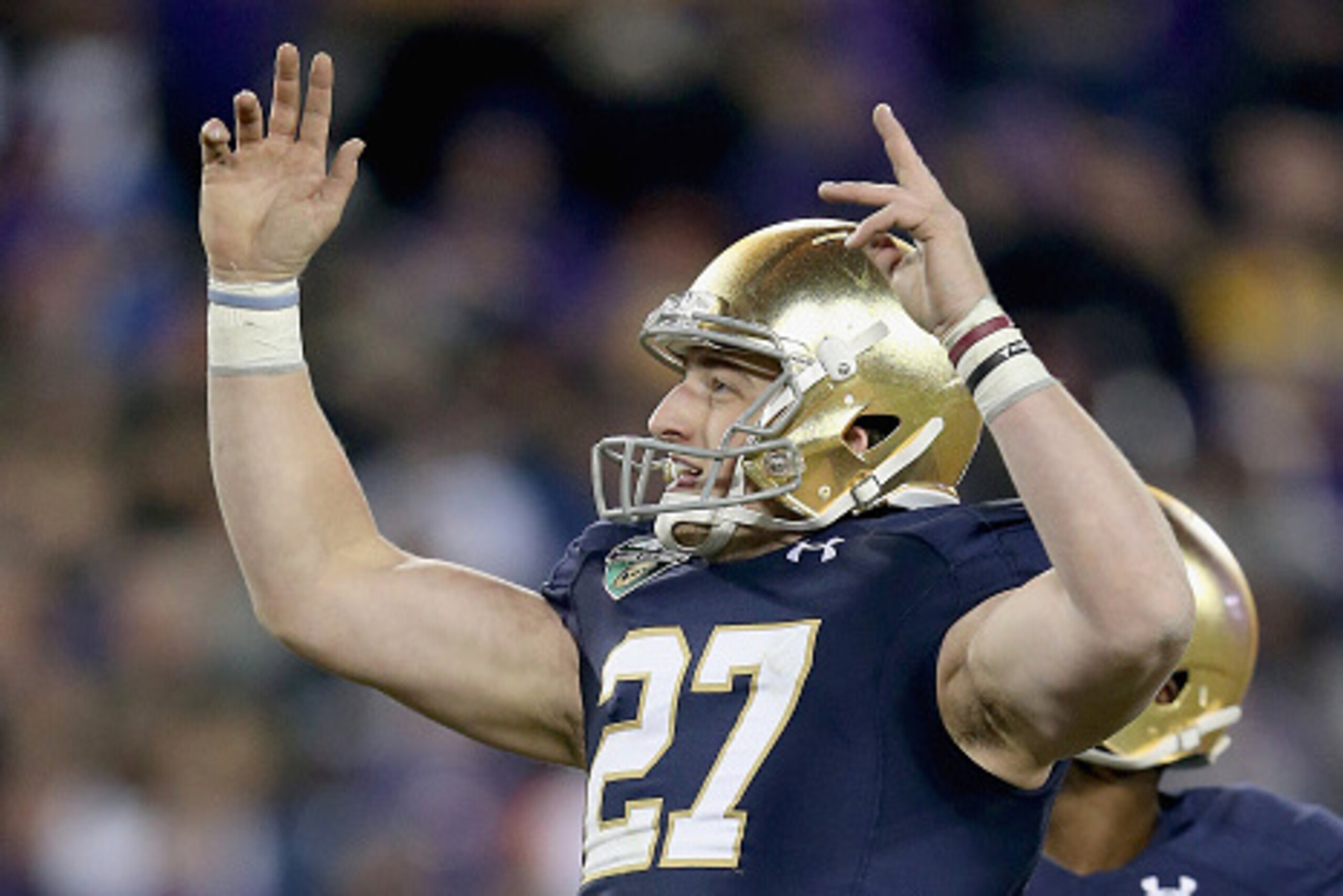
Special Teams: Although Leonard Fournette slashed through the Fighting Irish's kick coverage for a 100-yard kickoff return, the special teams unit excelled following the letdown. Notre Dame (potentially) stopped a fake field goal before halftime, blocked a field goal and the much-maligned Brindza hit a three-pointer to win the game.
Coaching: Despite encountering a noticeable lull during the third quarter, Brian Kelly utilized a two-quarterback system that ended up paying off in the end. Defensive coordinator Brian VanGorder was far from impressive, but he managed to survive the pair of 75-plus-yard touchdowns.
| Pass Offense | F | D |
| Run Offense | B+ | A- |
| Pass Defense | C | C- |
| Run Defense | D+ | D |
| Special Teams | B | C |
| Coaching | C+ | D+ |
Pass Offense: While Anthony Jennings took advantage of a defensive lapse on Diarse's 76-yard touchdown, he nearly missed his wide-open teammate. Jennings failed to gain necessary yardage on all four third-down throws and completed just 50 percent of his passes.
Run Offense: Fournette shredded Notre Dame for 143 yards and two scores on only 11 carries, but he received a mere three attempts during LSU's final three possessions. The members of the offensive line were undoubtedly stellar as run-blockers, paving the way for 5.3 yards per carry even without Fournette's long run.
Pass Defense: The Tigers secondary contained Notre Dame's receivers, though stopping screens and rollouts were clearly the unit's weakness. Plus, Golson found an unguarded Ben Koyack to convert a poorly defended 3rd-and-10 play on the final drive.
Run Defense: Nonexistent, to say the least. LSU surrendered 263 rushing yards, its worst performance since a loss to Auburn on Oct. 4. Consequently, the Irish were able to maintain possession for exactly 37 minutes and keep Fournette and Co. on the sideline.
Special Teams: Speaking of Fournette, the freshman set a bowl record with 121 kickoff-return yards, which included his first career return touchdown. Placekicker Trent Domingue didn't give his 40-yard field-goal attempt a chance, barely missing his own blocker on a potential go-ahead attempt.
Coaching: Les Miles called a questionable fake field goal, considering LSU would receive the second-half kickoff. Defensive coordinator John Chavis coached what was perhaps his final game at the school, according to Glenn Guilbeau of The Shreveport Times, and it was certainly forgettable.
Follow Bleacher Report college football writer David Kenyon on Twitter: @Kenyon19_BR.
.jpg?w=2560 "OBJ Calls Out Giants After Release")