The Weakest Link on Every Top NBA Contender
Psst. Guess what?
NBA contenders have weak links, too. Just don't tell anyone—wouldn't want you guys stealing my thunder, after all. Disrupting flaws may not be as evident on championship-chasers, but they are there. And we're going to find them.
In order to preserve the sanctity of exclusiveness, we'll be looking at only the top contenders—the teams with the best shot at winning their respective conference.
Worthwhile candidates will invariably be left off. That's just a symptom of exclusivity. More than half the Western Conference would be listed if this were a loosey-goosey, open invite.
Instead of cheapening the contender classification, we're going to honor it. While subjective, chosen teams' inclusions are, again, based on their ability to make the NBA Finals.
Subsequent weakest links will be limited to positions and specific players. Most of the time, it will be the former. In special cases, though, we're going to make an exception, singling out underachieving players who are supposed to be having a much bigger impact than they actually are.
Unflattering statistics will be our primary guide. Positions and players that hurt teams in specific areas—in a noticeable way—are up for consideration. Those harming said squads the most, well, they're here.
Now, with that in mind, it's time to invade the pedestal upon which some of the NBA's finest franchises presently sit.
Memphis Grizzlies: Small Forward
1 of 7
An ebbing, 34-year-old Tayshaun Prince still receives ample playing time for the Memphis Grizzlies. That's all you really need to know about their small-forward situation.
Quincy Pondexter, Vince Carter and Courtney Lee have all seen time at the 3—most of Carter's and Pondexter's minutes have come at small forward—but the production there is still shaky at best.
Carter is draining under 34 percent of his deep balls for the first time since 1998-99, when he was a rookie, and Pondexter is shooting a career-low 24.2 percent from three-point range himself. And though the Grizzlies field the NBA's eighth-most efficient offense, they've done so while milking the performances of Marc Gasol, Zach Randolph and Mike Conley.
Also, there's this to consider, courtesy of 82games.com:
| 20.0 | 15.2 | 9.6 | 18.8 | 21.8 | |
| 15.5 | 14.1 | 14.5 | 13.5 | 14.8 | |
| +4.5 | +1.1 | -4.9 | +5.3 | +7.0 |
Relative to every other position, small forward has been the absolute worst for Memphis. Being forced to play Prince is certainly most of the issue but not all of it.
Fellow wing players have yet to step up enough, leaving the seemingly infallible Grizzlies too vulnerable for comfort on the perimeter.
San Antonio Spurs: Boris Diaw
2 of 7
Injuries to Kawhi Leonard, Tiago Splitter and even Tony Parker—coupled with head coach Gregg Popovich's propensity for resting the San Antonio Spurs' calcium-chew-carrying veterans—has put pressure on Boris Diaw to play at a high level.
Important: He is not playing at a high level.
Diaw is shooting 45.5 percent from the floor—his worst mark since joining the Spurs—including just 30.6 percent from downtown. With Tim Duncan spending nearly 90 percent of his minutes jumping center, Diaw has spent 87 percent of his at power forward, where he's allowing opponents to record a 17.6 player efficiency rating per 48 minutes, according to 82games.com.
Still, the Spurs' eighth-place defense is better with him on the floor overall. Offense has been the bigger issue now that teams are no longer forced to defend him beyond the three-point line. He's hitting just 31.2 percent of his catch-and-shoot bombs one season after nailing 42.3 percent.
It's true that Diaw struggled from behind the rainbow at the beginning of 2013-14, too. He connected on just 25.6 percent of his treys through December before catching fire, so there's still time for him to follow that same trend.
But the Spurs need more from him in general. And quick. Popovich will continue to rest Duncan, Parker and Manu Ginobili as he sees fit, and the Spurs aren't ones to rush players (i.e. Leonard and Patty Mills) back from injury.
If they're going to secure home-court advantage in time for the postseason, it's everyday role players like Diaw who must produce.
Cleveland Cavaliers: Center
3 of 7
Big men pose big problems for the Cleveland Cavaliers.
First, though, a word: Record alone doesn't make the Cavaliers one of the NBA's top contenders. It's a combination of things—most notably their crazy-potent fourth-ranked offense and the fact they play within an invidious Eastern Conference that, if we're being honest, might not have a true contender.
Even so, we're (subjectively) rolling with teams that have the best chance at coming out of their conference. The Cavaliers, chemistry deficiencies and all, are up there thanks to talent alone.
If there's anything that could remove them from this list, it's the center position. Anderson Varejao is done for the season after suffering a torn left Achilles, leaving the Cavaliers thin on bodies and—most importantly—even thinner on potential rim-protectors.
Not that Varejao made the Cavaliers defensive juggernauts. Their defensive numbers are virtually identical with and without him, and they rank an unenviable 21st in points allowed per 100 possessions overall.
They're also the second-worst iron-guarding team; opponents are hitting 57.3 percent of their shots at the rim against them. Varejao remains one of the biggest culprits, with offenses converting 64.2 percent of their shots inside six feet when defended by him.
Healthy bigs Kevin Love (63.1 percent) and Tristan Thompson (55.9) haven't been much better. Even LeBron James is permitting opposing players to shoot above 57 percent inside six feet.
Marc Stein and Brian Windhorst of ESPN.com do say the Cavaliers are now ramping up their search for a paint-policer, but with modest names like Timofey Mozgov, Kosta Koufos and Brandan Wright being thrown around, they appear fated for suboptimal center circumstances all season.



Houston Rockets: Point Guard
4 of 7
Power forward could still be the position that does the Houston Rockets in. They like to run one-in, four-out lineups, and Chandler Parsons' relocation along with Terrence Jones' injury woes haven't made sustaining said model easy.
Signing the exiled Josh Smith won't make it any easier, either. Not unless he starts shooting way better—times infinity squared—from beyond the arc.
Bringing in Smith, though, at least gives the Rockets a viable starting power forward. They're still lacking in the point-guard department.
James Harden is effectively the Rockets point guard, and he's been magnificent. His league-leading 27 points and seven assists per game have him on track to become just the seventh player in league history to maintain a usage rate of at least 32 and an assist rate above 36.
And yet after all he's done, the Rockets still rank 19th in offensive efficiency after finishing fourth in 2013-14. The absence of a legitimate floor general has really hurt them. Patrick Beverley and Isaiah Canaan are their most used point guards, and neither of them directs offenses the way true pilots should.
The end result has been an uptempo assault light on passing and on pace to make and attempt the most three-pointers ever. Such a blueprint can be valuable (see: 2012-13 New York Knicks), but the Rockets rank 18th in three-point conversion rate and are living and dying—mostly living—by their impregnable defense.
Playmakers are a vital part of offensive success, and right now, outside of Harden (and now Smith), the Rockets don't have any. Impressive though they've been, that could come back to haunt them.
Portland Trail Blazers: Nicolas Batum
5 of 7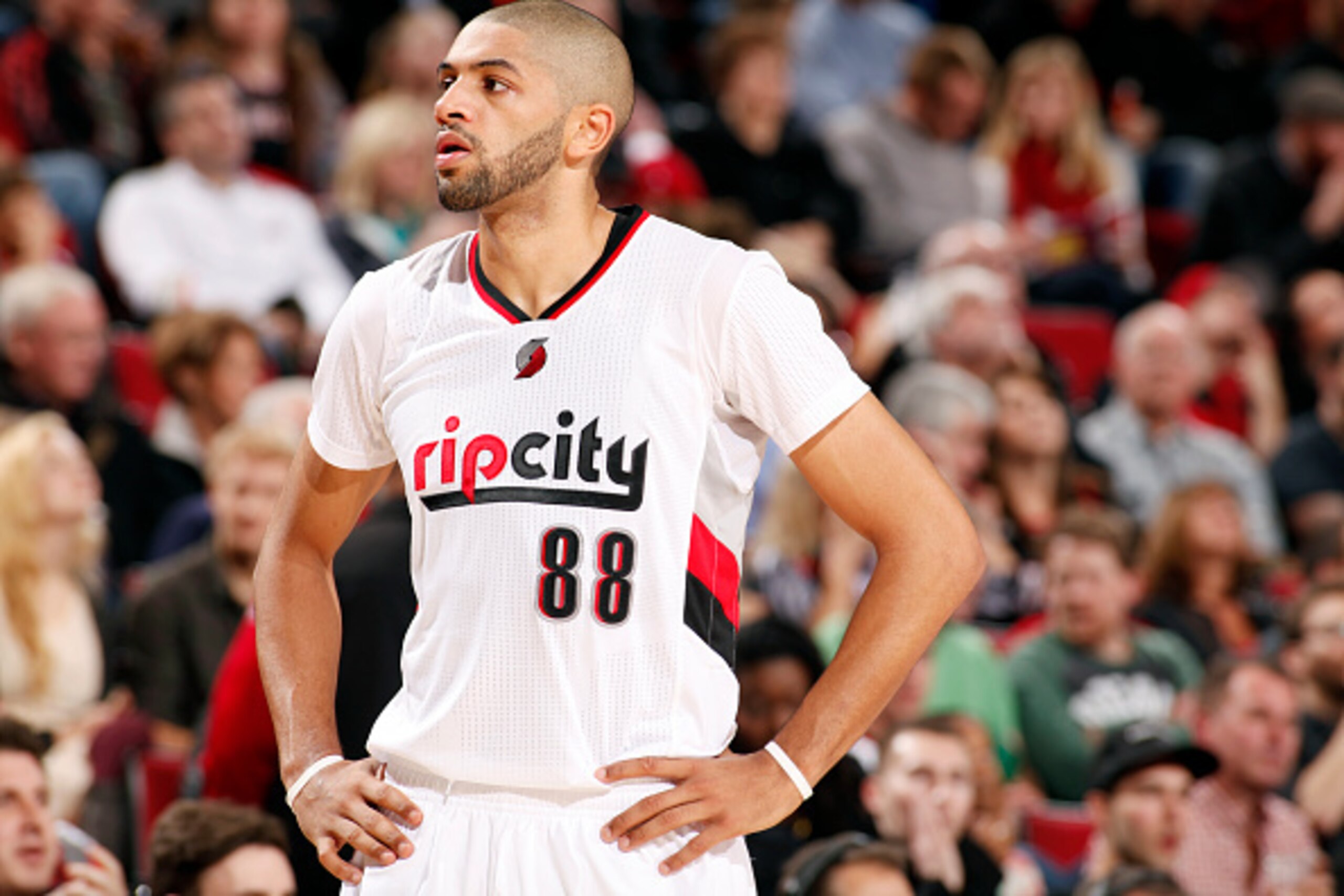
To recap before we even begin, yes, the Portland Trail Blazers remain one of the NBA's top title contenders even though one of their most pivotal players has become a weak link.
(Hats off to Damian Lillard and LaMarcus Aldridge.)
Nicolas Batum has been uncharacteristically, well, bad this season. Battling through knee and wrist issues, missing games in spurts, he's scoring just 8.6 points per game on a career-worst 38 percent shooting, including a ghastly 22.6 percent from deep (also a career worst).
There's been this overtly passive element to his game through 24 appearances. He's using the fewest number of possessions since his rookie campaign, and there are times when he's removed from the offensive game plan entirely, used strictly as a pick-setter or orbiting decoy.
All of that has taken a toll on the Blazers. You wouldn't know it judging by their 23-7 record, but the offense, while statistically better with Batum in the game, lacks the far-flung versatility from last season.
Portland has lost one of its premier weapons and has yet to get him back, further burdening the shoulders of Lillard and Aldridge—not to mention its defense, which ranks third in efficiency and has been 4.3 points per 100 possessions stingier without Batum.
"There’s a next step to be taken for the Blazers," writes Dime Magazine's Jack Winter. "They’re a clear playoff team in the Western Conference monster, but are still a notch below several other squads when it comes to championship pecking order. If Batum gets healthy and embraces the attitude he had for the French national team, there’s certainly a chance Portland moves up those ranks."
Getting Batum back—the real Batum—can make the already surging Blazers that much more dangerous. For now, though, his subpar play is disappointing with the potential to become detrimental.
Toronto Raptors: Power Forward
6 of 7
One more Eastern Conference team needed to make an appearance, and it's only right we have the Toronto Raptors, who remain perched above their conference peers despite navigating an extended absence from All-Star DeMar DeRozan.
Led by the bulldogging Kyle Lowry, the Raptors are still one of the most well-balanced squads out there. Identifying their weakest link is difficult when looking at a unit that is thriving through success by committee.
Thus, we have power forward, mostly because the Raptors rank 26th in defensive rebounding percentage and their 4s are giving up more boards than any other position, per 82games.com.
Amir Johnson isn't rebounding like he used to, and neither Patrick Patterson nor James Johnson is snatching misses in excess. There isn't a clear power forward of the future on the roster, either, and it shows in Dwane Casey's rotations. As the Toronto Sun's Ryan Wolstat writes:
"Part of that is because the coaching staff often prefers to go small, sending Jonas Valanciunas to the bench and often putting another small guard beside Lowry, part of it is because Amir Johnson has battled nagging injuries all season which affects his lift, part of it is because Patrick Patterson, for all of his strengths, is a poor rebounder, and part of it is because sometimes many of the Raptors simply lack concentration in crucial moments.
"
Running small hasn't been all bad, of course. The Raptors rank seventh in offensive rebounding percentage, proving deft at using their expansive quickness to out-position bigger power forwards and centers. At the same time, they don't have a true stretch 4, so their defense—18th in efficiency—is feeling the ill effects of playing undersized.
Nabbing a shot-burying, rebound-grabbing power forward would be a huge boon for the Raptors' soaring stock. Not that I'm saying they should offer the transitioning Indiana Pacers the expiring contracts of Landry Fields and Johnson, along with New York's 2016 first-rounder, in exchange for David West and hope it sticks.
Oh, never mind. That's exactly what I'm saying.
Golden State Warriors: Center
7 of 7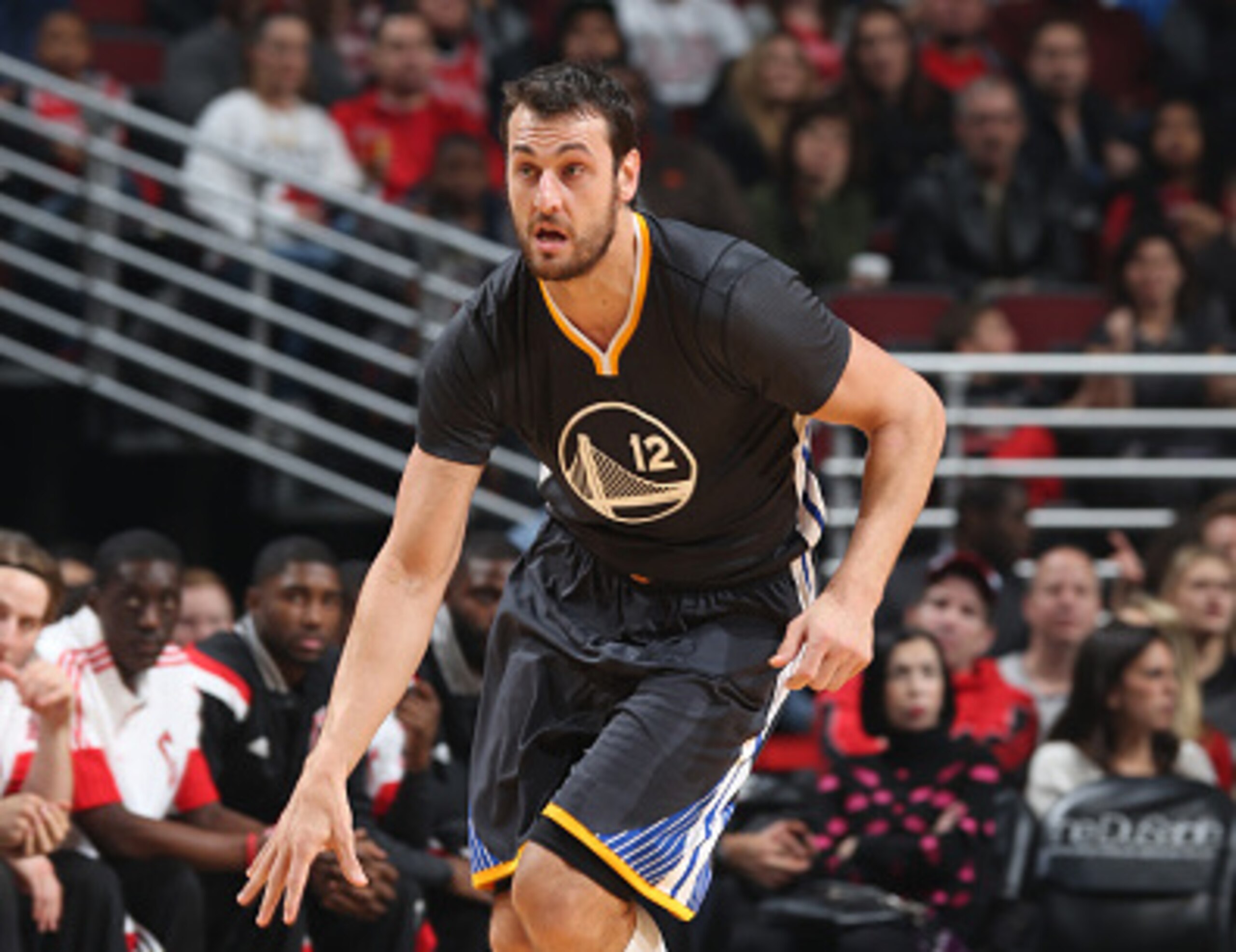
Center can indeed be a bright spot for the Golden State Warriors. A really bright spot. When Andrew Bogut is healthy.
Which he isn't.
When Bogut is on the floor, the Warriors are plus-19.9 points per 100 possessions, registering the equivalent of the NBA's third-best offense in addition to the second-best defensive rating in league history. But he's out of commission indefinitely with a knee injury, which, sadly, is par for the course; he's missed at least 15 games in each of the last four seasons.
That leaves the Warriors relying on various other players who don't measure up.
David Lee only just returned and doesn't play much defense; Festus Ezeli allows opponents to shoot just 47.1 percent at the rim, but he's uncoordinated on offense—where the Warriors are worlds worse with him in the game—and laboring through a sprained ankle; Marreese Speights allows a 57.3 percent success rate inside six feet; and Ognjen Kuzmic simply isn't an option.
“Bogut makes everybody’s life easier,” Draymond Green said when asked about his absence, per ESPN.com's Ethan Sherwood Strauss. “So if I said, ‘No,’ I’d be lying.”
Interior protection has mostly buoyed what is the Association's best defense. But it's the interior's lack of depth and superfluous fragility that threatens to rattle the NBA's most dominant team to date.
Stats courtesy of Basketball-Reference and NBA.com unless otherwise cited and are accurate through Dec. 25, 2014. Salary information via HoopsHype.
.jpg?w=2560 "OBJ Calls Out Giants After Release")




.jpg?w=2560 "Saquon Out for Game")