New England Patriots vs. New York Jets: Full Report Card Grades for New England
Entering this week, the New England Patriots' respect for Rex Ryan's New York Jets was not merely lip service. As always, Gang Green played the Pats tough on Sunday, holding the lead for the majority of the game and controlling the rhythm, only to fall 17-16.
The defenses dictated the game early, holding the offenses to a combined four three-and-outs over the game's first five possessions. New York's byzantine blitz schemes worked to perfection early on, as Gang Green picked up three first-quarter sacks on Tom Brady with a plethora of concepts—A-gap pressure, corner blitzes, stunts, etc.—that flummoxed the Pats offensive line.
Following an opening frame in which the offenses combined for just 60 total yards, a 37-yard Danny Amendola punt return catalyzed New England's first scoring drive. Rob Gronkowski capped off the drive with a three-yard touchdown on a back-shoulder laser from Brady for the tight end's 12th score of the year.
However, the Jets subsequently responded with their first sustained drive of the game, a 12-play, 87-yard sequence that resulted in a Jeff Cumberland touchdown. With the Pats' pass rush ineffective early, Geno Smith was under control during the first half, compiling 117 yards and a touchdown on 11-of-16 passing.
After another three-and-out from Brady and Co., Smith led the Jets on another long drive, though this 10-play sequence stalled out in the red zone and resulted in a Nick Folk 26-yard field goal. Nevertheless, having thoroughly dominated the lines of scrimmage, Gang Green went into the half with a stunning 10-7 lead.
The offenses traded field goals to start the second half, with each stalling out in the red zone. But following a Geno Smith interception, the Patriots retook the lead with a one-yard Jonas Gray touchdown. Jamie Collins' pick near the end of the third quarter was astoundingly Smith's first turnover in two games against the Pats this year, as the embattled second-year quarterback has saved his best for the Jets' biggest rivals.
Indeed, after the Pats touchdown, Smith directed yet another field-goal drive that reached the red zone, trimming New England's lead to 17-16. The next two possessions presented the ultimate roller coaster, as a Brady pick set up the Jets for the go-ahead score, only for a sack-blocked field-goal sequence to preserve the Patriots' lead with five minutes remaining.
Aided by an ill-advised challenge that cost the Jets a timeout, the Patriots subsequently ran out the rest of the clock, with a 16-yard Brandon Bolden scamper sealing the deal. New England swept its biggest rival in 2014, but the two victories came by a total of three points.
Read on for full position-by-position analysis of a win that clinched a first-round bye for New England.
Quarterback
1 of 10
Tom Brady struggled early amid constant pressure but always seemed under control against the woeful Jets secondary. While he was sacked four times in the first half alone, Brady exploited New York with a variety of three-step concepts (slants and sticks in particular), going 11-of-15 with a touchdown in the first half.
Of course, the pressure from New York can't be discounted, as Brady posted a putrid 5.3 yards per attempt in the half despite the high completion rate. Facing surprisingly stout coverage on the Patriots' vertical concepts, Brady often held the ball too long for the offensive line to protect against New York's blitz schemes, which resulted in just 52 total first-half yards.
After another short drive to open the second half, Brady experienced more success when the Patriots turned to a more uptempo shotgun-based approach. He did not throw another touchdown, but he led two scoring drives and a clock-killing four-minute drill to end the game, squeezing just enough out of a struggling New England offense. However, he also had a potentially fatal interception that set the Jets up for the go-ahead score late in the fourth, only for the Pats' defense and special teams to bail him out.
Brady's afternoon will go down as one of his worst statistical performances of the year, as he finished with just 182 yards on 5.5 yards per attempt. He was unable to hit any vertical concepts as the Jets safeties played with surprising discipline, though he did show improved pocket presence in the second half. Brady was erratic, as he often is against Ryan-coached defenses, but unlike many past meetings, he made enough plays to pull out a Patriots win.
Grade: B-
Running Back
2 of 10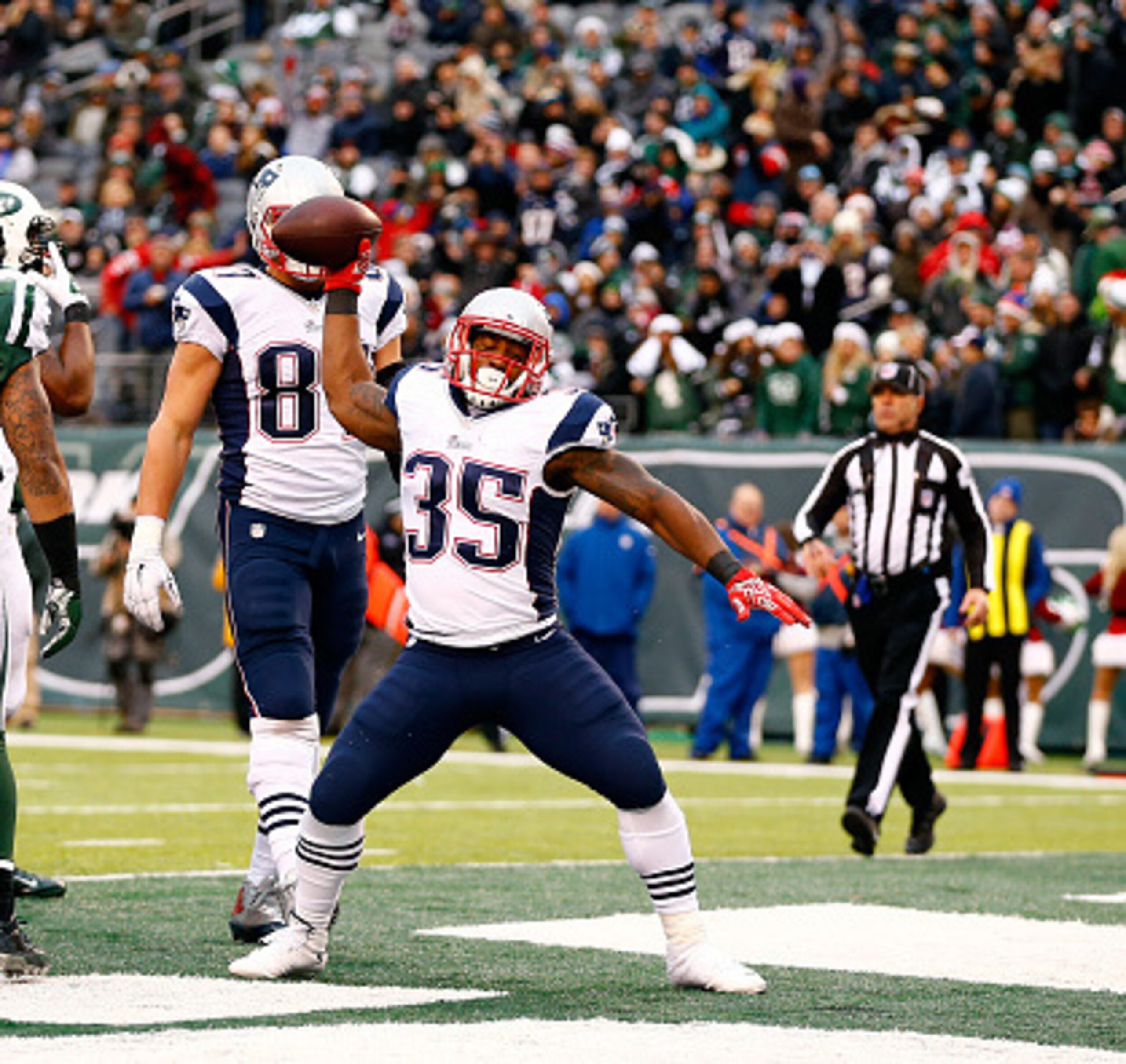
Much like the first meeting, the Patriots offense was rendered one-dimensional due to struggles in the running game. Playing as the main power back in place of an injured LeGarrette Blount, Jonas Gray was held to a meager five yards on six carries, though he did record the game-winning touchdown.
Still, an offense is a dynamic system, and the running game's inefficacy was the key to the Jets' containing the Patriots offense, as the numerous passing-down situations allowed New York's front seven to tee off on Brady. Without Julian Edelman to move the chains, Brady's lack of a security blanket became exacerbated by the dearth of a secure running game.
After the Jets extended their lead to six, Shane Vereen took over as the primary back. He helped spur the Pats' first scoring drive of the second half with 33 rushing yards after the offense had compiled just eight yards on the ground to that point in the game.
Curiously, though, Vereen did not receive another touch the rest of the way, finishing with 50 yards on just seven touches. The Pats turned to Brandon Bolden on the final clock-killing drive, and the third-stringer rewarded New England's faith with 26 yards, including a game-sealing 17-yard run on 3rd-and-1.
Make no mistake: This was overall an ugly performance on the ground, as the Pats ended up with 85 yards on 3.5 yards per attempt, most of which came on the two Vereen and Bolden drives. But given the strong situational execution in the fourth quarter, the grade gets a bit of a bump.
Grade: C+
Wide Receiver and Tight End
3 of 10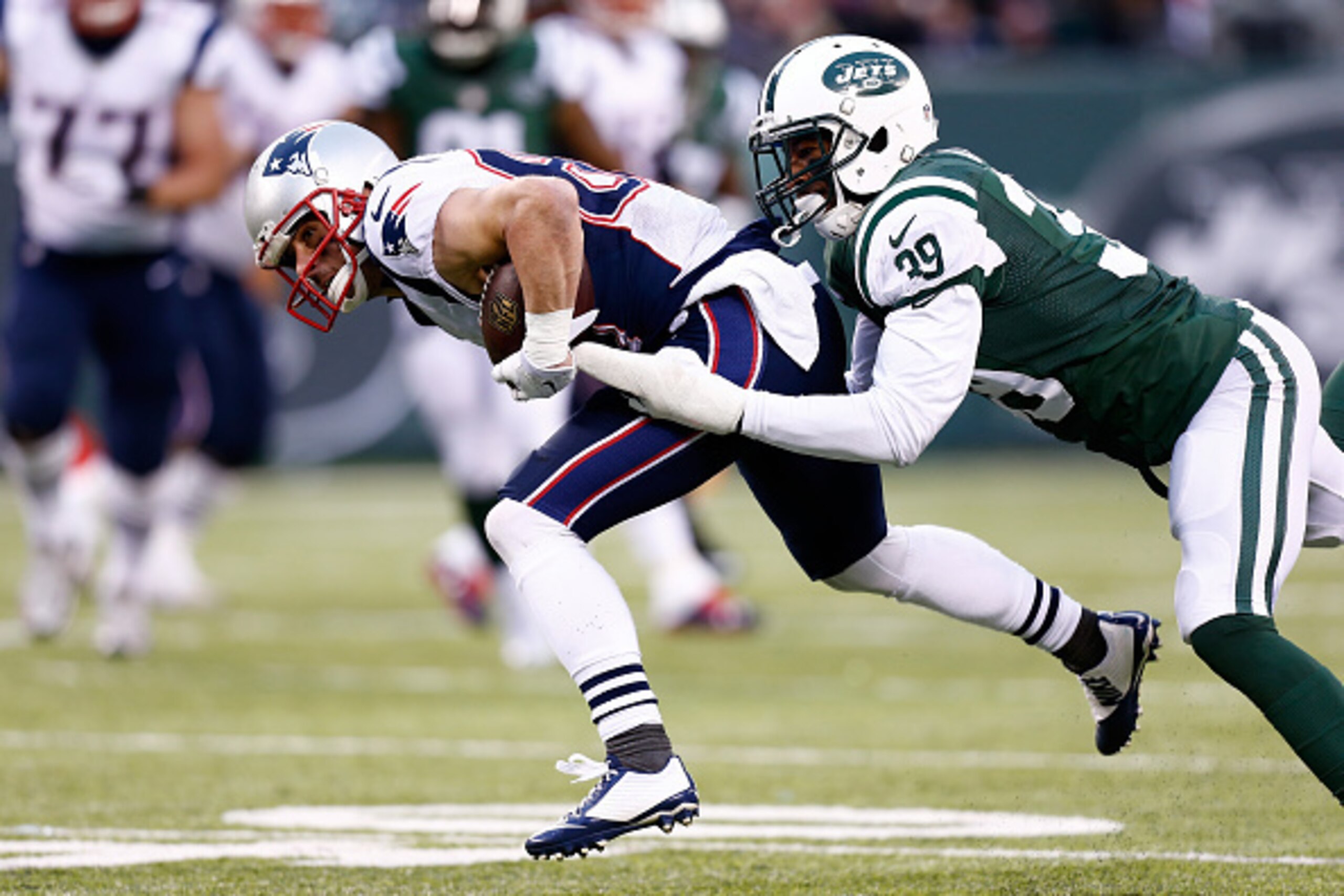
With Julian Edelman out of the lineup, Rob Gronkowski was predictably the center of the passing game's attention. He compiled 10 targets, including a touchdown off a laser back-shoulder throw from Brady in the second quarter. But the All-Pro was largely ineffective, with just six catches for 31 yards, as the Jets did a tremendous job of getting body position on him in the middle of the field.
But while Gronk stole the spotlight early, Danny Amendola emerged as the star of this game. He set season highs with eight catches for 63 yards, including two critical receptions on the final drive. No. 80 is unlikely to ever fill the Wes Welker replacement label he had when he arrived in Foxborough, but performances like this one suggest that Amendola still has enough game and chemistry to produce with Brady if called upon.
Brandon LaFell also produced more in the second half, as most of his seven catches and 64 yards came after intermission. He was the star of New England's only touchdown drive of the second half, but he also inadvertently batted the pass that led to Brady's fourth-quarter interception in what should have been a more critical turning point in the game.
Overall, Edelman's absence exposed the lack of depth in New England's receiving corps. The injury-plagued and anonymous Jets secondary was largely able to keep the receivers under wraps, which is an indictment of this unit. Amendola's contributions bring the grade up, but the receivers clearly underperformed.
Grade: B-
.jpg?w=2560 "Colts Football")
.jpg?w=2560 "Commanders 49ers Football")
.jpg?w=2560 "DOLPHINS-AIKMAN")
Offensive Line
4 of 10
The O-line has been creaking for three weeks, but in the first half, the dam came completely undone as the Jets wrecked New England's offense in compiling four sacks over the first 30 minutes. New England had no answer for New York's blitz schemes, as the left side of the line in particular—Nate Solder, Josh Kline and Marcus Cannon—were consistently beaten by the likes of Calvin Pace and Sheldon Richardson.
In the second half, New England made a substitution, moving Ryan Wendell to left guard, benching Kline and bringing in rookie Cameron Fleming at right guard. Given how badly Fleming struggled at guard during his lone start at the position (Week 4 vs. Kansas City), it is impressive that the rookie largely held his own in his first game back from an ankle injury.
It's clear the Pats missed Dan Connolly's stability and communication ability on the left side, even if the protection shored up more in the second half. Part of that was schematic, however, as the offense turned to a more uptempo quick-hitting pace to keep the Jets' front seven off guard. For the most part, New York won the majority of the one-on-one battles against this unit.
On a personnel-related note, Solder remained the tackle-eligible tight end in "Jumbo" six-linemen packages, despite the return of Fleming. Instead of Fleming, the newly extended Cannon came on at left tackle when Solder split out. Given the line's inability to create running lanes, one wonders if Fleming will get the role back next week against a similarly stiff Buffalo Bills front seven. Cannon also had a false start on the Pats' final drive—a gaffe that could have been more costly.
Grade: C-
Defensive Line
5 of 10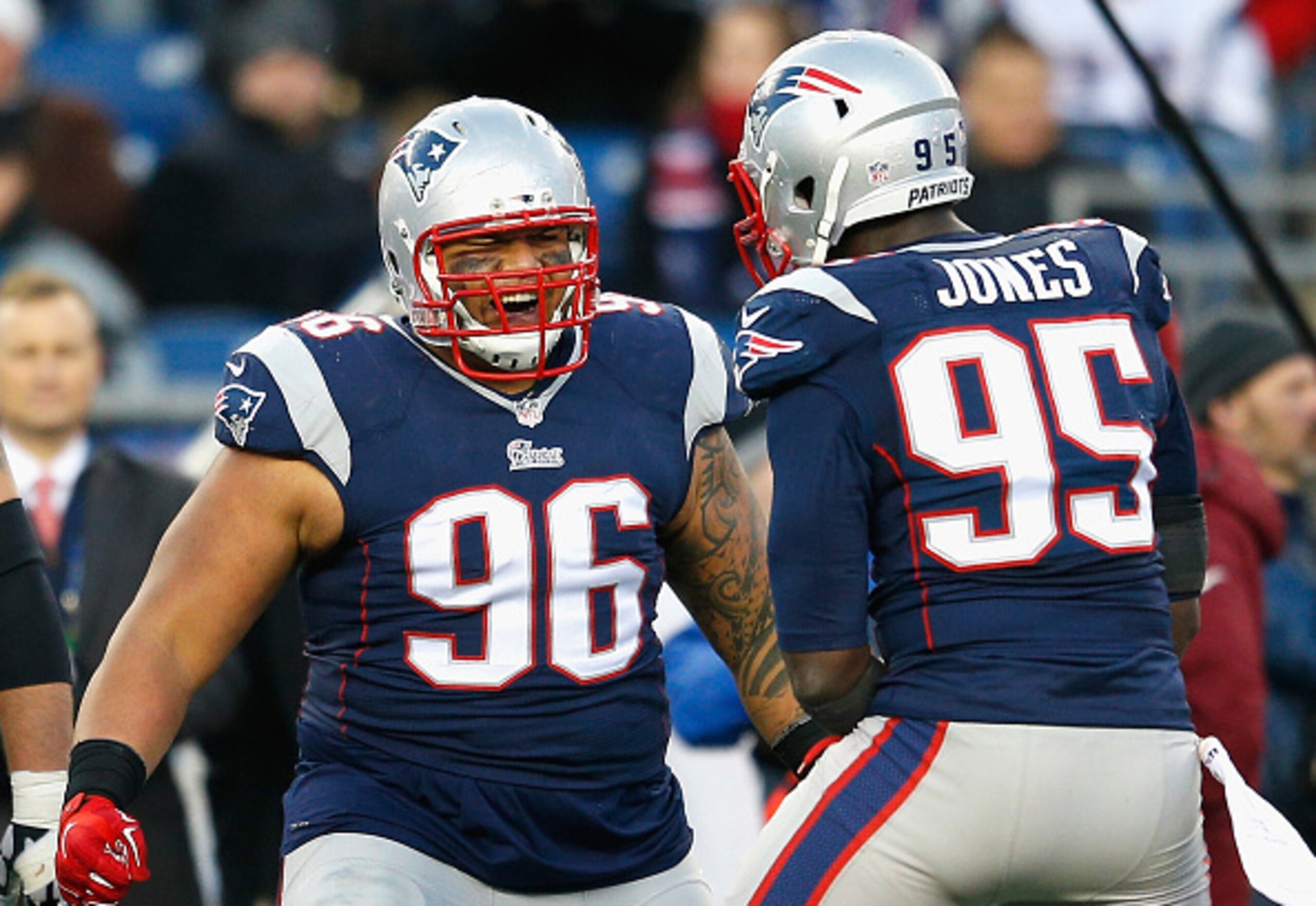
The Patriots played the majority of this game in a hybrid 5-2 front, with three defensive tackles in Vince Wilfork, Alan Branch and Sealver Siliga. On traditional gap-blocking concepts, the personnel wrinkle worked, as the Jets running game compiled just 3.6 yards per carry on 32 rushing attempts. That's a lot of wasted downs, and when considering how the pass defense struggled, New England's ability to stuff the run was the key in keeping the Jets' offensive production at a reasonable level.
Of course, some of those struggles resulted from this unit's inability to generate consistent pressure. Chandler Jones was the lone exception to that rule. In his second game back from a hip injury, he came up with some critical plays, including a pressure that led to a Geno Smith interception and a fourth-quarter sack in the red zone.
Jones also shifted to the interior 3-technique position on occasion in this game, but the rest of the edge-rushers were largely invisible. Rob Ninkovich and Akeem Ayers did not record a single sack or hit, and when the game book comes in, it wouldn't be surprising if neither recorded a pressure. Siliga was actually the Pats' best rusher besides Jones, with two hits on Smith.
New England's issues surrounding pass pressure popped up again, but the unit won't be downgraded too harshly because of the work against the run. It was a bit of an ambivalent showing from this unit, which is quite fitting considering how the game unfolded.
Grade: B
Linebacker
6 of 10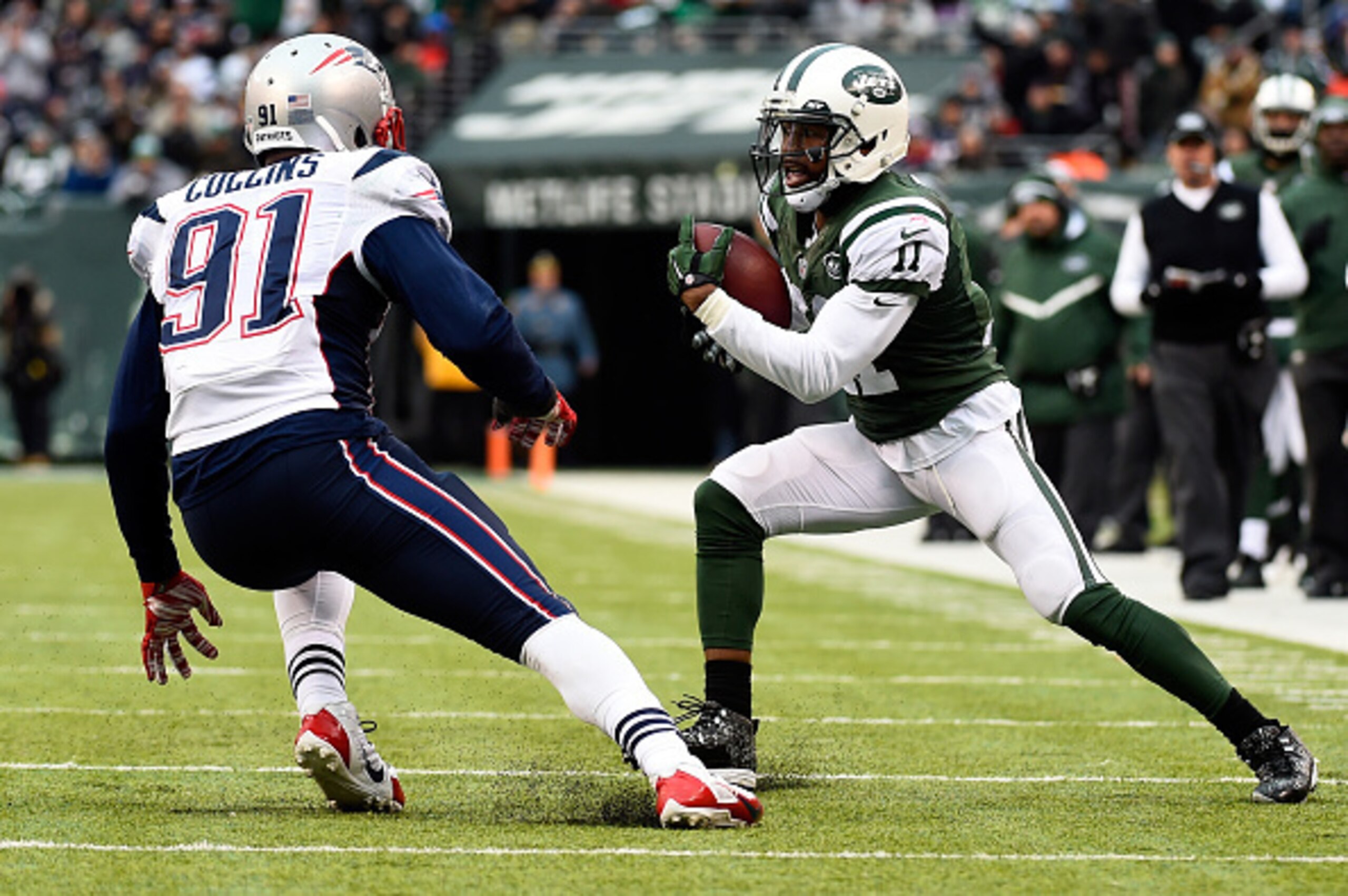
Jamie Collins rebounded from an inconsistent showing last week to post another excellent all-around performance, as he led the Pats with 11 tackles, including six of the solo variety. His pass coverage has not been as strong this year as many had hoped, but his third-quarter interception led to the go-ahead score; it was a critical boost for a defense that had been on its heels.
Dont'a Hightower also came up with a huge play, shooting through the A-gap to bring down Geno Smith on the drive following Brady's fourth-quarter pick. The sack pushed the Jets back to a 52-yard field-goal attempt, which an ailing Nick Folk couldn't get over the line. Considering the circumstances, Hightower's sack may have been the biggest play of the game.
On the downside, both players had occasional issues while stopping the run, particularly when the Jets ran misdirection plays to manipulate the second level. There were some strong contain plays—for instance, a Collins run stuff on a Percy Harvin jet sweep—but the missed tackle count also seemed higher than usual.
It's also curious that Collins and Hightower didn't receive more blitzing opportunities, though we'll touch more on that later. With the Patriots going heavy along the line, these two had a bit more support than usual. Nevertheless, Collins and Hightower were the two most consistent facets on a defense that experienced its share of ups and downs.
Grade: A-
Secondary
7 of 10
The Pats generally kept Darrelle Revis and Brandon Browner tethered to a single side of the field rather than having their top two cornerbacks follow around Percy Harvin and Eric Decker. As expected, neither Harvin nor Decker was particularly impactful on Sunday, combining for 65 yards on six catches. Browner also didn't commit a penalty for just the second time as a Patriot.
However, with Kyle Arrington inactive, second-year corner Logan Ryan struggled significantly in his stead. He had consistent issues against slot receiver Jeremy Kerley, who compiled a team-high 54 yards for New York. In the second quarter, Ryan had a critical third-down illegal contact penalty that extended New York's final drive of the half, leading to a field goal that gave the Jets the halftime lead.
Patrick Chung also made a crucial mistake in biting hard on a play-action fake, leading to Jeff Cumberland's second-quarter 20-yard touchdown. Chung generally regressed in coverage after a strong game last week, giving up three catches and 43 yards to Cumberland while also missing multiple tackles.
On the bright side, Revis and Devin McCourty were excellent in run support off the edge. Stopping the Jets running game was an 11-man effort—one the defensive backs contributed to. Still, when considering that Smith posted an efficient 7.8 yards per attempt when the Pats stuffed the running game, it's disappointing that this unit was unable to shut down the largely one-dimensional New York offense.
Grade: B-
Special Teams
8 of 10
Vince Wilfork's block on Nick Folk's 52-yard field goal was the game-saver, a huge play that illustrates the value of New England's continued emphasis on special teams. The block was the Pats' fourth of the year and second against the Jets, and all have resulted in massive momentum swings (two touchdowns, two potential game-winners blocked).
In addition, Danny Amendola took over for Edelman in the return game as well as on offense. Amendola was excellent, averaging 21 yards per attempt on three punt returns, including a 37-yarder that kick-started the Patriots' first touchdown drive.
The kickoff coverage was also excellent, holding Harvin and T.J. Graham to a putrid 15-yard average on three kick return attempts, pinning the Jets inside their 20 each time. The kicking game remained stellar as well, as Stephen Gostkowski hit his only field goal, while Ryan Allen continued a hot stretch by downing two more punts inside the 20-yard line.
In a game where the Pats were largely outplayed, special teams likely provided the one-point edge the scoreboard ultimately reflected. It's not hyperbole to suggest that the often overlooked third phase was the difference for the Patriots on Sunday.
Grade: A
Coaching
9 of 10
Schematically, the Patriots had a sound game plan, with two-tight end sets on offense to compensate for Edelman's absence and heavy base personnel usage to combat New York's run-heavy tendencies. However, after the linemen were consistently beaten in one-on-one matchups, the coaching staff was forced to adjust to work around those woes in the trenches.
Offensively, Josh McDaniels did a nice job of incorporating more three-step passing concepts to protect Brady while also turning to a more liberal no-huddle usage. The idea to insert Vereen and Bolden in the second half was also quite timely, as the Pats were able to salvage a bit of offensive balance on their final few second-half drives.
On defense, Bill Belichick made an extremely curious decision not to blitz Geno Smith more often. Part of that surely stemmed from a desire to contain Smith in the running game, which did work (the Jets QB had just three rushes for nine yards). Still, until Hightower's timely fourth-quarter sack, Smith was able to pick off the defensive backs like sitting ducks, which prompted the question of why the Pats did not mix up their pressure schemes more frequently.
It's clear the Pats were outcoached in this game, as Rex Ryan brought his A-game in what will likely be his swan song against New England. The adjustments kept the Jets from ever pulling away, but this was a rare instance in which Belichick did not hold the upper hand.
Grade: C+
Final Grades
10 of 10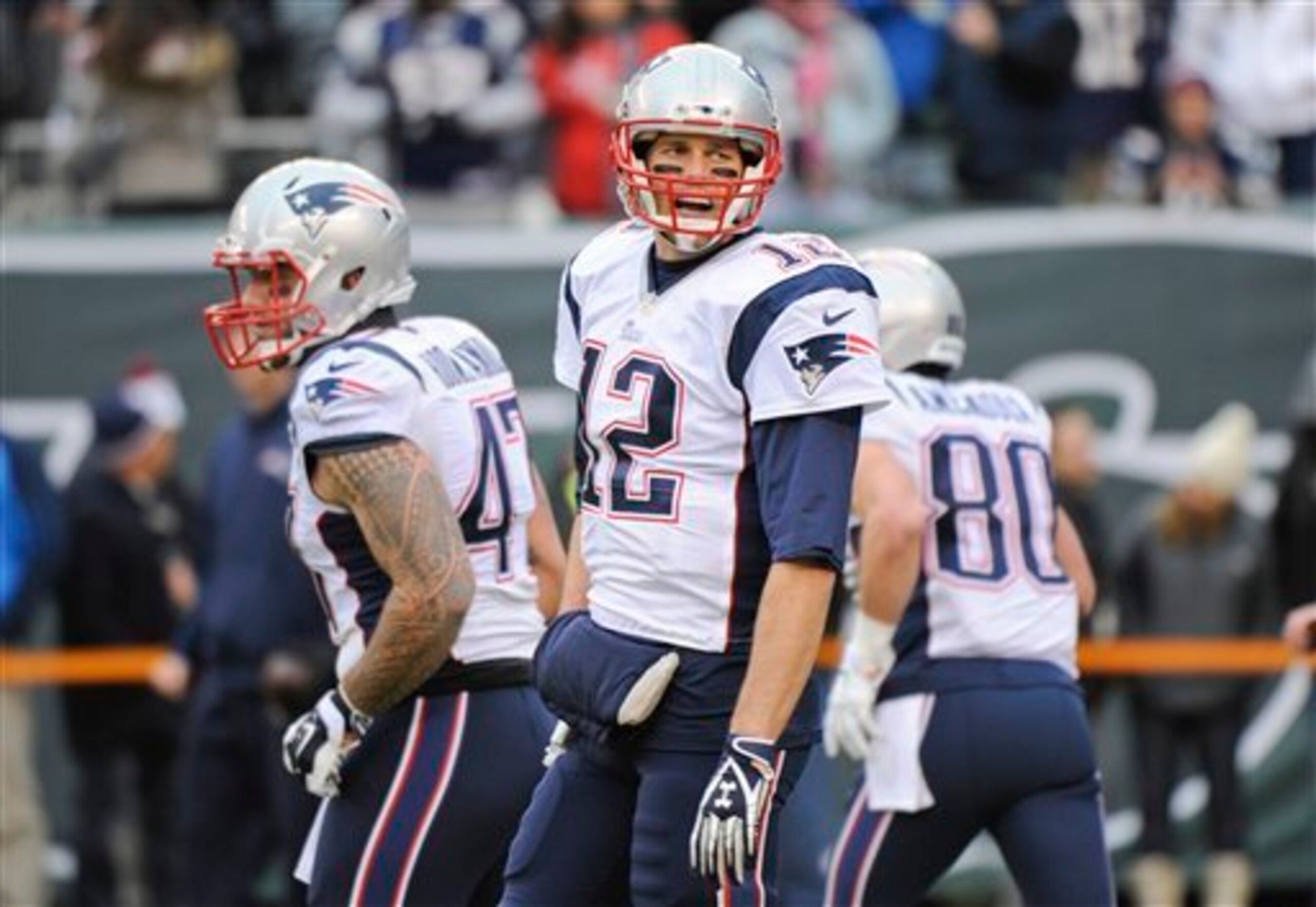
| Position Unit | Final Grade |
| QB | B- |
| RB | C+ |
| WR/TE | B- |
| OL | C- |
| DL | B |
| LB | A- |
| DB | B- |
| ST | A |
| Coaching | C+ |
| Cumulative Grade | B- |
For the third time in four weeks, the Patriots produced an effort that was far beneath their A-game. In fact, one could argue that in that monthlong stretch, last week's third quarter against the Miami Dolphins was the only time that the Pats truly played complete complementary football.
Nevertheless, New England continues to grind out wins and stay on track for home-field advantage in the AFC. It was never reasonable to expect the Pats to continue blowing teams out by three touchdowns, as they did during their incendiary midseason stretch. Still, these kinds of games illustrate how New England still has work to do in refining the roster before the postseason.
The Patriots get one more dress rehearsal next week against the Buffalo Bills, a similarly constructed team that will challenge New England in the trenches. The Pats remain one of the league's elite teams by any measure, but they are not invincible.
.jpg?w=2560 "NFL Paris Football")
.jpg?w=2560)

.jpg?w=2560 "Malik Beasley Negotiating Plea Deal (AP)")