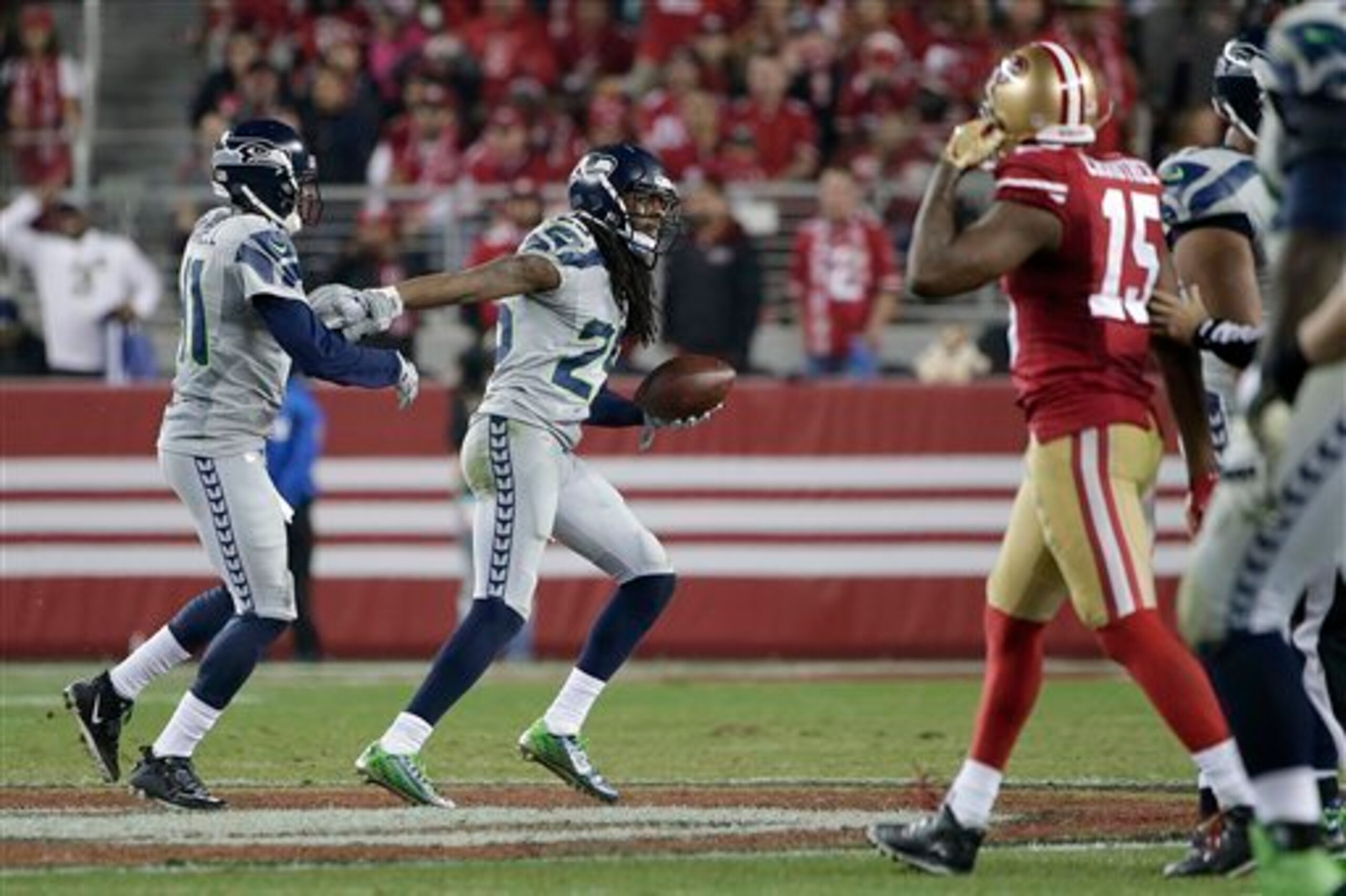

Why San Francisco 49ers Must Select an Impact Wideout in 2015 NFL Draft
With the San Francisco 49ers’ 2014 campaign all but decided, let us now welcome the season of articles, analyses and breakdowns of their draft-related needs in 2015.
And for the umpteenth consecutive year, please familiarize yourself with the imperative to bring aboard an impact wide receiver on the SS 49ers.
Certain personnel wearing the uniforms of San Francisco’s next two opponents will help reinforce this positional deficiency in case you need help remembering.
The San Diego Chargers travel to Levi’s Stadium Saturday night. Although Keenan Allen has been ruled out for this Week 16 matchup, the star receiver’s mere presence will remind 49ers fans of a key asset their beloved franchise passed over in the 2013 draft.
The same applies to the Arizona Cardinals’ 2012 first-rounder, Michael Floyd, whom the Niners will see hauling in multiple downfield throws against them in the season finale.
Of course, San Francisco’s 28th-ranked passing attack this year should already serve as enough evidence for the team’s dire need for a game-changing pass-catcher.
As would a cursory look at the failed, underachieving and disappointing draft picks at the receiver position since a one Terrell Owens in 1996.
So on that note, let’s break down why the 49ers must select an impact wideout in the 2015 NFL draft.
5. Nearly 2 Decades Worth of Disappointment
1 of 5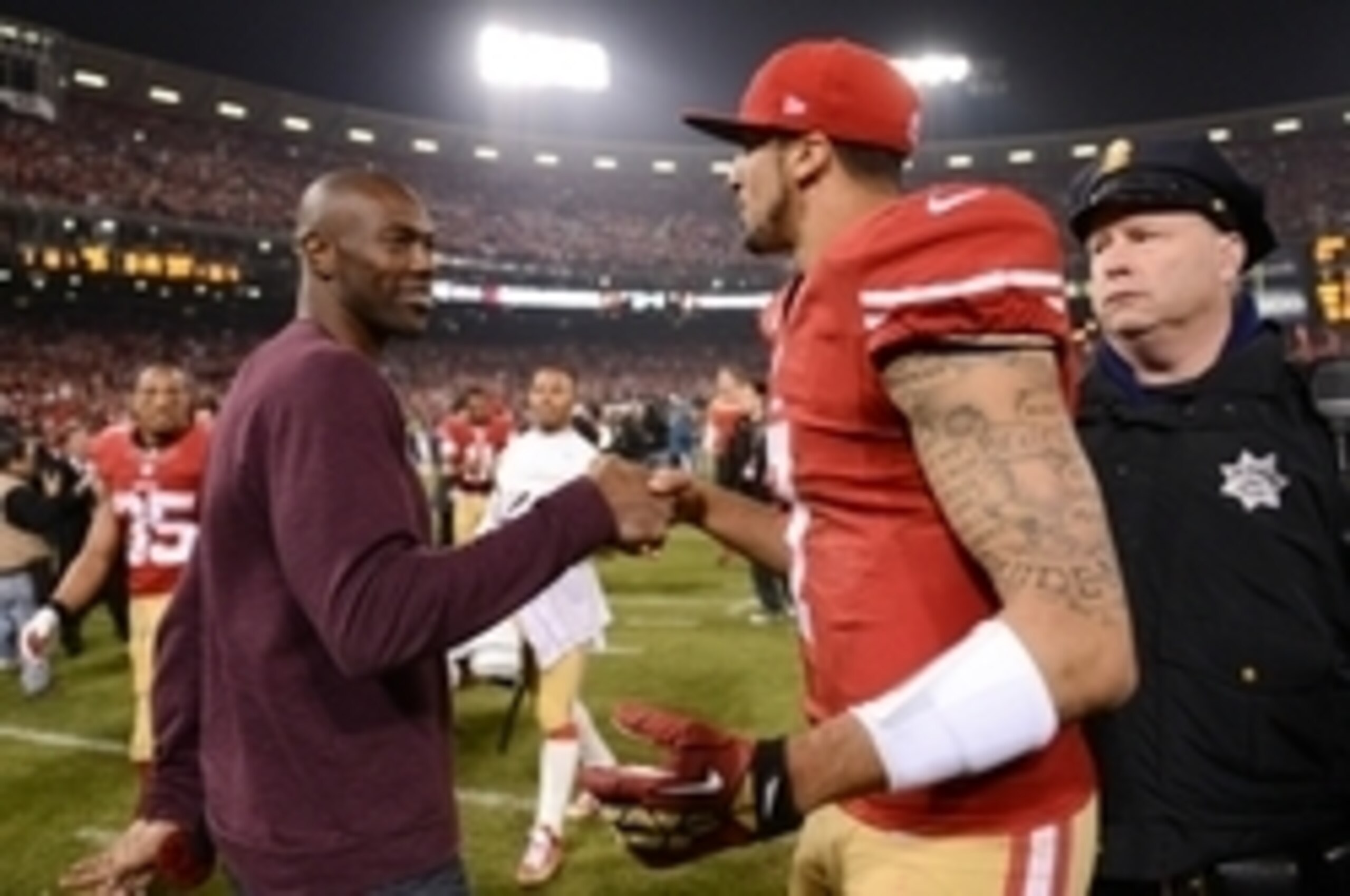
The 49ers selected Terrell Owens 86th overall in Round 3 of the 1996 draft.
The blazing 6’3” product out of Tennessee-Chattanooga proceeded to rack up 81 touchdown catches, three first-team All-Pros, four Pro Bowls and five 1,000-yard seasons in eight years with the Red and Gold.
He also registered four campaigns with double-digit touchdowns and twice led the NFL in that category.
However polarizing, enigmatic and emotionally taxing on the franchise, Owens provided years worth of big-time, if not all-time productivity.
Unfortunately, it’s been nothing but draft-day-hype-turned-on-field-disappointment ever since.
The likes of Tai Streets, Rashaun Woods and Jason Hill captured some of the past misfortune from 1999 to 2007. The regrettable trend continued with Michael Crabtree, A.J. Jenkins, Quinton Patton and Bruce Ellington in more recent seasons.
Crabtree may have notched a respectable 1,000-yard campaign in 2012, and the jury’s still out on Patton and Ellington. The latter two simply require more playing time.
But with the absolute misfire with Jenkins in 2012 and the overall history of forgettable stats and zero game-altering production, the 49ers have continually failed to acquire worthwhile talent at wide receiver.
There’s always a chance that certain “can’t-miss prospects” just don’t pan out.
The problem, however, is that the 49ers have passed over every conceivable product from the collegiate ranks with “can’t-miss” guarantees since 1997.
That’s 18 years, folks.
At any rate, let’s jump to the 2012 draft and examine the Niners’ historic debacle with a fast but undersized receiver from Illinois.
4. With the No. 30 Overall Pick in the 2012 NFL Draft…
2 of 5
…the San Francisco 49ers select A.J. Jenkins, wide receiver, University of Illinois.
A.J. Jenkins?
No, the 49ers did not move up for the pro-ready and highly accomplished Floyd out of Notre Dame, whom the Cardinals took at No. 13 overall.
Nor did they select Baylor’s Kendall Wright, a small-statured but dynamic wideout who went No. 20 to the Tennessee Titans.
To those who would scoff at relinquishing draft capital by trading up, just look at the prospects that landed on NFL squads shortly thereafter.
The St. Louis Rams netted the 6’4” Brian Quick just two picks later at No. 33 in the second round. Coby Fleener, a receiver-like tight end from Stanford, went to the Indianapolis Colts at No. 34.
Two additional big-bodied receivers in Alshon Jeffery (No. 45) and Rueben Randle (No. 63) were available as well. Trading down was very much a viable opportunity, but the 49ers’ upper-level decision-makers decided against it.
At any rate, outside of some minor growing pains, all six of these collegiate standouts have quickly evolved into notable contributors on their respective teams.
Floyd, Wright, Fleener and Jeffery have all notched at least one 1,000-yard season and a bevy of touchdown catches. Quick and Randle came into their own in 2014 and will serve as valuable contributors for their teams moving forward.
Jenkins, meanwhile, elevated his undeserved draft stock with a 1,000-yard campaign during his senior season and the fourth-best 40 time by a receiver at the 2012 combine (4.39 seconds).
Niners’ general manager Trent Baalke called him a receiver that “can line up at all three spots,” with head coach Jim Harbaugh attaching the qualities of speed, strength, character and “someone who can get separation” to the 6’0”, 192-pounder, per Taylor Price of 49ers.com.
Jenkins had the speed—but that’s it.
He displayed zero versatility, refused an opportunity to work out with the GOAT and couldn’t separate from a defensive back if his football life depended on it.
Baalke and Co. swallowed their pride and cut ties with Jenkins, sending him to the Kansas City Chiefs just one year after drafting him with the team’s No. 1 pick.
So much for the “best player available,” Trent, per the AP’s Jane McCauley via HuffiingtonPost.com.
While the 49ers have avoided such wideout-related catastrophes over the past two selection processes, it’s who they’ve missed out on that discredits this proud franchise.
Especially when one played collegiately in their own backyard.
3. Too Little, Too Late in 2013
3 of 5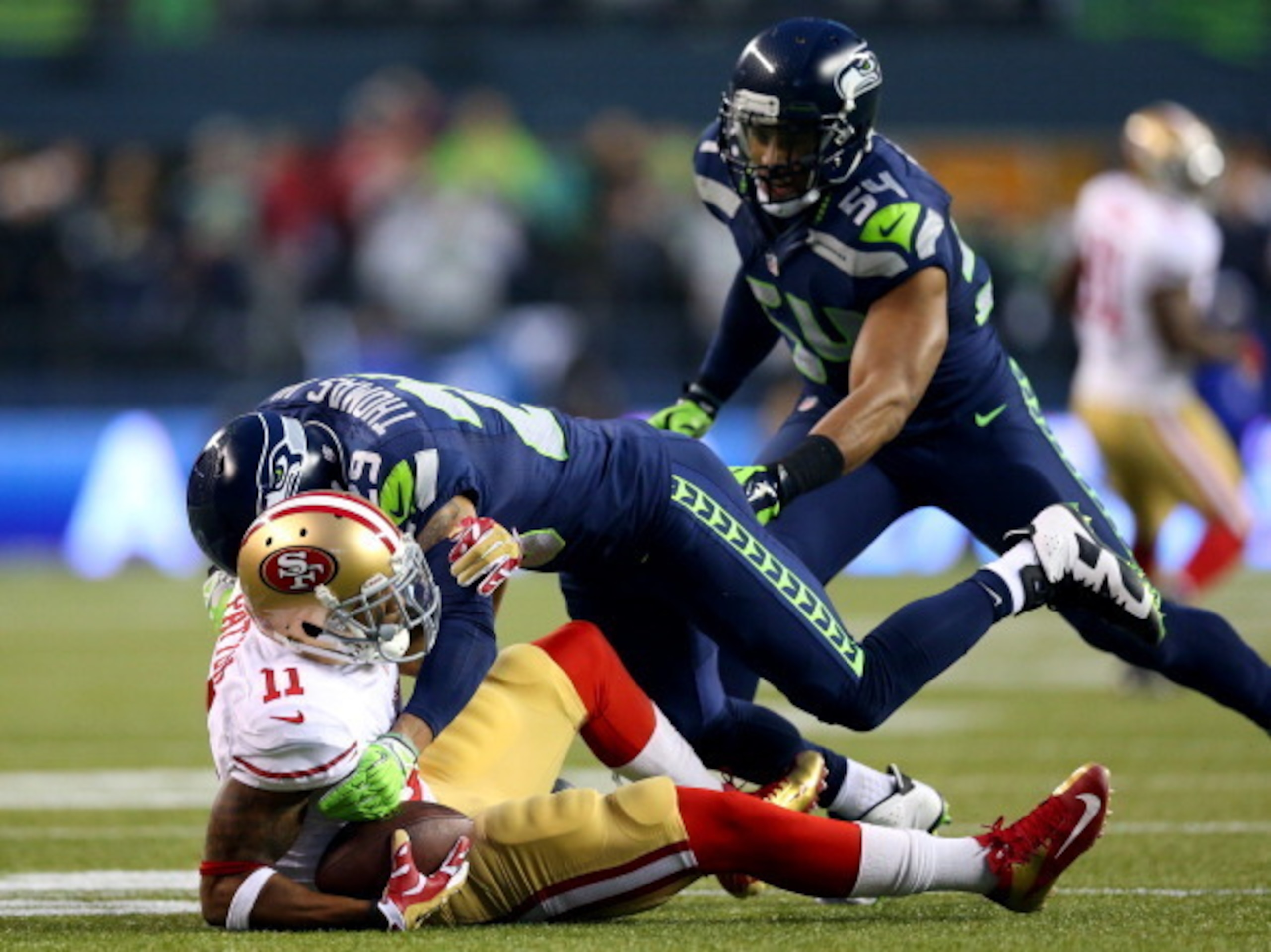
A quick review of Baalke’s draft strategy in 2013 reveals some astute planning and deft execution over the opening four rounds.
Except when it came to the all-important position of wide receiver.
Selecting a perennial Pro Bowler at free safety, future cog at defense end, versatile tight end for a tight-end-friendly system, high-ceiling pass-rusher and red-shirt asset at running back were all fine acquisitions for the 49ers.
Eric Reid, Tank Carradine, Vance McDonald, Corey Lemonier and Marcus Lattimore all brought tremendous value at their respective draft slots. And each one would fulfill a present or future need.
Notwithstanding Reid’s slight regression, Carradine’s slow development, McDonald’s drop issues, Lemonier’s disappearance and Lattimore’s retirement, few naysayers made their voices heard during time of the draft.
But, again, there’s that ole pesky skill position on the offensive side of the ball.
The 49ers waited until the bottom of the fourth round to address wide receiver.
They took Louisiana Tech’s Quinton Patton at No. 128 after the 6’0”, 204-pounder totaled an impressive 183 catches for 2,594 yards and 24 touchdowns in just two collegiate seasons.
Baalke called him a “solid, all-around receiver…[who] runs well enough to get behind defenders,” per CSN Bay Area’s Matt Maiocco.
Longtime draft guru Mel Kiper, Jr. said Patton had a “chance to stick because he’s a smart route-runner and finds ways to create separation,” per ESPN Insider (subscription required).
We’d venture to label Patton as a quality overall pick that late in the draft.
Unfortunately, he also represented the age-old maxim of too little, too late.
The Niners already had two possession receivers in Michael Crabtree and Anquan Boldin. They needed a pro-ready outside threat with No. 1 capabilities.
And when they passed on a first-round talent, especially a local product out of Cal that was available all the way in Round 3, Baalke’s lack of foresight for offensive skill positions really showed.
Keenan Allen, whom NFL.com compared to Jordy Nelson and described as a “smooth outside pass-catcher, [with] the height, speed and ability to win jump balls required of a No. 1 target in the NFL," landed in San Diego at No. 76 overall.
Allen immediately validated that high praise by compiling 1,046 yards and eight touchdowns and nearly winning Offensive Rookie of the Year.
Patton, for his part, rarely saw consistent on-field action. He received all of five targets and finished with three catches for 34 yards—for the season.
That he didn’t entrench himself near the top of the depth chart with Boldin as the 49ers’ only healthy and viable receiver didn’t reflect kindly on No. 11.
Now, Colin Kaepernick’s ongoing development as an NFL quarterback and San Francisco’s general offensive shortcomings surely played a role.
But a wideout of Allen’s caliber would have compensated.
Allen himself did so during his second year at Cal when quarterback and half-brother Zach Maynard struggled in 2012.
NFL.com notes that Allen “still displayed all the same skills and talents he showcased during his uber-productive sophomore season” in spite of Maynard’s regression.
So, long story short, the 49ers missed a bona-fide, can’t-miss receiver in the 2013 draft.
It typified their annual struggle to identify an impact wideout from the college ranks.
Had Allen been given the chance to develop alongside Kaepernick and bolster this Niners offense, we might have finally been able to end this otherwise ceaseless debate.
But he didn’t. And this discussion continues.
.jpg?w=2560 "Titans Giants Football")

2. Ellington TBD, Benjamin/Brown/Bryant All Too Proven
4 of 5
We’ll declare at the outset that it’s far too early to render any sort of complete judgment—whether positive or negative—on Bruce Ellington.
The 49ers’ 106th overall pick in Round 4 of the 2014 draft has played in only 11 games.
Ellington’s five catches for 54 yards and a touchdown from backup quarterback Blaine Gabbert don’t qualify as an adequate sample size. Nor does his 7.7 yard average on 20 punt returns or 25.9 yard average on 21 kickoffs.
Kiper essentially deemed him as a poor man’s version of Brandin Cooks, who came off the board at No. 20 to the New Orleans Saints. And Rob Rang of CBS Sports praised Ellington for his “athleticism and versatility,” not to mention “history of making the game-changing play.”
That said, the lack of any significant production from the fast and shifty 5’9”, 197-pound offensive weapon out of South Carolina is still notable.
Compare Ellington to other available receivers in this year’s draft class—both in the fourth round and otherwise—and one can’t help but be slightly disappointed.
Baalke elected to stay put and select Northern Illinois’ Jimmie Ward at No. 30 overall.
The versatile defensive back was a fine pick, as he could serve as both a backup safety and fulfill the highly critical role of slot cornerback in today’s pass-happy NFL.
Kiper lauded Ward as a defender who will “cover, attack the line of scrimmage and…play fast and fearless.”
ESPN Insider further noted that his “ability to hold up in man coverage and defend the run will be appealing as a slot defender in defensive coordinator Vic Fangio’s heavy Cover 2 scheme.”
Even though Ward’s rookie campaign ended after just eight games, it wasn’t all too pretty while it lasted.
He surrendered four touchdowns, a 72.0 completion percentage and 134.3 passer rating in coverage. Pro Football Focus (subscription required) classified him as the No. 86 corner out of 110 graded in 2014.
Look, Ward still has a bright future. But if Baalke had elected to trade up a couple of slots to No. 28 for Florida State’s Kelvin Benjamin, the 49ers’ struggles on offense wouldn’t have been so pronounced.
The 6’5”, 240-pound rookie wideout has showcased his expansive catch radius and big-play ability as the only dependable receiver for the Carolina Panthers. He has logged three games of over 100 receiving yards, has nine touchdowns in total and is just 48 yards away from eclipsing the 1,000-yard threshold.
Benjamin’s fourth-leading nine drops and No. 89 ranking from PFF are a bit unsightly.
But if placed on the 49ers, the first-year pass-catcher would have provided a legitimate downfield and red-zone weapon for Kaepernick.
We’ll bypass Round 2, as the 49ers’ selection of Carlos Hyde—the future replacement for Frank Gore and arguably best running back in this class—was a phenomenal choice.
Shying away from the likes of Vanderbilt’s Jordan Matthews and Davante Adams out of Fresno St. didn’t reflect poorly on Baalke.
Moving to the third round, it’s rather difficult to critique the Niners’ selections of Marcus Martin (No. 70), Chris Borland (No. 76) or Brandon Thomas (No. 100).
Martin started six games in place of the injured Daniel Kilgore and is a “future starting center” on this team. Borland, meanwhile, leads San Francisco with 104 tackles despite playing in only 11 games.
That he followed in the footsteps of perennial All-Pro Patrick Willis in seamless fashion and earned PFF’s No. 3 ranking at inside linebacker as a rookie is simply outstanding.
As for Thomas, using a compensatory pick on a red-shirt asset along the offensive line was another savvy move by Baalke. The Clemson product may very well become Mike Iupati’s replacement if the Pro Bowl left guard leaves in free agency.
All that said, the 49ers still missed out on a truly dynamic receiver.
Pittsburgh State’s John Brown went to Arizona as the No. 91 overall pick. The blazing 5’10” wideout ran a second-leading 4.34-40 at the combine and has amassed 41 catches for 591 yards and five touchdowns this year.
Two of those scores served as total game-breakers against the 49ers in Week 3. Brown made easy work out of Ward and Reid, and helped push the Cardinals to a 23-14 win.
The small-statured Brown was Arizona’s version of Ellington—and an entirely more productive one at that.
Lastly, Clemson’s Martavis Bryant was available when the 49ers picked in Round 4.
The raw, but 6’4” and high-ceiling wideout racked up 19.7 yards per catch and seven touchdowns in his final NCAA season. He has one-upped the former mark with a 20.2 yard average and has matched the latter total in just eight games as an NFL rookie.
Ben Roethlisberger and the Pittsburgh Steelers are surely pleased with his contributions.
Bryant’s league-best 94-yard reception and general red-zone effectiveness would have proven invaluable to a 49ers offense that just can’t score—whether inside the opponent’s 20-yard line or otherwise.
Ellington can still evolve into something special. And Dontae Johnson, whom the Niners tabbed with their second fourth-round pick, was a lifesaver for a heavily depleted secondary.
Yet, passing on Bryant—as well as Benjamin and Brown who came before him—ultimately proved costly for the Red and Gold in 2014.
1. 1st Round, 2nd Round or Both—Draft a Wide Receiver
5 of 5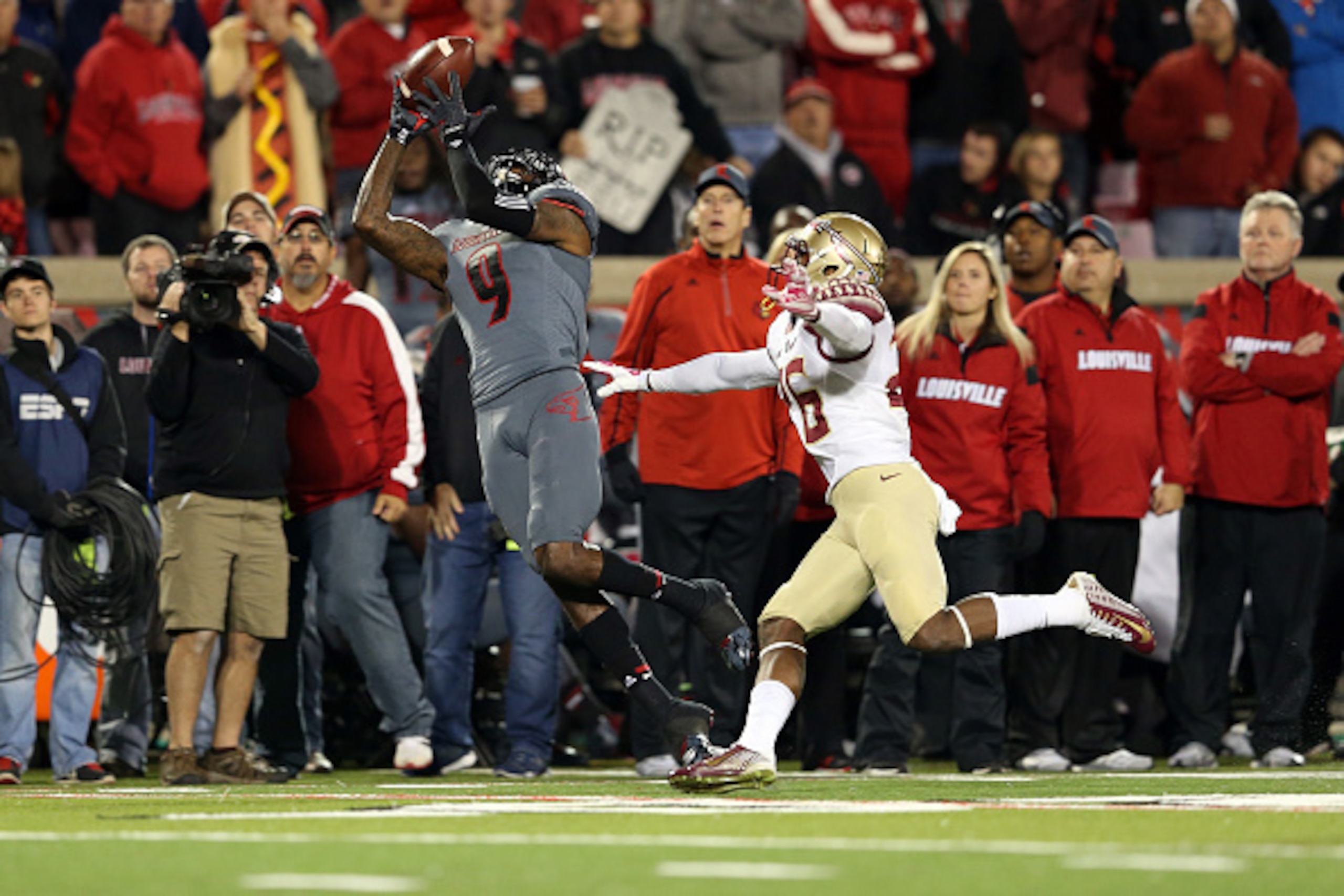
The 49ers must address several areas in this upcoming draft.
With Ray McDonald’s release, Vernon Davis’ unhappiness and Gore, Crabtree, Iupati, Dan Skuta, Chris Culliver, Perrish Cox and Michael Wilhoite, among others, becoming free agents in 2015, an assortment of holes will potentially open up for this crestfallen team.
Whichever head coach will replace the all-but-departed Jim Harbaugh must work diligently with Baalke on executing an effective draft strategy.
And this time around, like all the others that came before, it must include an impact wide receiver.
San Francisco lacks any semblance of speed and size among its pass-catching arsenal.
Boldin, Crabtree, Patton and Stevie Johnson are all 6’2” or shorter possession targets that are without an over-the-top skill set downfield. With Davis’ physical ailments and psychological difficulties, impending free agent Brandon Lloyd is the only real deep threat.
And for a guy who was out of football last year and essentially picked up off the scrap heap, that’s just not a good look for an NFL offense.
Kaepernick certainly must advance his development by leaps and bounds as a pocket passer who can read defenses and go through his progressions. He must do so while also not being hamstrung by the new coaching staff from utilizing his all-world abilities as a runner.
But in order for Kap to actually realize that quarterback evolution, he’ll need reinforced weaponry in the passing game.
Baalke, for his part, must do everything in his managerial power to make that happen.
It can arrive in the form of size and high-pointing ability with Louisville’s DeVante Parker or Arizona’s Jaelen Strong in the first round. Both receivers possess 6’3”-plus size and at least one double-digit touchdown campaign to their names.
It can also come in a speed-based package with Stanford’s Ty Montgomery or Sammie Coates of Auburn early in Round 2.
The former owns 24 career touchdowns from scrimmage through the air, on the ground and via special teams returns. The latter rocks a career average of 22.2 yards per catch against the NCAA’s premier defenses in the SEC.
Of course, these are just four possible options for the 49ers. Several more will emerge as the scouting process develops in earnest following the end of the college football season.
One way or another, Baalke must infuse receiving talent into a passing attack that ranked 28th in yards and 26th in touchdowns, not to mention a scoring offense that occupied a spot in the league’s bottom five.
But will he actually defy history and identify a true, game-changing wideout in the early rounds?
Counteracting historical tendencies or not, Baalke can’t afford not to—he must honor his quarterback, his team and the loyal 49ers fanbase with an NFL-ready receiver.
The Niners, after all, still remain just a few pieces away from returning to Super Bowl contention.
Eliminating a perpetual deficiency will go a long way toward achieving that end.
We just won’t go holding our breath until it happens.
All team and player statistics courtesy of Pro-Football-Reference, Sports-Reference, and ESPN unless otherwise noted. Advanced metrics provided by Pro Football Focus (subscription required).
Joe Levitt is a Featured Columnist for Bleacher Report, waxing academic, colloquial and statistical eloquence on the San Francisco 49ers. Follow him on Twitter @jlevitt16



.jpg?w=2560 "Saquon Out for Game")
