Derek Fisher Calling out New York Knicks Shows He's Growing as Coach
At first glance, it wasn’t much different from scores of other stretches authored by the New York Knicks this season: Bad offense, worse defense and the kind of body language better suited for a wake than an NBA basketball game.
Only this time, Derek Fisher wasn’t having any of it. Not the effort, not the end result.
With five minutes, 20 seconds left in the first quarter and his team down 26-11 to the visiting Dallas Mavericks, a disgusted Fisher used the occasion of a Dirk Nowitzki free throw trip to sub out all five of his starters—Carmelo Anthony included.
TOP NEWS
.jpg?w=2560 "NBA Gambling Charges")
Malik Beasley Negotiating Plea Deal (AP)

Yaxel: Luka Not MJ 🗣️
Knicks, Spurs On Wrong Side of History
The casual fan might see the 107-87 final score and wonder when rock bottom might finally come for their wayward Knicks.
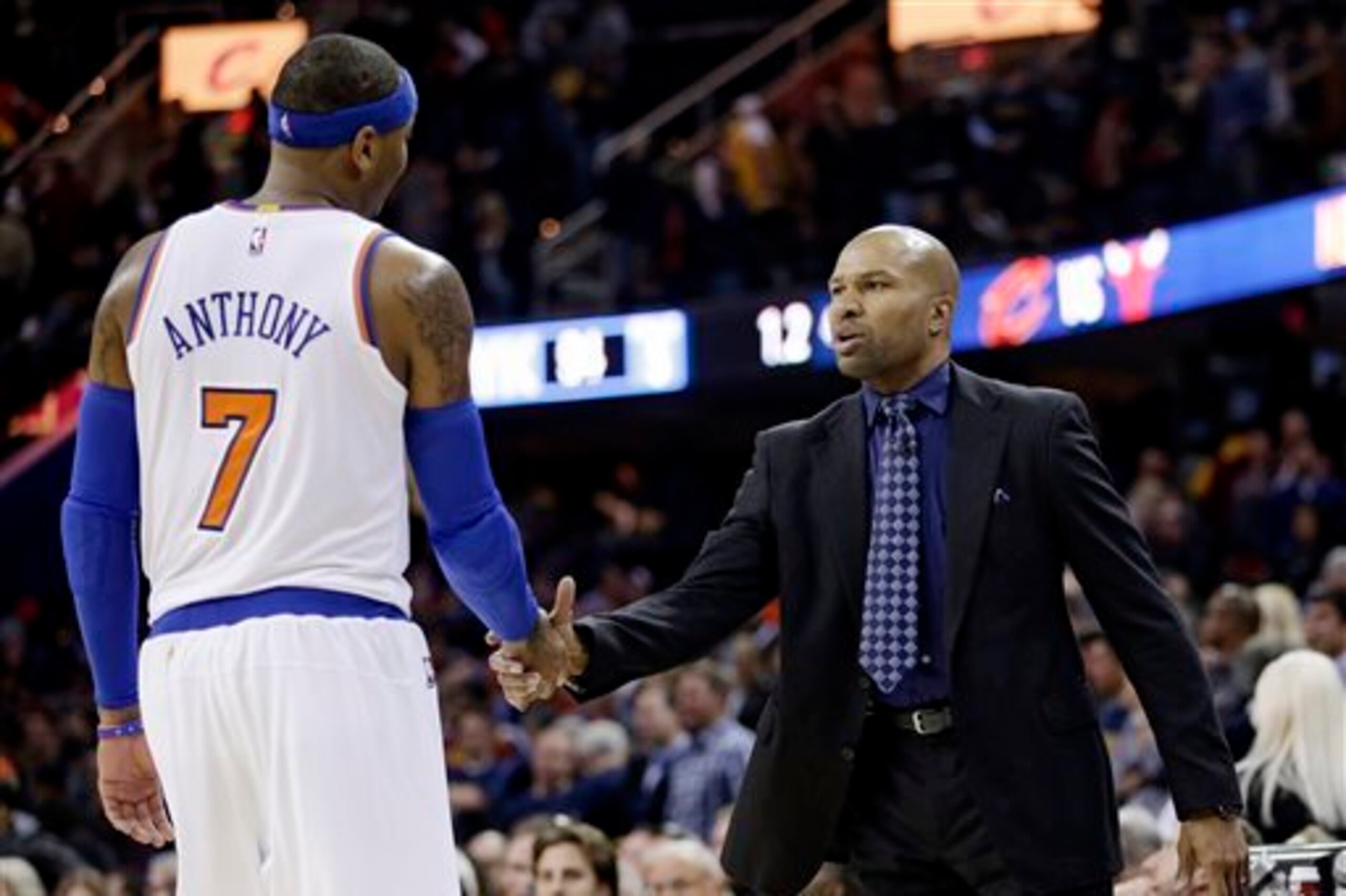
But in a season steeped in silver linings, perhaps it’s worth another: With that one move, Derek Fisher showed he's beginning to find his coaching voice.
“I thought the start was not the right way to start a professional basketball game,” Fisher told CBS New York after the game. “It’s not the way to start a game. The guys who started the game were a disappointment to their teammates. Guys who start a game have to be physically and mentally ready to play. We got five guys in there who played hard.”
The five players in question being Anthony, Amar’e Stoudemire, Quincy Acy, Jose Calderon and Tim Hardaway Jr.—one of myriad starting lineups wielded by Fisher thus far. Which is the kind of searching and scouring that tends to happen when a team drops 80 percent of its games.
To call the Knicks a work in progress would be selling the matter short. If anything, the 2014-15 campaign was supposed to be the bridge between regimes old and new, with president Phil Jackson playing the part of chief engineer.

A bridge is one thing. These Knicks are slabs of sheet metal laid between crumbling cement cylinders over the Snake River in springtime.
In what’s become the league’s most tumultuous trial by fire, Fisher is the one tasked with marshaling his men to the opposite shore—what four or five Jackson wants to survive, anyway.
Indeed, next year’s Knicks promise to look far, far different from this season’s triangle prototypes. Stoudemire and Andrea Bargnani will (likely) be gone; ditto Samuel Dalembert, Jason Smith and Shane Larkin.
In their stead will step...for Fisher and Jackson, The $64,000 Question. They’ll have their eyes on the usual free-agent suspects, of course—Marc Gasol, Greg Monroe, perhaps even the seemingly triangle-unfriendly Rajon Rondo.

A more cautious coach would've waited a while before playing the statement hand. After all, press too hard on the principles, and you may risk alienating the very players you’re looking to attract.
Instead, where many might’ve seethed in silence, Fisher took a heavy-handed stance. Minor, perhaps, in the grand scheme of things, but significant, nonetheless.
Not that yanking a unit en masse makes Fisher some John Wooden incarnate. The tactic is as old as basketball discipline itself. Rather, what Fisher’s first-quarter coup amounted to was an overt reminder that while the conference might be a cause deferred, the culture most certainly will not.
Back in November, CBS Sports’ Zach Harper underscored just how important it would be for Jackson and Fisher to seize the moral-authoritative high ground as quickly as possible:
"But the old habits of letting the players run the asylum on the court, like we saw under Mike Woodson, are being killed off by Fisher as an extension of Jackson. While the success of a couple early season victories may end up being fleeting this season, Fisher's goal of finding out who belongs here long-term and who is just passing through is in progress.
Part of that process is seeing which players are willing to ride it out in the Triangle Offense. Whether they're running the Triangle or implementing elements of the Triangle to get them in the proper mindset for the future game plan of this Knicks era, avoiding breaking off into isolation ball will go a long way with Fisher, Jackson, and making sure you belong on this team.
"
Fisher is still very much learning the ropes strategy-wise, New York’s late-game execution woes being Exhibit A in the case. Gregg Popovich wasn’t built in a season, of course, and anyway there are few first-time coaches who stand to enjoy more leeway than Jackson’s handpicked protege.
But Fisher is an expert in the triangle offense, the system most believe will remain at the fore of New York’s hoped-for renaissance, come hardwood hell or high water.

The minutia, the situational strategies, the managing of minutes: all of that will come with time. Indeed, if fellow former-cagers-turned-coaches like Jason Kidd, Jeff Hornacek and Steve Kerr have proven anything, it’s that being imbedded as a player at the game’s highest level is worth just as much as a PhD from Clipboard College.
Besides, having one of basketball’s brightest minds manning the spiritual circuits is sure to yield at least some osmotic dividends.
To stretch the economic analogy a bit further, think of NBA coaches trading in a pair of currencies: statements and strategy. A coach like Popovich who traffics in both—and each with boundless reserves in backup—tends to be the richer for it.
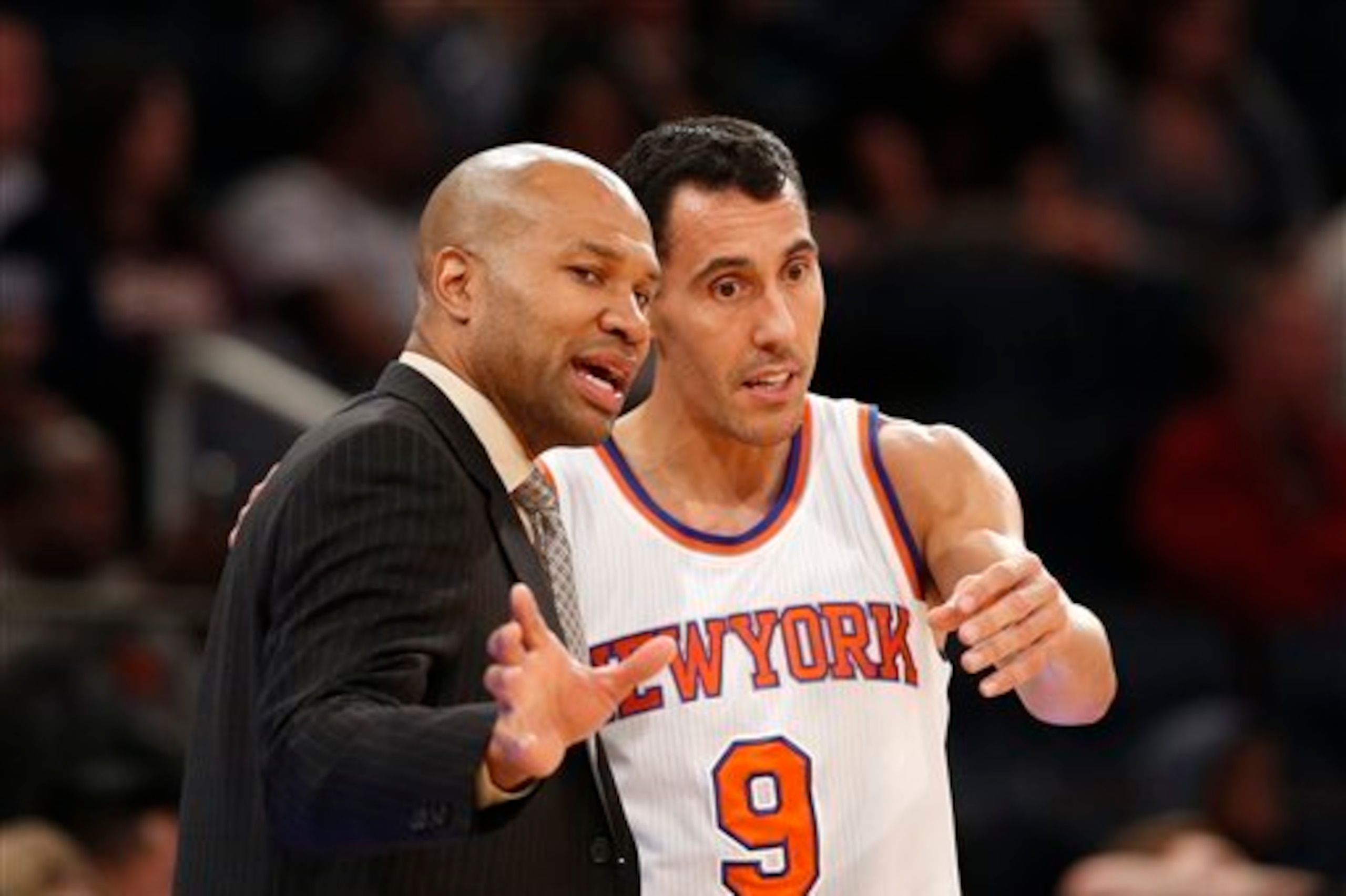
Fisher, meanwhile, has yet to grow his strategic currency. That is, his is an economy run almost entirely on statements: beratings and benchings, reinforcing roles and pats on the back. He still has the triangle, sure, but even that amounts to a loan or largesse from another land entirely.
Fisher yanking his starting five in the early minutes of a December blowout will not be remembered as the moment when the Knicks finally flipped the switch. It will not turn their season around. The way things are going, it'll likely be forgotten in a week, replaced by some new calamity or crisis of confidence.
What that moment showed, though, was a man grown more comfortable in his coaching skin, the leap from peer to superior being far more delicate than we’re willing to admit.
In short, an insistence on something seldom seen from these Knicks: accountability. Less for the sake of salvaging a win than for the sheer sake of itself.



.jpg?w=2560 "Aikman Blasts Cowboys WR 🫣")
.jpg?w=2560 "Jonathan Taylor Landing Spots")