Eagles Secondary a Scheme Disaster as Star WRs Dominate Philadelphia
It’s no secret Philadelphia Eagles cornerbacks Cary Williams and Bradley Fletcher are not very good. Fletcher in particular has been getting beaten like a drum by some of the NFL’s top wide receivers in recent weeks.
Last month at the Green Bay Packers, Jordy Nelson hauled in four receptions for 109 yards and a touchdown, and just this past Sunday night versus the Dallas Cowboys, Dez Bryant recorded six catches for 114 yards and three scores—both working primarily against Fletcher.
There’s been some question as to at what point the Eagles should bench Fletcher, but who would replace him? It seems to me the coaching staff needs to do a better job of scheming around their corners’ weaknesses.
.jpg?w=2560 "Titans Giants Football")

Defensive coordinator Bill Davis walked reporters through the decision to stick by Fletcher on Tuesday despite such glaring struggles, explaining during his weekly press conference via PhiladelphiaEagles.com that switching Brandon Boykin or Nolan Carroll out of their current roles would have a trickle-down effect in the secondary.
“There's only four corners that are active at the time, and [Carroll] has a big role in the dime and [Boykin's] got one in the nickel. Once you start making those changes, it trickles out there.”
That, and there isn’t a lot of reason to feel confident either Boykin or Carroll would fare much better than Fletcher. Boykin was tied for second in the NFL with six interceptions in 2013, but he has not been nearly as effective this season, while Carroll was available to sign for the low price of a two-year, $3.65 million contract as a free agent in March, according to Spotrac.
The reality is no matter who’s lining up outside the numbers, when going against surefire Pro Bowlers such as Jordy and Dez, this group of corners needs some help.

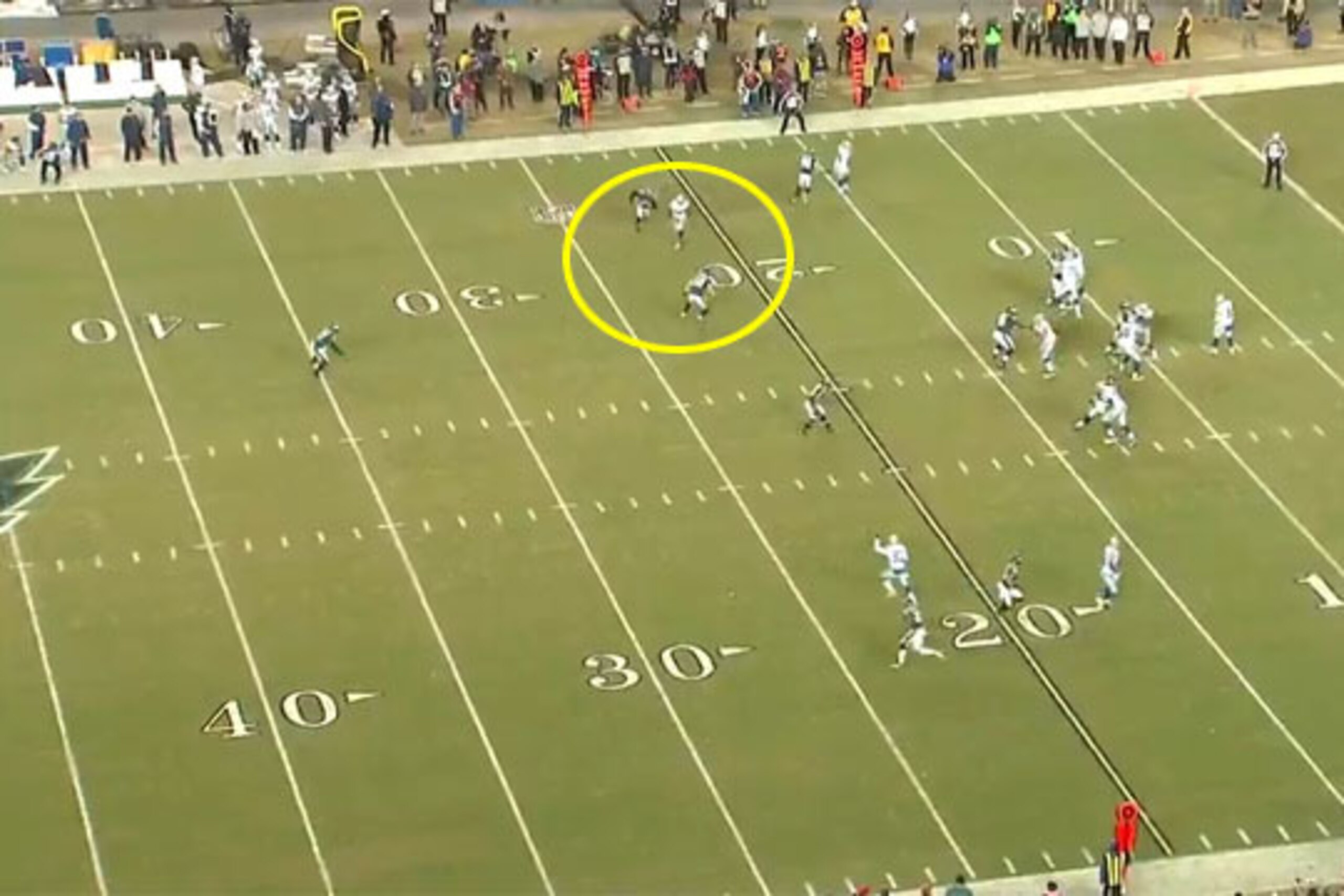
Early on against Dallas, Fletcher was getting the help he needed in the form of double coverage. Here, Bryant runs the type of shallow slant he could probably work all night, but linebacker Casey Matthews drops into the passing lane, forcing the quarterback to look elsewhere.


Also in the first quarter, the Eagles have Fletcher and safety Malcolm Jenkins in straight bracket coverage on a deep post route.
Bryant didn’t catch a pass until the Cowboys ran their 22nd play from scrimmage—a perfectly thrown four-yard fade in the end zone that Richard Sherman would’ve had trouble defending. The problem, as Davis contended, was Dallas was chipping away at the Eagles with tight end Jason Witten instead. As transcribed by the team’s web site:
"On almost half the snaps I had doubles on 88 -- doubles on Dez [WR Dez Bryant] – and early on you saw Witten [TE Jason Witten] getting the balls. In calling the game, you're constantly moving between five‑man pressure, or six‑man pressure, or doubling on a receiver. You can't do it all on the same call, so you have to choose where you're giving help: whether it's help to the rush and the pressure on the quarterback, or whether it's help on doubling a receiver or bracketing a receiver.
I’ll give [QB Tony] Romo credit, when [Bryant] was doubled and we had the two on him, he went to his other receivers. When we had the help or the pressure somewhere else, he went out to Dez.
"
It’s true, you can’t necessarily double one player on every single play, but the schemes still didn’t make a ton of sense.
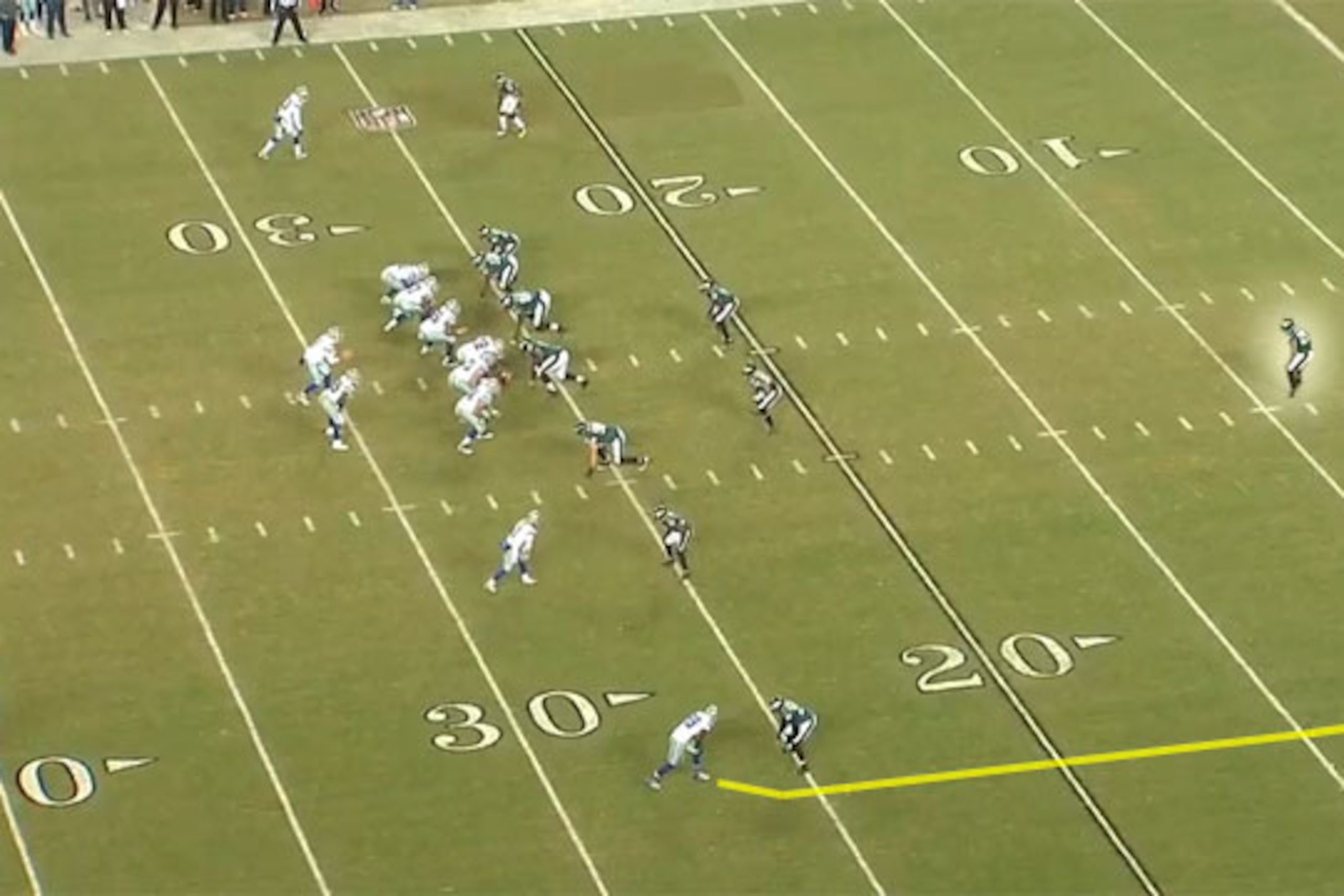
Nate Allen is playing a single-high safety on Bryant’s second touchdown—a 26-yarder over the top of Fletcher in the second quarter. His positioning doesn’t make a ton of sense, though. If anything, Allen should at least be shaded to Bryant’s side.
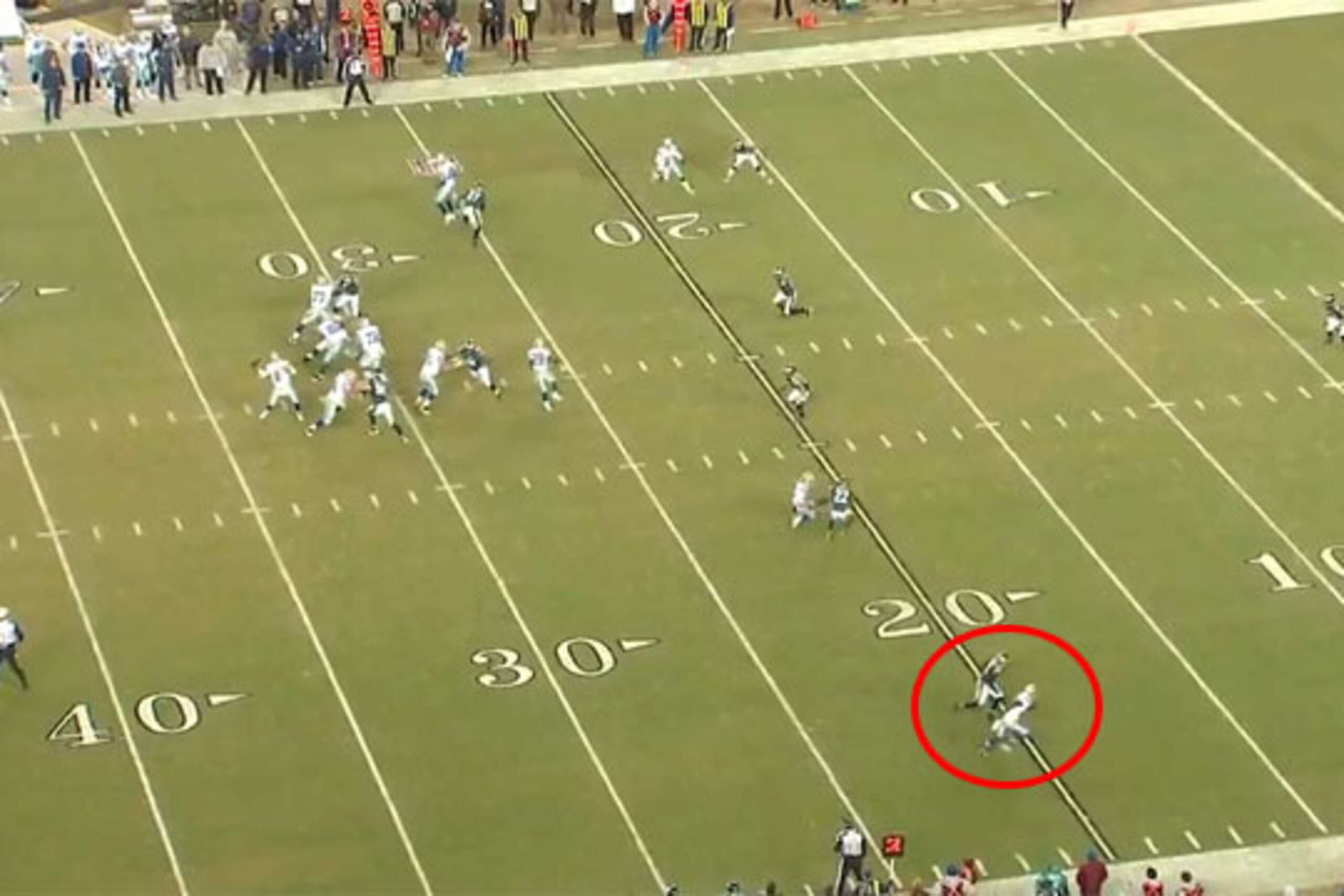
But Allen is just sitting in the middle of the field as the quarterback goes to throw the ball to Bryant, the only consistent downfield threat the Cowboys have. There’s no way the safety can run over to the receiver while there’s still a chance to do something about the pass.
Even if Witten is eating the defense alive underneath, do you want death by 1,000 cuts and hope to force a mistake, or do you surrender chunks of the field at a time?
It’s a no-brainer. Witten may be a nine-time Pro Bowler, but he’s 32 years old now, and en route to his least productive season since he was a rookie. Yes, Witten finished this game with seven receptions for 69 yards, including several key third-down conversions, but you have to trust the defense is going to get a stop eventually, whether it’s because somebody makes a play on the ball, the quarterback is sacked or he simply misfires eventually.
Instead, the Eagles left Fletcher on an island against a 26-year-old, 6’2”, 220-pound All-Pro, and an obvious result occurred.

The worst part is, they did the exact same thing again in the fourth quarter. This play is a carbon copy of the second touchdown, only from 25 yards out rather than 26, the only difference being Philadelphia is sending pressure on the quarterback this time.
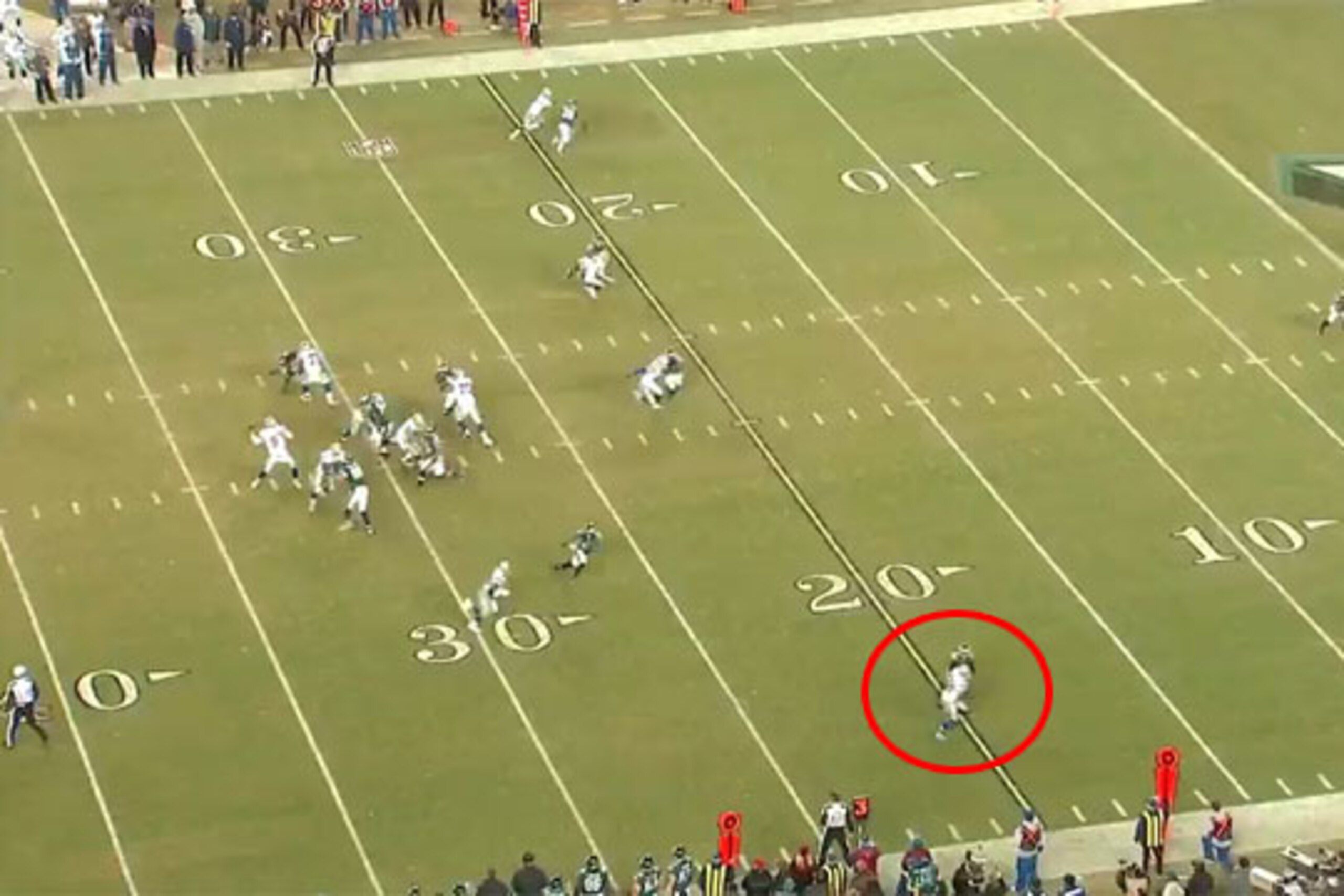
This time, Allen is at least breaking on the ball as its being delivered, but it’s still too late. He’s in an impossible position to reach the sideline and break up the pass. Six points—and game over for the Eagles.
Listen, Fletcher and Williams were always meant to be short-term solutions at cornerback. When Chip Kelly arrived as head coach in 2013, the secondary was in shambles. You can’t replace four starting defensive backs overnight and expect to field an elite pass defense. Fletcher and Williams, unpopular as they may be, are just Band-Aids.
No doubt, the Eagles understand this, too, but then they should know better than to leave Fletcher one-on-one against one of the best wide receivers in the game, without even safety help over the top. Simply put, Davis didn’t put his secondary in a position to win the battle against an elite weapon on Sunday.