

Brandon Moss Trade Brings Indians a Proven Power Bat at Small Price
Last week, the Cleveland Indians were said to have considerable interest in acquiring Brandon Moss from the Oakland Athletics, and it was widely believed the two teams would strike a deal before the weekend.
It took a few extra days, but the Indians and A's reached an agreement on the first day of the winter meetings, with the Tribe receiving Moss in exchange for second base prospect Joe Wendle, as reported by Yahoo Sports' Jeff Passan:
TOP NEWS
Aaron Boone Calls Out Yankees Catcher 🗣️
Brewers Admin Trolls Padres 🤭
Brewers Open Roof for Game 2
Moss, 31, emerged as one of the sport's better power hitters over the last three seasons, as his 76 home runs from 2012-14 ranks 18th in the major leagues among all qualified hitters, per FanGraphs. He also batted .254/.340/.504 during that time frame, and his 135 weighted runs created plus (wRC+) ranked 20th overall across both leagues, ahead of players like Hanley Ramirez, Matt Kemp and David Wright.
"The addition of Brandon Moss provides our offense with a proven run-producer and power bat for the heart of our order," Cleveland general manager Chris Antonetti said in a release, via Jordan Bastian of MLB.com.
"Brandon not only has great power, but his defensive versatility and personality also complement the team culture [manager Terry Francona] has helped establish over the past two years."
However, Moss' overall production has been trending in the wrong direction over the last three seasons, and he's coming off a brutal second half of the 2014 season in which he batted .173 with four home runs in 216 plate appearances.
| Year | G | PA | HR | BB% | K% | ISO | HR/FB% | AVG | OPS | wRC+ |
| 2012 | 84 | 296 | 21 | 8.8% | 30.4% | .306 | 25.9% | .291 | .954 | 160 |
| 2013 | 145 | 505 | 30 | 9.9% | 27.7% | .267 | 18.8% | .256 | .859 | 137 |
| 2014 | 147 | 580 | 25 | 11.6% | 26.4% | .204 | 14.8% | .234 | .772 | 121 |
Yet it's not as though the Indians are giving up a ton for the 2014 All-Star.
Moss is projected to earn $7.1 million this year through arbitration, according to MLB Trade Rumors' Matt Swartz, and he has one more year of arbitration remaining before hitting free agency following the 2016 season.
Meanwhile, concerns about Moss' health, specifically an ailing hip that required offseason surgery on Oct. 21, likely lowered his trade value, which is why the Indians were forced to part with only Wendle.
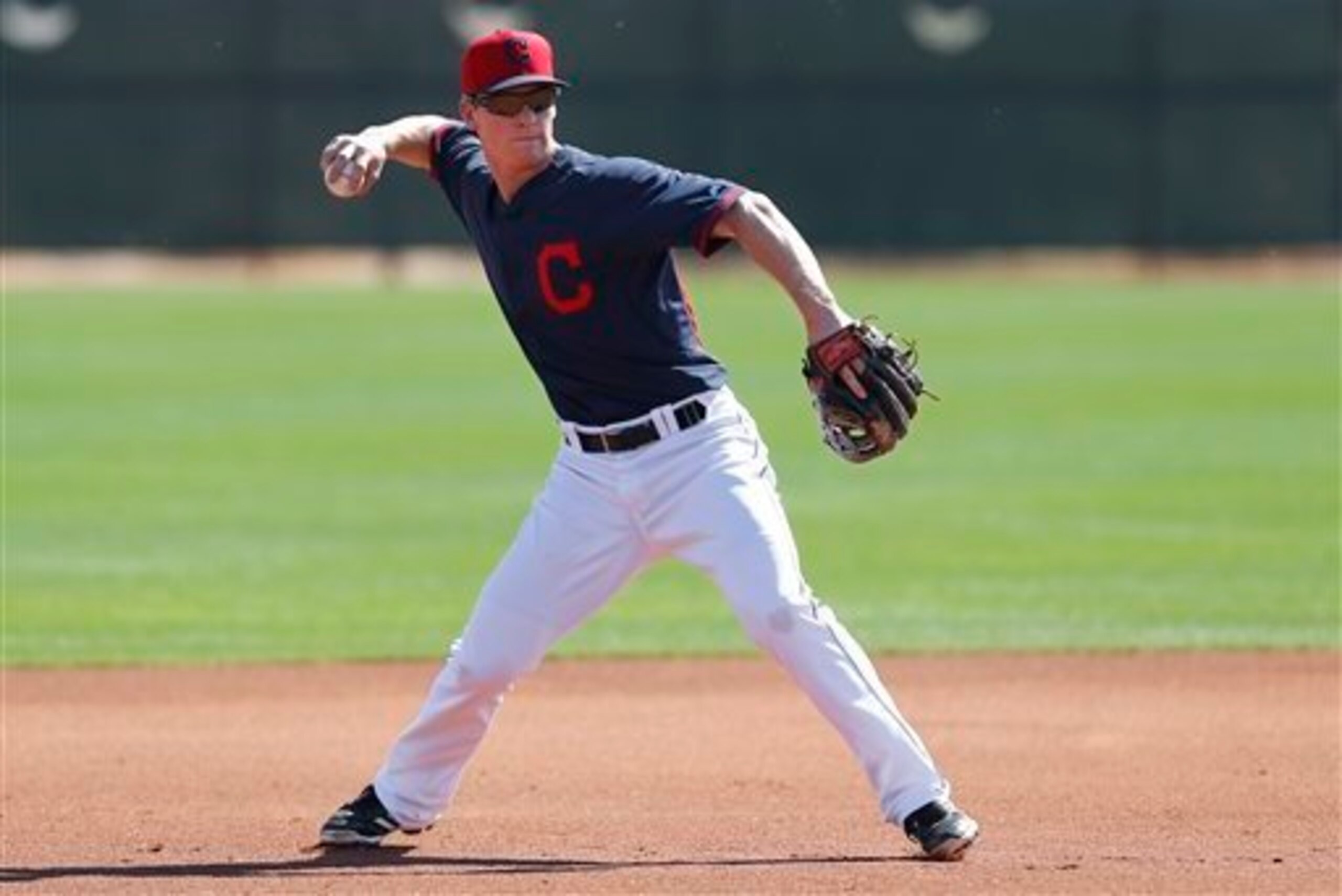
Wendle—a sixth-round pick in the 2012 draft out of a Division II program—enjoyed a strong full-season debut in 2013, batting .295/.372/.513 with 32 doubles and 16 home runs in 107 games for High-A Carolina.
The 24-year-old's power and on-base skills were challenged this past season at Double-A Akron, as his batting line dipped to .253/.311/.414 with only eight home runs in 370 plate appearances.
In Wendle's defense, however, he did suffer a broken hamate bone in June, which limited him to only 93 total games on the year. He recovered from the injury and returned to Akron for the final week-plus of the minor league regular season, but he batted just .205 with two extra-base hits in 44 plate appearances.
Wendle's value will always be tied to his bat, as he flashes the upside of a .270 hitter with 10-12 home runs at maturity. However, the fact that his path to playing time will be blocked by Jason Kipnis for years to come made him expendable for the Indians.
The Indians' acquisition of Moss means they'll now have an overlap across several positions, and Bastian believes another trade could be brewing.
Paul Hoynes of the Northeast Ohio Media Group agrees, writing that the addition of Moss means "Antonetti might have to make an additional trade to make sure Moss would get regular playing time."
Moss is unlikely to see much, if any, time over Carlos Santana at first base, so he'll likely to be limited to right field or designated hitter. However, the presence of David Murphy, Ryan Raburn and Nick Swisher in the outfield—Murphy a left-handed hitter, Swisher a switch-hitter—means Moss' best fit might be as the team's designated hitter.
If that were ultimately the case, it would result in a reduced role for Swisher, who should be considered a first baseman/designated hitter exclusively at this juncture in his career.
But regardless of how those playing time concerns get resolved, the Indians made a savvy low-risk gamble in trading for Moss, especially when considering the market price for players who possesses legitimate 20-plus home run power.
.jpg?w=2560 "OBJ Calls Out Giants After Release")




.jpg?w=2560 "Saquon Out for Game")