
Utah Jazz Power Rankings: Gauging Full Roster After First 6 Weeks
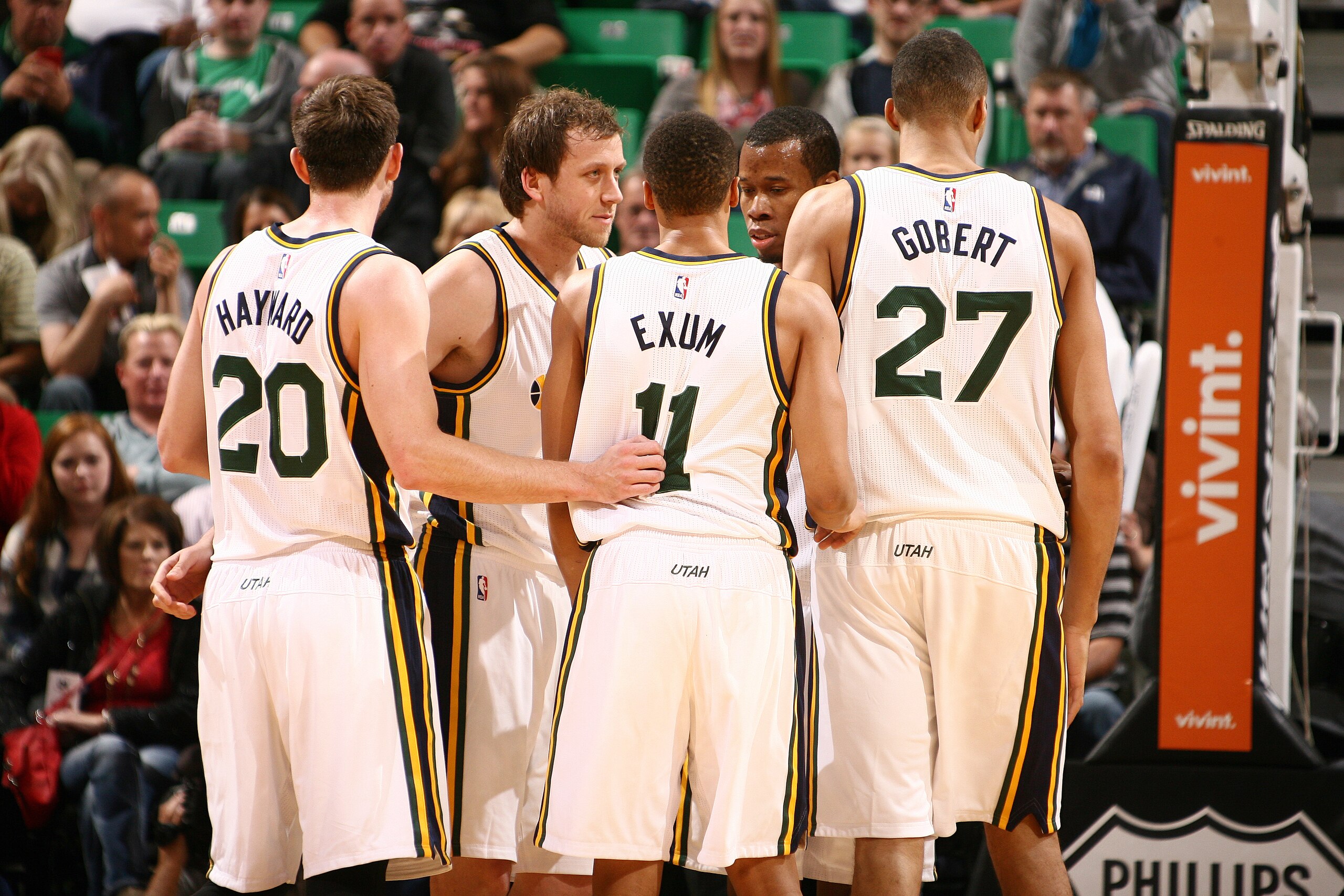
Despite having a roster packed with intriguing, young talent, the second year of the Utah Jazz's complete overhaul has gotten off to a very rocky start.
The team is 5-15 and in the midst of an eight-game losing streak, but there are still plenty of encouraging signs coming from the individual players.
Gordon Hayward has emerged as a legitimate No. 1 or 2 scorer, Derrick Favors is a serious pick-and-roll threat and Dante Exum has shown flashes of the potential that led to the Jazz using the No. 5 pick on him.
| Gordon Hayward | 35.2 | .460 | .380 | 5.4 | 3.8 | 18.9 |
| Derrick Favors | 31.5 | .572 | 8.7 | 1.6 | 16.3 | |
| Enes Kanter | 25.3 | .527 | .300 | 6.7 | 0.7 | 13.7 |
| Alec Burks | 33.7 | .404 | .350 | 4.5 | 3.0 | 13.3 |
| Trey Burke | 32.4 | .370 | .316 | 2.2 | 6.1 | 11.4 |
| Trevor Booker | 20.7 | .513 | .333 | 4.4 | 1.1 | 7.5 |
| Rodney Hood | 16.8 | .296 | .294 | 2.7 | 0.9 | 5.3 |
| Rudy Gobert | 15.9 | .587 | .000 | 5.1 | 0.5 | 5.0 |
| Dante Exum | 18.0 | .365 | .298 | 1.5 | 2.1 | 4.5 |
| Joe Ingles | 18.3 | .387 | .279 | 1.5 | 1.8 | 3.2 |
| Ian Clark | 6.1 | .429 | .500 | 0.4 | 0.3 | 2.0 |
| Steve Novak | 4.5 | .471 | .500 | 0.8 | 0.2 | 2.0 |
| Jeremy Evans | 2.6 | .500 | 0.4 | 0.2 | 0.4 |
With one exception, players here will be ranked based on how they're playing now, not on potential or previous accomplishment. Jeremy Evans is mostly evaluated on last season, as there isn't enough of a sample size from him in 2014-15.
There isn't any one stat determining the rankings, but individual offensive and defensive ratings had particular attention paid to them.
NBA.com defines offensive rating as, "...the number of points per 100 possessions that the team scores while that individual player is on the court." Defensive rating is, "...the number of points per 100 possessions that the team allows while that individual player is on the court."
11-13
1 of 11
13: Steve Novak
Considering he's only played 54 minutes, it's not really fair to judge, but three-point specialist Steve Novak has Utah's worst net rating at minus-21.1. He is 8-of-16 from three-point range, though.
12: Ian Clark
Slight, 6'3" shooting guard Ian Clark has appeared in just eight games this season, lacking the size and athleticism to compete with NBA wings.
11: Joe Ingles
Joe Ingles has surprised a lot of people by earning a rotation spot, playing 18.3 minutes per game. The problem is what he's producing in those minutes, with a team-worst PER of 7.3 and a net rating of minus-7.8.
10: Jeremy Evans
2 of 11
Evans has played the fewest minutes of anyone on the Jazz this season, but not because he's the 13th-best player. The frontcourt is just so loaded it's almost impossible to find him any playing time.
It's a shame because last season was a breakout for him, one that was statistically on par with what Trevor Booker did for the Washington Wizards.
| Trevor Booker | 21.6 | .551 | .618 | 5.3 | 0.6 | 6.8 |
| Jeremy Evans | 18.3 | .527 | .680 | 4.7 | 0.7 | 6.1 |
| Trevor Booker | 2013-14 | 15.0 | .563 | 14.1 | 2.4 |
| Jeremy Evans | 2013-14 | 16.2 | .549 | 14.8 | 3.0 |
But Utah's needs are in the backcourt and on the wings, which is why Ingles and Clark have played so much more.
9: Rodney Hood
3 of 11
Exum's fellow rookie, Rodney Hood, had a terrible time finding his rhythm to start to the season. He's shooting 29.6 percent from the field and 29.4 percent from three-point range, but has looked better since returning from some time off with plantar fasciitis.
In his last two games, both starts, Hood is averaging 12.5 points and posting a stellar shooting slash of 50/50/85.7. He's looked confident with his shot and fully recovered from the foot issue.
The experience he gains while filling in for the recovering Alec Burks will help the Jazz in the long run, giving them a skilled scorer who can give the second unit the punch it needs.



8: Dante Exum
4 of 11
When he was drafted in June, Exum was just 18 years old. So it should come as no surprise he's struggled to adjust to NBA basketball.
According to Broderick Turner of The Sydney Morning Herald, Exum talked about the challenge, saying, "It's a huge adjustment, but I keep reminding myself to keep trying to learn and adjust each game."
What he really needs to learn is what he's capable of. As he makes the leap from Australian high school basketball to the game's highest level, it's clear he's worried about making a mistake.
That's good and bad.
On one hand, he's averaging just two turnovers per 36 minutes, but on the other, he's passing up opportunities he may not even realize are there.
Exum's shown the ability to blow by his defender several times, but often cuts off his drive early, possibly fearing a turnover or contact at the rim. It's led to his settling for a lot of threes, which is not a strength. He's taking more than half his attempts from out there and shooting just 29.8 percent.
The potential there is clear, though. He's shown his athleticism in small bursts, and his vision and playmaking in the pick-and-roll is way ahead of schedule.
7: Trey Burke
5 of 11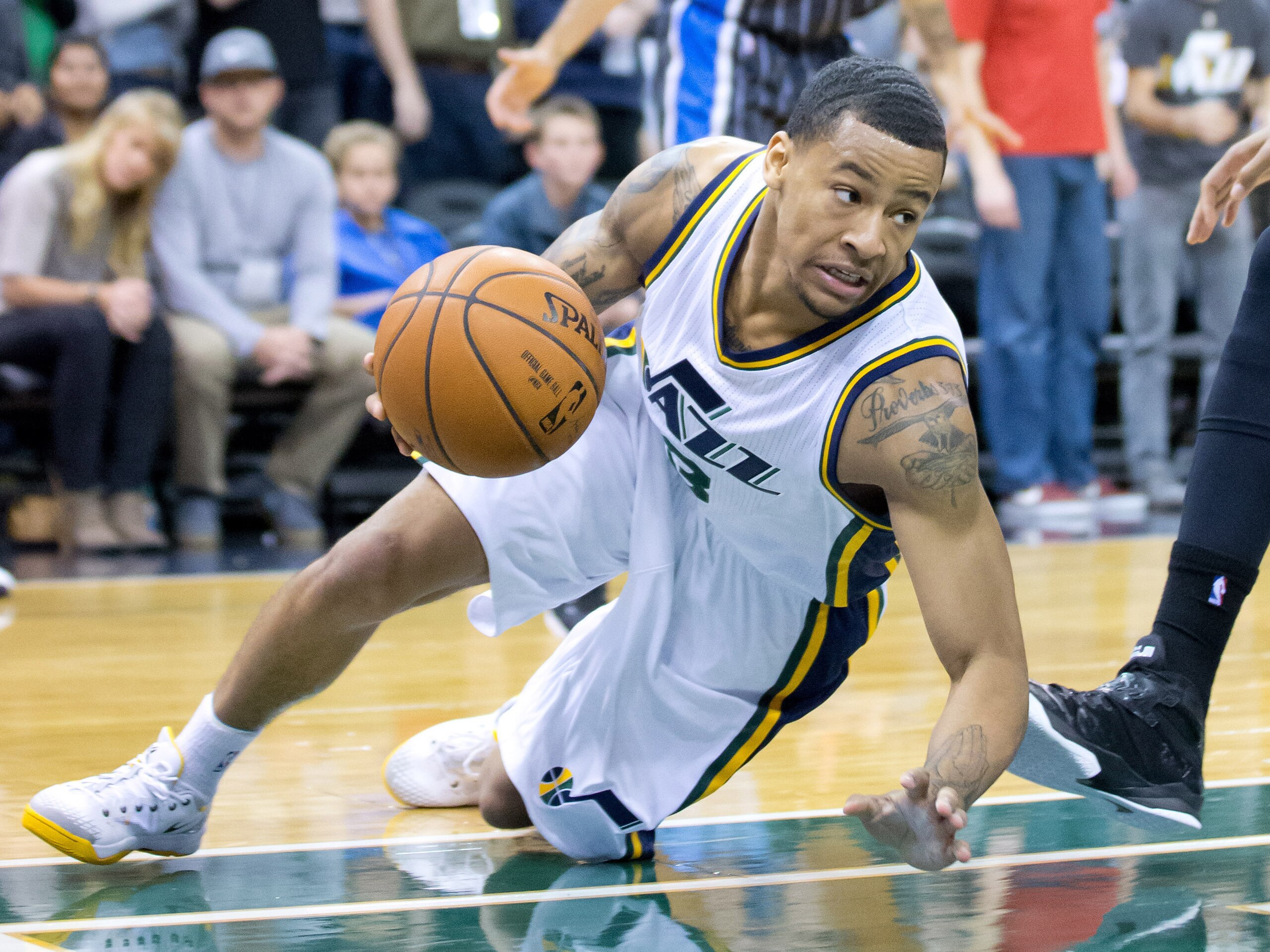
Joining Enes Kanter on the blame train this season (more on that later) is Trey Burke, the second-year point guard whose defense is being targeted on an almost nightly basis.
Several teams have simply identified whoever Burke's guarding, given him the ball and let him work. More often than not, the strategy pays off.
Burke's defensive rating of 115.2 is tied with Kanter's for second-worst on the team. Only Ian Clark, who's played just 49 minutes, is worse. And perhaps even more telling, Utah's defensive rating is 100.2 when Burke is on the bench. The 15-point difference is the worst on the team, by far.
On the other end, Burke got off to a nightmarish start, shooting 36.5 percent from the field and 28.9 percent from three-point range in October and November. Those numbers have started to level off a bit, but he's still at just 37 and 31.6, respectively.
The problem on both ends is Burke is "five-feet nothin', a hundred and nothin'" in a league that's trending taller at point guard. He has a hard time getting off good shots against the bigger guys and can't deny them anything defensively.
It's not all bad, though. Burke is closer to being a pass-first point guard this season, as he's averaging 11.8 field goal attempts, compared to 10.4 assist opportunities.
When he focuses on being a playmaker instead of a scorer, he looks a lot more like an NBA player. A good case study for him would be Andre Miller, who's made a long, excellent career for himself by being both crafty and extremely unselfish.
6: Trevor Booker
6 of 11
On a young team still adapting to the size and strength of the NBA, Booker brings a solid dose of energy and toughness.
At 7.5 points and 4.4 boards per game, he's sixth on the team in both scoring and rebounding. And he's doing that in just 20.7 minutes per game.
Keeping Booker on the floor is difficult, though. He's listed at 6'8", which seems generous when you see him trying to defend players three or four inches taller.
To an extent, he makes up for the lack of size with energy and athleticism, but the disadvantage in certain matchups is insurmountable.
5: Alec Burks
7 of 11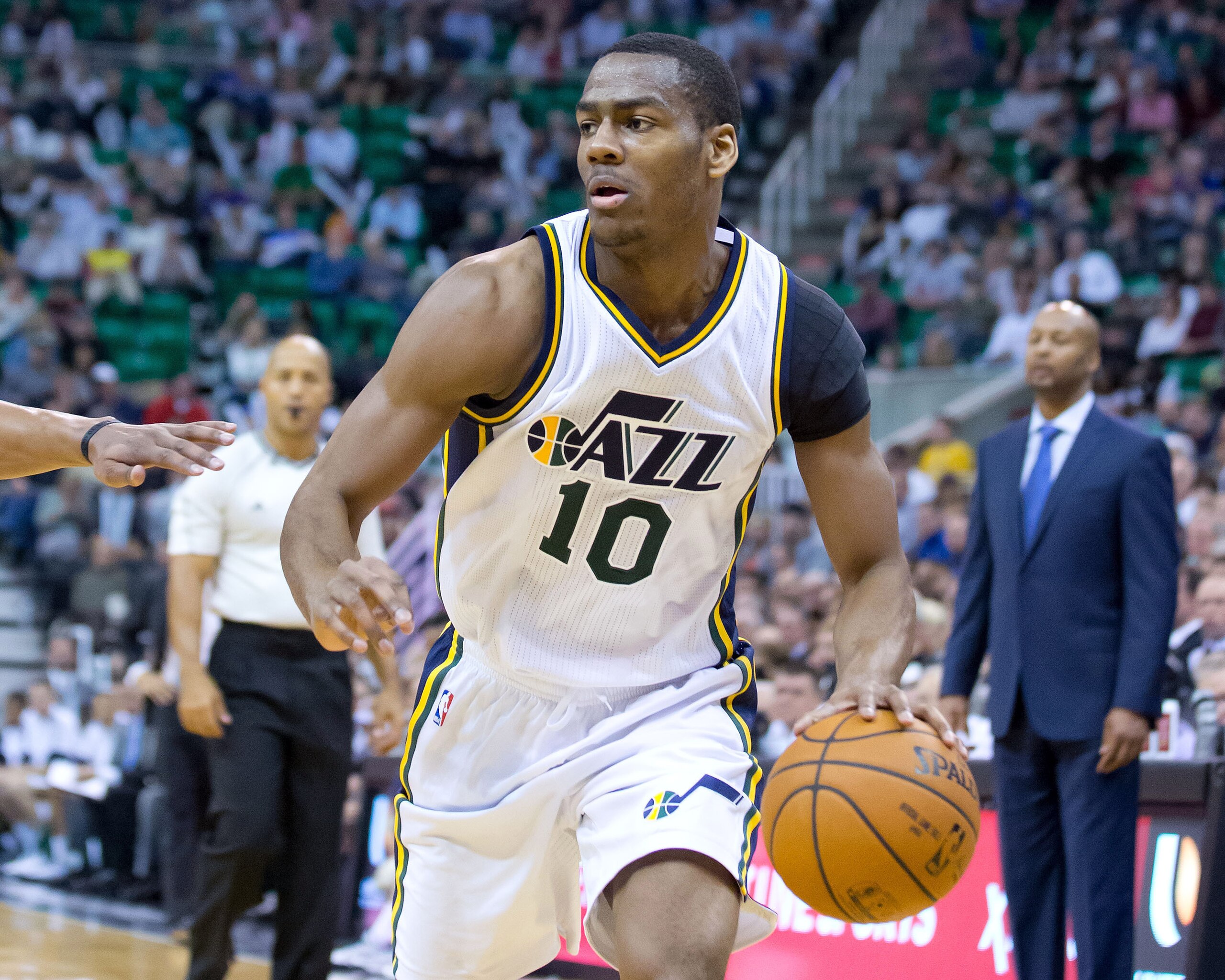
After a signing a four-year/$42 million extension, Burks has gotten off to a slow start, shooting a career-worst 40.4 percent from the field. There are a few possible explanations.
First, Burks has been dealing with a shoulder issue this season, something we recently learned won't require immediate surgery. According to Adrian Wojnarowski of Yahoo Sports:
"After meeting with several specialists, Utah Jazz guard Alec Burks will not require immediate surgery on his left shoulder and could return this month, a league source told Yahoo Sports.
Burks has been dealing with an inflamed left shoulder since the preseason, but the consensus of four specialists is that an aggressive rehabilitation program can restore the strength in his shoulder for him to return to the lineup in December.
"
The shoulder injury could be directly related to another issue contributing to Burks' struggles. The typically fearless slasher hasn't been as willing to get in the paint this season, or as Salt City Hoops' Ben Dowsett puts it:
"He’s been far too willing to settle for low-efficiency jumpers instead of pushing the envelope. Where Burks in previous years was often rounding corners and flying into the teeth of the defense to cause rotations and help collapses, he’s more frequently than ever stopping short and jacking impatient shots.
"
Or perhaps, this is just a typical start to an NBA season for Burks. In 2012-13, he shot 4-of-22 from the field in November. Last season, he was at 37.3 percent for that month. And now in 2014-15, he was at 38.5. In each of the last two seasons, he turned things around.
If his shoulder is right, there's no reason to think Burks won't do that again. Once he adapts to the added defensive pressure that comes with starting, he should become an important pressure reliever for Hayward.
4: Enes Kanter
8 of 11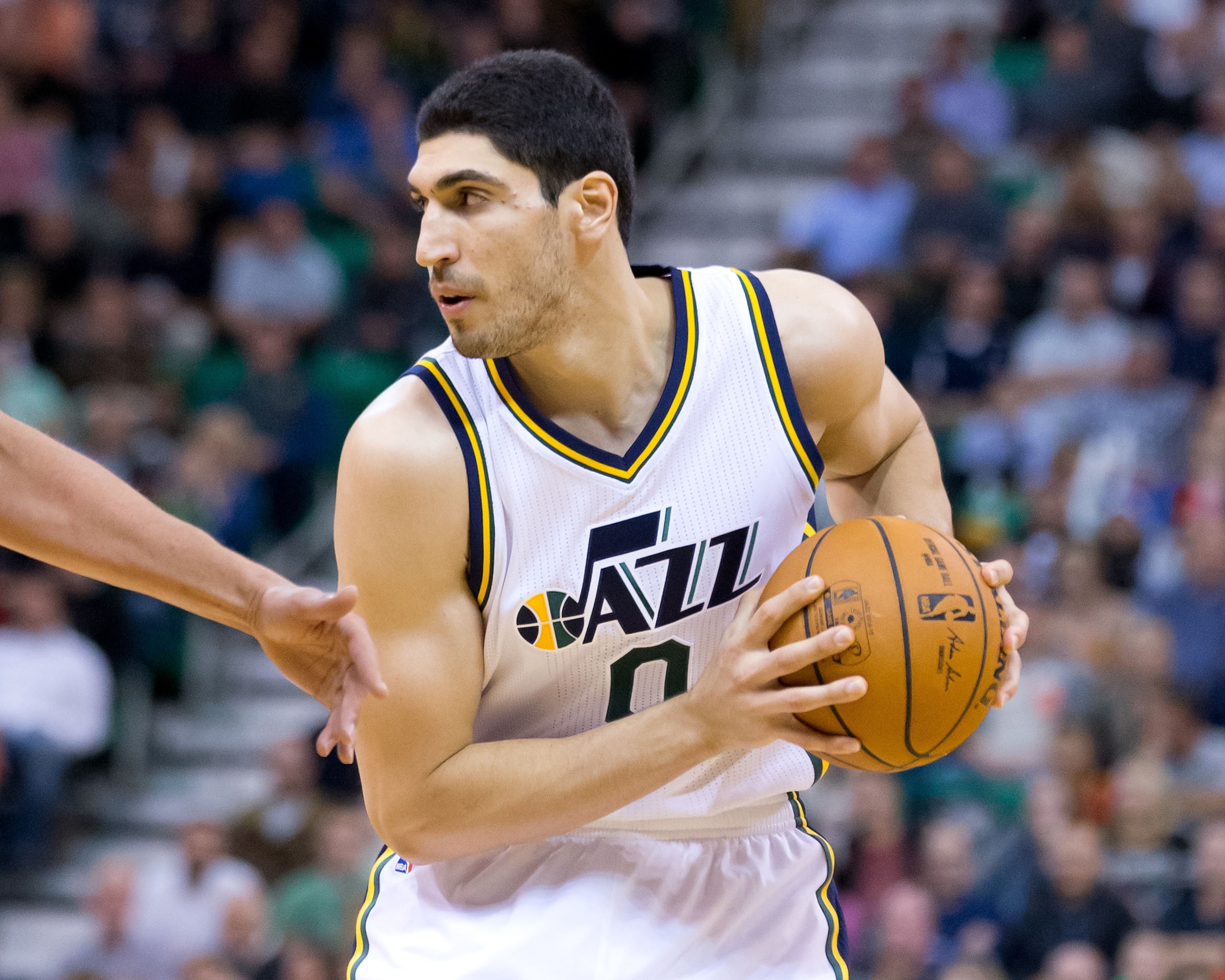
For years, Kanter's played the role of scapegoat for the Jazz, having most of the team's defensive woes pinned on him and his heavy feet.
While no one would argue he's a good defender, or even a decent one, it seems equally implausible to say one man is responsible for a systematic problem in a team sport.
ESPN's Jeff Van Gundy summed up the general criticism of Kanter (per SLCDunk's moni), "When I watch Utah, obviously, Kanter is less than mobile. He's a good offensive player; defensively, more challenged. So, they have some issues defensively."
Van Gundy is spot on. Anyone can see Kanter's not terribly mobile defensively, making it difficult to understand why he's been tasked with guarding mobile power forwards all season.
Favors is better equipped physically to handle guys like Dirk Nowitzki, Blake Griffin, Kenneth Faried and the rest of the league's 4s, and yet Kanter is the one futilely chasing them around the floor.
If you swap the two, you sacrifice rim protection, or hope Favors suddenly develops into the kind of weakside shot-blocker Utah had in the early 2000s with Andrei Kirilenko.
The more logical move might be to play Favors and Rudy Gobert together more. Have Kanter play with the second unit, a group that desperately needs his scoring.
Around the rim, he has great touch, footwork and patience. And his jump shot is reliable out to the three-point line.
| 2014-15 | .527 | 8.5 | .550 | .650 | .424 | .524 | .419 | .300 |
This doesn't necessarily mean Kanter shouldn't start anymore, but when your net rating is 25th in the league, it might be time to tinker with the rotation.
3: Rudy Gobert
9 of 11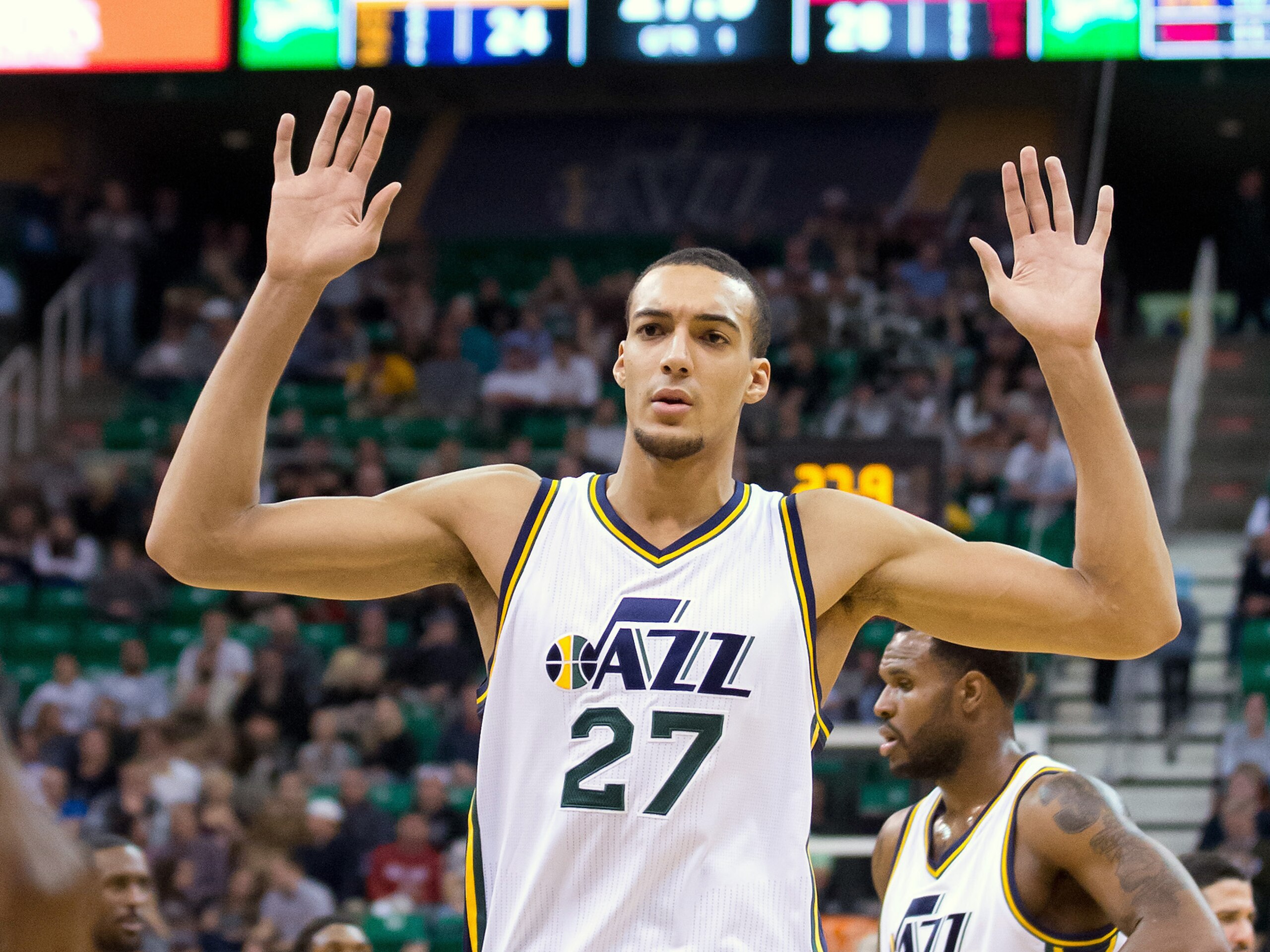
That brings me to what is probably the biggest surprise of this slideshow. Gobert's been the third-best player on the Jazz for two reasons: He's the only one who isn't clearly culpable on the defensive end, and he's no longer a liability on the other.
When Gobert is on the floor, opponents are scoring 102.1 points per 100 possessions. Only Jeremy Evans, who's played a total of 13 minutes all season, has a better defensive rating. Favors is at 113.7. Kanter is at 115.2
Opposing playmakers instantly rethink taking the ball in the paint when they see Gobert standing there, and for good reason. You can't write about the Stifle Tower (coined by The Deseret News' Jody Genessy) without mentioning his 7'9" wingspan that's helped him land at No. 2 in the league in block percentage (among qualified players).
| 1 | JaVale McGee | 1.1 | 7.7 |
| 2 | Rudy Gobert | 1.5 | 7.2 |
| 3 | John Henson | 1.1 | 7.2 |
| 4 | Brandan Wright | 1.6 | 7.1 |
| 5 | Roy Hibbert | 2.6 | 7.0 |
The conventional wisdom for why Gobert doesn't play more than 15.9 minutes per game is he's raw on offense, which is still mostly true even though he's learned how to manage it.
He knows his strengths and limits himself to little more than dunks and putbacks, which is why he leads the Jazz in field-goal percentage at 58.7.
Perhaps more importantly, he's dramatically improved as a free-throw shooter. His form looks great—knees bent, elbow in, follow through—and he's shooting with confidence. The jump from 49.2 to 65 percent has Gobert less than one percent behind Favors.
With his developing offense, and already stellar D, Snyder has to figure out how to play Gobert with Favors. The model the Dallas Mavericks use with Tyson Chandler and Brandan Wright should be the goal.
Grantland's Zach Lowe examined Dallas' offense, paying particular attention to the damage done by Chandler and Wright simply rolling hard to the rim. Gobert can similarly draw defenders as a finisher, leaving Favors with a little extra space on his rapidly developing midrange shot.
Now, before you excoriate me in the comments or on Twitter, I'm not saying Gobert and Favors are anywhere near the same universe as Chandler or Wright and Nowitzki. Simply put, there's a model in place, and it's at least worth experimenting with.
2: Derrick Favors
10 of 11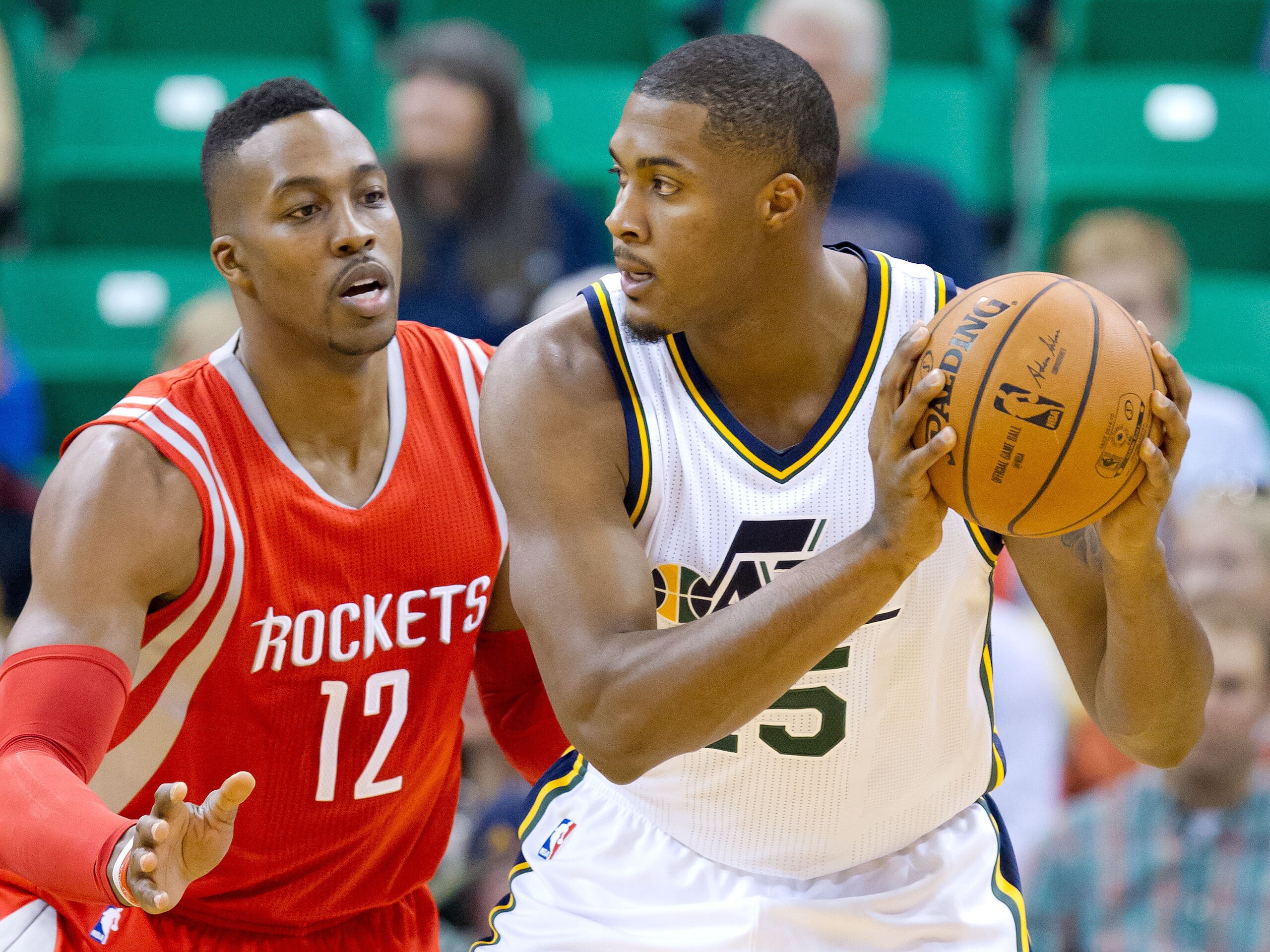
Hayward may make the biggest impact on the Jazz, but he's not the team's most efficient player. To this point, that's been Derrick Favors.
| Derrick Favors | 16.3 | .572 | 23.4 |
| Gordon Hayward | 18.9 | .460 | 20.0 |
| Rudy Gobert | 5.0 | .587 | 19.7 |
| Enes Kanter | 13.7 | .527 | 19.1 |
| Trevor Booker | 7.5 | .513 | 14.1 |
| Steve Novak | 2.0 | .471 | 13.4 |
| Trey Burke | 11.4 | .370 | 12.7 |
| Alec Burks | 13.3 | .404 | 12.0 |
| Jeremy Evans | 0.4 | .500 | 11.9 |
| Ian Clark | 2.0 | .429 | 11.4 |
| Rodney Hood | 5.3 | .296 | 8.9 |
| Dante Exum | 4.5 | .365 | 7.4 |
| Joe Ingles | 3.2 | .387 | 7.3 |
The big man has shown fantastic touch around the rim and in the midrange, providing the offense with a great option in short pick-and-rolls.
Hayward or Trey Burke can run a basic pick-and-roll with Favors and give him the ball early, around the elbow. From there, Favors has proved capable of hitting the jumper or making one quick move and getting to the rim, where his touch has been nothing less than feathery.
Considering how strong Favors has been offensively, it's hard to figure out how he isn't more involved. He's averaging a career-high 12.1 field-goal attempts, but there are stretches when he seems to disappear from the offense, and not of his own volition.
If Utah put him in more of those short pick-and-rolls, it would collapse defenses and force Favors to improve his ability to kick the ball out when he can't get the bucket himself.
It's on the other end where Favors needs the most work, which is interesting considering the book on him coming out of Georgia Tech. Before the big man was drafted, DraftExpress' Jonathan Givony said, "Defensively, Favors has all the tools needed to become an elite player down the road,"
SB Nation's Mike Prada was also high on his defensive potential, saying he possessed, "A freakish athleticism, making him capable of guarding pretty much any kind of player," and, "An ability to be a lock-down defender on the pick and roll."
Four years later, you can still say those same things about him. He has the physical tools to be great defensively, but they're not always used at their full potential.
Part of the problem may be the fact Favors has been slated at center this season, defending bulky, bruising centers while Enes Kanter tries to keep up with more nimble power forwards.
A simple swap of those two, or even better, playing Favors with Gobert, could go a long way toward healing some of the ills plaguing this team's defense.
1: Gordon Hayward
11 of 11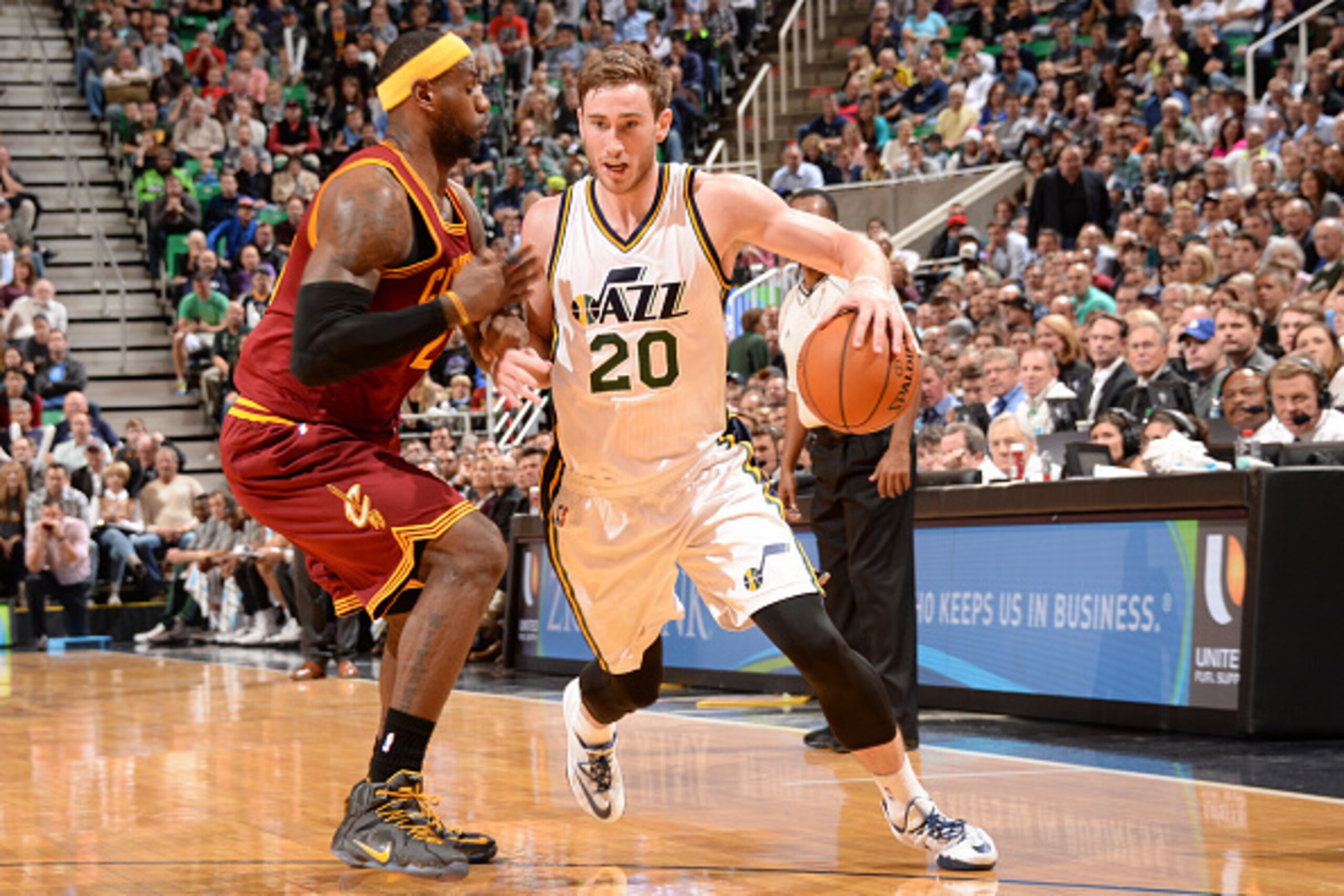
As a team, Utah is struggling to find its way in Quin Snyder's system, but the individual play of Hayward has been stellar. In fact, it looks like he'll prove he's worth every bit of the four-year/$63 million deal he signed this summer.
He's scoring both inside and out and doing so as the focal point of every opposing defense Utah has faced. Even against the opponents' best wing defenders, he's getting to the rim and free-throw line when a lane presents itself and hitting open threes when they're there.
Through a quarter of the season, he's averaging 18.9 points, 5.4 rebounds and 3.8 assists, while shooting 38 percent from three-point range. Only three other players are at those levels.
| Gordon Hayward | 5.4 | 3.8 | 18.9 | .380 |
| Damian Lillard | 5.1 | 6.5 | 19.9 | .407 |
| Blake Griffin | 7.5 | 4.0 | 22.9 | .500 |
| Stephen Curry | 5.1 | 7.7 | 23.2 | .408 |
His impact on the team is best illustrated by the difference in the offensive rating when he's off the court. While Hayward's playing, the Jazz are scoring 107.9 points per 100 possessions. When he's on the bench, they're at 94.6.
Unless otherwise noted, all stats and salary figures are courtesy of NBA.com and Basketball-Reference.com and are current as of Dec. 7, 2014.
Andy Bailey covers the NBA for Bleacher Report. Follow him @AndrewDBailey.
.jpg?w=2560 "OBJ Calls Out Giants After Release")



.jpg?w=2560 "Saquon Out for Game")