
College Football's All-2014 Season Team: Top Performers at Every Position
Championship Week featured a light slate of 14 games, so in lieu of the usual All-Week team, let's instead look back on the 2014 college football season in total.
Who were each position's top performers…for the year?
The theory of this article is similar to, but not exactly like, an All-America team. The main difference, though, has to do with form more than matter. Instead of building out a traditional All-America team, I will build this in the same style as my All-Week teams throughout the season: with the best two players/groups at 11 different positions.
Like the All-Week teams, the All-Season team weighed numerical merit against strength of competition. It was not as simple as sorting for each position's statistical leaders, copying and pasting.
Who those statistics came against was vital.
First-Team Quarterback
1 of 26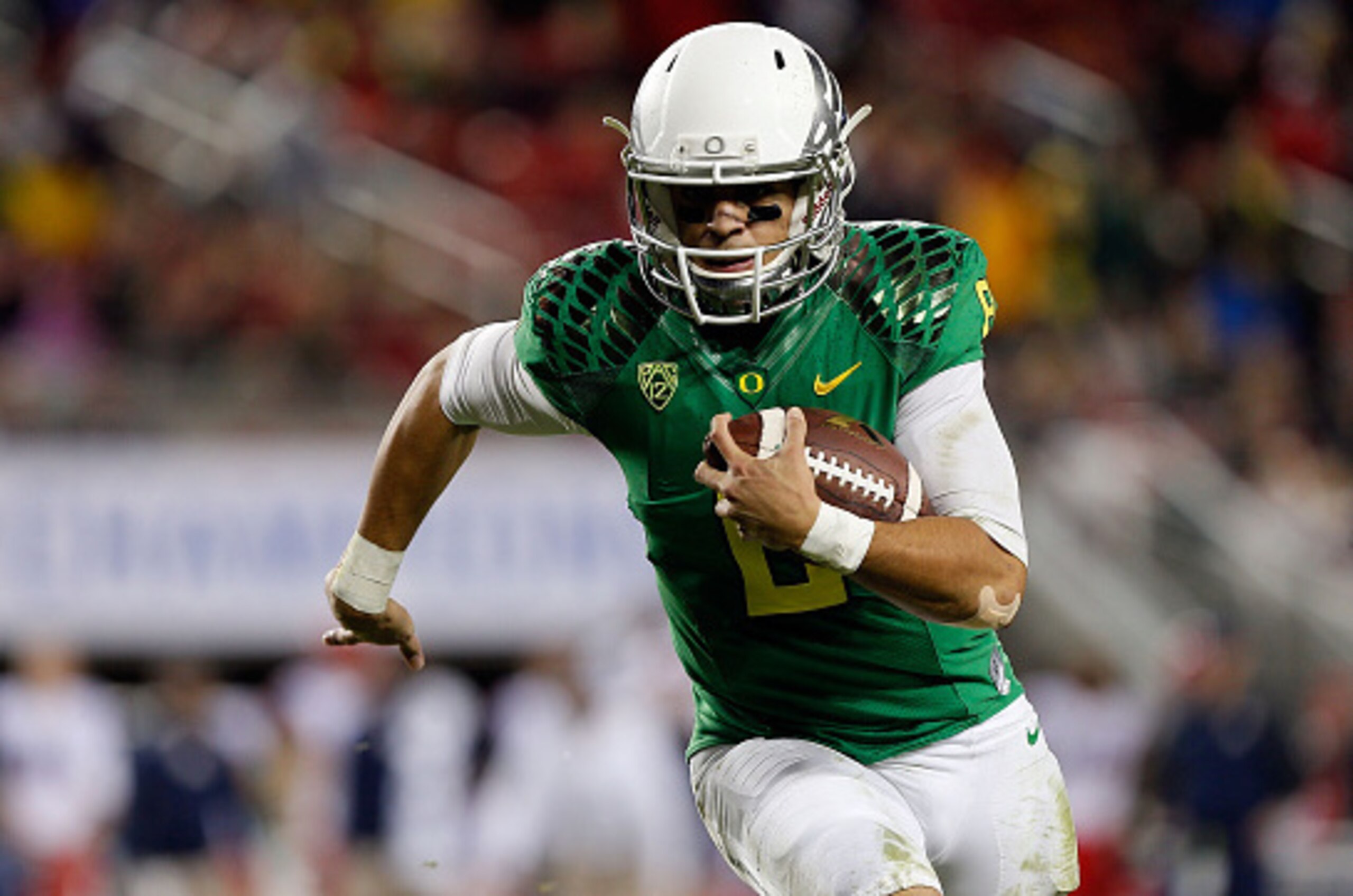
Marcus Mariota, Oregon
254-of-372, 3,783 yards, 38 TD, 2 INT; 117 carries, 669 yards, 14 TD
Marcus Mariota clinched the Heisman Trophy by scoring five touchdowns in the Pac-12 Championship Game against Arizona.
For the season, he has 38 passing touchdowns, 14 rushing touchdowns and two interceptions. That is more than 25 touchdowns per turnover. He scores as much as any player in the country but never takes unnecessary, drive-crippling chances. And he makes it look so easy that we're prone to take his greatness for granted.
But we shouldn't. This is one of the best college football players of the modern era, and he just enjoyed a season for the ages.
Second-Team Quarterback
2 of 26
J.T. Barrett, Ohio State
203-of-314, 2,834 yards, 34 TD, 10 INT; 171 carries, 938 yards, 11 TD
It doesn't matter what Braxton Miller did before him. It doesn't matter what Cardale Jones did (and continues to do) after him. J.T. Barrett had the best statistical season in Ohio State history, and he looked even better on the field than in the box score.
The Buckeyes scored seven touchdowns in eight possessions on the road against Michigan State. Barrett was throwing lasers into tight windows and running through a big, mean, physical defense. That was the best game any QB played all season, Mariota included.
And it was closer to the rule than the exception.
First-Team Running Back
3 of 26
Melvin Gordon, Wisconsin
309 carries, 2,336 yards, 26 TD; 17 receptions, 151 yards, 3 TD
Melvin Gordon couldn't get going against Ohio State in the Big Ten Championship Game, crippling his chances of breaking Barry Sanders' single-season FBS record (2,628 yards in 11 games in 1988).
But watching the Badgers get destroyed, 59-0, by the Buckeyes on national television might actually shine a positive light on Gordon's season. It ended on a low note, but MelGor dragged Wisconsin to a Big Ten West title. And Wisconsin wasn't a very good team.
Gordon rushed for 200 or more yards in five of 12 regular-season games, highlighted by a 408-yard shellacking of Nebraska. At the time, that was a single-game FBS record, and even though Samaje Perine of Oklahoma broke his mark one week later, it did nothing to erase the image Gordon left in our minds.
He did, after all, sit out the fourth quarter of that game.



Second-Team Running Back
4 of 26
Tevin Coleman, Indiana
270 carries, 2,036 yards, 15 TD; 25 receptions, 141 yards
Tevin Coleman went from underrated great player to bona fide superstar, which is a difficult leap for a guy at Indiana to make.
The Big Ten's other 2,000-yard rusher helped the Hooisers upset SEC East champion Missouri but did his best work during conference play. He had 351 yards on 30 carries (!!!) in back-to-back games against Iowa and Michigan State in October and 535 yards on 59 carries in back-to-back games against Ohio State and Rutgers in November.
Rutgers notwithstanding, all of those teams can stop the run, but none could slow down Coleman.
First-Team Wide Receiver
5 of 26
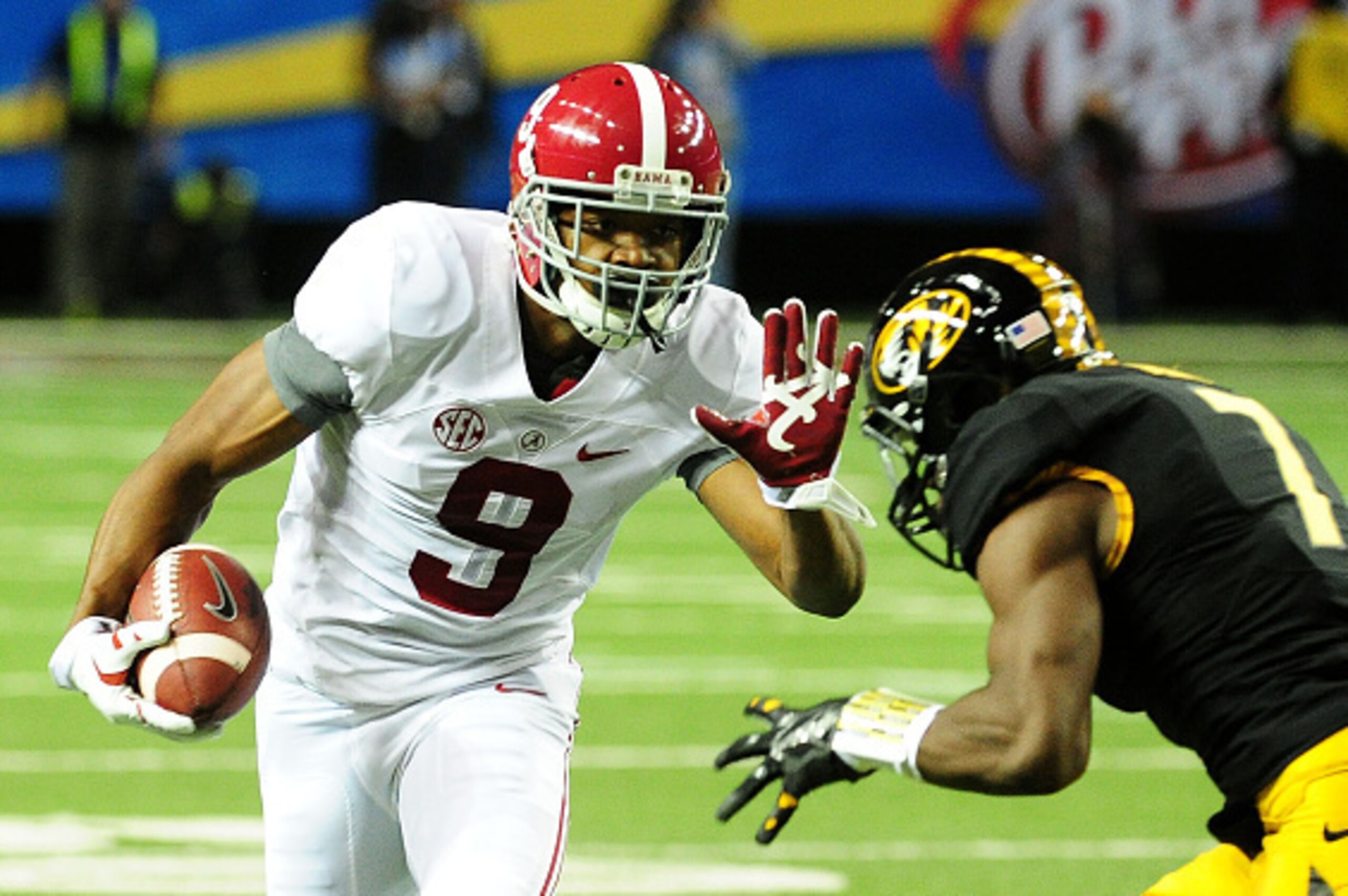
Amari Cooper, Alabama
115 receptions, 1,656 yards, 14 TD
Amari Cooper had a season for the ages at Alabama, playing so well that the lofty Julio Jones comparisons he has heard his entire career no longer seem like unrealistic flattery.
At this point, they might honestly be an understatement.
First-year offensive coordinator Lane Kiffin has made a point of targeting Cooper early and often in Alabama's biggest games, and no team has had an answer. Even against Florida cornerback Vernon Hargreaves III, who actually played pretty tight coverage when the Gators came to Tuscaloosa, Cooper made big play after big play.
Also of note: 79 of Cooper's FBS-leading 115 receptions and 1,118 of his FBS-leading 1,656 yards have come in the first half of games. If not for Alabama taking so many early leads and relegating Cooper to the bench, he might have shattered the NCAA record book.
Second-Team Wide Receiver
6 of 26
Kevin White, West Virginia
102 receptions, 1,318 yards, 9 TD
We didn't know it at the time—and how could we have?—but Alabama's Week 1 game against West Virginia was a matchup of the two best receivers in the country.
Kevin White caught 35 passes for 507 yards last season but broke out against the Crimson Tide (nine catches, 143 yards, one touchdown) and didn't stop rolling afterward. He had 100 or more yards in his first seven games of the season, and even though he petered out down the stretch, he was so good early on that it didn't matter.
If not for White, Baylor would have probably made the playoff.
First-Team Tight End
7 of 26
Clive Walford, Miami
44 receptions, 676 yards, 7 TD
Clive Walford gave true freshman quarterback Brad Kaaya the best thing a young QB can have: a safety net at tight end.
Miami sputtered after losing to Florida State but played better than its record for most of the season. And Walford, who flashed during his first three years but never put the pieces all together, was able to replace Allen Hurns' production.
One professional scouting director called Walford one of two senior tight ends—along with Notre Dame's Ben Koyack—who are "head and shoulders" ahead of their class, per Bucky Brooks of NFL.com.
Well-deserved after an awesome senior year.
Second-Team Tight End
8 of 26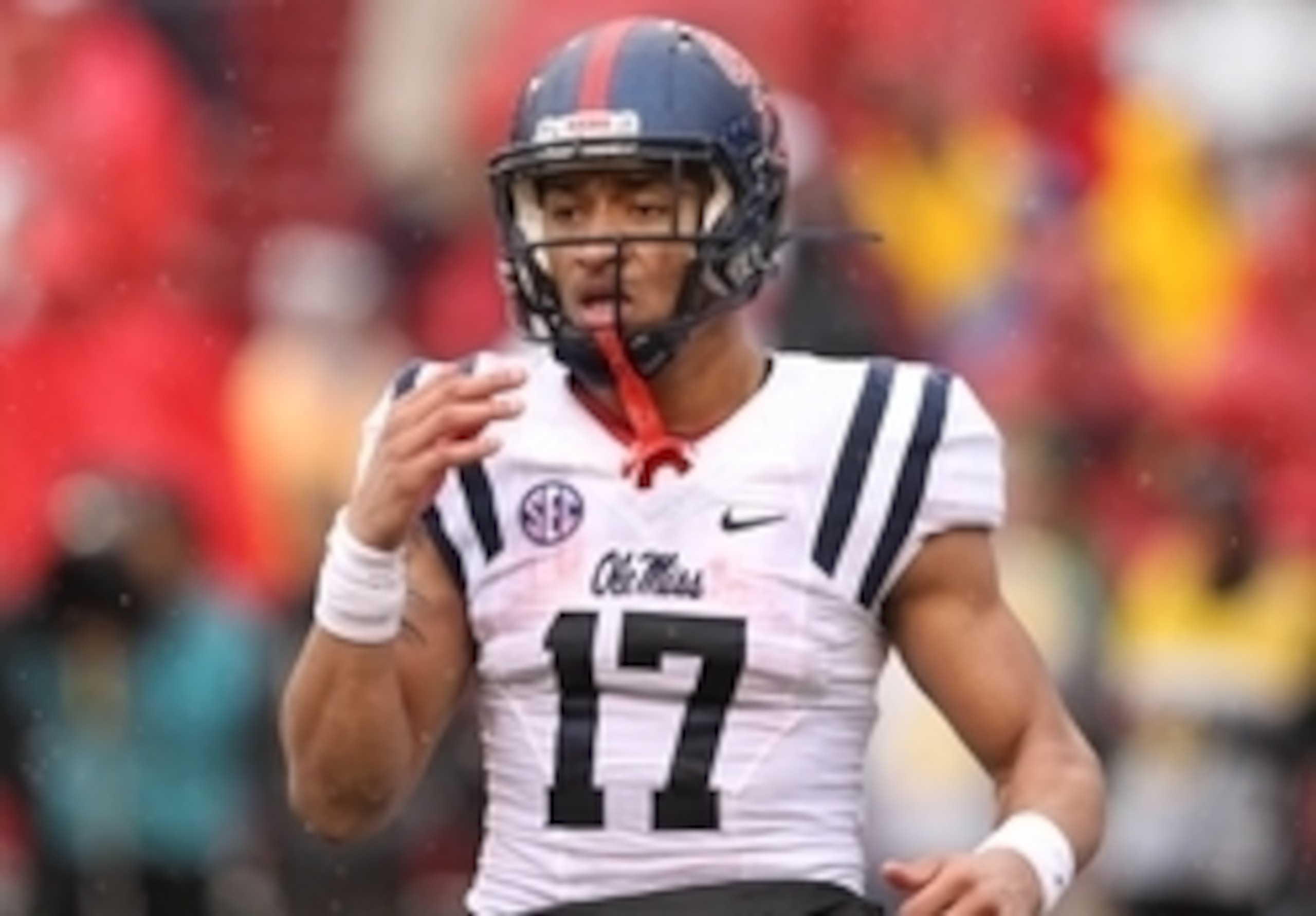
Evan Engram, Ole Miss
37 receptions, 651 yards, 2 TD
Evan Engram is a receiver in a tight end's body who drove SEC defenses mad during the latter part of conference play.
The super athletic sophomore made a habit of taking short passes for long gains out of the slot, leading all FBS tight ends with three receptions of 50-plus yards. He also led all FBS tight ends with 588 receiving yards against opponents from power conferences.
Ole Miss' 2013 recruiting class is the gift that keeps on giving.
First-Team Offensive Line
9 of 26
Georgia Tech
Georgia Tech runs the triple-option, and the triple-option depends on winning the line of scrimmage. According to the F/+ ratings at Football Outsiders, Georgia Tech had the No. 1 offense in college football.
Think about that.
The Yellow Jackets have been so good up front that their supposedly archaic offense has dominated. Left guard Shaq Mason was the only player to make one of the All-ACC teams—and not even the first team—which is criminal but does not change my pick.
The whole is greater than the sum of the parts.
Second-Team Offensive Line
10 of 26
Oklahoma
Oklahoma sputtered to a disappointing 8-4 record despite getting superior play from its offensive line and running game.
The Sooners ranked No. 6 in the country in yards per rush (6.13) and No. 9 in rushing yards per game (268.58). And they did it even though Week 1 starter Keith Ford got injured and missed most of the season, forcing true freshman Samaje Perine into the spotlight.
That Perine was as effective as he was played a role here. But that Oklahoma's offensive line was as dominant as it was definitely helped make Perine a top back. Everything about this offense started in the trenches.
First-Team Defensive End
11 of 26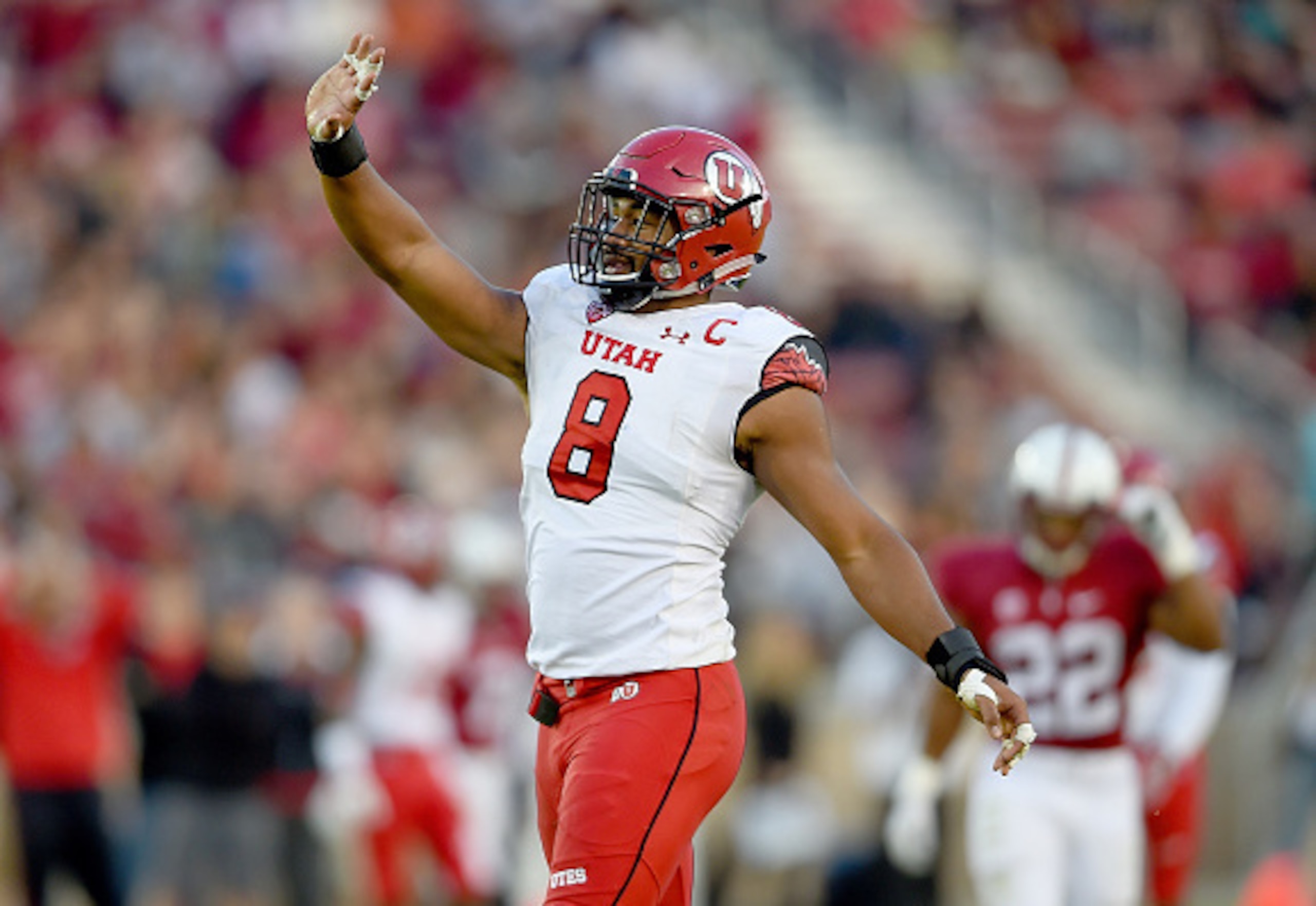
Nate Orchard, Utah
81 tackles (20 TFL), 17.5 sacks, 2 pass breakups, 2 QB hurries, 2 forced fumbles
Nate Orchard has always been good. But in 2014, he was at another level. He was bigger, stronger, faster and angrier than ever, and the result was a year in which he led Utah to an 8-4 record.
Orchard played especially well during two of Utah's three biggest wins, registering four sacks at UCLA and 3.5 sacks at Stanford.
"He's been a stalwart for us all year long," head coach Kyle Whittingham told reporters after Orchard broke the Utah single-season sack record against Stanford. "And he is the team leader, as I've said many times before. And it's great to see him have the individual success he's having."
Great to see the team success too.
Second-Team Defensive End
12 of 26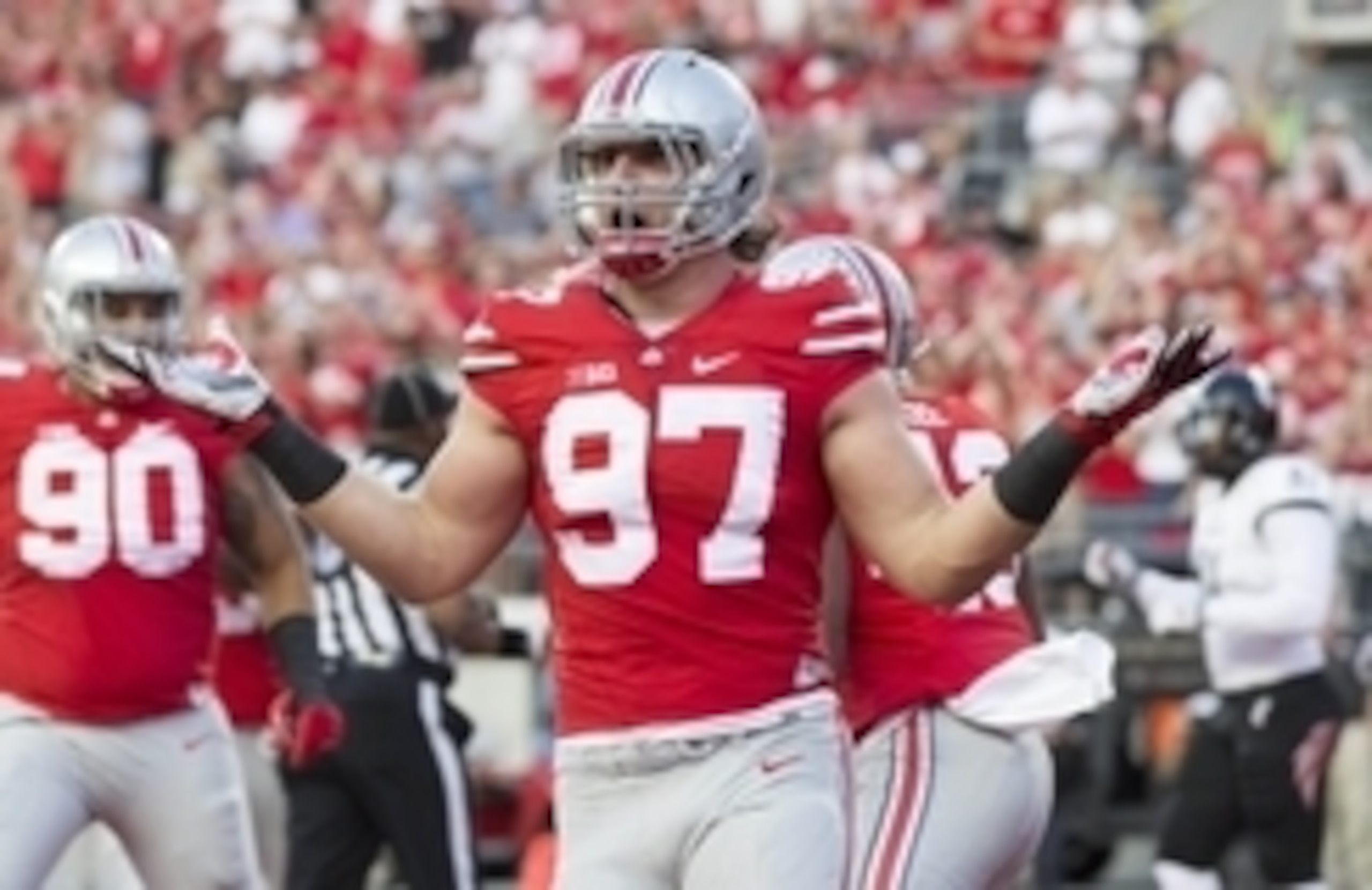
Joey Bosa, Ohio State
50 tackles (20 TFL), 13.5 sacks, 1 pass breakup, 4 QB hurries, 4 forced fumbles, 1 fumble recovery, 1 TD
Joey Bosa came on late during his true freshman season and continued that momentum with an All-America-worthy sophomore campaign.
At 6'5", 278 pounds, Bosa is big and strong enough to bull-rush smaller blockers but spry and athletic enough to elude slower blockers. (Reference: this standing back flip he did in the offseason.) An offensive lineman with any exploitable weakness will be toasted.
Forty percent of Bosa's tackles went for a loss, which is a difficult stat to wrap one's mind around. And he also proved to have a flair for the dramatic with his walk-off sack against Penn State in which he drove the running back assigned to block him (Akeel Lynch) under Christian Hackenberg's legs.
Never assign a running back to block this guy.
First-Team Defensive Tackle
13 of 26
Danny Shelton, Washington
89 tackles (16.5 TFL), 9 sacks, 3 QB hurries
Bosa isn't the only shrugging defensive lineman to make this list. Washington defensive tackle Danny Shelton was every bit as good.
Probably even better.
The Huskies didn't have the year they might have hoped for in the win column (8-5), but no defense in the country was more replete with superstars. Shelton was the best of the bunch, in my opinion, but outside linebacker Shaq Thompson and an outside linebacker to be named later on this list were not far behind.
At 6'2", 339 pounds, Shelton has the size to have his way with interior blockers. He also has deceptive speed—fine…"speed"—in the open field and the motor one likes to see from a lineman.
He is an offensive line's worst nightmare.
Second-Team Defensive Tackle
14 of 26
Malcolm Brown, Texas
62 tackles (12.5 TFL), 6.5 sacks, 1 pass breakup, 5 QB hurries, 2 forced fumbles
Much like they did at Louisville and Florida, first-year head coach Charlie Strong and defensive coordinator Vance Bedford tapped into their players' finer points and unlocked their lurking potential.
No one fared better in the Longhorns' new defensive scheme than Malcolm Brown, who became more than just a space-eater in the middle of the line. He also became a productive interior pass-rusher.
Brown was named a finalist for both the Outland Trophy (nation's best interior lineman) and the Nagurski Award (nation's top defensive player), the latter of which is rare for a defensive tackle.
First-Team Outside Linebacker
15 of 26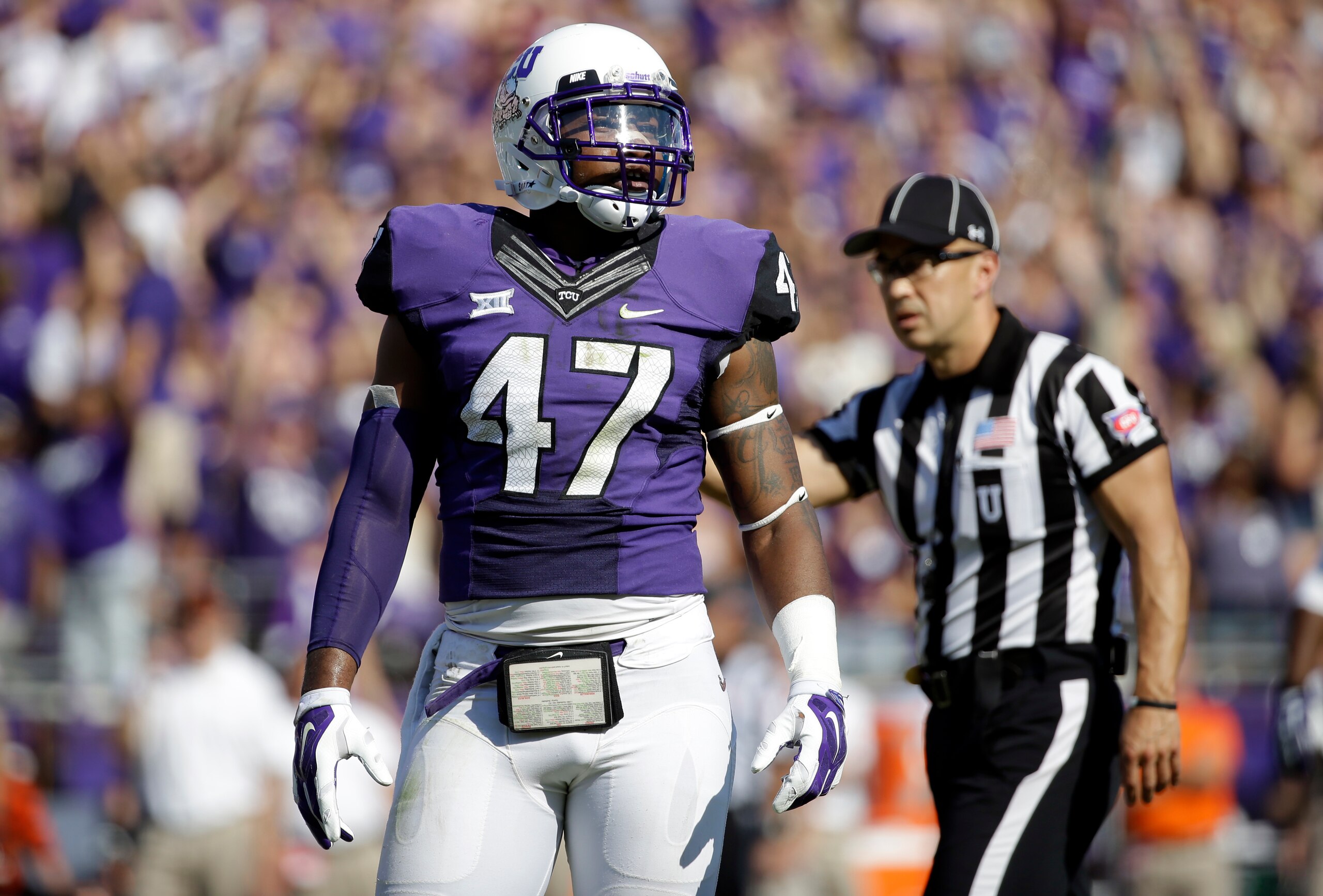
Paul Dawson, TCU
128 tackles (18.5 TFL), 5 sacks, 4 INT, 5 pass breakups, 5 QB hurries, 2 forced fumbles, 1 TD
Offense was the story of TCU's season—and rightfully so—but don't let that blind you from the year Paul Dawson had at linebacker.
Playing on the "outside" of the Horned Frogs' 4-2-5 formation, Dawson was a constant source of big plays, notably returning an interception for a touchdown in the fourth quarter against Oklahoma. But he was just as good on a down-to-down basis, leading the Big 12 in tackles.
Per Ralph D. Russo of The Associated Press, Dawson was the only player in the country with 100 tackles, five sacks and four interceptions. No Big 12 player had posted such a line since 2000.
He deserved a lot more press than he got.
Second-Team Outside Linebacker
16 of 26
Hau'oli Kikaha, Washington
67 tackles (24 TFL), 18 sacks, 2 pass breakups, 2 forced fumbles
Hau'oli Kikaha teamed with the aforementioned Shelton to give Washington one of the best pass-rush combos in the country. Actually…the best pass-rush combo in the country.
With Shelton occupying the middle, Kikaha was free to wreak havoc off the edge. Whether he was playing with his hand down or standing up, he made blockers look like traffic cones and forced negative plays.
No one had more sacks in 2014 than Kikaha's 18 or more sack yardage than his 120. His 24 tackles for loss were No. 2 in the country.
First-Team Inside Linebacker
17 of 26
Scooby Wright, Arizona
153 tackles (28 TFL), 14 sacks, 1 QB hurry, 6 forced fumbles
Scooby Wright did the unthinkable in 2014, turning a Rich Rodriguez-coached team into a club that won with defense, not offense.
His spot on the first team has to do with more than just individual numbers, but it would be remiss not to mention those too. They were amazing. Wright led college football in tackles for loss and forced fumbles, and he finished second in total tackles and third in sacks.
He honestly might deserve a spot at the Heisman ceremony.
Second-Team Inside Linebacker
18 of 26
Eric Kendricks, UCLA
135 tackles (8.5 TFL), 2 sacks, 3 INT, 2 pass breakups, 1 forced fumble, 1 TD
Eric Kendricks was the opposite of the rest of his team this season, showing up as the same, dominant player each week.
Starting with the first game of the year at Virginia, during which he had 16 total tackles, forced a fumble and returned an interception for a touchdown, he was a frequent candidate for the All-Week defense.
His line was one of the first things I checked each Sunday morning. It saved me a whole lot of time.
First-Team Cornerback
19 of 26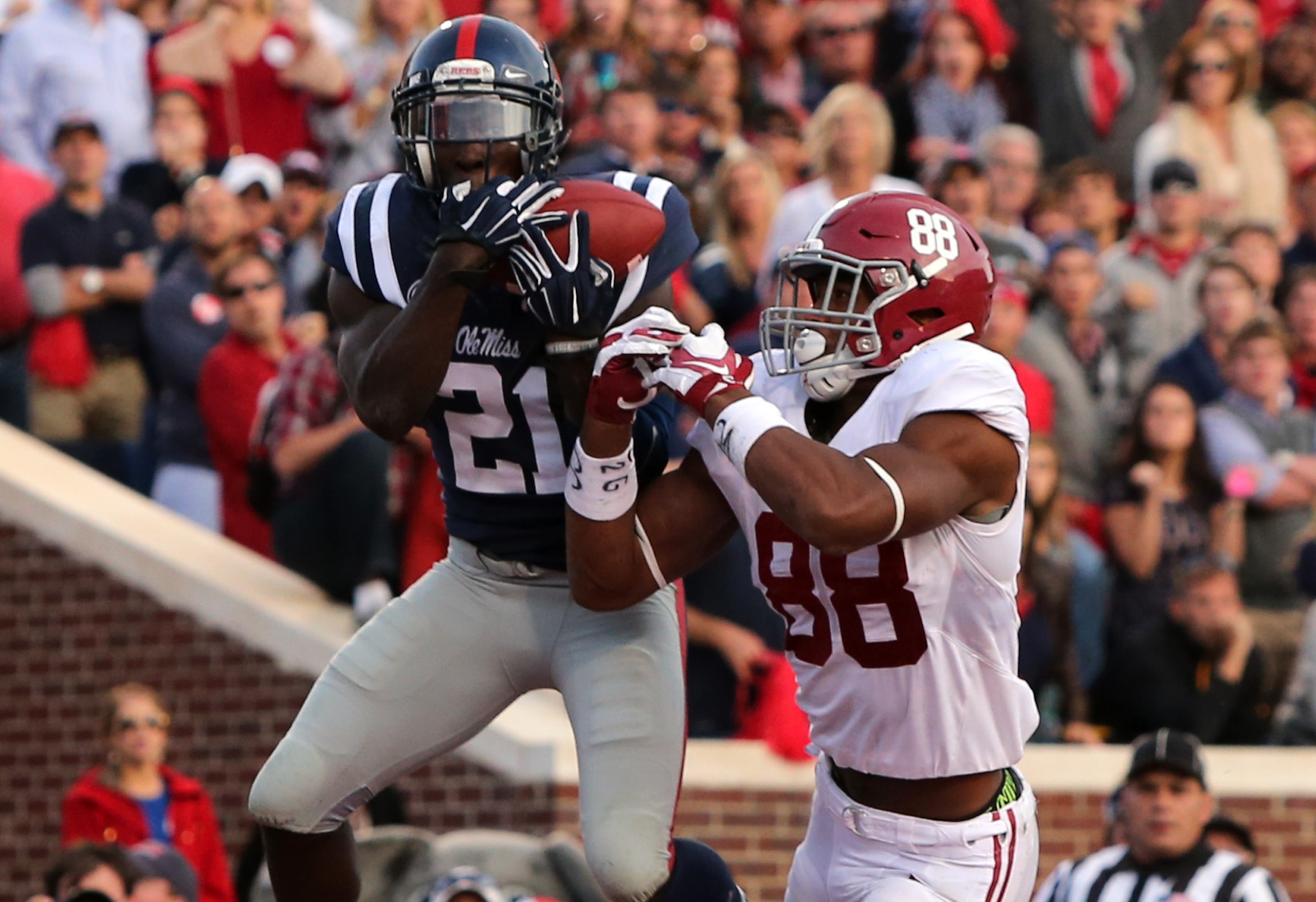
Senquez Golson, Ole Miss
41 tackles (3 TFL), 0.5 sack, 9 INT, 8 pass breakups, 2 QB hurries, 1 TD
Senquez Golson was one of the major catalysts behind Ole Miss' fast start to the season, helping the "Landsharks" become a household nickname.
He had nine interceptions in the Rebels' first nine games, coupling his penchant for big plays with tight coverage and tackling on the edge. And he came up big when the team most needed it, intercepting Blake Sims in the end zone to ice Alabama's only loss of the season.
Watching Golson cover Josh Doctson and Kolby Listenbee of TCU in the Peach Bowl should be fun.
Second-Team Cornerback
20 of 26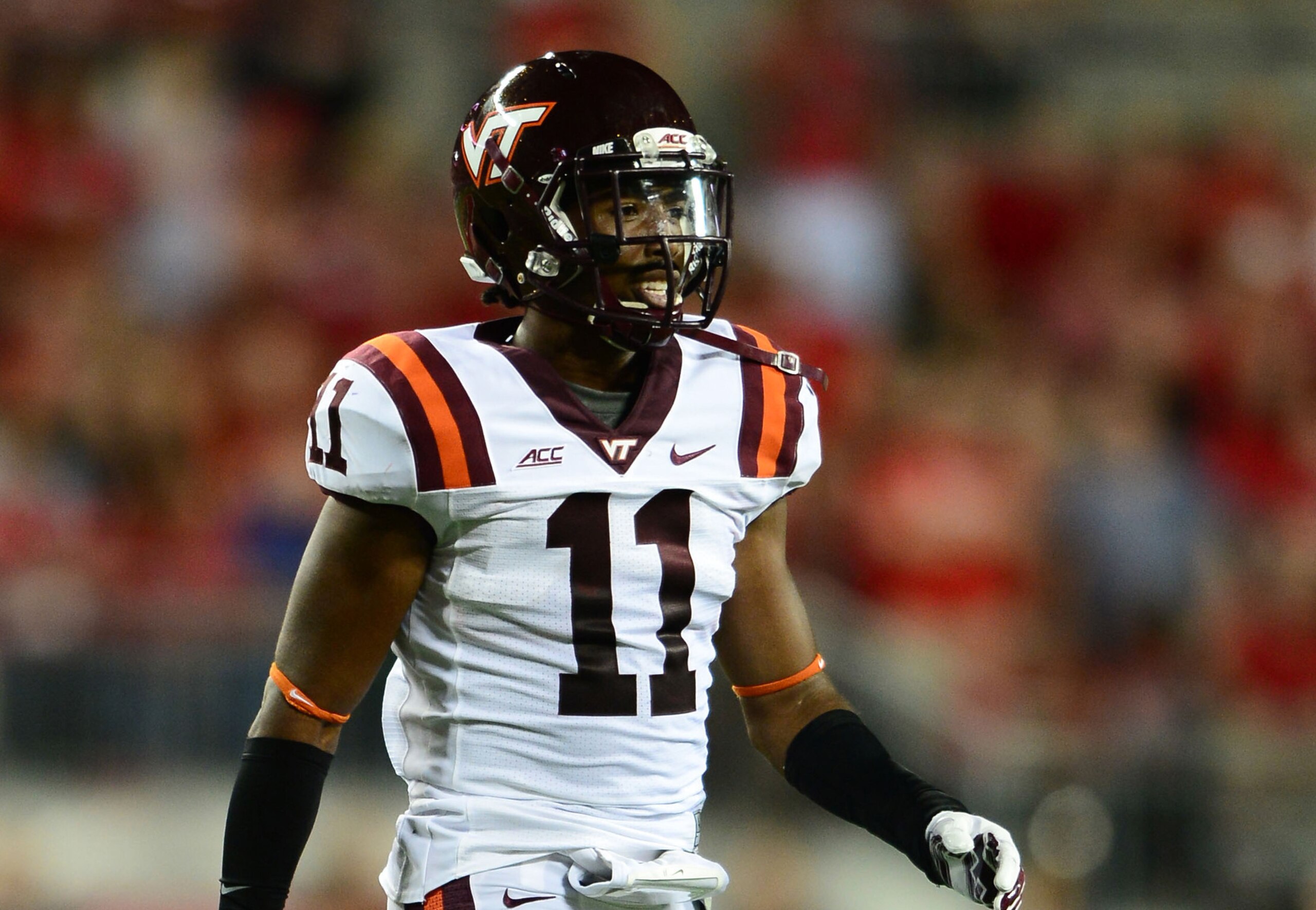
Kendall Fuller, Virginia Tech
50 tackles (4.5 TFL), 2 sacks, 1 INT, 14 pass breakups, 1 TD
Kendall Fuller built on an impressive freshman season to become one of the two or three best cornerbacks in the country as a sophomore.
Virginia Tech regressed on the whole, but Fuller played lockdown coverage in man, heady coverage in zone and proved against Ohio State that he could even make some plays in the backfield.
Of teams that played at least three power-conference opponents, Virginia Tech finished fourth in opposing QB rating (101.73) thanks in large part to a secondary that had nine interceptions to eight touchdowns allowed.
First-Team Safety
21 of 26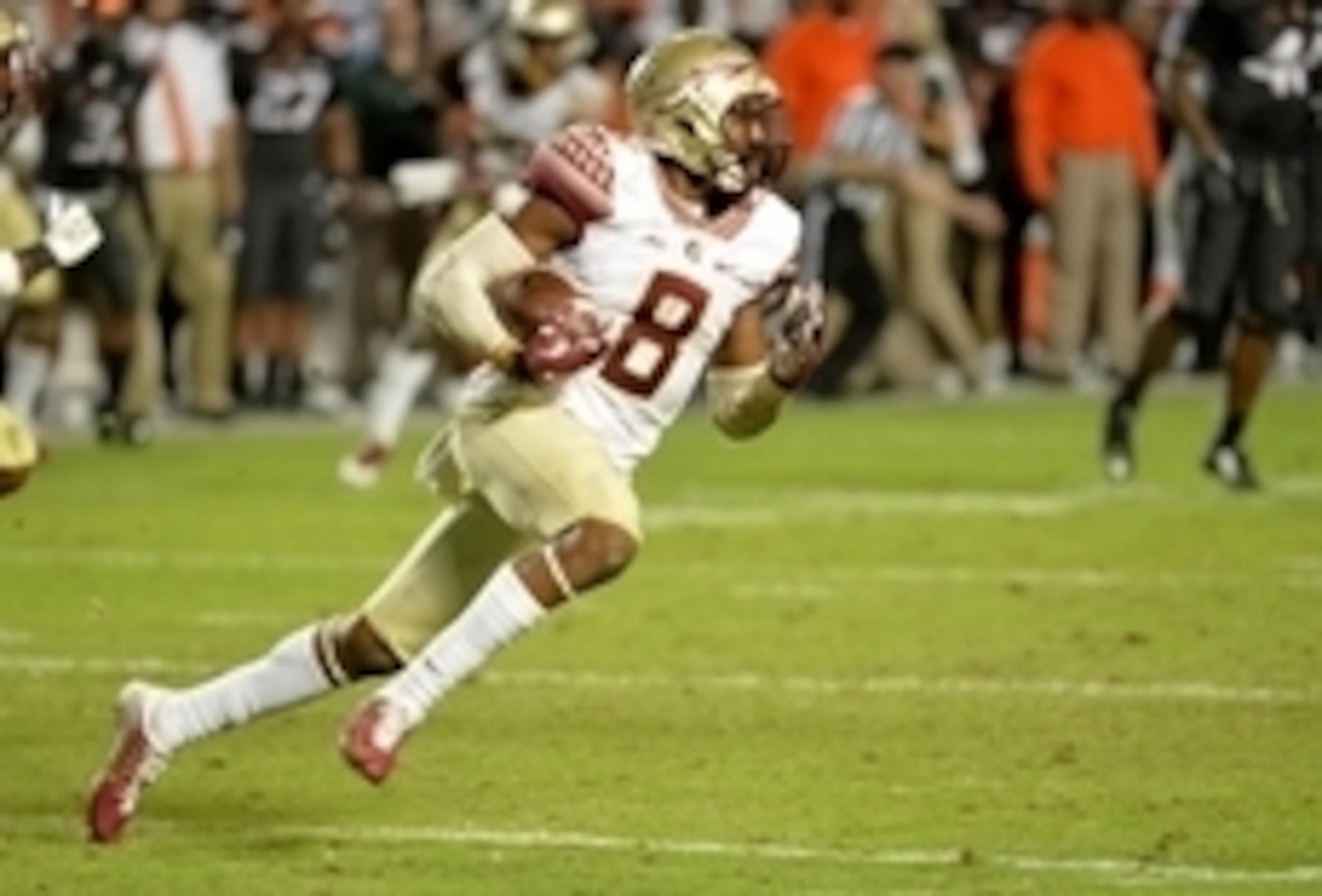
Jalen Ramsey, Florida State
76 tackles (9.5 TFL), 3 sacks, 2 INT, 11 pass breakups, 2 QB hurries, 3 fumbles forced, 1 blocked kick
Florida State—despite being 13-0 and having made the playoff—has had a fair number of disappointing players. Left tackle Cameron Erving and running back Karlos Williams jump immediately to mind.
Jalen Ramsey does not.
Only a sophomore, Ramsey inherited the nickelback role left vacant by LaMarcus Joyner and played it to perfection. He is best classified as a safety because he spends so much time roving the middle of the field, but his coverage skills rival those of any player at any position in the country. He did, after all, begin last season on the outside before injuries forced him to shift into a pure safety role.
His weaknesses are purely hypothetical.
Second-Team Safety
22 of 26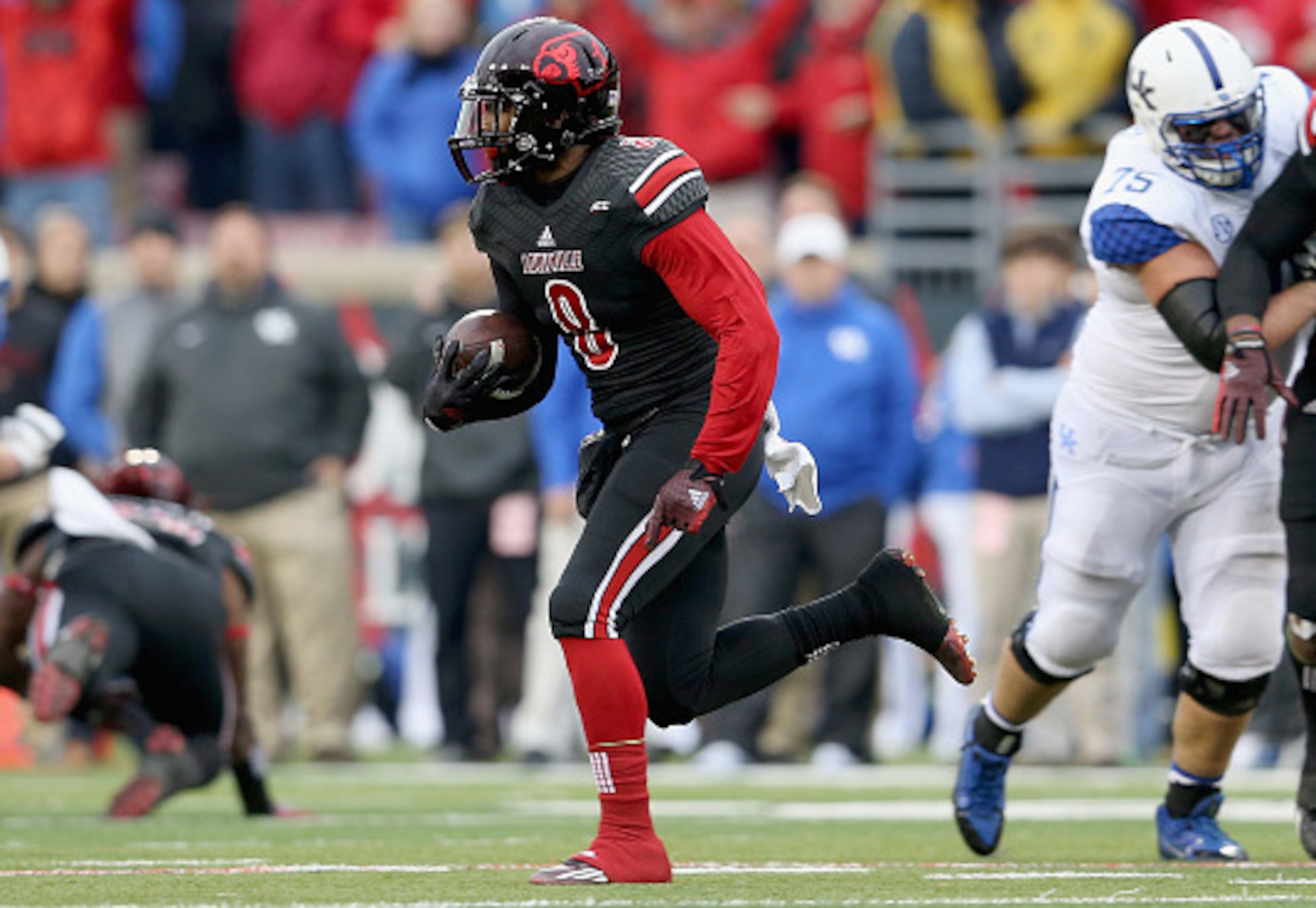
Gerod Holliman, Louisville
37 tackles (3 TFL), 1 sack, 14 INT, 3 pass breakups, 1 forced fumble, 1 TD
Gerod Holliman has struggled in run support—and that is putting it as kindly as I can—but he's been so good playing center field that it hasn't mattered. Or at least it hasn't mattered as much.
His 14 interceptions tied a 40-year-old NCAA record but weren't enough to win him ACC Defensive Player of the Year honors, which caused a minor outrage on the Internet earlier this week. Any way you swing it, though, there is no denying the impact his interceptions have had. Even if he's struggled against the run, he has compensated.
Turnovers are football's great equalizer.
First-Team Kicker
23 of 26
Roberto Aguayo, Florida State
25-of-27 FG, 53-53 XP
Roberto Aguayo missed two uncharacteristic field goals this season, but he has still been the most dependable kicker in America.
He proved as much with three clutch field goals against Georgia Tech in the ACC Championship Game and also nailed a game-winner in the rain against Boston College during the regular season.
His field-goal percentage of 92.6 was third in the country but highest among kickers with 25 or more attempts. The second-highest percentage was 84.6 (Andy Phillips, Utah).
Second-Team Kicker
24 of 26
Brad Craddock, Maryland
18-of-19 FG, 41-41 XP
Brad Craddock was a rock all season for Maryland, nailing his first 18 kicks before missing against Rutgers in the season finale.
The kick he missed proved costly, as it came with Maryland trailing 41-38 in a game it would lose by that exact count. But it also came from 54 yards out. Craddock was perfect on kicks from 53 yards or shorter this season and also hit a game-winner in a huge game at Penn State.
He is a well-deserving Groza Award finalist.
First-Team Punter
25 of 26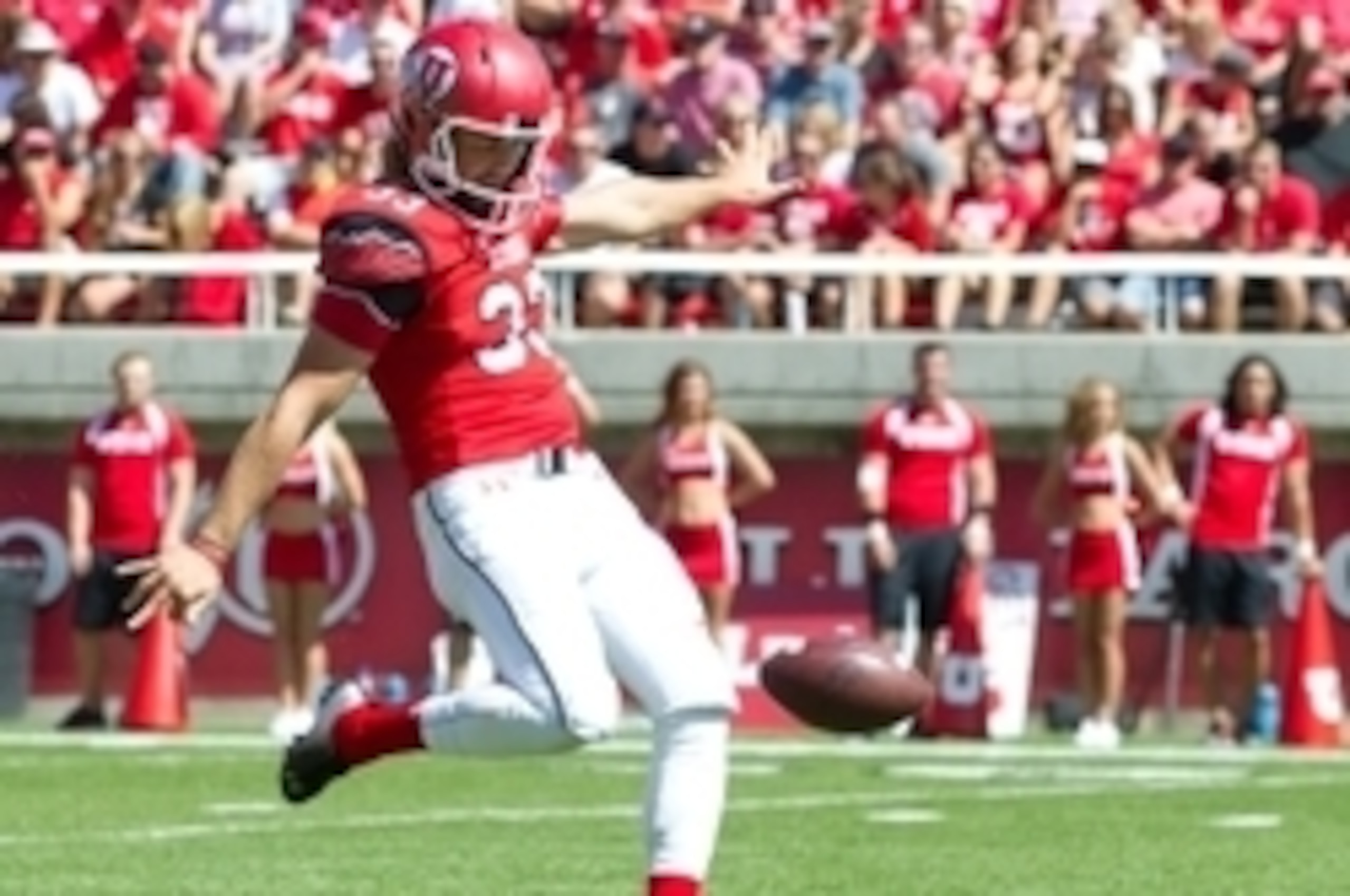
Tom Hackett, Utah
77 punts, 47.00-yard average
Tom Hackett finished second in the country with an average of 47 yards per punt, and he did it in an absurd 77-punt sample.
Only one other punter with 77 or more attempts finished within four yards of Hackett's average. And that punter, Alexander Kinal of Wake Forest, was still a pretty decent ways away (43.64).
Hackett also charmed America with his confidence and braggadocio downing punts inside the 20- and 10-yard lines. He made punting—an inherently not-fun activity—seem fun.
Second-Team Punter
26 of 26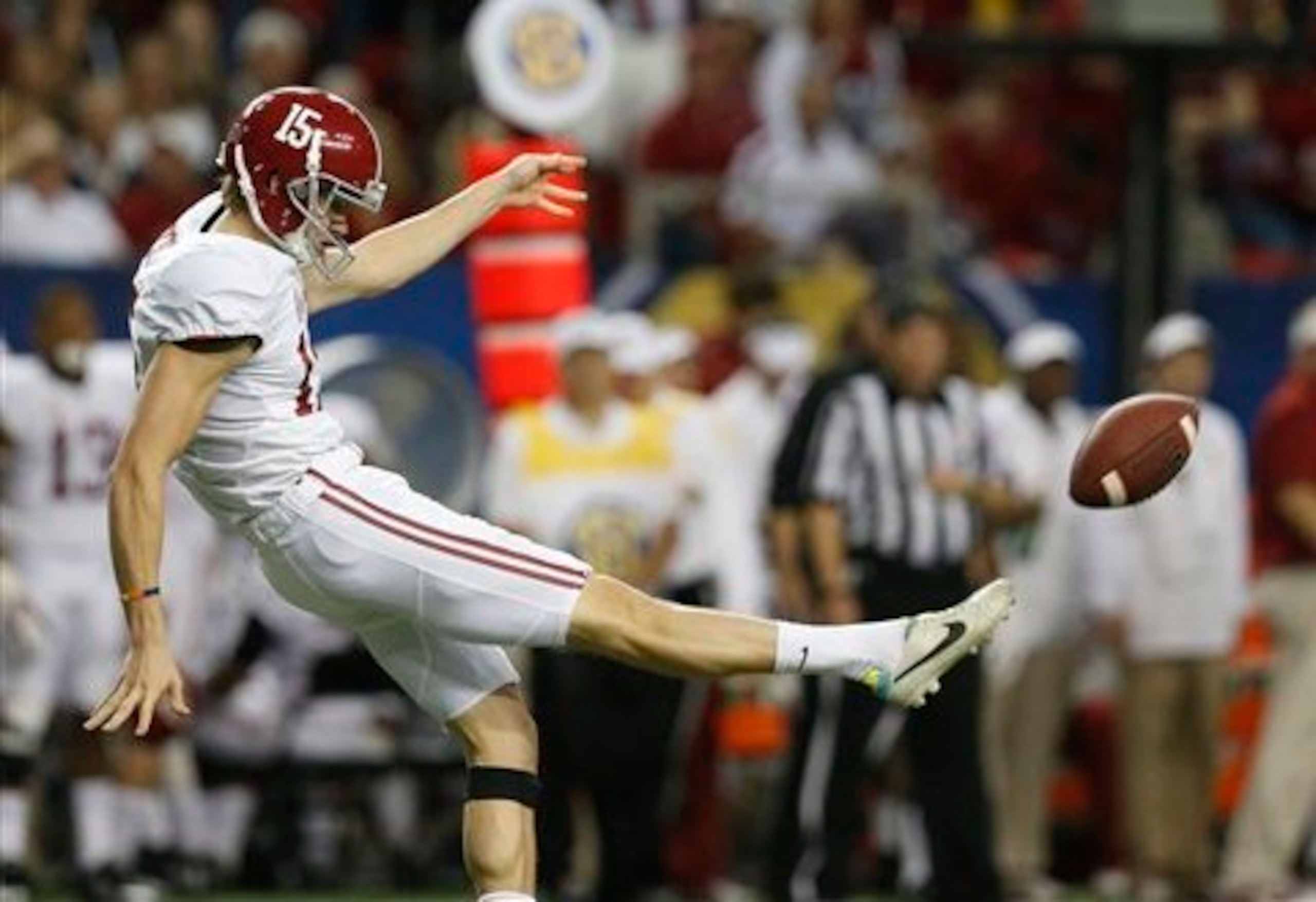
JK Scott, Alabama
46 punts, 46.98-yard average
JK Scott has been a bit of a revelation, answering one of Alabama's few preseason questions with solid punting all year.
The freshman from Denver, Colorado, has picked up right where Cody Mandell left off, pinning teams inside their own 20 with regularity. He was especially good against Missouri in the SEC Championship Game, when his only three punts were downed at the 11-, 13- and 20-yard lines, respectively.
Scott will have a role to play during the CFP. I can almost guarantee it.
.jpg?w=2560 "Jaguars Colts Football")
.jpg?w=2560 "Malik Beasley Negotiating Plea Deal (AP)")
.jpg?w=2560 "Aikman Blasts Cowboys WR 🫣")

.jpg?w=2560 "Jonathan Taylor Landing Spots")