Breaking Down the New York Jets' Red-Zone Struggles
Michael Vick's insertion into the starting lineup has been more refreshing than a Fresca on a hot summer day. The New York Jets are sustaining drives, not turning the ball over and becoming competitive enough to actually win one of their games against an opponent not named the Oakland Raiders.
Still, there is one area of the Jets offense that hasn't been corrected by a change at quarterback: the red zone.
On the season, Team Rankings indicates that the Jets rank 29th in the NFL in touchdown conversion rate in the red zone, converting just 46.67 percent of their opportunities. Last week against the Pittsburgh Steelers, the Vick-led offense converted on just one of three red-zone trips.
TOP NEWS
Bears' Santos Wanted to Kick 58-Yarder

Picking Each NFL Division Winner 🔮
.jpg?w=2560 "Chargers Chiefs Football")
Reported Details of Seahawks-K9 Split ⛓️💥
They were able to be dominant enough in other areas of the game—particularly on defense—to secure the win, but this is an area the Jets must be more consistent in if they plan on going on any type of win streak.
Protection Issues
Pass protection has been a weak point for the Jets all season, but as with everything else, their issues in this aspect of offensive football are only magnified in a condensed field.
Not all of their problems can be blamed on the offensive line, either. The running backs have done a poor job across the board of picking up blitzes and putting away linebackers.
Here, the Jets use a play-action concept out of a shotgun. Given the fact that they rushed for 150 yards in this game, trying to get the linebackers out of position and slow down the pass rush with this idea makes a lot of sense on the surface:
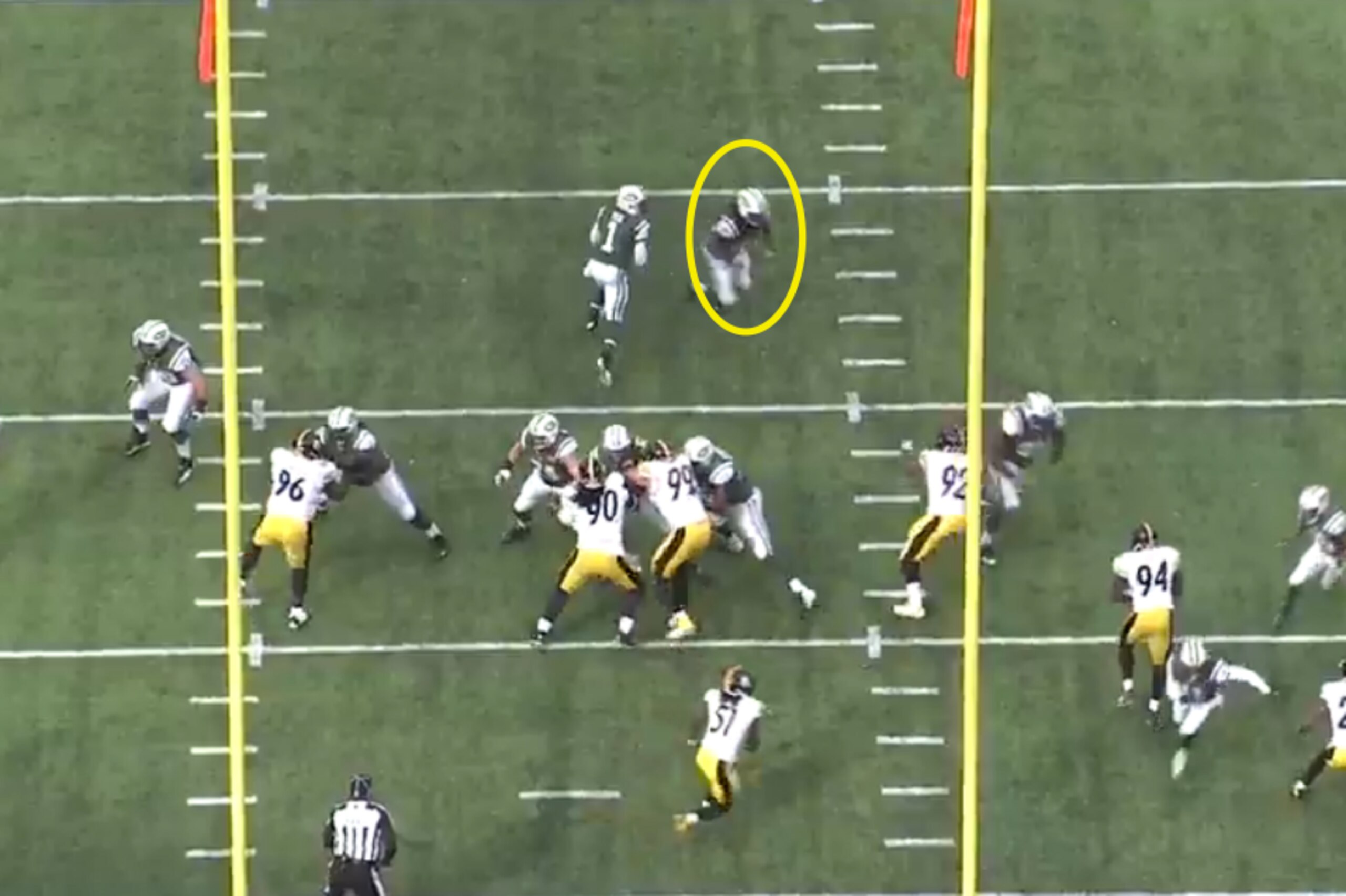
The execution, however, falls apart when running back Chris Ivory completely whiffs on a block on James Harrison. This was anything but a mental miscue—Harrison was charging right at Ivory, who simply whiffed on the block:
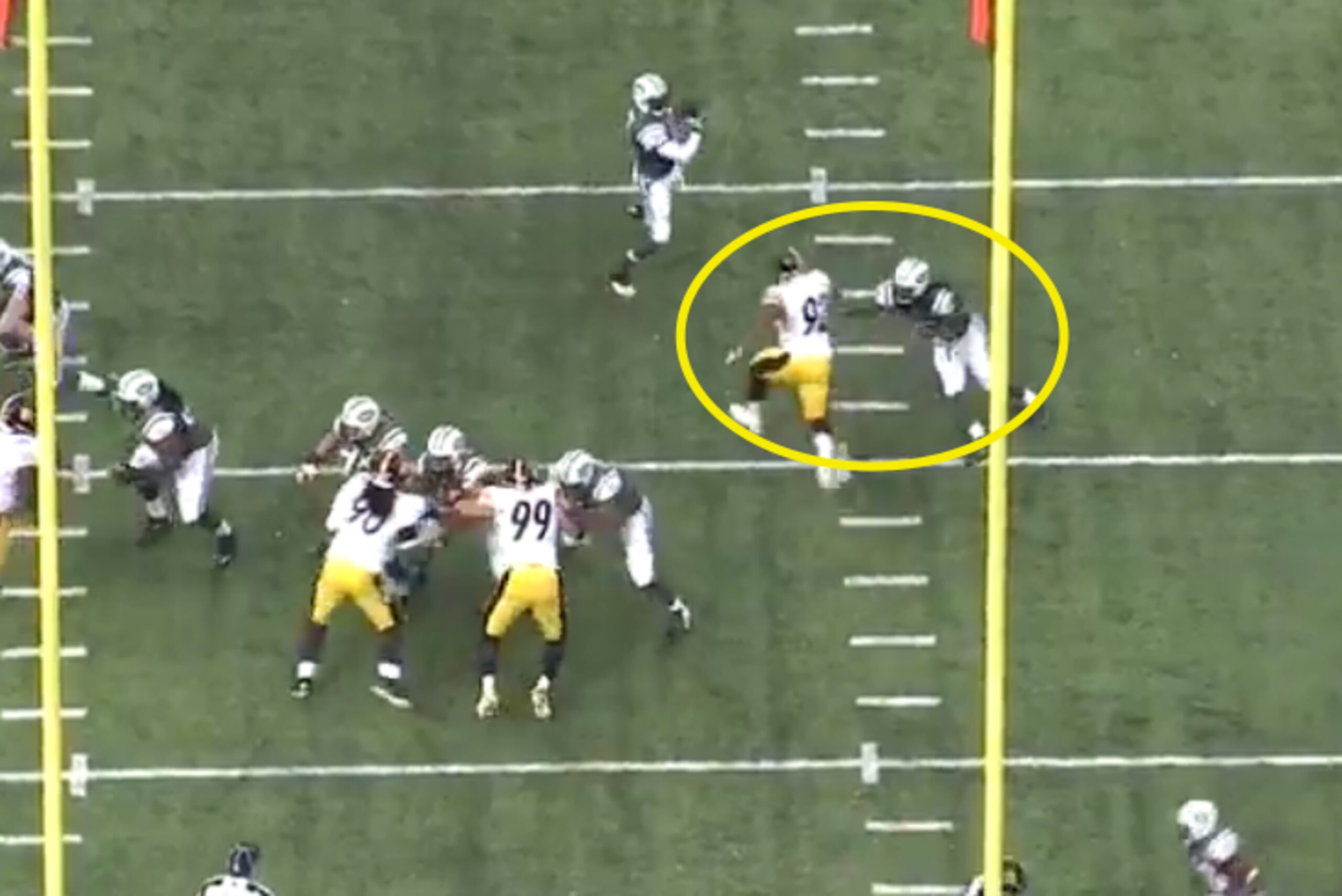
The result was instant pressure on Vick, who was forced to escape and run out of bounds for a minimal gain.
Ivory's protection issues have been an overlooked weakness of his all season. He is by far the worst pass protector (subscription required) of all of the Jets running backs, having allowed two hits and six hurries on the season.
By comparison, Chris Johnson and Bilal Powell have combined for just two hurries allowed (both by Powell).
Whether or not anyone was open is irrelevant. Vick never had an opportunity to survey the field. Offensive coordinators are often the target of criticism in this particular area of the field, but this outcome is blamed squarely on lack of execution.
Missing Throws
As much as Vick has given the Jets an offensive boost between the 20s, he has never been an efficient quarterback in the red zone.
Since 2011, he has been about as likely to throw an interception as he is to throw a touchdown in this crucial part of the field:
| 2011 | 4.3 | 3.3 | 23 |
| 2012 | 3.4 | 2.8 | 28 |
| 2013 | 3.5 | 2.1 | 15 |
| 2014 | 2.9 | 1.0 | 14 |
Vick is one of the most talented players to ever set foot on an NFL field, but he has always left a little to be desired with his accuracy. His absence of consistent, precision passing is exacerbated in the red zone with smaller windows and throwing lanes that leave no room for errant throws.
Vick has avoided turnovers in his two starts, but his questionable accuracy has yet to recede, shown on the very next play after the aforementioned Ivory protection snafu.
Here, offensive coordinator Marty Mornhinweg elects to use a moving pocket concept, which makes logical sense with such a mobile quarterback under center. This concept all but nullifies the pass rush, which is now busy trying to keep up with the play:
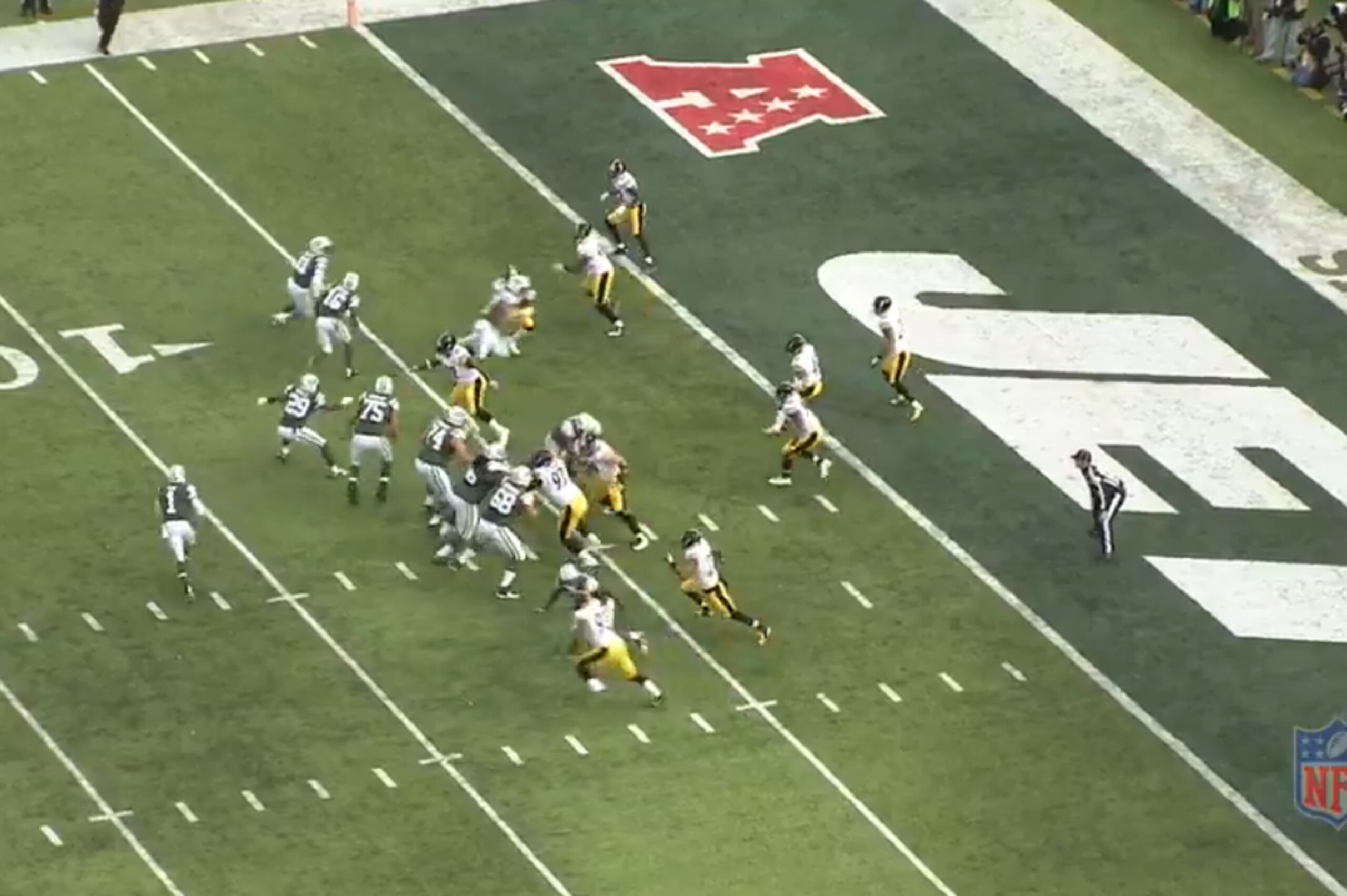
Receiver Jeremy Kerley finally gets open in the corner of the end zone, thanks in large part to the moving pocket. The wrinkle in mobility causes three members of the Steelers' secondary to get caught staring in the backfield.
The window for Vick to hit Kerley is small, but by NFL standards, Vick may as well be throwing to Kerley in his backyard. This throw required a bit of touch to drop it in to Kerley, but Vick, as he has a tendency to do, puts a hair too much juice on it and sails it out of bounds:
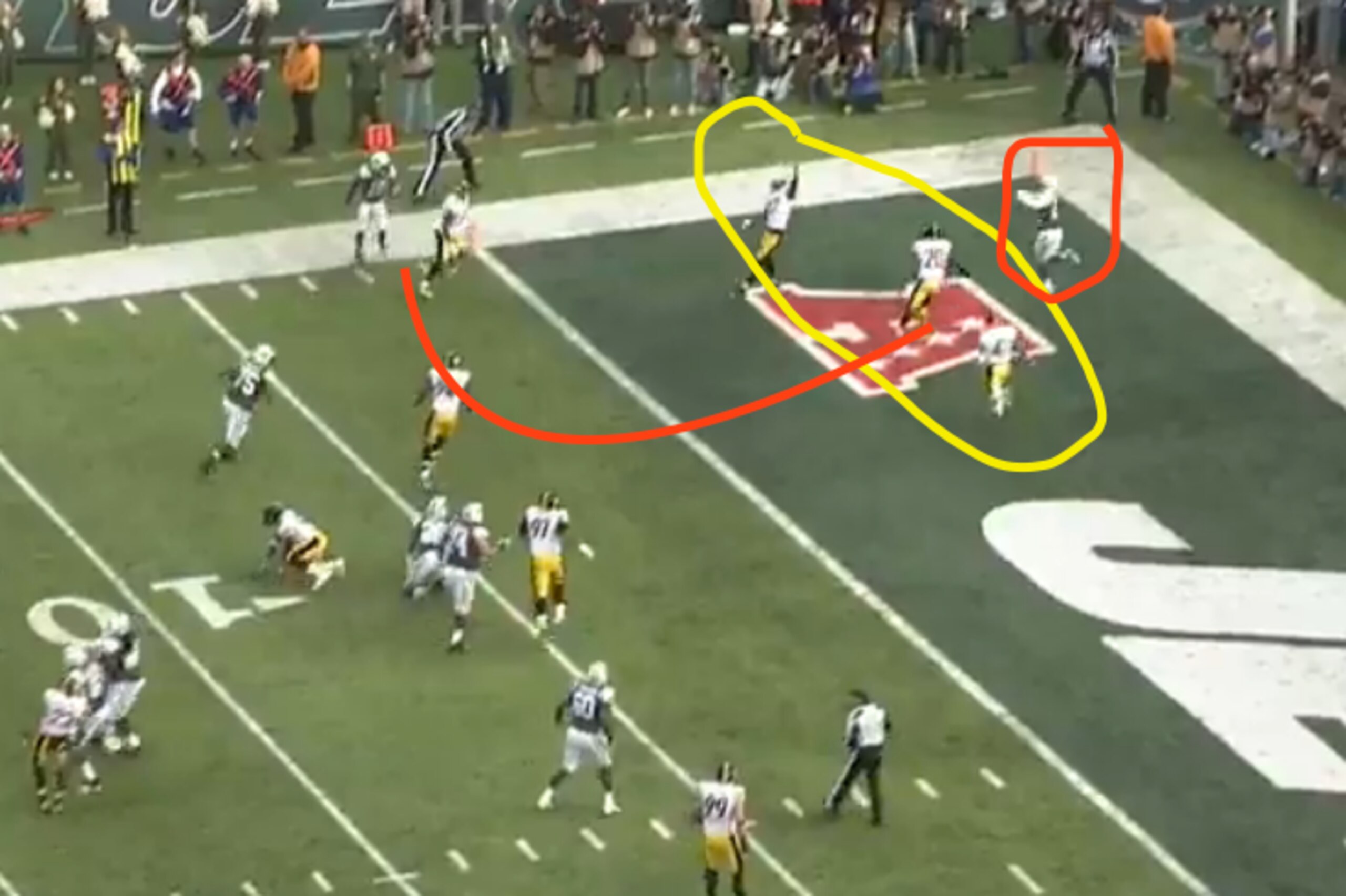
Once again, play-calling is not to blame for the Jets' failures in this crucial spot. The play design and concept worked to get a receiver open in the end zone, but once again, the execution was lacking.
The "Quick Fix"
Generally, the Jets have struggled this season when trying to pass the ball into the end zone—mostly thanks to a lack of execution, not necessarily the play-calling that is so easy to blame.
For the rest of the way this season, Mornhinweg should stick to where the Jets have managed to be effective in this confined space: the running game, particularly with Ivory handling the rock.
According to CBSSports.com, Ivory has been far and away the runner of choice in the red zone, and for good reason. His four touchdowns account for more trips to pay dirt than any other player on the team, including the receivers and tight ends.
This is a simplified way of looking at a solution, but these numbers correlate with Ivory's physical running style. As noted by Pro Football Focus' Pete Damilatis, few—if any—runners have kept pace with his numbers after contact:
Until opposing teams prove they can stop Ivory, the Jets need to keep feeding him the rock, especially in this area of the field.
Scoring with a dive through the A-gap may not be the most clever way of covering six points, but at this juncture in the season, style points should be the last thing on the Jets' mind as they try and scrape together as many wins as possible.
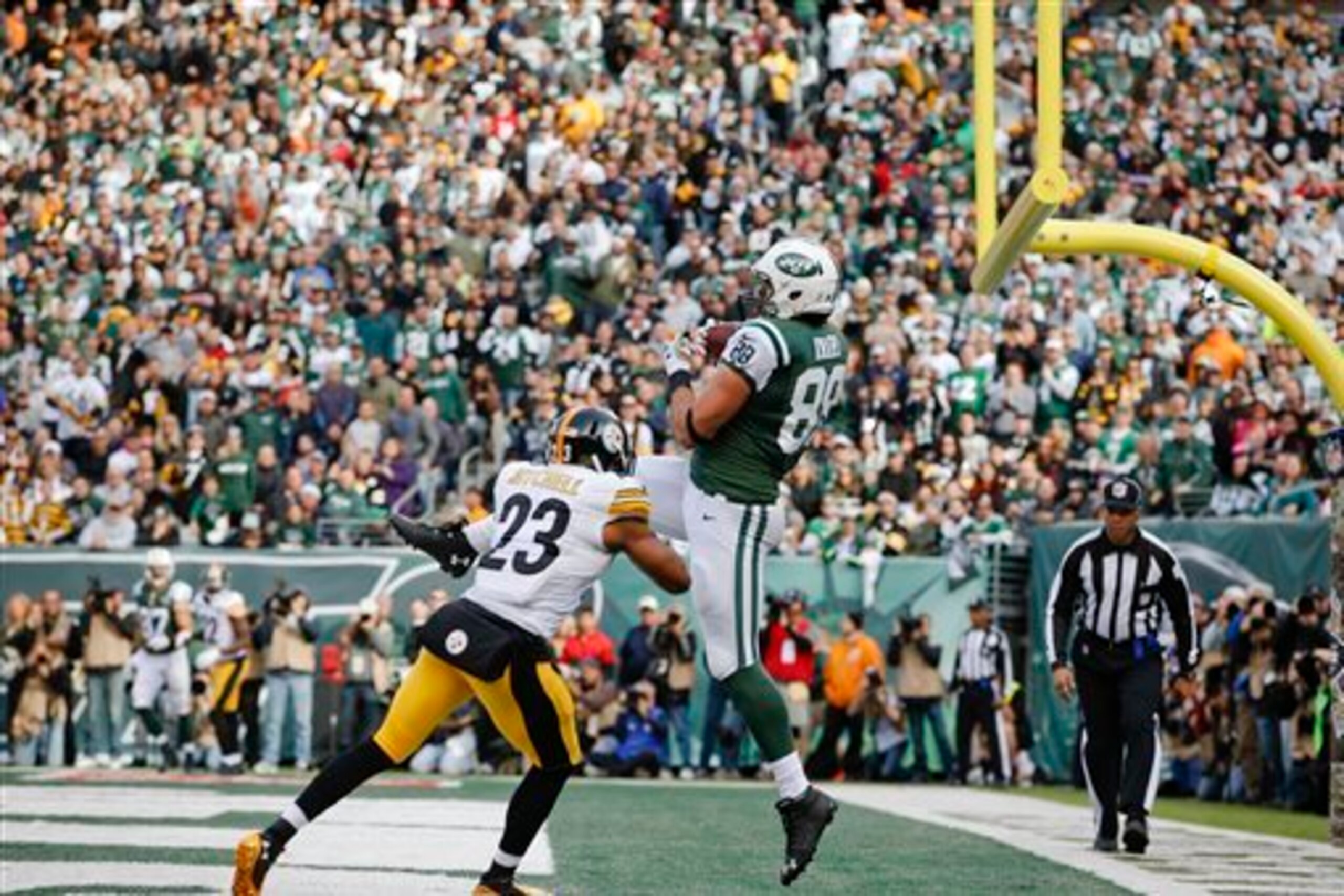
When the Jets do have to pass, they do have a largely untapped resource at their disposal in rookie tight end Jace Amaro. While he has yet to receive snap counts comparable to that of a No. 1 starter, Amaro has two touchdowns on the season—both in the red zone.
While guilty of the occasional drop, Amaro's 6'6" frame makes him a nightmare to cover in confined space.
What is most frustrating for the Jets is that this weak point cannot be pinned on one area, meaning a quick fix is out of the question.
However, the Jets do have a quality group of skill players to work with after some making some key midseason roster changes, setting them up nicely to make vast improvements in the red zone over the last month of the season.
Dissecting situational football may seem irrelevant in a lost 2-8 season, but fixing these types of details could wind up making the difference between a strong and mediocre finish—which may wind up deciding the future of Rex Ryan.
If the Jets' players and coaches want to keep their head coach in place, cleaning up areas like the red zone are the first step toward showing signs or progression.
Advanced statistics provided by ProFootballFocus.com (subscription required).
.jpg?w=2560)
.jpg?w=2560 "Texans Jaguars Football")