Tale of the Tape for NFL Week 11
Throughout the 2014 regular season, former NFL defensive back Matt Bowen will bring you an X's-and-O's look at the pro game. Here are his five key plays from the Week 11 Sunday NFL schedule.
Jamaal Charles Gashes the Seahawks Defense
Charles ran for 159 yards and two touchdowns as the Kansas City Chiefs used a variety of schemes and formations to create running lanes versus the Seattle Seahawks defense during KC’s 24-20 win at Arrowhead.
TOP NEWS
Bears' Santos Wanted to Kick 58-Yarder
Picking Each NFL Division Winner 🔮
.jpg?w=2560)
B/R's Expert Week 7 NFL Picks 🔮
Here’s a look at Charles’ 47-yard run (one-back power) off the packaged play that allowed the running back to get to the second level before showcasing his open-field ability and speed.
Personnel: Posse/11 (3WR-1TE-1RB)
Formation: Doubles Gun Far
Offensive Concept: One-Back Power (Packaged Play)
Defensive Scheme: Cover 1 "Sam" Pressure
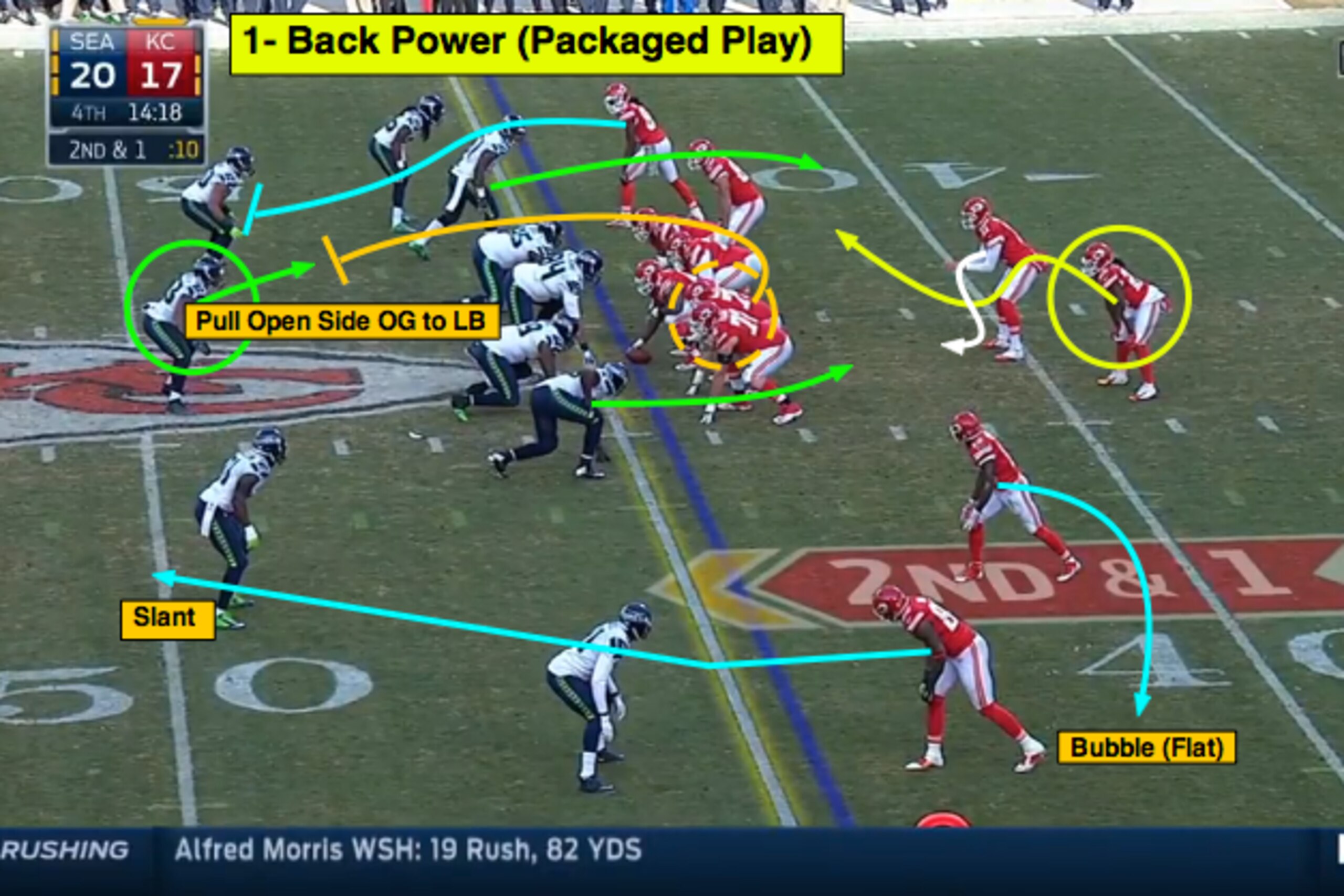
In this packaged play, Alex Smith has a run/pass option based on the coverage look and the number of defenders in the box. The Chiefs quarterback can work the slant/flat (bubble action) to the open side of the formation or hand off to Charles on the one-back power with the left guard pulling up through the hole.
Here, Smith hands off to Charles with "Sam" linebacker Bruce Irvin rushing off the closed-side edge. That allows tight end Travis Kelce to wash the linebacker up the field with the Chiefs blocking down and the guard pulling to the second level.
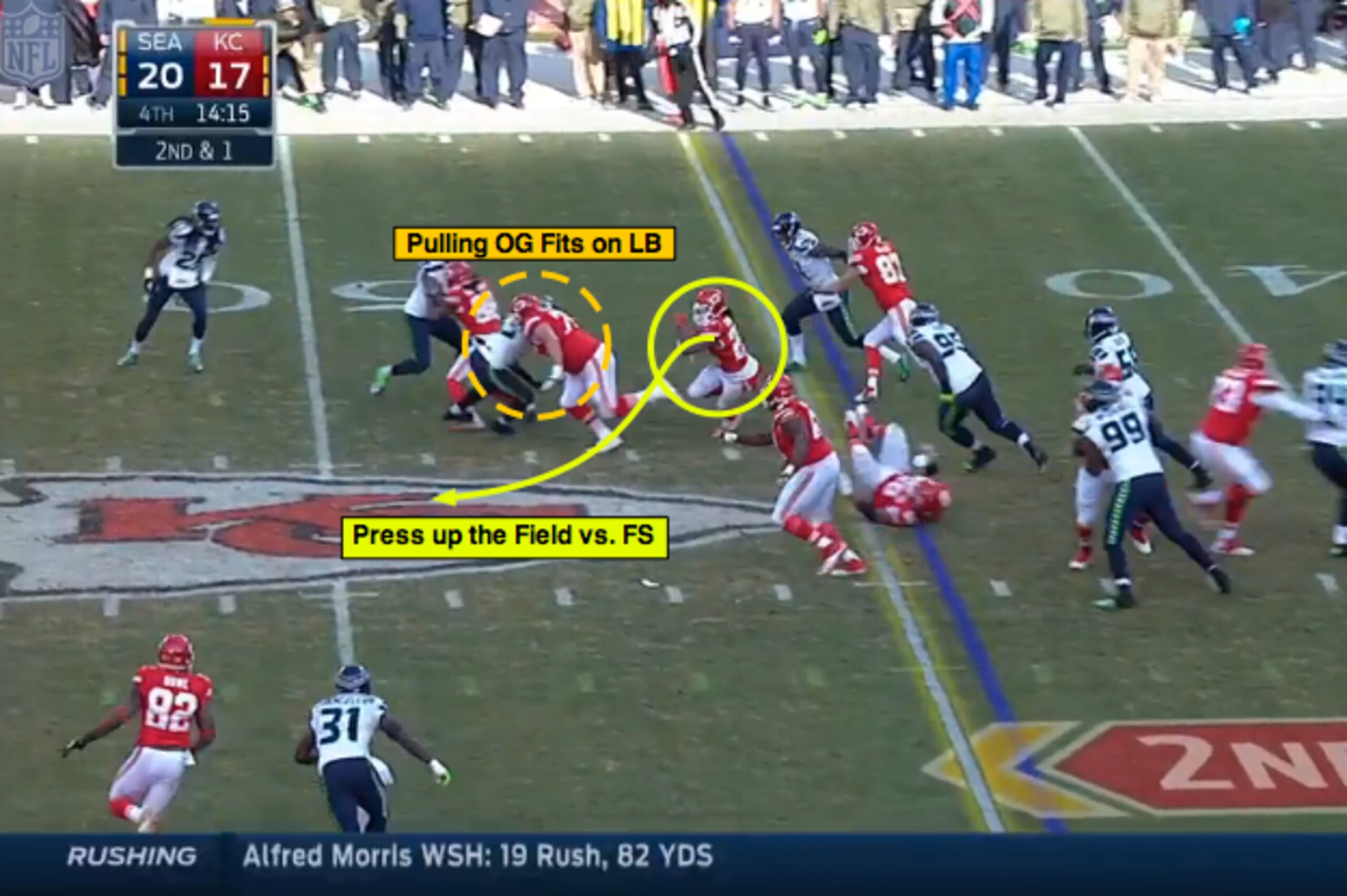
As you can see, the open-side guard fits up on linebacker Malcolm Smith with Irvin removed from the edge. That allows Charles to push this ball through the second level of the defense.
In this situation, free safety Earl Thomas has to run the inside alley and attack downhill to make an open-field tackle versus Charles once the run breaks.

Thomas has an opportunity to make this play, but the smooth cut from Charles in the open field forces the free safety to leave his feet and lunge. That prevents Thomas from getting his head across on the tackle.
And in the NFL, that’s not going to get it done versus a back with the skill set of Charles.
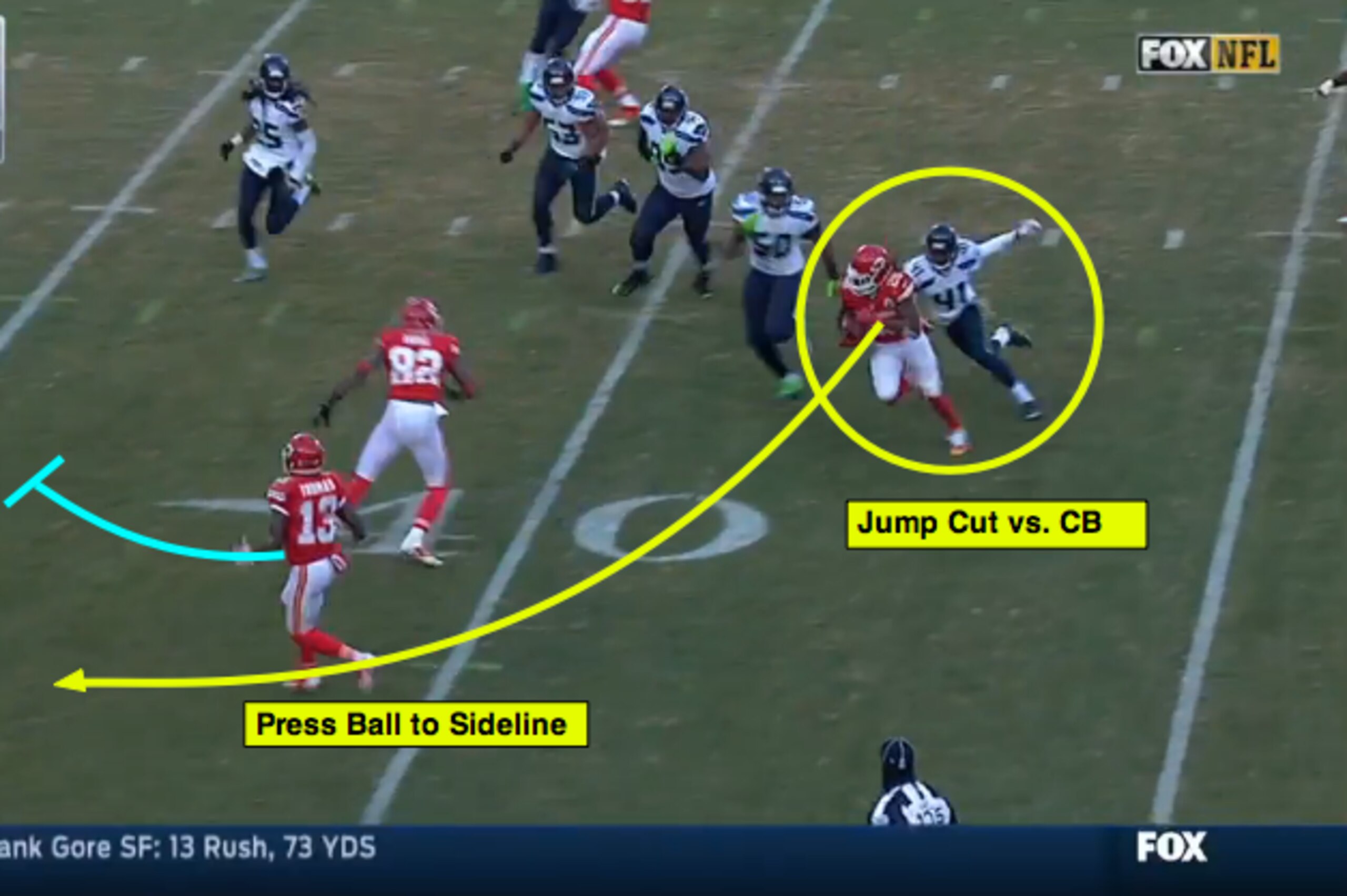
Even with the missed tackle from Thomas, the Seahawks still have a shot to limit this play. However, Charles once again forces a defender to miss in the open field when he shakes cornerback Byron Maxwell.
This creates an opportunity for Charles to get up the sideline (and set up the eventual game-winning score) with the help of De’Anthony Thomas blocking down the field.
Sweet run from Charles as it helped the Chiefs improve to 7-3 on the season.
Rams Utilize Pressure to Create a Turnover vs. Peyton Manning
The St. Louis Rams and defensive coordinator Gregg Williams used a nice mix of coverage and pressure to throw multiple looks at Peyton Manning while limiting the Denver Broncos offense to just seven points Sunday.
Let’s break down how the Rams used a five-man pressure scheme to take away the four-verticals concept, while putting linebacker Alec Ogletree in a position to make a play versus the Broncos' inside-seam route.
Personnel: Posse/11 (3WR-1TE-1RB)
Formation: Doubles Gun Far
Offensive Concept: Four Verticals
Defensive Scheme: “Gold” Zone Pressure

Four verticals is one of the Broncos' top concepts from a 2x2 formation with Manning showing quick play action to create inside throwing windows. That allows the Broncos quarterback to target the seam routes as the receivers stem to the top of the numbers.
On the defensive side of the ball, the Rams are rushing five out of their sub-package. Nickelback E.J. Gaines walks down to an open-side blitz alignment and both linebackers drop as “inside vertical hook defenders” (match to No. 2 or the inside-seam routes).
Outside, the cornerbacks are playing a “gold” (or trap) technique. That puts them in a position to sink with the release of No. 1 and read inside to No. 2 (slot receiver or tight end). If No. 2 breaks on an outside cut, the cornerback will drop No. 1 to the deep-half safety and drive on the throw.
However, our focus here is on the technique of Ogletree, as the linebacker plays to the inside hip of tight end Jacob Tamme (No. 2 to the closed side) and the Rams generate a rush lane for Gaines in the blitz front.

With the defensive end taking an outside path at the snap, the Broncos' right tackle widens to account for the edge rush. That creates a rush lane—and a free run at the quarterback—for Gaines to attack the open-side B-gap.
This forces Manning to identify his target (Tamme) and get the ball out with Ogletree playing the proper technique of the call (inside hip of the receiver) as he follows the seam route up the field.
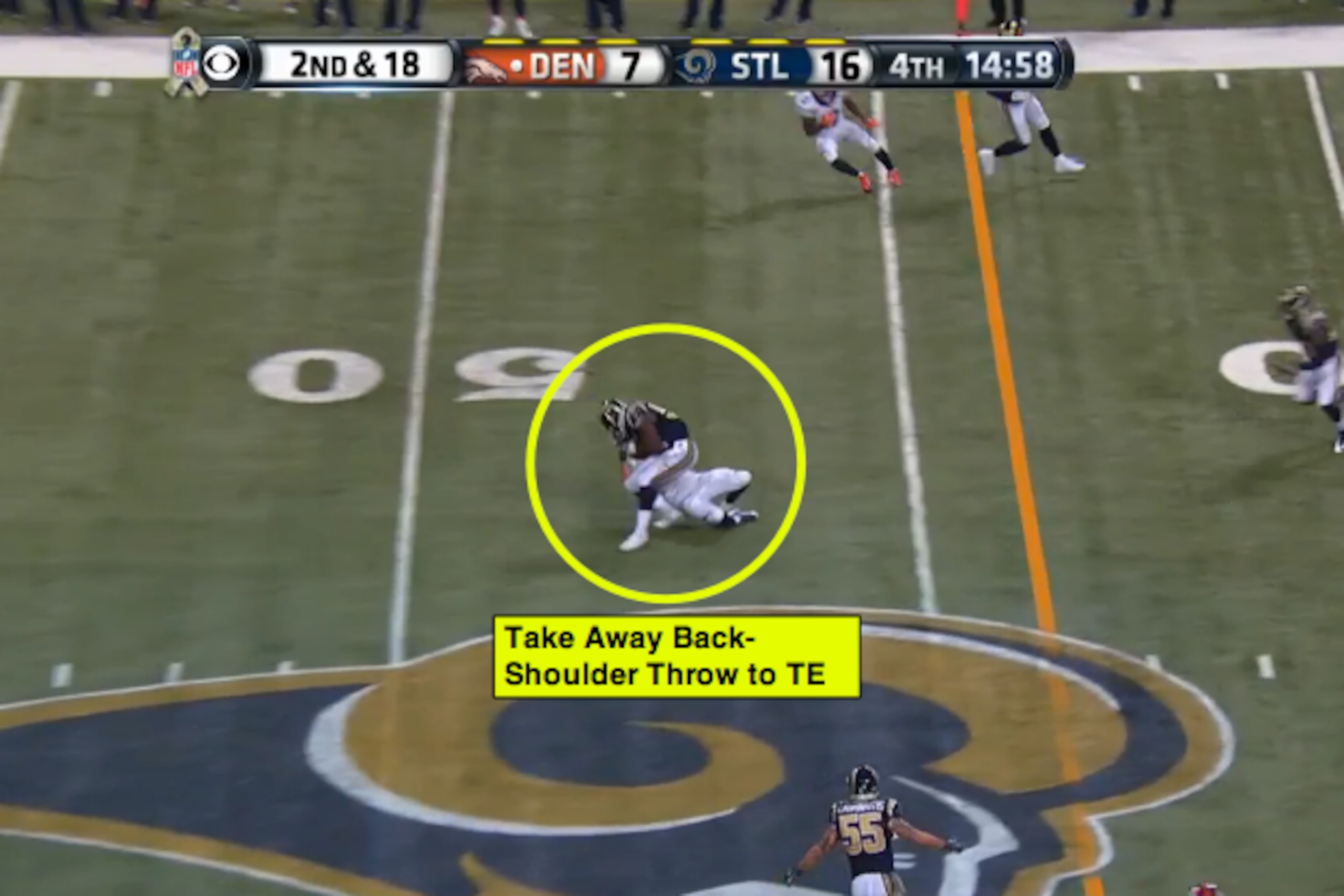
Manning tries to go back-shoulder on this throw (avoid the safety over the top), but because of the inside leverage and technique from Ogletree, the Rams linebacker gets his head around to make the play.
This is a perfect example of how coverage works in a pressure scheme. The Rams got a hit on Manning and took away one of his top concepts to produce a turnover in the 22-7 upset win.
Jonas Gray, Patriots Physically Dominate Colts Up Front
The New England Patriots used the power-run game to feed Gray the ball on Sunday night, as the running back showcased his strength at the point of attack to produce 199 yards and four touchdowns in New England’s 42-20 win on the road in Indianapolis.
Here’s a look at Gray’s first touchdown in the one-back power scheme that highlights his ability to play with low pad level while moving the pile.
Personnel: Ace/12 (2WR-2TE-1RB)
Formation: Unit Slot
Offensive Concept: One-Back Power
Defensive Scheme: Cover 1
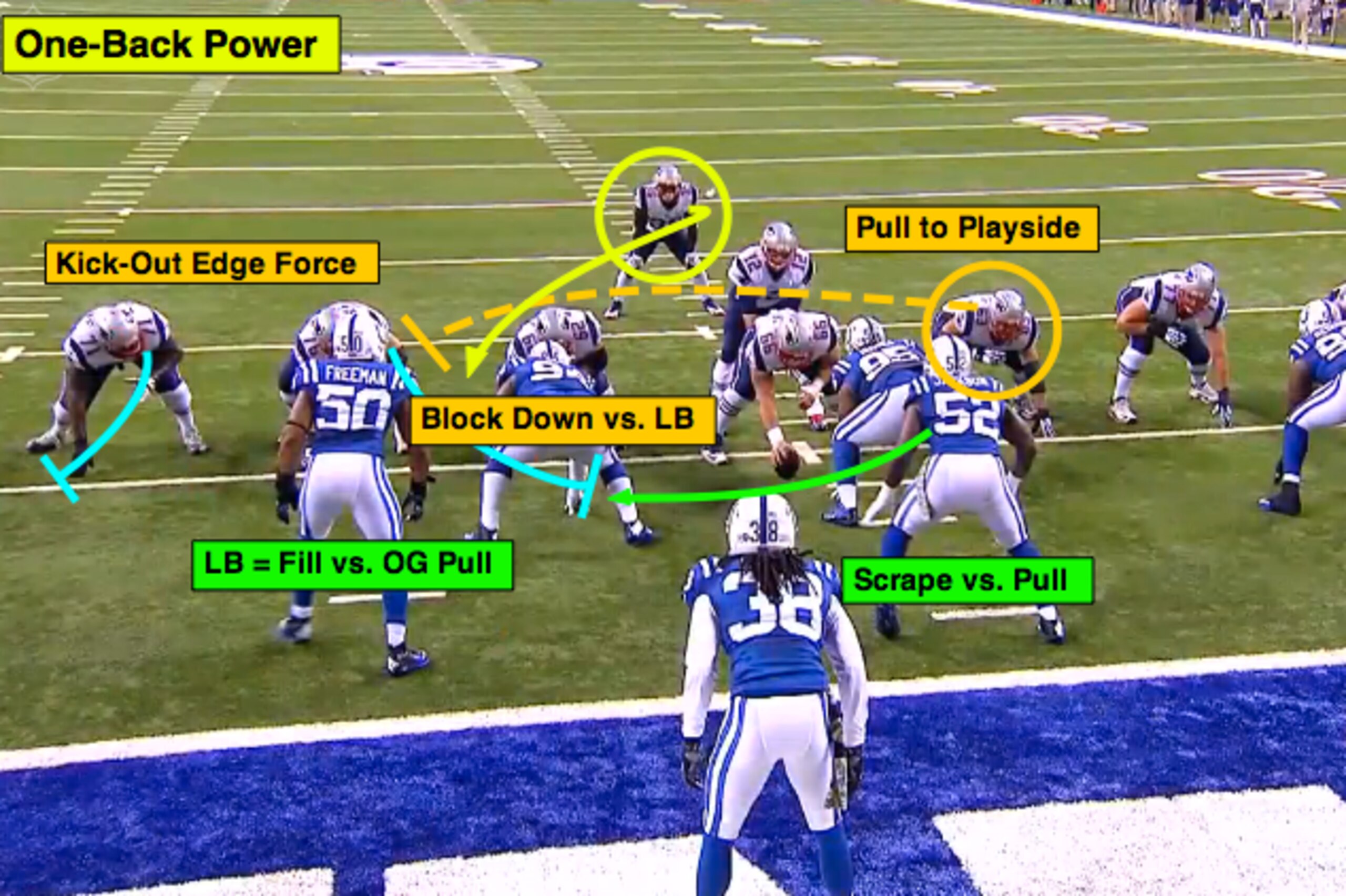
This isn’t a complex scheme with the Patriots bringing an extra offensive lineman into the game to the open side of the formation (replaces a tight end in Ace/12 personnel).
At the snap, the Patriots kick out the edge support, block down versus D’Qwell Jackson scraping to the ball and pull the closed-side guard to account for Jerrell Freeman filling downhill.
This is one of those power-run schemes where there is nowhere to hide in the deep red zone, and the contact in the hole feels like a car accident.
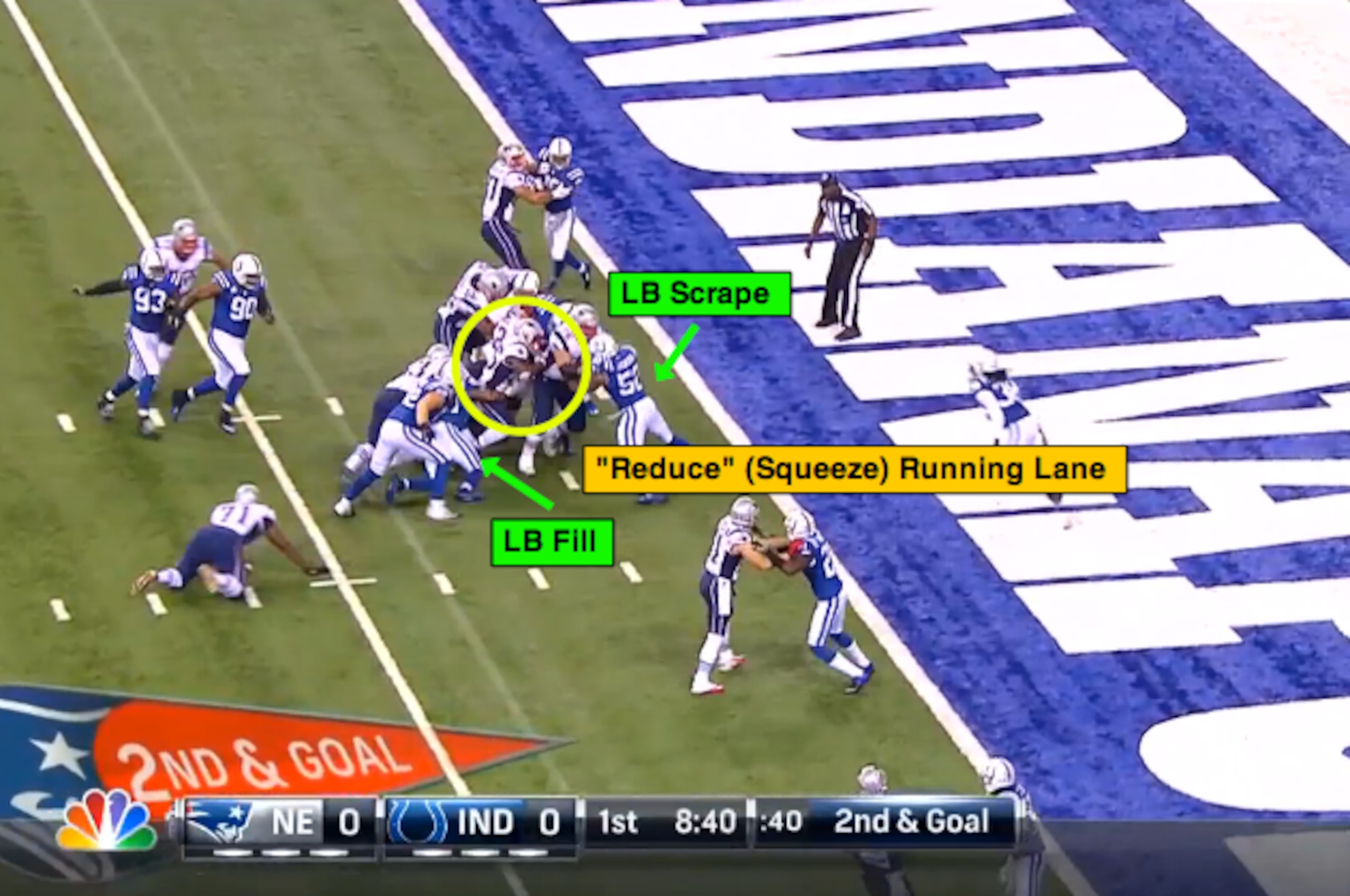
The Indianapolis Colts stuff up the run with Freeman filling the hole and Jackson scraping to the ball. This allows the defense to reduce (or squeeze) the running lane at the point of attack while forcing the back to cut inside.
However, look at Gray in this shot as the running back gets in behind the offensive line, drives his legs and pushes the pile forward. That’s hard running and what you should expect from an NFL back in this situation.

Gray reaches the ball over the goal line for six points and followed this touchdown up with three more scores in a game I thought the Patriots physically dominated with power running on the offensive side of the ball.
Drew Stanton Produces vs. Lions in the Red Zone
The 9-1 Arizona Cardinals continued to roll on Sunday with Stanton under center. The backup quarterback threw two touchdowns in the 14-6 win over the Detroit Lions.
Let’s break down Stanton’s second touchdown pass of the day, focusing on the pre-snap defensive look and the quarterback’s ability to deliver the ball with pressure in his face.
Personnel: Jet/10 (4WR-1RB)
Formation: Empty (Bunch)
Offensive Concept: "Out" Route
Defensive Scheme: Cover 0
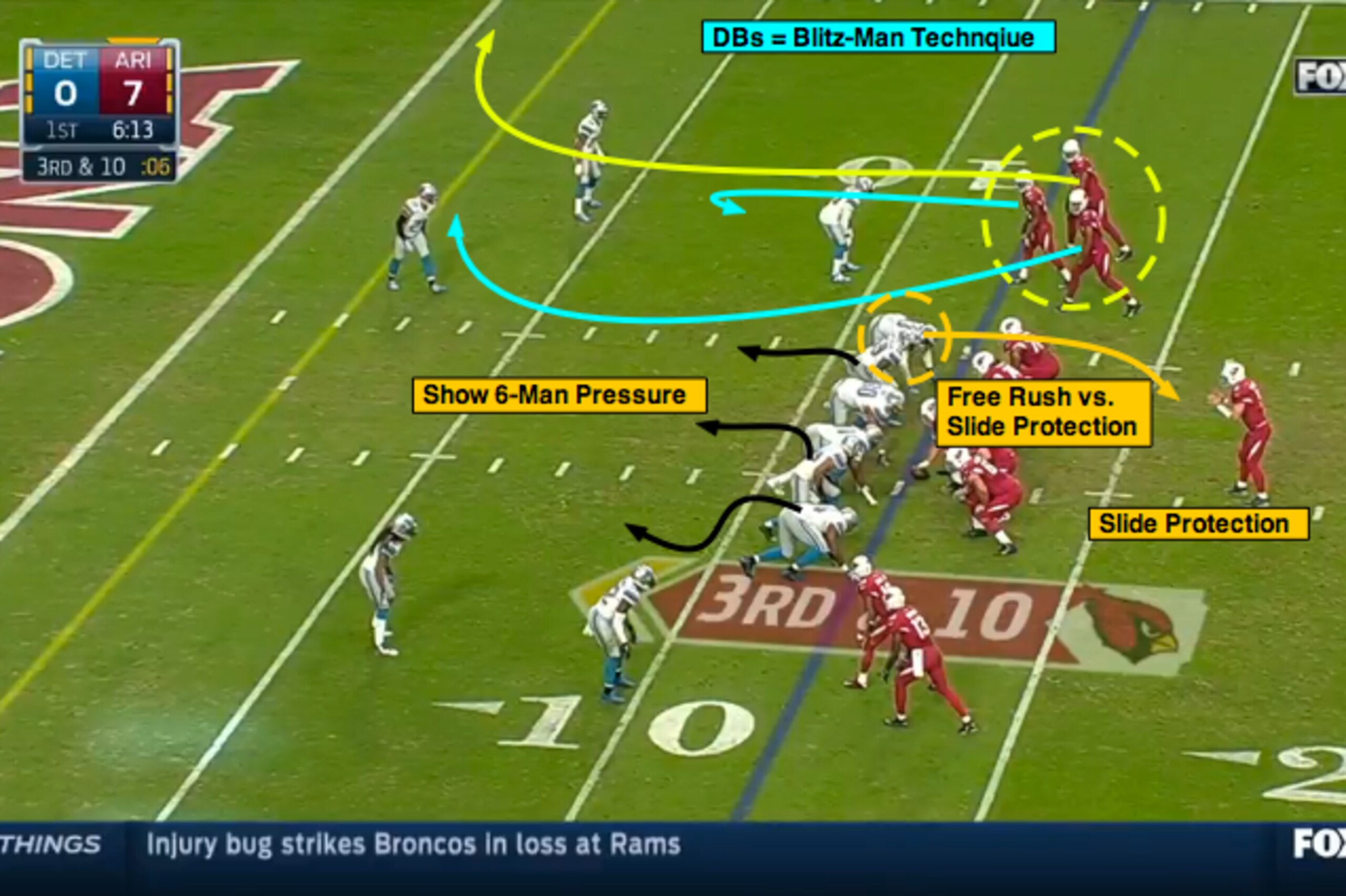
Based on the pre-snap alignment, I see "zero" pressure here from Detroit with six defenders showing blitz at the line of scrimmage. The nickelback is pressing the point versus the bunch and two defensive backs are playing off with inside leverage (blitz-man technique).
That forces the Cardinals to slide the protection to the open side of the formation while receiver Michael Floyd runs the deep out cut versus cornerback Darius Slay. That’s a good matchup for the Cardinals given the field position and the initial leverage position of Slay.
However, with the Lions dropping three defenders underneath, there will be a free runner off the closed-side edge versus Stanton as the Cardinals slide the protection. This puts some stress on Stanton to identify the matchup he wants while delivering the ball before the rush gets home.
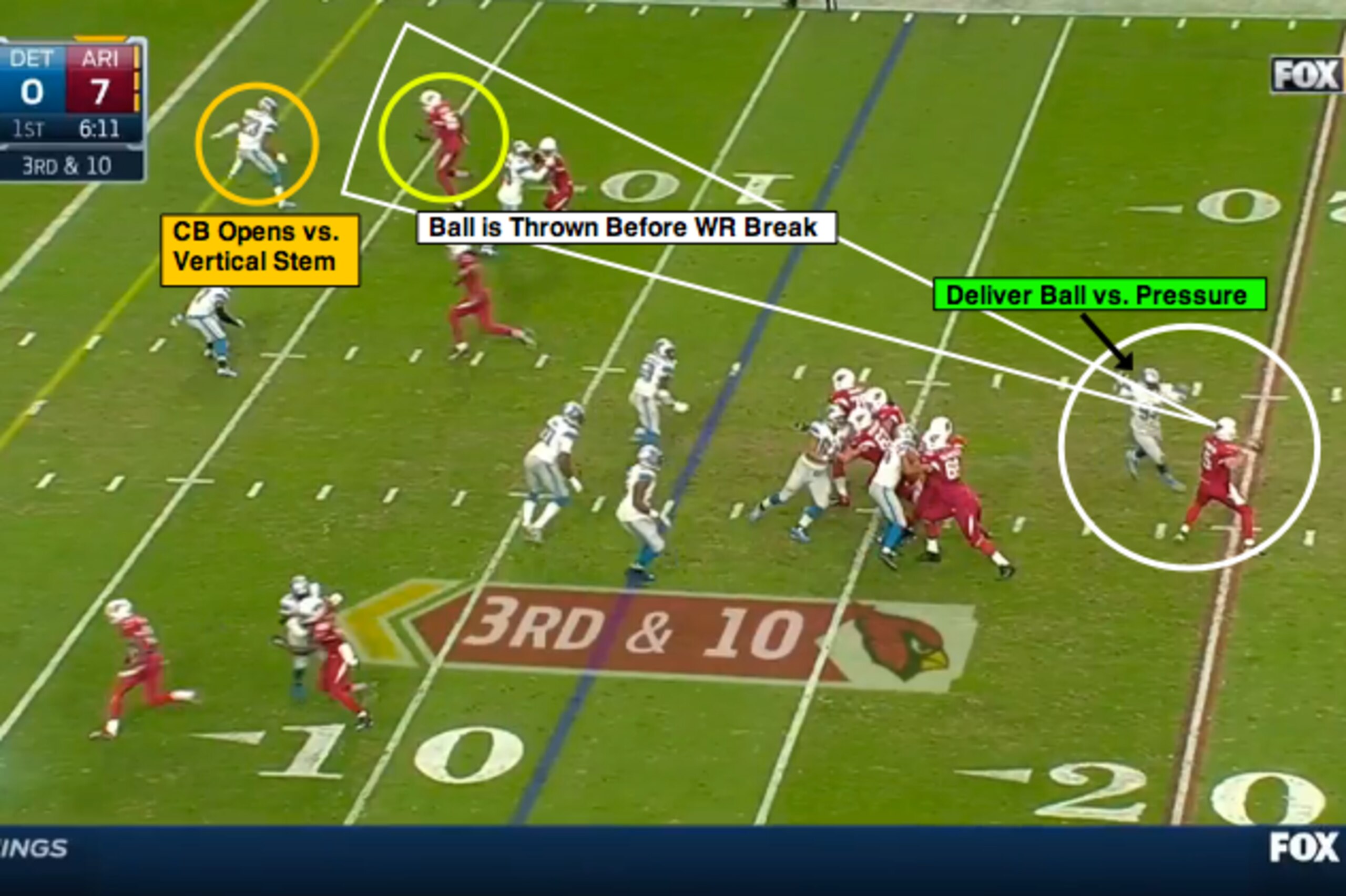
With the right tackle stepping down inside at the snap, Lions defensive end George Johnson has a clear path to put a hit on Stanton.
However, Floyd takes a hard, vertical stem up the field that forces Slay to open his hips (instead of staying square), and Stanton throws the ball (with pressure in his face) before the receiver even comes out of his break.
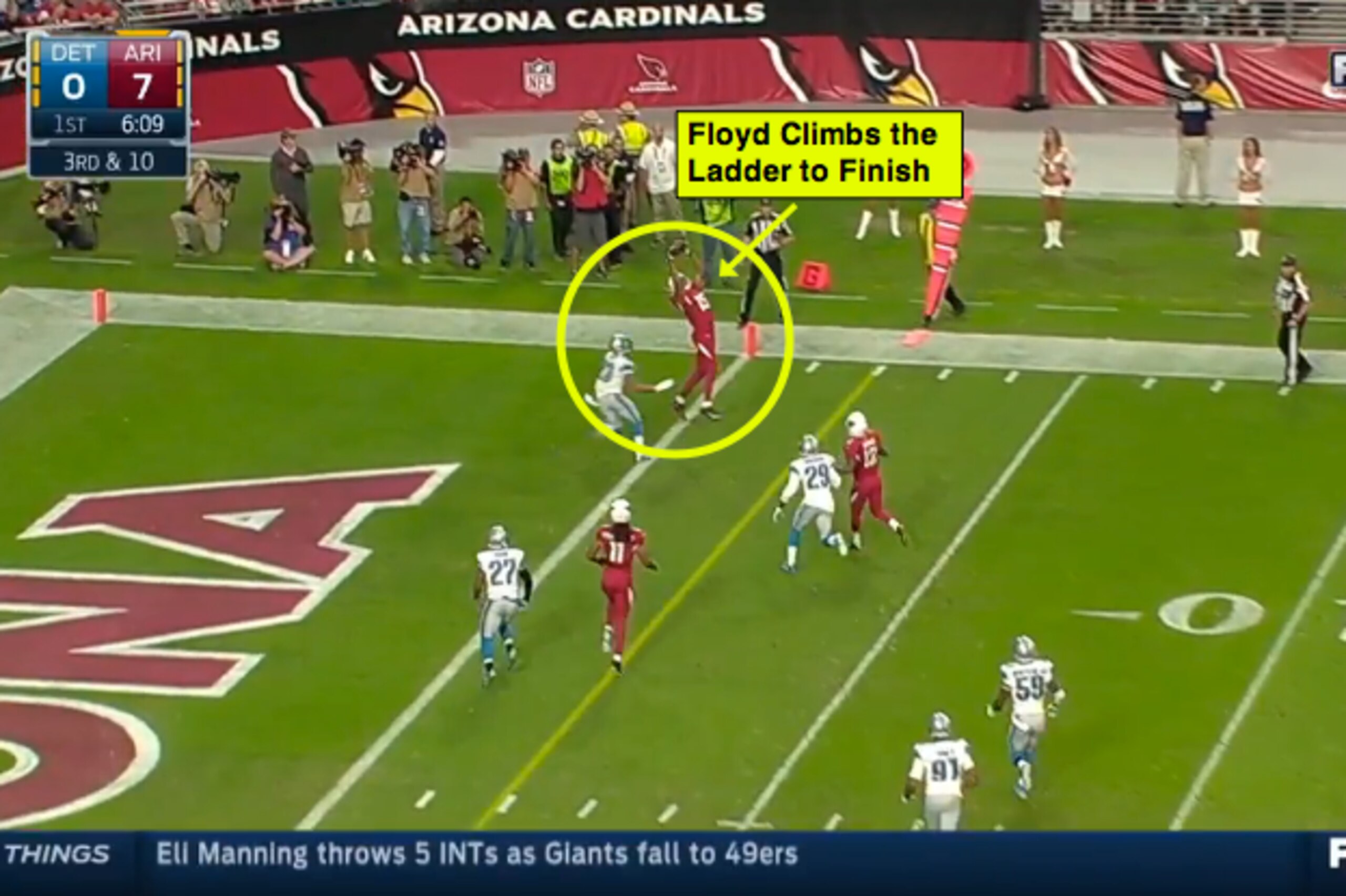
Look at this finish from Floyd after he creates some separation at the top of the route on the out cut. The Cardinals' wide receiver climbs the ladder to secure the catch and finish in the end zone.
Julius Peppers, Packers Defense Close Out Mark Sanchez, Eagles
Last Monday night in a blowout win over Carolina, Sanchez played good football for the Philadelphia Eagles as he managed the pocket and showcased his ability to execute in Chip Kelly’s scheme. However, Sanchez took a step back on Sunday during the 53-20 loss to the Packers. He was unable to protect the ball and he struggled with accuracy/reads in the game plan.
Let’s break down Peppers’ pick-six that essentially closed out the Eagles after Sanchez made a really poor read on the tare concept that gave the linebacker an opportunity to break on the ball.
Personnel: Posse/11 (3WR-1TE-1RB)
Formation: Doubles Slot Gun Far
Offensive Concept: "Tare" Route (Packaged Play)
Defensive Scheme: Cover 3

In this packaged play, the Eagles are running a front-side “tare” concept (clear-out fade, stick-out, flat combo) with a backside slip screen to Darren Sproles.
Given that the Packers are only rushing three and playing a zone shell in the secondary, Sanchez can work the quick two-level read on the “tare” or come back to Sproles as the Eagles release both guards and the center on the screen.
As an inside “hook” defender, Peppers gains depth in his drop and gets his eyes back to the quarterback. Read inside and break on the throw. Those are the basics of an underneath defender in a zone coverage.

As the curl-flat defender widens to account for No. 2 on the "flat" route, Sanchez reads inside to the tight end on the stick-out.
However, instead of allowing the tight end to clear Peppers (target the hole in the zone), Sanchez locks onto the route and throws the ball with Peppers in a position to make a play.
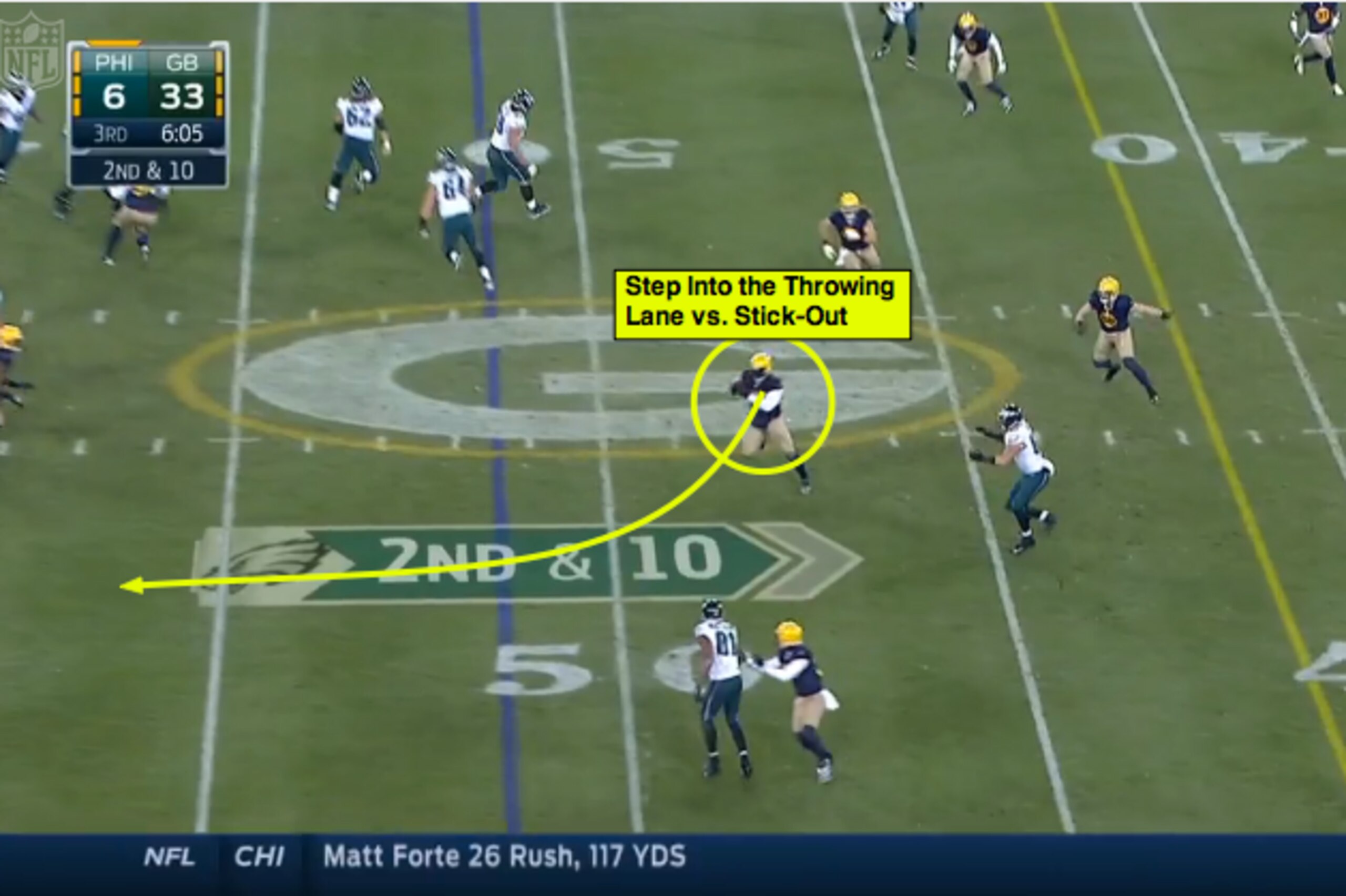
This is a poor read from Sanchez given the athletic ability of Peppers and the defensive look underneath—the linebacker was still sitting in the throwing window.
Peppers breaks on the throw, secures the catch and rumbles the other way to remind us that he can still run at this stage of his career.

Wide receiver Jordan Matthews has an opportunity to make a tackle after the interception, but the rookie goes for a ride as Peppers runs through the contact to find the end zone.
It was a really rough day for Mark Sanchez in a game where the Eagles needed offensive production to keep pace with Aaron Rodgers and Jordy Nelson.
Seven-year NFL veteran Matt Bowen is an NFL National Lead Writer for Bleacher Report.