Brandon Rush Determined to Reboot Career with Warriors After Devastating Injury
OAKLAND, Calif. — Brandon Rush's career had finally found its sweet spot. But on Nov. 2, 2012, the Basketball Gods hit the reset button.
"I remember it play-by-play," Rush recalled Tuesday morning at the Warriors' practice facility in downtown Oakland. "It was on a fast break from Klay [Thompson]. Klay hit me on the baseline, I made two dribbles to the left and went up for a dunk. Z-Bo [Zach Randolph] got me on the side and I just landed wrong. I knew. I heard a pop. I knew that it was bad."
TOP NEWS
Giannis' Warning to NBA ⚠️

NBA Power Rankings Entering Preseason 🔢
Wizards Guard Admits Tanking 😨
Bad is an understatement. The crash landing tore Rush's left anterior cruciate ligament and medial collateral ligament, an injury widely known to end a player's year, even when it occurs on the second game of the season.
It wasn't until this past summer, 20 months after the night Rush's Warriors fell to Randolph's Grizzlies and Rush suffered his second ACL tear in five years, that he finally reported feeling 100 percent healthy again—a grueling time frame compared to the five months it took him to recover from an ACL tear in his other knee in college.
In the days that followed the injury, Rush's agent Mark Bartelstein said is was "devastating" and "traumatic" to Rush, according to the Associated Press via ESPN.com. And the recovery period offered little respite from the pain.
"It was definitely miserable," Rush recalled. "It was a rough 10 months, especially. I had some complications and couldn’t have surgery right away so I had to wait two months...It was definitely a rough stage in my life, and I’m glad it’s over with."
But now, two years, two teams, one trade and one free-agent contract later, Rush is again donning the Golden State blue and yellow. He's left navigating a league that is far kinder to young, healthy leapers than to post-surgical veterans seeking another fresh start.
Who is Brandon Rush the player now? And what's left of the once-promising career built on the foundation of an NCAA tournament championship and lottery-pick expectations? Add those questions to the list of unknowns that have plagued Rush since late 2012. But put his name first on the tally of people trying to find the answers.
"I think I can still be a good role player on this team," Rush said.
In 2012, when he'd found his niche so comfortably, there was no question about that. But it wasn't always that way.
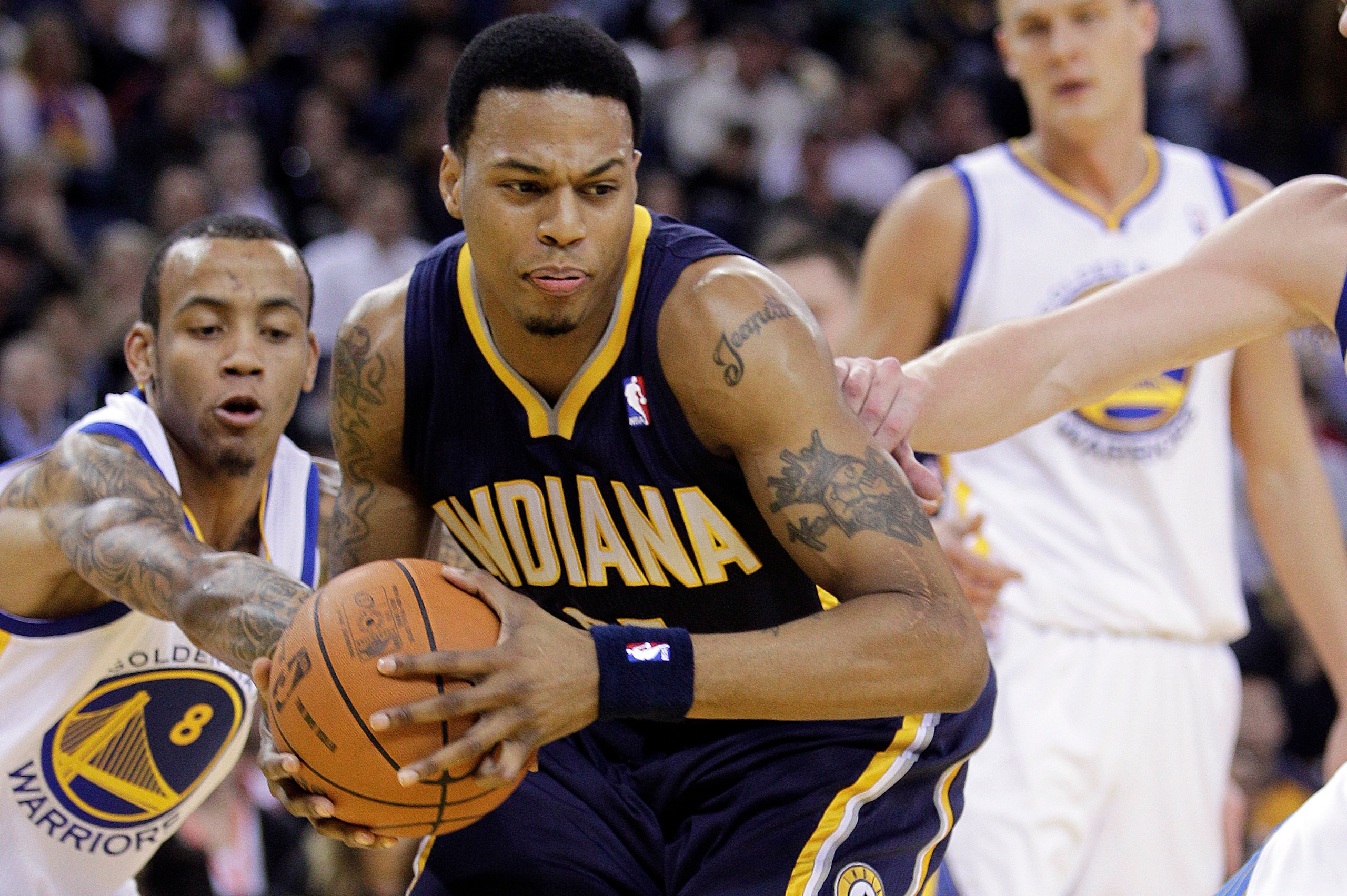
Rush spent his first three years on the Indiana Pacers mired in the pressures associated with being a high draft pick, while his production (8.9 points and 3.6 rebounds per game on 42.2 percent shooting) fell short. Near the end of his second season, John Hollinger, writing for ESPN, noted just how historic Rush's struggles actually were.
"Rush has a PER of just 9.96 in his second pro season, but somehow leads the Pacers in minutes played with 2,159–157 more than the next closest player, Troy Murphy.
If he manages to maintain his lead, he’ll claim the dubious distinction of being the worst player ever to lead his team in minutes. My search through the record books unearthed only two other players in the post-merger era to lead their team in minutes with a single-digit PER: Bruce Bowen with San Antonio in 2003-04, and Jason Collins with the Nets a season later.
"
Rush finished with a PER of 10.1 that year, narrowly avoiding the infamous distinction.
In his fourth season, Rush jump-started his middling career after an offseason trade to the Warriors in exchange for Louis Amundson and a second-round draft pick.
"My first years in the league I didn’t even know where Golden State was," Rush said Tuesday. "But I came out here in 2011 and loved it."
And it showed. During his first year in Oakland, Rush entered NBA history books with one of the best season-long shooting displays ever recorded—a stark contrast from his growing pains in Indiana.
That year, Rush became just the seventh player ever to shoot over 50 percent from the field (50.1) and over 45 percent from three-point range (45.2) while attempting over 200 threes. The others on that list: Steve Nash, Dale Ellis, Jeff Hornacek, Brent Barry, Steve Kerr and Tim Legler—all historically great percentage shooters. Rush was also the youngest to ever join that list at 26, with the average age of players achieving the feat being 30.
Soft-spoken but still confident, Rush said no one had ever shown him that list of sharp-shooting company he can call his peers before this week.
"I didn’t know that. That’s pretty nuts," he said. "I think I can still do that. I’m just trying to get my rhythm down."
The Warriors won only 23 games that year in the lockout-shortened season, despite Rush's career-high offensive production. But with Stephen Curry ready to blossom into a superstar and Andrew Bogut headed to Oakland, the tide was finally turning for Golden State after just one playoff appearance in 18 seasons. And in the first game of 2012-13, Rush built on his historic year with a season-opening line of 14 points on 6-of-9 shooting in an 87-85 win over the Phoenix Suns.

Then just two minutes after checking in to Game 2 against Memphis, Rush collided with Randolph, and his budding career came to a grinding halt. Randolph, known for throwing his heft haphazardly into opponents, was immediately and perpetually repentant for the collision.
"He came back [to the locker room] and apologized and every time I see him he still apologizes, so no hard feelings towards him," Rush said.
The injury led to Rush's expendability within the franchise, and he was packaged in a trade the following summer to the struggling Utah Jazz in order to free up salary-cap space for the Warriors to acquire Andre Iguodala. At the time of the trade, Rush was still deep in the throes of ACL and MCL rehab. He suited up in 38 games for Utah in 2013-14, averaging a mere 2.1 points per game on 33.3 percent shooting.

"It was really difficult being traded to Utah because there was a lot of confusion going on and they didn’t know what to do with my situation," Rush told Warren Shaw of Dime Magazine in October. "I didn’t rehab well in Utah so it took me a while."
But the hurdles were more than physical for Rush.
"My mind — my mental standpoint — wasn’t there," he told Dime. "At times, [while] driving in traffic I was thinking too much. I mean everything just wasn’t going right, things weren’t clicking the right way."
As far as climates go—political, cultural, environmental, etc.—there aren't many places that stand further apart on the spectrum than the Bay Area and Salt Lake City, and Rush took notice right away.
"It’s different there. There’s snow," he said on Tuesday. "The fans are different there. The whole atmosphere about Utah is different. But my family loved it at least, so I was happy for them."
Two years of futility didn't stop over 25 NBA team reps from watching Rush audition for a new job in July, according to the San Francisco Chronicle. Within days of that workout, Rush signed a new two-year deal to return to the team where he finally found a flourishing role in the NBA.
"Being able to have the opportunity to come back here to a winning team...and I played with some of the guys from the last go-round, it was definitely a no-brainer for me to come back here," Rush said.
But can he come full circle? At a surgically repaired 29, does he have enough left in the tank to contribute like so many thought he could two years ago?
"I think I still have a lot of years left in this league," he said. "I can still shoot the ball. As long as you can shoot the ball and defend, you can be in this league a long time."
Rush admitted to KUSports.com in October that the "time has passed" for him to still be a starter in the NBA. But as he surveyed the end of his team's shootaround from a folding chair on Tuesday, he remained confident that he has what it takes to run with the second unit.
"I think honestly I’m about 90 percent of what I was before I got injured, athletically," he said with frank optimism. "My speed is coming back. Everything is coming back except that bounce I used to have."
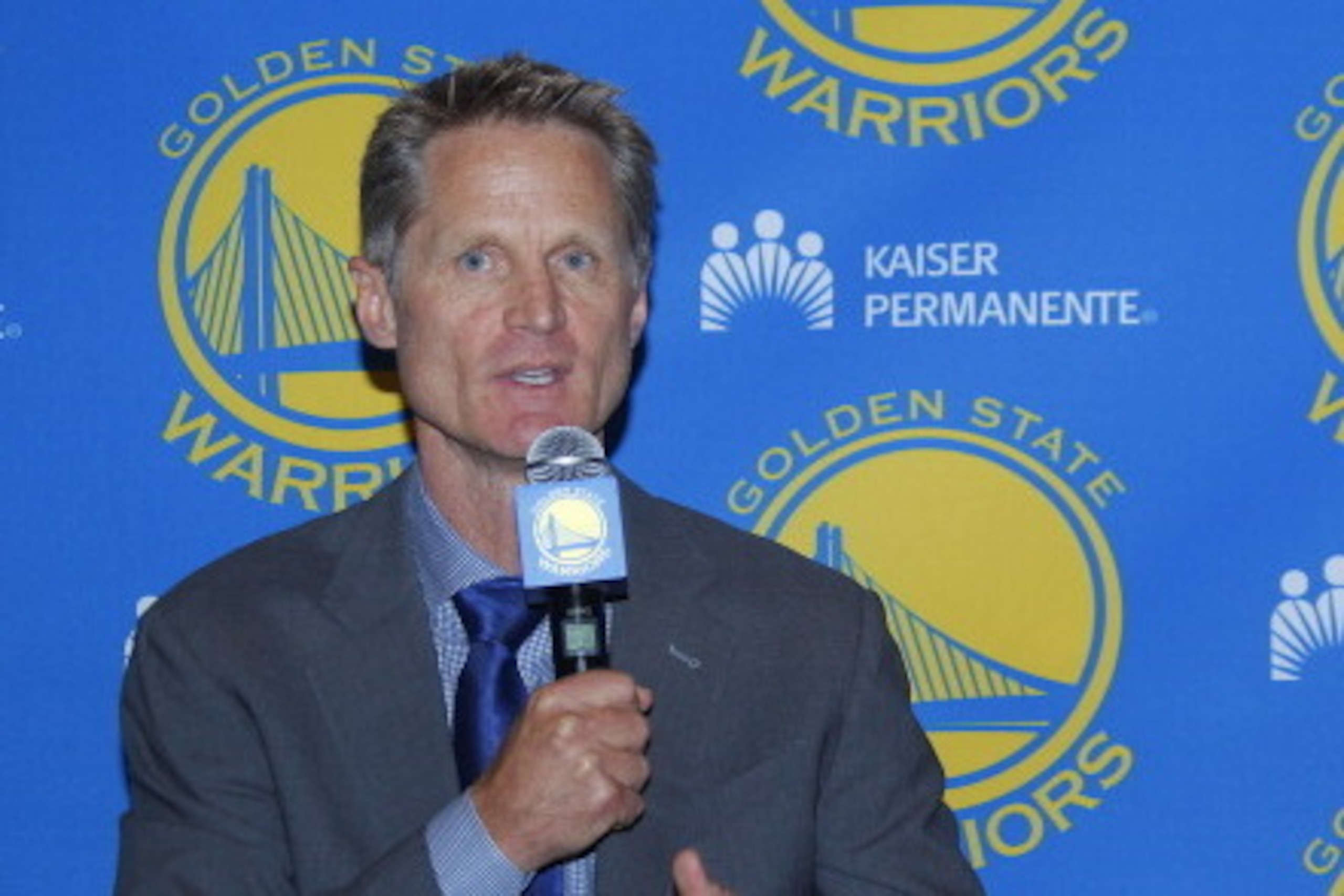
The Warriors, now replete with talent through the end of the bench, are 6-2 on the young season. And while Rush's story could very well still have a redemptive ending in Oakland, head coach Steve Kerr has only used Rush three times so far.
"It's hard. He played three minutes. I wanted to get him in, if possible," Kerr said after the Warriors' loss to the Spurs on Nov. 11. "I did get him in during the meat of the game because the game called for it...He did fine. He did what he was supposed to do. But we have a really deep team...I can't get everybody in."
Rush didn't put in nearly two years of rehab to settle for "fine" at this point. The odds are rarely in favor of a veteran with with two reconstructed knees. But if his 2011-12 season taught us one thing, it's to never assume Rush can't defy the odds.
All statistics courtesy of Basketball-Reference.com.
Jacob Bourne is an Associate NBA Editor for Bleacher Report. You can keep up with his unique brand of NBA musings on Twitter at www.twitter.com/jacobwbourne.
.jpg?w=2560 "Every Trade's Best Trade Asset 🔁")
.jpg?w=2560 "Insiders: Cowboys Overpaid for Porter")
.jpg?w=2560 "MHJ's Potential Trade Value 📉")