
Memo to Melo: Pass or Lose
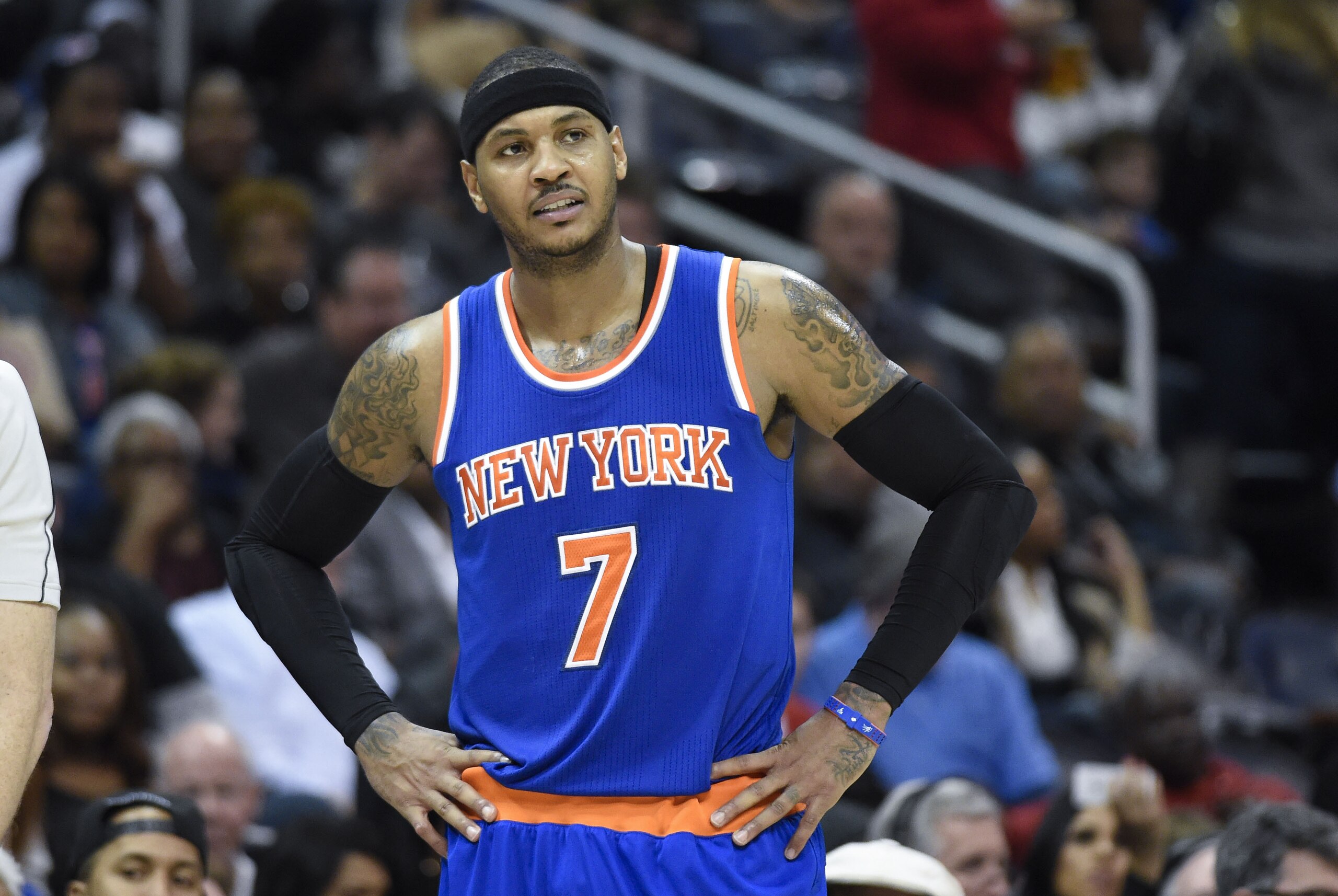
Carmelo Anthony and the New York Knicks' triangle offense aren't getting along.
Playing within the system that helped Phil Jackson win 11 NBA championships was supposed to make things easier; its core tenets were supposed to lighten the offensive load upon Anthony's shoulders, boosting his efficiency and increasing his unselfishness, all while organically augmenting the value of those around him.
None of that has happened early on. The Knicks' 20th-ranked offense is still in its infancy, but its effectiveness is cracking and crumbling and collapsing under the weight of misconstruction and Anthony's lackluster performance.
TOP NEWS
Giannis' Warning to NBA ⚠️

NBA Power Rankings Entering Preseason 🔢
Wizards Guard Admits Tanking 😨
Although unsightly growing pains were inevitable during this systematic overhaul, Anthony was supposed to be this team's one constant—its lone unflappable scorer who wouldn't break or even bend. Instead of resembling an invariable bright spot, though, he's on pace to average a career low in points (19.6), field-goal percentage (38.2) and player efficiency rating (14.5).
If the Knicks are to make anything significant of 2014-15 and rebound from their inchoate beginning, they'll need his offensive struggles to subside soon—because for all the triangle is supposed to do, it won't ever fix New York without first fixing Anthony.
Wanted: More Passing
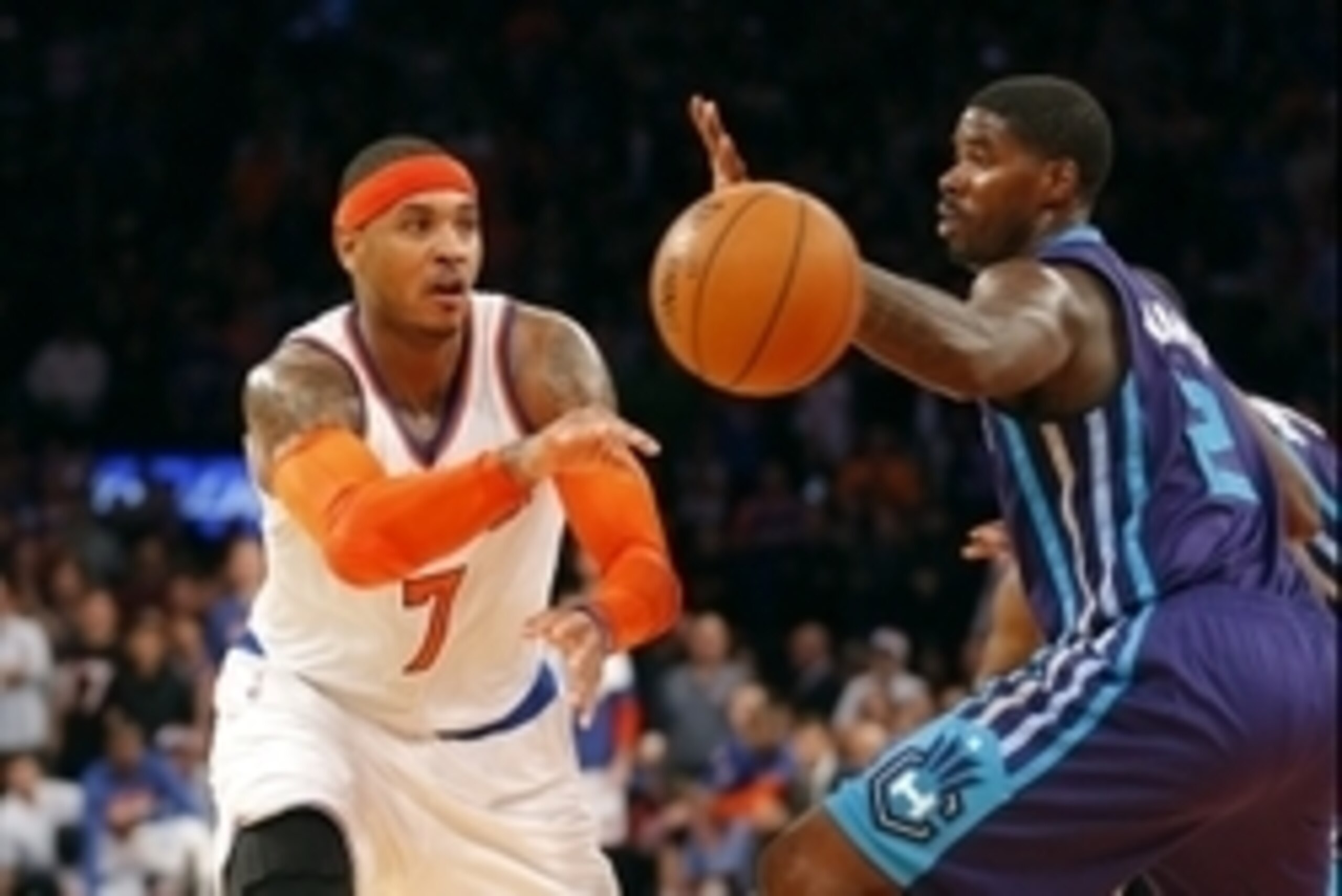
Even though the Knicks rank third in passes per game, their offense remains largely predictable.
Certain players rarely look at the rim. Others aren't hitting shots. Some are just incapable of burying the shots they're taking. Whatever the symptom, the disease is the same: Anthony doesn't have a reliable second option to help simplify his offensive game.
Three other players are averaging in double figures: Amar'e Stoudemire, Iman Shumpert and Tim Hardaway Jr. Anthony, meanwhile, is the only player pumping in north of 15 points per game. It's not as if players aren't receiving opportunities because of him, either. Anthony is hoisting fewer shots (19.4) than last year.
He might just need to take even less.
More pointedly, he needs to pass even more.
Not that he isn't passing more already. Through the team's first five games, he was averaging 1.15 passes per minute played, up from 1.06 last season. He's also tracking toward a career high in assists. Asking him to pass much more would seem unreasonable given the dearth of star power around him.
Scoring is also his primary function. He isn't in New York for his point guard skills. He's a scorer. Scorers shoot. Scorers score.
Still, exceptional times call for exceptional measures.
When Anthony is the one deferring, the Knicks are making shots. He's averaging four assists on 7.2 assist opportunities per game. That means his teammates are shooting 55.6 percent off his passes, markedly better than the 43.8 percent that New York is shooting overall.
Furthermore, remove Anthony's 52 makes and 136 field-goal attempts from the team's total (253-of-577), and New York is shooting 45.6 percent from the floor overall (201-of-441). That conversion rate would rank among the nine best in the league. The Knicks' 43.8 percent mark currently ranks 19th.

Having Anthony pass more renders the offense more unpredictable. It would also ease the difficulty of the shots he himself is attempting.
Defenses are still zeroing in on him even though he's passing more than last season. Double-teaming him has become the standard. Teams aren't allowing Anthony to get his while locking everyone else down. Players are hounding and trapping him in hopes he'll do what comes naturally: shoot. And that's what he's doing.
Per the NBA's player tracking box-score database, 56.6 percent of his shot attempts have come under duress. He's shooting just 36.3 percent (28-of-77) in those situations.
Passing even more will force defenses to stay honest, affording Anthony more one-on-one situations—rather than one-on-two and one-on-three—while increasing the number of wide-open looks he receives. He's putting in just 40.7 percent (24-of-59) of his uncontested shots, but those will inevitably fall.
Contested looks are different. They don't have to start falling. Anthony is talented enough to make those difficult attempts, but with hands in his face and bodies in his way, there are no guarantees. He has teammates who are hitting shots—especially when he's the one passing to them. He needs to do a better job of using that to his advantage.
Different Shots
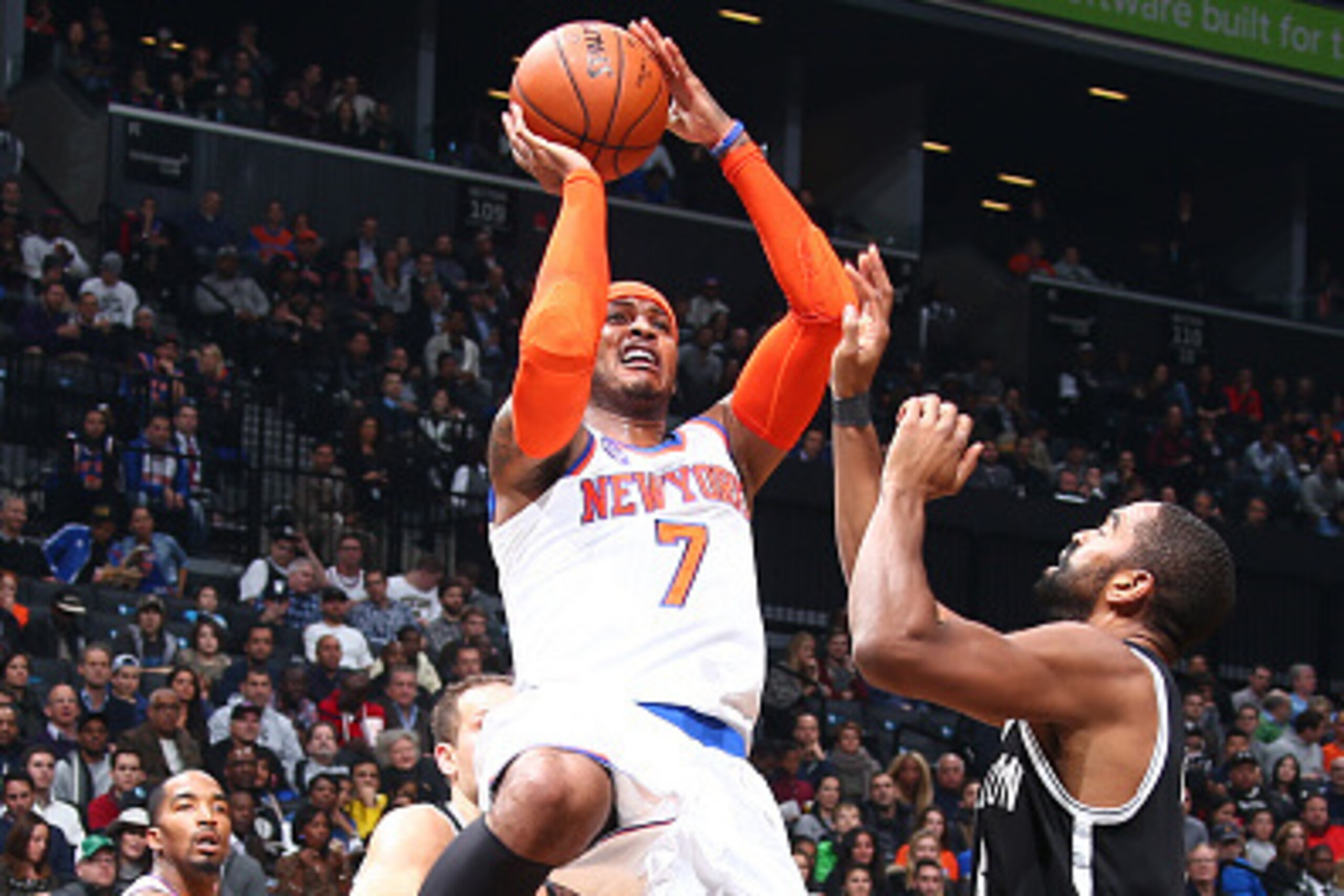
Sometimes, it is this simple.
Anthony needs to start attempting different shots. The ones he's jacking up now aren't conducive to offensive success.
Most of what's ailing his shot selection is systematic or out of his hands. The Knicks, for one, are in the habit of sapping time off the shot clock before making pivotal decisions. That, in turn, has them entering notoriously inefficient panic mode, wherein they hoist low-percentage shots out of necessity.
Following their loss to the Washington Wizards, The Wall Street Journal's Chris Herring found that 16 percent of the Knicks' shot attempts were coming with four or fewer seconds remaining on the shot clock. Finding opportunities and shooting sooner will help everyone's efficiency—including Anthony's.
So, too, will shooting fewer mid-range jumpers.
"It’s late on a Friday, and a more thorough look at the data is certainly warranted, but they’ve been a very good trey-heaving team again this year," KnickerBlogger.net's Robert Silverman wrote after the Knicks fell to Brooklyn, "it’s just that the number of attempts is way, way down, mainly because of our friendly neighborhood triangle."
The triangle encourages mid-range jumpers. It produces spacing and demands selflessness, but with so many sets beginning just above the elbow, there's too much stock placed in long-two opportunities.
New York leads the league in mid-range attempts. The team is attempting 33.9 every night and hitting on only 40.9 percent of them. Anthony himself ranks fourth in mid-range shots per game (10.2) among all players. He's drilling just 37.5 percent of them.
Mid-range jumpers helped fuel his rise to prominence, but he's never averaged more than 9.9 attempts from that area for his career (2013-14). In recent years, he's made a living off reaching the rim and honing his three-point touch, which needs to continue.
| Restricted Area | 19.8 | 48.1 |
| In the Paint | 14.7 | 30.0 |
| Mid-Range Jumpers | 47.1 | 37.5 |
| Three-Pointers | 18.4 | 36 |
Ideally, more of his shots would come within the restricted area or in the paint. But since the triangle only allots a certain number of isolations—situations in which many of those attempts would, in theory, come—the Knicks need to milk his distance shooting.
Last season, Anthony drained a career-best 40.2 percent of his treys. This year, he's drilling a respectable 36 percent—only he's on pace to average just 3.6 attempts from deep per game, his lowest mark since arriving in New York.
That decline would be fine if Anthony was substituting long balls with point-blank opportunities. But again, he's not. Nor are the Knicks. More than 40 percent of their shot attempts have been long twos. It's been all mid-range everything.
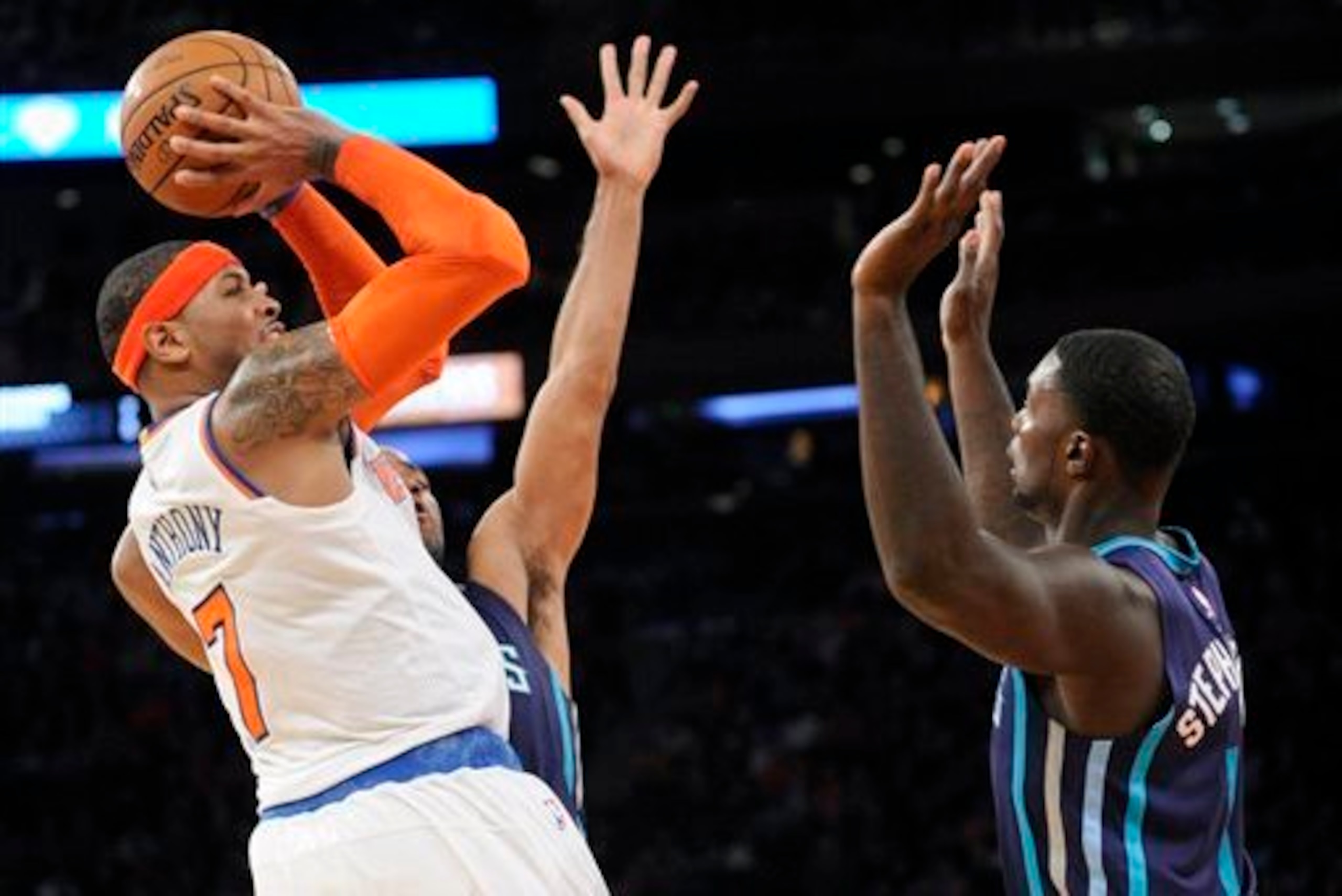
"This antiquated shot selection has really been cramping New York's style," Joe Flynn wrote for Posting and Toasting. "The Knicks rank 25th in the league in three-point attempts, which is positively absurd given their stable of shooters."
Indeed, their archaic shooting tendencies have been detrimental. And puzzling. The Knicks own the league's best three-point conversion rate (41.7). They should be shooting more than 17.1 a night. Anthony has become too dangerous an outside shooter to curb those chances. They're especially important as his transition to an off-ball scorer plows forward.
Half of his made baskets are coming off assists. That number needs to be higher. It was for a little while, then it dropped as the Knicks and Anthony began deviating from the game plan.
Shooting more threes is a way to help that climb. Anthony banged in 44 percent of his catch-and-shoot bombs last season. While said success rate has plummeted, that part of his offensive game has been nearing extinction.
Both he and the Knicks must find a way for that to change.
Time is Everything
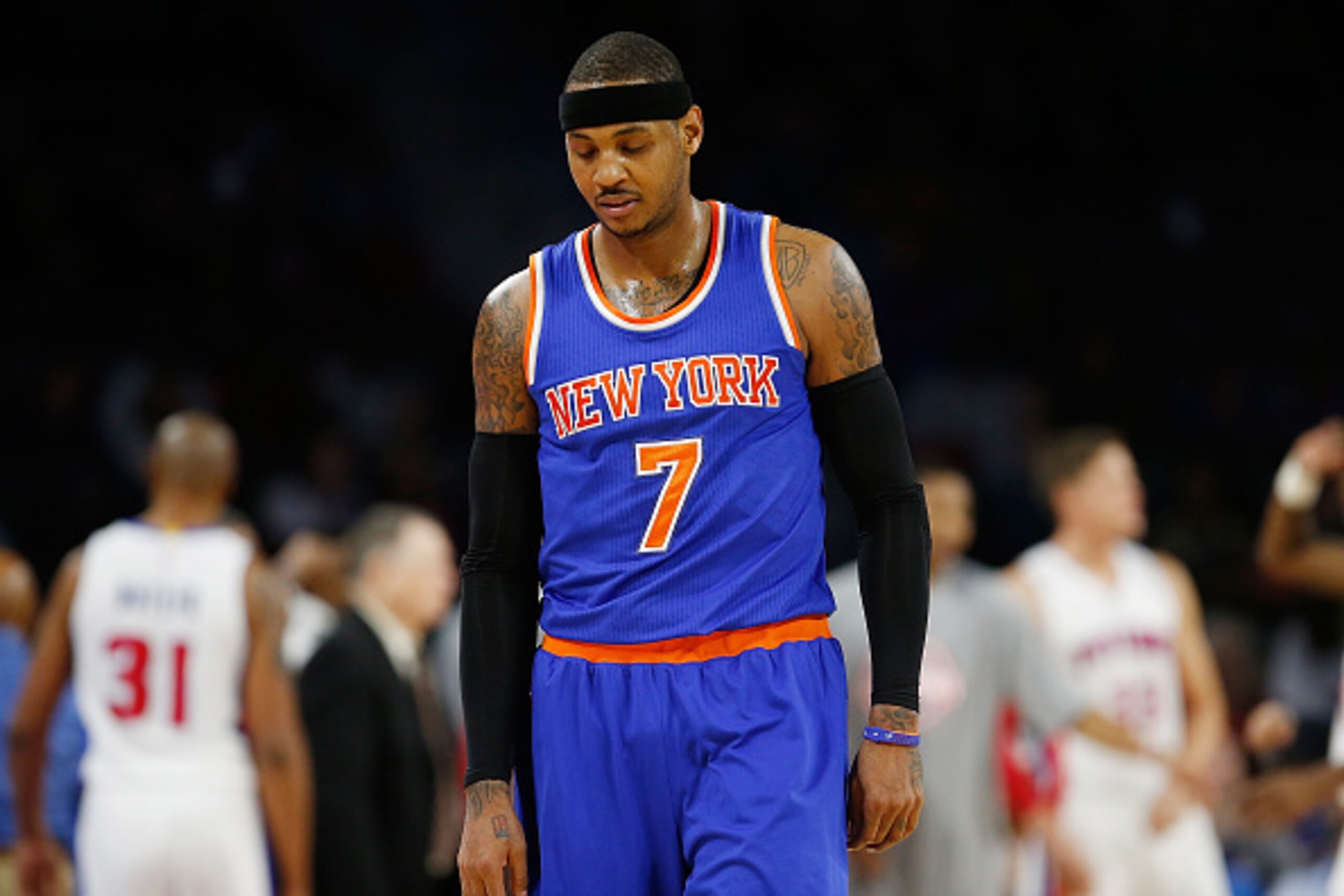
Nothing in the scheme of Anthony's struggles is more important than time.
"I don’t know," he said, per the New York Post's Fred Kerber. "I’m still trying to figure it out.”
Of course he is. Of course the Knicks are. It hasn't even been 10 games. This offensive transformation was never going to take place overnight. There is still much to figure out, there is still plenty to change.
Rotations have been inconsistent. Injuries to the Knicks' two best playmakers, Pablo Prigioni and Jose Calderon, have made finding scoring opportunities a more cumbersome activity. Even Anthony's position within the system—small forward or power forward—remains in flux.
Time becomes everything for individuals and teams when the task at hand is this big. The Knicks and Anthony are trying to create a new identity, and the only way to do that is through trial and error.
Lots of trial and error.
"We're not playing well, I'm not playing well and it starts with me on this team," Anthony admitted, via ESPN New York's Ian Begley. "So I've got to get myself going, and I think that will trickle down to everyone else."
Once Anthony finds his place in the triangle, everything else should fall into place. Until then, there is only transition—mistake-laden, patience-demanding transition—and the belief that time will correct all.
*Stats courtesy of Basketball-Reference and NBA.com unless otherwise cited.
.jpg?w=2560 "Every Trade's Best Trade Asset 🔁")
.jpg?w=2560 "Insiders: Cowboys Overpaid for Porter")
.jpg?w=2560 "Top NFL Trade Targets")