
Can Jason Hatcher Still Make an Impact in Washington Redskins Defense?
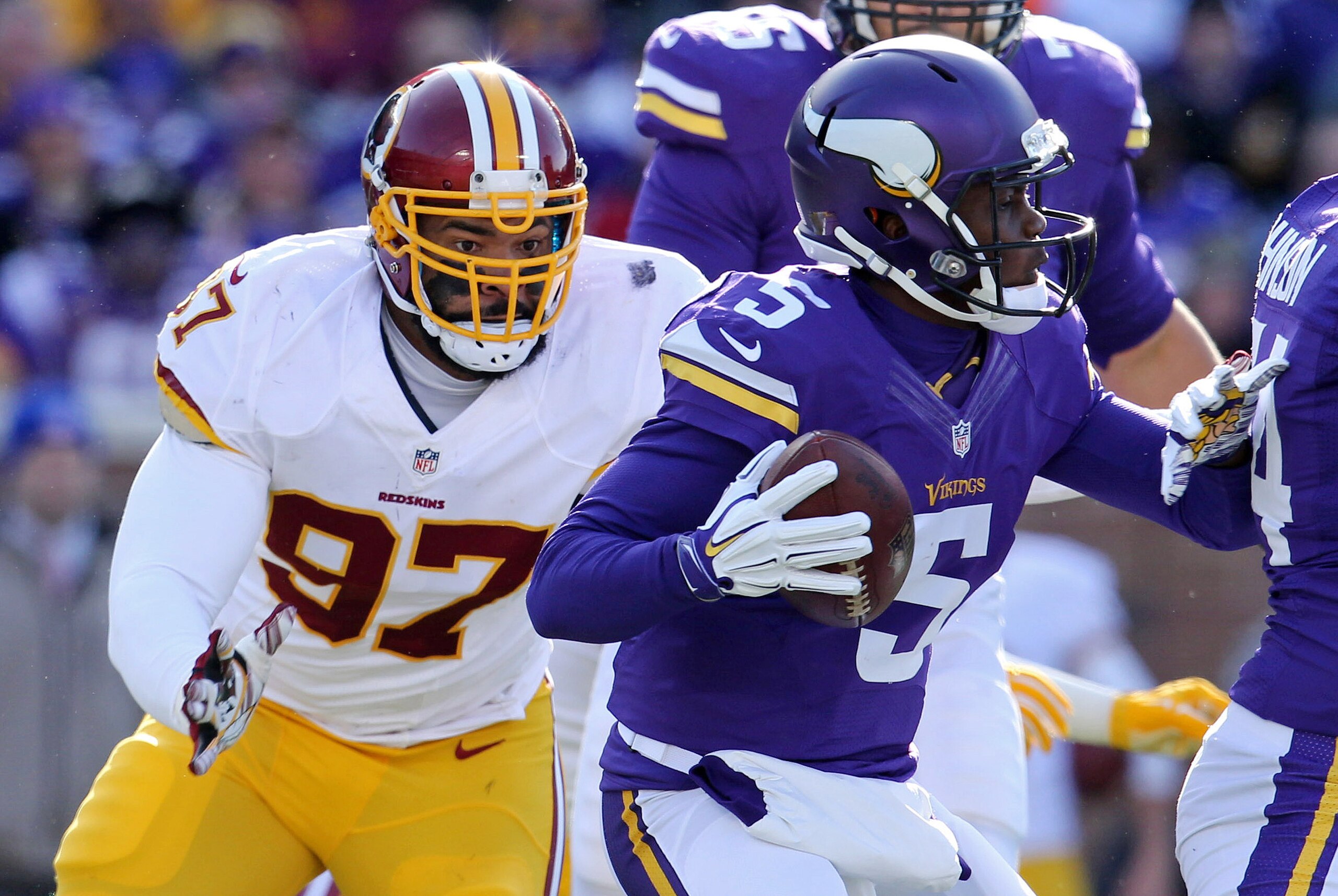
Jason Hatcher's production has been pretty minimal since he signed for the Washington Redskins as a marquee free agent this offseason. But it doesn't have to stay that way.
The former Dallas Cowboys Pro Bowler can still be the focal point of the Washington front seven and the dominating, impact player an inconsistent unit needs.
Hatcher has been short of both dominance and impact through his first nine starts wearing burgundy and gold. He has just four sacks, 20 combined tackles and one batted pass.
TOP NEWS
.jpg?w=2560 "Chargers Mack")
Every Trade's Best Trade Asset 🔁
.jpg?w=2560 "Green Bay Steelers Football")
Insiders: Cowboys Overpaid for Porter
.jpg?w=2560 "Seahawks Cardinals Football")
MHJ's Potential Trade Value 📉

Head coach Jay Gruden has called for more from the ultra-talented 32-year-old, per CSN Washington reporter Tarik El-Bashir:
"I am not saying that he is playing poorly by any stretch. His effort is outstanding. He is a great team leader out here. It’s just [he’s] not the dominant player that we need him to be. …We need a little bit more from him.
...
It’s a combination of things. We have got to get better, consistent pressure from the edges. He is an inside player and if we can get the pressure on the edges, [and get] the quarterback to step up, that’s when he is at his best.
...
We’re probably not creating enough one-on-ones for him perhaps. But when he does have the one-on-ones, he is not consistently winning. …[But] when you are 3-6, you need more from everybody, coaches included.
"
Let's take a closer look at Hatcher, as well as some of the things defensive coordinator Jim Haslett can do to turn him loose.
Base 3-4
It's important to note that Hatcher's banner 2013 season came playing as a one-gap, defensive tackle in a 4-3 scheme. Since moving to Washington, he's shifted back to the 3-4.
That doesn't rule out greater production, but it is a significant difference in how he plays. That difference begins with alignment.
Take a look at this play from Week 9's soul-sapping 29-26 loss to the Minnesota Vikings. It was a game Hatcher began in destructive mood.
On Minnesota's first play, Hatcher lines up at right end in the team's base 3-4 front. This is his most common position:
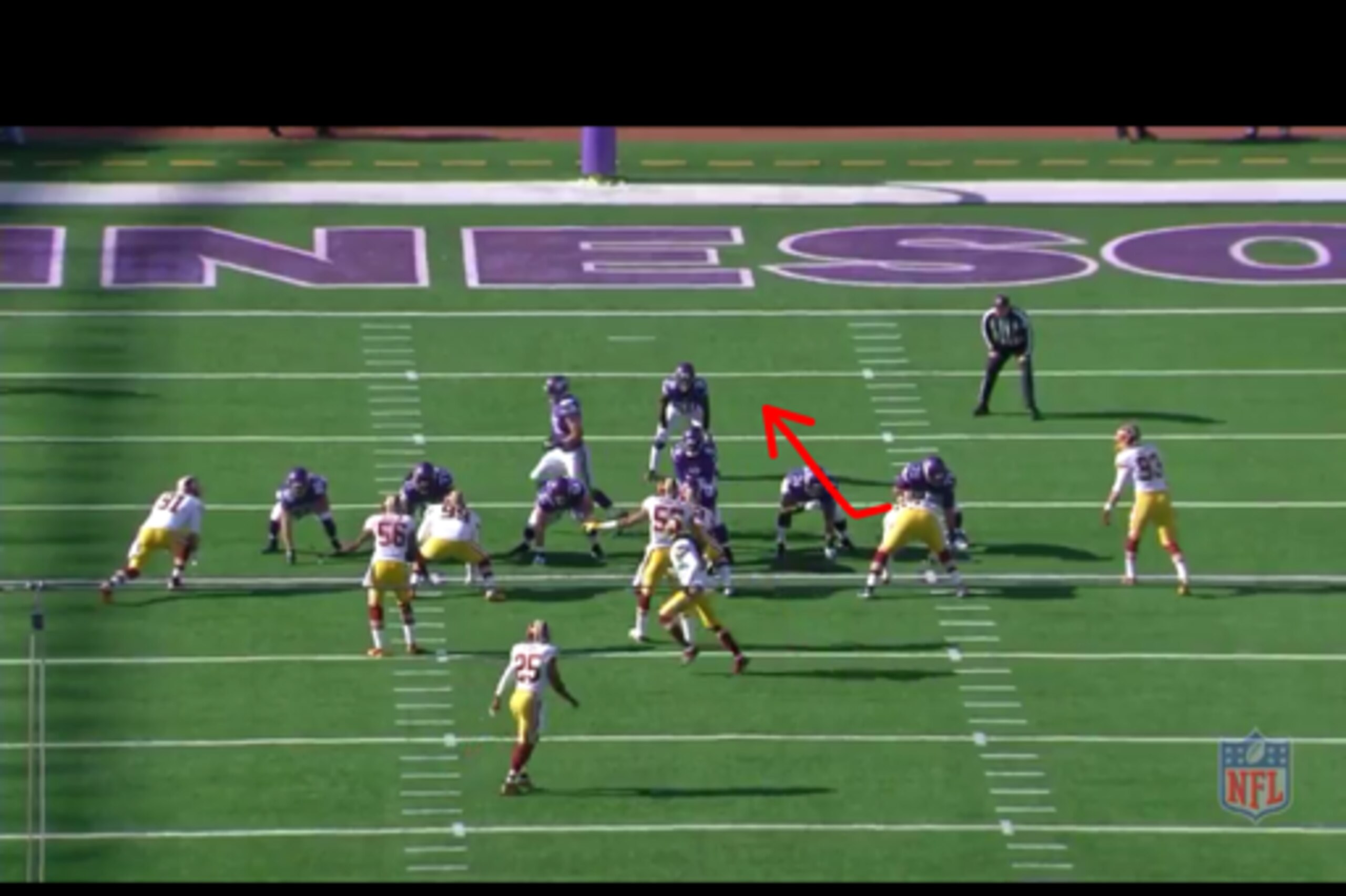
However, pay close attention to Hatcher's exact alignment and stance. Hatcher is aligned in a 4-technique stance, meaning he's positioned on the inside shoulder of the offensive tackle.
This is a subtle riff on the most common alignment for the 3-4 defensive ends. They are usually 5-technique players who line up directly over the tackle and are responsible for the gaps on either side.
But that two-gap responsibility doesn't suit a player with Hatcher's quick-twitch athleticism and big-play instincts. Putting him on the inside shade of a tackle is a compromise between the basic principles of the traditional 3-4 front Haslett likes and the position that suits Hatcher best.
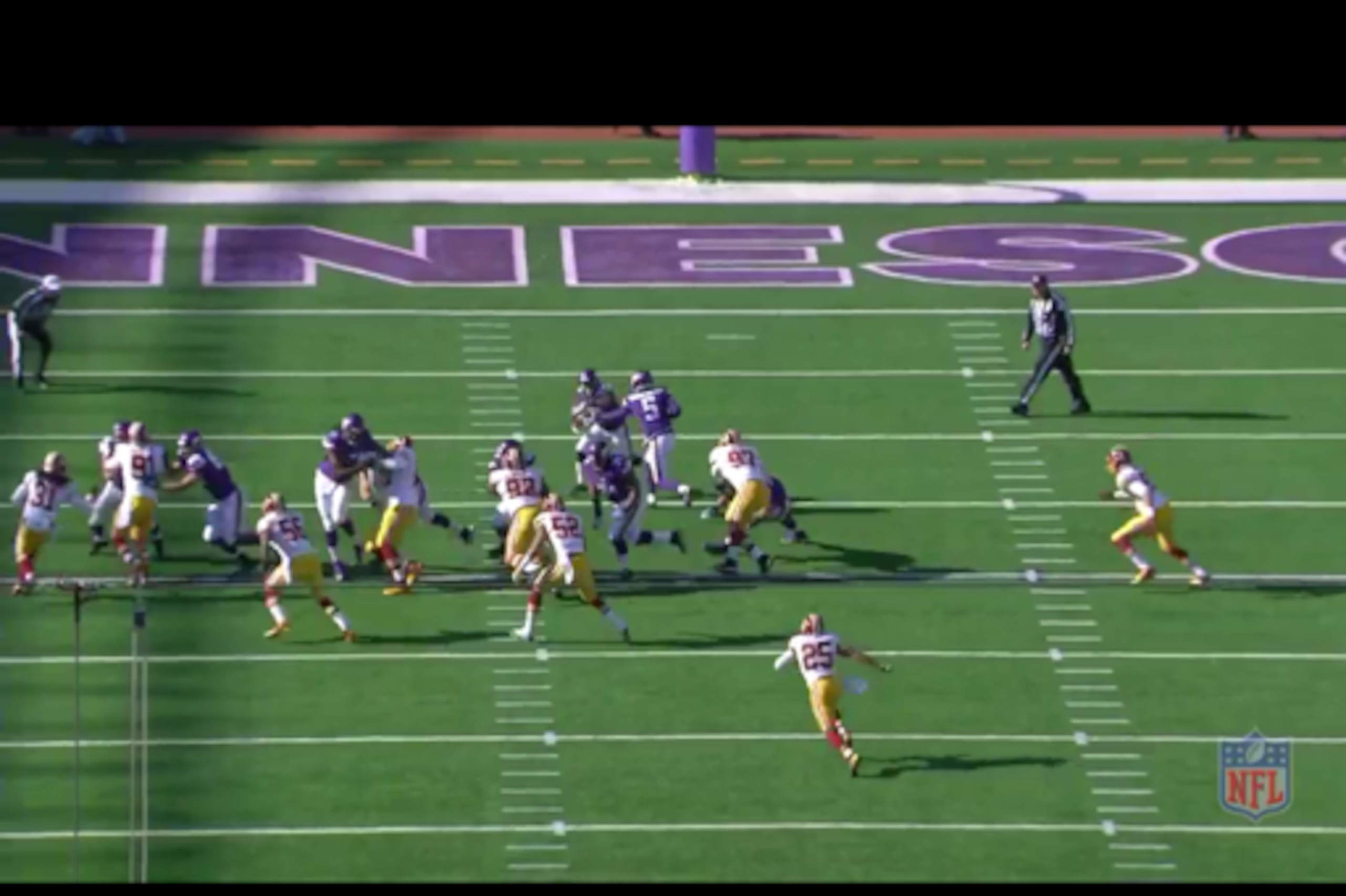
On this play, that compromise produced excellent results. Already leaning inside, Hatcher had the leverage to slant that way and quickly split the guard-tackle gap.
Once he did, Vikings left tackle Matt Kalil was forced to try to cut him. But Hatcher, who's more nimble than any 6'6", 299-pound veteran ought to be, deftly hurdled Kalil's block:
That put him in position to dump Minnesota running back Jerick McKinnon for a one-yard loss:
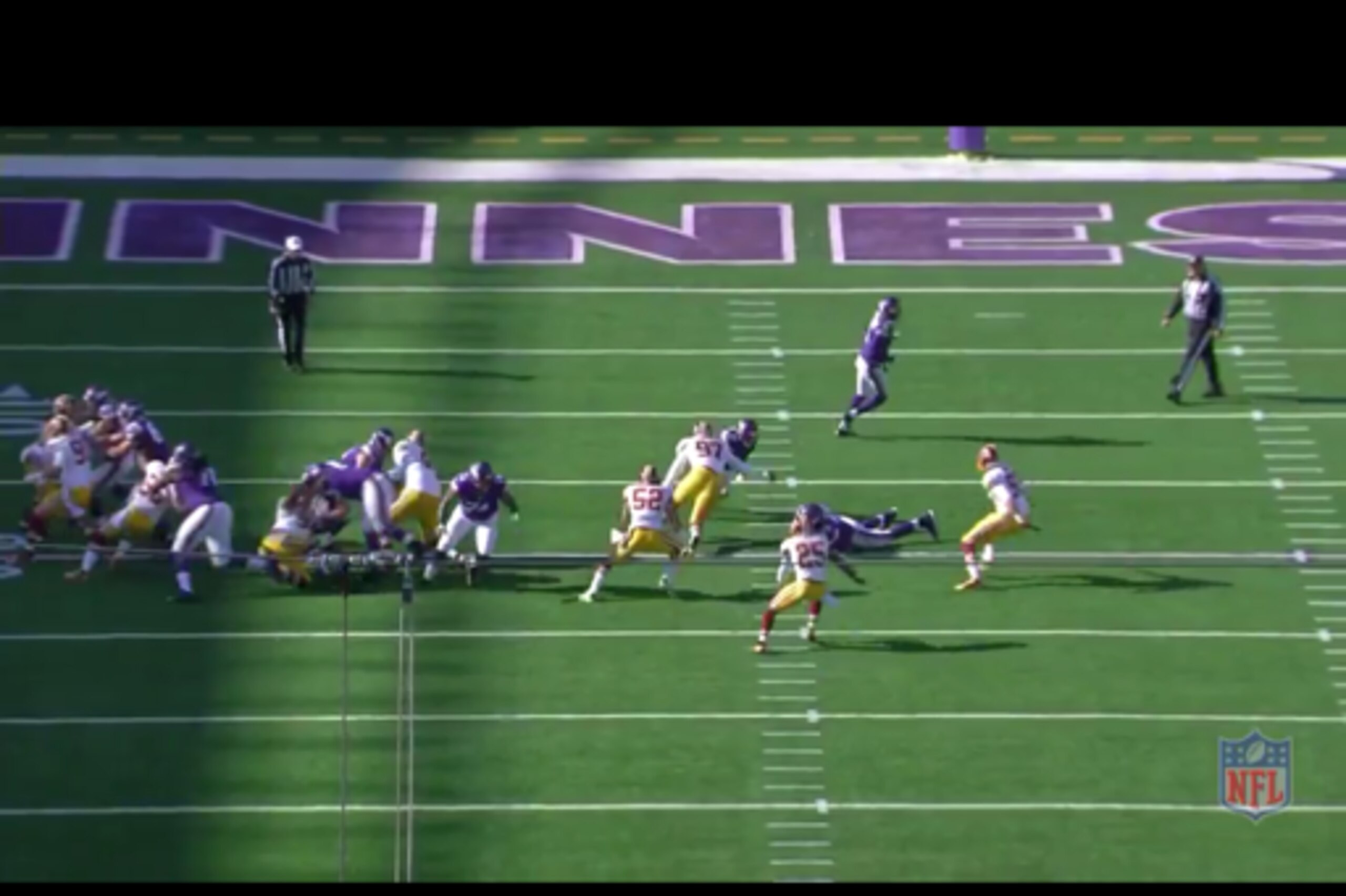
Adjusting Hatcher's stance to attack the inside shoulder of a tackle gives him more room to attack inside, which is the strength of his game. However, he's still in a position where it's easy for a tackle to clamp on him and stand him up, particularly if a play is run to the outside.
Hatcher's best position is 3-technique tackle. That's the technique that puts a lineman in a one-gap alignment, directly between a guard and offensive tackle. This is the B-gap, and every 3-technique has full license to split this gap and get into the backfield.
This is the position Hatcher played exclusively for the Cowboys last season, en route to logging a career-high 11 sacks. One of those sacks came in a Week 12 win over the New York Giants and was the perfect illustration of classic 3-technique play.
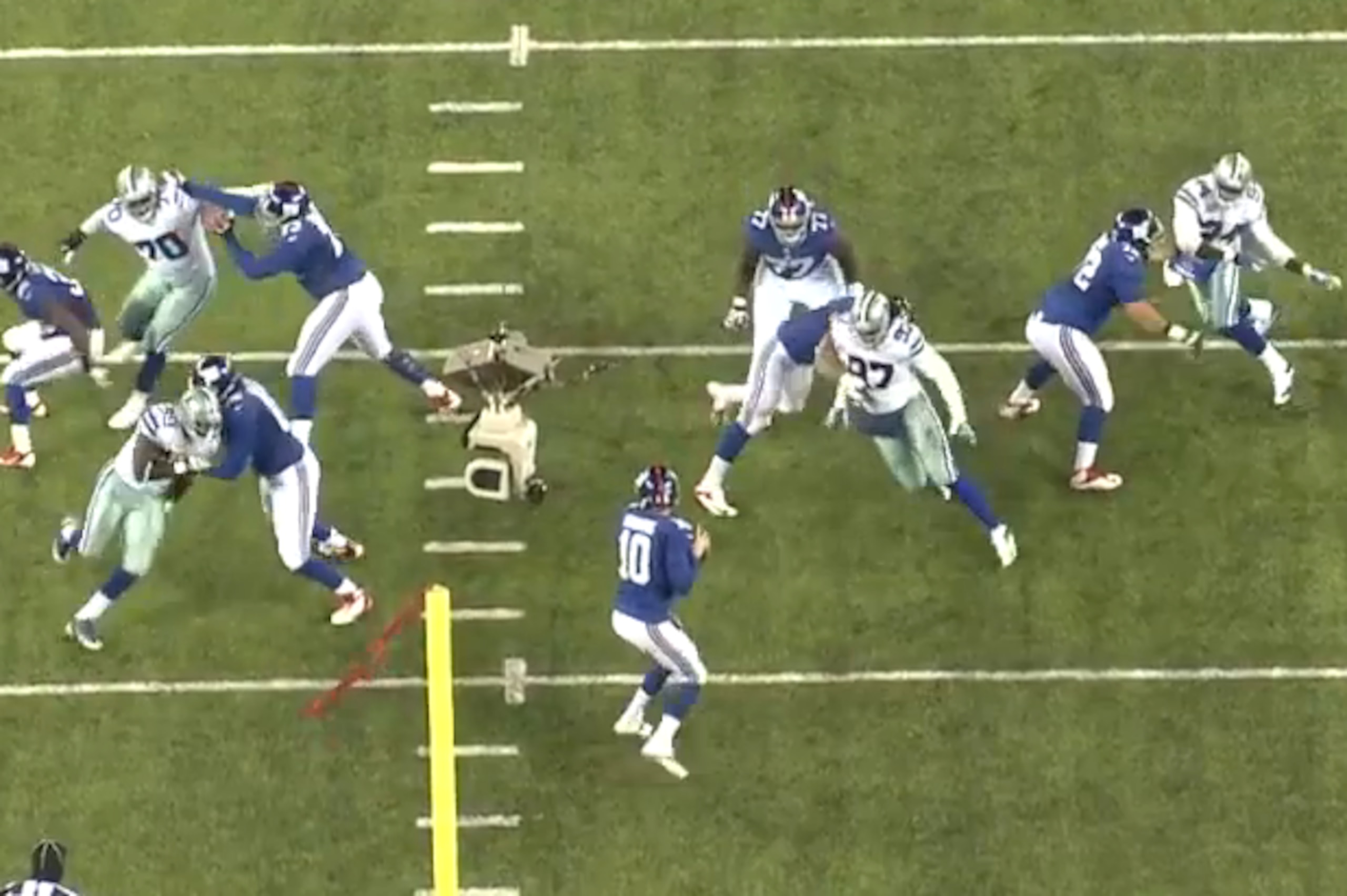
Hatcher began the 2nd-and-7 play aligned in the guard-tackle gap in the Cowboys' stacked 4-3 front:

From his wide and tilted alignment, Hatcher had the leverage and freedom to attack either guard David Diehl or tackle Justin Pugh. He opted to slam into Diehl:
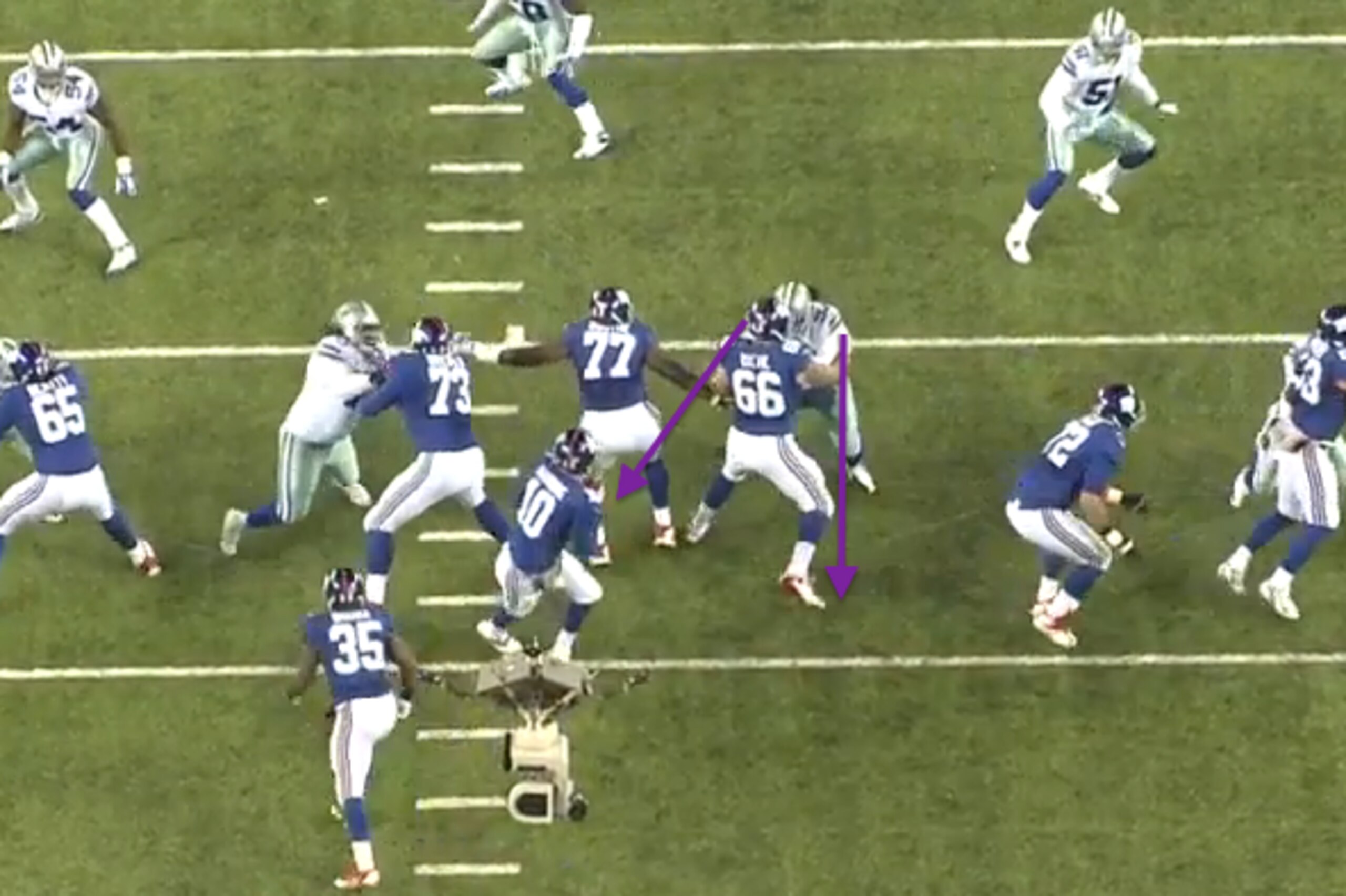
This gave Hatcher two possible lanes of attack. He could either slant into the A-gap, between Diehl and the center. Alternatively, he could continue working the outside pass-rush lane and charge through the B-gap.
Hatcher chose the latter and broke free off the outside shoulder of Diehl:
That left him free to chase down Big Blue quarterback Eli Manning and register the sack for a loss of 12:
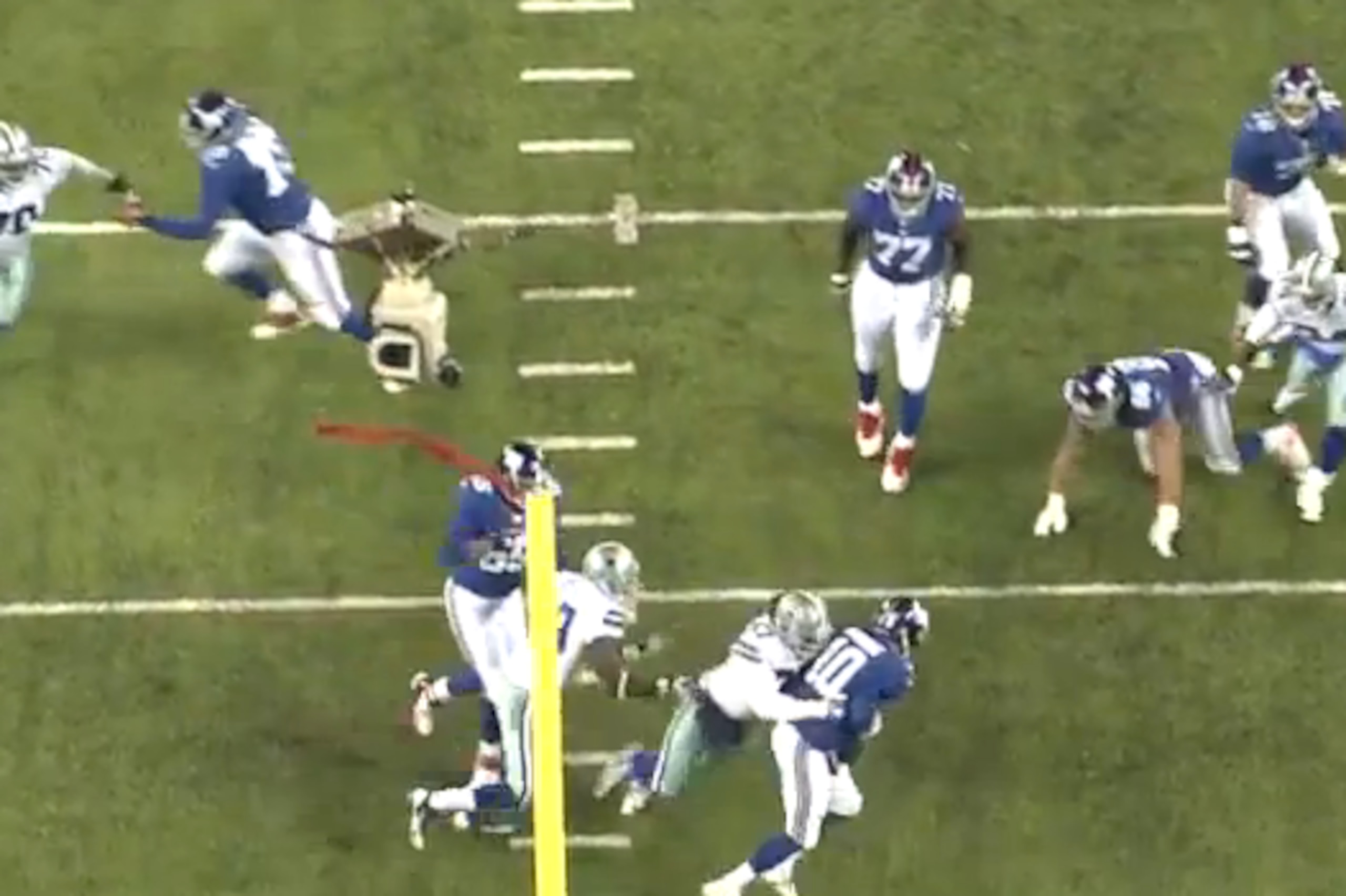
This really was a clinic in how to play 3-technique. Hatcher used his one-gap alignment to isolate a guard and set up the outside rush lane by initially using a push to the inside.
Hatcher is one of the league's best 3-technique pass-rushers. He's been getting some chances to show off that skill in Washington's base defense.
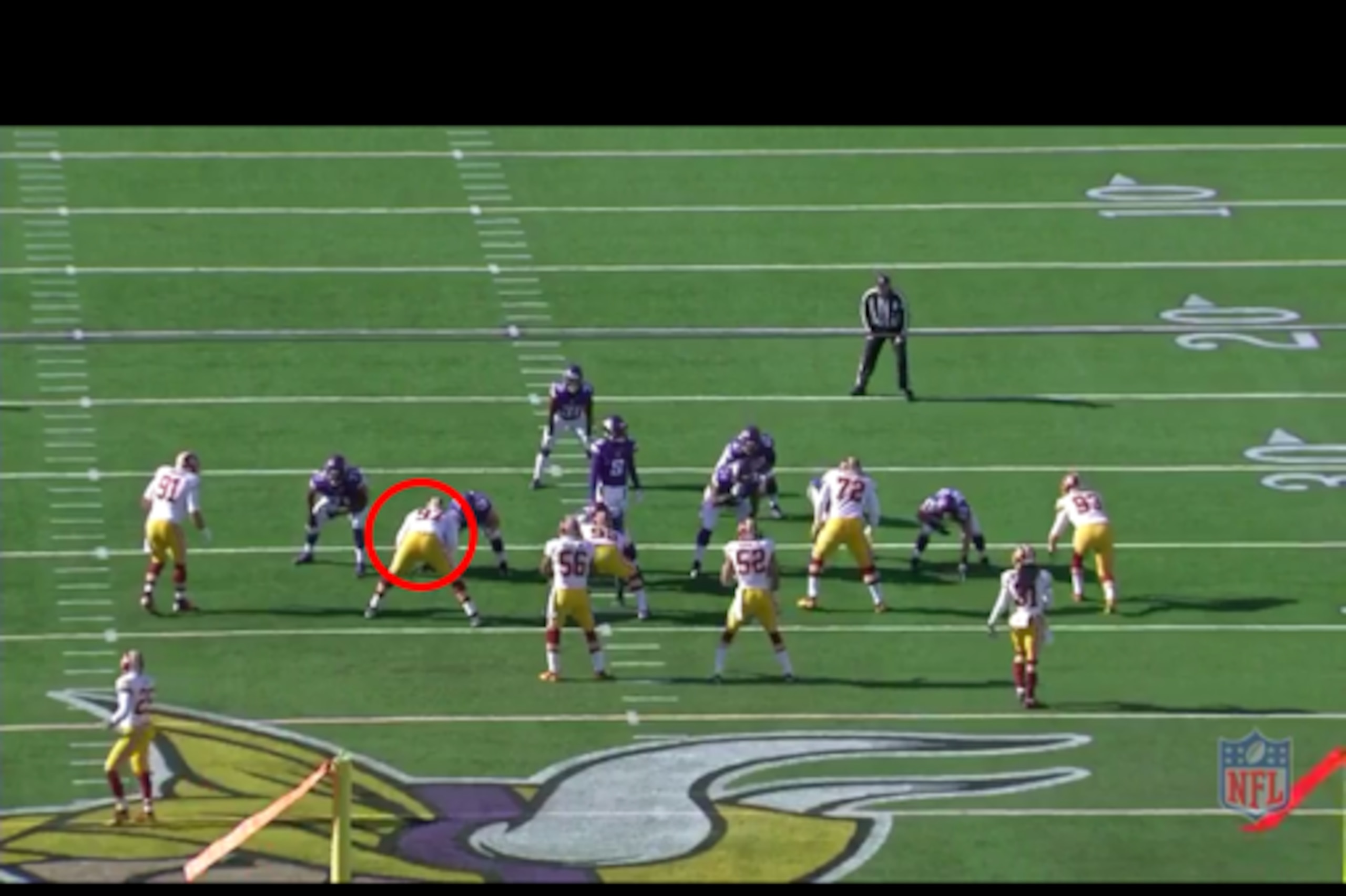
Later in the first quarter against the Vikings, Hatcher moved to left end and aligned as a 3-technique in the B-gap:
He immediately began working to attack the outside shoulder of his blocker:
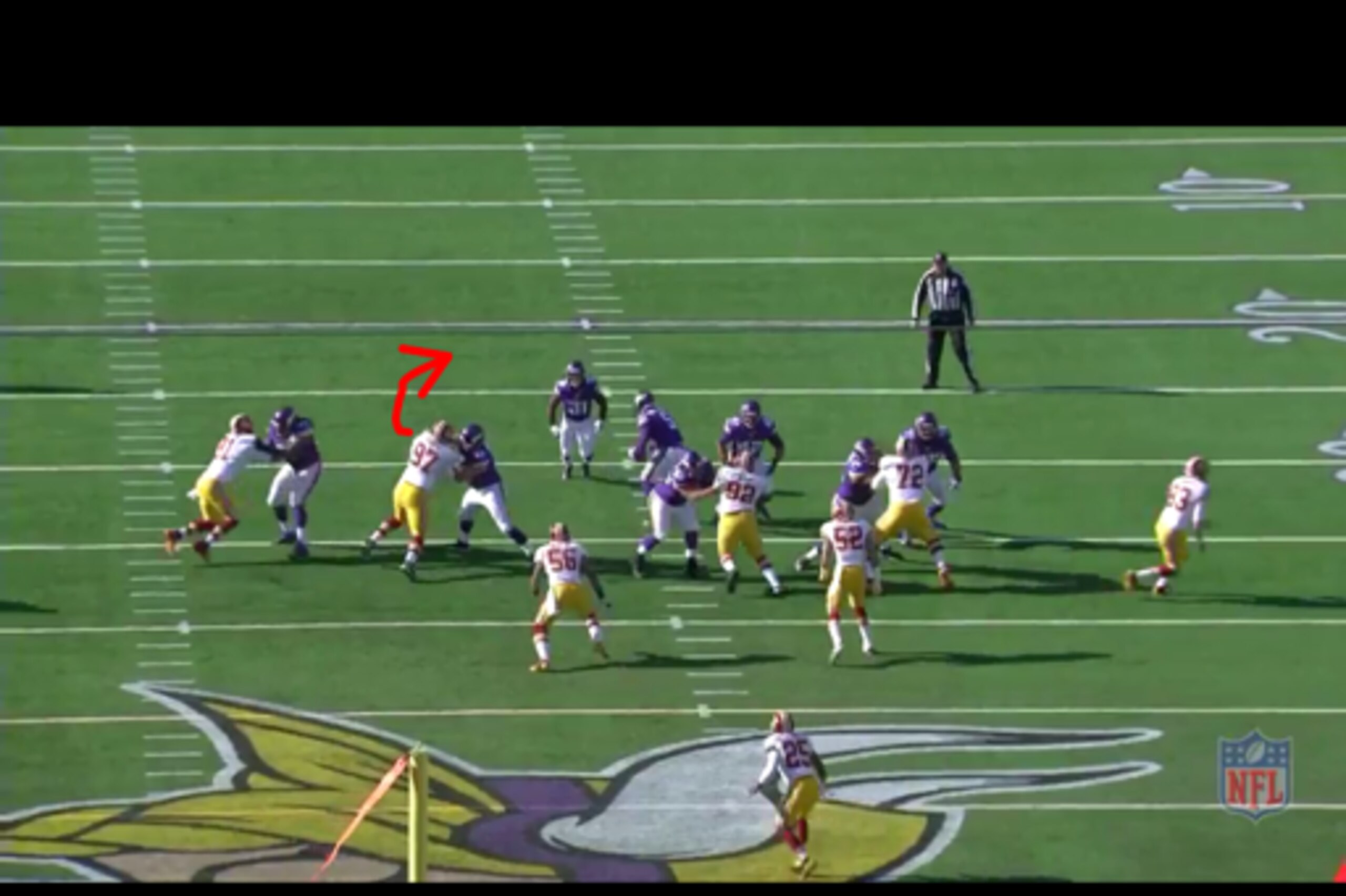
After a strong initial push, Hatcher used a classic rip move to get underneath the guard's arms and separate from the block:
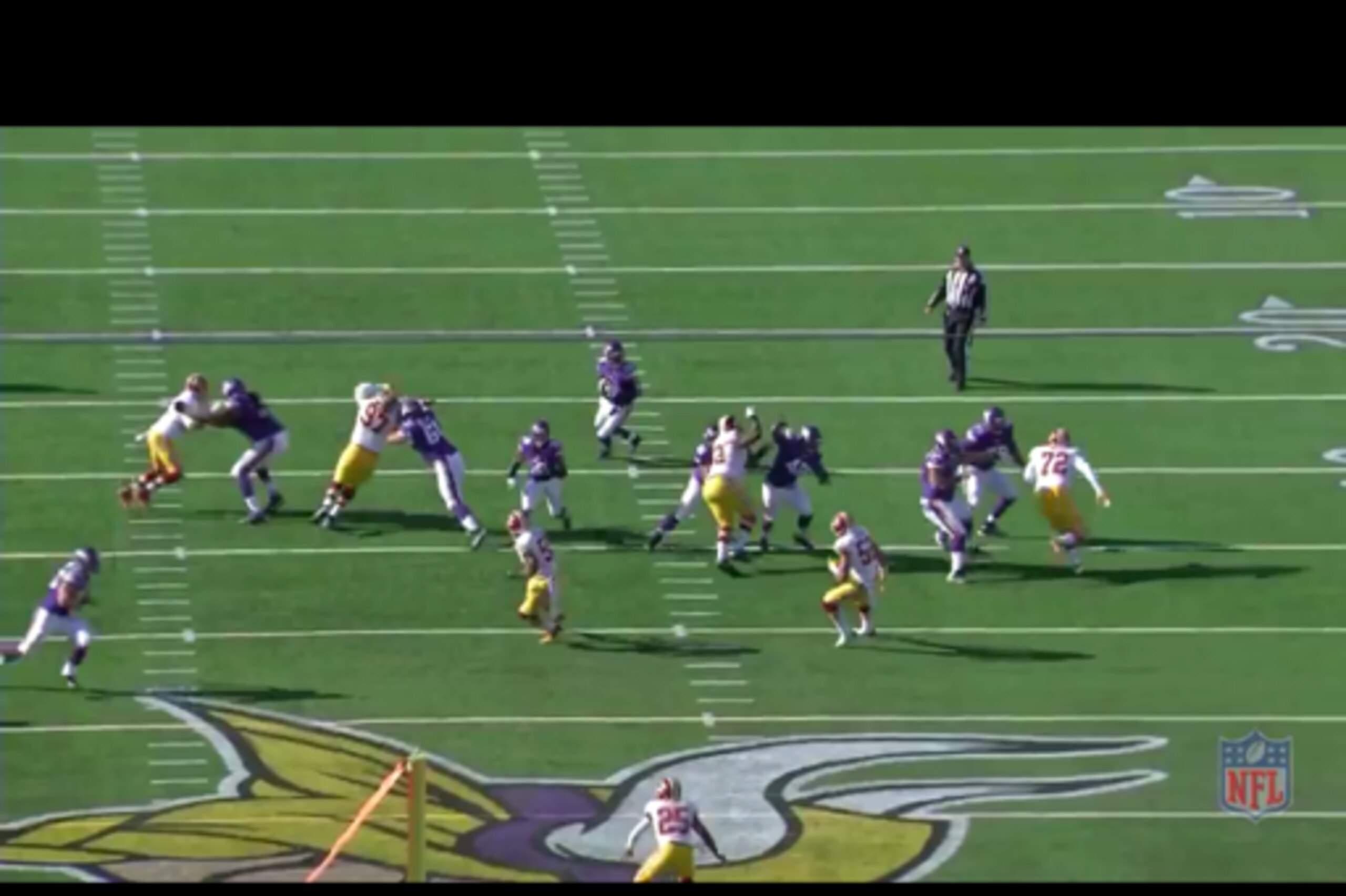
That gave Hatcher room to quickly close on rookie quarterback Teddy Bridgewater:

His pressure forced the young passer to step up in the pocket and likely caused the errant deep throw that missed a wide-open Cordarrelle Patterson.
This is how the Washington defense is supposed to work with Hatcher in the fold. Edge pressure from two outside linebackers is supposed to keep a quarterback in the pocket, while Hatcher crushes the blocking from the inside.
The idea is to draw a net around a quarterback and provide no room for escape.
But while Hatcher is getting some opportunities to do what he does best, it's fair to say he isn't getting enough. Even though the Redskins remain a 3-4 defense, Haslett can still make room for a regular 3-technique along the front.
Many 3-4 teams do this. They are usually of the one-gap variety, such as the Arizona Cardinals. The Cards give Calais Campbell full license to align in and attack a single gap.

Under previous coordinator Wade Phillips, a master of the one-gap 3-4, the Houston Texans used Antonio Smith the same way.
To get the most from Hatcher, Haslett should make a similar allowance. He must include more one-gap fronts that provide Hatcher with inviting rush lanes, better matchups against single blocking and a shorter path to the backfield.
Sub-Package Defense
Giving Hatcher greater license to attack isn't just limited to how Haslett deploys his base personnel. It also includes how Hatcher is used in sub-package fronts.
Nickel schemes often favor a four-man line, and that's usually where 3-4 linemen collect most of their sacks. Leaning heavily on nickel and dime schemes is how a team such as the Texans gets to turn J.J. Watt loose more often.
The problem in Washington is that Hatcher is not always included in sub-package schemes. Take a look at a pre-snap shot of this nickel alignment used against the Vikings:

Stephen Bowen and Jarvis Jenkins are in the 3-technique, "Eagle-style" alignments. Where is Hatcher?
Of course, players have to be rotated to keep fresh. But barring an injury, Hatcher should never be off the field in nickel situations.
Anytime this defense switches to a four-man front, it's an opportunity for Hatcher to do what he does best, namely split gaps and attack the passer.
He provided ample evidence of that during the latter stages of the third quarter in Minnesota. On 3rd-and-21, Hatcher aligned in the B-gap between the left tackle and guard:
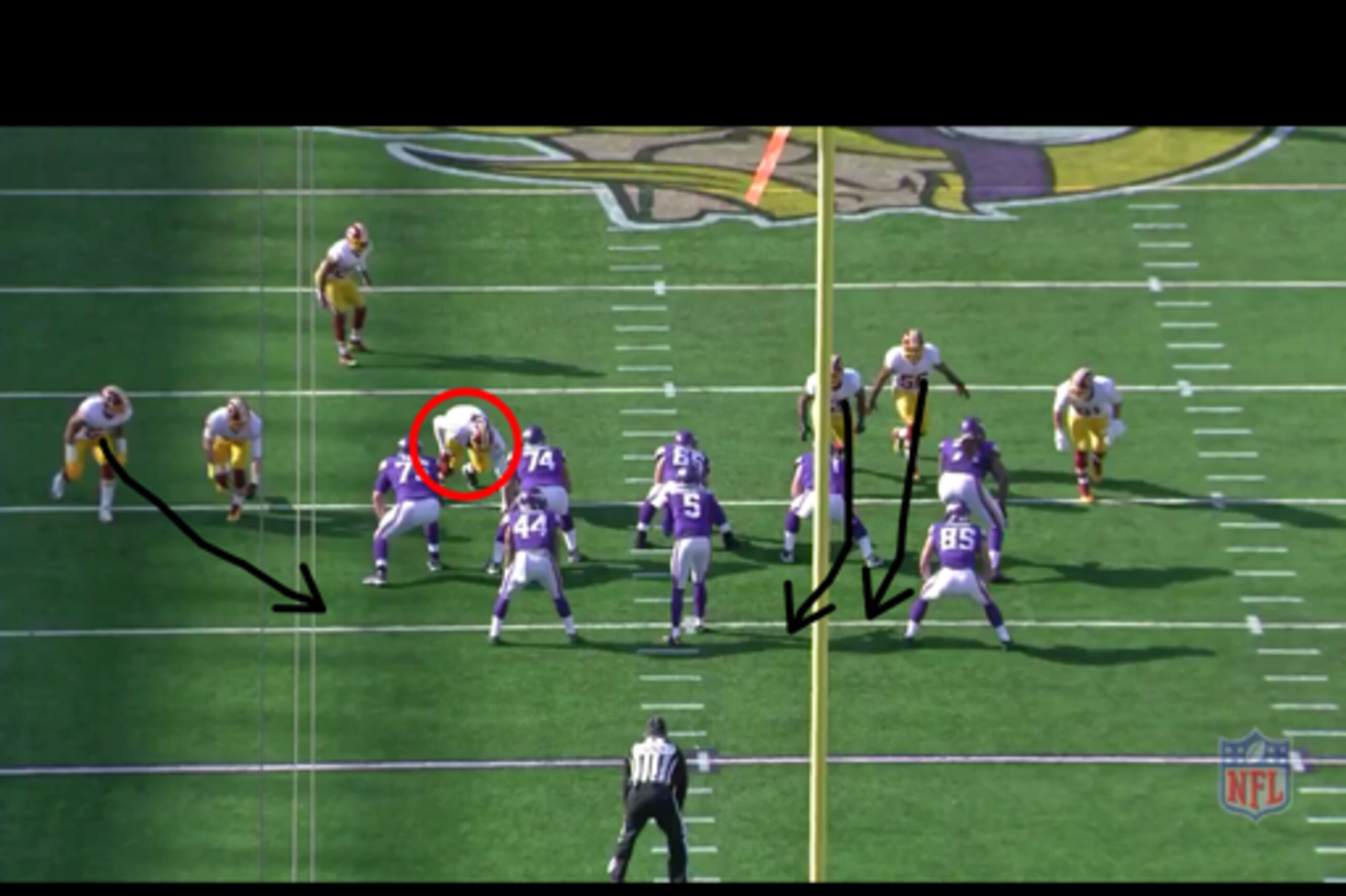
In what was a rare blitz look shown to Bridgewater, Haslett had three linebackers, Keenan Robinson, Adam Hayward and Perry Riley Jr., crowd the line and threaten to rush. This pressure look would help give Hatcher a one-on-one matchup.
Hatcher's alignment again enabled him to choose two paths to the quarterback. He could either slant to the inside, across the face of the guard, or attack his outside shoulder:

He initially powered his way to the inside, slamming the guard right up against the center:
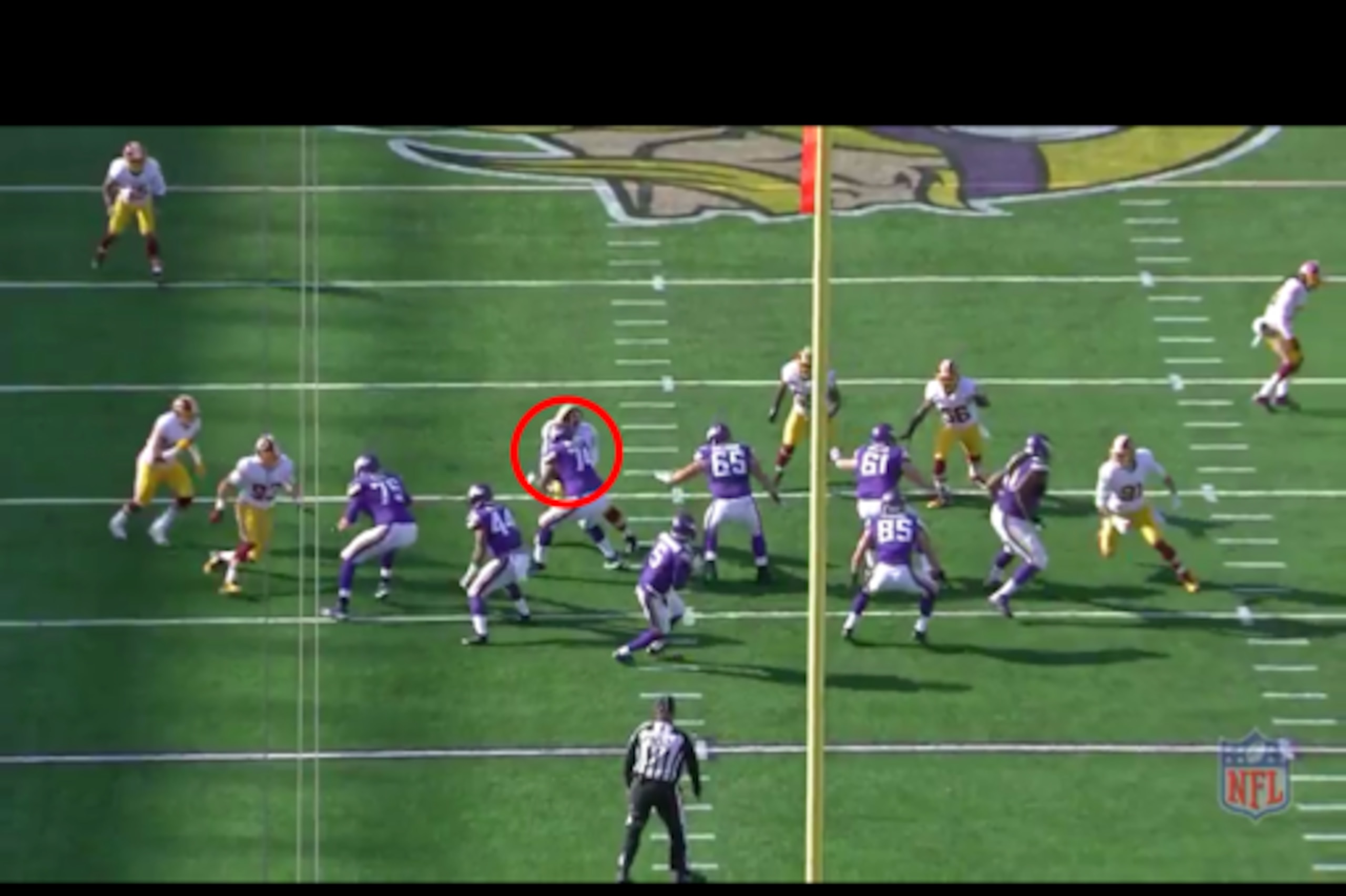
Then Hatcher showcased his dazzling combination of size, range and speed. He looped to the outside on a twist move:
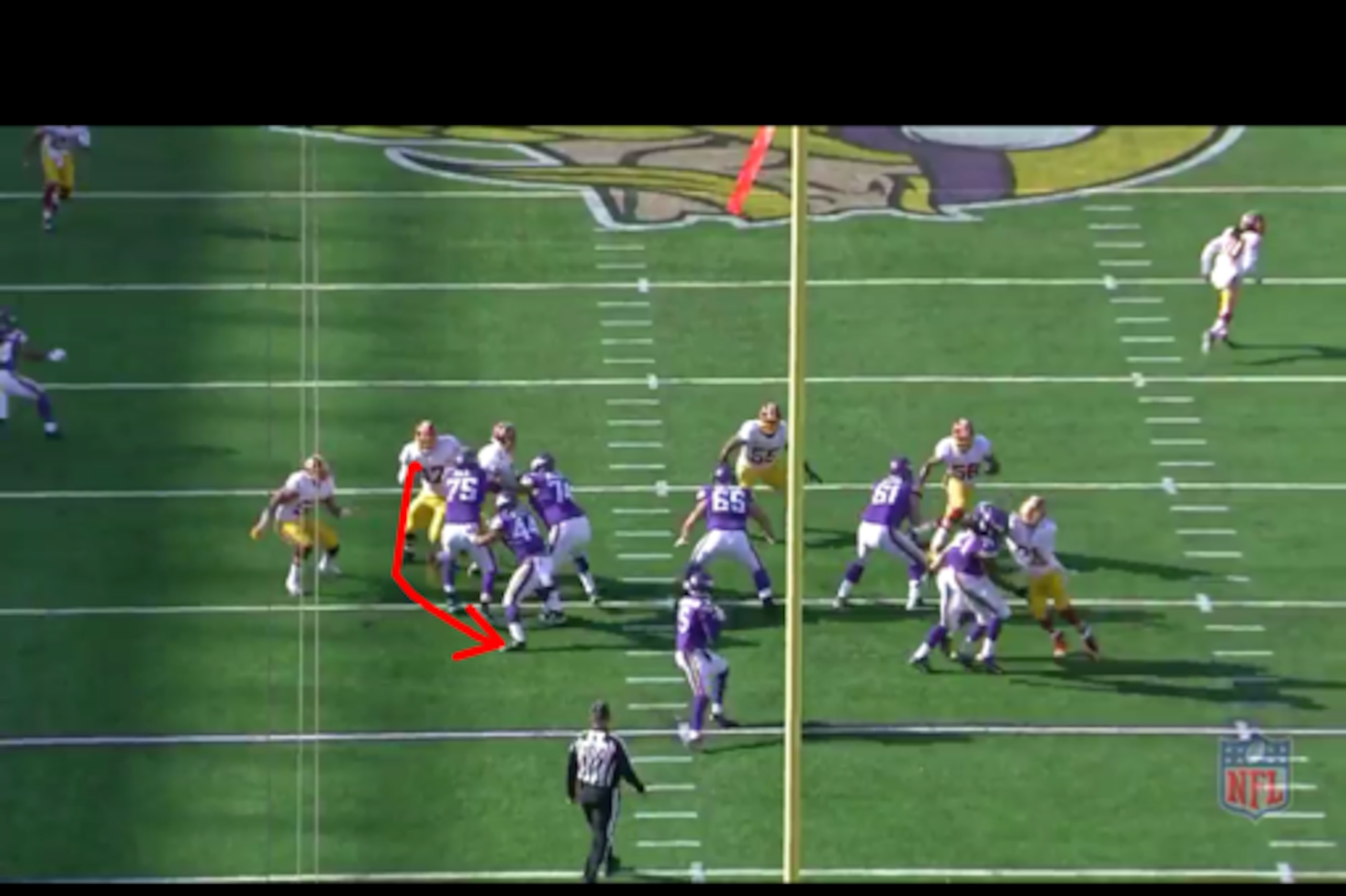
After exchanging his rush lane, Hatcher was athletic enough to beat Kalil around the corner and close in on Bridgewater:

Hatcher soon engulfed Bridgewater to record a sack for a seven-yard loss:
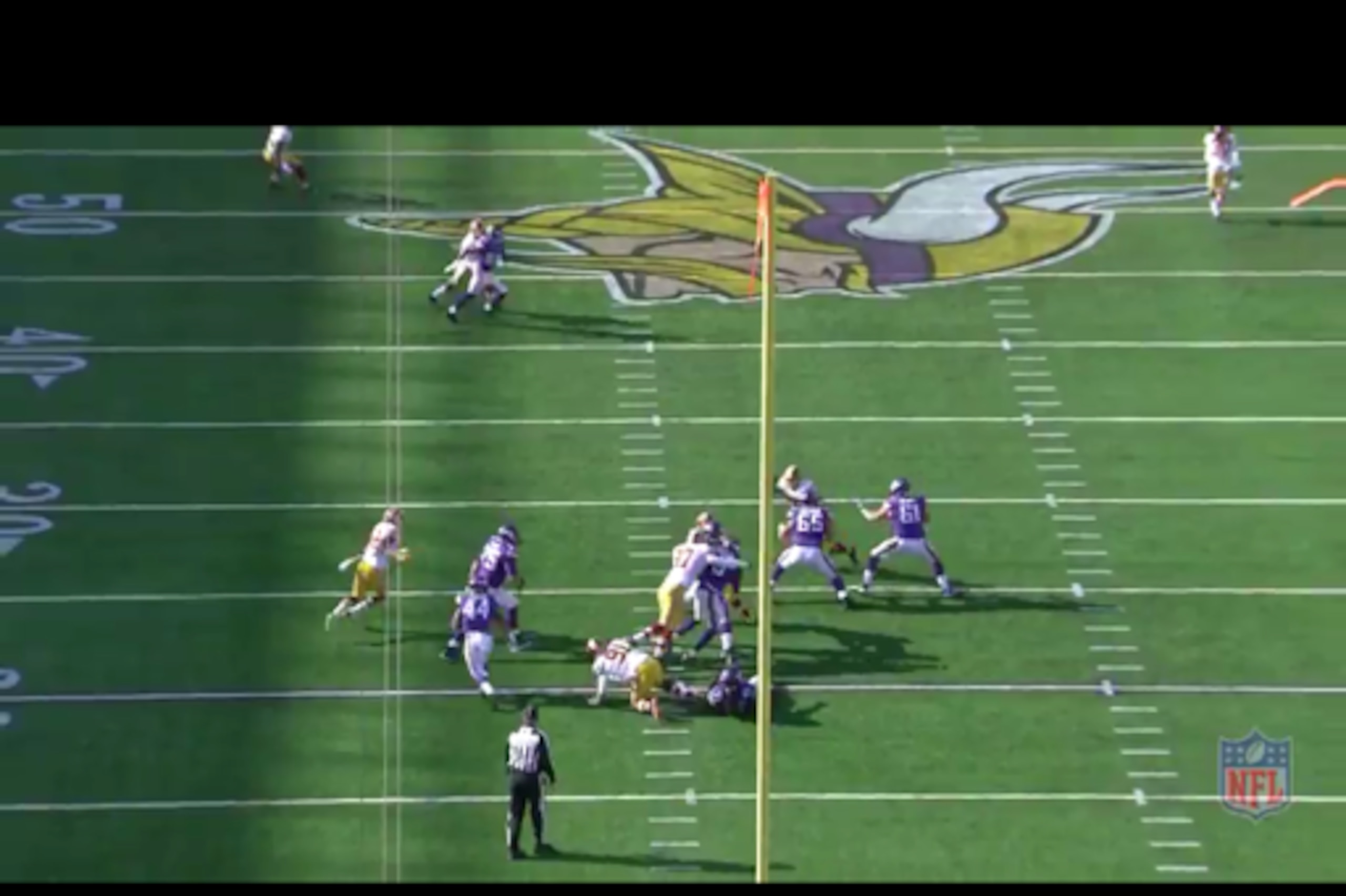
Haslett tweaked this nickel scheme by putting a standing rusher next to Hatcher, leaving him as the only one with his hand down. But the play is still a great example of the damage Hatcher can cause from a de facto four-man front.
The Redskins have to put him in these alignments more often, even if it means making nickel the base front at the expense of the 3-4.
Expanding Hatcher's Role
Playing him as a 3-technique on base fronts and using more four-man lines are surface-level and pretty obvious ways of coaxing more big plays from Hatcher. Haslett and his coaches also need to get more creative and expansive with the ways they use Hatcher.
The previous play provided a decent hint, with Hatcher as the lone lineman in a "Psycho-style," linebacker-heavy front. But there are many other possibilities worth exploring.
One ploy could involve using Hatcher as a standing rusher in certain sub-package schemes. He's certainly athletic enough to handle that responsibility. A two-point stance would let him pick his lanes and keep quarterbacks guessing about where exactly he'll be rushing from.
Another possibility could involve isolating Hatcher over a center. This would be best be achieved by deploying a T-N-T front, akin to the 46 defense, where a trio of D-linemen cover both guards and the center.
The architect of the 46, Buddy Ryan, often shifted his best pass-rusher over the center from this look. He did it with the late, great Reggie White as head coach of the Philadelphia Eagles.
During that same period, Bill Parcells and Bill Belichick, 3-4 practitioners, sometimes used Leonard Marshall the same way in shifted fronts.
Buddy's son Rex, head coach of the New York Jets, still uses this look on occasion:
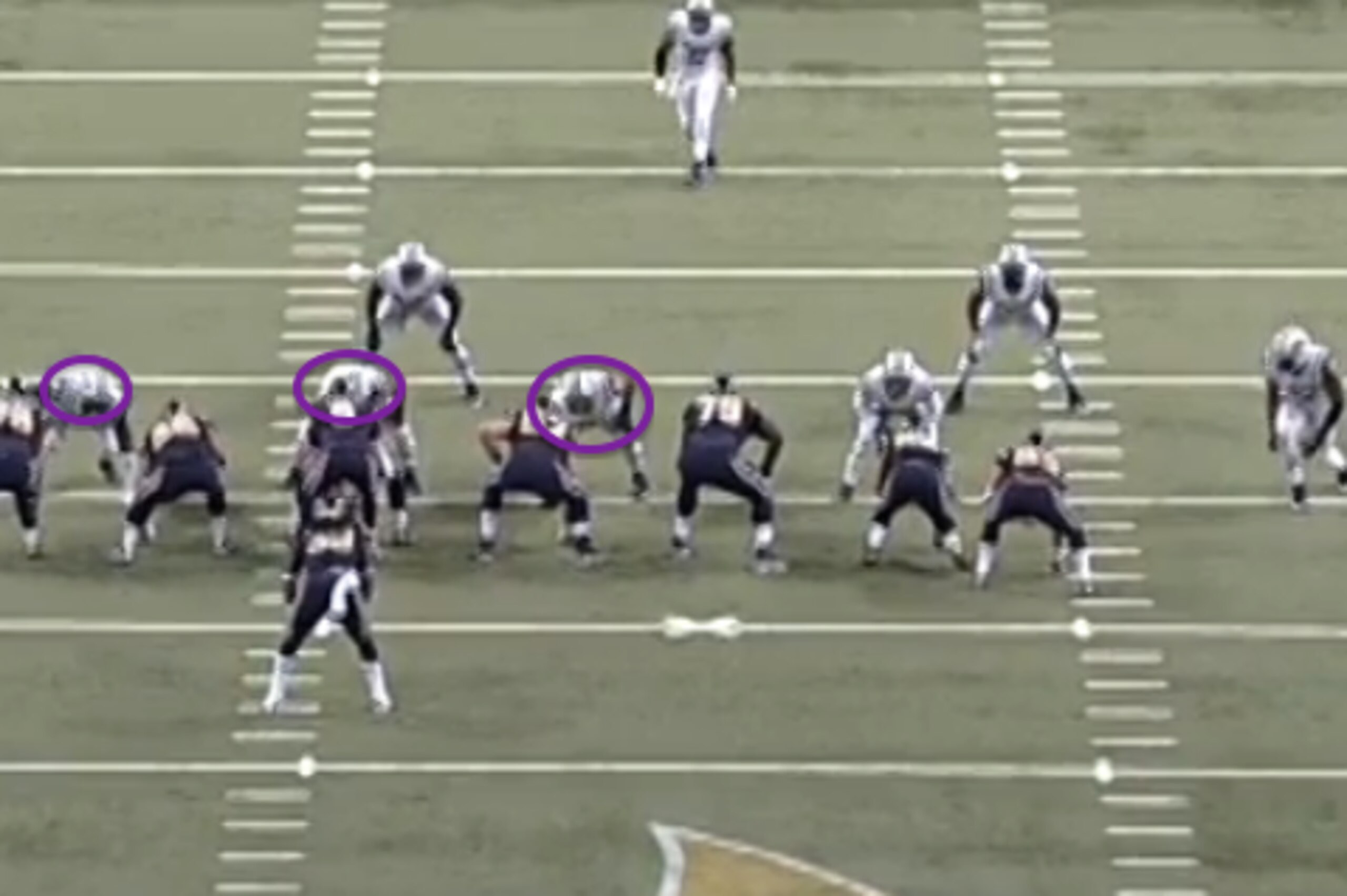
The beauty of the 46 is that it isolates talented inside rushers in one-on-one matchups. The "Bear" front shown above is also flexible enough to be used with 3-4, 4-3 or even nickel personnel.
But putting Hatcher over a center isn't the only thing Haslett can do. How about shifting him outside to end and scheming ways to get him free, unblocked?
That may sound fanciful, but take a look at this play from the Texans' Week 2 road win over the Oakland Raiders. Houston defensive boss Romeo Crennel aligned Watt as an edge-rusher:

Crennel put linebackers Brian Cushing, Jeff Tarpinian and Brooks Reed as standing blitzers in the middle.
Their pressure created a logjam in the middle, occupying three Raiders blockers. This left Watt with a free rush lane on the outside:

He leveled rookie quarterback Derek Carr as he threw, causing the ball to flutter into Reed's grateful mitts, who promptly returned it for a touchdown:
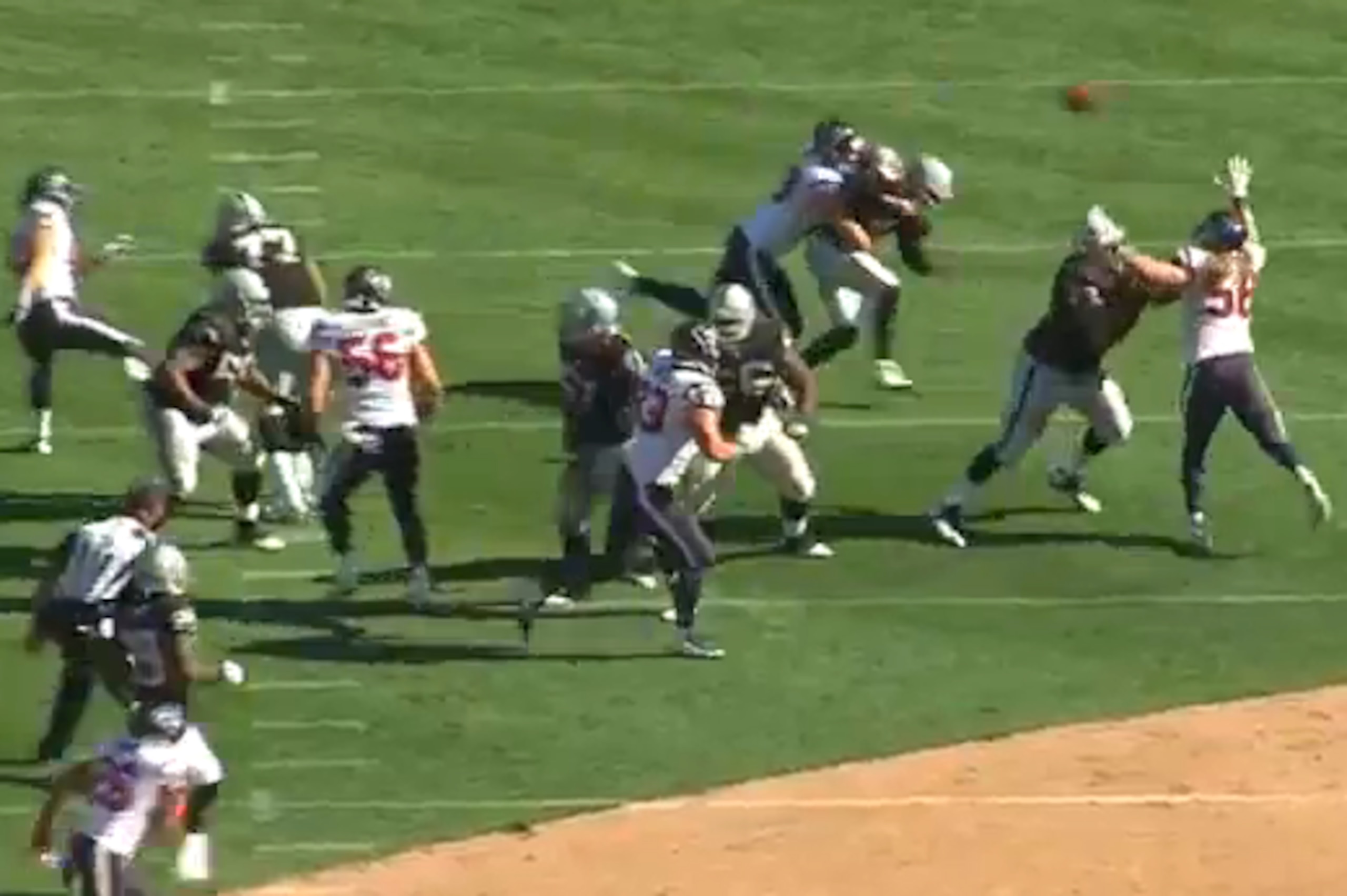
Simply by moving players around and tweaking an alignment or two, Crennel created a situation where Watt, the most dominant defensive player in football, could be left unblocked.
These are the type of creative things Haslett needs to start scheming for Hatcher.
Last season's Pro Bowler can still make a major impact for the Redskins. But a lot will depend on Haslett and his coaches realizing what they have.
In Hatcher, the Washington defense possesses a truly disruptive playmaker along the front seven. He merits being made the focal point of a scheme that emphasizes his strengths.
If that happens, Hatcher will soon deliver his best.
All statistics via NFL.com.
All screen shots courtesy of CBS Sports, Fox Sports and NFL.com Game Pass.
.jpg?w=2560 "Giants Football")