What Minnesota Vikings Must Improve Coming out of Week 9 Bye
Following consecutive must-have victories over the Tampa Bay Buccaneers and Washington Redskins, the Minnesota Vikings will spend Week 10 getting some extra rest during its bye. Minnesota, which has now moved into third place in the NFC North division with a record of 4-5, will face the Chicago Bears at Soldier Field in Week 11.
The Vikings have to feel good about their current standing, as few expected this team to have any success once running back Adrian Peterson was suspended earlier this season. With the possibility of Peterson returning to the team this season after reaching a no contest plea agreement earlier this week, Minnesota may now have a very real shot at contending for a playoff spot this season.
Regardless of whether Peterson is able to return to the team this season or not, Minnesota has two very important divisional matchups on the horizon—Chicago in Week 11 and the Green Bay Packers in Week 12. For this reason, it would behoove the Vikings to spend some extra time attempting to improve in areas that have hindered them thus far in 2014.
The ensuing slides will address some of these areas of concern that could potentially jeopardize a playoff spot for Minnesota this season.
Passing Offense
1 of 5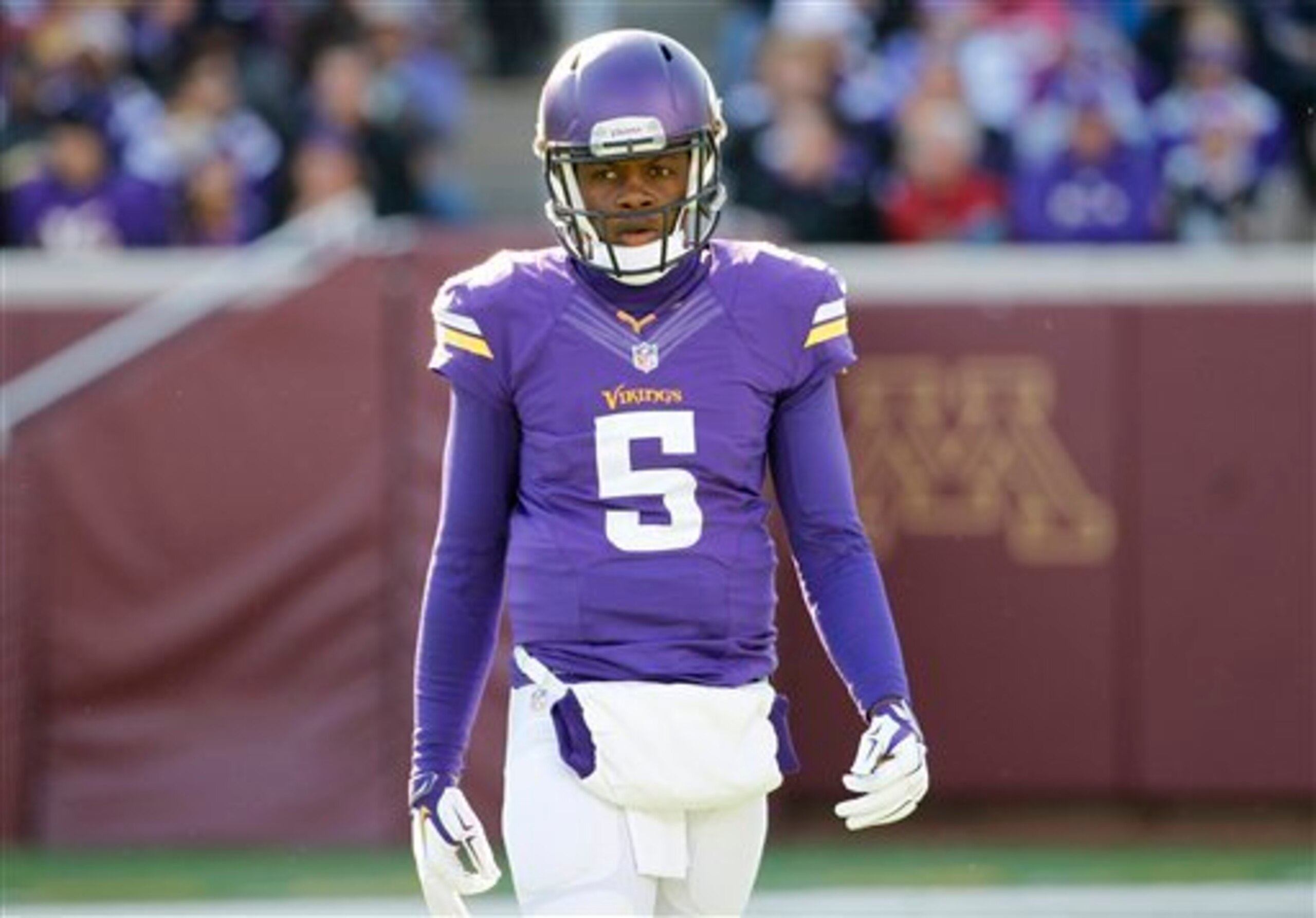
Rookie Teddy Bridgewater is the Vikings starting quarterback regardless of whether head coach Mike Zimmer expected—or wanted—him to be this early in his career.
Bridgewater made his NFL debut in Week 3 against the New Orleans Saints as an injury replacement for then-starting quarterback Matt Cassel. Since then, to the delight of fans and coaches, Bridgewater has registered a winning record of 3-2 in five starts this season. While he has posted a (relatively) impressive win-loss record for a rookie quarterback and has been the catalyst for multiple enthralling moments this season, Bridgewater still must improve considerably as a passer if he wishes to meet and surpass expectations.
Simply put, the Vikings passing offense has been awful this season. According to ESPN.com, Vikings quarterbacks and the team's passing offense rank 31st in passing yards per game (197.1), 30th in passing yards per attempt (6.3), 32nd in touchdowns (six), 29th in completion percentage (58.3), 31st in quarterback rating (68.7) and have thrown the third-most interceptions (11) through Week 9 this season.
Although Bridgewater certainly has not been the Vikings worst quarterback of the three who have started games this season, he (and the entire offense) could stand a little (or a lot of) improvement.
The biggest area in which Bridgewater must improve in his deep passing. Since becoming the starter, Bridgewater has consistently struggled to deliver the ball accurately downfield. This issue was on full display last weekend against the Redskins, as Bridgewater missed multiple wide-open receivers.
""@bencelestino: @sportspickle Teddy Bridgewater overthrows wide open WR https://t.co/AkBe7Ya2QD" #Badgers #McEvoy in nfl?
— Sid Bagley (@BadgerSid) November 2, 2014"
Excuses have been made on Bridgewater's behalf that wide receiver Cordarrelle Patterson lost the above pass attempt in the sun or was not tracking the ball at maximum speed, but the fact remains, Patterson was wide open and Bridgewater missed him. Patterson did his job to get open (with considerable help from the Redskins defense), and Bridgewater must do his job to deliver the ball on target.
According to Pro Football Focus (subscription required), Bridgewater ranks 20th in completion percentage (38.5), 27th in yards (233) and 21st in touchdowns (two) on pass completions over 20 yards among quarterbacks with 15 or more attempts. However, he has been very solid on intermediate pass attempts (10 to 19 yards), completing these passes at close to a 65 percent rate for 359 yards.
While it may take time for Bridgewater to improve his deep-pass accuracy, he has managed to improve the Vikings aerial attack by averaging 234.2 yards per start. He has also posted an 84.8 quarterback rating and with two touchdown passes and zero interceptions over the past two weeks.
Given his status as a rookie and the fact that he has only five starts under his belt, Bridgewater should continue to improve with experience and development. As a result, the Vikings passing offense should improve as well. However, his status as a rookie also suggests the passing offense may be a roller coaster ride, but that is the risk Minnesota will have to take with their 21-year-old franchise quarterback.
Offensive Line
2 of 5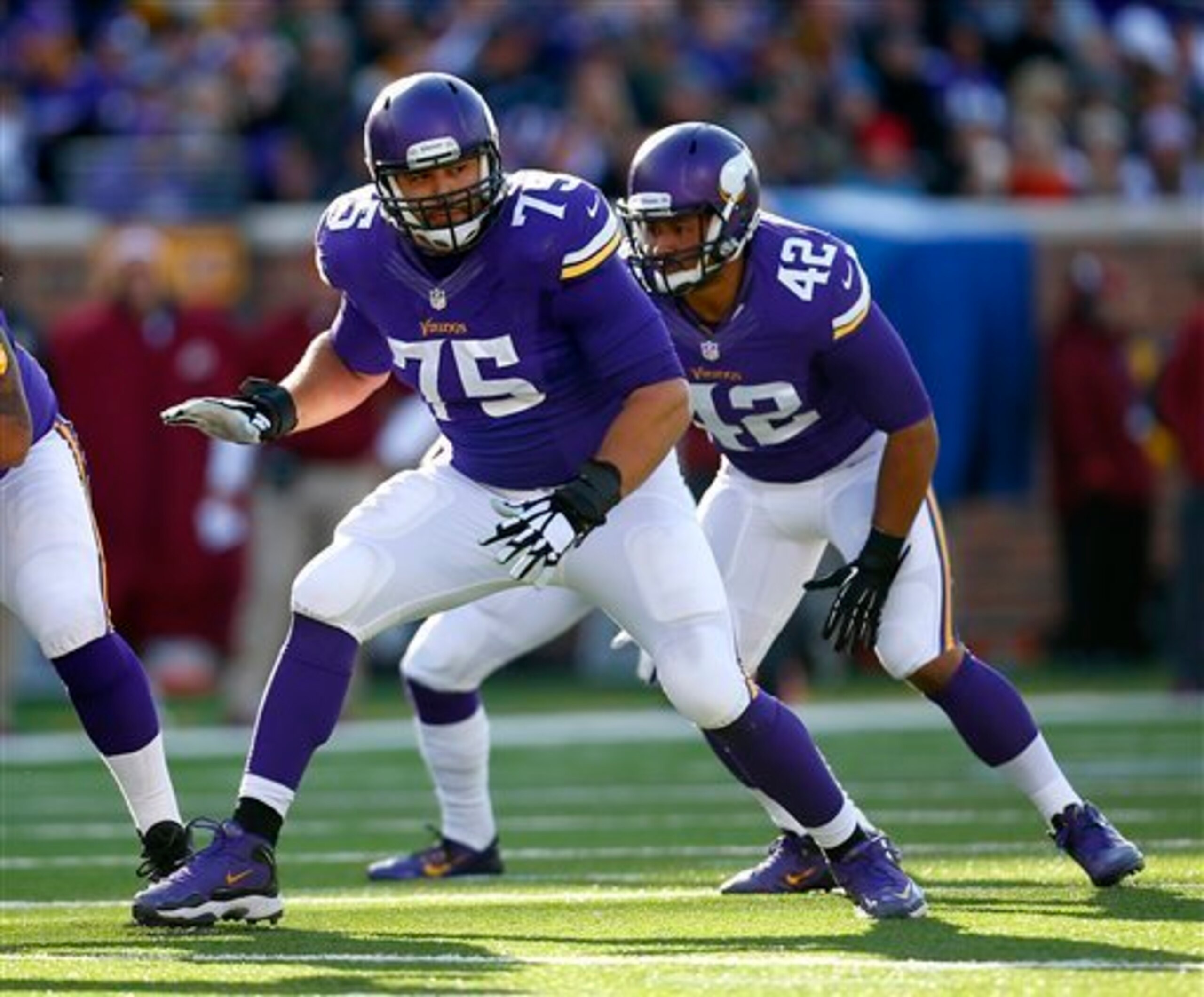
Anybody who has watched the Vikings consistently this season should have assumed the offensive line would pop up in this slideshow at some point.
Whether or not it is the biggest reason for the team's issues passing the ball this season, the Vikings offensive line has been truly horrendous in 2014. According to Pro Football Focus (subscription required), the Vikings offensive line has a pass-blocking efficiency of 73.8 this season, which is third worst in the NFL. They have also allowed the second most quarterback pressures (118) and the most quarterback sacks (24).
Simply put, Minnesota's offensive must improve for both future and present reasons. First, Bridgewater needs a fighting chance. There is no chance he can develop efficiently if he is frequently on the run from defensive linemen and being sacked at an astronomical rate. As for now, Bridgewater may have a legitimate chance to lead the Vikings to the playoffs (especially if Adrian Peterson returns), but he will need to be protected better moving forward.
Granted, the Vikings offensive line has been forced to deal with multiple injuries, most notably to starting right guard Brandon Fusco. However, the noticeable regression of Pro Bowler Matt Kalil, the pass-blocking struggles of right tackle Phil Loadholt and the continued ineffectiveness of left guard Charlie Johnson are non-injury-related concerns.
Referring back to Pro Football Focus, Kalil (92.2) and Loadholt (93.7) rank third-worst and 17th-worst among qualifying offensive tackles in pass blocking efficiency, respectively. Additionally, Johnson (93.6) ranks fifth-worst among offensive guards in pass blocking efficiency.
However, the Vikings offensive line led by the ever-consistent John Sullivan at center (98.1 PBE) has shown improvement in recent weeks. The group has allowed just four sacks over the past two weeks after allowing 13 during the three weeks prior. Coincidence or not, the Vikings have won their past two games after losing games in Weeks 6 through 8.
This noticeable improvement over the past two weeks suggests that Bridgewater may see better protection over the balance of the season, and the potential return of Peterson would only help this. Time will tell if the Vikings offensive linemen, specifically Kalil, have turned a corner.
Red-Zone Scoring
3 of 5
Aside from their specific offensive issues, the Vikings have also struggled in multiple key in-game situations. The team's most recent matchup against Washington may say otherwise, but Minnesota has frequently struggled to reach and score touchdowns in the red zone.
According to TeamRankings.com, the Vikings rank 29th in red-zone attempts per game (2.6), 29th in red-zone touchdowns per game (1.3) and 24th in red zone touchdown percentage (52.17 percent). As a result, it should come as no surprise that Minnesota ranks 27th overall in points per game (18.7).
As noted previously, Teddy Bridgewater and the Vikings have struggled completing deep passes. Consequently, the Vikings struggle to hit the "home run" on a frequent basis, so the team must sustain drives, reach the red zone and score touchdowns in the red zone to win.
The Vikings defense has been great, especially of late, at keeping opposing teams from scoring a ton of points, but it will need some help from the offense if the team is to win games more decisively.
More points means a higher probability of winning, and the teams that generate the most points are the ones who have the most success in the red zone. The Denver Broncos, who hold a record of 6-2 and whom many consider to have the best offense in the NFL, rank first in red-zone touchdown percentage (81.4 percent), per TeamRankings.com.
While the Vikings have not been great at reaching and scoring from the red zone over the course of the season, they have shown signs of improvement in recent games. Upon getting inside the opponents' 20-yard line over the past three games, Minnesota has scored a touchdown 71.4 percent of the time, which ranks eighth in the NFL during this stretch. As a result, the team is averaging 21.3 points per game during this period, which is nearly three points higher than Minnesota's season average.
This recent improvement suggests that the Vikings will fair well on offense in their matchup with the Chicago Bears, who have allowed the fourth-most points (27.8 per game) to opposing teams this season, according to ESPN.com.
Minnesota will have to prove that their offense—specifically their red-zone offense—is on the rise at Soldier Field in two weeks, but the team should have plenty of time to work on this concern during the bye week and should only improve moving forward.
.jpg?w=2560 "Chargers Mack")
.jpg?w=2560 "Green Bay Steelers Football")
.jpg?w=2560 "Seahawks Cardinals Football")
Success Early in Games
4 of 5
It is an undeniable fact that playing from behind is much more difficult than playing with the lead. While the Vikings have overcome deficits in recent weeks, the team must begin to play well earlier in games.
Against teams such as Tampa Bay, Washington and Buffalo, or teams without imposing offenses, rallying late for a victory is not as difficult. Though any comeback victory is a testament to that winning team's resolve, some comebacks are simply more difficult than others.
Come-from-behind victories are great and surely build team confidence, but as Teddy Bridgewater stated during his postgame press conference last weekend, "Hopefully we will be able to finish games more in the victory formation." The teams that most frequently finish games in the victory formation are the teams who play well throughout an entire game, not just in the second half.
According to TeamRankings.com, Minnesota ranks 28th in first-quarter points per game (3.0) and 28th in first-half points per game (8.1). The Vikings have demonstrated issues on offense during the first half, even in games the team has won, and these statistics reinforce this notion.
If the Vikings are going to win against high-powered offenses, such as Chicago or Green Bay, they will need to put together a strong offensive performance from start to finish. The best way to do this, though easier said than done, is establish the running game early and get Bridgewater into a good rhythm as soon as possible.
Minnesota would be wise to replicate their performance against the Atlanta Falcons in Week 4. In this game, the Vikings compiled 14 points in the first quarter and 24 total points in the first half. The game began with Bridgewater completing six consecutive short passes and running backs Matt Asiata and Jerick McKinnon finding running lanes. Minnesota would go on to win this game 41-28, producing its highest point total in the process.
Bridgewater has struggled to perform early in games, with exception to the Atlanta matchup, throughout his five starts this season. It is no coincidence that this issue and the Vikings lack of a first-half offense are connected.
Completing consecutive passes to top targets early on should help Bridgewater with his confidence and, as a result, games will less likely come down to executing the two-minute offense at the end of regulation.
Other Areas of Concern
5 of 5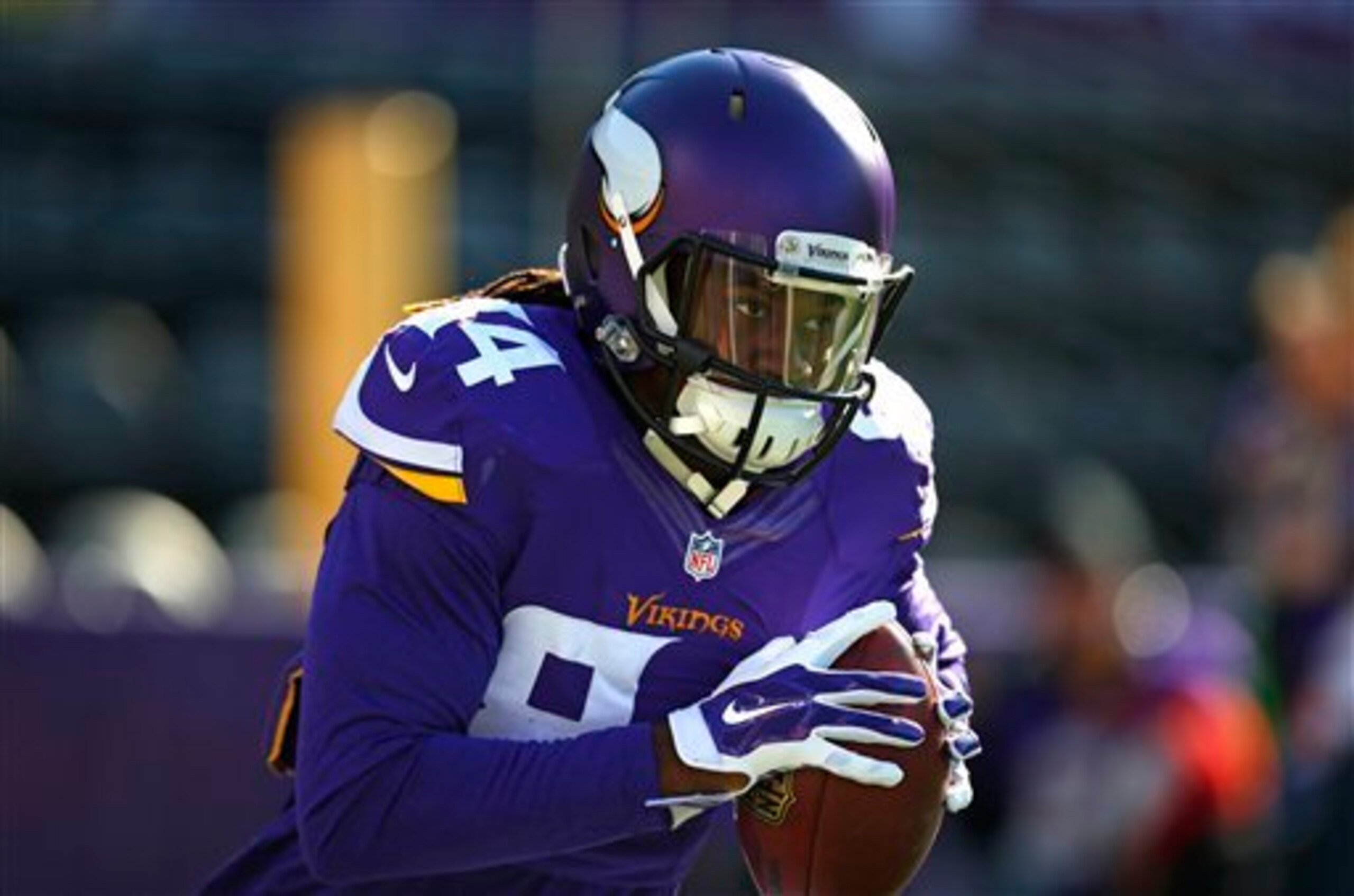
Finishing Games
The Vikings have seen their previous three contests decided by a touchdown or less. While Minnesota has managed to finish off both the Buccaneers and Redskins in recent weeks, improving his team's play late in games should be a priority for Mike Zimmer moving forward.
Run Defense
Minnesota's defense has been the team's biggest strength this season, but its run defense remains statistically average. According to ESPN.com, Minnesota is allowing an average of 112.8 rushing yards per game, which ranks 15th in the NFL. Given that the Vikings will face Matt Forte and Eddie Lacy in the coming weeks, improving a relatively mediocre run defense should be on the short list of things to accomplish during the bye week.
Consistency at Wide Receiver
It is no secret that the Vikings need to receive better production from their skilled group of wide receivers, especially Cordarrelle Patterson. Greg Jennings, Patterson and Jarius Wright have totaled 87 receptions, 1,082 yards and three touchdowns, per ESPN.com.
In comparison, Pittsburgh Steelers wide receiver Antonio Brown has totaled 71 receptions, 996 yards and eight touchdown receptions. When one player, though one of the very best at the wide receiver position, has recorded totals comparable (if not better) than one team's top three wide receiver options, that is a problem. Bridgewater is not Ben Roethlisberger, but improvement here is absolutely critical moving forward.
For more Vikings news and analysis, follow me on Twitter @RobertReidellMN.
.jpg?w=2560 "Giants Football")