LeBron James May Never Match the Feats of Michael Jordan, and That's Just Fine
When he was just a teenager, not yet a legend, Michael Jordan stamped his aspirations on a personalized license plate: It read, "Magic Mike." Yes, long before anyone wanted "to be like Mike," Mike wanted to be like Magic Johnson.
Indeed, when he arrived at North Carolina, Jordan introduced himself with that moniker, to which a scolding Dean Smith replied, "We already have a Magic."
"You're Michael," Smith said.

This tale comes from Roland Lazenby, author of Michael Jordan: The Life, and it resonates today, as fans and pundits continue to ponder the most grating, mind-numbing question in sports: Who is the next Michael Jordan?
The question ruined Harold Miner, shadowed Kobe Bryant and now haunts LeBron James, who, as it happens, will stare down MJ's ghost on Halloween night, when the Cavaliers play the Bulls at United Center.
James can hardly move a muscle without triggering comparisons and criticism.
LeBron left his team to join another star? Michael would never have done that.
LeBron passed the ball for the final shot? Michael would have shot it.
LeBron switched teams, again? Michael was more loyal.
LeBron lost in the Finals, again? Michael was 6-0.
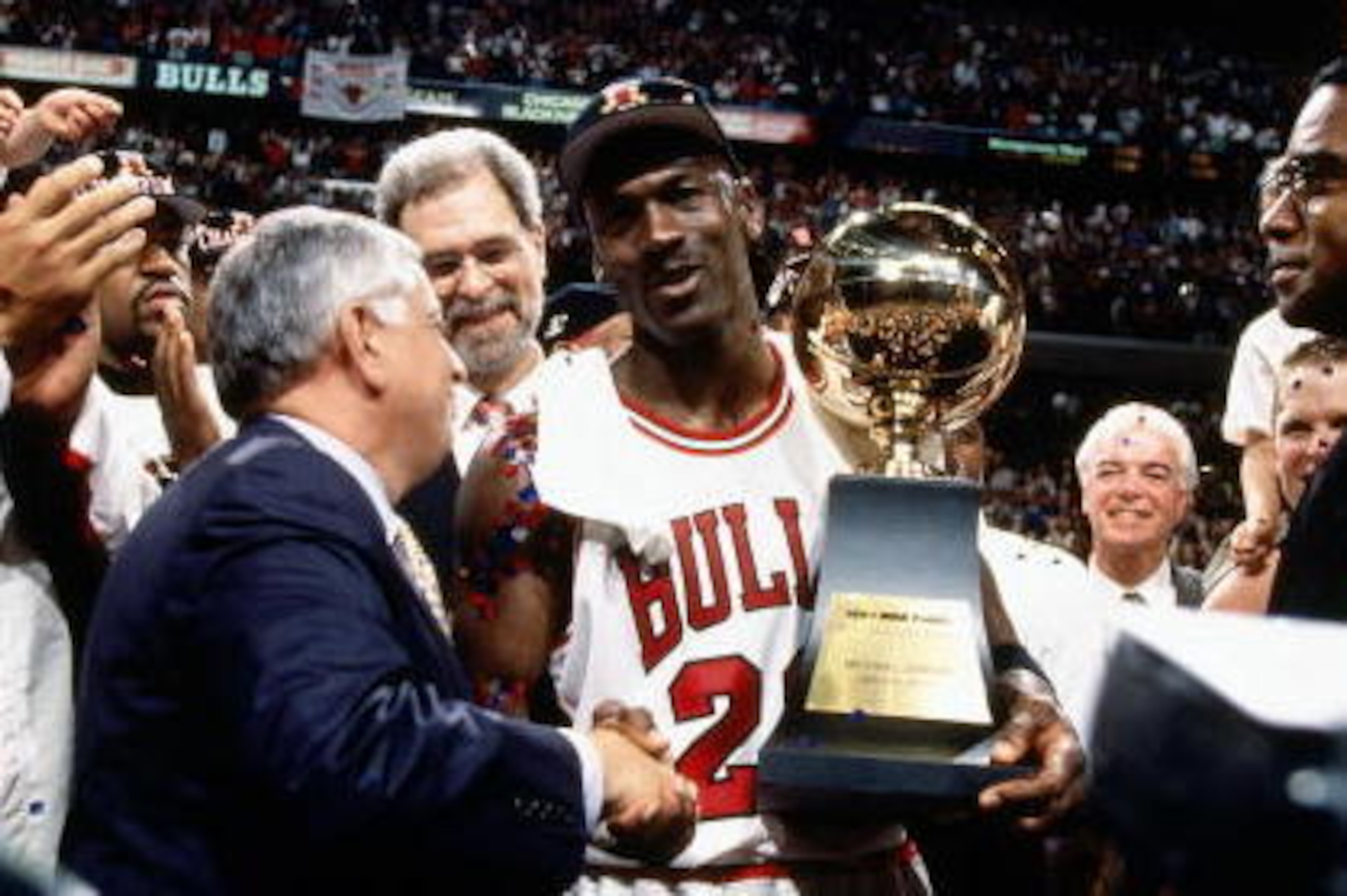
LeBron, still just 29, may one day match, or even trump, Jordan's six championships—the modern barometer for greatness—and the response will inevitably be: Yeah, but he also lost three times.
Michael, of course, never lost in the Finals. To hear commentators rhapsodize about him now, you'd think Jordan never lost a game, period.
Two points:
1. No, LeBron James is not Michael Jordan, however one defines the standard.
2. It doesn't matter.
The debate has grown tired and comical, to the point where another book had to be written just to shut up the chattering classes. There Is No Next is the latest tome from Sam Smith, the former Chicago Tribune reporter and author of the best-selling The Jordan Rules.
Smith, who covered the entirety of Jordan's Bulls career and remains the foremost authority on all things MJ, makes his case through personal observation and interviews with countless others, from Magic and Larry Bird to Isiah Thomas, Grant Hill and President Barack Obama.
Smith would be the first to tell you that LeBron James will never "be" Michael Jordan, whatever that means. He would also tell you the comparisons are pointless and should probably cease.
"LeBron is boxing with clouds," Smith said. "You can't grab a hold of this thing, this guy, his mystique."
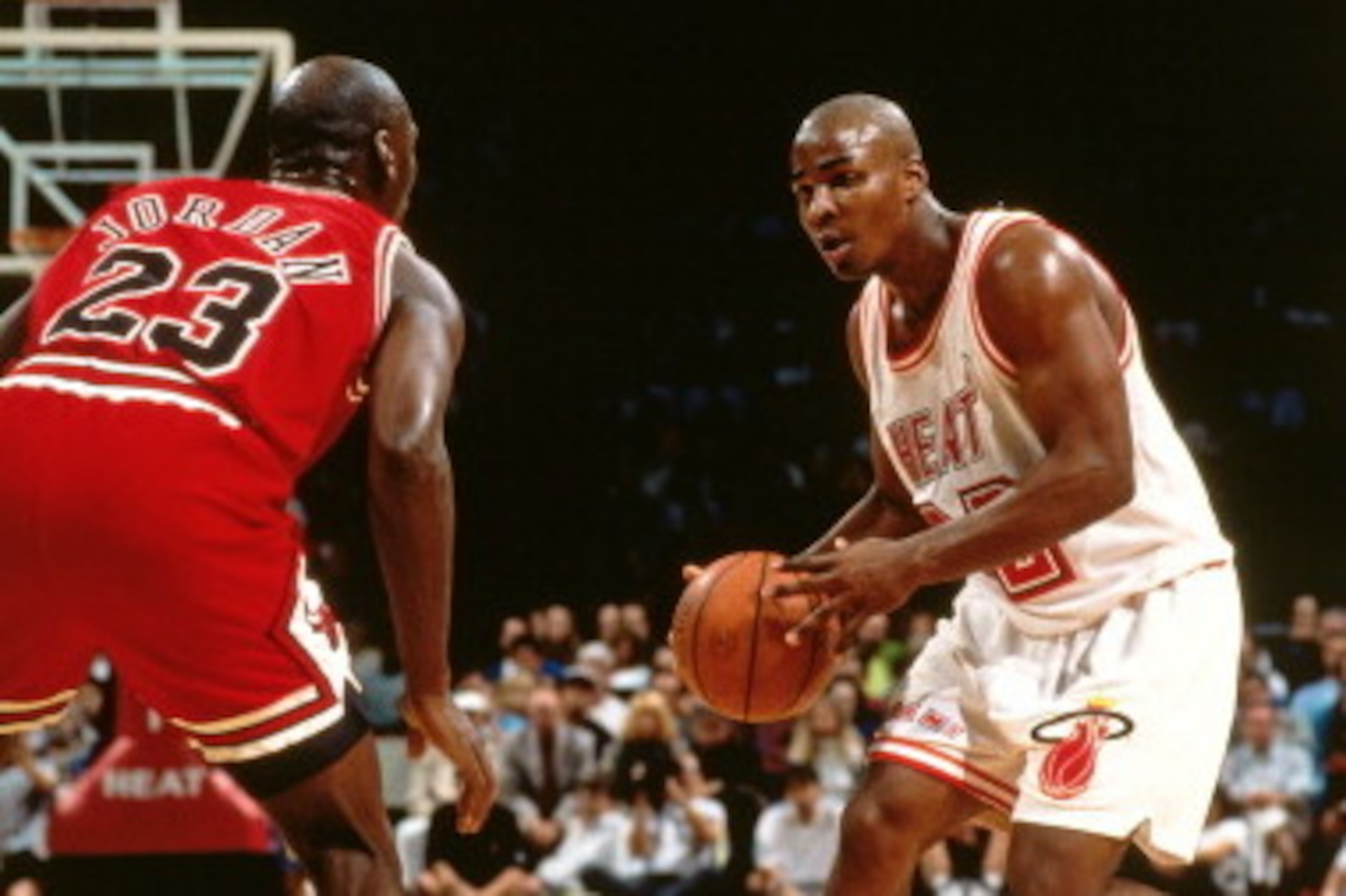
James temporarily quieted critics by winning back-to-back championships with the Miami Heat in 2012 and 2013. James fell short in his bid for a "three-peat" (Jordan did it twice!), but that failure was quickly eclipsed by the wave of good feelings elicited by his decision to return to the Cavaliers, his original team.
Yet even as Cleveland celebrated LeBron's second coming this week, Jordan's ghost lingered.
"Can LeBron James surpass Michael Jordan as the NBA's best ever?" asked a headline in The (Cleveland) Plain Dealer.
There is even an entire web page devoted to comparing the two.
It's a strange construct that we, NBA fans and media, have created. It doesn't exist in other sports. There is no urgent demand for the Next Hank Aaron or the Next Joe Montana or the Next Wayne Gretzky. Young pitchers don't face daily comparisons to Roger Clemens.
Only in the NBA do we turn one player into a deity, and then insist that every great young player live up to the standard.
"It's not logical, it's not fair and it is unprecedented," Smith said. "It didn't exist before Jordan came along."
Before Jordan collected six titles with the Bulls in the 1990s, the NBA's standard for winning was Bill Russell, who led the Boston Celtics to 11 championships between 1957 and 1969. The standard for offensive dominance was Wilt Chamberlain. The standard for filling up box scores was Oscar Robertson. And the standard for clutch was, of course, Mr. Clutch, Jerry West.
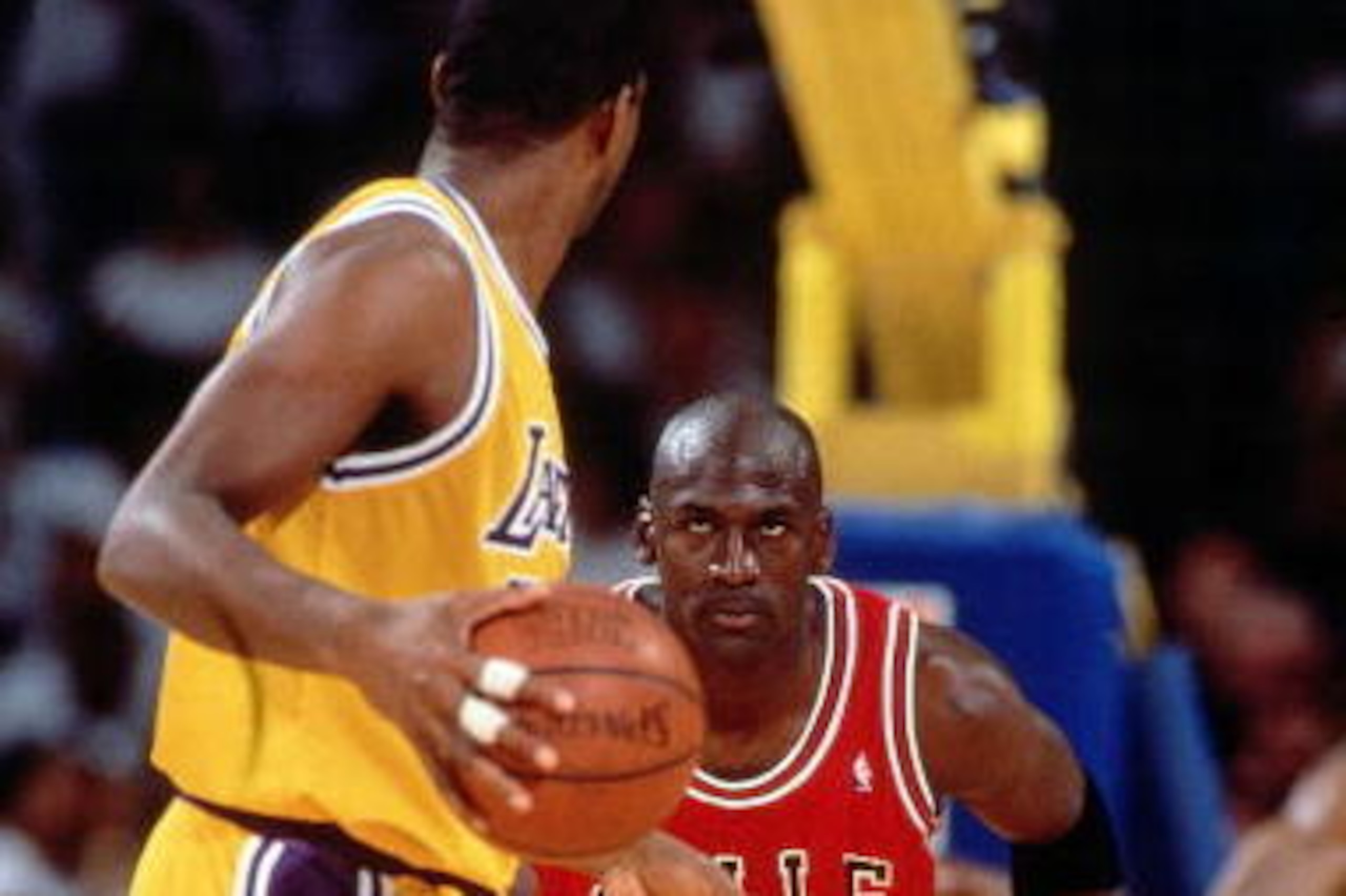
But Russell lacked an offensive game, and the others lacked the jewelry. Magic and Bird established the modern standard for greatness, but Jordan was the first to check every category—scorer, champion, icon—and the first to cross over as a pop-culture and marketing phenomenon.
"It's what pop culture determined: Here's the best guy," Smith said.
So while Jordan did try to adopt Magic's name as a teenager, he was never asked to match Magic's feats or to be the "next" anyone. He was often compared to Julius Erving, for his high-flying theatrics and dunking artistry, but Dr. J never cast the same shadow, because his best years were spent in the ABA.
There was a time, early in Jordan's career, when he was derided as a ball-hogging gunner, as a great scorer but not a winner. Critics wanted him to be more like Magic, the ultimate team player.
"So that used to be held up to him, and it used to really piss him off," Smith said, chuckling. "He hated that."
The comparisons effectively ceased after Jordan knocked off Magic's Lakers in the 1991 NBA Finals.
"There was no 'Jordan' for Jordan," Lazenby said. "Michael owned the game like no one ever has. LeBron doesn't own it like that yet, but he's very close."
To an extent, the modern stars have invited the comparisons. They all grew up idolizing and imitating Jordan. Bryant patterned his game, and even his speech, after Jordan. James adopted Jordan's number, 23. (When he moved to Miami, James took No. 6, which of course evoked Jordan's ring count.)
And though outwardly they might eschew the comparisons, Bryant and James both badly want to match Jordan's six titles.
Lazenby has spent time interviewing influential people in James' background, "and they insist that LeBron's entire motivation is to win more championships than Jordan."
"They're not on the floor at the same time," Lazenby said, "but I do think they're sort of competing across time, across the decades."
And so we all get trapped in these ridiculous debates the moment that Bryant or James (or soon, Kevin Durant) fails to live up to some immeasurable, possibly mythological standard.
LeBron gets leg cramps in the Finals and can't return? Critics point to Jordan's "flu game" to prove LeBron is unworthy.

LeBron passes to an open Chris Bosh in the critical moments of a playoff loss? Critics say he lacks the "Jordan gene" (and never mind that Jordan won championships by passing to Steve Kerr and John Paxson).
It has come to the point where the entire Jordan legacy has been distorted. You would think that Jordan took every big shot, made them all and discovered cold fusion during the timeout. Based on the mythology, you would think Jordan alone won those titles, without the aid of Scottie Pippen or Horace Grant or Dennis Rodman.
The Cavaliers never got a Pippen or a Rodman, and so James left for Miami to find his own. If the Bulls had been as inept in the 1980s, perhaps Jordan would have done the same.
No, James cannot match Jordan's 6-0 record, and to some folks, that alone disqualifies him from "Next Jordan" status. But this discussion is pointless, and the comparisons were misguided from the start.
James entered the NBA as a selfless, playmaking wizard, in the mold of Magic, not Michael. He has evolved into a dominant scorer, but it's not what defines him.
Comparing players across eras is an inherently fraught exercise, because of changing rules and salary caps and expansion. But Jordan's statistical feats stand alone. He averaged 33.6 points in his Finals career, a number that James (24.3 average) will likely never match. Jordan once averaged 37 points for an entire season and had eight seasons of averaging at least 30, a plateau James has reached just once.
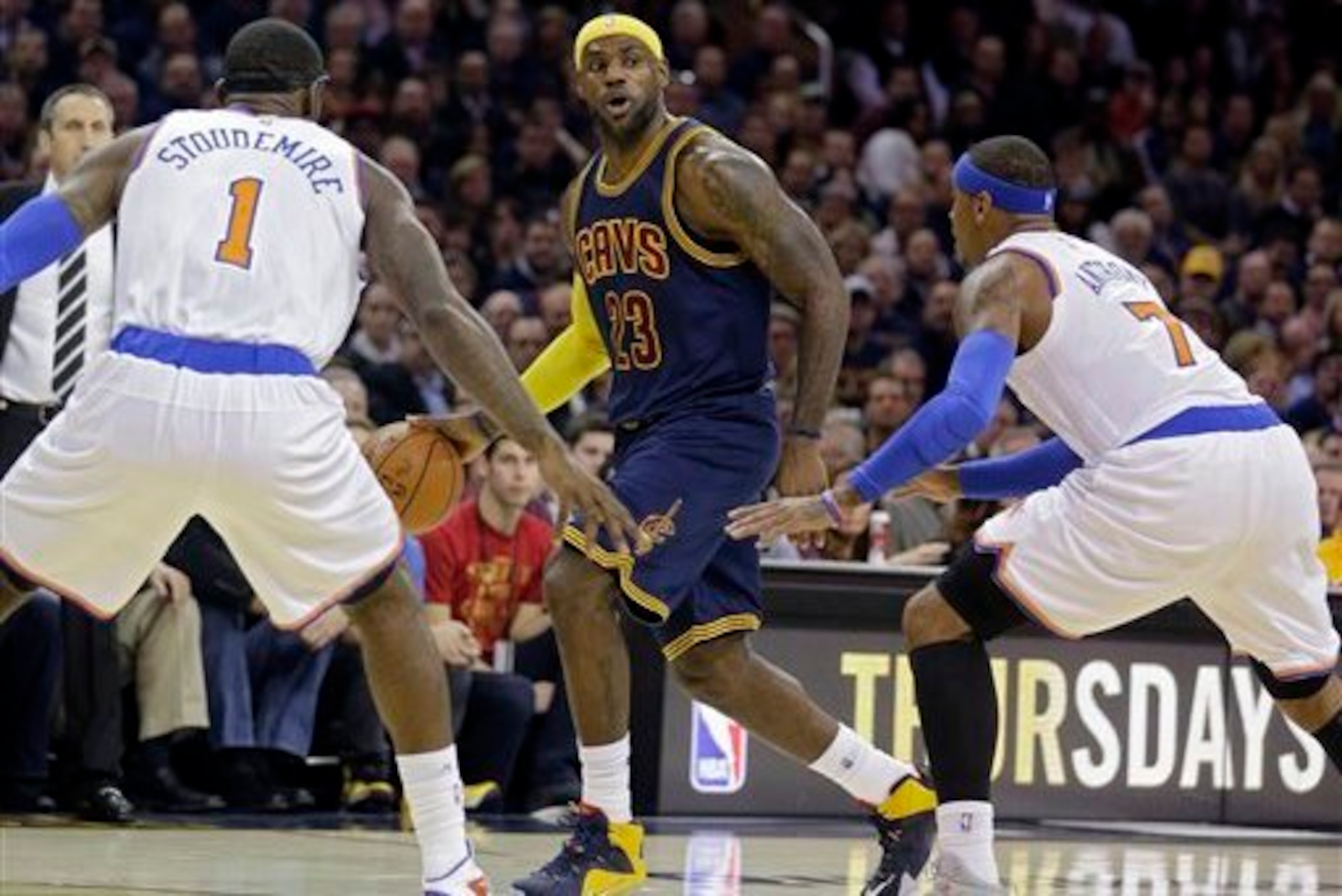
As a scorer, James will never be Jordan. As a champion, perhaps not either. Yet he already stands apart in his own right, as the only player who ever combined size, speed, agility, scoring, playmaking, rebounding and defense at this level—a mashup of Magic and Jordan and Karl Malone.
We can keep obsessing over Jordan and making impossible comparisons, or we can choose to appreciate James for his own unique brand of greatness.
There is no Next Jordan. There is no debate. But the suffocating comparisons will inevitably persist, to the detriment of us all.
In his Hall of Fame induction speech in 2009, Jordan peered out into the audience and glibly declared, "I wouldn't want to be you guys if I had to." He was addressing his children. He might as well have been saying it to every young basketball star until the end of time.
Howard Beck covers the NBA for Bleacher Report. Follow him on Twitter, @HowardBeck.

.jpg?w=2560 "NFL House in Paris Closes for Protests")
.jpg?w=2560 "Trevon Diggs Cut by Seahawks")