
Oakland A's: 10 Most Tradeable Assets for the 2014-15 Offseason
If the Oakland A's decide to be sellers this offseason, they have quite a few assets who can help reload the farm. There's an asset or two who can help reel in a big name if they decide to be buyers, too.
First and foremost, listing any player on this list is not an endorsement by this writer to in fact trade them. Said another way, just because Player X is on the list doesn't mean I think or want him to be traded.
The list simply contains the Athletics' top 10 trade assets.
After reading, hit me up on Twitter to let me know who you think the No. 1 asset is.
All statistics and contract figures are courtesy of Baseball-Reference.com.
Honorable Mentions
1 of 11
Renato Nunez
Nunez is a 20-year-old third baseman who could see time in Double-A in 2015, giving him an MLB debut arrival of 2017 at 23. He's the No. 3 prospect in the A's system according to the A's website.
Nunez recently hit .279 with 29 home runs in Single-A.
Josh Reddick
Reddick is a Gold Glove outfielder. He's also young(ish), turning 28 before the 2015 season begins. Lastly, he's arbitration-eligible for two more years before free agency, and he currently makes less than $3 million a year while playing at least $6 million defense.
His value lessens, though, because of his hitting.
In 2012, he didn't particularly hit well for average but hit 32 home runs. The next season, both his batting average and home run total dropped significantly.
This season, he hit for average better, his power stayed the same, his production stayed the same, but his walks and stolen bases lessened.
Teams inquiring know they'll get good defense. But they can't be confident in what they're getting at the plate.
Ryan Cook
Cook is the Josh Reddick of the bullpen.
He's one year younger at 27. He's locked up for two years longer and makes much less ($500,000). And in 2012, he was an All-Star.
In the two seasons since, his ERA has risen while his innings pitched have lessened. Cook walked less in each year, but he allowed more earned runs.
The potential is there, but teams just can't be certain Cook will "find it" again or keep trending downward.
Craig Gentry
Gentry is a speedy outfielder who plays defense quite well covering a ton of ground with his legs. He can also steal plenty of bases once he's on. But the almost 31-year-old has never been a full-time player in his career, despite hitting .278 over the last four years.
Daniel Robertson
Daniel Robertson is the No. 1 prospect in the A's system, currently. That label alone adds perceived value.
Robertson has hit well as he moves up through the minor leagues. For example, he finished 2014 (Single-A) with a .310 average, 37 doubles and 15 home runs.
He's also a slick defender; Robertson made no errors at third, one error at second base and had a .964 fielding percentage at shortstop.
If the A's want to trade for a prime-time player, including Robertson would absolutely sweeten the deal.
10. John Jaso
2 of 11John Jaso is a solid backup or platoon catcher, assuming he returns to behind-the-dish duties.
He can provide veteran leadership from an important part of the diamond, helping a young catcher, pitchers and hitters. And he'll provide quality hitting—Jaso has a .270 average the last three years.
Jaso earned $2.3 million in 2014, so there's a good chance he remains under $3 million next season.
His trade value dwindles a bit, though, due to injury concerns.
Having finished the last two seasons on the disabled list due to concussions makes one wonder if he can remain behind the plate. If not, he's a designated hitter, or he'll have to learn first base.
9. Stephen Vogt
3 of 11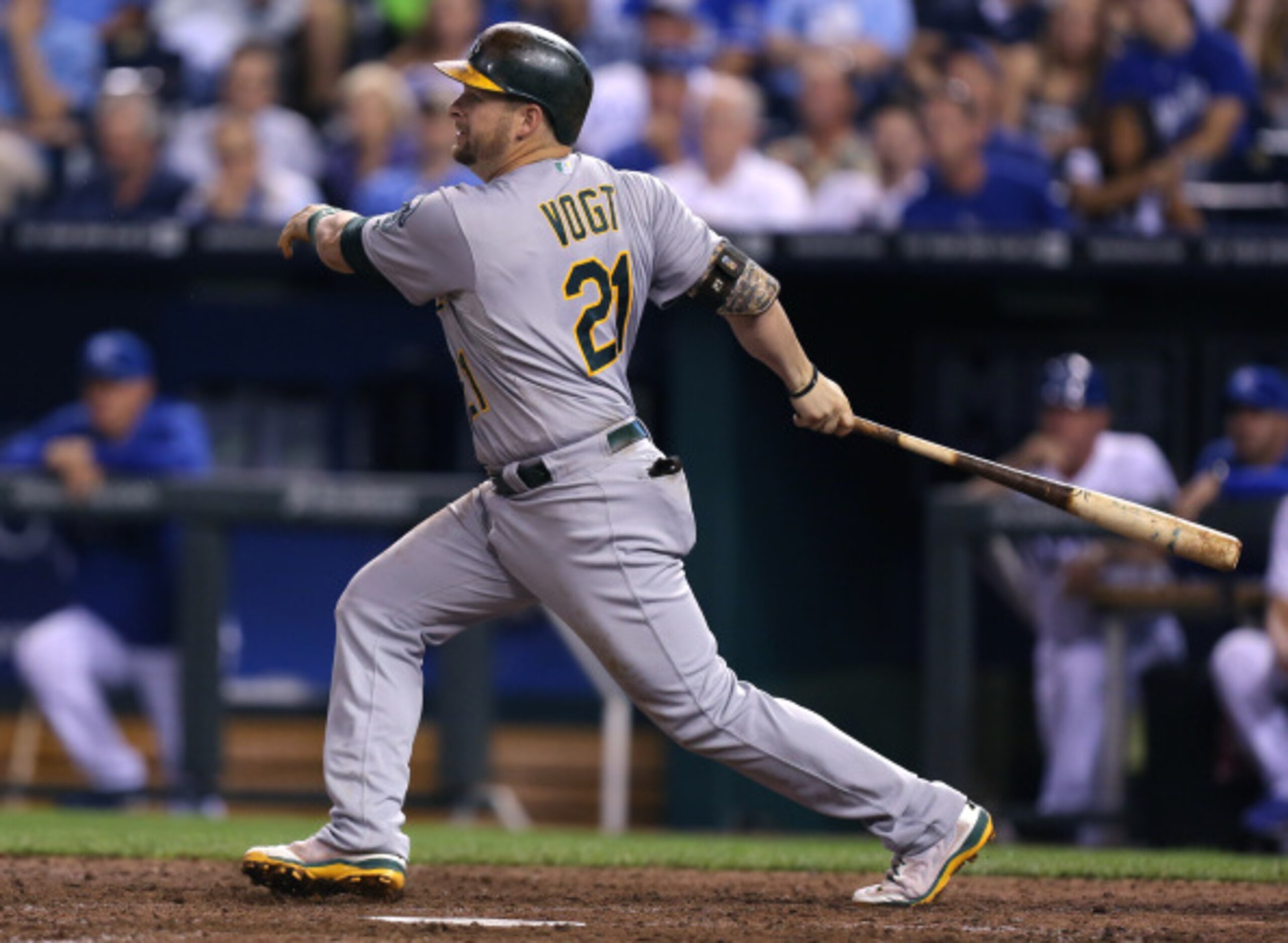
Vogt has more value than Jaso because he's a smidge younger and can play multiple positions (catcher, first base, outfield).
He's also much more cost-friendly.
The concern for Vogt, though, is whether he can sustain the upward trend of his batting average. After hitting .252 in 2013, he finished 2014 with a .279 batting average.
But it took Vogt quite a while to finally catch on in Major League Baseball. So his sample size is small.
Lastly, like Jaso, he's really only a backup or platoon player, which decreases his value.


8. Brandon Moss
4 of 11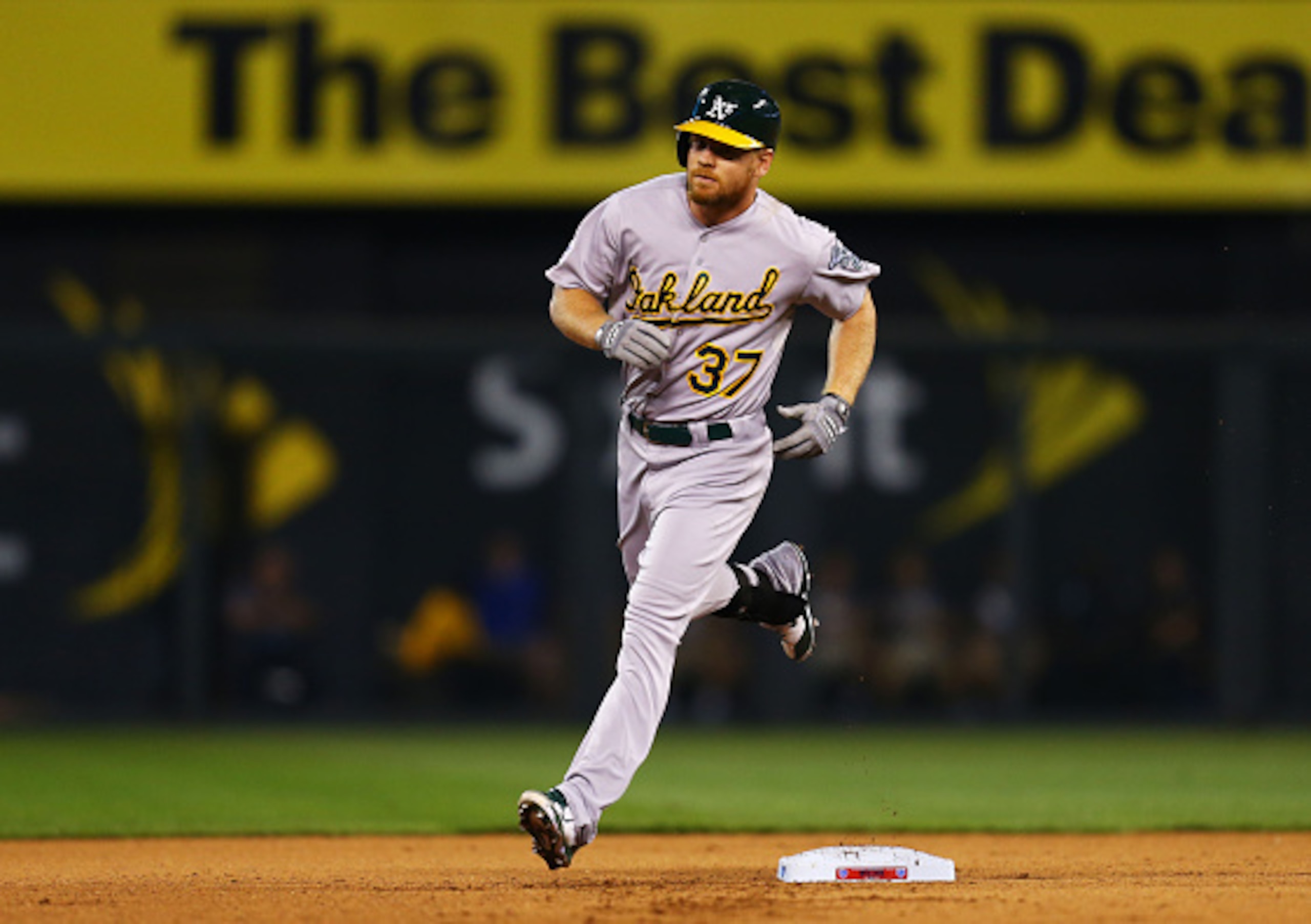
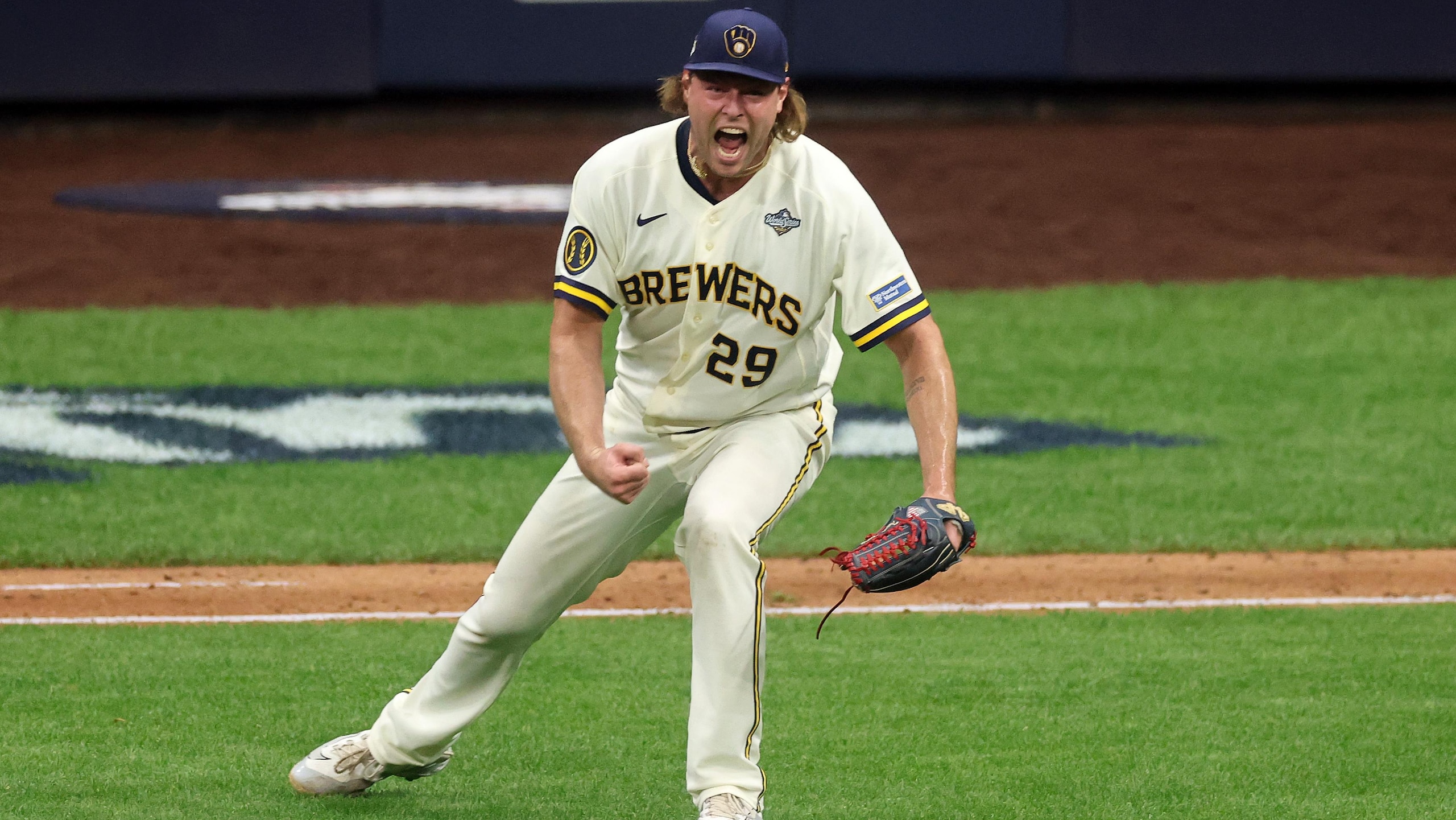
Brandon Moss is a more valuable asset than guys like Vogt and Jaso strictly due to his power. With Moss, a team adds at least 20 home runs to its season total—minimum.
Moss plays first base pretty well, too. He committed five errors in 2014, ending with a .990 fielding percentage. The league average is .992. But in addition to first, Moss can play left or right field. So between power, meeting the standard on defense and some versatility, he has some value.
His recent performance (2-for-5 with two home runs) in this year's postseason should jack his value up if he were to be traded soon.
Teams could decrease his value, though, by pointing out that Moss is a "platoon" player, even though he's played in over 140 games in each of the last two seasons. But as he plays in more games, his batting average has gone down.
The 31-year-old's salary jumped from $1.6 million in 2013 to $4.1 million in 2014 as well.
He's getting older and more expensive and he doesn't hit for average. But he has power and can play in a few spots in a pinch.
7. Matt Olson
5 of 11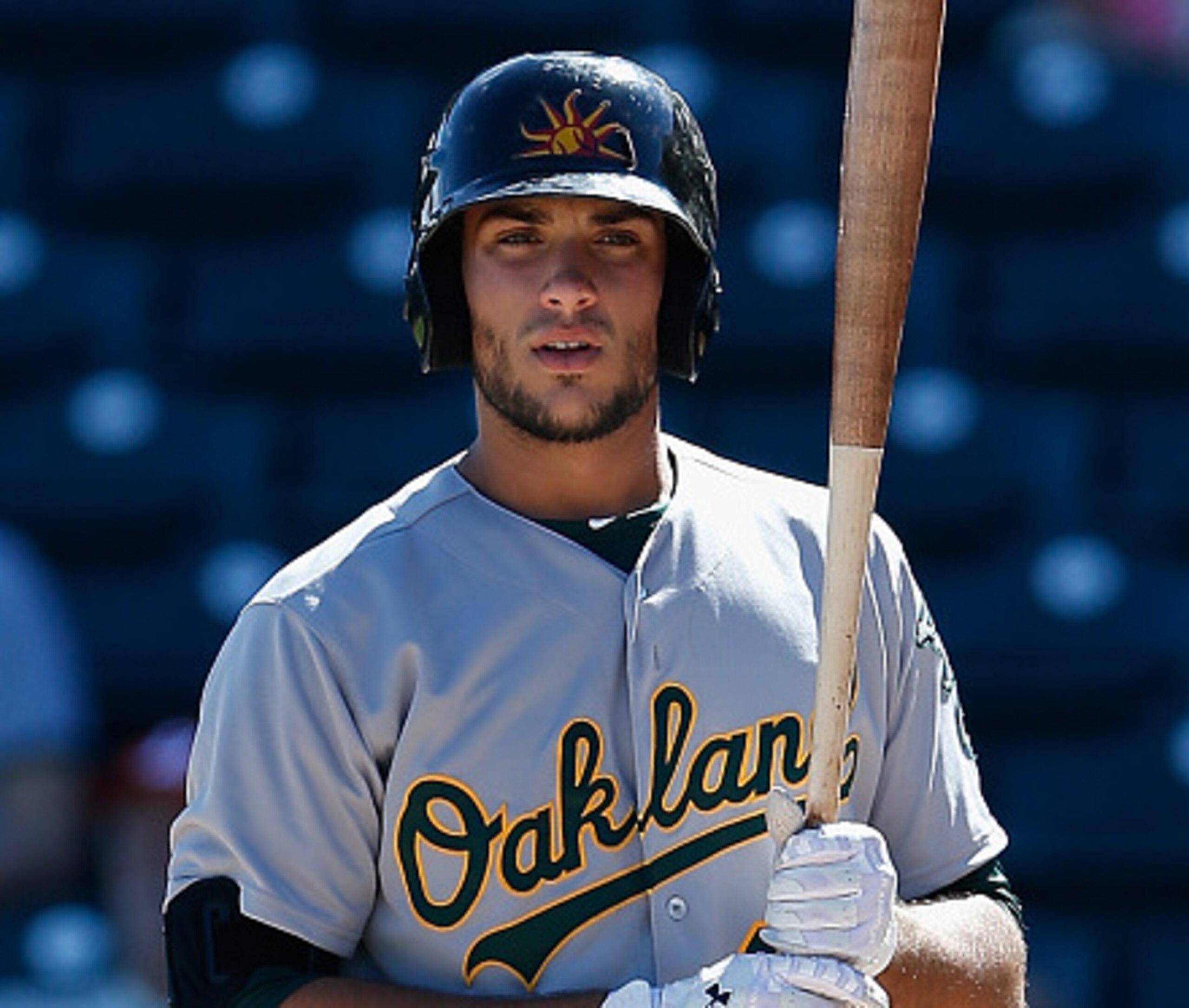
It's debatable, but prospect Matt Olson may have better trade value than Brandon Moss. It really depends on the inquiring team, and it's difficult to compare trade values for teams looking to upgrade now versus load up for the future. Obviously Moss is a better fit for the former, with Olson better for the latter.
So really, you could flip-flop Olson and Moss if you'd like.
That said, I have Olson one spot ahead of Moss because of age, talent ceiling and how long he's locked up.
Moss' best asset is power. Power? Yeah, Olson's got that.
Olson hit 23 home runs in 2013. He followed that with 37 this season. Throw in over 30 doubles and over 90 RBI in each of the last two seasons, and you've got a power hitter who produces plenty of runs.
I also have him over Daniel Robertson—even though he's ranked lower on the prospect list—because of that power and ceiling. Would you rather have a slick shortstop who has speed and hits for average, or the huge first baseman who hits a ton of home runs?
If it's speed and defense or power, I'd bet teams would be more interested in the pop.
6. Coco Crisp
6 of 11
With Coco Crisp, you're getting a centerfielder who can cover a ton of ground and play high-quality defense sans throwing power. At the plate, you're getting a prototypical leadoff batter with a touch of power to add to his speed.
But injuries hamper Crisp's trade value.
In five years since becoming an Oakland Athletic, the most games Crisp has played is 136. In 2010, it was just 75 games.
His speed is considerably down as well. After swiping 49 bags in 2011, his total dropped to 39, 21 and 19 in the following seasons, respectively.
And he's just about to turn 35.
Lastly, locked up for three more years (with a buyout option), Crisp is about to begin earning $11 million over 2015-16 and $13 million in 2017.
That's a lot of money for a guy who spends a decent amount of time on the disabled list and isn't getting any younger. However, again, he is a quality leadoff hitter which is hard to find. He'll add character to a team and leadership to a clubhouse for sure.
5. Scott Kazmir
7 of 11
It sounds counterintuitive, but guys who pitch once every five days are bigger commodities than guys who play the field every day and guys who pitch an inning or two every other day.
But, because starting pitchers are such a commodity, Scott Kazmir jumps the backup and platoon players on the list so far.
Kazmir is No. 5 because, unlike prospects or a guy like Jesse Chavez, he's proven what kind of talent he brings to the table consistently. But unlike other guys coming up on the list, he's older and not quite as effective.
Still, he provided 15 wins and a 3.55 ERA in 2014. Someone will be interested.
The 30-year-old logged 190.1 innings as well, second-most on the team. He'll turn 31 in January.
The major downfall for teams interested in Kazmir is his 2015 salary. Kazmir is set to earn $11 million next season.
4. Sean Doolittle
8 of 11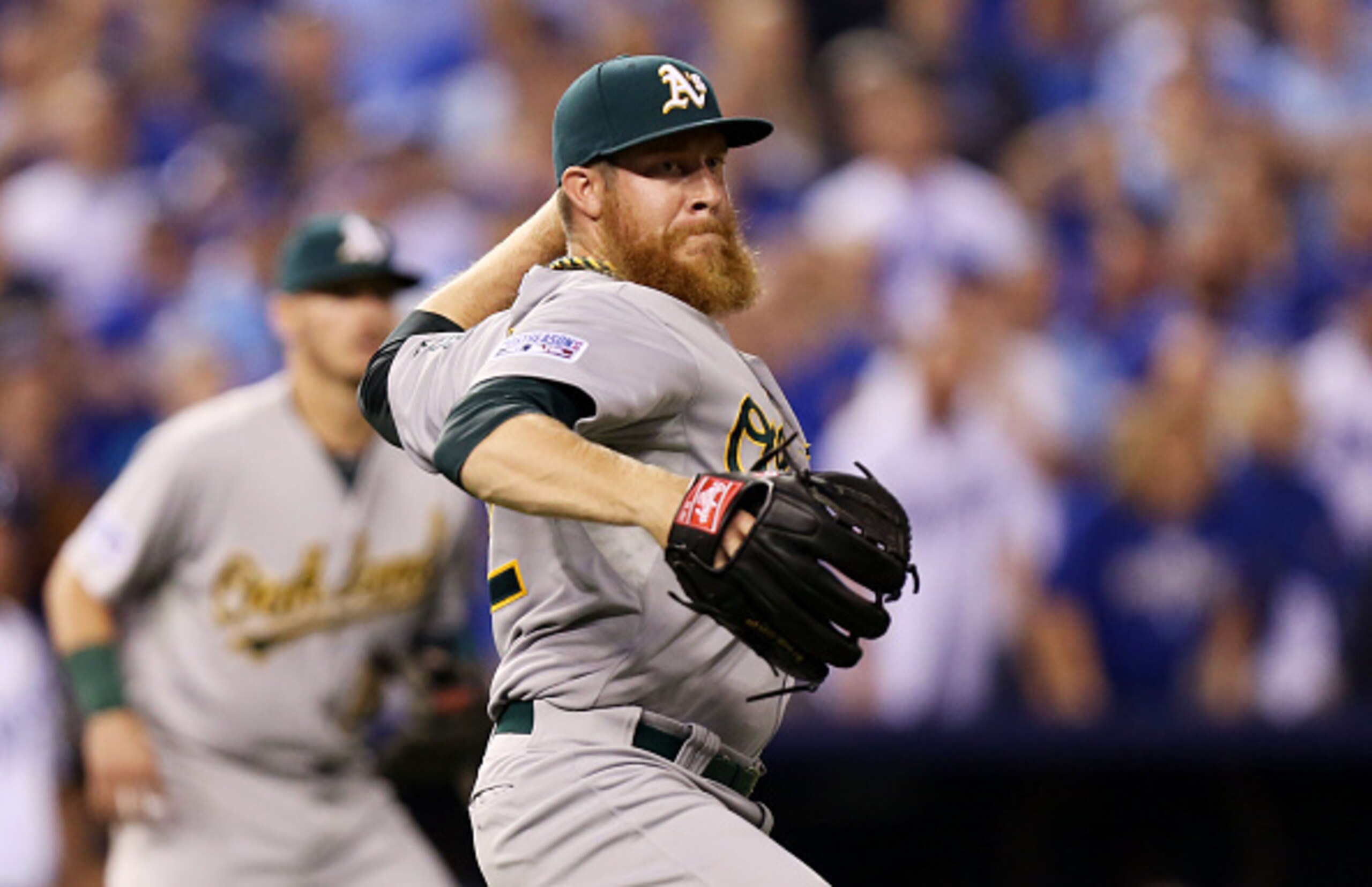
In the honorable mentions list, Robertson, Jaso and Vogt have what I would call "C-value," wherein there is certainly some value, but not an overwhelming amount (yet for prospects). Moss through Kazmir represent the next tier of "B-value" assets.
Now we're into "A-value" players.
Sean Doolittle is in the prime of his career at 28 years old. He now has that closer designation, which for relievers adds perceived value. Say it out loud: Doolittle isn't just a reliever, he's a closer. Doesn't it just sound more special?
In three years in the bigs, Doolittle holds a career ERA of 2.97, finishing this last season with a 2.73 mark. His strikeout-to-walk ratio of 11.13 was particularly impressive in 2014. The production earned Doolittle a trip to the All-Star Game.
And best of all for Doolittle's trade value, he's locked up until 2020 (33 years old) for $21.87 million.
Moreover, the team that has Doolittle has a $500,000 buyout option before he'll ever earn more than $6 million, meaning a team could hang on to him until he's 31, pay him a total of $9.37 million for four years, then cut him loose.
OK, I lied. His beard is his best trade asset. It's pretty incredible.
So if he has all of this going for him, how is he not higher?
3. Jeff Samardzija
9 of 11
Remember when I said starting pitchers are hotter commodities than relievers? That's why Jeff Samardzija is ranked higher than Sean Doolittle.
Samardzija hits the 30 mark in January before the 2015 season begins. He's also locked up for one more season before what should be quite a payday in free agency. Currently, he's up for arbitration. Samardzija made $5.345 million in '14, so that figure should increase.
But for an ace, that's still cheap.
And while Shark may be older, more expensive and pitch less often than Doo, he's a guaranteed and proven ace.
Sure, Samardzija's career 3.85 ERA nears the 4.00 mark, and he owns a losing record. But eliminate his first three shaky years in the league, and his ERA drops to 3.61. Also, you have to include the fact that he pitched for the Chicago Cubs during some of their worst years in recent history.
But because he hasn't ever captured double-digit wins in a single season, he falls behind the next two guys.
2. Josh Donaldson
10 of 11
He's not an ace. He's not a closer.
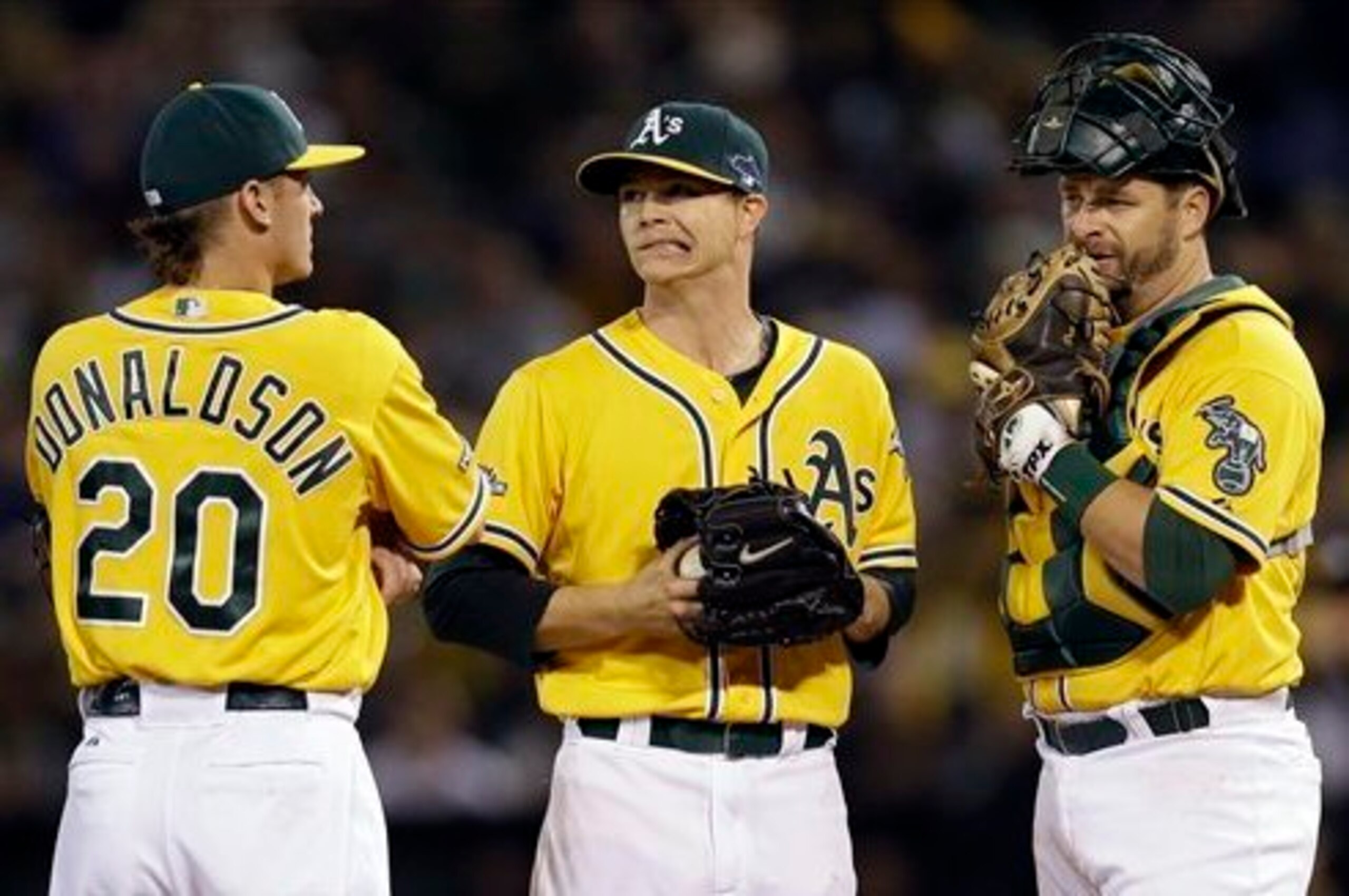
Instead, Josh Donaldson is a Triple-A catcher-turned-third baseman (only out of necessity) who, since the switch, finished fourth in MVP voting in 2013 and went to the All-Star Game in 2014.
The soon-to-be 29-year-old has hit .277 the last two seasons. In that time frame, he has averaged 91 runs, 164 hits, 34 doubles, 26 home runs and 96 RBI. All the while, he made a whopping $500,000 in 2014. Donaldson is arbitration-eligible yet again and won't be a free agent until 2019.
Why is he above an ace?
Because the dude plays every single day (well, almost). Donaldson played in 158 of 162 games in back-to-back years.
So he's kind of talented, pretty cheap, locked up for a long time and is a workhorse—and I didn't even mention the glovework.
How is he not the most tradeable asset?
1. Sonny Gray
11 of 11
Well because there's that kid named Sonny Gray.
Gray is loads younger (in terms of baseball) at 25 years old when the 2015 season starts. He's as cheap as Donaldson at $502,500 (in 2014). He won't even be arbitration-eligible until 2017, and he won't be eligible for free agency until 2020.
Now let's get to his stats.
Gray would be an ace on most MLB teams. In two years so far, he's averaged a 2.99 ERA. As of now, he strikes out about seven batters for every walk. And in the postseason? He's allowed just three runs in 13 innings across two games, walking six and striking out 12.
You might argue that Donaldson is the best trade asset the A's have. And that's fair.
But Gray has the edge based on—what I've said in slides prior—starting pitching being the bigger commodity combined with his age and length of time until free agency.
.png?w=2560)

.jpg?w=2560 "NFL House in Paris Closes for Protests")

.jpg?w=2560 "Trevon Diggs Cut by Seahawks")