Teams the College Football Playoff Committee Will Have the Hardest Time Ranking
The College Football Playoff selection committee will convene for the first time (ever!) this week and release its first batch of rankings Tuesday, Oct. 28 at 7:30 p.m. ET.
Mississippi State and Florida State are the only unbeaten teams remaining from power conferences, which in that case makes the committee's job easy. If you've won every game you've played, you will probably find yourself at the top of the poll.
But behind Mississippi State and Florida State lies a group of 16 one-loss teams from power conferences, a gaudy number for this point of the season. The amount of teams in that cluster (and the divergent paths they have taken to get here) will make the committee's job far from easy once it gets past the likely top two.
But who will give the committee the hardest time during its first conclave on Monday? Factors such as injuries, suspensions, strength of schedule and timing could all complicate a team's resume.
Here are five teams that stick out.
Arizona State
1 of 5
If it's healthy, Arizona State can score with any team in the country; but we don't know if quarterback Taylor Kelly is healthy.
If it it plays out like it has the past two weeks, Arizona State can defend well enough to beat every team left on its schedule; but we don't know if it can sustain the way it's played the past two weeks.
Basically, as far as ASU is concerned, we don't know much of anything.
And the "we" here includes the committee.
What we do know is that the Sun Devils' only loss came with backup quarterback Mike Bercovici making his first career start against UCLA. If not for a last-second Hail Mary against USC, Bercovici would have lost his second career start as well. Alas, he split those games 1-1 and also led a win over Stanford before Kelly returned in Week 9.
But Kelly got his bell rung toward the end of last week's game at Washington, casting his status back into doubt. He looked a little rusty, too. Might Bercovici give the Sun Devils their best chance to win? And is the defense due for a regression to the mean?
All of this will be answered when Arizona State hosts Utah and Notre Dame the next two weeks. But it won't be answered before the first set of rankings come out on Tuesday.
If the committee takes injuries into account (as it claims it will), shouldn't a 6-1 team in the Pac-12 South whose only loss came (a) against a ranked opponent, and (b) in its quarterback's first career start be granted the benefit of the doubt?
Georgia
2 of 5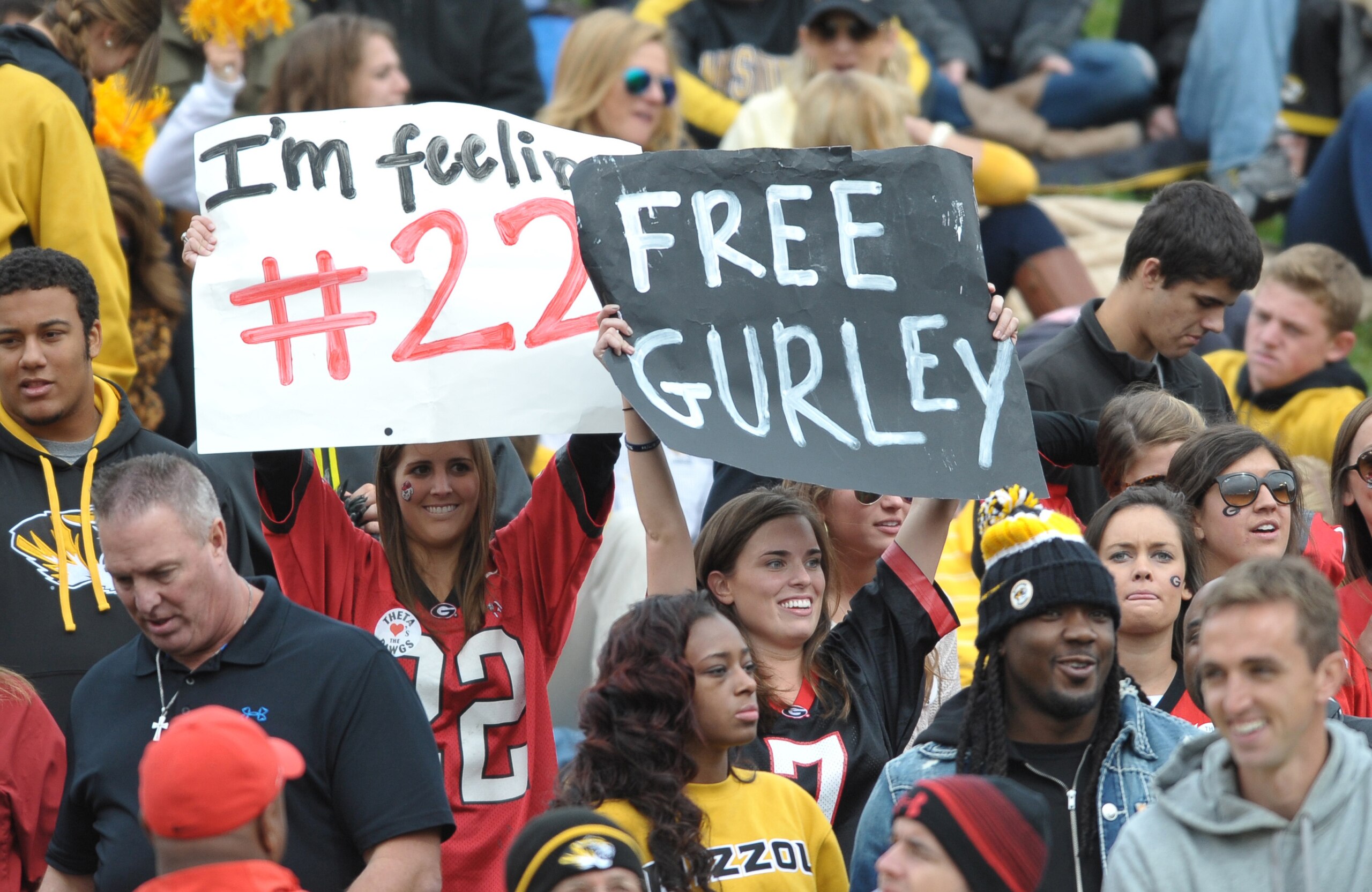
Georgia has looked fine—and in many ways improved—since Todd Gurley was suspended for allegedly selling autographs.
But how long can this "Ewing Theory" continue?
At some point, the 'Dawgs will pay for not having their best player (and my personal choice as the best player in the country) in the lineup. Backup Nick Chubb is a super freshman, but he's still a freshman. Quarterback Hutson Mason is getting better, but he's still not reliable enough to compensate.
Georgia filed for Gurley's reinstatement last week but has yet to hear back from the NCAA. "We're just waiting for a response," head coach Mark Richt said on his weekly teleconference, per Benjamin Wolk of the Macon Telegraph. "We don't really know what to expect."
Unfortunately, neither does the selection committee, which ostensibly means Georgia will be ranked under the pretense of Gurley's absence. The Bulldogs cannot afford that based on their resume, which includes a loss to an unranked opponent (South Carolina) and zero wins over teams in the Associated Press Top 20.
Georgia is the only team in the AP Top 12 whose resume includes both of those things. But it's still ranked all the way up at No. 9. There is a dissonance between what Georgia has done and the way it has been ranked in the non-committee polls. People like they way it's been playing, but questions remain about its past and its future.
This is just a murky situation all-around.
Notre Dame
3 of 5
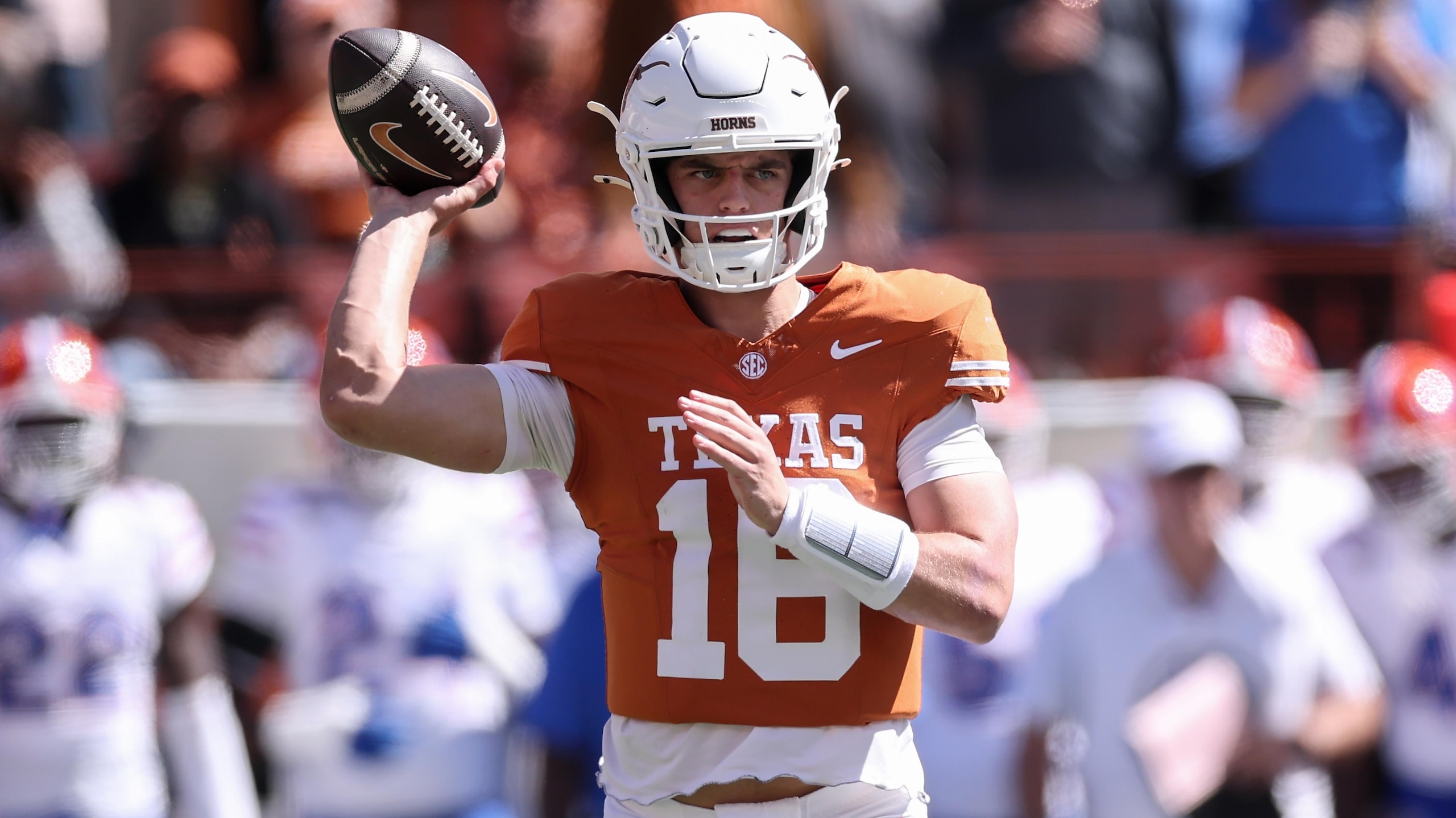
The problem with Notre Dame—as formulated by Matt Hinton of Grantland—is that it's "'signature win' right now is a loss."
Seriously, the Irish earned more street-cred in losing 27-24 at Florida State than they did in any of the six games they won.
Of the six opponents they conquered, only two, UNC and Stanford, are on track to make a bowl game from a power conference. But it's not like the Tar Heels and Cardinal have been great. Combined, they have lost seven games this season, often by a bigger margin than their losses to Notre Dame. The Irish beat Stanford by three points on a last-minute fourth-down touchdown pass and UNC by seven points in a sloppy, turnover-addled affair.
(Both of those games were played in South Bend, too.)
Notre Dame has a much tougher road ahead than it has behind. Its next five games are at Navy, at Arizona State, vs. Northwestern, vs. Louisville and at USC. If it finishes 11-1 with a close loss at Florida State, it will be a much more straightforward case for the committee. At that point, it's an easy team to judge.
But right now? It's as difficult to judge as anyone. The six teams directly behind it in the AP Poll have beaten at least one other Top 25 team. What is more important to the committee: whom a team has beaten, or whom a team was beaten by?
Notre Dame's first ranking will be a litmus test.
.jpg?w=2560)
Oregon
4 of 5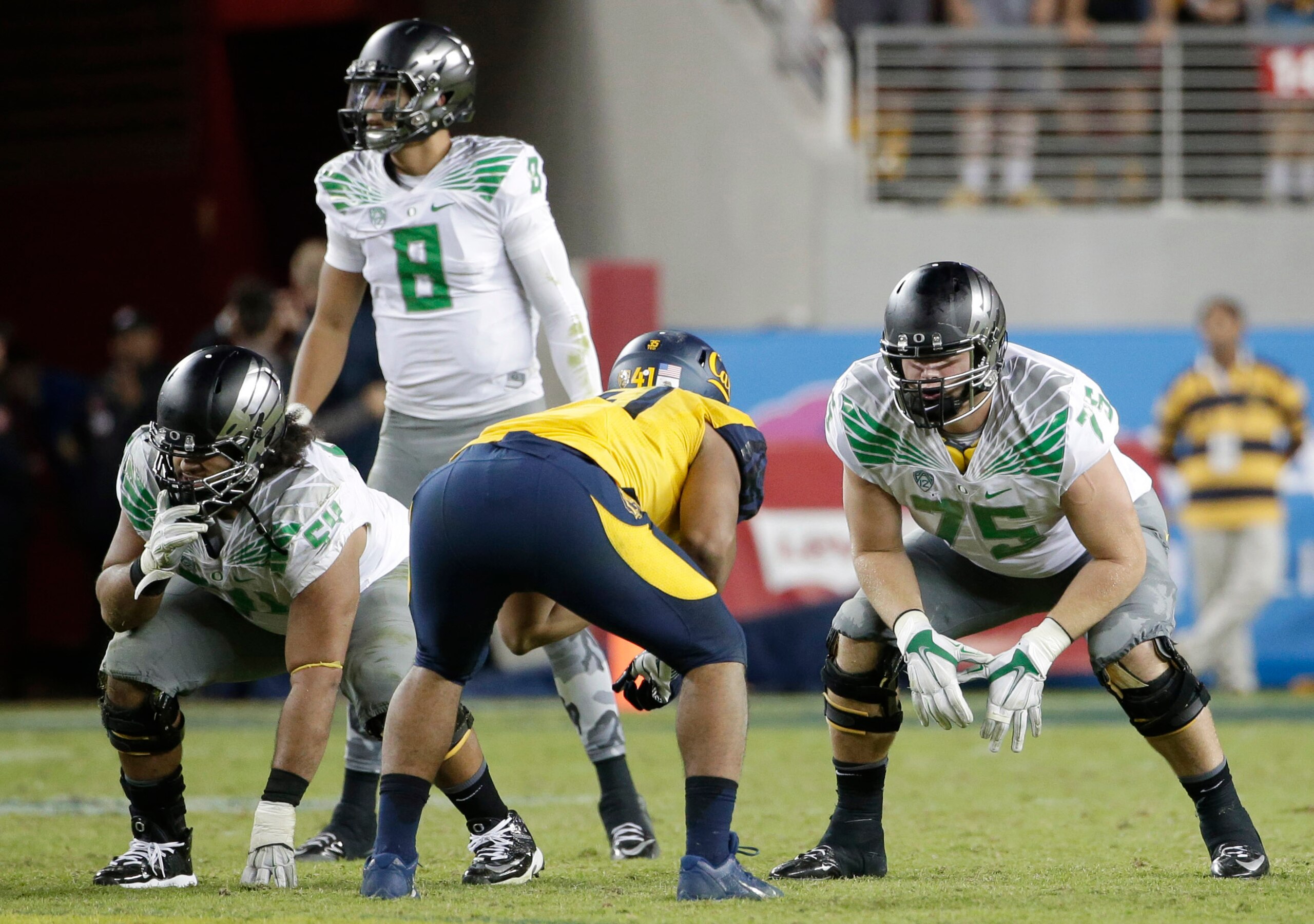
Oregon is 7-1 with a thorough road win over UCLA and a thorougher home win over Michigan State—the latter of which has beaten every other team on its schedule. In six of their eight games this season, the Ducks have looked like an easy Top Four team.
The problem is the two-game stretch at the start of Pac-12 play, during which Oregon squeaked by Washington State in Pullman, 38-31, and lost to Arizona in Eugene, 31-24.
Starting left tackle Jake Fisher was injured for those games, and the effect his absence had on the offense was noticeable. Marcus Mariota stood on his head to get the Ducks past Washington State but couldn't pull a rabbit out of his hat against Arizona. The depth of Oregon's offensive line was tested, and it failed.
But Fisher has since returned from that injury, and he's shown no ill effects. "Obviously, (Fisher's) presence was just a calming factor," said Oregon offensive line coach Steve Greatwood after Fisher's return helped spark the win at UCLA, per George Schroeder of USA Today.
But how much will the selection committee care?
According to its official protocol, the committee will consider "other relevant factors such as key injuries that may have affected a team’s performance during the season…" The way Oregon has looked with Fisher and without Fisher is an exemplar of that principle.
We'll see if the committee holds true to its word.
Ohio State
5 of 5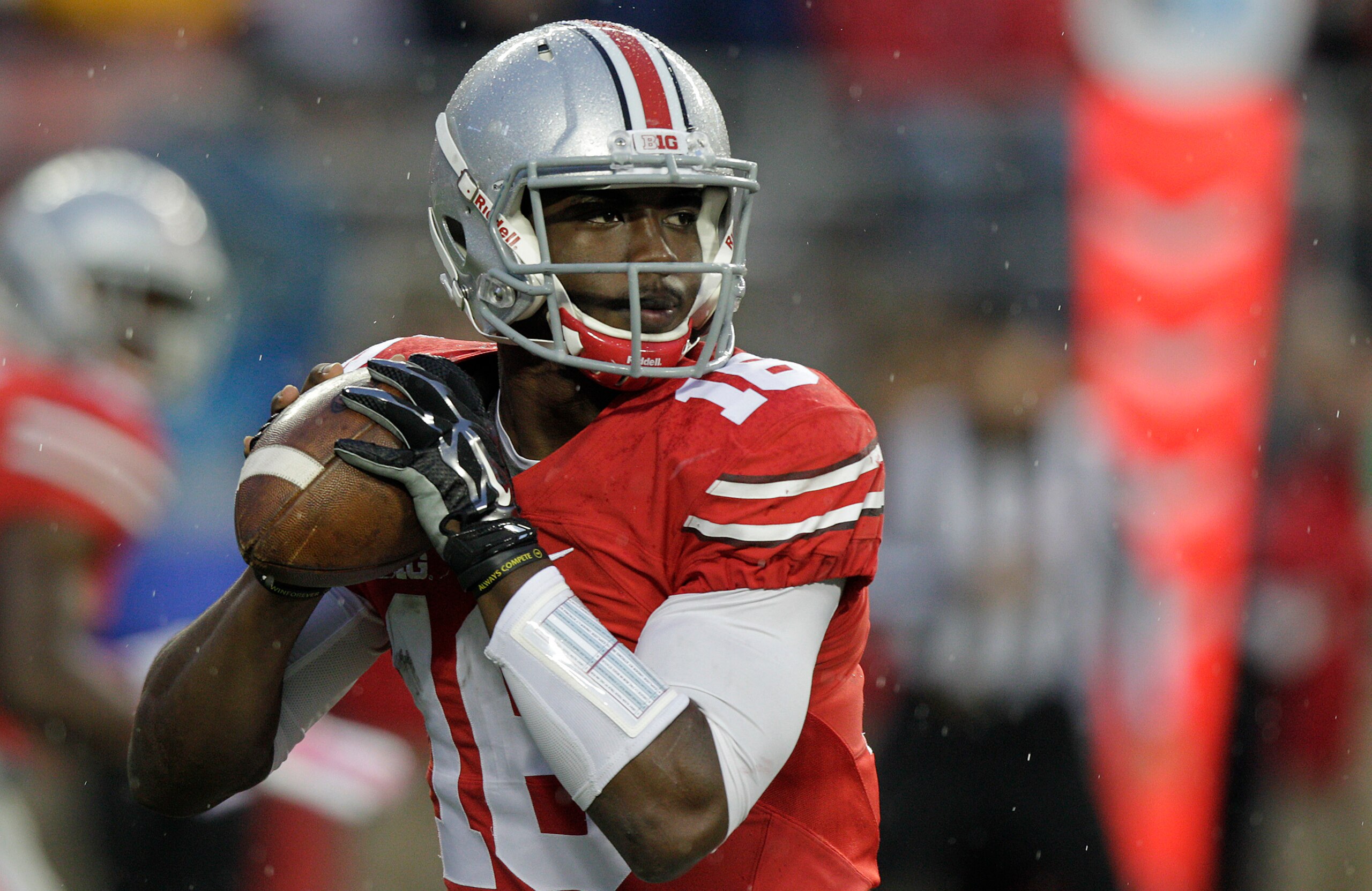
Ohio State is less of a problem now than it was before needing double overtime to beat Penn State, but it's still a problem.
Even after struggling to beat the Nittany Lions—a team that lost by 23 points at home to Northwestern—the Buckeyes can make a case for being the most improved team in the country from Week 3 to Week 9. And it's fair to excuse their early-season malaise given the timing of Braxton Miller's shoulder injury (i.e., right before the season).
Redshirt freshman J.T. Barrett was thrust into the lineup with little notice, and his first few games made that obvious.
But the argument for Ohio State's improvement, while definitely valid, still feels a little bit like excuse-making. The Buckeyes have yet to beat a ranked opponent and lost a home game by 14 points to Virginia Tech. And Virginia Tech has done them no favors by losing to East Carolina and starting 1-3 in ACC play.
At the time, losing to the Hokies was a bad loss.
In hindsight, it was catastrophic.
Especially after watching the Penn State game, committee members will likely take a conservative approach to ranking the Buckeyes, who get to play at Michigan State two weeks from now. A road trip to East Lansing will tell them a lot more about this team's legitimacy.

.jpg?w=2560 "NFL House in Paris Closes for Protests")

.jpg?w=2560 "Trevon Diggs Cut by Seahawks")