It Matters That San Antonio Spurs Will Never Fly Under the Radar Again
SAN ANTONIO — The last three years have been a reintroduction of sorts for the San Antonio Spurs.
After two opening-round defeats in 2009 and 2011, the Duncan-Popovich era appeared destined for decline until 2012's march to the Western Conference Finals. A 2013 Finals appearance and 2014 championship restored a legacy that had all but been proclaimed a thing of the past.
It's been a gradual and eventually irrefutable reemergence.

Even after 2013's remarkable collapse in a seven-game series against the Miami Heat, there remained a very real sense that San Antonio had finally run out of gas after one last, admirable quest for glory.
"And such is existence for the Spurs, no matter how thoroughly they destroy their competition," Hardwood Paroxysm's Andrew Lynch wrote in Nov. 2013. "They're constantly winning, yet rarely celebrated. Hell, forget celebrations—they're hardly even acknowledged."
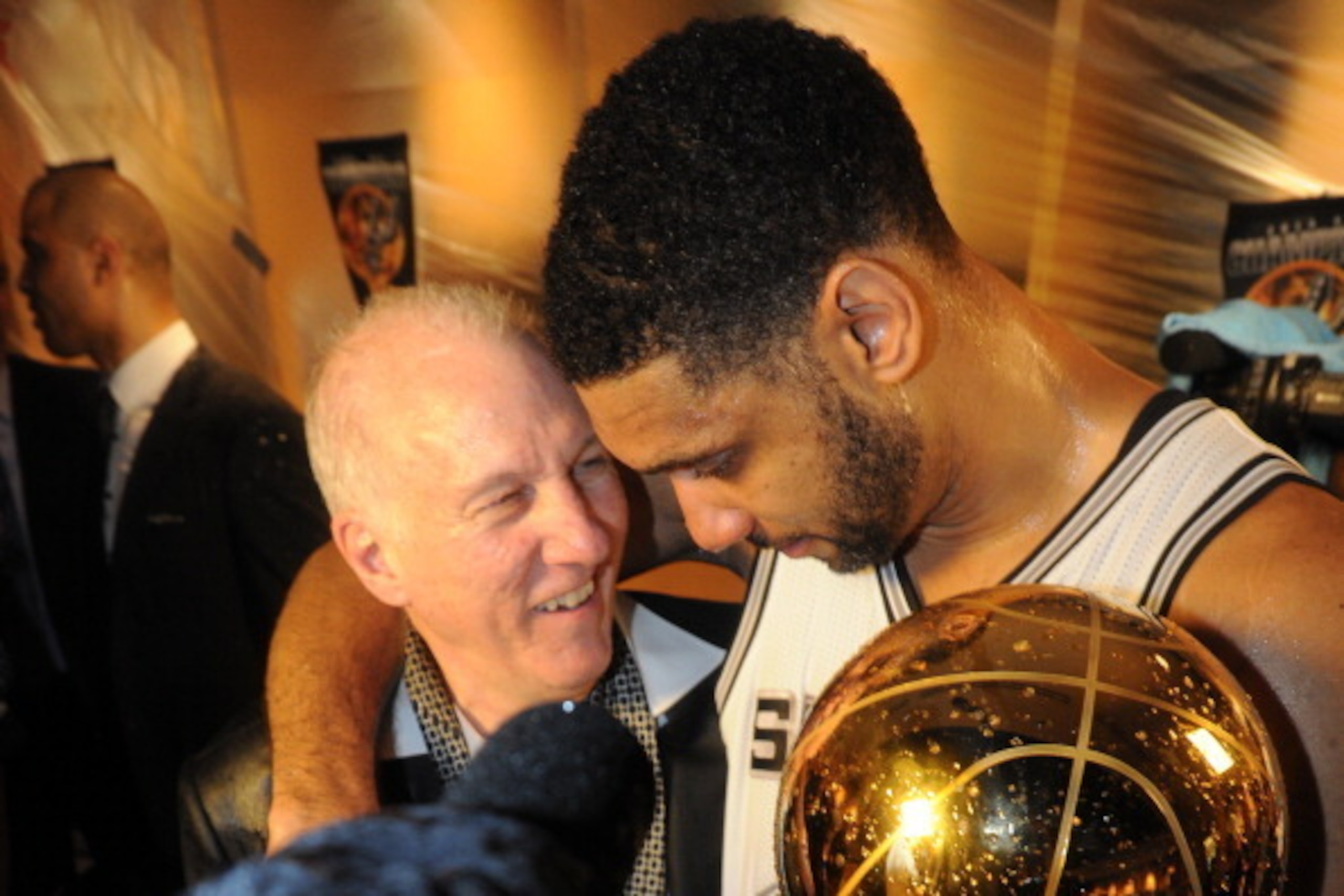
Consider 2014 the Great Acknowledgement, a year in which we were all reminded what an exceptional and enduring story Tim Duncan and Gregg Popovich have quietly authored since they came together in 1997.
On the heels of a five-game series decided by the widest margin of victory in Finals history, this especially deep roster of Spurs has turned doubts into expectations.
Recently named the best organization in all of the four major professional sports in ESPN's Ultimate Team Rankings, there's suddenly a prevailing belief that San Antonio isn't finished just yet.
The Spurs were more recently voted most likely to win the 2015 Finals by NBA.com's 2014-15 survey of league general managers.
In a landslide, 46.2 percent of the GMs picked the Silver and Black to win it all, a sizable margin over the 15.4 percent who chose the Cleveland Cavaliers.
As you might imagine, the franchise hasn't taken those expectations to heart—even as back-to-back championships remain the one thing standing between these Spurs and Phil Jackson's definition of a real dynasty.
"Why haven't we repeated? Because we haven't," Popovich said at the team's media day in September. "If we do, it would be great. If we don't, life will go on and everything's cool."
"Just to be clear, we've never had any goals whatsoever in the sense of winning 'X' number of games or this year is our year to win a championship," he added. "All we've said is that we want to be the best team we can be at playoff time and that starts with the very first practice and it's a building block sort of thing."
It's a predictable talking point from the process-oriented skipper.
The Spurs are renowned for never getting too high or too low, and they certainly aren't ones to get too far ahead of themselves. This season's primary objectives will look like every other's. There's always room for in-house improvement.
So while this franchise encounters a hype rarely afforded understated, small-market teams, the Spurs themselves will make every effort to ignore media-driven narratives. They'll say as much as they have to say, and they'll do their jobs without asking for credit.
When confronted with choices about what kind of players they want to be, they'll probably ask themselves what Duncan would do.

San Antonio's standard operating procedure is as indebted to the two-time MVP as it is to Popovich's regime.
As ESPN.com's Kevin Arnovitz put it in June,
"The most gifted players have every right to leverage their talents into power and have a voice in where and with whom they want to work. Duncan claimed that authority and chose to spend his capital on establishing a culture. He wants pro basketball to be about the work and to sell itself on the strength of the game's actual appeal rather than the atmospherics or drama. That's Duncan believing in the craft of basketball.
"
That rejection of theatrics will be tested this season.
The Spurs have been good before—perhaps great—but they're more interesting now. The motion-based offense has become a thing of selfless beauty. For the first time in league history, no one on last season's roster averaged 30 or more minutes per game. Everything that happens on and off the court is defined by seamless execution.
While there are no contract controversies or off-court distractions grabbing headlines, this team still makes for a good story. It draws attention in spite of itself.
All the more attention as Duncan and Popovich pursue a sixth title together.
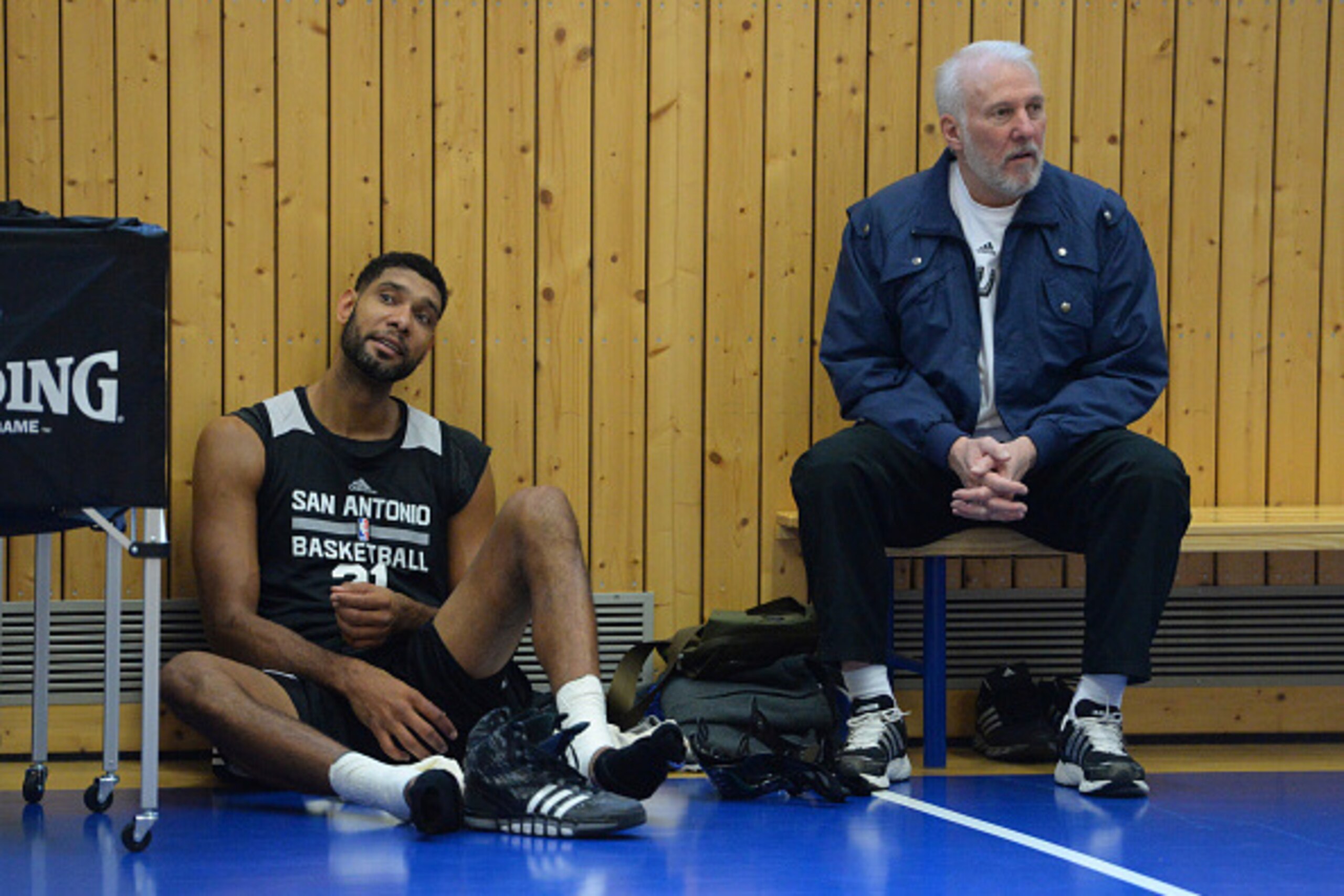
Following up last season's masterpiece won't be easy. Whereas the 2013-14 Spurs were motivated to avenge Ray Allen's clutch three-pointer in an unforgettable Game 6, this season's group is coming off a historically one-sided achievement.
"I'm worried for one reason," Popovich told the San Antonio Express-News' Buck Harvey in September. "They are human beings. They are going to feel satisfied."
If there's a source of inspiration guiding this season's effort, it may be that Duncan and Popovich won't have many more opportunities to do this. The latter signed a multiyear extension this summer, but the former is in the last year of his contract—and could conceivably retire in 2015.
Popovich could very well outlast his legendary big man, overseeing the emergence of Kawhi Leonard and whatever's left of Tony Parker's career, as he told reporters this month:
"That's very possible. I always said that [he'd leave with Duncan], because it's kind of a funny line. It seems pretty logical and smart to do that. I know where my bread is buttered.
But I basically made the same commitments to Manu [Ginobili] and to Tony that when they signed contracts, they wanted to know if I'm going to be here and I tell them I am, so it's pretty tough to go ahead and leave.
"
Popovich will turn 66 in January, and the Spurs should remain a force so long as he's around. Leonard is only beginning to come into his own after being named Finals MVP a season ago. With a timely addition or two, there's nothing stopping this team from contending at the outset of the post-Duncan era.
In any event, we probably shouldn't be surprised if they do—irreplaceable as Duncan is.
It's the kind of predictability we've come to expect given general manager R.C. Buford's track record since 2002. The front office's penchant for savvy decision-making has made success a norm even as so many faces have changed over the years.
We'll continue caring about the Spurs for the foreseeable future—even if they prefer otherwise.

.jpg?w=2560 "NFL House in Paris Closes for Protests")
.jpg?w=2560 "Trevon Diggs Cut by Seahawks")