Power Ranking College Football Playoff Contenders by Their Defenses
Offense becomes a bigger, more-important part of college football every season, but the cliched maxim about "defense winning championships" holds true.
According to the F/+ ratings at Football Outsiders, the past three national champions have all had the No. 1 defense in the country, and only one of the past seven national champions (Auburn in 2010-11) has had a defense ranked lower than No. 6.
Which is to say that maybe—just maybe—we can predict the viability of College Football Playoff contenders by looking at their defenses. The better the defense, the more likely a team is to make a run at the national title. The worse the defense, the more statistical precedents it would have to refute to get there.
For the purposes of this list, "College Football Playoff contender" was defined as any zero- or one-loss team from a power conference.
Yes, that excludes East Carolina and Marshall. Yes, that excludes Oklahoma and USC. No, this was not done as an insult to those programs. It was done because they would need too many dominoes that are out of their control to fall. Fair or not, that's the truth.
Once we had our 19 "contenders" together, the order of the list was determined using a healthy balance of traditional metrics (e.g. yards and points per game), advanced metrics (e.g. the F/+ ratings), strength of opponent and a subjective assessment of game film.
Sound off below and let me know where you disagree.
19. Arizona State (5-1)
1 of 19
Arizona State is trending up after holding Stanford to 288 yards and 10 points last weekend—but not so much that it can get out of the cellar.
This is not intended as an insult, necessarily, as every team on this list is a playoff contender, and playoff contenders are more likely than almost any other subset of teams to have good defenses. It's like being the shortest center on a professional basketball team.
It doesn't necessarily make you short.
Still, the Sun Devils have allowed three of four power-five opponents to gain 490 yards of offense. UCLA averaged 10 yards per play and scored 62 points against them in Tempe. This defense might be heading in the right direction, but it still has a long way to go.
18. Arizona (5-1)
2 of 19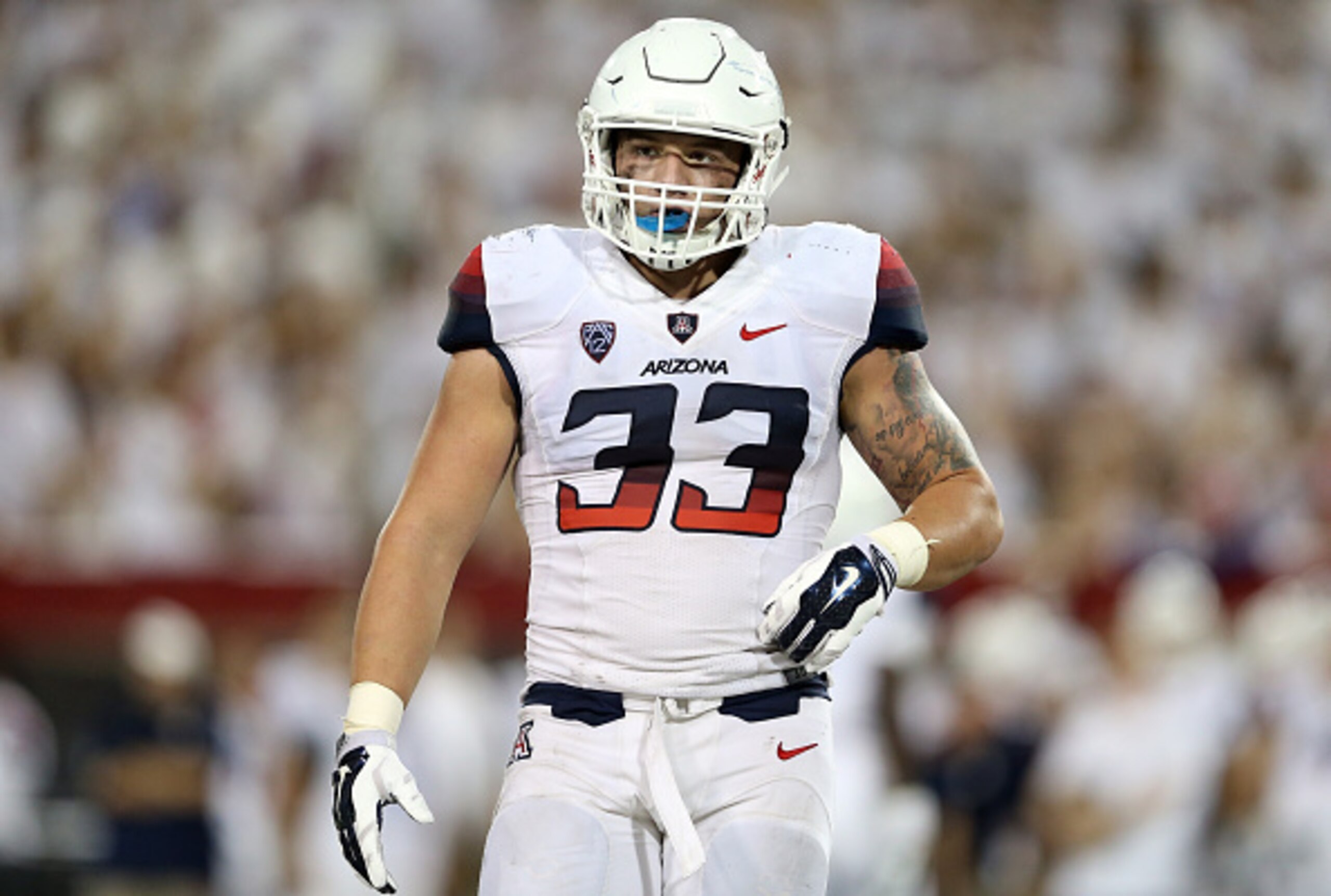
Like its in-state rival, Arizona has slowly improved on defense. It bent without breaking against Oregon (when the Ducks had a depleted offensive line) and limited USC's passing game the following week.
But, like its in-state rival, it still isn't very good.
The Wildcats have allowed all three of their power-five opponents to average at least six yards per play, averaging 6.71 YPP in those games. That is the fifth-worst mark among all power-five teams, ahead of only Washington State, Texas A&M, Illinois and Colorado.
They weren't remarkably better in their last non-power-five game, either, allowing Nevada to average 5.43 yards per play (including 8.20 yards per pass) and score 28 points in Tucson.
17. Minnesota (6-1)
3 of 19
Minnesota's defense would have ranked higher before allowing Purdue to score 38 points and average 7.39 yards per play in Week 8.
Still, this unit is better than people give it credit for, and so is Purdue's offense. The Boilermakers scored 31 points against Michigan State one week before gashing Minnesota and averaged 8.48 yards per play (against an admittedly terrible Illinois defense) the week before that.
The Gophers are above average without being great at every level of the defense—the type of team that beats neither itself nor its opponent. If you play well (see: Purdue), you can move the ball and score. If you don't play well (see: Michigan), things will get ugly.
They are basically an offensive litmus test.

.jpg?w=2560)
16. Duke (6-1)
4 of 19
Duke's defense is a tough nut to crack.
Before Week 8, it appeared to be vulnerable against the run (having just allowed four consecutive teams to rush for 200-plus yards) but superior against the pass (having held those same four teams to 169.8 passing yards per game and 5.4 yards per attempt).
But then it went out and allowed 325 passing yards to 140 rushing yards against Virginia.
Weird.
The most prudent thing to do—at least for the time being—is to chalk up Week 8 as an aberration and accept that this pass defense is pretty good. The corners are a little bit weak, but safeties Jeremy Cash, DeVon Edwards and Deondre Singleton are keepers. Duke has eight interceptions to three passing touchdowns allowed this season.
Having said that, the Blue Devils do not have the size in the front seven to compete with the top 15 defenses on this list. They just don't. Whether that comes back to bite them during the regular season is one thing (seriously, look at their remaining schedule), but at some point it should end their pipe dream of making the playoff.
15. Baylor (6-1)
5 of 19
Baylor's defense was not the problem against West Virginia. It forced three turnovers in Mountaineers territory during the first half and was weighed down by a couple of dubious pass interference calls. It played better than the final score (41 points allowed) indicates.
The same thing might be said of the previous week's game against TCU, even though the Horned Frogs scored 58 points in Waco, Texas. Seven of those points came on a defensive touchdown, and Baylor's ability to force multiple 3-and-outs in the fourth quarter put Bryce Petty and the offense in position to devise a manic comeback.
All of which is to say that having the Bears at No. 15 is not necessarily an indictment—nor is it an overreaction to the past two weeks. This defense is still far better than it has been in recent years. Shawn Oakman, Andrew Billings and the rest of the defensive line have been as good as advertised, and the secondary, despite committing so many penalties last weekend, is big and physical and aggressive.
The Bears have too many mental lapses, which is ultimately what places them so far down the list. It would impress but not shock me to see them pass a few teams that are currently ahead of them.
14. Kansas State (5-1)
6 of 19
Is "overachieve" the right word for what Kansas State is doing? A ragtag band of JUCO transfers and walk-ons should not be playing this well, but under Bill Snyder, playing this well is par for the course.
At what point does "overachieving" simply become "achieving"?
Regardless, the Wildcats are playing well on both sides of the football, most recently gutting out a 31-30 win at Oklahoma.
The defense did not play its best game but got enough stops to win against a presumed Top 10 opponent in a difficult-to-navigate environment. Earlier this season, it did the unthinkable by shutting down Auburn's running game.
Unfortunately, Kansas State's defense has an Achilles heel that prevents it from rising any higher: the lack of a true No. 1 cornerback.
D'haquille Williams of Auburn and Sterling Shepard of Oklahoma combined to catch 23 passes for 307 yards against the Wildcats, the former icing the game with a late touchdown and third-down conversion in the fourth quarter.
With TCU (Josh Doctson), West Virginia (Kevin White) and Baylor (Antwan Goodley) all left on the schedule, Kansas State cannot afford to let this problem linger. Otherwise, even with Snyder on the sideline, it is difficult to see how the Wildcats make the playoff.
13. Georgia (6-1)
7 of 19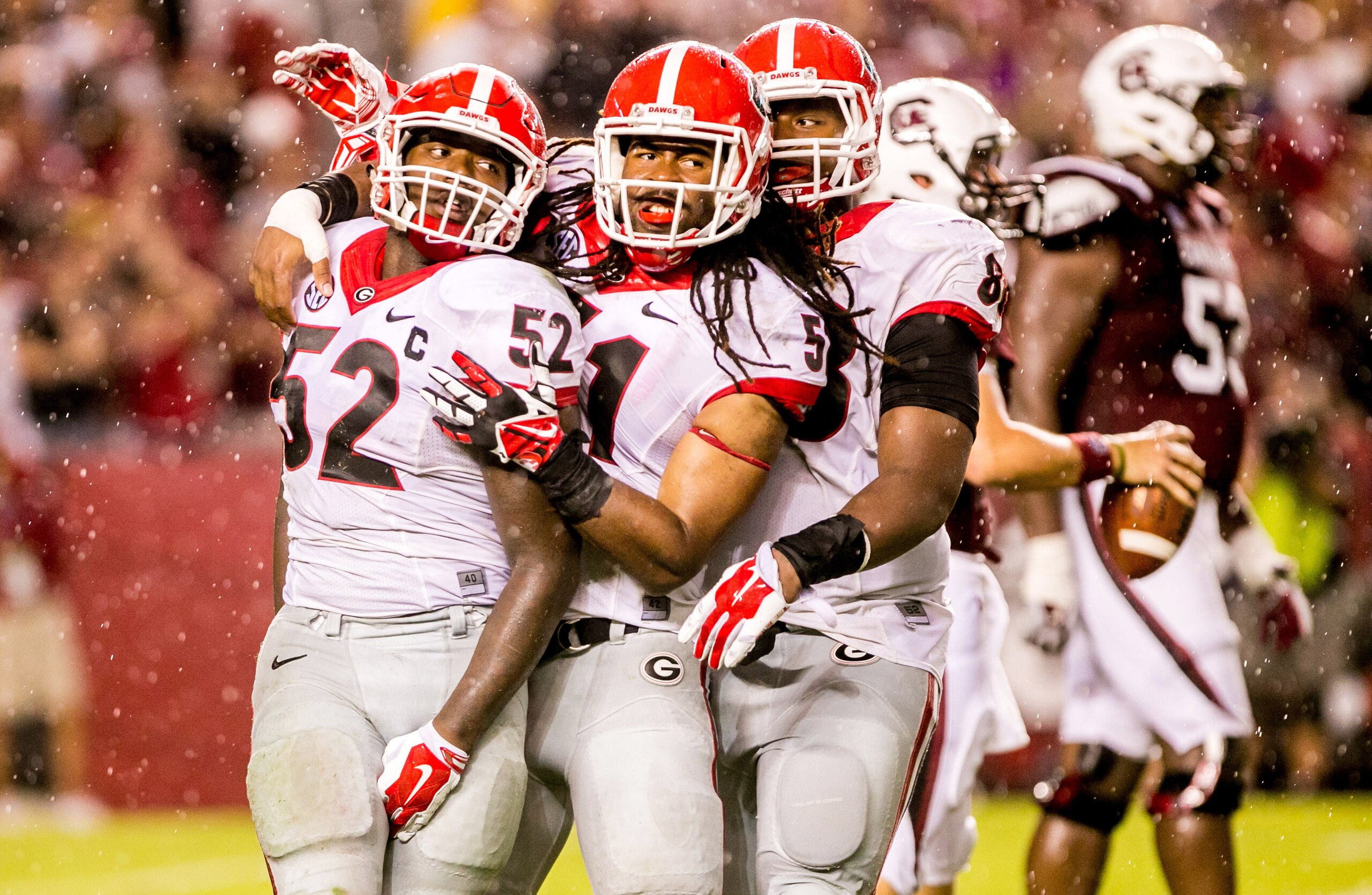
Is Georgia's defense for real? Or have the past two weeks been a mirage? There are arguments to be made in both directions.
On the first hand, UGA has enough talent to conceivably field a great defense. Leonard Floyd, Ramik Wilson, Amarlo Herrera and Jordan Jenkins are the best linebacking unit in the country, and cornerback Damian Swann is back to playing like an All-SEC defender after struggling as a junior in 2013.
On the other hand, the rest of the secondary around Swann is difficult to get behind. Georgia's pass defense looked great against Missouri, but Missouri just threw for 20 yards on 18 pass attempts against Florida. Maty Mauk's 97-yard, four-interception performance against the 'Dawgs might have said a lot more about him than his opponent.
Fortunately, Georgia doesn't have much in the way of competent passing attacks left on its schedule. Auburn can throw but is still a decidedly run-first team…and that's about it.
We might not get a true answer about this defense until the SEC Championship Game.
12. Nebraska (6-1)
8 of 19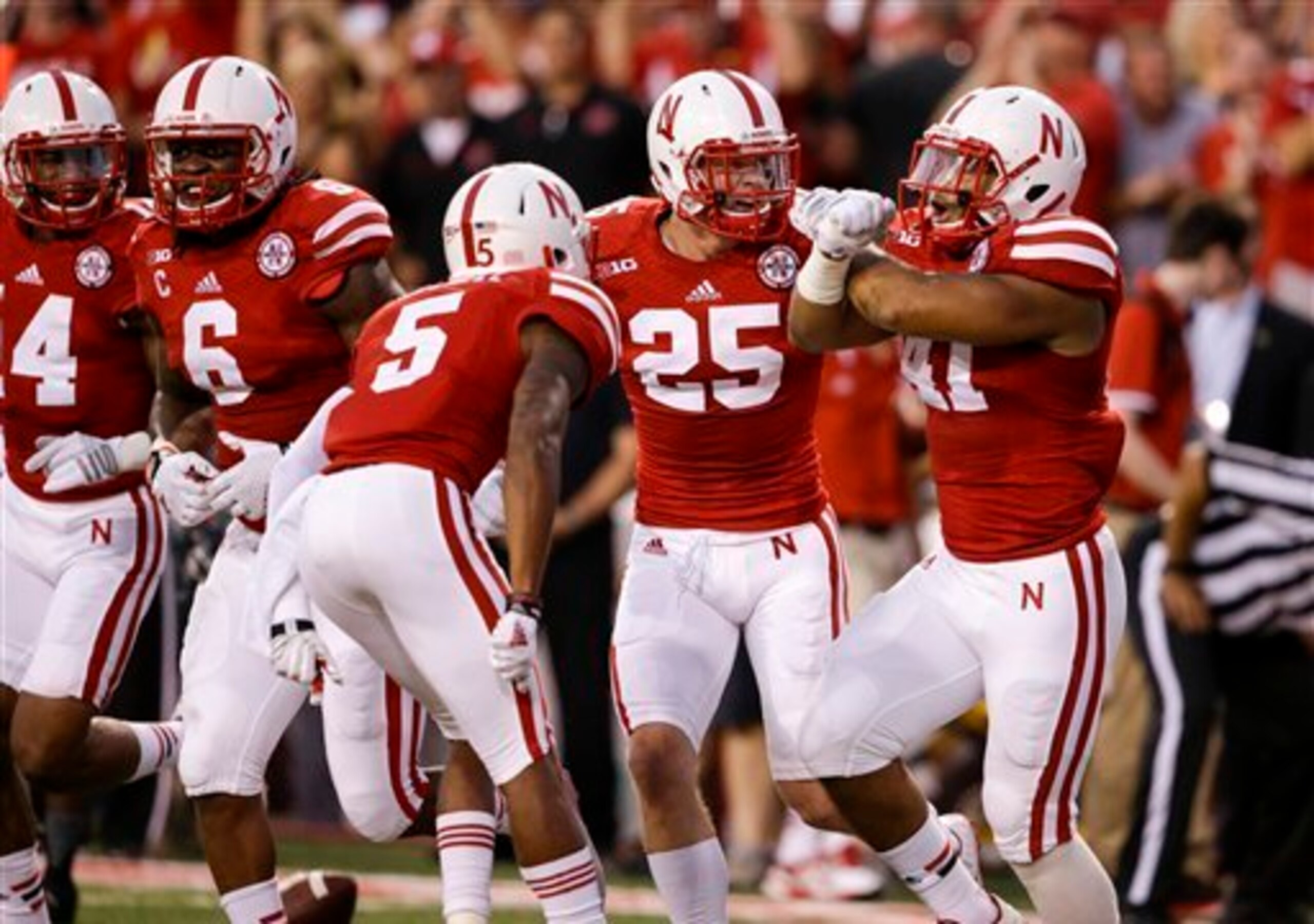
Nebraska's depth was tested with a torrent of preseason defensive injuries, and for the most part it has earned a passing grade.
Things did not look great against Miami, which averaged 6.69 yards per play and scored 31 points in Lincoln, Nebraska, but the Huskers held their own against a very good Michigan State offense and completely shut down Northwestern (3.97 yards per play) last weekend.
The front seven has held strong despite the oscillating health of Randy Gregory, thanks in large part to balance along the defensive line and inspired play from linebacker Trevor Roach.
The pass defense has been better than expected given what the Huskers lost in the secondary, especially on third down, during which they are allowing a conversion rate of only 27.68 percent.
That is the No. 6 mark in the country.
11. Ohio State (5-1)
9 of 19
Even without suspended defensive end Noah Spence, Ohio State's defensive line can hang with any front four in the country. That is what happens when two of your starters—Joey Bosa and Michael Bennett—are future first-round NFL draft picks and All-America candidates.
The Buckeyes linebackers look pretty good too. Doran Grant and Joshua Perry are game-worn upperclassmen, and freshmen Darron Lee and Raekwon McMillan are future superstars.
The only questions that remain are with the secondary, which is not playing as poorly as it did at the end of last season but also not playing like the secondary of a top-10 defense. The coverage breakdowns against Cincinnati—which averaged 10.7 yards per pass attempt against the Buckeyes—were jarring to say the least.
Ohio State's defense is a slightly better version of Georgia's.
Both units have the upside to rise up these rankings.
10. Oregon (6-1)
10 of 19
Oregon's defense is better than you think—and a lot better than its raw numbers (448.4 yards allowed per game) indicate.
Take, for example, the splits from the past two weeks against UCLA and Washington. On the surface, one might see that the Ducks allowed 435 yards and 25 points per game. But in reality, they played well before resting on their laurels in garbage time:
| Plays | Yards | Yards per Play | Points | |
| Before Taking 29-Point Lead | 103 | 461 | 4.48 | 16 |
| After Taking 29-Point Lead | 67 | 411 | 6.13 | 38 |
First-time defensive coordinator Don Pellum is a question mark with regard to game-planning and on-the-fly adjustments, but he has plenty of talent (Ifo Ekpre-Olomu, Tony Washington, Arik Armstead, DeForest Buckner, et al.) to work with.
When it's on, this defense is good enough to supplement Oregon's offense and gives the Ducks a chance to beat anyone.
9. TCU (5-1)
11 of 19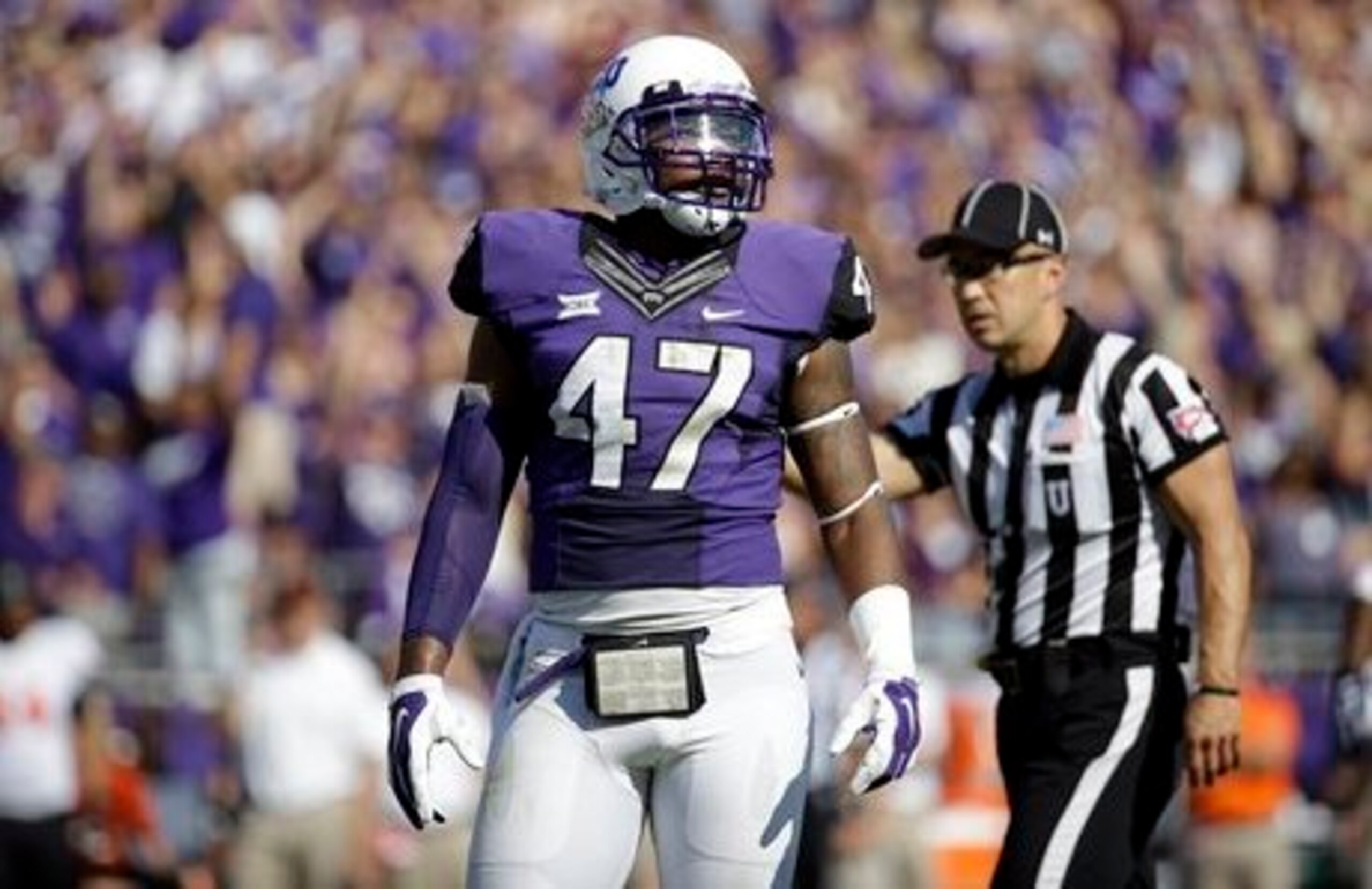
Yes, TCU allowed 782 yards and 61 points at Baylor. No, that cannot be completely ignored. It happened, and it didn't mean nothing.
But I'm inclined to think it didn't mean everything for a defense so historically productive. Even when TCU was slogging through a 4-8 season in 2013, its defense could hang with the best Big 12 offenses. Gary Patterson and Dick Bumpas will always field a strong 4-2-5. They scheme as well as any pair of coaches in the country.
Excepting the Baylor game—and even at spots during the first three quarters in Waco—this group has looked as good as we have come to expect. It held Oklahoma State without a touchdown in a 42-9 romp last weekend and gave Oklahoma trouble in Week 6.
Even after the dismissal of Devonte Fields, the preseason Big 12 Player of the Year, during fall camp, players such as Chucky Hunter and Paul Dawson have this front six playing sound, tough, opportunistic football. And few if any schools have done a better job developing defensive backs than TCU this past half-decade.
The Horned Frogs still have a championship-caliber defense.
8. Auburn (5-1)
12 of 19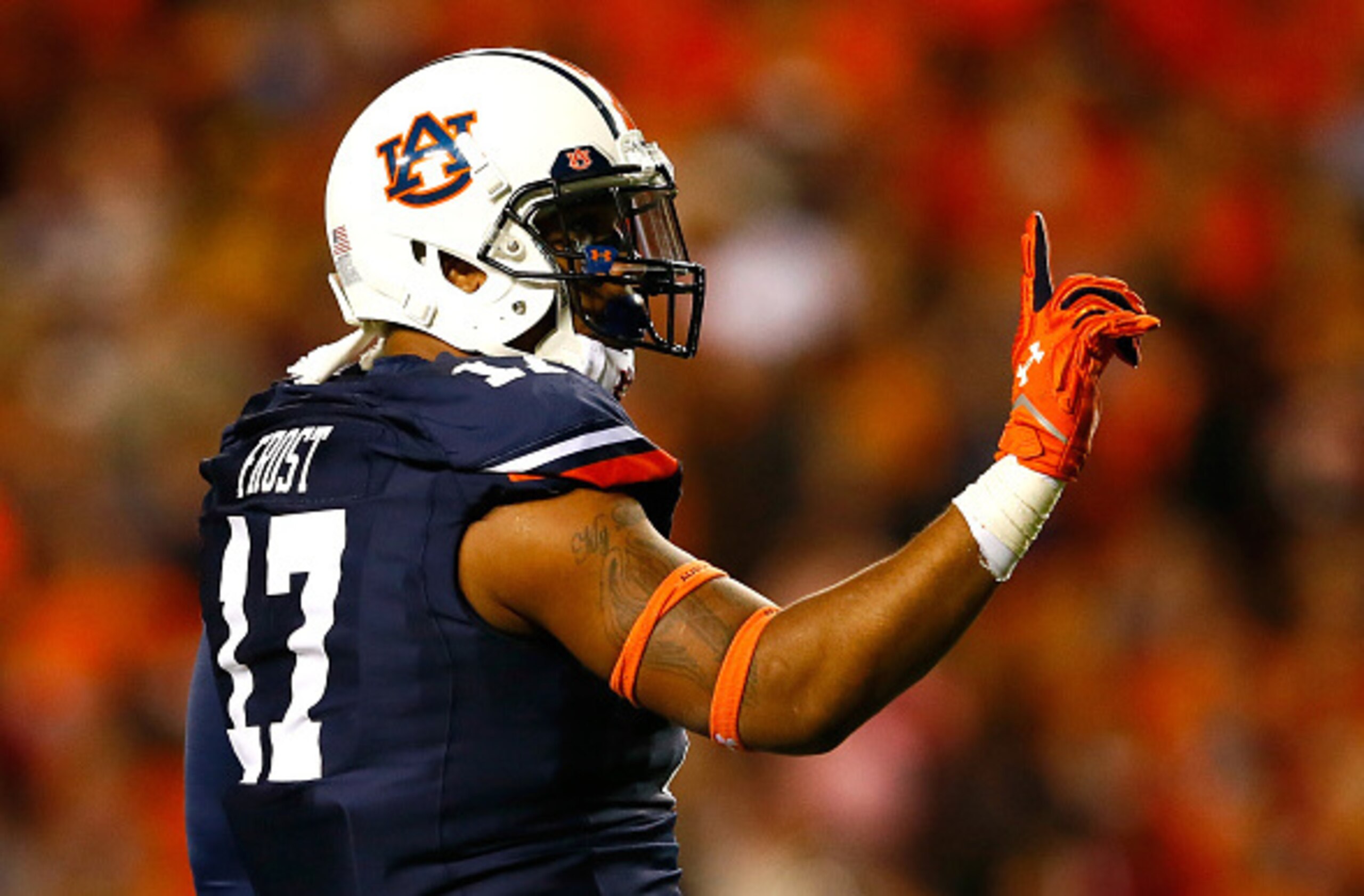
On the whole, Auburn is about as good as it was in 2013. But that whole includes a lot more balance. The offense has taken a small step back. The defense has taken a small step forward.
The units, to this point, have been equal.
The biggest improvement for the Tigers has been the play of Kris Frost and Cassanova McKinzey at linebacker—a position it has struggled to develop in recent years. The pass rush has survived the loss of Carl Lawson during fall camp, and the secondary has played well above average (which I swear is intended as a compliment).
Barrett Sallee of Bleacher Report elaborates:
"The Tigers are giving up 333.7 yards per game this season, have picked off 10 passes and are second in the conference in opponents' red-zone scoring percentage (69.57 percent). …
With an offense like the one Auburn runs, the defense doesn't have to be great—it needs to be opportunistic. The Tigers certainly have been opportunistic and have mixed in a stout run defense, creating a recipe for success on The Plains.
"
Auburn no longer feels like it has to play shootouts to win games, something it proved by bending without breaking at Kansas State. The final line at Mississippi State was ugly, but in that case, offensive turnovers pinned the defense into a corner for most of the first half.
There's a lot to like about what Ellis Johnson's group is doing.
7. Utah (5-1)
13 of 19
Utah's defense has been a joy to watch this season, spearheaded by the best player no one is talking about, defensive end Nate Orchard.
Orchard ranks second in the country with 1.75 sacks and 2.17 tackles for loss per game, trailing just Hau'oli Kikaha of Washington in both categories. With him leading the defensive line, Jared Norris and Gionni Paul leading the linebackers and Eric Rowe and Brian Blechen leading the secondary, the Utes are loaded with talent and experience at all levels of their defense.
That talent and experience has translated to production, too, as Utah held four of six opponents to less than 391 total yards and 4.71 yards per play. It entered Week 8 ranked No. 3 in Football Outsiders' defensive FEI, higher than every other team on this list.
And the way it played at Oregon State, beating the Beavers 29-23 in overtime, did nothing to impugn its ranking.
6. Michigan State (6-1)
14 of 19
This is not the same Michigan State defense as a year ago. It misses tackles and suffers sporadically dreadful coverage breakdowns. It has allowed 12 plays of 40-plus yards—No. 111 in the country.
Last year, it allowed just 11 such plays the entire season.
But the step back Pat Narduzzi's defense has taken has not been a huge one. Really, the explosive plays are the only glaring issue. On a down-to-down basis, it has still been one of the better units in the country. Only six teams have allowed less plays of 10-plus yards (68).
The Michigan State defense that showed up for (the first three quarters of) the Nebraska game looked every bit as good as that of last year's Rose Bowl champion. With Shilique Calhoun, Marcus Rush and the rest of the defensive line leading the charge, it's not crazy to think MSU might eventually get back to that level.
It just needs to smooth out some jagged edges.
5. Florida State (7-0)
15 of 19
Florida State has the best secondary in America, something it proved despite the success of Notre Dame receiver Corey Robinson in Week 8. Those were just some really, really nice throws and catches.
Despite that, cornerbacks P.J. Williams and Ronald Darby continue to play like future first-round draft picks, and nickelback Jalen Ramsey continues to play like an All-American. The way defensive tackle Eddie Goldman and linebackers Terrance Smith and Reggie Northrup have performed against the run is another detail to feel good about.
The only thing holding Florida State back from a top-four ranking on this list is the pass rush. The four teams ahead of it have one. The Seminoles do not. Even in sacking Everett Golson three times on Saturday—just their second game of the season with more than one sack—it felt like they were getting beat along the line.
Last year's defense did not lose along the line.
4. Notre Dame (6-1)
16 of 19
Florida State and Notre Dame played essentially to a draw last weekend. Their offenses played to a draw. Their defenses played to a draw. The Seminoles made one more play than the Irish, so they won.
But for Notre Dame's defense to play Florida State's defense to a veritable draw in Tallahassee speaks wonders to the improvement it has made under Brian VanGorder this season. That was its first true road game of the year, and it played inspired football. It was aggressive and spent the entire first half in the FSU backfield.
All of which is to say that the Irish proved their start to the season was no fluke. Their utter domination of Michigan and Stanford looks a lot better now that they have held their own against the Seminoles.
"We knew it was going to be a tough day for our defense and we held in there as long as we could," head coach Brian Kelly said after the game. "It's a tough offense to keep down."
Not a lot of defenses could have done that for as long as the Irish's.
On a neutral field, they might have kept it down even longer.
3. Mississippi State (6-0)
17 of 19
Mississippi State has the deepest front seven in the country.
The way in which the Bulldogs rotate players is unique and outwardly beneficial. Their players stay fresh and are not bogged down by the homunculus in their head reminding them to conserve energy. It's the same theory by which hockey teams make line changes.
The result through six games has been impressive. Thirteen different Bulldogs have recorded at least half of a sack, and 19 have recorded at least half of a tackle for loss. Those numbers inch up to 14 and 20, respectively, if you count the one team sack they have registered.
The secondary is worse than the front seven but not so bad that it can rightfully be called a "weakness." The Bulldogs rank fifth-to-last in the country with 308.3 passing yards allowed per game, but that has been a product of the massive early leads they took against LSU, Texas A&M and Auburn forcing opponents to abandon the run.
Those numbers can't be viewed without proper context.
2. Alabama (6-1)
18 of 19
Alabama handed Kevin Sumlin the first shutout of his career against Texas A&M on Saturday, proving once and (one would think) for all that Nick Saban and Kirby Smart are not allergic to spread offenses.
That could be bad news for the rest of the country, because it's hard to imagine a pro-style offense finding much in the way of success against this front seven. A'Shawn Robinson continues to play like a man at nose tackle, Xzavier Dickson is having a great season off the edge at outside linebacker and Trey DePriest and Reggie Ragland have both been great against the run at inside linebacker.
The secondary has been better since a Week 1 struggle against West Virginia—a struggle that does not look as bad in hindsight given the way the Mountaineers have been playing. Landon Collins is having an All-America year at safety (predictable), and Cyrus Jones has morphed into a true a No. 1 cornerback (not as much).
Alabama ranks No. 3 in the country and first among teams on this list with 262.1 yards of offense allowed per game.
1. Ole Miss (7-0)
19 of 19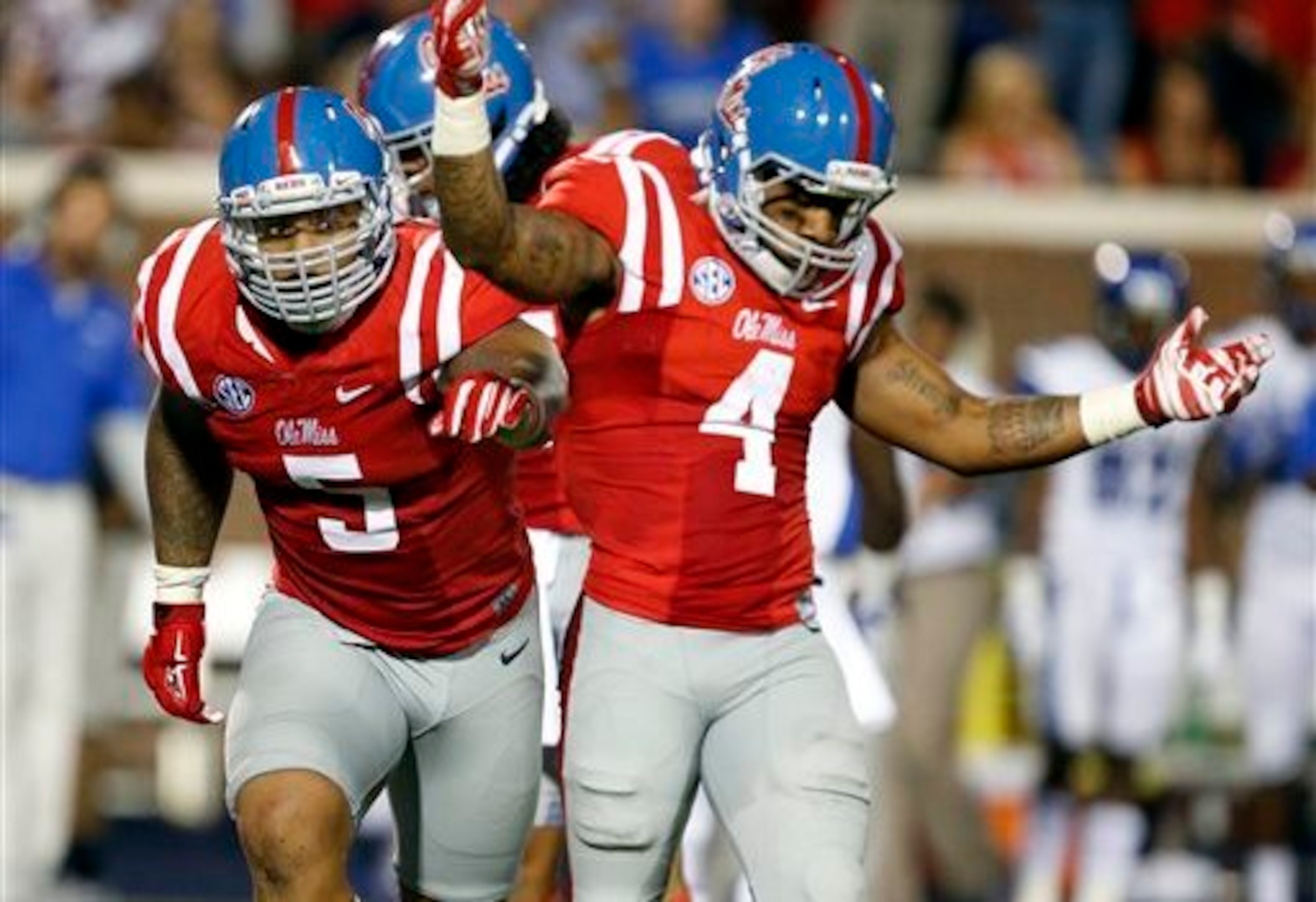
The refs can stop the Landsharks from gesticulating, but there's no one in the country who can stop them from swimming.
Ole Miss ranks No. 3 in the country and first among teams on this list with 4.15 yards per play allowed this season. But the way this team has dominated extends far beyond the box score. There is a visceral, passionate emotion to the way the Rebels play defense, whether it's Robert Nkemdiche steamrolling an Alabama lineman or Cody Prewitt decapitating a receiver from Boise State.
It's a unit that gets into opponents' heads.
In addition to its yards-per-play success, Ole Miss leads the country with 10.6 points allowed per game and is No. 3 with 20 turnovers gained. Nkemdiche and Prewitt are the stars, but supporting players such as interception machine Senquez Golson, linebacker D.T. Shackelford, nickelback Tony Conner and defensive ends C.J. Johnson and Marquis Haynes are also playing out of their minds.
The whole entire team is playing out of its mind.
And there's nothing to suggest that will stop.

.jpg?w=2560 "NFL House in Paris Closes for Protests")

.jpg?w=2560 "Trevon Diggs Cut by Seahawks")