Playing Carmelo Anthony at 4 Benefits Knicks' Small Ball and Triangle Strategies
It’s a trope that’s become so well-worn within the New York Knicks universe it probably deserves its own 30 for 30 documentary: Carmelo Anthony—long believed to be the quintessential small forward—is actually much more of a force at the 4.
But with the Knicks in the midst of a Phil Jackson triangle overhaul, head coach Derek Fisher appears poised to start the season with Anthony at the 3, opting to slot the rough-and-tumble Quincy Acy at power forward ahead of the likes of Amar’e Stoudemire and Andrea Bargnani, according to the New York Post’s Marc Berman.
Acy’s infectious energy and impressive rebounding are beyond reproach. His offensive capabilities? Not so much.

All the more reason why, when all’s said and done, the Knicks will be forced to re-embrace their small-ball identity.
As a purely statistical exercise, the case for Anthony at the 4 doesn’t exactly yield a lot of holes:
| Position | % of Team's Minutes | ORtg | DRtg | PER |
| SF | 44 | 96.3 | 95.8 | 22.0 |
| PF | 73 | 100.3 | 98.7 | 27.1 |
With his uncanny combination of size, split-second release and a lightning-quick first step, Melo has always posed a nightmarish matchup for opposing defenses. Pitted against bigger, slower power forwards, those superlatives are even more pronounced.
So why the move back to small forward? At its core, the triangle offense is designed to put players in perpetual motion and thus in variable spots on the floor. As such, it's almost inevitable that Anthony will find himself squarely in his sweet spots—the elbows (the high or pinch post) and the wings.
Here’s Posting and Toasting’s John Schulman expounding on precisely this point in a recent post:
"Obviously nothing is set in stone, and that's part of the amorphous brilliance of the Triangle offense. Whether Melo plays the 3 or 4 is not the issue. He will get his touches. The guy is a scorer, and the Knicks will look to generate and exploit mismatches through ball and player movement. All Melo needs is space, and someone like Amar'e or Smith could hopefully contribute enough of that alongside shooters in a bigger lineup.
"
Part of the byproduct of the triangle, then, is to create the very advantages on which Melo routinely capitalized at the 4 in Mike Woodson’s more milquetoast motion offense.
On the flipside, positioning Anthony at the 3 means fewer minutes spent banging bodies with David West and Kevin Love at the other end. That, in essence, becomes Acy’s job.
But there’s also a purely utilitarian flavor to the move as well, one Anthony himself acknowledged in a recent interview with ESPN New York’s Ohm Youngmisuk.

“We got too many [power forwards],” Anthony said. “I don't need to go down there and battle. For what? If it comes down to it, I'll go back there. But I doubt it. They're going to move me. We're pretty packed at four and five positions.”
Melo certainly has a point. With Acy, Stoudemire, Bargnani and mid-range specialist Jason Smith all in the fold, New York’s power-forward depth is all but bursting at the seams.
Key to this equation is Samuel Dalembert, a solid veteran center whom most believe is a lock to start at the 5. The reason: Dalembert’s efficient post game and solid interior defense, the latter of which has long given the Knicks fits (Tyson Chandler’s admirable service notwithstanding).
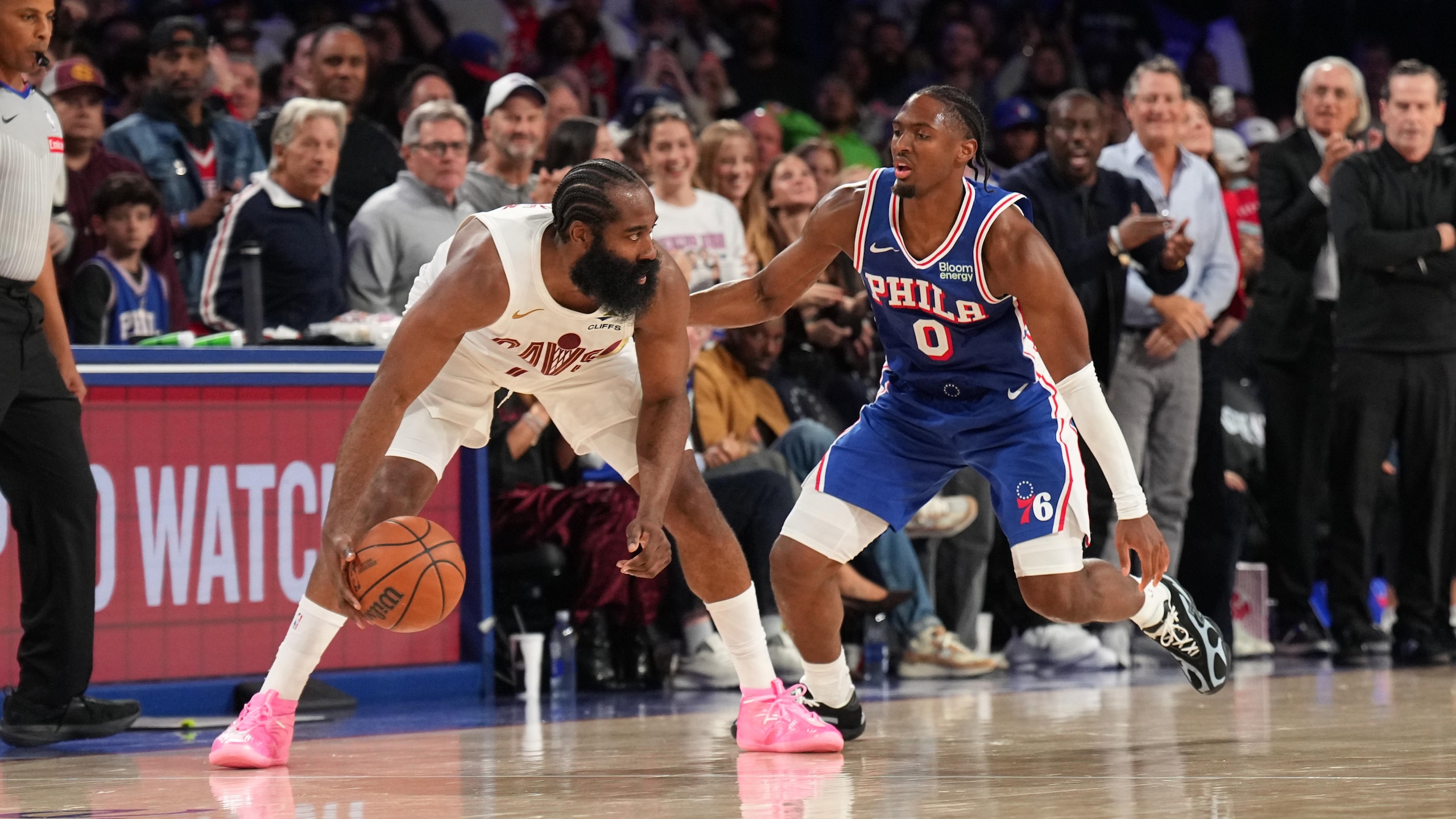
The rest of the roster, however, isn’t exactly a defensive juggernaut. Save, perhaps, for this guy:
At a certain point, it’s worth wondering whether New York’s best chance at a successful season lies in doubling down on triangle firepower and damning the torpedoes on defense.
Consider: Per NBA.com (subscription required), of the 10 five-man lineups that logged more than 40 total minutes and registered a positive net rating, seven of them featured Anthony at power forward, including the top six most productive (all 10 boasted offensive ratings above 100).

System differences aside, it’s clear the Knicks’ best recipe for success was—and may well remain—in putting Anthony at the 4.
But while Fisher’s rotational strategy hints at an organizational consensus for Melo at the 3, The Knicks Blog’s Keith Schlosser suggests a possible strategic rift, however seemingly small, between the head coach and his triangle mentor:
"Earlier this fall, President Phil Jackson promoted and/or simply recognized him as a power forward. Just a few short weeks later, and the lineup Coach Derek Fisher is rolling out (in camp) calls for him to play in a different spot. As minimal of a change as this may be, it does appear to be the first difference in vision seen between Jackson and Fisher.
"
That's not to say Fisher has been completely hostile to small-ball lineups, of course.
Indeed, as Posting and Toasting's Joe Flynn recently pointed out (via Basketball-Reference.com), the Iman Shumpert-Tim Hardaway Jr.-J.R. Smith group constituted the most productive Smith-centered trio a season ago—at over 109 minutes, no less.
It’s become a cliche to say cliches are clichE’s because they’re true, and this one is no exception: It’s a long season. Even if big ball with Anthony at the 3 sputters early, Fisher and his staff should have ample time to make the proper adjustments.
Adjustment, in the singular, to be more specific.
Tried and championship true as the triangle has been, there’s some merit to the idea that a combination of rule changes, advancements in analytics and an increased emphasis on more diffuse offensive systems—“small ball” being but a byproduct—have conspired to make it a relic of the past.
Whether that proves a prescient prophecy, only time will tell. What Knicks fans must hope for now is that the spirit of fluidity that fuels the triangle is as real in function as it is in form.

.jpg?w=2560 "NFL House in Paris Closes for Protests")
.jpg?w=2560 "Trevon Diggs Cut by Seahawks")