Dolphins vs. Bears: Breaking Down Miami's Game Plan
Coming off a devastating last-second loss in Week 6, the Miami Dolphins have the chance to redeem themselves on their trip to Soldier Field in Chicago. Sitting at 2-3, the Dolphins must feel urgency to win their matchup with the Chicago Bears. Miami cannot afford to fall behind the New England Patriots any more if the team wants to make the playoffs.
The Bears won on the road against the Atlanta Falcons last week 27-13. Quarterback Jay Cutler amassed an impressive 381 yards against the Falcons with the help of his tremendous supporting cast. Miami is a much better defense than the Falcons, however, and those types of numbers would be shocking to see at the conclusion of the game.
TOP NEWS
.jpg?w=2560 "NFL Paris Football")
NFL House in Paris Closes for Protests
.jpg?w=2560 "Seahawks Chiefs Football")
Trevon Diggs Cut by Seahawks
.jpg?w=2560 "Colts Football")
Jonathan Taylor Landing Spots
Like any 3-3 team, Chicago has numerous areas of weakness on its roster, and we’re going to devise a game plan for the Dolphins to follow in their quest for victory. So far, the Dolphins haven’t done a good job of exploiting opponents’ weaknesses until the second half, but if they were to follow our game plans, they’d be a more consistent team.
Will the Dolphins show the coaching acumen needed to beat the Bears this week? Make sure to leave your thoughts on Sunday’s outcome in the comments after you’re done reading.
We’ll start with how Miami’s offense should attack the Bears defense.
Get Tannehill in Rhythm Quickly
Miami’s averaging just eight points in the first half of games, which is 30th in the league. For the most part, that is due to the struggles of quarterback Ryan Tannehill and the lack of sustained drives by the offense. Not all of the blame should go on Tannehill, as SportingCharts.com shows he’s suffered the second-most drops in the league, but Miami needs to make sure the offense doesn’t get off to a slow start once again.
While looking at the Dolphins’ film, the offense has had far greater success when running intermediate routes over the middle of the field. This includes deep crossing routes, comebacks and seam routes. It’s clear that Tannehill prefers these routes as well, as seen in the second half of the Green Bay Packers game.
He is able to read the defense much more effectively because the leverage between the defender and receiver is easier to see. These routes develop faster than vertical routes as well, keeping Tannehill’s internal clock from hitting panic level.

That’s also why Miami leads the league with an average of 16 points scored in the second half.
There is a narrative that Tannehill always locks onto his first read, but this tends to happen only when Miami runs two-deep vertical routes. Tannehill doesn’t trust his eyes as much as he could, and his receivers don’t get much separation, sans Mike Wallace, when he’s single-covered.
Despite Tannehill’s hesitance on the deep throws, Miami focused on calling deeper passes in the first half against the Packers, and the strategy backfired.
In the second half, Miami called plays to Tannehill’s strengths by giving him reads on the same side of the field. By giving him a receiver on each layer of the defense, more space was created for yards after the catch. It’s a simple formula that has led to all of Tannehill’s best performances.
Besides his monster game against the Oakland Raiders, however, Miami has not been consistent in game-planning to these strengths.
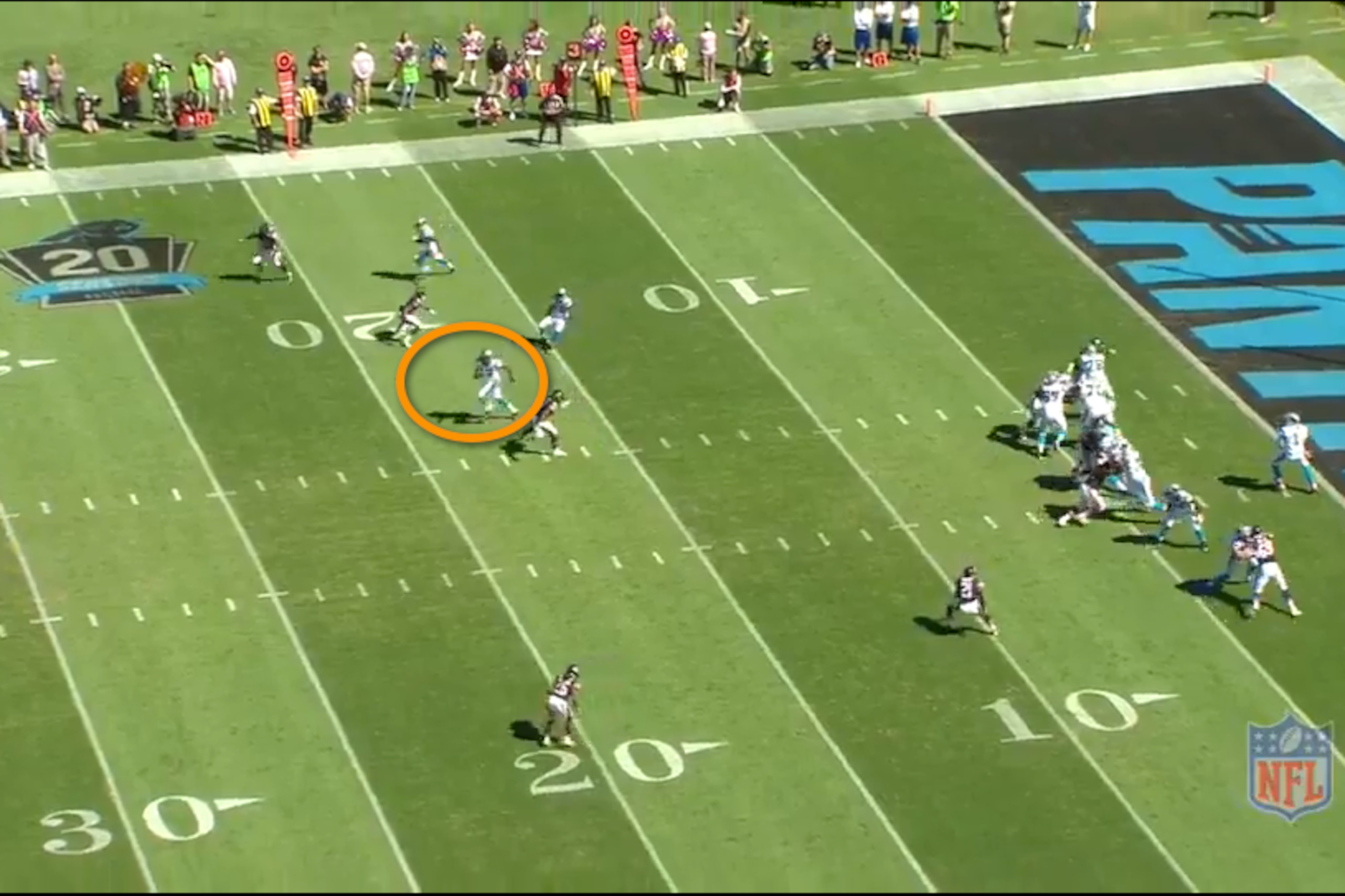
To be effective against Chicago, Miami needs to attack the weak secondary of the Bears. The Carolina Panthers and Falcons were able to get their receivers open throughout their games with Chicago by running intermediate routes over the middle, and Miami can too.
According to Pro Football Focus’ signature stats (subscription required), Tannehill shines on these passes. His 129.4 quarterback rating on passes over the middle of the field between 10 and 19 yards is a terrific mark. Yet Miami has only thrown 15 times to this part of the field, showing the coaching staff is not accentuating his talents effectively.
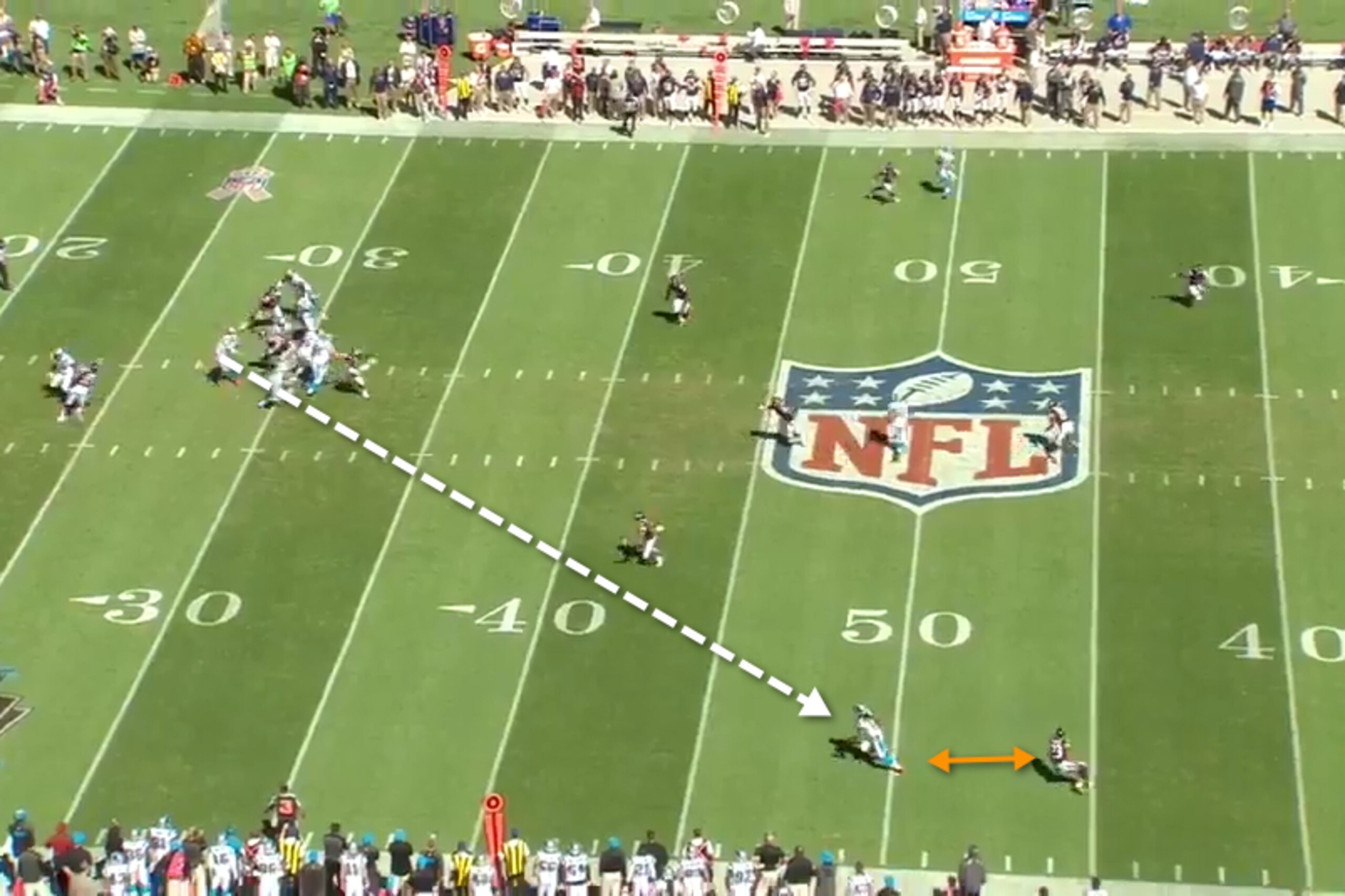
The poor game-planning has to change in Week 7. Lance Briggs is the only capable coverage linebacker for the Bears, and opponents have exploited his range on a weekly basis. That means Charles Clay and Jarvis Landry must be prepared to make catches over the middle this week.
Tannehill has his fair share of limitations, but getting him in rhythm makes the Dolphins offense quite good. His read-option to start the second half against the Packers lit a fire for the offense and kept the defense from crashing an extra defender on run plays. Suddenly, Lamar Miller had more room to run, and Tannehill didn’t have to deal with an extra secondary member.
Stay Balanced
After rushing for just 10 yards on as many attempts in the first half, the offense balanced out in the second half against the Packers, and it led to three consecutive touchdown drives. As Tannehill caught rhythm, the running game opened up because the defense had to account for Landry in the slot, removing a linebacker for a smaller cornerback.
The Bears possess a good defensive line, which is the product of an offseason where they spent nearly $60 million on upgrades. That means the Dolphins offensive line must perform better than it did against a less-talented Packers defensive line.
Specifically, right guard Mike Pouncey must be able to hold his ground better in one-on-one situations. Pouncey showed a lot of rust upon his return, as Mike Daniels beat him routinely.
In the chart below, it’s clear the Dolphins are a much more effective offense when they run at least 50 percent of their offensive plays. As fun as a high-powered passing attack is to watch, the Dolphins do not have the personnel to accommodate such an offense, so they need to make a strong effort to establish the running game early and stick with it throughout the game.
| Wins | Losses | |
| Average Pass Plays | 31.5 | 41 |
| Average Run Plays | 33.5 | 21.3 |
| Average Points | 35.5 | 16.3 |
Chicago is allowing just 103.7 yards a game on the ground, which is 10th in the league. This cannot be an excuse to not be aggressive running the ball. Miami’s offensive line has helped produce the sixth-best rushing team in the league, despite only 137 rushing attempts.
Force Cutler to Throw Quickly
Chicago's offensive attack isn’t that much different than Miami’s in terms of its route combinations and what it does effectively. The main difference is the personnel and that the Bears are much more consistent in their approach. Miami loses confidence in its identity, whereas the Bears constantly force defenses to adjust.
Having Brandon Marshall, Alshon Jeffery, Martellus Bennett and Matt Forte certainly helps.
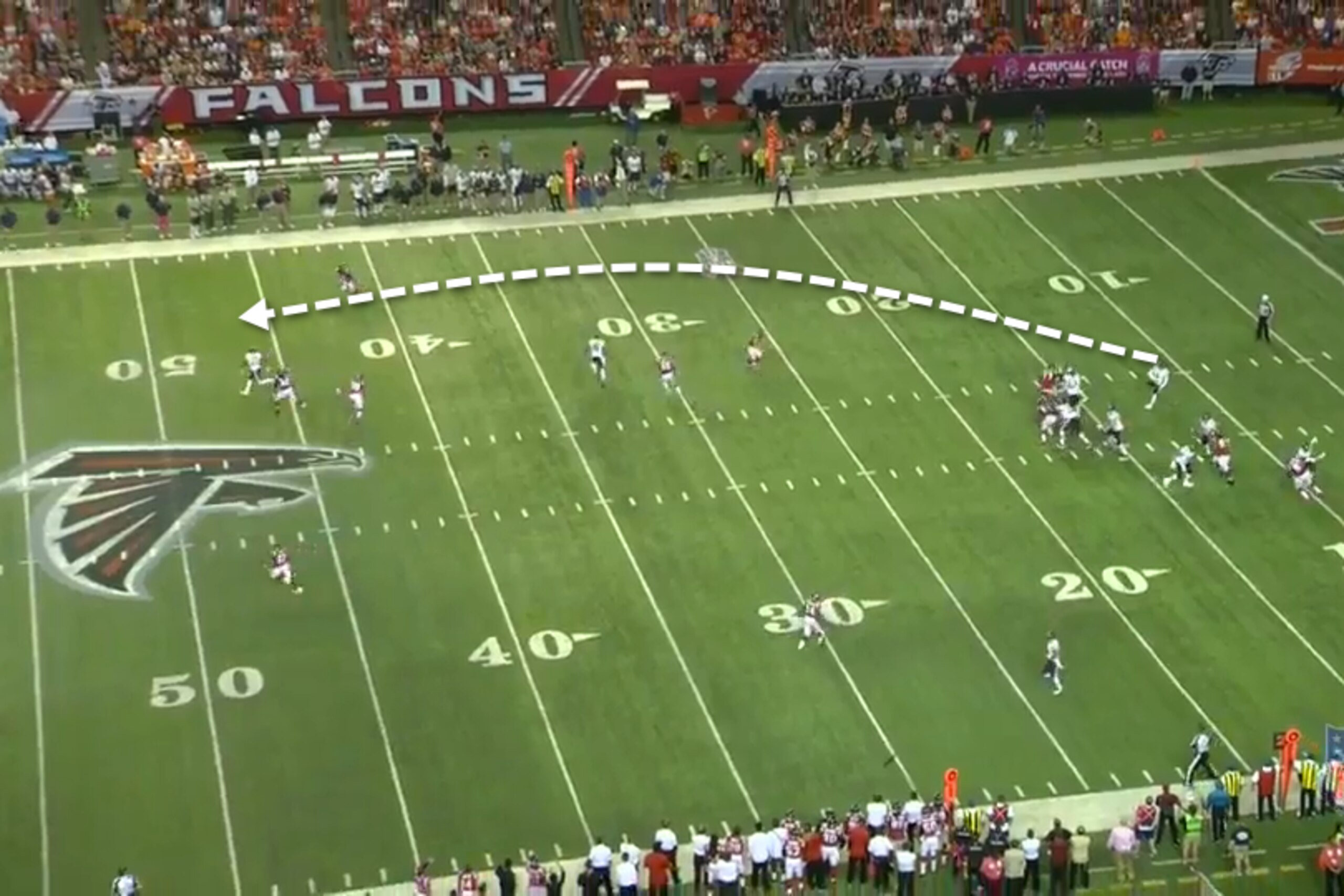
There are few, if any, teams with a better supporting cast around their quarterback than the Bears. Along with Marc Trestman, the head coach and genius offensive mind, Chicago has a system perfectly built for Jay Cutler to thrive. Cutler has responded by throwing 13 touchdowns and six interceptions.
Miami is most at risk when Chicago decides to throw deep, as Marshall and Jeffery are elite receivers at going up and winning at the point of contest. Each has a major size advantage on Brent Grimes and Cortland Finnegan, and each is coming off a poor performance.
Chicago’s talented receivers are also incredibly good at creating yards after the catch with their massive frames. Miami again will be at a disadvantage here. So it’s important that Grimes, Finnegan and safeties Louis Delmas and Reshad Jones are in good position to quickly wrap up their assignment.
It’s inevitable that Jeffery and Marshall will produce catches, but trying to prevent the big plays they often can create is critical for Miami.
Getting Cutler to throw the ball quickly is key for Miami’s defense to succeed in stopping the Bears offense.
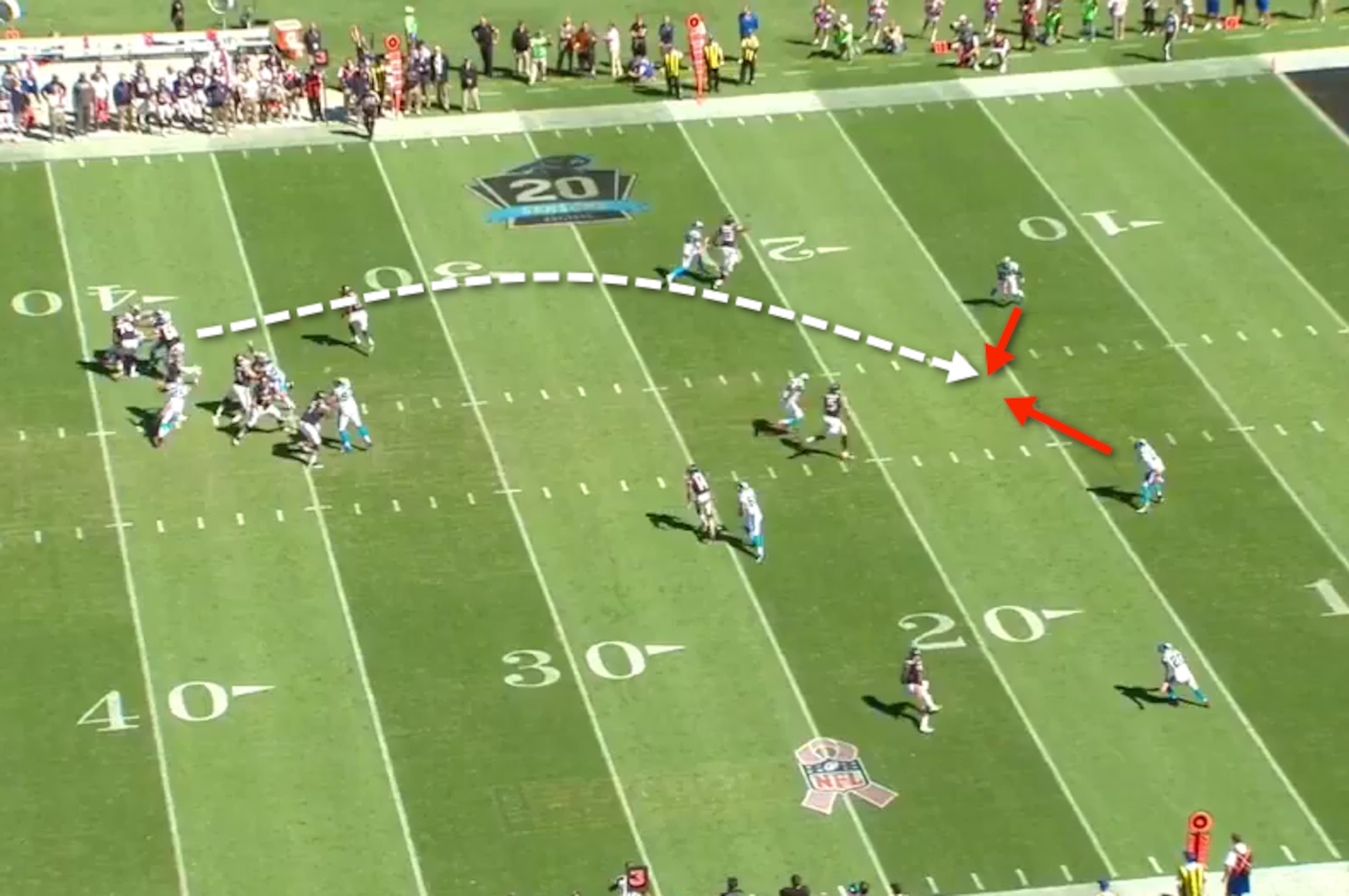
Although giving up long drives can be demoralizing, it’s more chances that Cutler has to make a bad decision and force a turnover. Per PFF, Cutler averages just 2.53 seconds to throw the ball, so even when forcing the ball out quickly, the cornerbacks must be in proper position to make a play on the ball.
Maintain Integrity
With so much firepower on the outside, it’s important to not overlook Matt Forte in the Bears backfield. Forte is one of the top running backs in the NFL. He presents issues to any defense because he is not only a very good runner out of the backfield, but also a great pass-catcher in open space.
Forte’s 46 catches and 376 yards easily tops the running back receiving leaders statistic at this point in the season. Miami will need to shadow Forte with standout linebacker Jelani Jenkins, who is one of few in the league who can handle such an assignment.
Containing Forte after he gets the ball will take major defensive integrity. On defense, Miami has been tremendous at limiting chunk gains by running backs. Its 3.8 yards-against allowed is eighth in the NFL and should improve with the return of Koa Misi, Reshad Jones and Derrick Shelby to the lineup.

Still, the Bears offensive line is solid, and Miami needs to consistently set the edge against the run and force Forte to the sideline. He is a much better runner inside the tackles than outside, and Miami has the speed to curtail most outside run attempts.
Like the Packers, the Bears are a difficult matchup for most teams because of their immense offensive potential. Miami’s lack of size and bulk at cornerback will be difficult to overcome, but it will need its veterans to play up to their potential to stop the potent Bears offense. The Dolphins offense should have multiple opportunities to produce sustained drives on the Bears’ vulnerable defense.
Week 7 will be yet another big test for Miami’s coaching staff and roster. The performance they deliver will have huge ramifications on the rest of the season.
All stats used are from Pro Football Focus' Premium Stats (subscription required) or Sports-Reference.com. All contract information is courtesy of Spotrac.com.
Ian Wharton is a Miami Dolphins Featured Columnist for Bleacher Report, contributor for Optimum Scouting and analyst for FinDepth.
Follow @NFLFilmStudy
.jpg?w=2560)