10 Crucial Stats That Could Make a Difference in the 2014 ALCS and NLCS
You can’t predict baseball, they say. Yet, when it comes to the postseason, that’s exactly what we attempt to do, using any relevant statistic, trend or storyline to contextualize individual performances and head-to-head matchups.
After all, with 162 regular-season games and two playoff series in the books, it’s not as though there’s a shortage of information.
With the American and National League Championship Series set to begin Friday and Saturday, respectively, it’s time to take an in-depth look at some of the stats that define (either for better or for worse) the four remaining teams seeking a World Series berth.
Here are 10 crucial stats that could project the 2014 ALCS and NLCS winners.
The Orioles Hitters vs. Curveballs, Changeups
1 of 10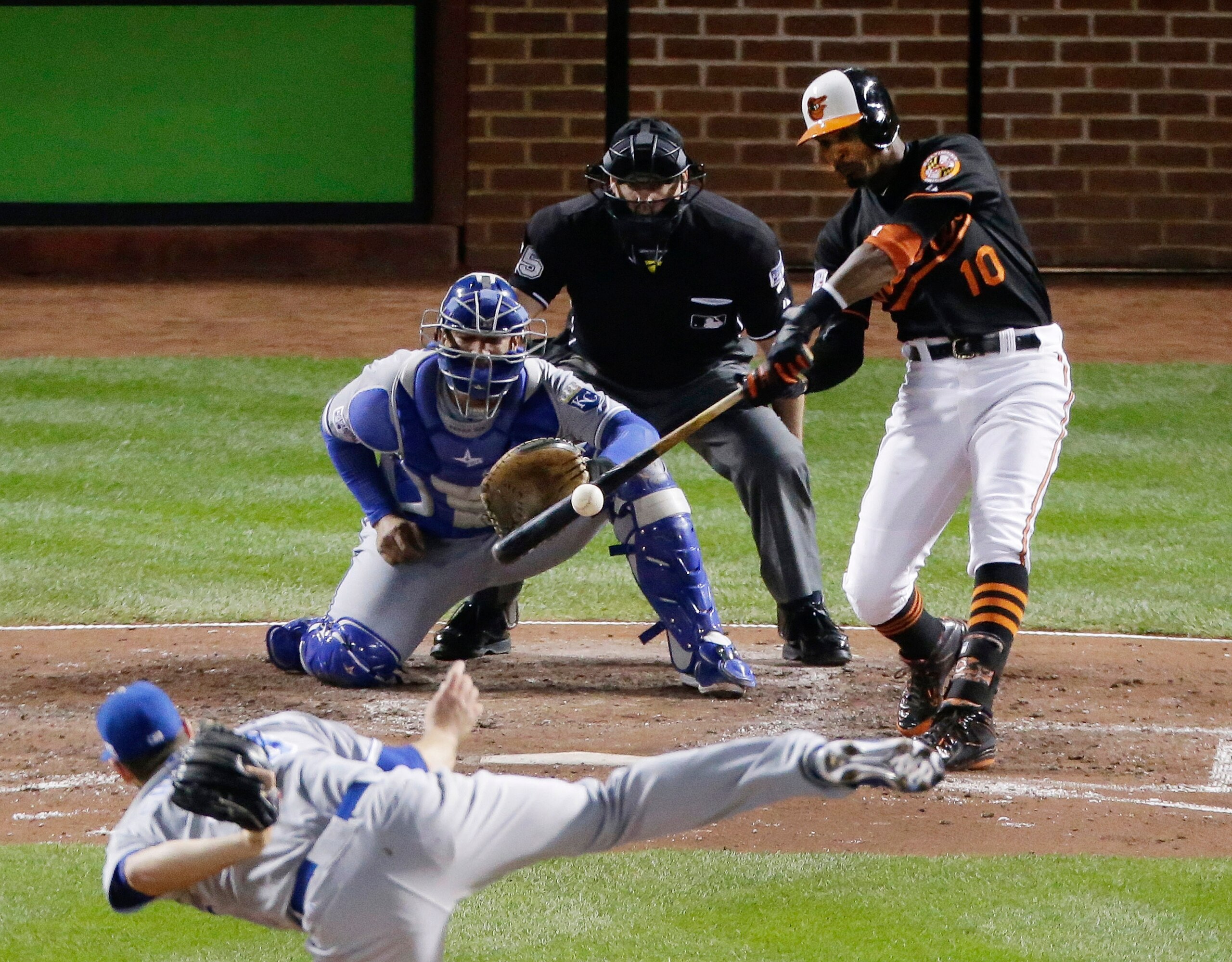
As a team, the Orioles absolutely mash fastballs. According to FanGraphs, the collective 80.3 wFB (fastball runs above average) posted by Orioles hitters this season ranked first in the American League, and they also finished second in the league against sliders, with a 7.0 wSL.
However, the success ends there, as the Orioles ranked 13th in the AL against curveballs (minus-4.0 wCB) and 11th against changeups (minus-8.9 wCH).
Meanwhile, Royals pitchers ranked fourth and third in the league in terms of curveball and changeup usage, throwing the pitches 11.2 percent and 15.6 percent of the time, respectively.
Plus, those struggles were enhanced by the Orioles’ league-high 33.9 percent swing rate at pitches outside the strike zone as well as an overall 10.8 percent swinging strike rate, which ranked as the second-highest (tied with the Chicago White Sox) in the AL.
The Royals Starters vs. the Orioles Hitters
2 of 10
Each of the Royals’ five potential starters in the NLCS has strong career numbers against the Orioles:
| 26 | 11-7 | 176.1 | 3.52 | 1.21 | 6.8 | .697 | |
| 2 | 1-1 | 14.1 | 1.26 | 1.19 | 10.7 | .632 | |
| 8 | 2-3 | 55.2 | 1.94 | 1.04 | 4.4 | .589 | |
| 2 | 1-1 | 12.1 | 1.46 | 0.81 | 5.8 | .434 | |
| 4 | 2-1 | 27.0 | 2.67 | 1.22 | 4.3 | .685 |
On top of that, they all also had the Orioles' number during the regular season:
| 2 | 2-0 | 14.0 | 3.21 | 1.07 | 3 | 9 | |
| 2 | 1-1 | 14.1 | 1.26 | 1.19 | 3 | 17 | |
| - | - | - | - | - | - | - | |
| 1 | 1-1 | 7.0 | 0.00 | 0.29 | 0 | 2 | |
| 2 | 0-1 | 15.0 | 3.60 | 1.07 | 2 | 5 |
The Orioles Pitchers/Catchers vs. the Royals Baserunners
3 of 10The Royals led the major leagues during the regular season with 153 stolen bases, and, as a team, they were successful 81 percent of the time. Heading into the ALCS, the team is 12-of-13 in stolen-base attempts in four postseason games.
However, the Orioles are one of a few teams that might be able to stifle the Royals’ running game.
Rookie catcher Caleb Joseph filled in nicely, at least defensively, for the injured Matt Wieters, as he led the American League with a 40 percent caught-stealing rate. Nick Hundley, acquired from the San Diego Padres in late May, owns roughly a league-average career caught-stealing rate of 27 percent, but this year he had the lowest success rate of his seven-year career, throwing out only 14 percent of attempted base stealers.
Chris Tillman is about as good as any starting pitcher at killing the running game; base stealers have been successful only twice in 13 attempts against the right-hander over the last two seasons. Hundley should be behind the plate for Tillman’s starts in the ALCS, which means the Royals might not be able to exploit his catch-and-throw issues as they would with another starter on the mound.
Bud Norris has also been above average at preventing stolen bases, but this year he was especially effective, with a 38 percent caught-stealing rate. The same can’t be said for Wei-Yin Chen and Miguel Gonzalez, who posted respective caught-stealing rates of 17 and 14 percent during the regular season. However, it was a down year for both hurlers on that front; Chen has a league-average 26 percent in his career, while Gonzalez’s is slightly better at 33 percent.

The Royals' Outfield Defense
4 of 10
If you’ve watched the Royals this season, then you already know that the team’s outfield defense is superb. But just how good, you ask? Well, the Royals outfield led the major leagues this season in defensive runs saved (46) and zone rating per 150 games (17.9), and the team also made more plays (11.3 percent) in remotely possible opportunities—defined by FanGraphs as balls in play that have a 1 to 10 percent chance of being successfully fielded—than any other team.
And then there’s this juicy tidbit, courtesy of Sam Miller of Baseball Prospectus (subscription required): “A Gordon/Dyson/Cain outfield is more than 40 runs better than a Gordon/Cain/Aoki alignment over the course of 135 games. If Dyson comes in at the seventh inning and the game doesn't go extras, the Royals' run prevention improves by about a tenth of a run per game.”
The Bochy Factor
5 of 10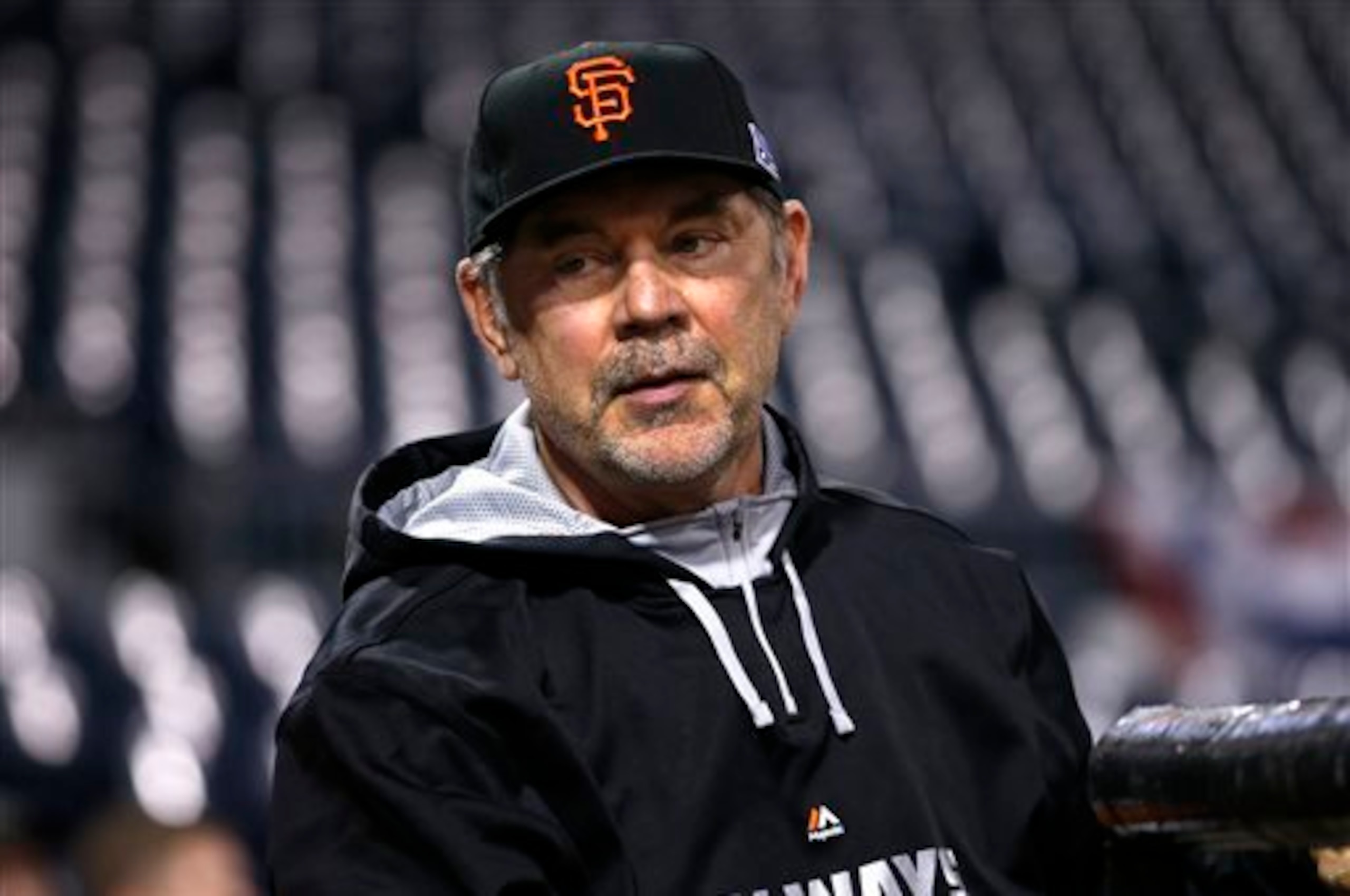
Manager Bruce Bochy has guided the Giants to two pennants and two World Series titles in the last five years, while the team owns a 436-374 overall regular-season record during that time. Meanwhile, the club enters the NLCS having won 11 of its last 12 postseason games.
Say what you want about a manager’s ability to influence his team’s success, but there’s no denying that Bochy has played a part in the Giants’ emergence as a perennial World Series contender in the past half-decade.
After Bochy picked up his 1,600th career managerial win in early September, B/R National MLB Columnist Scott Miller argued that the 20-year skipper deserves to be enshrined in Cooperstown:
"It was a short respite in the middle of the swirling grind that is a 162-game season: Bochy had just earned his 1,600th career victory, and for a few minutes, he and his Giants coaches stopped worrying about yesterday's problems and tomorrow’s challenges so they could savor the moment.
That this milestone arrived roughly one month after three managers were inducted into baseball’s Hall of Fame—Joe Torre, Bobby Cox and Tony La Russa—was wholly fitting because in Bochy, what we're watching is a Hall of Fame manager at the top of his game.
"
Bochy always seems to get the most from his veterans by constructing lineups in ways that are conducive to their playing styles, therefore allowing for consistently strong contributions from those players. And unlike so many other managers across the game, Bochy rarely overthinks and overmanages within games, which also is why he always appears to have such a phenomenal feel for handling the bullpen.
The Orioles' Left-Handed Relievers vs. the Royals' Left-Handed Hitters
6 of 10
Kansas City’s left-handed hitters have come alive in October, combining to bat .295/.397/.574 with four home runs, three doubles, 13 RBI and an even 11-11 strikeout-to-walk ratio in four postseason games.
Eric Hosmer is the Royals’ playoff MVP so far; the soon-to-be 25-year-old first baseman is batting a robust .500/.632/1.143 with four extra-base hits (two homers), five RBI and more walks (five) than strikeouts (four). Mike Moustakas has also come up big for the team, with hits in all four games, including two solo home runs, while Alex Gordon has a pair of doubles, four RBI and four walks.
However, Baltimore’s trio of left-handed relievers, Andrew Miller, Zach Britton and recently added Brian Matusz, will be tasked with cooling off the Royals’ red-hot lefty hitters in the ALCS—a task for which they’re more than equipped.
Miller, acquired from the Boston Red Sox at the trade deadline, dominated same-side hitters during the regular season, posting a 2.25 ERA, 0.77 WHIP and 16.6 K/9 in 26 innings, all the while holding them to a .163 batting average.
Britton, who took over as the Orioles closer in mid-May and went 37-for-41 in save opportunities, was equally dominant against lefties this season, pitching to a 0.35 ERA and 0.78 WHIP while generating 11.75 ground-ball outs for every flyout.
Matusz was left off the Orioles ALDS roster but is back in the bullpen now for the ALCS, giving manager Buck Showalter another left-handed arm to match up against Hosmer, Moustakas or Gordon. Matusz posted a 1.69 ERA against lefties during the regular season, striking out 29 batters over 26.2 frames.
Bud Norris at Camden Yards
7 of 10
In his first full season with the Orioles, Bud Norris set career bests in wins (15), ERA (3.65), WHIP (1.22) and BB/9 (2.8). The right-hander was very impressive in his first postseason start, allowing two hits and two walks with six strikeouts over 6.1 scoreless innings against the Detroit Tigers in Game 3 of the ALDS.
It wouldn’t be surprising if Showalter moved up Norris to No. 2 in the postseason rotation for the ALCS, as he pitched considerably better at Camden Yards during the regular season (13 GS, 8-2, 2.44 ERA) than he did on the road (15 GS, 7-6, 4.80 ERA). Plus, the fact that Norris shut down the Royals (7.1 IP, 4 H, ER) early in the season only strengthens his case to start Game 2.
John Lackey's Postseason Resume
8 of 10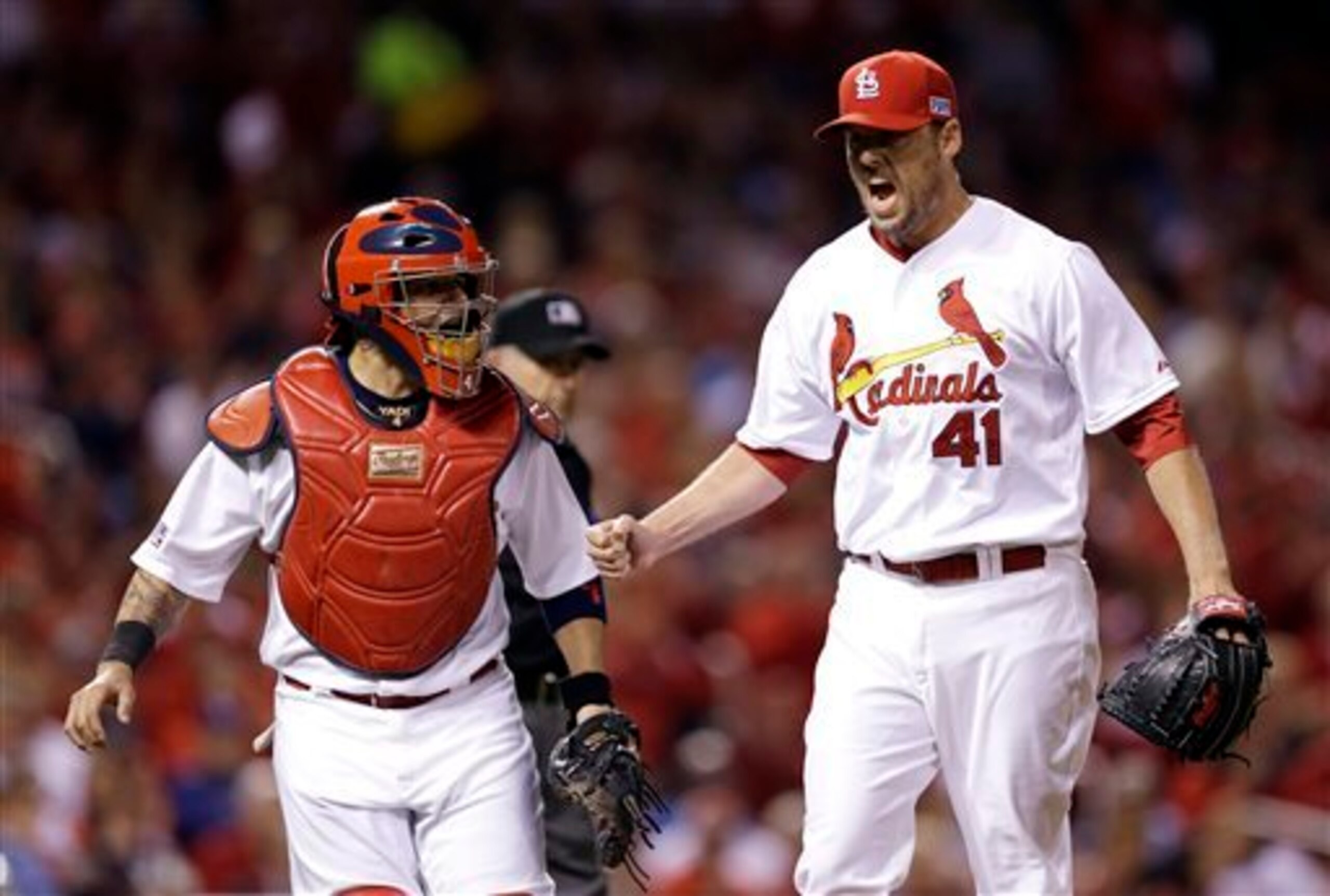
John Lackey went 3-3 with a 4.30 ERA and seven quality starts in 10 games after joining the Cardinals at the trade deadline, but the Cardinals made the move with his impressive postseason track record in mind.
After winning Game 3 of the NLDS with seven innings of one-run ball, the 35-year-old right-hander is now 7-5 with a 2.92 ERA in 20 career postseason games (17 starts). Plus, as the winning pitcher in the clinching games of the 2002 and 2013 World Series, Lackey has experienced virtually every imaginable postseason scenario in his career.
The Return of Michael Morse
9 of 10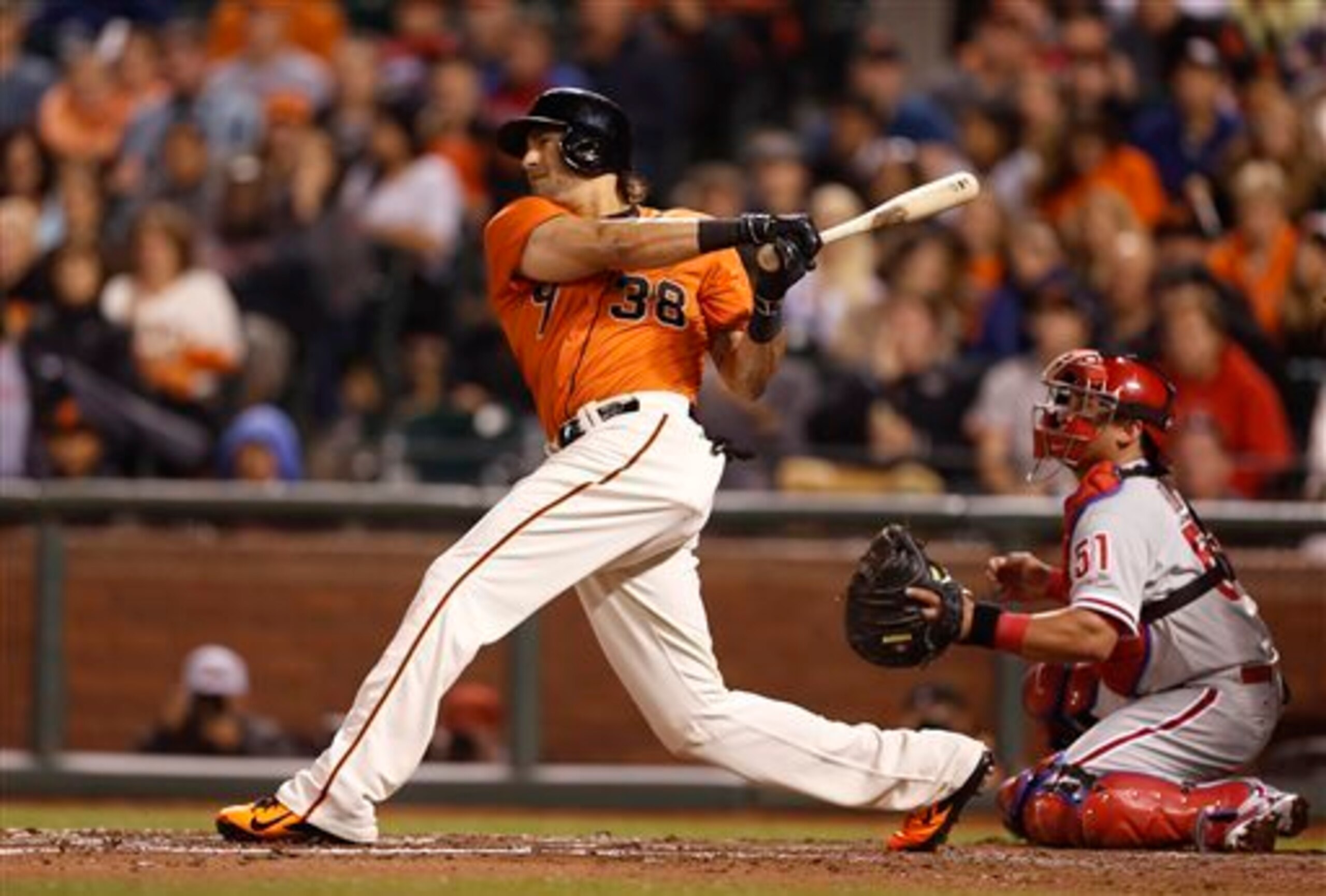
The Giants haven’t had a right-handed batter hit a home run this October, though that could soon change with the news that Michael Morse will be included on the NLCS roster. He won’t be in the Giants starting lineup Saturday for Game 1, but manager Bruce Bochy stated that the 32-year-old slugger will be available off the bench.
Assuming he’s healthy enough to play the field, Morse should wind up starting a majority of the NLCS games in left field. Other than perhaps Buster Posey, he possesses the best raw power on San Francisco’s roster, which he showcased this season in the form of 16 home runs, 32 doubles and three triples in 131 games.
It is worth noting that Morse’s power numbers dropped off considerably during the second half, as he hit only two home runs over his final 125 at-bats. However, it’s a safe bet that his decreased pop following the All-Star break was tied to the left oblique strain that cost him all but one game in September.
As a 6’5”, 245-pound right-handed hitter, Morse’s greatest strength has always been his ability to mash left-handed pitching. Over parts of 10 seasons in the major leagues, Morse has compiled a .277/.335/.485 batting line with 32 home runs and 46 doubles in 778 plate appearances against southpaws.
And for what it’s worth, he’s also a career .283/.334/.468 hitter with 67 home runs and 85 doubles in 1,731 plate appearances against righties, which is why he’s been able to hold down an everyday role.
The Cardinals' Postseason Power Surge
10 of 10The 105 home runs hit by the St. Louis Cardinals during the regular season was the lowest total in the National League and the second-lowest in the major leagues, as only the Royals (95) jumped the yard fewer times.
Apparently the Cardinals were just saving the big blasts for the postseason, because they exploded for seven bombs over four games against the Los Angeles Dodgers in the NLDS. Five of those homers were hit by left-handed batters against left-handed pitchers; leadoff man Matt Carpenter led the charge with three home runs (two off Clayton Kershaw), while Matt Adams and Kolten Wong both came through with late-inning go-ahead shots.
The Cardinals will see their share of lefties against the Giants in the NLCS, with left-hander Madison Bumgarner starting Game 1 of the NLCS for San Francisco—and Game 5, if necessary—and Jeremy Affeldt and Javier Lopez out of the bullpen.
.png?w=2560)

.jpg?w=2560 "NFL House in Paris Closes for Protests")

.jpg?w=2560 "Trevon Diggs Cut by Seahawks")