Cordarrelle Patterson Not Ready for Spotlight as Vikings' Go-to WR Just Yet
Two Cordarrelle Pattersons exist in the NFL.
Both of them play for the Minnesota Vikings. Both are listed as wide receivers, and both wear No. 84. They are the same person off the field, but when the 23-year-old former Tennessee prospect steps onto a football field, he becomes two different beings.
The change is created by the football.
TOP NEWS
.jpg?w=2560 "NFL Paris Football")
NFL House in Paris Closes for Protests
.jpg?w=2560 "Seahawks Chiefs Football")
Trevon Diggs Cut by Seahawks
.jpg?w=2560)
B/R's Expert Week 7 NFL Picks 🔮
When Patterson has the football, he is one of the most terrifying weapons in the whole league. His physical talent is evident, his aggressiveness is animalistic, and his ability is simply tough to comprehend. Patterson can run over defenders, but more often than not, he anticipates space to run around and away from them.
When Patterson doesn't have the ball, none of those things can be seen.
That's not just because our eyes naturally follow the football. It's not because Norv Turner and Teddy Bridgewater(/Christian Ponder/Matt Cassel) choose to feature the other receiving options on the team over Patterson without good reason.
No, the split between the two Pattersons is highlighted by Patterson himself.
When Patterson has the ball, he exudes confidence and natural talent. When he is asked to run routes down the field without the ball, he is timid against contact, lacks intensity in his effort and is indecisive with his footwork. Hand usage and technique in general appear to be irrelevant to Patterson's approach.
All of these issues combine to erase the impact of Patterson's physical talent and make him play like a mere mortal among gods, whereas when he has the ball, he makes those gods look like mortals.
It's incredibly bizarre to watch a player go from being extremely confident and effective on one play to confused and uncomfortable on the next. Patterson's size works against him somewhat coming out of breaks in his routes, but it's not significant and doesn't explain the rest of his faults.
Those faults appear to be born out of confidence. When Patterson has the ball, he understands that he just needs to find a way to the end zone, and his natural instincts lead him there. When he doesn't have the ball, he has to think about every precise movement and how the coverage reacts to those movements while understanding what he is allowed to do against what is illegal.
Some players, such as his teammate Greg Jennings, naturally excel with those facets of being a receiver, but Patterson came out of college as a raw receiving prospect—and it shows in his play.
One of Patterson's biggest issues right now is how he responds to contact within five yards of the line of scrimmage. He doesn't use his hands to fight defensive backs off when they initiate contact and struggles to push his way through contact when pressed physically.
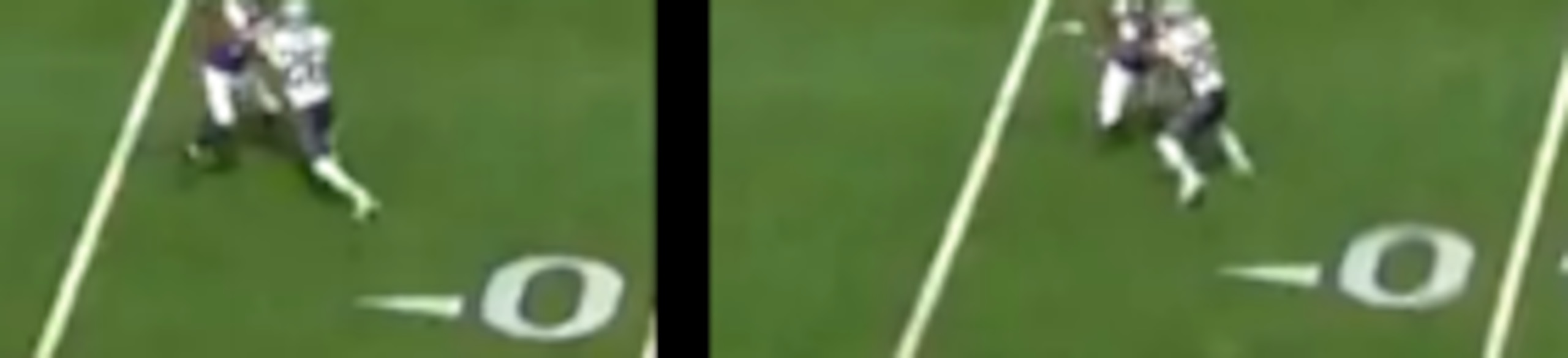
On this play against Logan Ryan of the New England Patriots, Patterson is attempting to run a short in-route. He does the right thing initially by running at the defender's outside shoulder, but he does so without much speed.
Ryan quickly gets his left arm on Patterson's inside shoulder, a move that is legal within five yards because he isn't holding the receiver. A good, physical route-runner would immediately react to this by knocking the extended arm away before sharply turning infield.
Throughout the route, Patterson never knocks the extended arm away. Instead, he is solely focused on where his route is going as he gets on the outside shoulder of the defensive back before turning infield underneath him.
Ryan is able to run with him because his arm is always on the receiver to slow him down. The ball is thrown to Patterson's back shoulder, where Ryan can knock it away, but if it had been thrown further infield, it would likely have resulted in an interception opportunity for Ryan rather than a reception opportunity for Patterson.
A few plays later, Ryan and Patterson were matched up again, but this time Ryan wasn't pressing Patterson at the line.
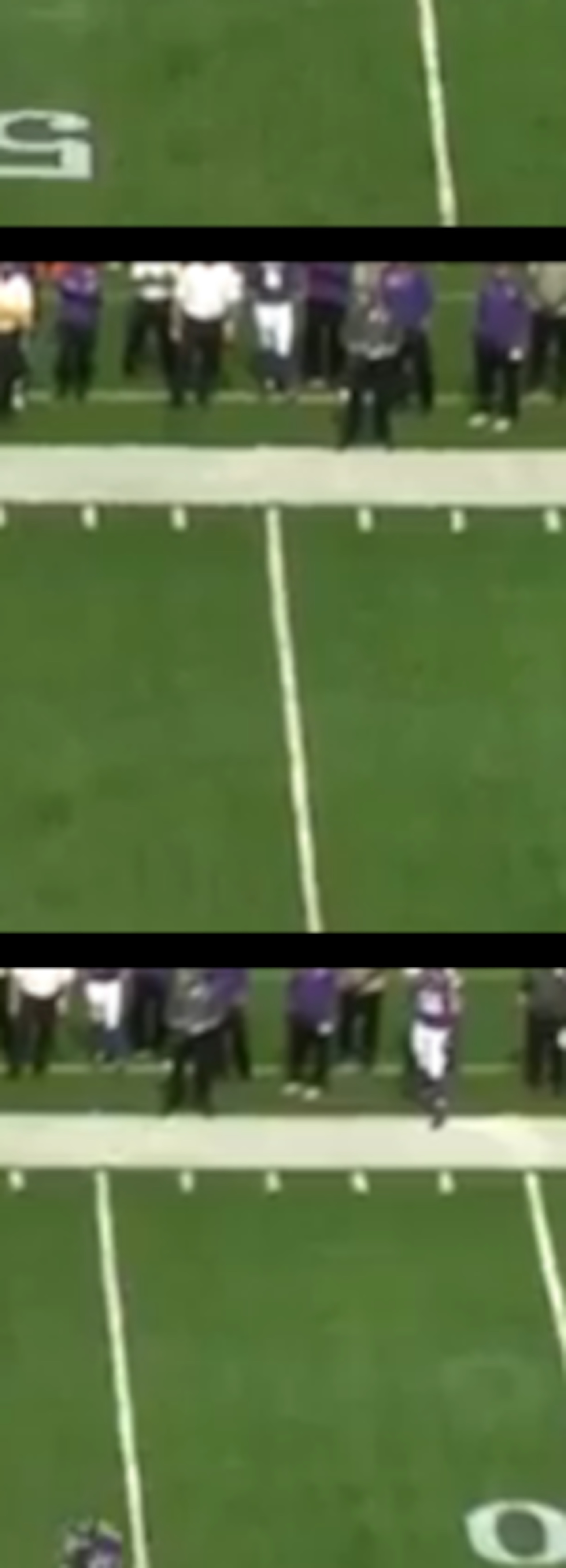
The Patriots defensive back was still well within five yards of the line of scrimmage, so he was in position to legally disrupt Patterson's route with physical contact. Patterson releases straight at the defensive back before turning toward the sideline.
Ryan doesn't close the space between himself and the receiver; instead, he waits until he arrives before engaging him with extended arms. Ryan is able to disrupt Patterson's route and push him further toward the sideline than the play is designed to go.
When Patterson straightens to run down the sideline, he has no space to run because Ryan is on top of him. There is no way the quarterback can find him with the ball in this scenario.
Although Patterson rarely ever uses his hands or strength to beat a defensive back off the line, he does often attempt to use his quickness to deceive defenders. His release moves are limited to him planting his foot and pushing off in one direction.
That is something that can work effectively, but it needs to be timed well and sold to the defensive back.
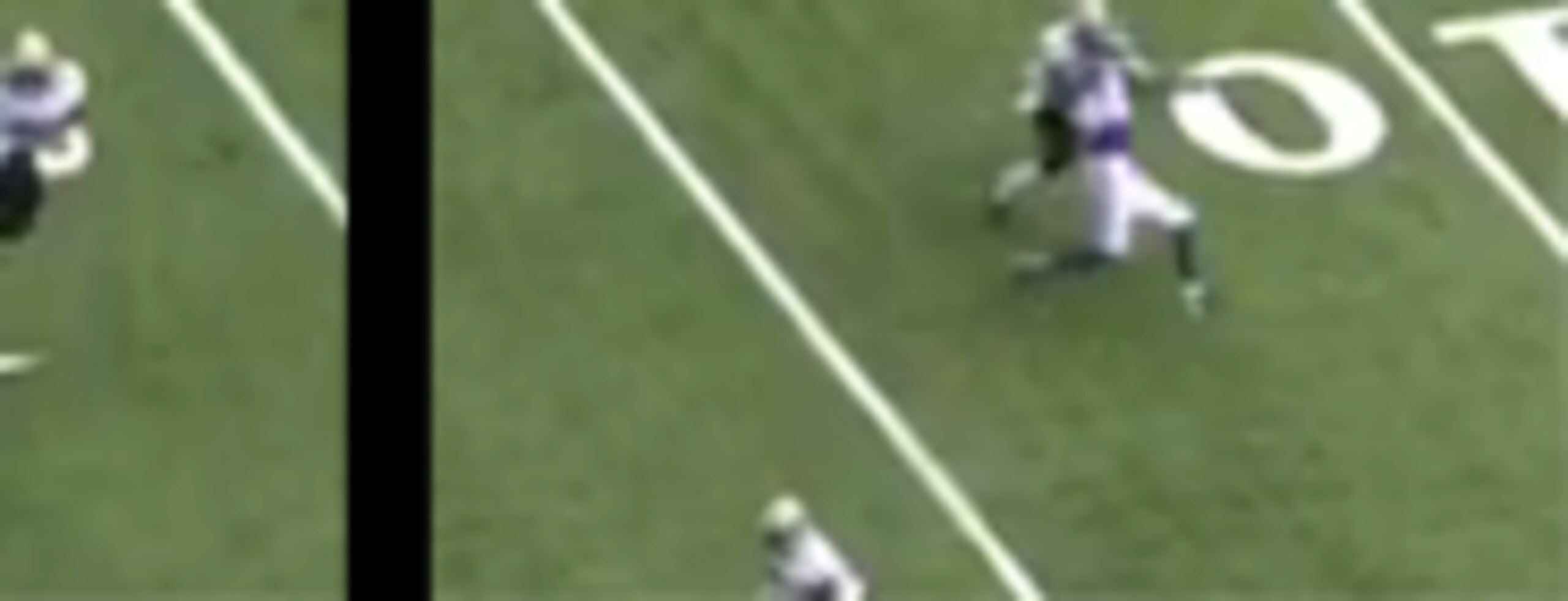
On this play, we can see a typical release from Patterson. He plants his left foot in the ground and tries to accelerate infield past the cornerback. Patterson's planted foot comes with his first step out of his release. He doesn't close the space between him and his assigned defender before cutting inside to turn him around.
This makes it very easy on the defensive back to sit back and watch his lower body movements before mirroring them. Keenan Lewis is the defender on this occasion, and Patterson is trying to create space to run down the seam.
Lewis lets Patterson release into the seam, but he is on his back the whole way through the route. Patterson never creates any separation because of his poor release.
During the same week of the season, San Francisco 49ers wide receiver Brandon Lloyd gave us an example of what Patterson should have done on this kind of route. Lloyd is working against Antonio Cromartie, who has a similar skill set to that of Lewis, and he is running a similar route in a similar situation, except past the outside shoulder of the defender.
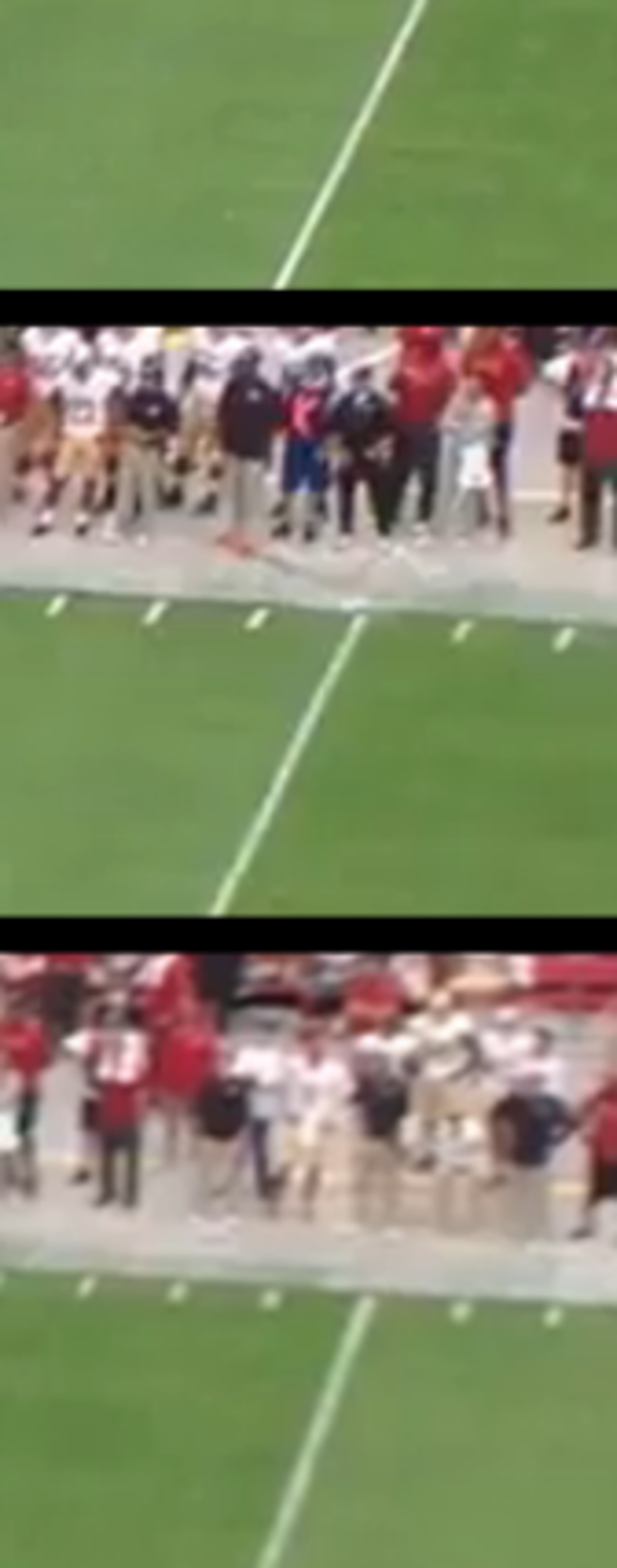
Unlike Patterson, Lloyd doesn't plant his foot to fake the defender out on his first step. Instead, he works his way across the line of scrimmage and closes the space to the defensive back to force that defender to take his eyes away from his lower body and react more quickly to his movement.
Lloyd shows much greater speed and decisiveness through this route than Patterson did on his. He may be a lesser all-around athlete, but Lloyd is a refined route-runner with the experience to take advantage of defensive backs in different situations.
He is what Patterson should ultimately hope to become, even if his physical size may curtail that to an extent.
On the occasions when Patterson attempts to close the space between the defender before cutting away from him, his steps are often too slow and deliberate. It appears from the outside looking in that he is still too slow in thinking about the timing of his movements.
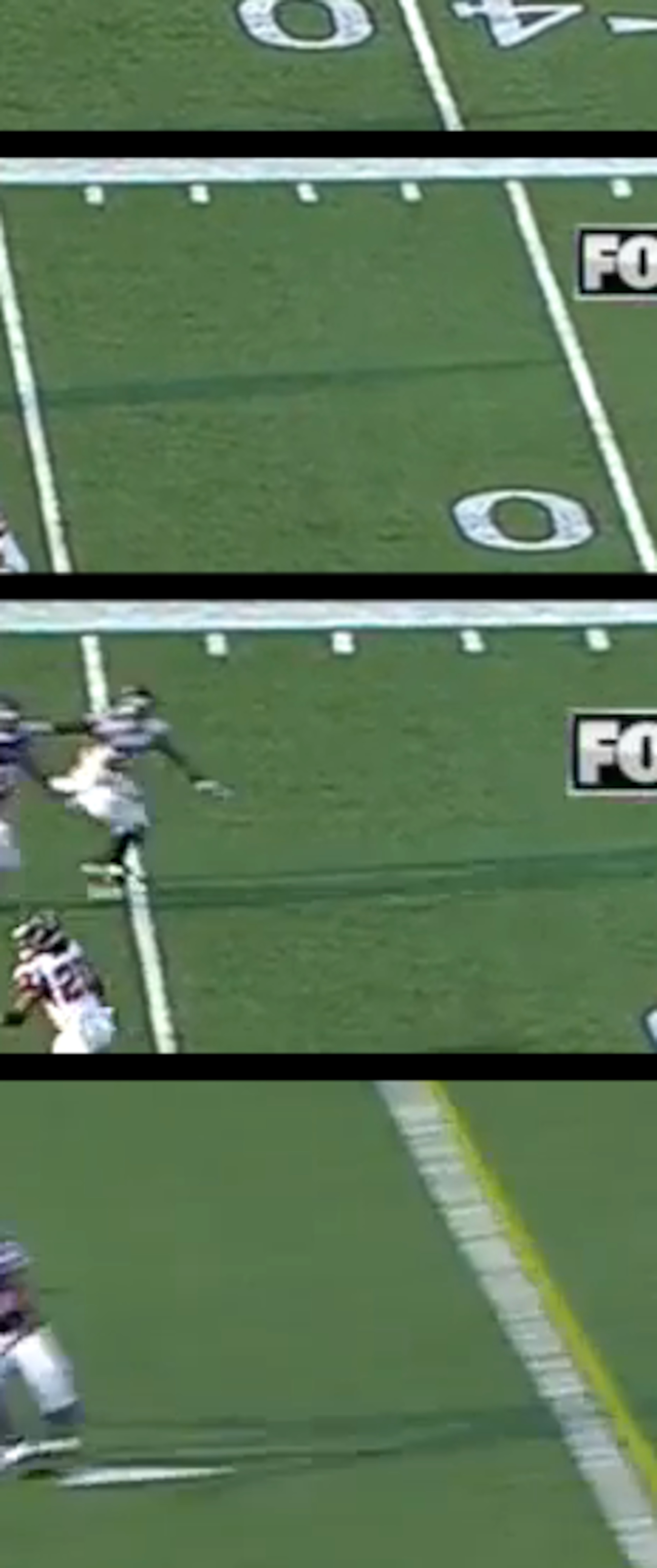
Patterson's flaws are easy to see and prevalent in his game. It's a lot tougher to judge his development and differentiate between a stagnant player who is destined to be just a gadget option for the rest of his career or a developing talent who can become an all-around, efficient receiver.
One route in particular has stood out for this.
The route itself is a deep in from a wide position. In Week 2, Cassel threw an interception trying to find Patterson down the field on this route. Cassel threw the ball straight to the defender. It was a terrible decision and throw, but he wasn't given any throwing window by his receiver's route.
Patterson never threatens the defensive back outside, so he completely closes off the space infield by not widening the coverage as much as possible.
His initial release features that planted leg at the start before he meagerly runs inside the defensive back, who doesn't look to stop him but rather trail him underneath. Patterson then rounds his route at the top when he turns infield. Instead of threatening to run an out or corner route to make the defender react to him, he lets the defender break inside on the ball ahead of him.
This was an awful route that Patterson ran on a number of occasions during the season.
From a technique and awareness point of view, Patterson hasn't shown much development over the first couple of weeks of this season. However, on occasion, he has shown a greater intensity in his routes and even this minor change can have a noticeable effect.
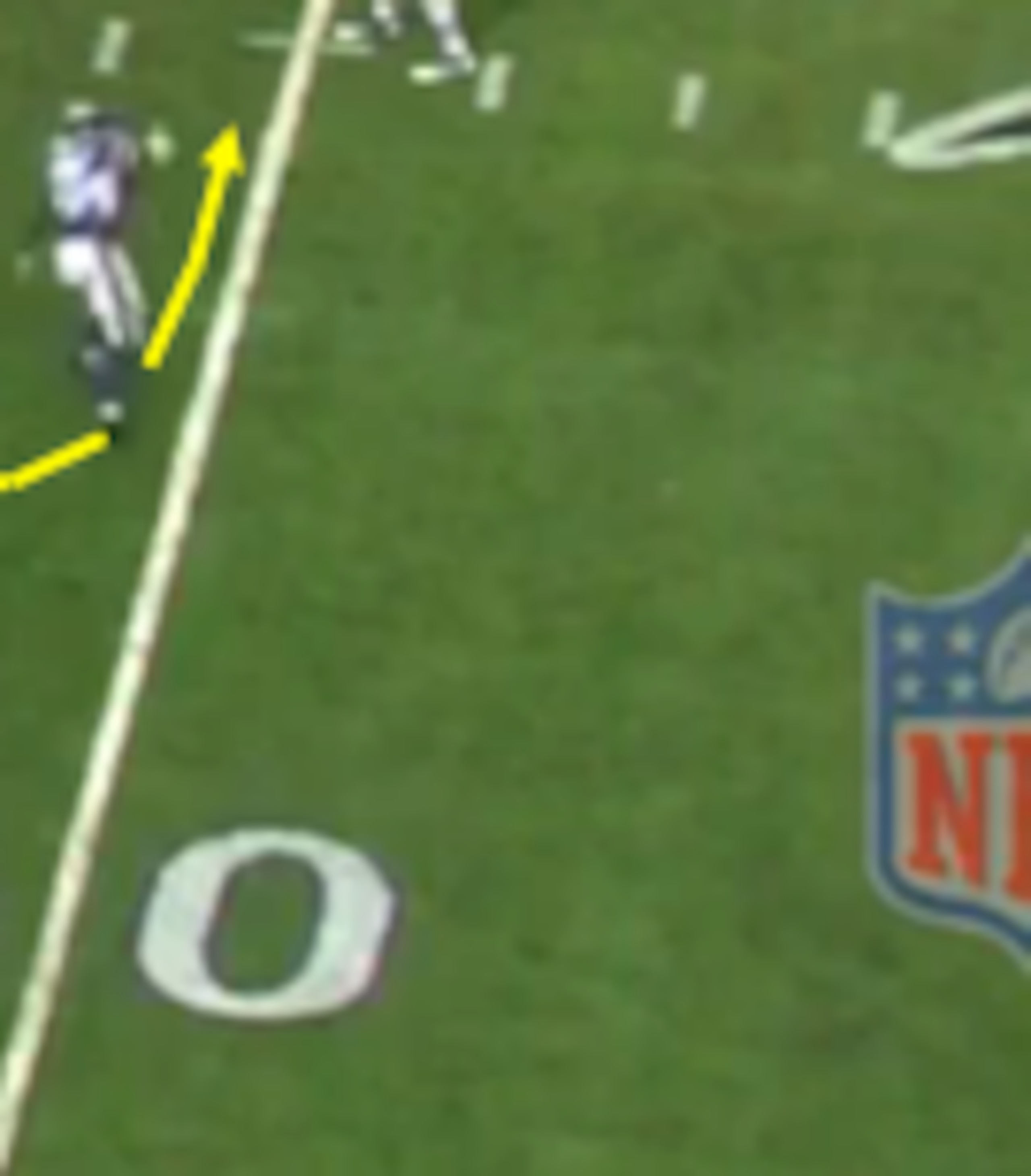
Against the Falcons in Week 4, Patterson ran this route poorly early in the game but came back to it in the fourth quarter for one of his better receptions of the season.
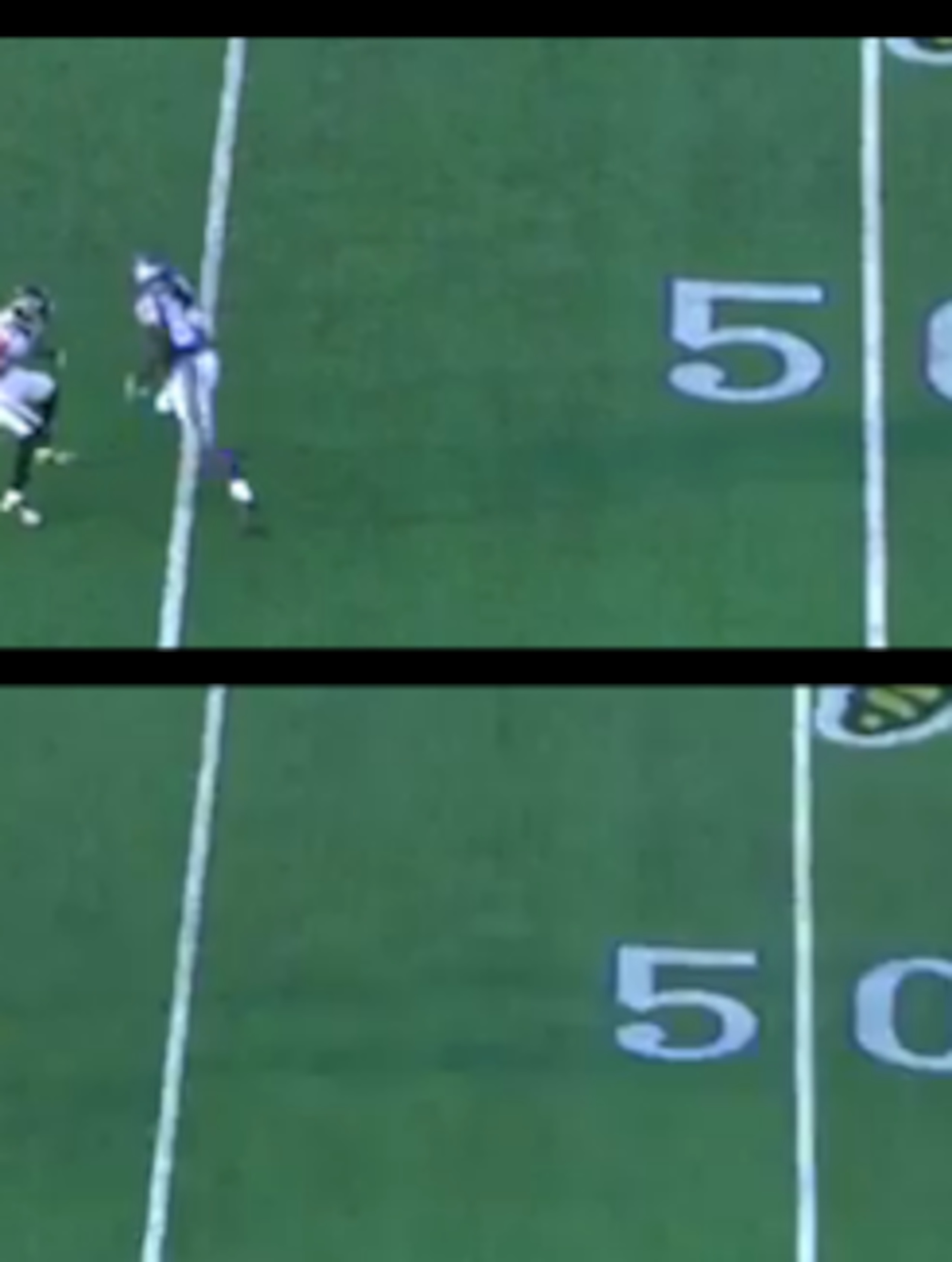
The difference between this route and his previous attempts was primarily the intensity and speed at which he moved during his release. He still just used one immediate, hard step to sell a potential outside route, but he sold it more with his upper body movement and was quicker breaking back inside.
It should also be noted that the defensive back was in press coverage at the start of the play.
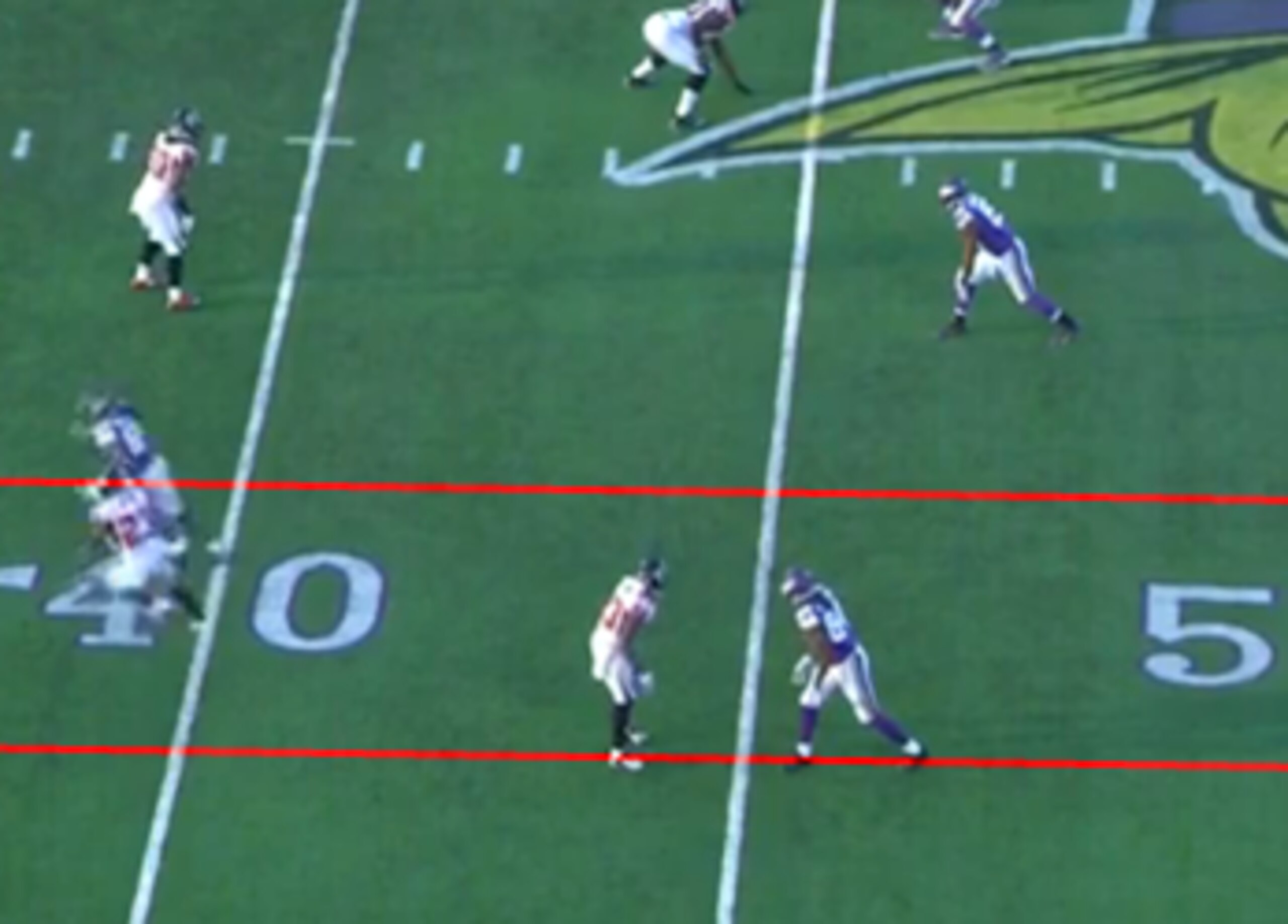
Because of this release, Patterson gets a free run down the seam while the defender trails in outside position. Patterson doesn't drift infield, so even when he runs a rounded break at the top of his route to go infield, he still has plenty of space to run into.
When you compare this route to his other attempts, Patterson is giving his quarterback a much greater throwing window to attack. As the red lines show, the distance between the two cuts in his routes is not taking away from the spacing of the offense as a whole.
Bridgewater finds him with an accurate pass over the middle of the field that Patterson is able to comfortably catch.
As limited as Patterson has been running routes down the field, that doesn't explain how little the Vikings have used him on "gadget" plays. In Week 1, Patterson ran the ball three times for 102 yards and a touchdown. That touchdown was exceptionally impressive, too.
Since then, Patterson has one carry for a seven-yard loss on an end-around. That carry came when Bridgewater replaced Cassel in New Orleans.
Norv Turner and Mike Zimmer don't appear to have a game plan that includes running plays for Patterson. They have motioned him into the backfield since Week 1 and used him on play action, but for the most part, he is lining up as a receiver and running routes as a receiver.
Patterson has been targeted on a number of screen plays, but those plays have mostly struggled for a variety of reasons.
It's hard to understand why the Vikings have moved away from using Patterson in these situations. It may simply be that they want him to run as many routes as possible to get better for the long term, or it may be that Patterson is a valuable blocker and Jarius Wright is a capable receiver/runner on similar plays.
Wright isn't capable of blocking for Patterson the way Patterson is capable of blocking for Wright.
Whatever the reason, it's difficult to comprehend from the outside looking in. Patterson's threat to the defense with the ball in his hands has been prominent ever since he entered the league. Last year, he had a number of impressive plays, and he reminded defenses of that in Week 1.
Notably, the Vikings used him as a decoy to great success in Week 2 to set up a touchdown drive.
Patterson initially lines up wide right of the formation, but he motions into the backfield before the snap. With Patterson in the backfield behind a fullback in a heavy formation, there is no real deep threat to keep the New England secondary deep off the ball.
Understanding the formation and the threat of Patterson, the Patriots' second-level defenders completely lose their discipline and are drawn to the football. Only Darrelle Revis, on the other side of the field, accounts for his assignment.

With all the breaks in coverage, one of the Vikings tight ends is able to slip out into a vast amount of space for a huge, easy reception. On the very next play, the Vikings use Patterson's threat in a similar way but in a different design.

Patterson lines up in the slot initially but goes in motion before the snap. Cassel gets the ball as his receiver approaches him at the perfect time to fake the handoff. While Cassel fakes the handoff, Matt Asiata, the running back in the backfield, runs a route into the opposite flat.
As Patterson continues across the field, he draws multiple defenders with him to leave Asiata completely uncovered for the easy touchdown reception.
When the Vikings did this so quickly after Patterson's exceptional play in Week 1, it appeared that they had perfectly set the Patriots up for Patterson to then take the ball on running plays later in the game. This kind of mixing and matching of play calls should be something the coaching staff tries to continue with throughout the season as a whole.
Instead of doing that, the Vikings ignored Patterson's running ability and focused on running a more traditional offense that put pressure on Cassel to carry the offense without Adrian Peterson to lean on. Something that Cassel simply can't do.
Understanding where Patterson is in his development right now is different from suggesting he is a bad receiver.
He needs to take a large portion of the responsibility for his lack of production in recent times, but he is also being fit into a role he simply cannot execute effectively right now. Patterson still has enough physical talent to be productive on certain routes running down the field but not enough to be a consistent threat at this stage of his career.
When he was drafted, the common theme from draft analysts suggested he was a raw receiver who would need time to develop. Despite our general lack of patience with these things, development isn't something that can be rushed. It might take Patterson another year or two to reach his full potential.
If he reaches it at all.
.jpg?w=2560 "Colts Football")