Packers vs. Dolphins: Breaking Down Miami's Game Plan
Fresh off a bye week, the Miami Dolphins have had two weeks to look at their Week 6 opponent, the Green Bay Packers. Miami is looking to rise above .500 and move to 3-2 on the season, where the Packers have caught fire in the last two games and stand at 3-2.
In the Packers’ last two games, they’ve outscored their opponents 80-27, and the play of All-World quarterback Aaron Rodgers is a major reason why the Packers have won two consecutive games. His seven touchdowns and 75.5 completion percentage in that span serves as a reminder of why he’s one of the few elite quarterbacks in the NFL.
TOP NEWS
.jpg?w=2560 "NFL Paris Football")
NFL House in Paris Closes for Protests
.jpg?w=2560 "Seahawks Chiefs Football")
Trevon Diggs Cut by Seahawks
.jpg?w=2560)
B/R's Expert Week 7 NFL Picks 🔮
"Aaron Rodgers set an NFL record for the fewest INTs (53) at the time of his 200th TD pass. It broke Tom Brady's previous record by 35.
— Brian Carriveau (@BrianCarriveau) October 8, 2014"
Stopping the Packers offense will be a mighty challenge for the Dolphins on Sunday, but we’ve devised a game plan to do just that. Miami will also need to replicate its offensive performance from Week 4 against the Oakland Raiders, so we’ve found the weaknesses in the Packers defense to see how Miami can execute that goal.
Don’t forget to leave your thoughts on how Sunday will play out in the comments section below.
Work the Linebackers
The Packers defense is a subpar unit overall due to the lack of talent in its front seven personnel. We’ll get into the down linemen later, but the area Miami must exploit often is the linebacker core. With a starting lineup of A.J. Hawk, Clay Matthews, Julius Peppers and Jamari Lattimore, the Packers have major issues in coverage and run defense.
Matthews and Hawk have struggled dearly as run defenders this year, earning a combined Pro Football Focus (subscription required) grade of minus-9.1. On film, the Chicago Bears had great success running directly to the weak side of the offense, which happens to be where Matthews and Hawk line up. Miami will need to attack the same area often to sustain drives.
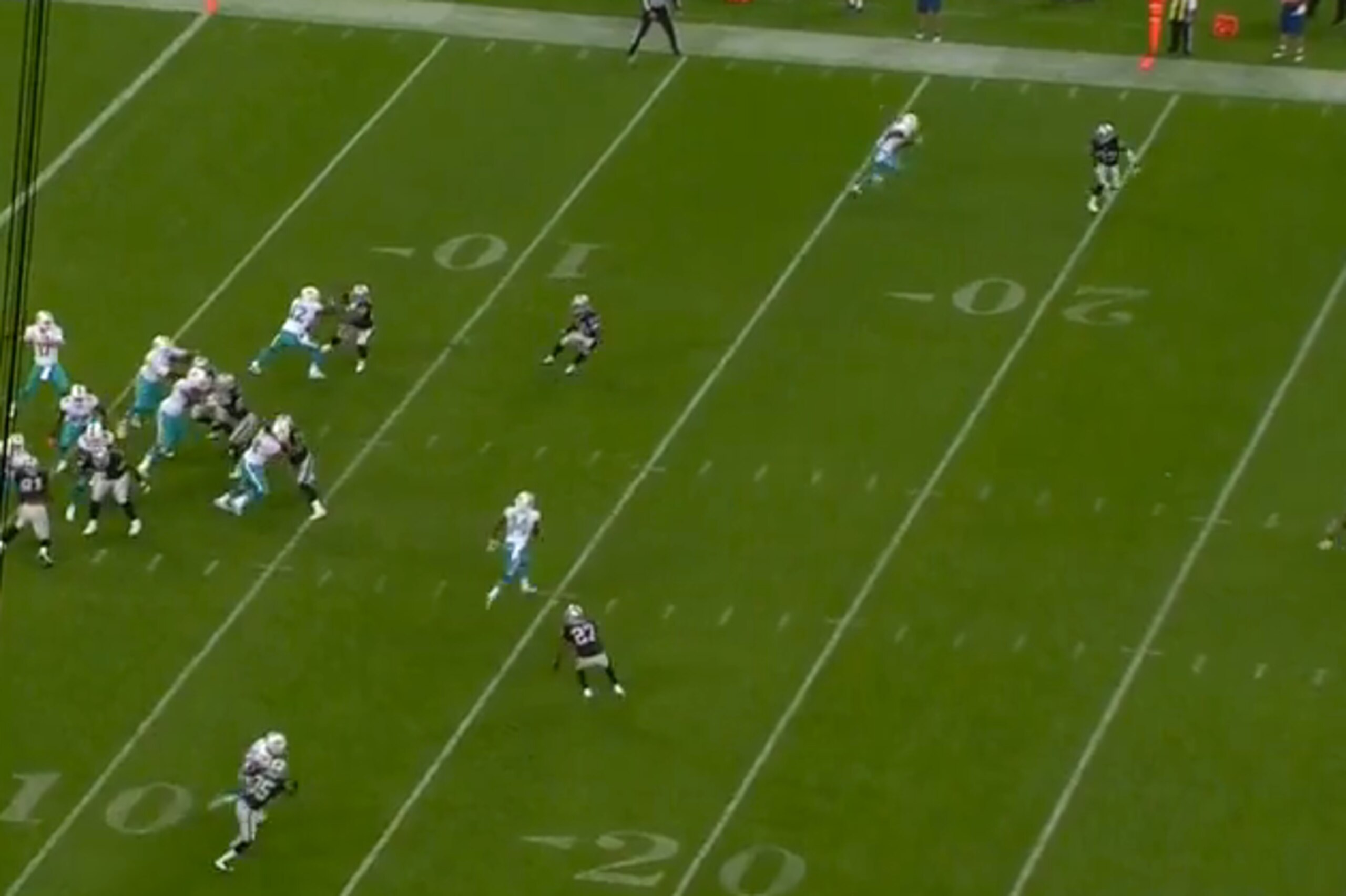
Forcing the Packers linebackers into coverage is really where the Dolphins can create explosive plays. In every game the Packers have played this season, the linebackers are biting hard on play-action passes, approaching the line of scrimmage to limit the damage on a run play.
For the offense, there is a major advantage when the linebackers come up. Miami has been calling more deep-crossing routes in recent weeks, and that is the perfect call to gain chunk yardage against the Packers.
Since Green Bay primarily plays Cover 2 man, the role of the linebackers on passing plays is to drop back eight to 12 yards and play zone. Running play action is even more effective against the Packers because of how poorly their linebackers drop into coverage.
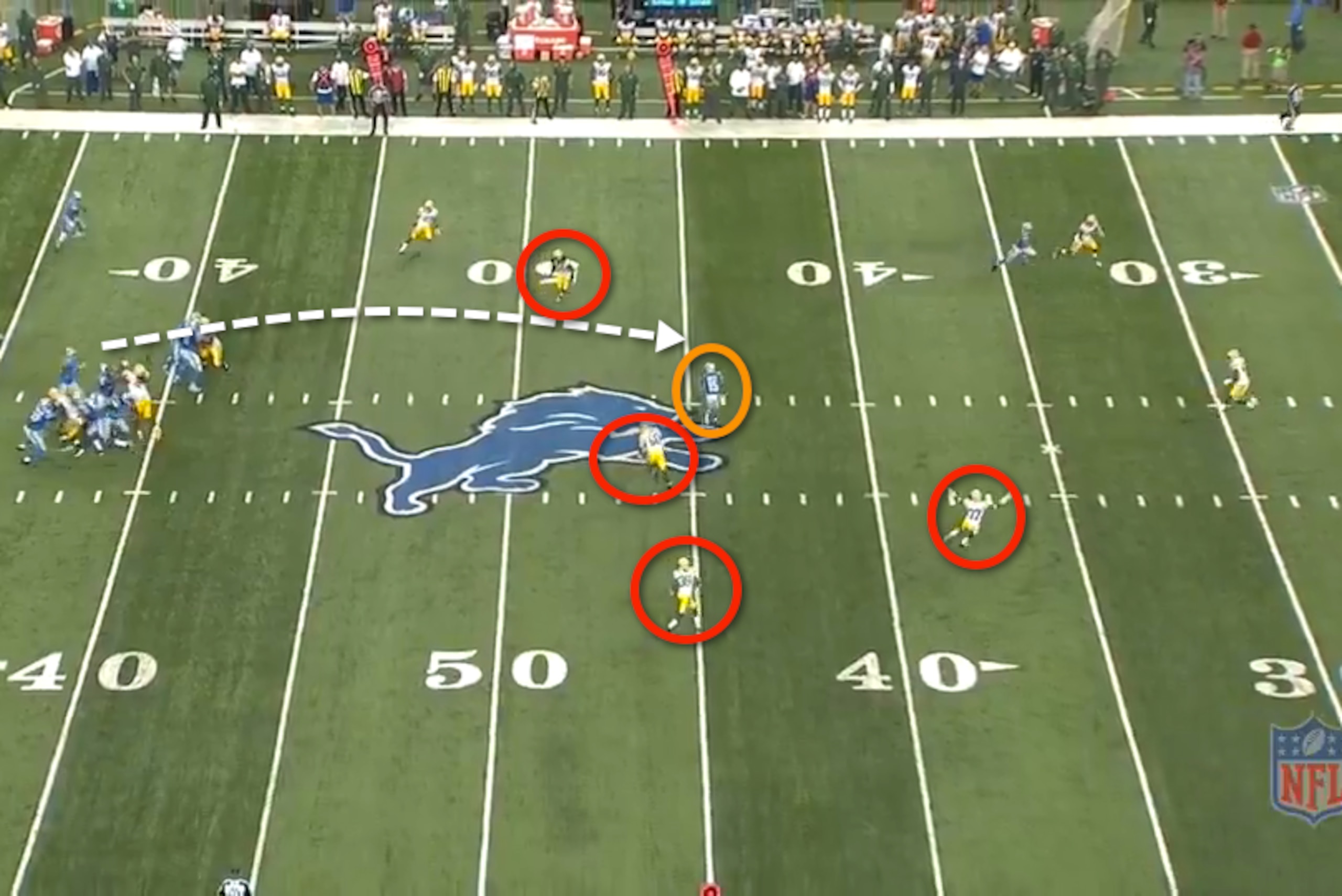
Peppers and Lattimore are plus athletes, but Peppers primarily rushes the passer. He no longer is as fluid in the flats when covering running backs. Lattimore is able to cover some tight ends, but Miami’s Charles Clay will have a significant advantage whenever the two are matched up.
Lattimore doesn’t have the lateral burst that Clay possesses, so Miami should run deep outs and curl routes with Clay to shake the coverage off him.
For Miami to score with Green Bay, it must create explosive plays to balance out the more consistent running game. By attacking the linebackers, big chunk plays will be possible.
For more on the running game, let’s look at the trench play.
Own the Trenches
On the Packers’ starting defensive line, Mike Daniels is by far the best player. Daniels’ PFF grade of 9.5 has been well-earned, as he’s disruptive as a gap penetrator in a 3-4 front. He often lines up in the B-gap, which is split between the guard and tackle.
The advantage of Daniels in this position is that he doesn’t have to maneuver around a bigger guard; instead he will use his burst off the line to set the guard up for an outside-shoulder speed move or a counter inside. At 294 pounds, he possesses more lateral agility than most guards in the NFL, so his countermoves back to the inside are devastating.
"#Packers injury report: Sam Barrington (hammy) limited Josh Boyd (knee) limited Jarrett Boykin (groin) DNP Datone Jones (ankle) DNP
— Rob Demovsky (@RobDemovsky) October 8, 2014"
The other talented Packers lineman is Datone Jones. As the left defensive end, it’s his job to anchor against the run and provide support as a pass-rusher. So far this year, he’s been unable to set the edge as a run defender. At only 284 pounds, he’s unable to handle more powerful interior linemen, which allows the offensive guard to move to the second level while the center takes care of Jones.
Jones is a solid pass-rusher and is capable of drawing two blockers. That’s a nightmare situation for the Dolphins, as that would leave blitzers in either one-on-one situations or free to attack the quarterback. If Mike Pouncey is back from injury, as Barry Jackson of the Miami Herald reported could happen, Miami has a better chance of handling the pass-rushers without a help-blocker.
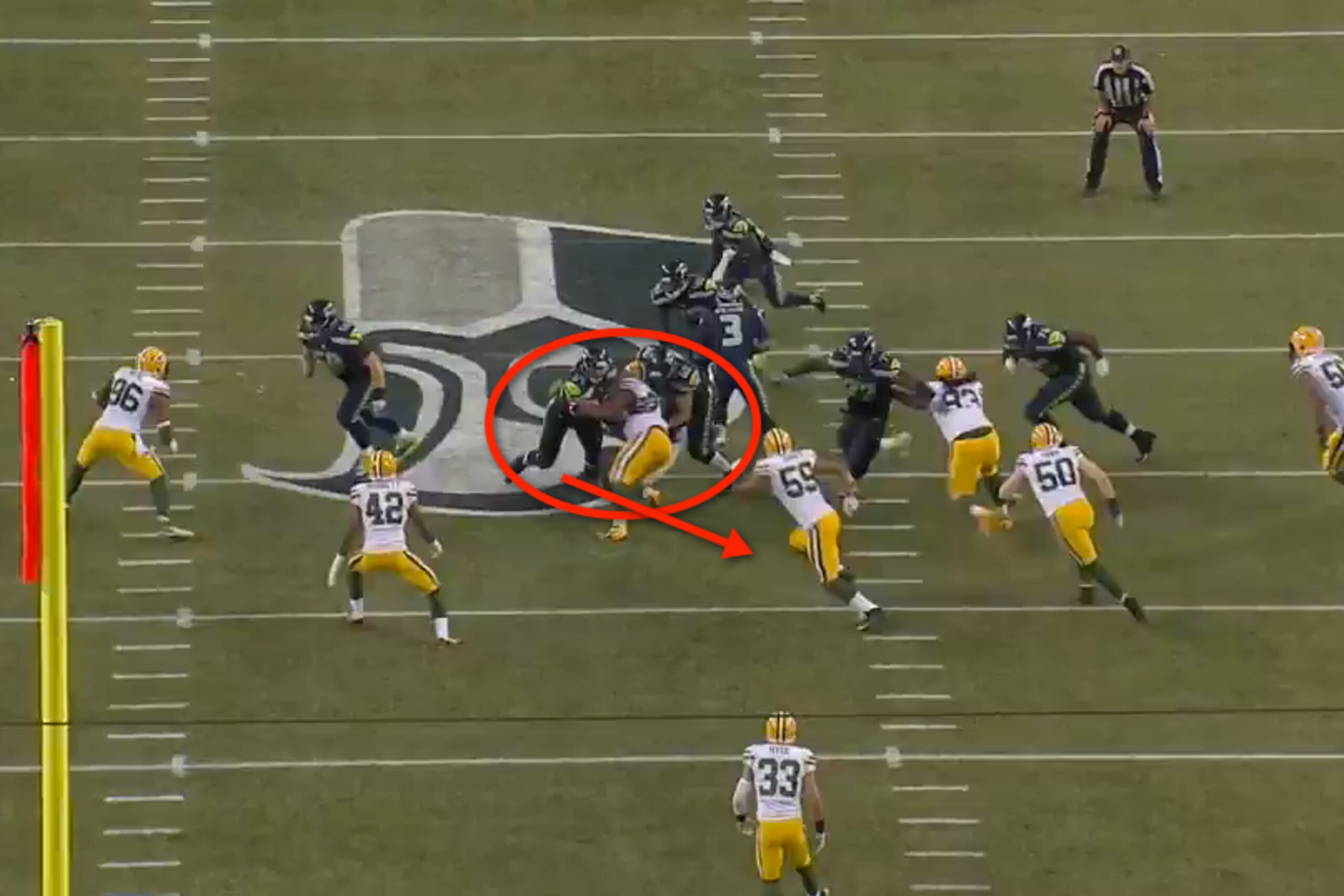
Giving quarterback Ryan Tannehill time to carve up the Packers secondary will be critical. Winning one-on-one blocks is vital, especially if the team falls behind and has to pass a lot. Clay Matthews and Peppers are still very good pass-rushers, so if the rest of the line can handle its assignment, help-blockers can commit to the outside pressure from those two.
Run the Ball
Miami’s biggest advantage this game is its rushing attack against the porous Packers run defense. Miami is currently averaging the fifth-most rushing yards per game with 142.2. The Packers rank as the worst run defense in the NFL, allowing 163 yards a game.
Having a successful running game will allow Miami to keep Rodgers on the sidelines more and will eventually open up more passing windows. We’ve talked about how the linebackers are vulnerable in coverage, and they’ll be in an even more difficult position if the run game is producing five or more yards a carry.
It’s critical Miami makes the Packers linebackers think and make plays in space. By running the ball as many as 40 times then having an effective vertical passing game, that goal will be accomplished. Green Bay’s defense can be exploited with a similar game plan as Miami used against Oakland in Week 4. Green Bay is more talented than Oakland but not by much on defense.
Pressure Rodgers
Like any human, Aaron Rodgers isn’t fond of being hit hard by a 300-pound defensive lineman. To say that he’s affected by pressure and can be thrown off his game after being hit is an obvious statement. But, that shouldn’t minimize the importance of the task of finishing sacks and hitting Rodgers as he delivers passes.
According to PFF, Rodgers is the No. 1 quarterback in the league this year. ESPN has Rodgers second in its passer-rating statistic. Neither is a definitive measure, but it’s easy to see that he is a truly elite talent. That’s why Miami has to gain the upper hand wherever possible to stop the Packers’ explosive attack.
Pro Football Focus charts how effective quarterbacks are when blitzed, pressured and when they have a clean area to throw. Not all blitzes create a pressure, and when the blitz doesn’t serve its purpose, it takes away a player from coverage and effectively makes it easier to find an open receiver. Rodgers thrives when he’s blitzed and unpressured, throwing for a QB rating of 132.3.
When Rodgers is pressured, he’s been mortal, posting a minus-1.2 PFF grade. His quarterback rating is still impressive at a 105.6 mark, but his completion percentage of 54.8 is much more manageable for a defense.
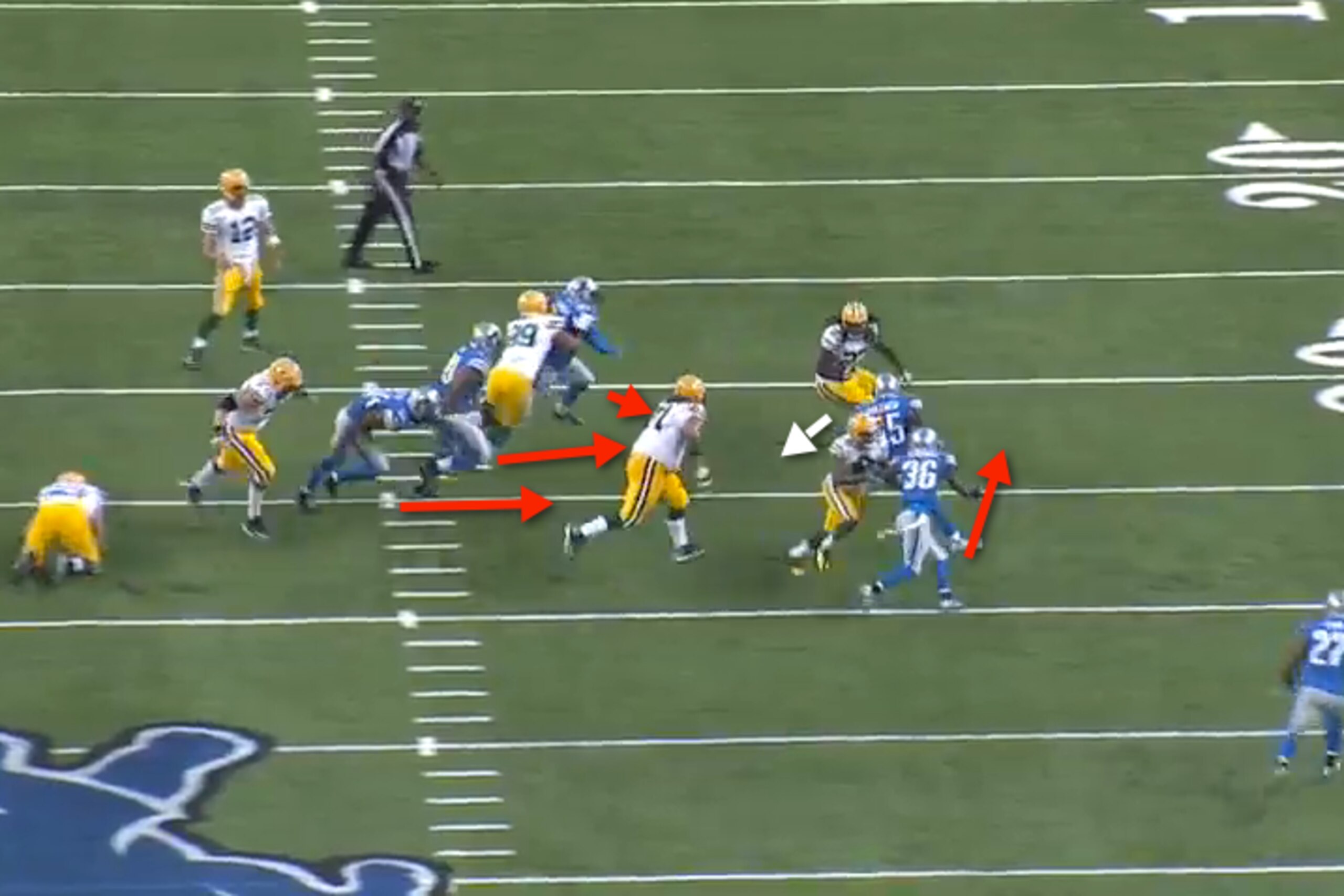
The good news for Miami is it is able to replicate the successful approach the Detroit Lions had in defending the Packers offense. With a dominant defensive line, Detroit was able to hit Rodgers throughout the game, and it rattled the quarterback to miss numerous passing windows he normally hits.
"The last thing any defense wants is Aaron Rodgers improvising. That means dial down the rush a tad. Don't go THAT upfield.
— Omar Kelly (@OmarKelly) October 8, 2014"
Rodgers has an incredible ability to escape from the rush and buy time for his talented receivers to get open when the pass-rushers don’t maintain discipline. If the offensive line of the Packers can push edge-rushers Cameron Wake and Olivier Vernon around the pocket, Rodgers will have huge running lanes. Miami cannot afford that.
It’ll take a tremendous effort by the Dolphins’ defensive line to be disruptive yet disciplined, but it can do it. The execution level will have to be nearly perfect throughout the game to keep the scoring pace down. In a way, the linemen need to attack as if they’re run-defending, with more emphasis on quick penetration than trying to bend the edge of the pocket.
Eddie Lacy is one of the better running backs in the league, but most of his success is from the threat of the pass. If Miami can fill the running lanes for Lacy and Rodgers (on pass plays) like the Lions and Seattle Seahawks were able to, the Packers offense is susceptible to bogging down.
Defend Deep Routes
With Rodgers as the triggerman, the Packers are reliant on creating explosive plays to advance the ball quickly down the field. Their offensive play-calling is conducive to vertical movement, which is especially aggressive.
To get a better feel of their scheme and how good Rodgers’ timing and field vision is, read Bleacher Report Featured Columnist Justis Mosqueda’s breakdown of the Packers’ passing concepts.
With receivers Jordy Nelson, Randall Cobb, Davante Adams and Jarrett Boykin, the Packers are absolutely loaded with weapons for Rodgers. Nelson is possibly a top-five receiver, with incredible route running, hands and quickness. His chemistry with Rodgers is second to none.
Cobb is a major threat to the Dolphins due to his deep speed and suddenness in space. Miami’s secondary doesn’t have great athletes like Cobb, so it'll need to have help defenders nearby to limit yards-after-catch opportunities.
With the improved play by linebacker Philip Wheeler, the emergence of Jelani Jenkins and the return of Reshad Jones, Miami will able to develop a solid scheme that can limit the big plays.

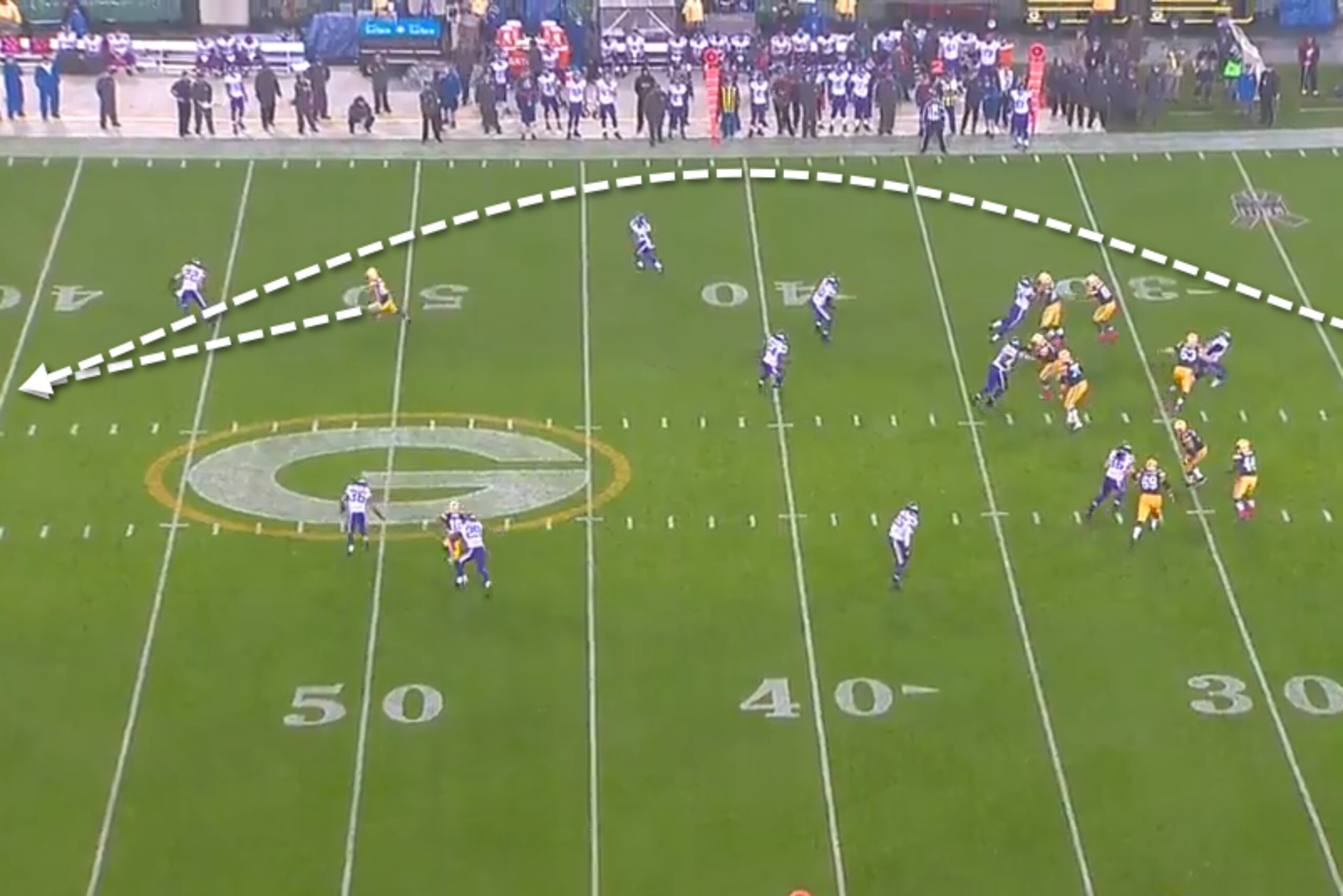
The worst coverage Miami can play against the Packers is Cover 1. Cover 1 features just one deep safety, and Miami doesn’t have a guy who will be able to offer enough support to deter Rodgers from throwing deep. Although Miami’s cornerbacks have played well this season, they aren’t the best option to leave in single coverage against the Packers’ wide receivers.
Considering the size and speed limitations Miami has at cornerback, Cover 3 is the best option for its secondary scheme. The Dolphins cannot replicate what Seattle did to Green Bay, but this scheme will allow Miami to prevent blown coverages down the sidelines, and it plays to the strengths of Jones, Cortland Finnegan and Brent Grimes.
Miami allows the underneath routes, which is frustrating to watch, but it prevents the big plays and makes an offense execute for seven or more plays on a drive.

For Miami to defeat the Green Bay Packers, it’ll take a level of execution that we’ve only seen accomplished against the Raiders in their last game. Green Bay is loaded with stars on both sides of the ball, but its offense is the primary key to the game.
The Dolphins should be able to win the possession time and move the ball without too many issues, but getting into a shootout with the Packers is a recipe for disaster.
Get ready for a fun game.
All stats used are from Pro Football Focus' Premium Stats (subscription required) or Sports-Reference.com. All contract information is courtesy of Spotrac.com.
Ian Wharton is a Miami Dolphins Featured Columnist for Bleacher Report, contributor for Optimum Scouting and analyst for FinDepth.
.jpg?w=2560 "Colts Football")