
10 X-Factors That Will Decide Who Reaches the 2014 World Series
If the division series round of this postseason has taught us anything about October, it's that who wins and who loses—and who advances—isn't always decided by normal, expected occurrences.
In fact, it's very often not decided based on that, but on random, didn't-see-that-coming aspects, elements or happenings.
How else do you explain that we've reached the championship series round and can say this: The two National League teams, the St. Louis Cardinals and San Francisco Giants, are late-October regulars by now, while the American League representatives, the Baltimore Orioles and Kansas City Royals, haven't been this far in 46 combined years?
Each of the four remaining clubs has made it this far for a number of reasons—call them X-factors—and how those play out over the next round ultimately will determine who wins, who loses and who advances. This time, to the World Series.
The Orioles' Power Bats Versus the Royals' 'Power' Bats
1 of 10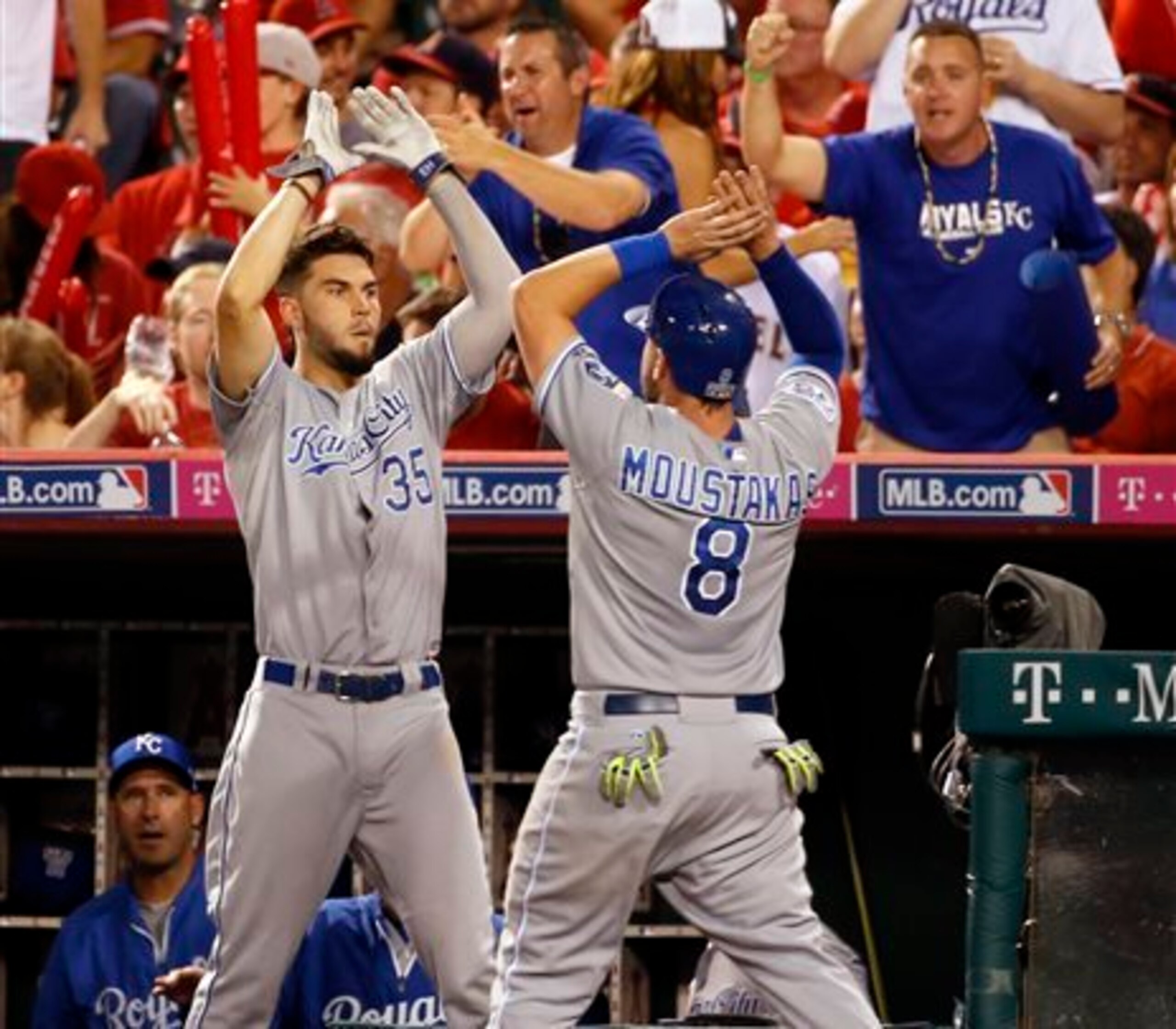
Simply put, the American League Championship Series pits the team that hit the most home runs (Orioles, with 211) against the club that hit the fewest (Royals, with 95). That's a staggering disparity.
Heck, you have to combine the top three homer totals on K.C.—Alex Gordon's 19, Sal Perez's 17 and Mike Moustakas' 15—to surpass the amount hit by Baltimore's Nelson Cruz alone (an MLB-high 40).
And yet in their respective division series, the two teams hit exactly the same number of long balls (four apiece).
Granted, there are plenty of other ways to score besides hitting it out of the park—the Royals, among other teams this month, have shown that—but if Baltimore's bashing continues, it's going to be hard for Kansas City to keep up.
Michael Wacha's Health as a Cardinals Bullpen Option
2 of 10
At this time last year, Michael Wacha was the Cardinals' postseason hero. This October? So far, he's been a big zero.
After missing two-and-a-half months with a stress reaction in his right shoulder, the 23-year-old right-hander came back in September and didn't pitch all that well (20 H, 10 ER in 16.2 IP).
Plus, there wasn't enough time left in the season to stretch Wacha out to use as a starter in the National League Division Series, even if the Cardinals wanted to, so he wasn't used at all by manager Mike Matheny.
Wacha did throw a side session Monday to stay sharp, according to reports, so he could be a factor in this round, even if it's in a relief role rather than a starting one. In fact, his stuff might play up in short bursts out of the pen, which means St. Louis could have another, ahem, card to play in a big spot or two.
Given the uncertainty surrounding the health of ace Adam Wainwright, as Joe Strauss of the St. Louis Post-Dispatch writes, Wacha could go from a little-needed luxury in the NLDS to a necessary piece in the National League Championship Series.
The Orioles' Andrew Miller, Zach Britton Versus the Royals' Lefty-Heavy Lineup
3 of 10
The heart of the Royals lineup is built around three lefty swingers in Gordon, Hosmer and Moustakas—we hit on them earlier—and that could play right into the Orioles' hands.
At the back of Baltimore's bullpen are two dynamite southpaws in setup man Andrew Miller and closer Zach Britton, both of whom just chew up same-sided bats.
Miller held them to a .163/.206/.261 line this year, while Britton kept them in check to the tune of .170/.215/.170. (Yes, that's right: Britton didn't allow a single extra-base hit to a lefty.)
If the O's have a late lead, expect to see a lot of these two and quite possibly not a lot of offense from K.C.


The Giants' Unexpectedly Strong Starters
4 of 10
If, prior to the Giants' series with the Washington Nationals, you knew they would lose the game pitched by their very best starting pitcher, Madison Bumgarner, you would have bet the house that San Francisco wouldn't have won the NLDS, right?
Turns out, not only was that wrong, but Bumgarner's game wound up being the only one the Giants lost. (Seriously, baseball quite often can be really, really...weird.)
Meanwhile, Jake Peavy, Tim Hudson and Ryan Vogelsong combined to allow just two runs on 11 hits in 18.2 innings in helping their club win Games 1, 2 and 4 to advance.
If the Giants are going to get past their fellow October-tested rivals from St. Louis, they'll need more of the same from the entire rotation, which posted a 1.40 ERA—second-best among all teams in the division series round.
Will Either the Royals or Orioles Defense Crack?
5 of 10
Perhaps the most underrated aspect of this upcoming Royals-Orioles showdown is just how darn great both teams are in the field.
In fact, these two check in as the top two defenses in all of baseball, according to FanGraphs' overall defensive rating metric.
There was all kinds of D in their respective DSes too, including (but certainly not limited to): Norichika Aoki's look-what-I-found grabs in right field and center fielders Jarrod Dyson's catch-and-throw double-up and Lorenzo Cain's ridiculous range for the Royals, as well as third baseman Ryan Flaherty's diving double-play and second baseman Jonathan Schoop's glove flip for the O's.
Figure on at least a few more web gems in the American League Championship Series. Errors, though, are bound to happen, and when they do, the side that benefits will have to capitalize.
The Giants' Random, Contact-Oriented Offense
6 of 10
Think about this for a second: The Giants scored nine total runs in four games against the Nationals—five games, really, since Game 2 was that longest-playoff-game-ever 18-inning extravaganza—and that was just enough to get the job done.
And it's not just the number of runs that cross the plate, but how they get there.
To wit, in the series-clinching Game 4, here's how San Francisco scored its three runs in the 3-2 win: a bases-loaded walk, an RBI ground out and a wild pitch, the last of which was the deciding tally.
"That's our way sometimes," manager Bruce Bochy said via Anthony DiComo of MLB.com. "We scratch and claw for runs. And we got a break."
Even with Buster Posey, Hunter Pence, Pablo Sandoval and potentially Mike Morse back in play, as Henry Schulman of the San Francisco Chronicle reports, the Giants don't have the most dangerous lineup. But the hitters make a lot of contact—the team's 13.7 percent strikeout rate was the lowest in the division series.
That helps the Giants put pressure on the opposition and find random ways to create offense, which is going to have to continue if they want to steal another series.
The Royals' Runners Against the Orioles' Batteries
7 of 10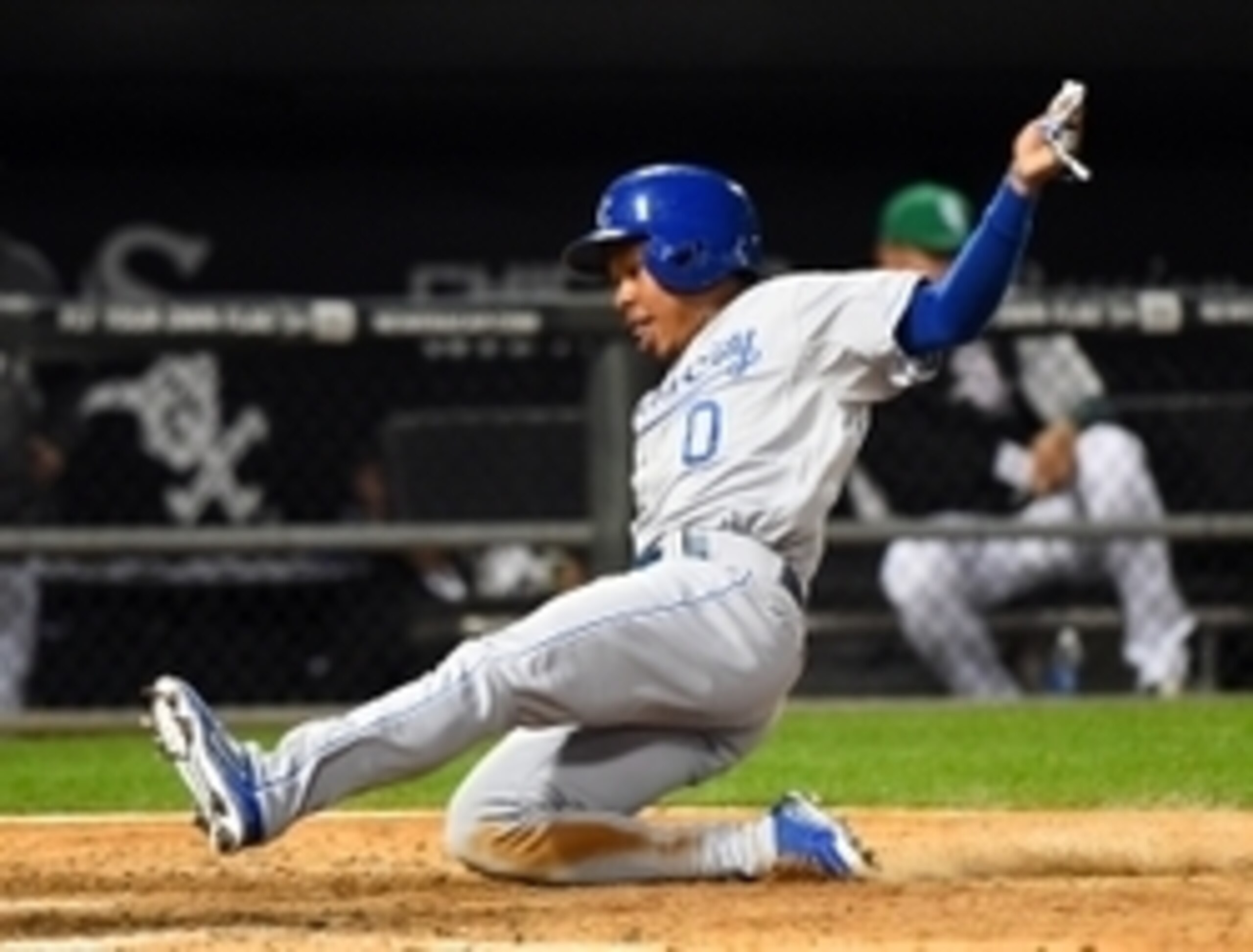
By now, you're probably aware that the Royals stole the most bases (153) in MLB in 2014. You also watched them run wild against the Los Angeles Angels, swiping five more—most among all DS clubs—including one from noted speedster Billy Butler.
And let's not forget: K.C. set a postseason record with seven steals in the AL Wild Card Game. As Cash Kruth of MLB.com writes: "Speed kills, as the A's and the AL-best Angels can attest. Terrance Gore and Jarrod Dyson are perhaps the two biggest difference-makers off the bench this postseason."
But the Orioles have been especially good at shutting down the run game. Pitchers Chris Tillman and Wei-Yin Chen allowed only one and five successful attempts, respectively, all season long, because they're quick to the plate and have good pickoff moves.
It's not all about the arms on the pitchers, of course, and in that regard, Baltimore also has a pretty good throwing backstop in rookie Caleb Joseph. He caught 23 of 57 (40.4 percent) potential thievers this season, good for the second-best percentage among catchers with at least 500 innings behind the dish.
That's like the very movable object (the Royals' runners) meeting a stoppable force (the O's batteries). K.C.'s burners, like Alcides Escobar, Terrance Gore, Dyson and Cain, will run if they get on. So it's up to Baltimore to stop them in their tracks or risk being run out of a shot at the Fall Classic.
The Cardinals' Late-Inning Offense
8 of 10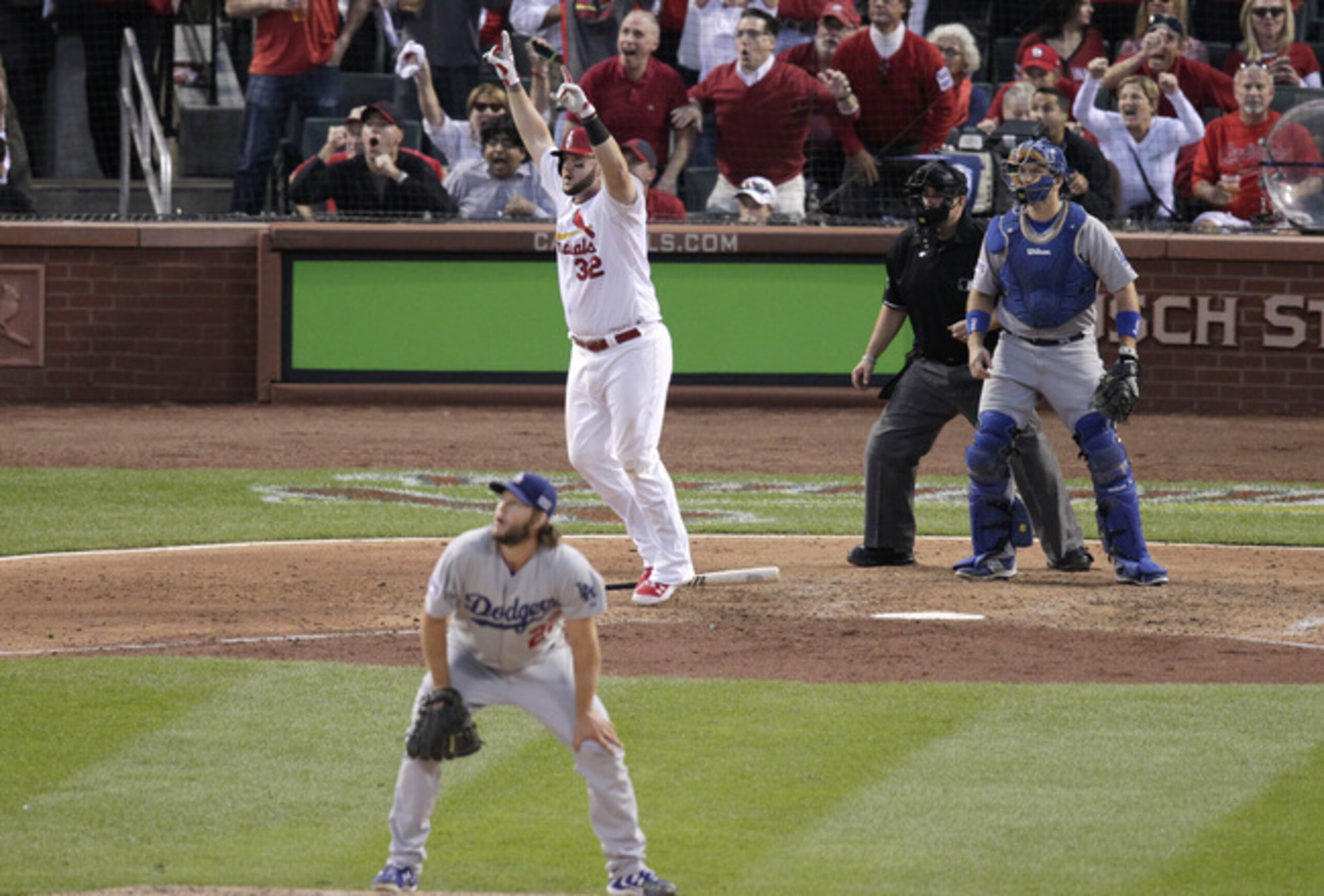
Here's the scoreboard showing what the Cardinals did against the Los Angeles Dodgers only from the seventh inning on in each game in their NLDS...
- Game 1: 8-3 Cardinals
- Game 2: 2-1 Cardinals
- Game 3: 2-0 Cardinals
- Game 4: 3-0 Cardinals
Add it all up and, well, St. Louis essentially got past the favored Dodgers by outscoring them 15-4 from the seventh inning on in a series that was so tightly contested that three of the four games were decided by a single run.
Part of that, of course, was the Cardinals taking advantage of a bad L.A. bullpen (3.80 ERA in 2014), which likely won't be the case with the Giants (3.01 ERA, fifth-best).
Can St. Louis put together more late-inning heroics against San Francisco? Possibly, but probably not to the same extent, which puts more of an onus on the lineup to score earlier rather than waiting until it's (too?) late.
The Royals' Late Luck
9 of 10
Speaking of getting it done late, the Royals showed a serious knack for doing just that in getting to this point.
Starting with the AL Wild Card Game against the Oakland Athletics, Kansas City won not one, not two, but three consecutive games in extra innings to open the playoffs: That had only happened, oh, never before in MLB history.
The last of those three outcomes played out similarly to the second, per Michael Clair of MLB.com's Cut4:
"The game remained all square at 1-1 until the 11th, when Lorenzo Cain used his wheels to beat out an infield single.
Then Eric Hosmer stepped to the plate. One day after fellow former first-round draftee Mike Moustakas smashed an extra-inning go-ahead homer, Hosmer did the same. The two-run shot gave the Royals a 3-1 lead.
"
Given how good the Royals and Orioles are both in the bullpen and on defense, expect a few of their games to be close late. If the teams require extras to decide things once or twice, K.C. surely will feel like it holds the edge.
The Orioles' Buck Showalter Versus the Royals' Ned Yost
10 of 10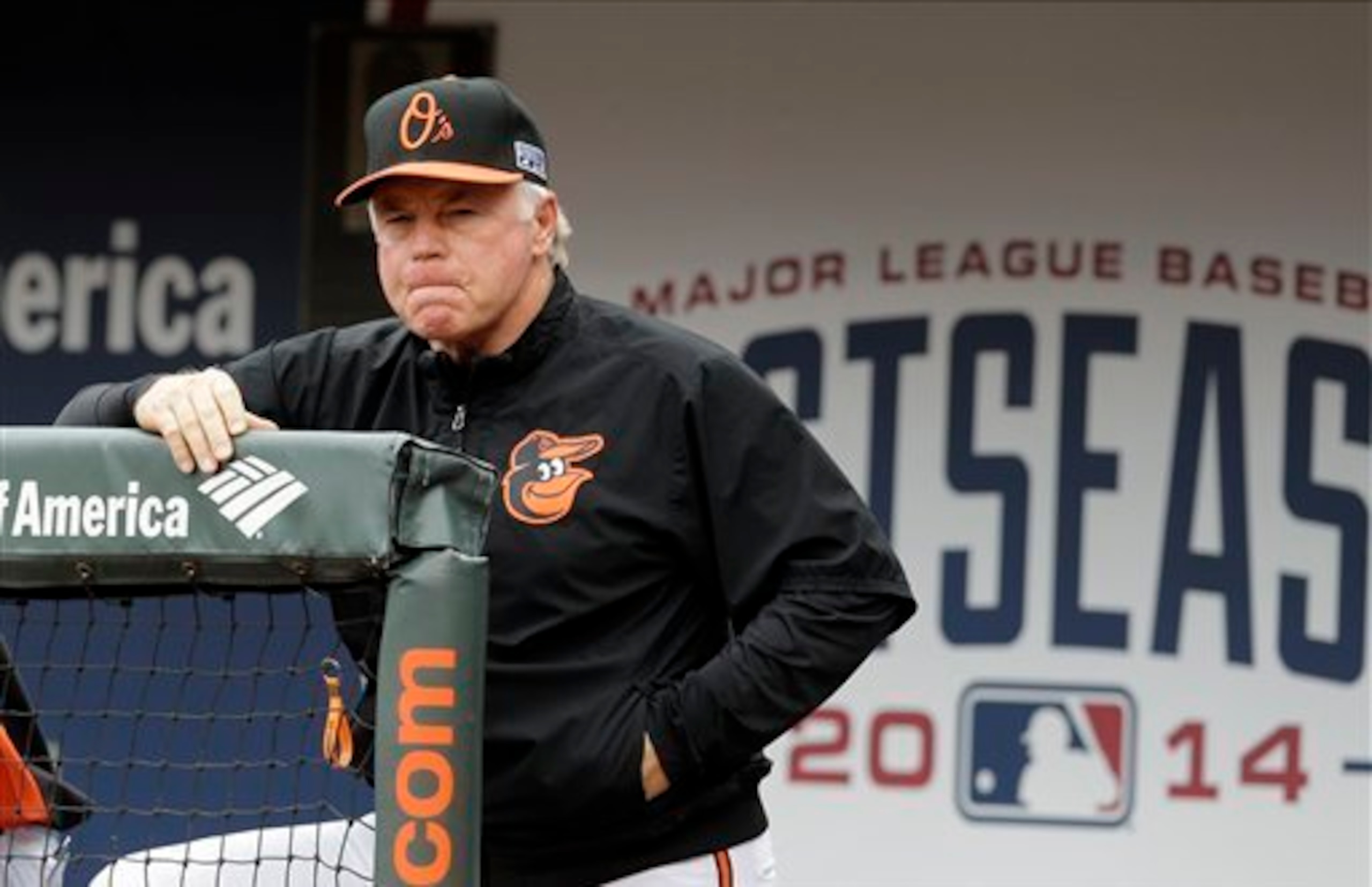
Managers normally aren't a big focal point in a postseason series, at least compared to the players. But it's no secret that media and fans do quite a bit of dissecting and second-guessing just about every decision a skipper makes because of the heightened focus and intensity in October.
That's bound to happen in the ALCS showdown between the managerial minds of the Royals' by-the-book Ned Yost and the Orioles' master tactician Buck Showalter.
Players' execution will be the ultimate deciding factor in this series, just like any other, but Baltimore would appear to have the upper hand with Showalter's ability to make maneuvers and push the right buttons at the most opportune times.
For example, Showalter won't hesitate to turn to rookie right-hander Kevin Gausman in a big spot early in the game, just like he did in Game 2 when Wei-Yin Chen abruptly lost it.
Gausman, a starter with plenty of relief experience, came on and delivered five strikeouts over 3.2 innings of three-hit, one-run ball to allow the O's to come back for the 7-6 victory.
Yost, on the other hand, continues to manage as if straying from his time-honored bullpen formula—Kelvin Herrera in the seventh, Wade Davis in the eighth and Greg Holland in the ninth—is actually not permitted by rule.
That's why he went with his own hard-throwing rookie righty, Yordano Ventura, in the sixth inning of the AL Wild Card Game—an unfamiliar spot for Ventura—rather than bringing in Herrera an inning early. The result? A 3-2 Royals lead turned into a 5-3 deficit when Brandon Moss homered.
Ultimately, Yost was saved when his club came back, but this bench battle between him and Showalter in the ALCS is going to be one to watch.
Statistics are accurate through Oct. 8 and courtesy of MLB.com, Baseball-Reference and FanGraphs unless otherwise noted.
To talk baseball or fantasy baseball, check in with me on Twitter: @JayCat11.
.png?w=2560)


.jpg?w=2560 "NFL House in Paris Closes for Protests")
.jpg?w=2560 "Trevon Diggs Cut by Seahawks")