

The 2014 Division Series round of the playoffs is in the books, and it provided as much drama as any in recent memory, with three extra-inning affairs and nine of the 14 games decided by one run.
On the American League side of things, both series wrapped up in three games, but it was the underdogs that came out on top.
The Baltimore Orioles actually finished the season with a better record than the Detroit Tigers, but most expected the Tigers to thrive in October thanks to their stable of former Cy Young winners. That was not the case, as the Orioles rode clutch hitting and a dominant bullpen to a sweep.
After needing extra innings to eliminate the Oakland A's in the Wild Card Round, the Royals met the Los Angeles Angels, the team with the best record in baseball during the regular season, in the ALDS. Two more extra-inning victories to kick off the series put them up big, and they completed the sweep behind ace James Shields in Game 3.
Both National League series went to Game 4, with the lower-seeded teams taking care of business at home and advancing to the NLCS.
The San Francisco Giants won by one run in each of the first two games of their series with the Washington Nationals, including an 18-inning marathon in Game 2 that was ended with a Brandon Belt home run. The Nationals stole Game 3 thanks to a throwing error from Madison Bumgarner, before the Giants closed out the series in equally unlikely fashion with the winning run scoring on a wild pitch.
The most exciting series of all, however, was the St. Louis Cardinals and Los Angeles Dodgers in a rematch of last year's NLCS.
All four games were decided by big hits in the seventh inning or later, with Matt Carpenter, Matt Kemp, Kolten Wong and Matt Adams all playing the role of hero. The Cardinals' clutch hitting and a shaky Dodgers bullpen proved to be the biggest differences, though a struggling Clayton Kershaw will likely be the story.
So with the ALCS and NLCS fields set, let's go through a quick rundown of the 10 biggest takeaways from the 2014 ALDS and NLDS rounds.
Nelson Cruz and Delmon Young Are Still October Studs
1 of 10
Some players simply take their game to another level in the postseason—Nelson Cruz and Delmon Young included.
Young agreed to a minor league deal on Jan. 14 that was worth $1 million at the big league level. Serving as the team's fourth outfielder, he hit .302/.337/.442 with seven home runs and 30 RBI in 242 at-bats, and he went 10-for-20 as a pinch-hitter.
Meanwhile, Cruz inked a one-year, $8 million contract on Feb. 22 after declining a qualifying offer from the Texas Rangers and failing to find much of a free-agent market, due in part to his 50-game PED suspension in 2013.
That wound up being perhaps the best bargain of the offseason, as Cruz posted an .859 OPS and led baseball with 40 home runs.
As productive as they both were during the regular season, especially relative to their salaries, it's their postseason track records that really separate them from the pack.
Young delivered the big blow in Game 2, lacing a pinch-hit, three-run double in the eighth inning to give the Orioles a one-run victory. He now has nine home runs and 21 RBI in 35 career postseason games, and a 2012 ALCS MVP award to his credit.
Not to be outdone, Cruz went 6-for-12 with two home runs and five RBI in the ALDS. He now has a 1.059 OPS with 16 home runs and 32 RBI in 37 career playoff games, and he too won ALCS MVP honors back in 2011.
These guys simply know how to get it done in October, and they proved that again in this year's ALDS.
A Bad Tigers Bullpen Was Magnified in October
2 of 10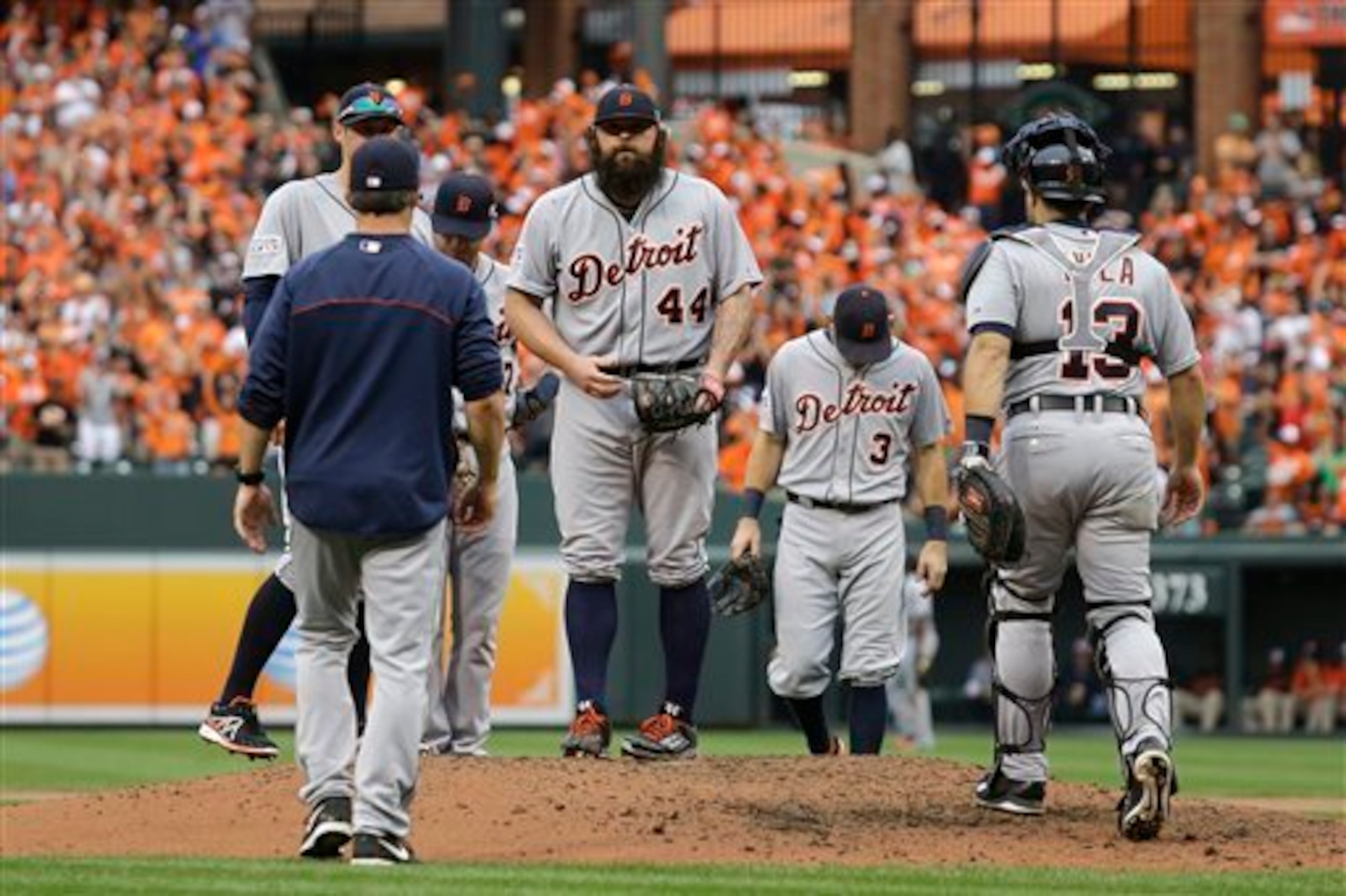
After watching their bullpen cost them a pair of games in the ALCS a year ago, the Detroit Tigers went out and added All-Star closer Joe Nathan and setup man Joba Chamberlain in free agency in an effort to shore up the late innings.
Instead, the Tigers bullpen ended up being much worse, as they ranked 27th in the MLB with a 4.29 ERA on the season.
The Tigers still looked strong heading into October, thanks to a potent lineup and terrific starting pitching, but that bullpen remained perhaps the biggest red flag on any playoff-bound team.
It didn't take long for it to rear its ugly head either, as it took three pitchers to get the final two outs of the eighth inning in Game 1, and they combined to allow five hits, two walks and seven runs (six earned) in the process.
Anibal Sanchez threw two scoreless innings out of the pen in Game 2, and the Tigers led 6-3 into the bottom of the eighth inning. Chamberlain and Joakim Soria then gave up four earned runs in the inning to cost them the lead and the game.
David Price gave the team eight innings in Game 3, allowing five hits and two runs, and Joe Nathan pitched a scoreless ninth. The Orioles held the Tigers to just one run offensively, though, and just like that the season was over for Detroit.
The final postseason line for the trio of Phil Coke, Joakim Soria and Joba Chamberlain:
1.2 IP, L, BS, 8 H, 11 R, 10 ER, 3 BB, 0 K
Nothing was more telling than the Baltimore crowd cheering wildly when Chamberlain entered Game 2, and then giving him a standing ovation as he walked off the field following another rough outing.
The Tigers are tremendously talented, but that bullpen has to be priority No. 1 this offseason if they hope to be legitimate title contenders.
Lorenzo Cain Is a Budding Star
3 of 10
A superior fielder who could earn his first Gold Glove award this season, Lorenzo Cain took his offensive game to another level here in 2014, making the most of an expanded role.
The 28-year-old finished the year hitting .301/.339/.412 with five home runs, 53 RBI and 24 stolen bases in 471 at-bats for a 5.0 WAR.
Looking to spark the offense, manager Ned Yost moved Cain up to the No. 3 spot in the lineup on Sept. 13, and he hit .321/.367/.429 the rest of the way.
Despite that big step forward, he was still a relatively unknown player outside of Kansas City heading into the playoffs. He didn't do much at the plate in the ALDS, but his glove work in center field has been spectacular.
Cain was just 2-for-13 at the plate with a pair of runs scored, but he delivered one exceptional catch after another in center field.
"He’s a phenomenal center fielder," Yost told Kathleen Gier of The Kansas City Star. "Got tremendous athleticism, he’s got tremendous speed and he gets great jumps on balls because he reads them right off the bat."
Let's run through some video for those who may have missed them the first time around.
- Leaping catch to rob Kole Calhoun of extra bases in Game 1
- Sliding catch to rob Erick Aybar of a base hit in Game 1
- Diving catch to rob Albert Pujols of a base hit in Game 3
- Sliding catch to rob Howie Kendrick of a base hit on the next play in Game 3
Defense often goes overlooked during the regular season, but what Cain has done in center field this October has opened more than a few eyes.


The Derek Jeter-to-Mike Trout Passing of the Torch Didn't Quite Go as Planned
4 of 10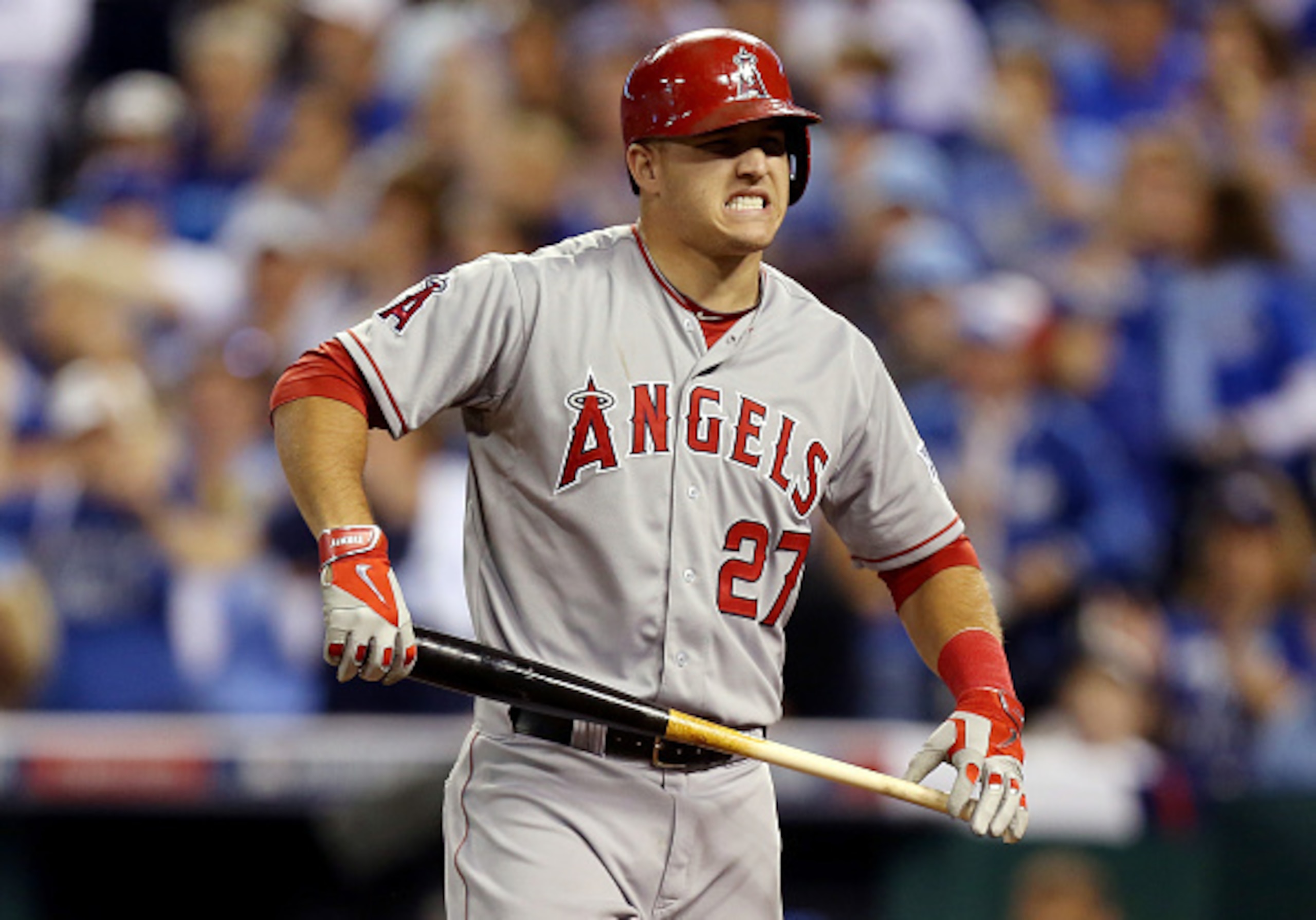
The storyline was almost too perfect.
The face of the sport, Derek Jeter, wraps up his farewell tour and rides off into retirement, just as budding young superstar Mike Trout gets set to make his first postseason appearance.
Jeter burst onto the scene as a 22-year-old back in 1996, winning AL Rookie of the Year honors and leading the Yankees to the first of what would be four World Series titles in a five-year span.
Also in his age-22 season this year, Trout will likely walk away with AL MVP honors, as he led the Los Angeles Angels to the best record in baseball.
It had all the makings of a passing-of-the-torch moment. Jeter calls it a career just as Trout is leading the Angels on a lengthy postseason run.
The Kansas City Royals had other ideas, though.
The Wild Card Round winners swept the Angels out of the ALDS, and in the process held Trout to just 1-for-12 with his lone hit being a solo home run in the first inning of Game 3.
A strong case can still be made for Trout being the best all-around player in the game today and the heir to Jeter as the face of the sport.
However, the tailor-made passing-of-the-torch moment instead ended up being a botched handoff on the part of Trout.
The Royals and Orioles Better Score Early During Their ALCS Matchup
5 of 10
The Kansas City Royals and Baltimore Orioles had arguably the two best bullpens in baseball heading into the playoffs, and the relievers certainly delivered in helping them both to three-game sweeps in the ALDS.
ALDS Bullpen Stats
| Royals | 2-0 | 2/2 | 12.0 | 4 | 1 | 5 | 12 | 0.75 | 0.75 | .108 |
| Orioles | 1-0 | 2/2 | 12.0 | 9 | 3 | 4 | 11 | 2.25 | 1.08 | .220 |
The Royals bullpen was led all season by the trio of Kelvin Herrera, Wade Davis and Greg Holland, and they combined for 7.1 innings against the Angels, allowing just three hits and one run while striking out nine.
They have depth beyond just those three guys, though. Jason Frasor is another proven veteran arm, and left-hander Brandon Finnegan has made a big impact after being taken in the first round of this year's June draft.
For the Orioles, they rely on their own three-headed monster at the back end of Darren O'Day, Andrew Miller and Zach Britton. Those three combined for 6.2 innings and allowed four hits and two runs, striking out five.
Kevin Gausman, the odd-man out in the starting rotation, also made his presence felt with 3.2 innings of one-run ball in relief of struggling starter Wei-Yin Chen in Game 2, as he helped keep things close to set up the late-game heroics of Delmon Young.
One thing is for sure: Both of these teams have to hope they can push across some runs early in their upcoming ALCS matchup, because runs will be at a premium once the bullpens get involved.
The 2 Least Powerful Teams in the Playoffs Have Hit Some Huge Home Runs
6 of 10
It's hard not to take notice of what the Kansas City Royals and St. Louis Cardinals did in the power department during their Division Series victories, and not just because so many of their home runs came in crucial situations.
The long ball was not supposed to be a significant weapon for either team heading into the playoffs.
The Cardinals ranked 29th in the majors with 105 home runs during the regular season, leading only the Royals, who were dead last with 95.
Yet those two teams combined for 11 home runs in seven games in the Division Series, with some tremendously clutch blows coming on both sides.
Kolten Wong hit a two-run home run in the seventh inning of Game 3 to break a 1-1 tie and give the Cardinals a victory, and Matt Adams followed that up with some heroics of his own with the game-winning three-run shot in the seventh inning of Game 4.
Matt Carpenter hit two home runs all season against left-handed pitching, but he crushed three in the first three games of the series, including a tying two-run blast in Game 2 that was later upstaged by a game-winning home run from Matt Kemp.
The Royals won the first two games of their ALDS series in 11 innings behind home runs from Mike Moustakas and Eric Hosmer. Those two each launched their second home run of the series to help the team to a convincing 8-3 victory in Game 3.
For two teams that had to find other ways to score during the regular season, the home run has suddenly become a serious weapon, and it makes them that much more dangerous heading into their respective Championship Series.
Kershaw Is No Koufax, Not Yet Anyway
7 of 10
It's hard not to compare Clayton Kershaw to Sandy Koufax sometimes—as a pair of dominant left-handers pitching for the Dodgers—but if the NLDS proved anything, it's that Kershaw still has a ways to go before he belongs in the same category as Koufax.
Kershaw will likely win both NL Cy Young and NL MVP this season, and he's more than deserving of both honors after going 21-3 with a 1.77 ERA and 239 strikeouts in 198.1 innings of work.
However, he was burned in the seventh inning of both of his postseason starts, and he walked away from the NLDS at 0-2 with 12 hits and 11 earned runs allowed in 12.2 innings of work.
That puts his postseason career numbers as a starter to 1-5 with a 4.98 ERA in eight starts, and it makes it back-to-back series where the Cardinals have handed him a pair of losses and bested him in an elimination game.
His regular-season numbers may stack up well with Koufax in his prime, but the postseason performance is night and day, and that puts a major divide between the two at this point.
Koufax was 4-3 with a 0.95 ERA in eight games (seven starts) during his playoff career, and all of those appearances came in the World Series.
He was also World Series MVP in 1963 (2-0, 1.50 ERA) and 1965 (2-1, 0.38 ERA, 2 SHO), and he helped lead his Dodgers teams to three titles during his 12-year career.
That is the kind of performance that makes you one of the greatest pitchers of all time, and that is what Kershaw is still lacking from his otherwise impressive resume.
Look out for the Cardinals Offense in the Seventh Inning
8 of 10
Small sample sizes often make for fluky stats, and that is especially true in October.
That being said, how can the Giants not be at least a little worried when the Cardinals dig into the box in the seventh inning of Game 1?
For whatever reason, the seventh inning was the magic inning for the Cards in their NLDS matchup with the Dodgers.
| 7th inning | .560 | 1.633 | 14 | 3 | 3 | 13 | 13 |
| Other innings | .158 | .527 | 16 | 3 | 4 | 5 | 5 |
Two of their big seventh-inning performances came against ace Clayton Kershaw, as they tagged him for six hits, including a three-run double from Matt Carpenter in Game 1 and then three straight hits leading up to a Matt Adams three-run home run in Game 4.
The Cardinals simply refused to quit, despite running into some very good starting pitching in the early innings, and they were able to come through with the big hit time and again.
It makes sense that the seventh inning would be a tough one for a pitching staff to navigate. At that point, either the starter is beginning to tire or the team has turned to its middle relievers in an effort to bridge the game to the setup man and closer.
Who knows if the Cardinals have more seventh-inning magic in them for their upcoming NLCS series with the Giants? If I'm a Cardinals fan, that's probably not the inning I'm picking to run to the bathroom, though.
It's Easy to Forget Bryce Harper Is Still Only 21 Years Old
9 of 10
For whatever reason, Bryce Harper has become a polarizing figure among baseball fans.
You either love him and think he is destined for stardom, or you hate him and think he's the most over-hyped prospect to come along in years.
Regardless of which side of that argument you land on, it's important to remember one thing: This guy is still just 21 years old.
If he had followed the standard path to college, he would have been a draft-eligible junior this past June. To put it another way, he's 10 months younger than Chicago Cubs prospect Kris Bryant, who will likely open next season as the No. 1 prospect in baseball.
Forget prospect status; Harper has already played three big league seasons.
Sure, he's missed time to injury the past two years, and his power numbers were down this season, but he already has 55 major league home runs under his belt heading into his age-22 season.
Harper came up small in his first taste of postseason action as a 19-year-old back in 2012, going 3-for-23 in the team's NLDS loss to the St. Louis Cardinals.
He looked far more comfortable in the bright lights of October this time around, going 5-for-17 with a double and three towering home runs.
While the rest of the team's run producers came up small, he was playing with a sense of urgency on Tuesday, driving in both Nationals runs with a double and a home run into McCovey Cove.
Love him or hate him, it's hard not to be impressed by what Harper is able to do as a 21-year-old, and it takes a fool not to realize that he has all the potential in the world.
Starting Pitching Is Again the Key to Success for the San Francisco Giants
10 of 10
During their World Series runs in 2010 and 2012, the San Francisco Giants leaned heavily on their starting pitching.
In 2010, they ranked third in the majors in starters' ERA at 3.54 behind the foursome of Tim Lincecum, Matt Cain, Jonathan Sanchez and a 20-year-old Madison Bumgarner.
In 2012, they came in at sixth in the major leagues with a 3.73 ERA from their rotation. Lincecum was relegated to bullpen duties, but Cain, Bumgarner and Ryan Vogelsong still gave the team a lights-out trio once October rolled around.
So how did their rotation this season stack up?
All told, their starters went a combined 56-60 with a 3.74 ERA, good for 16th in the majors and 10th in the National League.
Bumgarner is one of the best in the game, and Jake Peavy pitched like a second ace after being acquired at the trade deadline, but the back end of the rotation was a major question mark heading into October.
Veterans Vogelsong (3-6, 4.20 ERA) and Tim Hudson (2-7, 4.73 ERA) both struggled after the All-Star break, and with Bumgarner forced to throw the Wild Card Round game, he would be unavailable until Game 3 of the NLDS.
As we all know by now, though, the postseason is a different animal entirely, and their starting pitchers have come up huge so far.
| WC: Bumgarner | 9.0 | 4 | 0 | 1 | 10 |
| G1: Peavy | 5.2 | 2 | 0 | 3 | 3 |
| G2: Hudson | 7.1 | 7 | 1 | 0 | 8 |
| G3: Bumgarner | 7.0 | 6 | 2 | 1 | 6 |
| G4: Vogelsong | 5.2 | 2 | 1 | 2 | 4 |
And who could forget Yusmeiro Petit's impressive Game 2 performance? Petit took the mound in the bottom of the 12th inning and gave up only one hit in six innings to grab the W for the Giants.
They will have their work cut out for them in the NLCS facing a St. Louis Cardinals team that has come up with one clutch hit after another, but that NLDS performance has quieted a lot of the concerns surrounding the depth of their staff.
Unless otherwise noted, all standard and advanced stats courtesy of Baseball-Reference, and accurate through Tuesday, Oct. 7.
.png?w=2560)


.jpg?w=2560 "NFL House in Paris Closes for Protests")
.jpg?w=2560 "Trevon Diggs Cut by Seahawks")




