Move to Pistons' Super-Sub Role Could Jump-Start Josh Smith's Stalled NBA Career

Demotions aren't all bad.
Josh Smith spent all of last season languishing within the Detroit Pistons' space-sapping starting lineup, where his performance was unbecoming of the almost-All-Star who haunted the hardwood with the Atlanta Hawks. Moving to the bench as part of Detroit's second unit, as something of a super-sub, can help Smith regain the on-court swagger he lost last year.
The bench, though? Really? Joe Dumars didn't hand Smith $54 million over four years to dwell among second-stringers.

Dumars also isn't in charge anymore. Stan Van Gundy is the man now, and the Pistons' president and coach hasn't ruled out bringing Smith off the pine.
"We’re not there yet,” Van Gundy said to NBA.com's Keith Langlois of playing Smith, Greg Monroe and Andre Drummond together. “We talked about it today. We won’t do it the first three (preseason) games, for sure. ... Everything’s on the table right now in terms of what we do, both starting and rotation-wise. We’ll just have to see where we go.”
At the moment it seems Detroit is heading in the direction that separates Smith from Monroe and Drummond. And rightfully so; their collective performance was underwhelming when on the floor last season.

In 1,361 minutes together—which qualified as Detroit's fourth-most-used three-man combination—the Pistons were outscored by an average of eight points per 100 possessions. Their middling offense struggled even more, and their horrendous defense played worse.
None of which is especially surprising. Detroit's triumvirate were fated to fail from the beginning. Long before they took the floor, Grantland's Zach Lowe penned their obituary:
"And so when the Pistons signed Josh Smith, one of the league’s most polarizing players, to a four-year, $56 million contract, the reaction was swift and predictable — derision, mockery, and curiosity over how the Pistons could seemingly be the last people to realize playing Smith at small forward, alongside Greg Monroe and Andre Drummond, amounted to spacing death.
"
Monroe and Smith both play power forwards' games. Signing with the Pistons forced Smith out on the perimeter as a small forward; that's where he played the majority of his minutes for the first time in seven years.
Most of his action came at power forward between 2006 and 2013. It was during that time that he established himself as a ferociously athletic two-way force, averaging 16.8 points, 8.5 rebounds, 3.5 assists, 1.4 steals and 2.1 blocks per game.
Not one player matched Smith's per-game benchmarks of 16 points, eight rebounds, three assists and two blocks during that span. Well-rounded stat lines like these were—and remain—hard to come by, leaving his continued absence from the All-Star Game slightly mystifying.
Knowing what he did in Atlanta—complicated though he was—made last season hard to watch. Smith hoisted a career-high 3.4 three-pointers per game and connected on only 26.4 percent of them.
More than half his shot attempts came inside eight feet in 2012-13; less than 46 percent came within that same range for 2013-14. Worse still, he drilled just 30.4 percent of his field goals outside eight feet.

Redeeming himself next year as a starter, then, would be difficult, if not impossible. Nothing has changed in Detroit. Smith would still have to play small forward, where he notched an abysmal 11.5 player efficiency rating, per 82games.com.
There's only one way Smith can atone for last year's rim-razing jump-shot fest: change.
From Sports Illustrated's Rob Mahoney:
"More broadly, Smith is still the enticing (and maddening) two-way dynamo we saw during those last years in Atlanta. He's every bit the defensive difference-maker he was then, so long as he's allowed to hang around the paint to best influence shots. It's not as if his finishing ability or sharp passing have somehow left him either. What plagues Smith most is circumstance; if cast into a role that constantly tests his worst instincts as a player -- instincts, it must be said, that Smith never had perfect control over in the first place -- all is essentially lost. He can do better, and were he on a team with a more coherent internal structure, he would.
"
Switching teams isn't an option at this point. The Pistons talked trades with the Sacramento Kings over the summer, but nothing substantial ever materialized, according to ESPN.com's Marc Stein.
Pinned to Detroit for better or worse—mostly worse until now—Smith's "comeback" season becomes something more than wishful thinking if he plays in the second unit.
Coming off the bench ensures his minutes will be staggered against Monroe's as much as possible. That in turn means he would be playing more power forward, which has been a position of power for him all along.
Even last season, when Smith was clanging shot after shot after shot off every part of the rim, he managed to notch an above-average 17.8 PER at the 4. That's 6.3 points better than his showing at small forward.
Both his offensive and defensive performance improved there. His effective field-goal percentage—which takes into account two- and three-pointers—climbed while that of his opponents fell, per 82games.com.
Moving him to where he's clearly more successful is a no-brainer. If it entails coming off the bench, then he should come off the bench. And if it means playing more power forward (it does), he should be happy to come off the bench—which, apparently, he is.
“I’m not really necessarily concerned with it," Smith said to Langlois about starting. "I’m more so about winning than anything. ... I know that I’m going to get a lot of playing time and a lot of minutes, probably finish a lot of games. So starting doesn’t really matter.”
This public, team-first acceptance is atypical of Smith. He gained a less-than-sterling reputation during his time in Atlanta. His tenure was peppered with controversy—a practice incident, max-contract proclamations—and rumors of distrust and dysfunction, according to ESPNLosAngeles.com's Ramona Shelburne. He wasn't popular by any means. If he was, someone like him—who fills the stat sheet better than anyone not named LeBron James—wouldn't have left Atlanta after nine years with no All-Star selections to his name.
Accepting a move normally associated with punishment or inability paints Smith in a different light. Entering his 11th season, pushing 29, he appears more willing to place the needs of his team above that of his own. It just so happens this move benefits both parties.
Headlining the second unit means facing second-unit defenses. It means guarding players who are (usually) physically and statistically inferior. It also means spending more time away from Brandon Jennings, who assisted on more than 31 percent of his made baskets last year. But not even that marginal risk makes this move any less sensible.
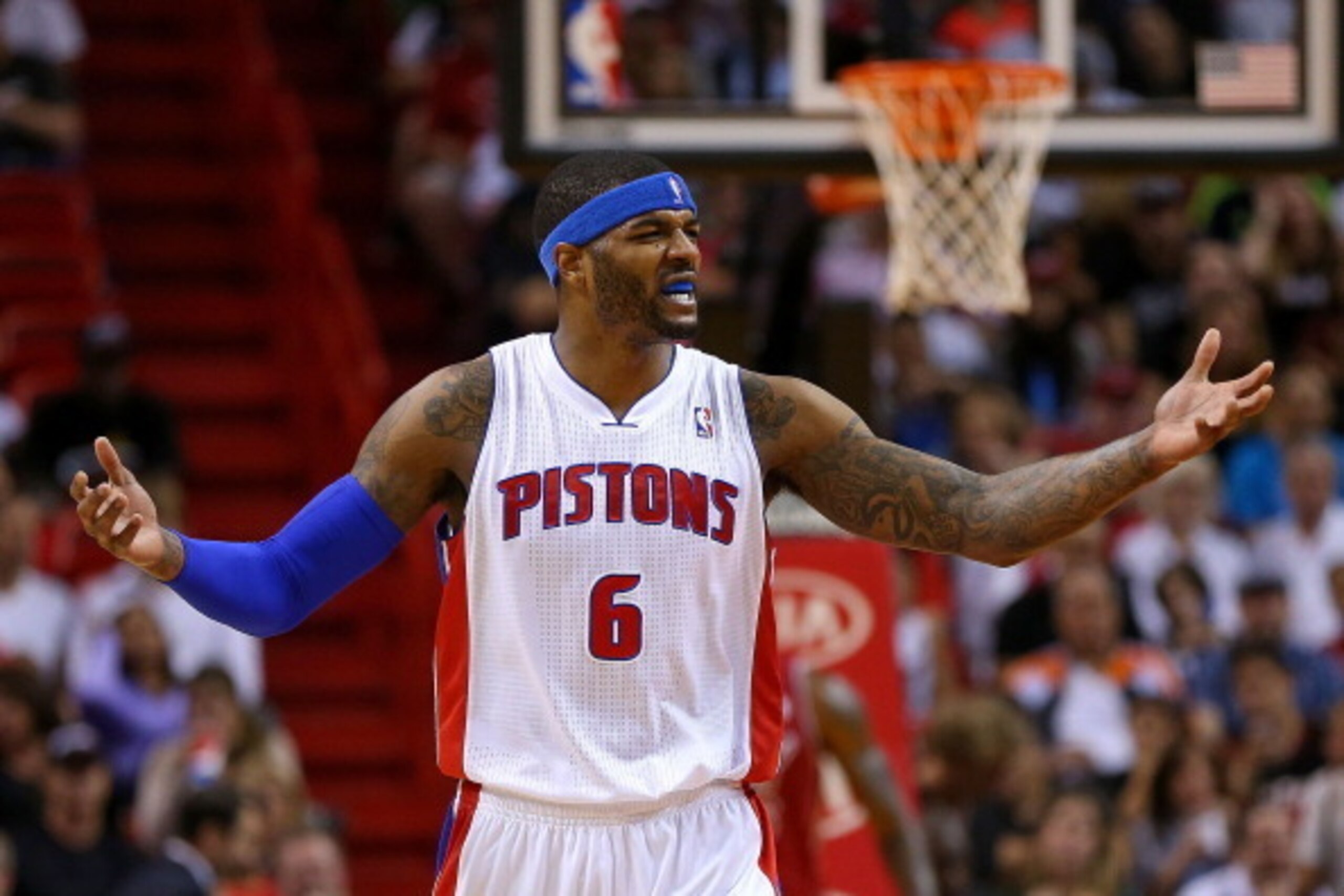
What the Pistons fielded last season didn't work. They ranked 19th in offensive efficiency, 25th in defensive efficiency and missed the playoffs for a fifth consecutive year after an expensive summer.
Adding shooters to help counteract their floor-spacing nightmare will help. So, too, will Van Gundy's knack for installing offensive schemes that open up driving lanes. But that only gets the Pistons and Smith so far.
For the Pistons to take that next step, they need Smith to play power forward. They need him on the block and in the post, not jacking jumpers with harrowing inefficiency. For Smith to thrive in Detroit and inject life into his slumping reputation, he needs to play power forward.
Anchoring the second unit is for now the only way that will happen consistently. And so for now, it's the only way Smith can reverse the disappointing descent that has characterized his time in Detroit.
Stats courtesy of Basketball-Reference.com and NBA.com unless otherwise cited.

.jpg?w=2560 "NFL House in Paris Closes for Protests")
.jpg?w=2560 "Trevon Diggs Cut by Seahawks")