Few subjective sports terms are held as objective measures by fans more than "value" and "star."
Both are intangible labels in the know-them-when-you-see-them sense. Yet because neither comes with a universally recognized definition, these terms can spark some spirited, fascinating debates among sports junkies like few others can.
Rarely are these arguments settled with anything other than agreements to disagree. But if there was a way to turn these qualities into something more tangible, then perhaps we could find reach more concrete conclusions.
That's the challenge for us here as we unearth the NBA's five most overrated superstars heading into the 2014-15 campaign.
So what exactly makes a star? For our purposes, players will have had to be selected to the 2014 All-Star Game plus one more midseason classic over the past five seasons. While not every deserving candidate gets an All-Star nod, true stars should never be snubbed. Not with the name-recognition aspect the label implies.
As for the overrated portion, we'll compare production against perception. Statistically speaking, two all-encompassing categories stand above the rest: player efficiency rating (both for and allowed) and ESPN.com's real plus-minus.
The old-fashioned eye test plays a part, too, but numbers will have the heaviest hand in our attempt to find an objective answer to one of basketball's greatest subjective questions.
*Because of the usage of statistics, injured players—those who made fewer than 41 appearances in the 2013-14 season—have been excluded from this discussion.
Chris Bosh, PF/C, Miami Heat
1 of 5
Notable 2013-14 Numbers: 16.2 points, 6.6 rebounds, 1.0 blocks, 51.6 field-goal percentage, 19.0 PER
All-Star Selections: Nine
Chris Bosh has big-time talent. Big enough that he can be the No. 1 option on a one-and-done playoff team or the third wheel on a championship contender.
How do either of those labels represent elite status? They don't. Nothing about the big man really does other than the five-year, $118 million contract he signed with the Miami Heat over the summer.
Bosh had some productive seasons with the Toronto Raptors (22.8 points and 9.9 rebounds his last five years north of the border), but Al Jefferson put up nearly identical numbers (21.8 and 10.8) for the then-Charlotte Bobcats in 2013-14. And no one is draping a superstar sash over Big Al's shoulders.
It bears watching whether Bosh, who turns 31 in March, can stretch his streak of nine consecutive All-Star selections to 10 this season. On the one hand, his stat sheet should see a substantial rise in quantity as he goes back to being a No. 1 option.
On the other, his efficiency could take a hit with LeBron James' offseason departure and Dwyane Wade's ongoing injury issues. With Kevin Love (Cleveland Cavaliers) and Pau Gasol (Chicago Bulls) joining Eastern Conference contenders—and Jefferson's Hornets seemingly ready to rise—Bosh's credentials could come into question if the Heat suffer a substantial dip in the standings.
Bosh is a nice player, but he's been held in a considerably more favorable light in recent years.
Roy Hibbert, C, Indiana Pacers
2 of 5
Notable 2013-14 Numbers: 10.8 points, 6.6 rebounds, 2.2 blocks, 43.9 field-goal percentage, 13.5 PER
All-Star Selections: Two
It's almost unfair to put Roy Hibbert on this list given how poorly his numbers stack up against these other stars. Do you know how many players averaged at least 11 points and seven boards last season? Thirty-six. And only one, Jared Sullinger, shot a worse percentage from the field than Hibbert.
Still, don't blame me for including Hibbert here. Blame those responsible for putting him on two of the last three All-Star rosters.
Hibbert plays a valuable role for the Indiana Pacers, one that coach Frank Vogel told Bleacher Report people overlooked while picking the big man apart during his second-half stumble last season.
"His No. 1 role on our team is to protect the rim, and he's the No. 1 rim protector in the game," Vogel said, "and that's what everybody that wanted to criticize him last year often lost sight of."
Hibbert's interior defense is solid—he held opposing centers to a 13.1 PER last season—but if defense alone makes a superstar, why isn't Memphis Grizzlies perimeter stopper Tony Allen held in the same regard? The 6'4" swingman shot a much better percentage from the field (49.4) and came close to Hibbert's scoring average (9.0).
But Allen isn't a star, he's a specialist. Judging by the numbers, Hibbert should be defined the same way.
Dwight Howard, C, Houston Rockets
3 of 5
Notable 2013-14 Numbers: 18.3 points, 12.2 rebounds, 1.8 blocks, 59.1 field-goal percentage, 21.3 PER
All-Star Selections: Eight
With his athletic gifts and the overall dearth of talent at the position, Dwight Howard should be the NBA's best center without question.
To some fans, the 28-year-old still holds that title. While his production puts him in that discussion, it's not enough to close the conversation.
Last season, the five-time rebounding champ finished fourth in the category. His blocks average tied for the sixth-best in the league, putting him behind, among others, the 38-year-old Tim Duncan, who logged only 29.2 minutes a night. Of the 17 players who faced at least eight shots at the rim per game, five held opponents to a lower field-goal percentage than Howard (48.1), per NBA.com's SportVU player tracking data.
Injuries—Howard told reporters he's only now getting over his 2012 back surgery—and role changes from the Orlando Magic's leading man to one who now shares the Houston Rockets spotlight with James Harden have both contributed to Howard's decline.
However, perception has been slow to catch up to his production. And with 10 NBA seasons already under his belt, there is a chance his numbers will never grow back to their previous levels.
"Defensively, he's figured everything out..." wrote Hardwood Paroxysm's Jeremy Conlin. "But offensively, he seems to have plateaued at a level that would probably be best described as 'frustratingly satisfactory.' "
If this is the Howard we're going to get, it's time we start seeing him as such—one of the game's great centers, but no longer in a class of his own.

Kyrie Irving, PG, Cleveland Cavaliers
4 of 5
Notable 2013-14 Numbers: 20.8 points, 6.1 assists, 1.5 steals, 43.0 field-goal percentage, 20.1 PER
All-Star Selections: Two
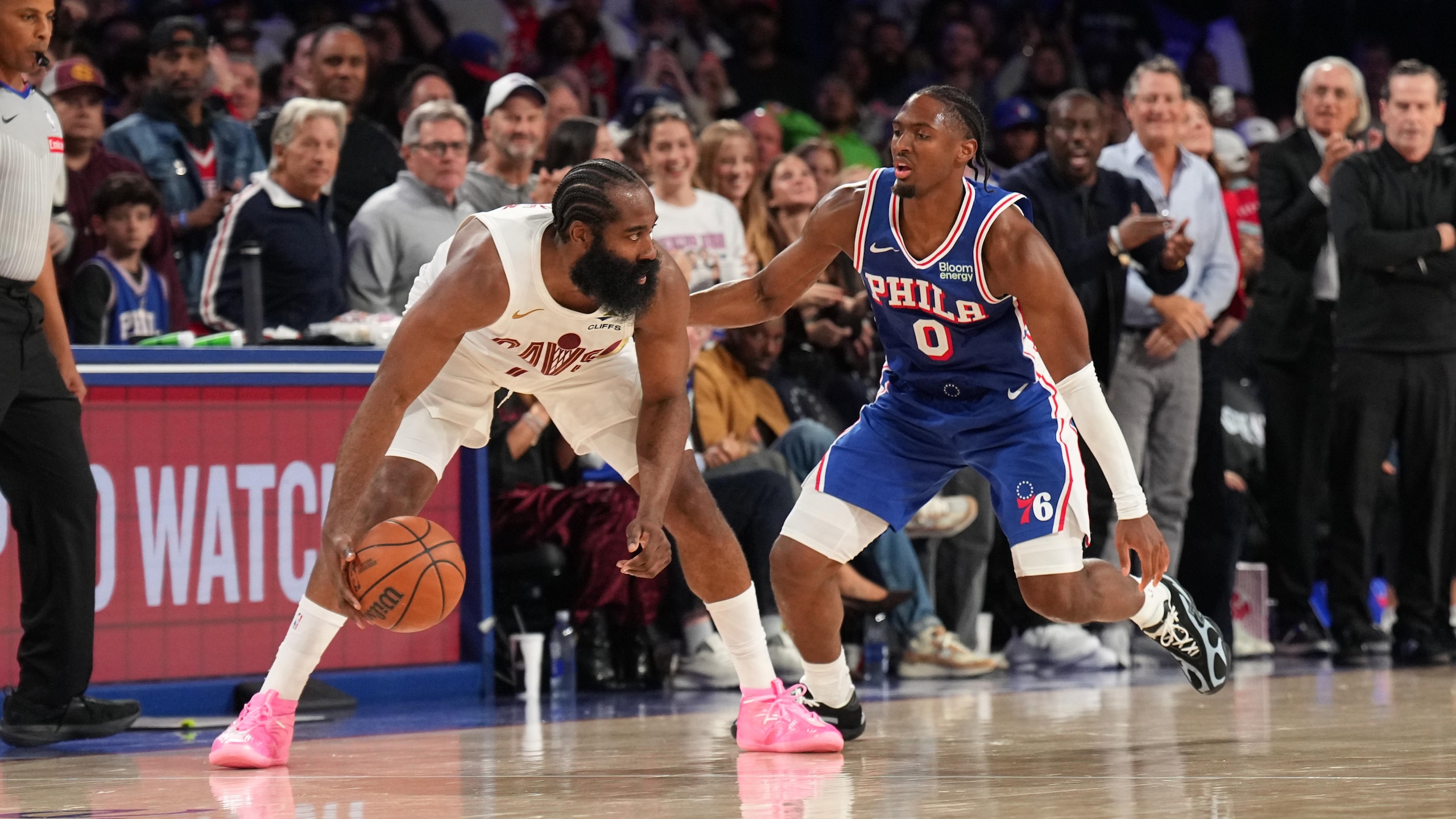
It's easy to get lost in Kyrie Irving's dazzling dribbling skills and explosive scoring outbursts while overlooking the severe marks against his superstar status.
The Cleveland Cavaliers are just 78-152 since his arrival. While team success is often too heavily tied to individual evaluations, it's still concerning that Irving never pushed the Cavs into playoff contention in the Charmin-soft East.
While James and Love will help Irving wipe that stain off his resume, it remains to be seen how the scoring point guard will fare under basketball's brightest lights.
Narrowing the focus to Irving himself, his defensive effort and offensive quality have drawn dreadful marks.
One of the methods used to create this list was adding up a player's PER and real plus-minus, then subtracting the PER he allowed to opponents. The average total for the 18 players measured was 11.4. Irving's was 0.9, easily the lowest on the list (Bosh was second at 1.8).
"For Kyrie Irving, it's all about defense and efficiency." wrote Bleacher Report's Adam Fromal. "He tends to force up looks far too often, diminishing the value of his scoring, and he's always been a lackluster defender."
Last season, Irving was somehow both a volume scorer on a bad team and an All-Star starter. In 2010-11, perceived black hole Monta Ellis averaged 24.1 points, 5.6 assists and 2.1 steals, shot 45.1 percent from the field and had an 18.6 PER during his final full season with the Golden State Warriors. All Ellis got for his production was a featured role on All-Star Game snub lists.
That's not to suggest Ellis is—or was—a better player than Irving, but rather to highlight the type of statistical company Irving has kept. Suffice to say, it's far removed from the prominent pedestal on which fans have placed him.
Joe Johnson, SG, Brooklyn Nets
5 of 5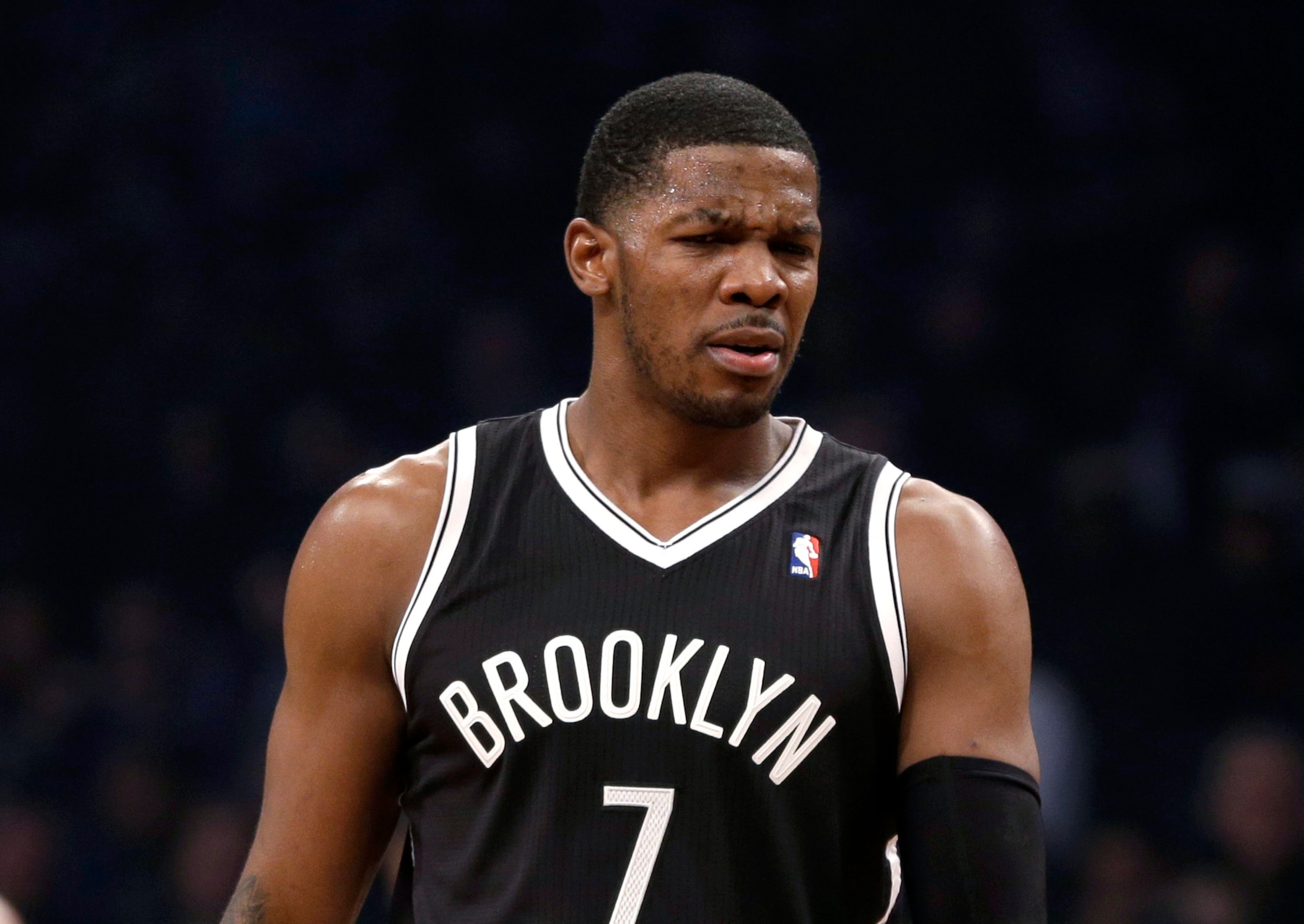
Notable 2013-14 Numbers: 15.8 points, 3.4 rebounds, 2.7 assists, 45.4 field-goal percentage, 15.5 PER
All-Star Selections: Seven
Something helped Joe Johnson book his seventh career All-Star trip last season. Maybe it was his coolness in the clutch or his steady—albeit underwhelming—scoring touch. Perhaps the extra eyes drawn in by the Brooklyn Nets' historically exorbitant payroll did the trick.
Whatever the reasoning was, his selection certainly wasn't based on merit.
Johnson brings little else to the hardwood than scoring, and his "greatest" strength grades out a hair above mediocre.
Last season, 52 players averaged more points than Johnson (minimum 25 games played). Of those 52, 24 had a higher field-goal percentage and 45 had a better PER.
If Johnson is being celebrated as a scoring specialist, shouldn't his scoring be a little more, well, special?
It really has to be in order to justify his All-Star nod. He's forgettable as both a rebounder and setup man, and his defense was solid (13.8 PER allowed to opposing 2-guards), but nothing better than that.
And for what it's worth, Johnson is set to collect the NBA's third-highest salary this season ($23.2 million). He's more overpaid than overrated, but unfortunately for the Nets, he has the credentials to wear both labels.
Unless otherwise noted, statistics used courtesy of Basketball-Reference.com and NBA.com. PER allowed statistic found via 82games.com.

.jpg?w=2560 "NFL House in Paris Closes for Protests")
.jpg?w=2560 "Trevon Diggs Cut by Seahawks")