Falcons vs. Vikings: Breaking Down Minnesota's Game Plan
The Minnesota Vikings return home in Week 4 for a critical showdown with the high-flying Atlanta Falcons. For the Vikings, this game presents an opportunity to get back to .500 and get the season back on track before it gets away.
Atlanta struts into town on the back of a 56-14 trouncing of Tampa Bay, so the team’s confidence couldn’t be any higher at this point.
On the flipside, the Vikings have been ravaged by injuries and extra-curricular distractions while dropping their last two results. The story of the 2014 Vikings is ever-changing, and so are their game plans, with many new players being integrated into the starting lineup or given significant playing time.

.jpg?w=2560 "Commanders Eagles Football")

Head coach Mike Zimmer and the Vikings have reached a critical point in their season, so a positive result is needed from Sunday’s game. Detailed below are the most critical factors in achieving that.
Trust Teddy
Rookie quarterback Teddy Bridgewater will make his first start on Sunday. Descriptions of Bridgewater’s mentality as a prospect and his subsequent successful showing on his debut against New Orleans indicate just how ready he is for this job.
Offensive coordinator Norv Turner must be willing to keep the playbook open and trust that Bridgewater can make all the throws. NFL coaches tend to be overly conservative with rookies, mostly due to lack of trust. Two reasons should steer Turner away from limiting the offense to protect Bridgewater.
If Turner goes too far with his restrictions, the offense becomes predictable. Atlanta’s defense will be quick to adjust to the way Turner lays out his calls early in the game. Adjustments can quickly stop an offense with obvious tendencies.
For example, play-callers with a mobile quarterback can become too fond of the play-action rollout pass, which cuts the field in half and gets the quarterback on the move. This type of exaggerated usage is unnecessary with Bridgewater and will only lead to Atlanta's rushers adjusting in order to stop it. That won't take very long either. An overly conservative offensive plan will keep the Vikings’ offense from scoring points.
The second reason relates to Bridgewater’s quarterback intelligence. Coaches often want to help rookies get the ball out of their hands in a hurry, not willing to let them stick around in the pocket. Bridgewater has the pocket awareness to tolerate the rush and migrate from it. He also makes anticipation throws after quickly diagnosing coverage. The playbook doesn’t have to shrink to what it was with Matt Cassel because Bridgewater can handle a full plate.
Minnesota's offensive line has been the target of deserved criticism following its poor performances to start the season. Tackles Matt Kalil and Phil Loadholt have been the main culprits behind the constant pressure. Chip blocks, which the Vikings utilized to some success in New Orleans, can help.
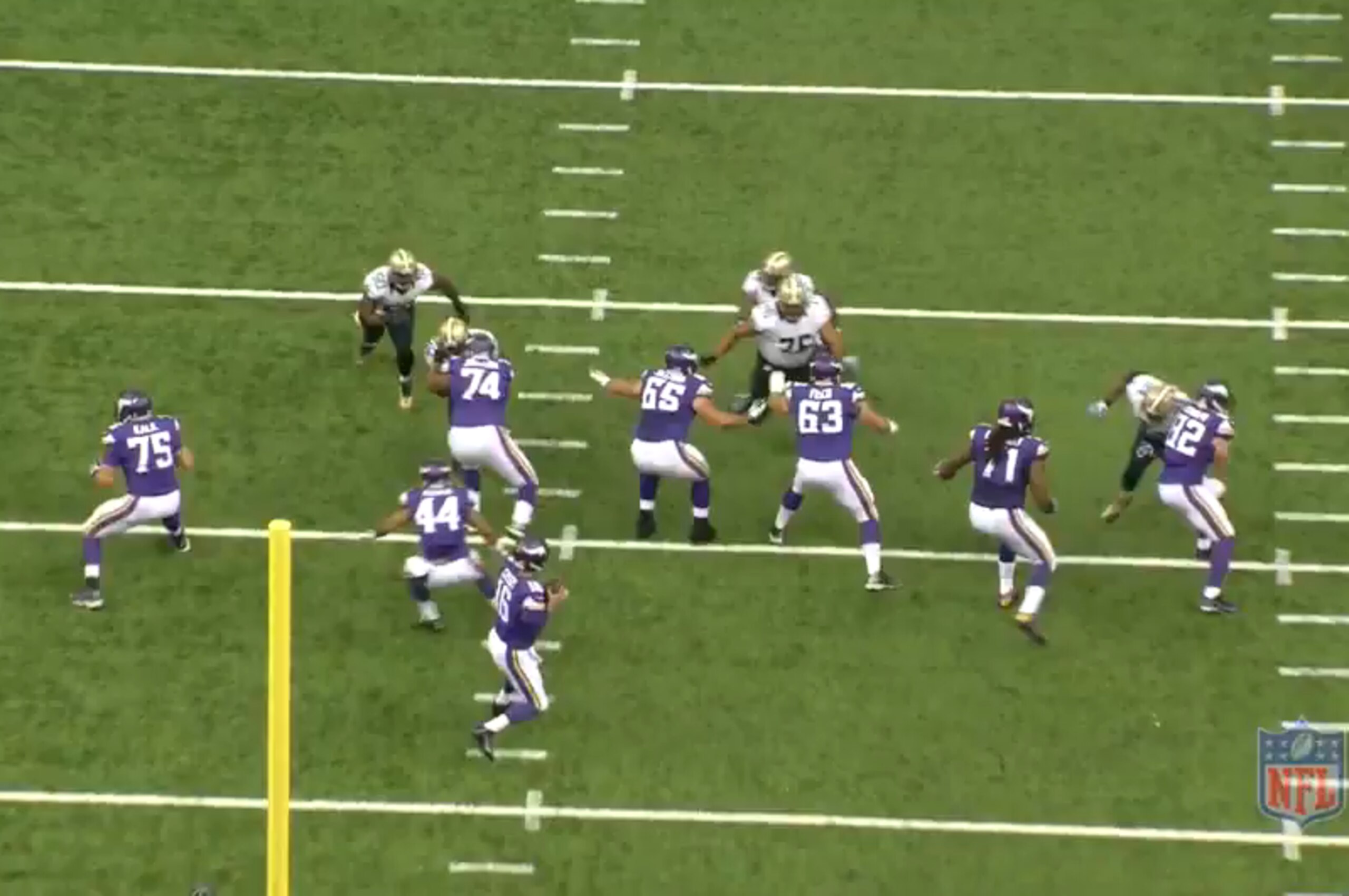
Ultimately, trusting Bridgewater to take charge of the offense must happen. Hiding him behind limited play-calling will only limit the offense's short-run success and could actually slow Bridgewater's growth.
A Little Help from the Receivers?
Early returns from Minnesota's talented corps of pass-catchers have been disappointing. On top of that, Jerome Simpson never made it back to the roster after being released by Minnesota last week. The Vikings come into Week 4 without star tight end Kyle Rudolph, who is out for the near future after undergoing hernia surgery.
That puts the onus on the veteran shoulders of Greg Jennings and the younger Cordarrelle Patterson. So far, neither has been as dynamic in routes or productive in terms of reception totals as expected.
The group as a whole has been extremely unreliable. Minnesota’s receivers have put the ball on the ground at a higher rate than any other team’s, per ESPN Stats & Info:
"According to @ESPNStatsInfo, Vikings receivers have dropped 8.8 percent of the passes targeted for them. That's the highest rate in the NFL.
— Ben Goessling (@GoesslingESPN) September 23, 2014"
Quite simply, the drops must be cleaned up. The passing game and offense as a whole will struggle until that happens.
The current crop of receivers will also have to start adapting Bridgewater’s ability to extend plays. The rookie QB has the wherewithal to elude pressure and keep plays alive, which means receivers can’t quit on routes. Coming back to the quarterback is what receivers are taught to do, and it’s what Jennings failed to do on this play against the Saints, which led to an incompletion on a critical third down.
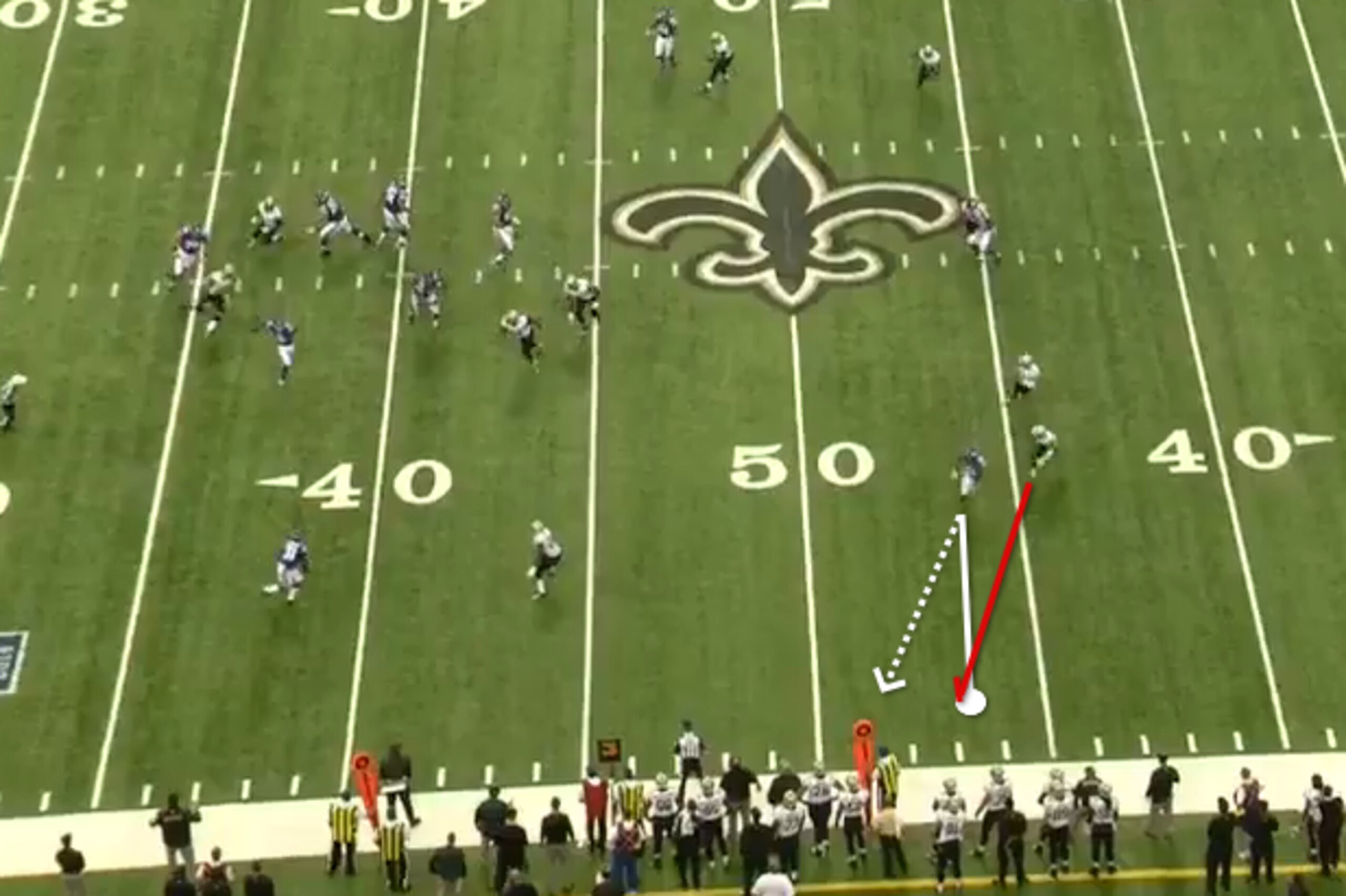
Jennings is supposed to be the security blanket, but he let Bridgewater down by flattening his route and not running away from the defender. The Saints cornerback was able to cut in front of Jennings as the ball arrived and deflect it.
Bridgewater will need help from his receivers in order to be successful. That means improvement in separating from man coverage and improvement in attacking the football.
Win First Down
Gashing the defense with first-down runs doesn’t have to be the expectation here, but the Vikings’ inability to run the ball on early downs continuously forces the offense to dig its way out of holes.
The biggest problem, of course, is the lack of backfield talent. Without Adrian Peterson, Minnesota has been leaning on Matt Asiata, who has made a habit of gaining two yards when four are blocked for him. Rookie Jerick McKinnon can’t seem to earn an increased role yet either. The run game has clearly suffered, especially when considering yards gained on the ground by actual running backs.
"#Vikings RBs (including Peterson) have averaged 3.1 yards per carry. Last time they avg'd 3.5 was 1988. Last time below 3.5? 1978
— Arif Hasan (@ArifHasanNFL) September 22, 2014"
Two easy adjustments can be made to help remedy this situation against Atlanta. The first is to find some way to utilize more of McKinnon’s athletic ability. As long as the rookie can be trusted to hold onto the football, there’s no reason his workload can’t be increased as an early-down runner. Asiata brings little upside on a per-carry basis.
The second is to run Patterson more. Turner has been reluctant to call upon Patterson the past couple of weeks and hasn’t gone back to the speed sweeps that had so much success Week 1. That needs to change for the offense to bring more variety to the table.
Finish Drives
Minnesota faces a Falcons defense that isn’t the most established in terms of pass-rush or linebacker play. They should be able to move the ball with some consistency. The key then is to finish with touchdowns, something the Vikings have been unable to do recently.
The Vikings offense hasn't crossed the goal line in the last seven quarters, going back to Asiata’s touchdown reception in the opening drive against New England. Through three weeks, the Vikings have punched a lowly 40 percent of their red-zone trips into the end zone, leaving them at No. 26 in the league.
Create Favorable Down and Distance
For the Vikings defense to continue their fine play from last week, early-down success is critical. Atlanta will feature running back Steven Jackson on the ground, who has become a classic cloud-of-dust back at his age. He may not rip off explosive gains often, but allowing him to get four or five yards a crack won’t cut it defensively
First down has been a sore spot for the Minnesota defense too.
| Yards per Carry | Comp. % | |
| 1st-and-10 | 4.3 | 78.8% |
| All other downs & distance | 3.0 | 66.7% |
The run defense has been poor on first down, giving up more than a whole yard more per carry. Giving up almost 80 percent completions is almost worse for the back end of the defense.
Allowing Atlanta to make positive gains on first downs makes everything so much more complicated for the defense. For one, Matt Ryan would have more freedom to take deep shots. The rush also slows down with lowered ability to anticipate passing plays. The whole playbook opens up when that happens and would allow Atlanta to stay on schedule offensively.
Success on early downs for Minnesota leads into the next point.
Blitz to Force the Ball out of Ryan’s Hands
With the playmakers Atlanta has on the perimeter, most notably Julio Jones, forcing Ryan to unload the ball before he wants to is an avenue toward success.
Opposing defenses blitzed Ryan to positive results last season. Minnesota should identify these trends and plan accordingly.
| Comp. % | TD % | QB Rating | PFF Grade | |
| Blitz | 61.7% | 1.7% | 74.6 | +1.4 |
| No Blitz | 69.6% | 4.9% | 95.4 | +8.6 |
Timing the blitzes properly is important as well. In their victory over Atlanta in Week 2, Cincinnati didn’t hold back on second and third downs, giving cushions with their cornerbacks while sending the house to force Ryan to throw underneath in this example.
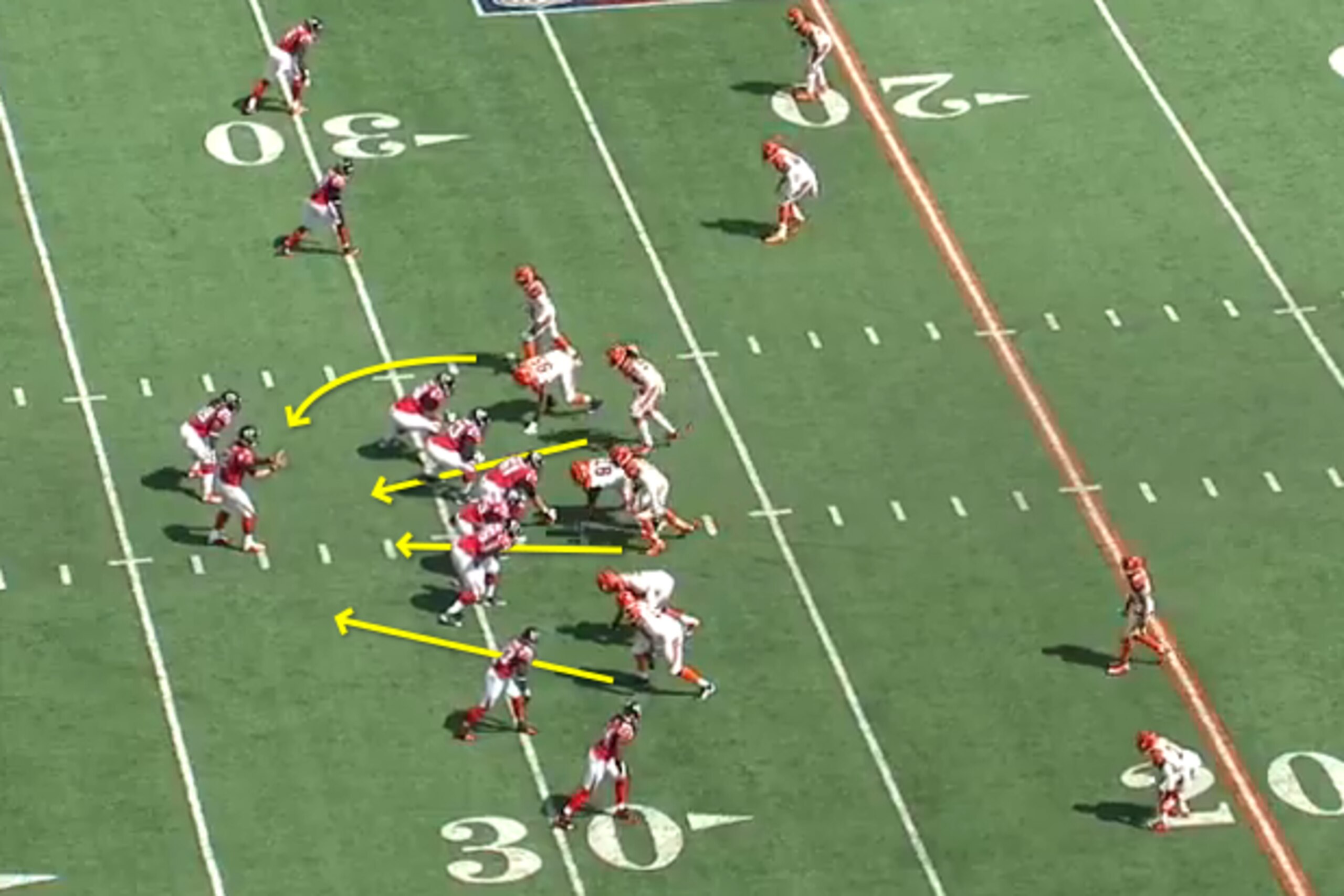
Cincinnati brings seven rushers on 2nd-and-8, one too many for the Falcons to block. That forces Ryan to throw it to the flat, living to play another down.
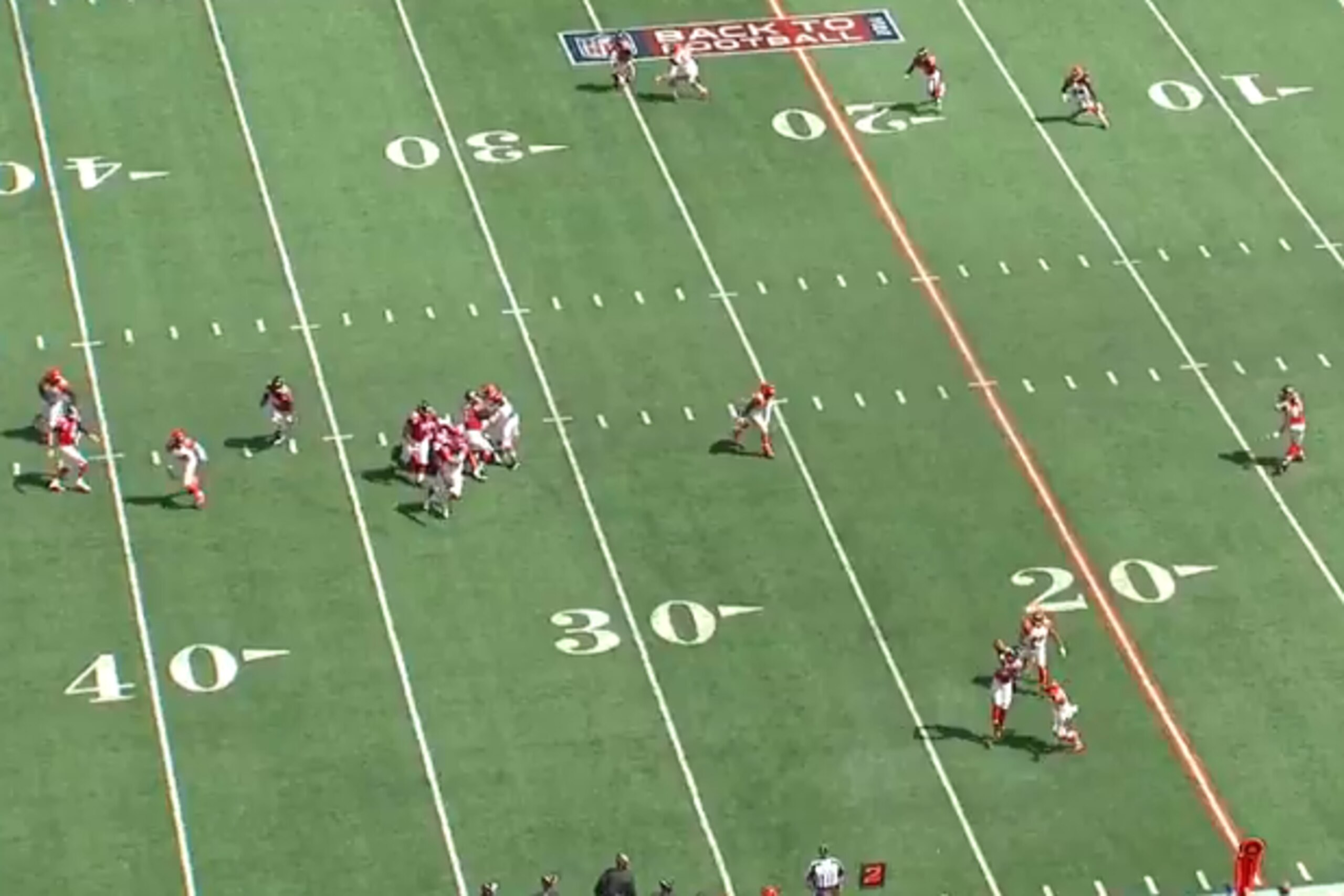
Though the defensive backs gave a cushion, they can play aggressively knowing the ball must come out of Ryan’s hand with a free rusher. That’s why two arrive to make the tackle in the flat, forcing Atlanta into third down.
For this type of blitz to be implemented, getting the Falcons into suboptimal situations is a must.
Prepare for the Deep Ball
Downfield passes are where Jones can break the game open as a receiver. Through three weeks, Ryan stands at No. 4 among quarterbacks in attempts of 20 yards down the field or deeper, via Pro Football Focus premium statistics (subscription required). His downfield targets have been distributed as such:
| Targets | Receptions | Yards | TD's | |
| Julio Jones | 11 | 7 | 172 | 1 |
| Devin Hester | 2 | 2 | 56 | 0 |
| Harry Douglas | 2 | 0 | 0 | 0 |
| Roddy White | 1 | 1 | 39 | 0 |
| Eric Weems | 1 | 1 | 40 | 0 |
The usage pattern is clear. Jones is the deep-ball specialist and rightfully so. He’s a big, athletic receiver who can win over the top with long speed and beat defensive backs to the football in contested situations.
"Julio Jones pace for 2014 after 3 games: 122 catches, 1,947 yards, 16 TD's. If he can maintain, it'd be a top 3 WR season of all time.
— Scott Carasik (@ScottCarasik) September 24, 2014"
How does Minnesota cope with Jones? The best way might be the usage of Cover 3 “Cloud”, which can keep a receiver from an outside release while a cornerback disrupts. A deep safety then rolls over the top of that third of the field, so the receiver could be bracketed by the safety from over the top and cornerback from underneath.
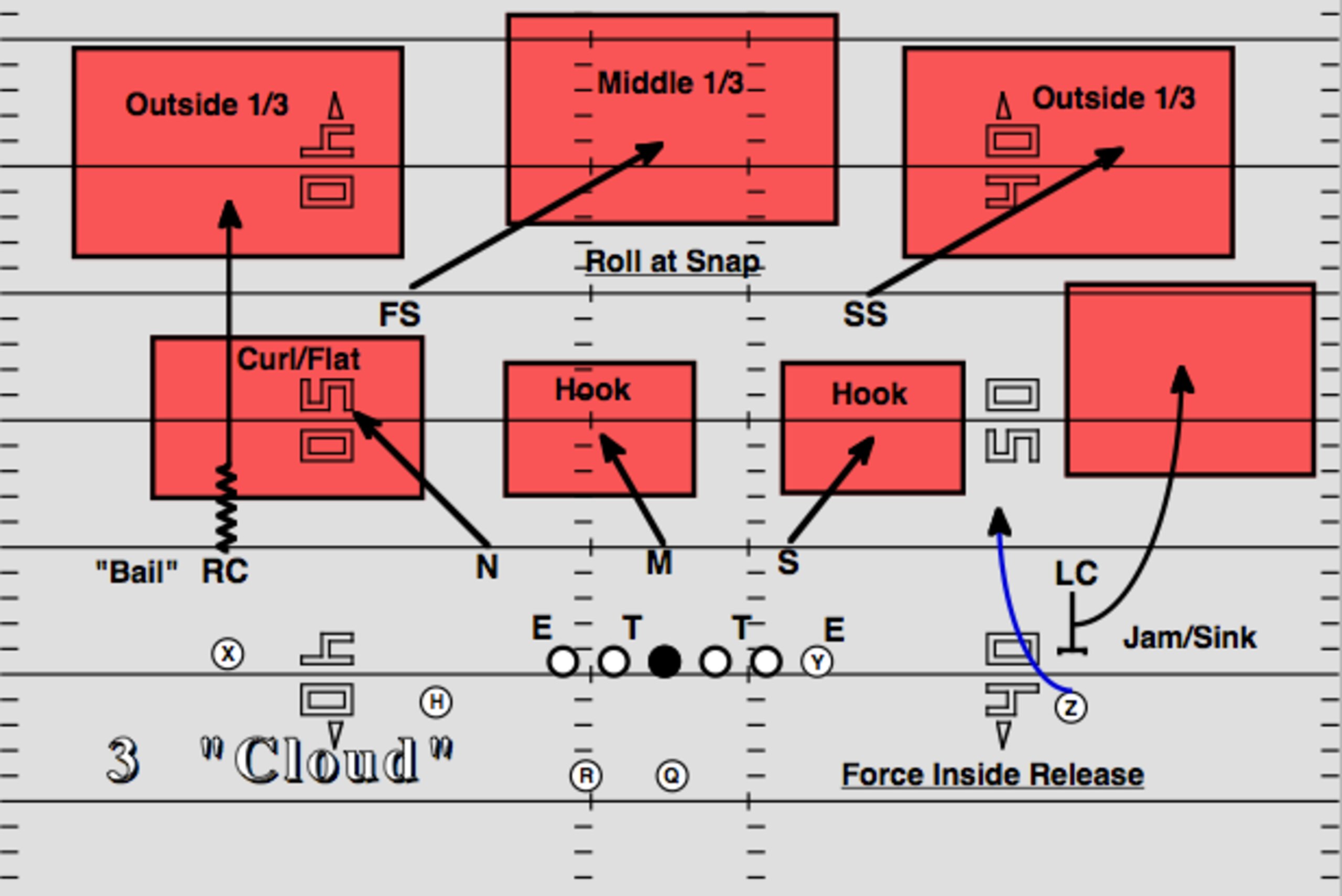
Expect the Vikings to utilize variations of Cover 3 such as Cloud or "Quarter, Quarter, Half", which also keeps a safety above and a cornerback below Jones if done on his side of the field.
Zone coverage won’t be the rule throughout the game, though, as Zimmer tries to vary his coverage. Right cornerback Xavier Rhodes may be asked to man up on Jones occasionally. Rhodes has the size and athleticism to keep up but hasn’t shown the clinical technique to consistently play up to his physical ability. Letting Rhodes press Jones at the line of scrimmage could be an answer, but some safety help would be necessary.
The situation on the opposite side of the field from Rhodes is less certain because the Falcons will attempt to force Minnesota into its nickel set. The left cornerback would normally be Josh Robinson, although he was held out of practice on Wednesday with a hamstring injury, as reported by Andrew Krammer of 1500 ESPN, so his status for Sunday is up in the air. Increased snap counts for Shaun Prater or Jabari Price could be the result.
In any case, a plan that involves safety help over the top, especially if that safety is Harrison Smith, will benefit the Minnesota defense in its handling of Jones and Roddy White.
Bottle Up Hester
Return specialist Devin Hester, who the Vikings know well, is the new record holder for career return touchdowns after taking a punt for six points last week. He will garner the bulk of the attention for Minnesota’s special teams units, putting extra stress on pursuit lanes for the kickoff and coverage teams. Allowing an Atlanta team that will already rack up points offensively to add six through special teams would be disastrous for the Vikings.
Next Man Up
The final point of emphasis for Minnesota is the role that depth will play. With the injury report riddled with contributors, the next-man-up mentality must be driven home. Role players such as linebacker Gerald Hodges, tight end MarQueis Gray and right guard Vlad Ducasse will play bigger roles against Atlanta. How they fare will have a significant impact on the outcome of Sunday’s game.
A quicker start and a more resounding finish is the way for Minnesota to come out on top against Atlanta, beyond the most important points previously listed. Getting to 2-2 before the divisional games begin would be a big boost to a team still trying to find its identity. Hopefully that identity presents itself as the 2014 Vikings begin to take shape.
.jpg?w=2560 "Chiefs Dolphins Football")
.jpg?w=2560 "Cardinals Giants Football")