

The Changing Identity of the SEC
"Is this what we want football to be?"
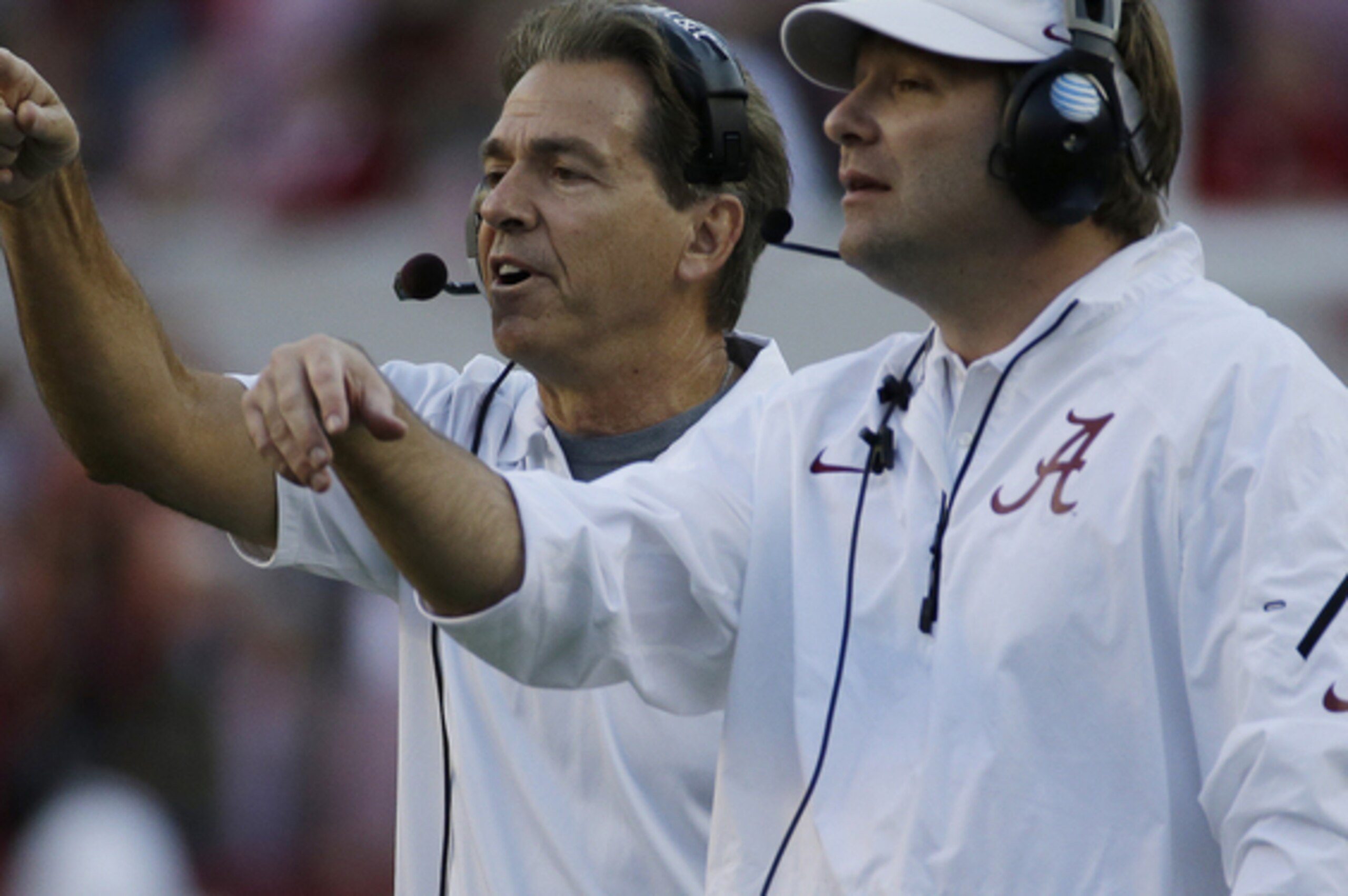
Those were the words of Alabama head coach Nick Saban in early October 2012 when preparing for Ole Miss' hurry-up, no-huddle offense led by head coach Hugh Freeze, according to AL.com's Andrew Gribble.
Fast-forward two years, and the "three yards and a cloud of dust" label synonymous with the SEC has been replaced with another—"wide open." Eleven of the conference's 14 teams are currently averaging more than six yards per play, as opposed to two in 2011.
.jpg?w=2560 "AP Poll Top Five Week 9")

.jpg?w=2560)
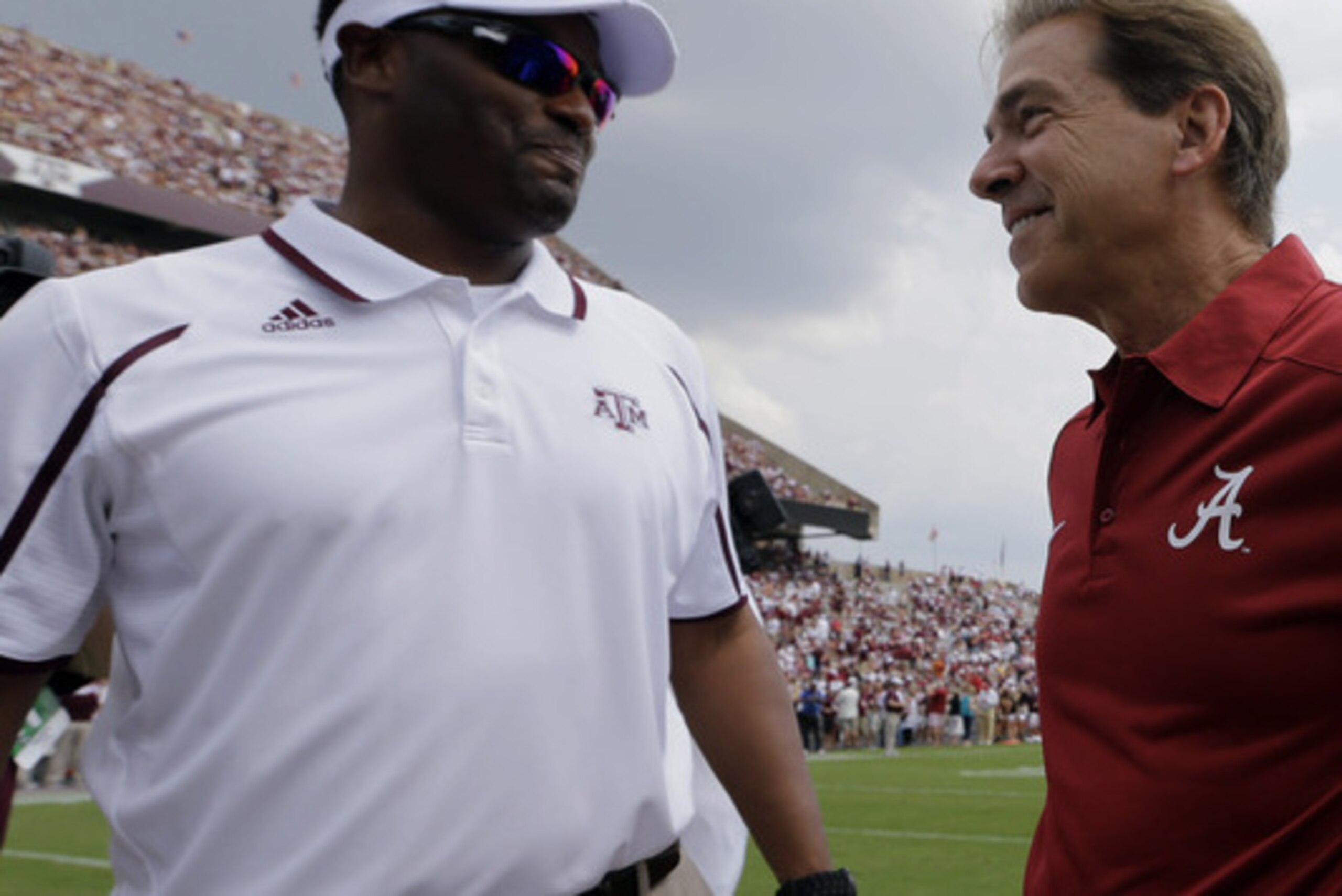
Even Saban's team—with a little help from new offensive coordinator Lane Kiffin—is lighting up the scoreboard. Through four games, the Crimson Tide are averaging 7.6 yards per play and, while not running a true hurry-up, no-huddle offense, still managing 78 plays per game.
The SEC has become a conference where defense doesn't win championships anymore; "just enough defense" wins championships. The definition of "just enough" changes based on the versatility and explosiveness of each individual team.
How did it get to this point?
The Introduction of the Spread
When Florida hired Urban Meyer from Utah prior to the 2005 season, critics said his offense wouldn't work in the SEC. Meyer himself even had concerns after getting trounced 31-3 at Alabama that year.
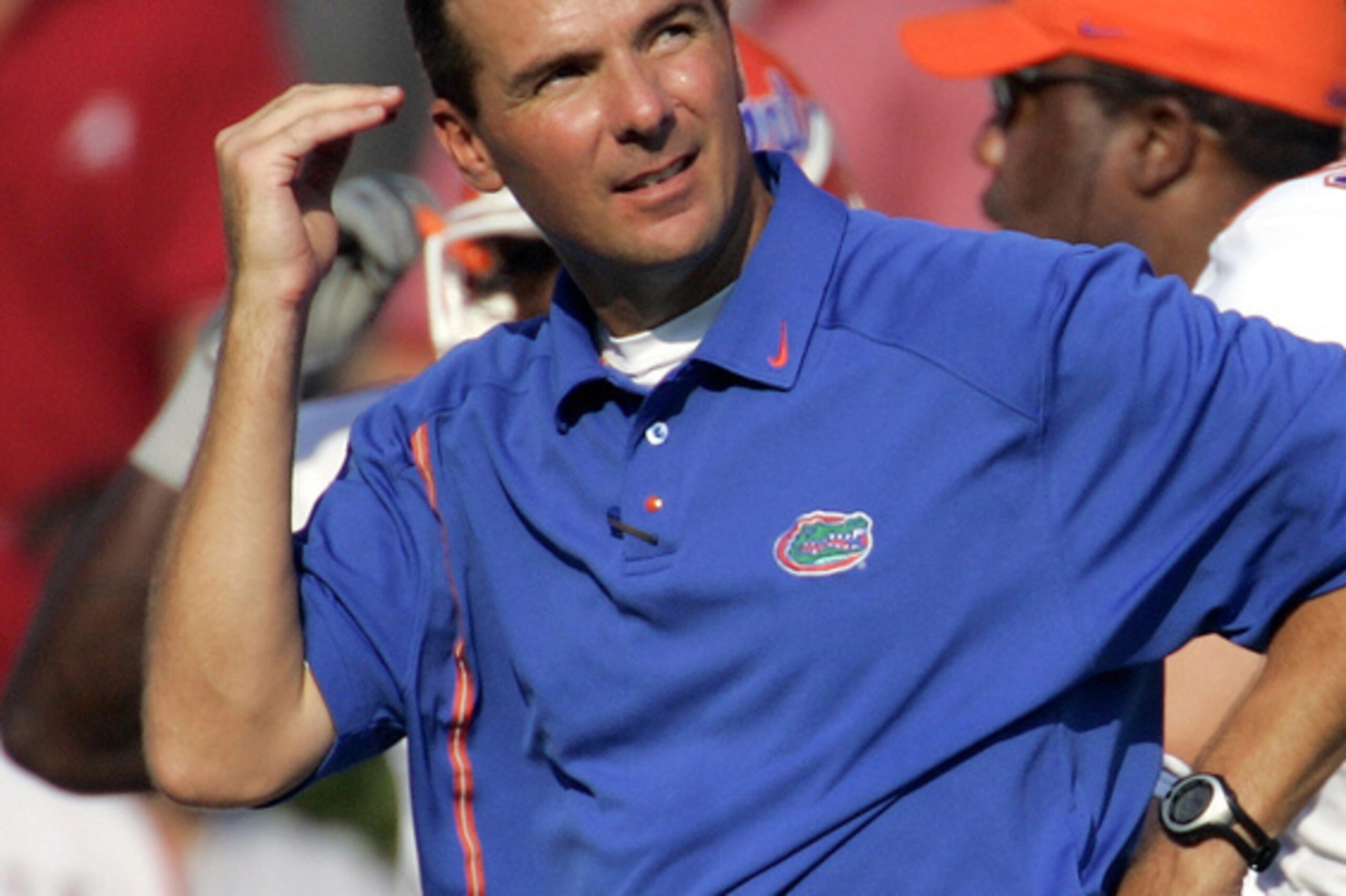
“I was very concerned,” he told Ray Glier, then of The New York Times and now of Bleacher Report, in 2009. “I started believing what I was hearing."
All he did after that was win national championships in 2006 and 2008, help quarterback Tim Tebow win the Heisman Trophy in 2007 and win another SEC East title in 2009.
Sure, it helped Meyer that Tebow—a quarterback who is built perfectly to run his offense—decided to choose the Gators over Alabama in February of 2006. Since that time, though, spread elements have been injected into the SEC.
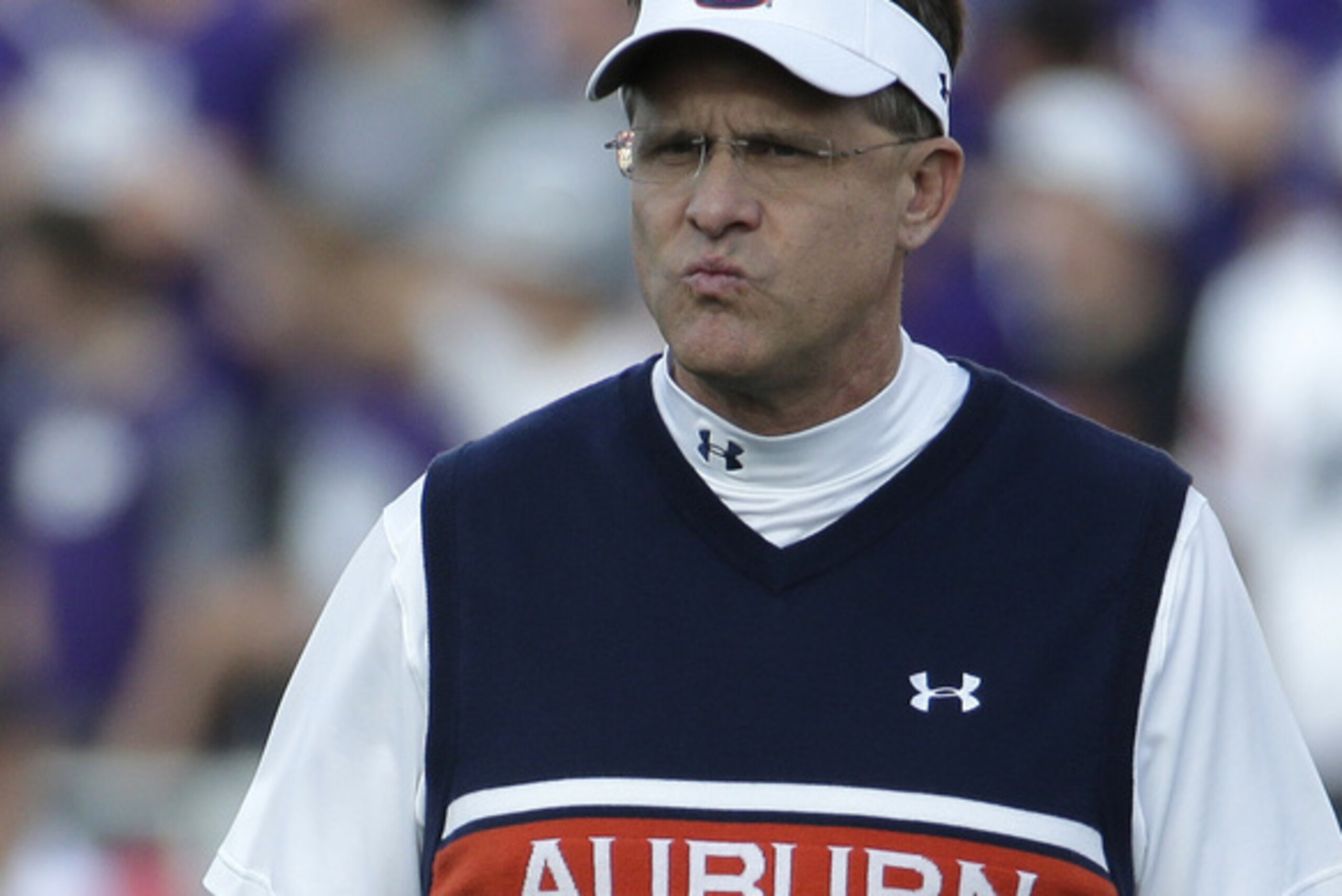
Auburn hired Gus Malzahn—a versatile offensive mind whose spread is more of a blend of old-school and new-school style—as its offensive coordinator in 2009 and then its head coach prior to the 2013 season. Ole Miss selected Hugh Freeze—a coach with a similar style—to replace Houston Nutt prior to the 2012 season.
That same year, Texas A&M brought first-year head coach Kevin Sumlin's flexible, pass-happy style into the conference along with Missouri, which finished ninth in the nation in rushing out of a spread attack the previous season.
The offenses have evolved from the read-option attack Meyer won with to variable attacks that blend power with open space.
When then-new head coach Gene Chizik told Auburn athletics director Jay Jacobs that he was thinking about bringing Malzahn in as offensive coordinator in 2009, Jacobs wanted to make sure he wasn't just bringing in the spread, but the right kind of spread.
"What was important to me, as a spread offense like this, is it all throwing and how does the rush balance out?" Jacobs said. "What I quickly found out from talking to a lot of people and watching Gus' bowl game is that it's a lot of throwing, but it's a downhill football style. In this league, you have to run the ball to win."
That's exactly why Sumlin has been successful at Texas A&M.
He came in with the reputation of being an air-raid coach who slings it all over the field. In his first year in the SEC in 2012, Sumlin's Aggies led the conference with 5.90 yards per rush and followed it up with 5.17 in 2013.
"With what we do, it's probably a little bit different than most people," Sumlin said. "Even though everybody lumps all spread offenses into one boat, that's not necessarily the truth. You have spread offenses that lead with the run that are misdirection-type offenses. You've got all kinds of different things. Certainly, no-huddle may be the contrasting factor."
It is, which brings us to the next point.

Tempo, Tempo, Tempo
FBS instituted a rule change prior to the 2008 season that gave us a 40-second play clock that resets when the previous play ends, similar to the NFL. It replaced a 25-second play clock that wouldn't start until the umpire spotted the ball—whenever that was.
The result allowed teams that ran no-huddle offenses to not only sprint to the ball as they have in the past, but get the snap off quicker because officials wanted to keep play moving.
"The biggest change is tempo," said Florida head coach Will Muschamp. "With how quickly people are getting on the ball, snapping the ball and getting more snaps in the game, that to me is the most challenging aspect from a communication standpoint defensively. It affects technique, it affects fundamentals and creates fatigue, which creates cowards of us all."
In the SEC, that has led to a steady creep of offensive prowess as coaches and programs realized the benefits of tempo.
| 2008 | 342.9 | 25.6 | 64.9 |
| 2009 | 378.5 | 28.4 | 66.1 |
| 2010 | 400.3 | 31.0 | 66.4 |
| 2011 | 355.0 | 27.3 | 65.5 |
| 2012 | 402.5 | 30.4 | 68.0 |
| 2013 | 432.5 | 31.7 | 69.7 |
| 2014 | 474.2 | 39.7 | 71.9 |
"Five years ago, if you look at what teams were averaging in yards per game and points per game, the game has certainly changed," said Freeze.
Now programs can blend traditional smashmouth elements with wide-open elements found in spread offenses to keep opposing defenses on their toes while still wearing them down through speed and strength.
The rule change in 2008—Muschamp's first year as Texas' defensive coordinator—was something that created a perfect storm.
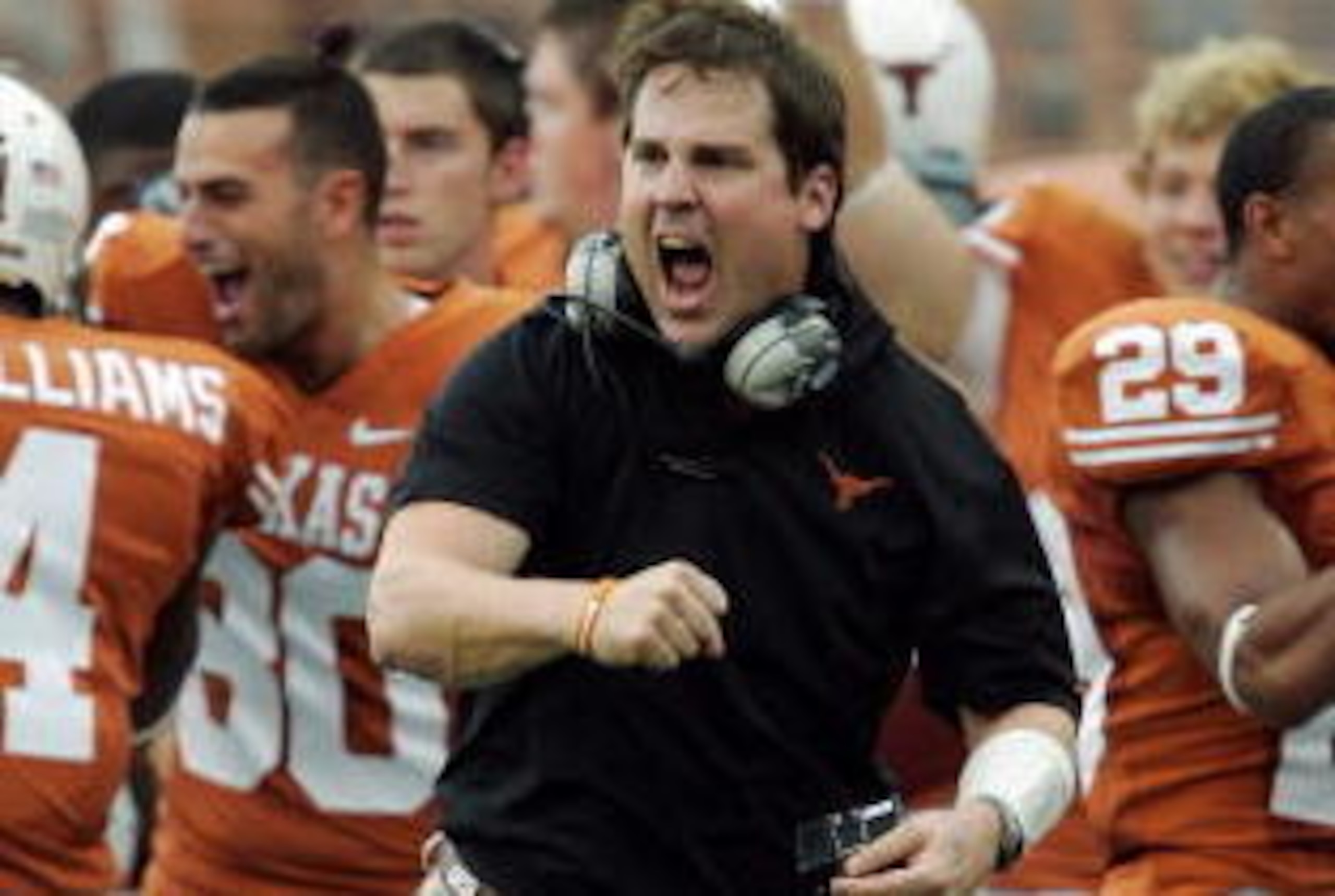
"It was an eye-opener for me in 2008 going to Texas," he said. "With some of the talented quarterbacks in the league at the time. Sam Bradford, we had Colt McCoy, Graham Harrell was at Texas Tech, Robert Griffin III was at Baylor, [Todd] Reesing was at Kansas. There was a bunch of really good quarterbacks, and the tempo of the league was really fast."
That served as a precursor to what was to come in the SEC.
The ability to play fast, the evolution of the spread, quarterbacks recruited specifically to run it and an injection of creative play-callers have put defensive-minded SEC coaches into a bind.
"I think the fast pace of play and the way college football is right now definitely favors the offense, that’s why we see the points that we see," Saban told my B/R colleague Marc Torrence. "I think you have to have a lot more patience on defense. I think the whole approach to how you prepare for a game has to be completely different than what it used to be."
The more things change, though, the more they stay the same.
"The tempo has changed," Jacobs said, "but the 'ball' is still the same."
Simplicity
Increased tempo in college football has simplified the game for everybody. Instead of complicated play calls, a focus on running a high number of plays has simplified the play-calling process.
Instead of wordy play calls in a huddle, teams signal in plays quickly through hand signals, pictures and numbers. This was a point of criticism while former Auburn quarterback Cam Newton was going through the draft process.
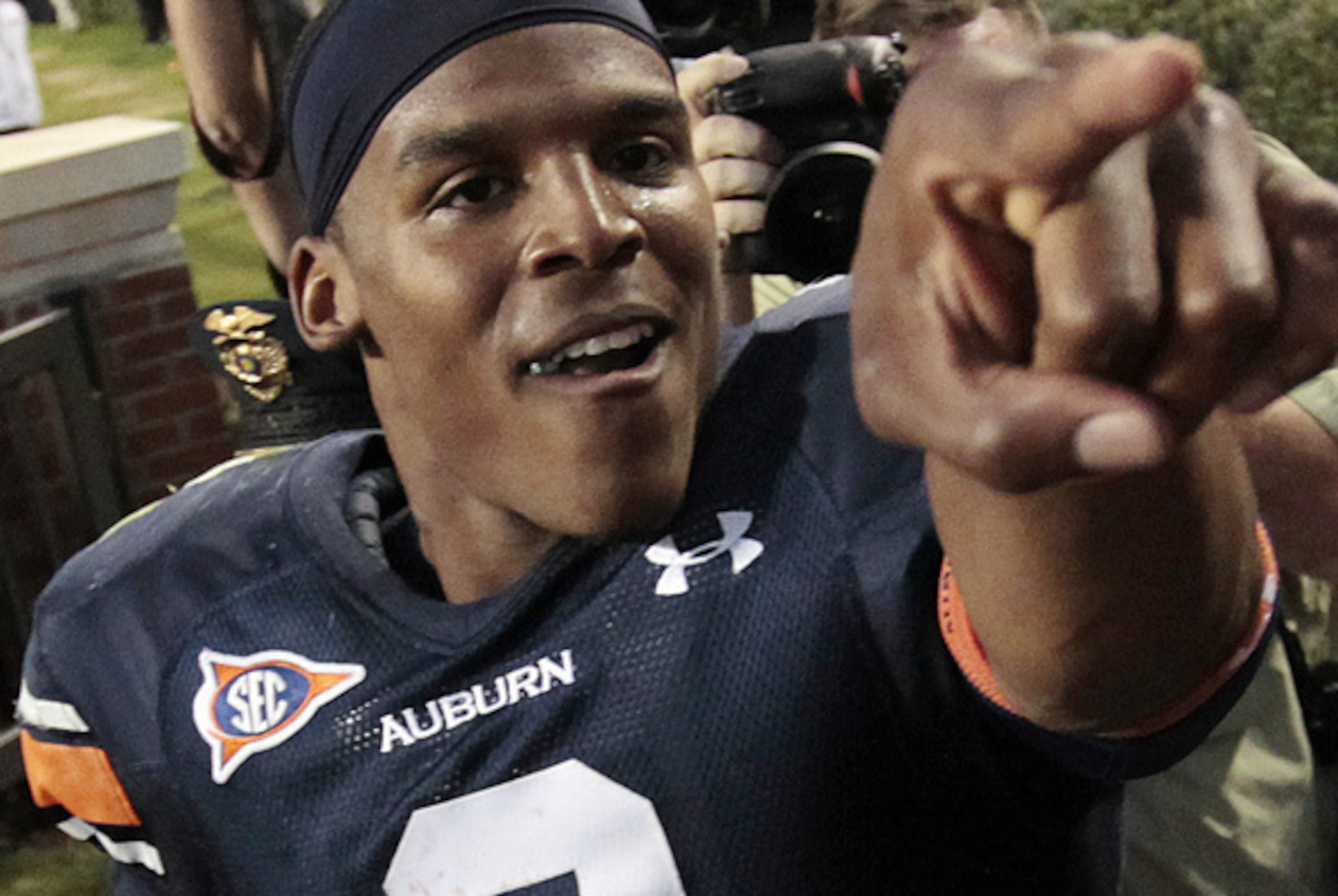
"Our method is ‘simplistic equals fast,'" he told ESPN's Jon Gruden (via ProFootballTalk.com) in 2011. "It’s so simple as far as, you look to the sideline [and] you see 36 on the board. And that’s a play. And we’re off.”
While that may hurt players moving on to the next level, it also presents challenges to defensive coaches at the college level.
Take Saban, for example. Instead of scheming to stop an offense, his No. 1 goal is simply to get his team lined up properly, which means plays that aren't exotic and an advantage that the offense has neutralized.
It goes beyond the game itself, though.
"It's been a little bit of a work in progress," Saban said. "When you have the new offenses, on defense, you have to be realistic about what you can implement and play in the games. We've always been more of a pro-style, match personnel and have a lot of different packages of things we can do on defense. You waste time practicing because you can't get it in the game when they go fast and don't substitute."
The Crimson Tide offense is actually going more uptempo itself these days, which has benefited its defense.
"We actually forced our offense to be a no-huddle team too, which has helped us on defense," Saban told Torrence. "Even though we don’t go fast all the time, just the fact that we can practice against a no huddle-type team rather than huddling up. Then, all the sudden, here’s a game where you have to go no-huddle and the players are used to that routine and how they have to play."
Exotic offenses have forced defenses to simplify. As is the case in the game itself, when you force the opposition to play your game, you have the advantage.

Recruiting
Size doesn't matter anymore; speed does.
Sure, having a 330-pound monster in the middle of the defensive line will certainly help teams that run 3-4 defenses, but even those ends can't simply be space-eaters anymore.
Defenses need speed outside—like Alabama's A'Shawn Robinson and Jonathan Allen—in order to get off blocks and make plays, not just free up room for linebackers.
New offenses that force defenders at all levels to run have changed the way SEC teams recruit defensively.
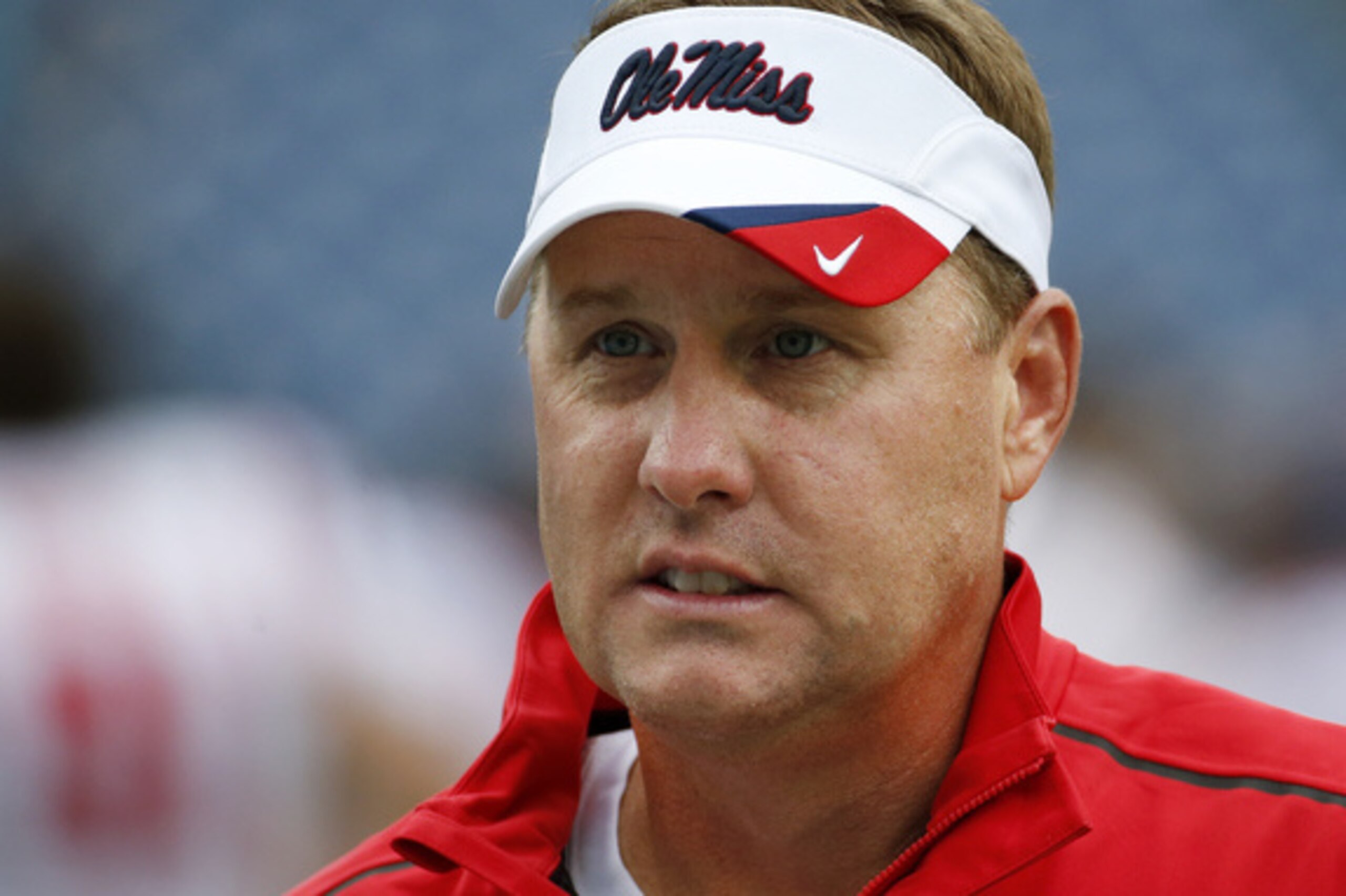
"We want to get longer and faster," Freeze said. "We're not so much concerned with defensive linemen or our backers being a certain weight. We think we can add weight once they get there. You have to recruit speed. If you can't run on the defensive side, it makes for some long afternoons. People are so good now at exploiting matchups and putting their guys in space with these offenses."
Instead of having outside linebackers who can go into the hole and stand up powerful running backs, you need outside linebackers who can do that and go east and west to track down speed-rushers and quarterbacks off the edge and, at the very least, occupy those lanes and turn plays back inside.
Freshman Alabama linebacker Rashaan Evans is a perfect example of teams adjusting to the speed of the game. Playing the same "Jack" linebacker position as 265-pounder Courtney Upshaw played in 2011, the 225-pound Evans has already made an impact for the Crimson Tide this year, notching six tackles and one sack through four games.
“Rashaan is a freak,” fellow linebacker Reggie Ragland told Torrence, B/R's lead Alabama writer, earlier this season. “And when you’re a freak, you deserve to be on the field. He’s putting that time in to be that player that Coach Saban and Coach [Kirby] Smart and (outside linebackers) Coach [Lance] Thompson want him to be.”
The injection of speed and creativity has forced coaches to react in the recruiting game, which has allowed a guy like Evans to make an immediate impact in the toughest conference in the nation.
Barrett Sallee is the lead SEC college football writer and video analyst for Bleacher Report as well as a co-host of the CFB Hangover on Bleacher Report Radio (Sundays, 9-11 a.m. ET) on Sirius 93, XM 208.
Quotes were obtained firsthand unless otherwise noted. All stats are courtesy of cfbstats.com, and all recruiting information is courtesy of 247Sports. Information from B/R's Alabama lead writer Marc Torrence was used in this story. Follow Barrett on Twitter @BarrettSallee.

.jpg?w=2560 "Colts Texans Football")

.jpg?w=2560 "Mahomes Told Teammate to Leave Meeting")
.jpg?w=2560 "Rodgers Iced Out on Plane 💎")


.jpg?w=2560 "Lamar Being Out Shocked Ravens")
.jpg?w=2560 "Raiders Could Start Mendoza")