

Healthy Steve Nash Would Change Grim Outlook of Los Angeles Lakers' Season
In February, Grantland's Bill Simmons summarized the average Los Angeles Lakers fan's sentiments regarding Steve Nash.
"He just turned 40," Simmons wrote. "His body keeps breaking down. The Lakers need his cap money—desperately—whether it happens through trade, medical retirement, buyout, stretch provision, whatever. He's in the way."
Be that as it may, the organization ultimately elected to keep the iconic point guard around and pay him the hefty $9,701,000 he's owed in the final year of his contract.
TOP NEWS

LeBron's Special Helicopter Deal

MJ Makes Record-Setting Donation 🙌
Report: Embiid Down to Rookie Weight
Now the question is whether 20/20 hindsight will view that expenditure as a sunken cost or savvy investment.
After playing in just 15 games last season (and 50 in 2012-13), Nash is looking to earn his money. His legacy remains intact thanks to those transcendent years in Phoenix, but the encore performance hasn't gone as planned.
The season ahead may be the last opportunity to change that.
Though it's still early to make any bold predictions, early returns paint a favorable picture of Nash's health and vitality.
And after what these Lakers—Nash included—have been through, we'll take whatever good signs we can get.
The latest good sign is pretty consistent with what Lakers trainer Gary Vitti intimated to NBA.com's Mike Trudell in August.
"All my conversations with [Nash] are that he has absolutely no neural issue at this point," Vitti said. "He's playing full-tilt, unrestricted soccer. He's doing all the corrective injury and performance exercises he's supposed to be doing, and right now he's 100 percent healthy."
"Right now things look better on July 31, 2014, than they did July 31, 2013. He was still having nerve issues last July," Vitti added.

Nash's 2013-14 campaign never really got off the runway thanks in large part to a fractured fibula he suffered in November of 2012. ESPNLosAngeles.com's Ramona Shelburne described the fallout from that break as a "chain reaction in the nerves throughout Nash's body."
"One day it's his hamstrings and lower back that are barking," Shelburne explained. "Then the pain spreads into his neck and up and down his spine. Another day it's shooting down his legs again."
"I'm still fighting things that happened because of the broken leg," Nash told reporters early last season. "I still feel that almost every day, all over. It's not just in that spot. The whole system in a way is different now, it's just a little bit more sensitive."
Shelburne refuted the notion that his ongoing struggles were attributable to age, writing, "It's a circuitry issue, not decay—like the logic board on your computer going haywire more than wear and tear on the parts."
The coast isn't entirely clear, but Nash appears to have made significant progress.
As NBCSports.com's Brett Pollakoff put it, "The problem with the nerve injury is that it's been unpredictable, and has flared up at seemingly random times. If Nash is able to keep it in check for the bulk of the upcoming season, his consistent presence in the lineup would undoubtedly help L.A.'s chances."
So—in theory—there's reason to be hopeful that months of rest and recuperation could yield some dividends. It's entirely possible the 18-year veteran goes on to have an injury-free season, riding off into the sunset without aches, pains and any lingering doubts about whether this summer's decision to keep him around was a wise one.
To be sure, Nash will have some help running the offense this season.
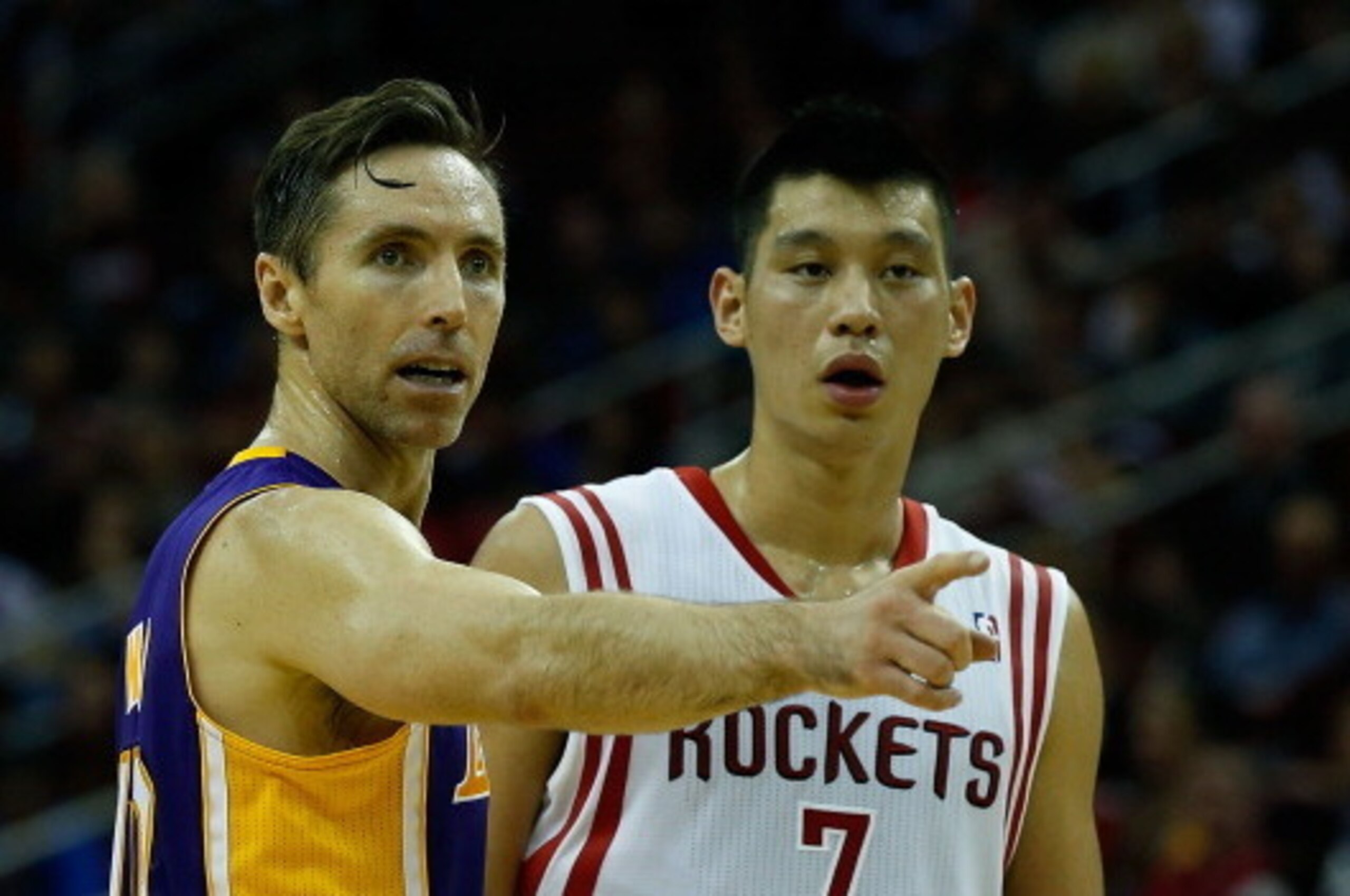
General manager Mitch Kupchak acquired point guard Jeremy Lin from the Houston Rockets, adding some backcourt insurance and supplementing Nash's minutes with a capable floor general still very much in the prime of his career.
At the moment, it remains unclear whether Nash will reclaim his starting job.
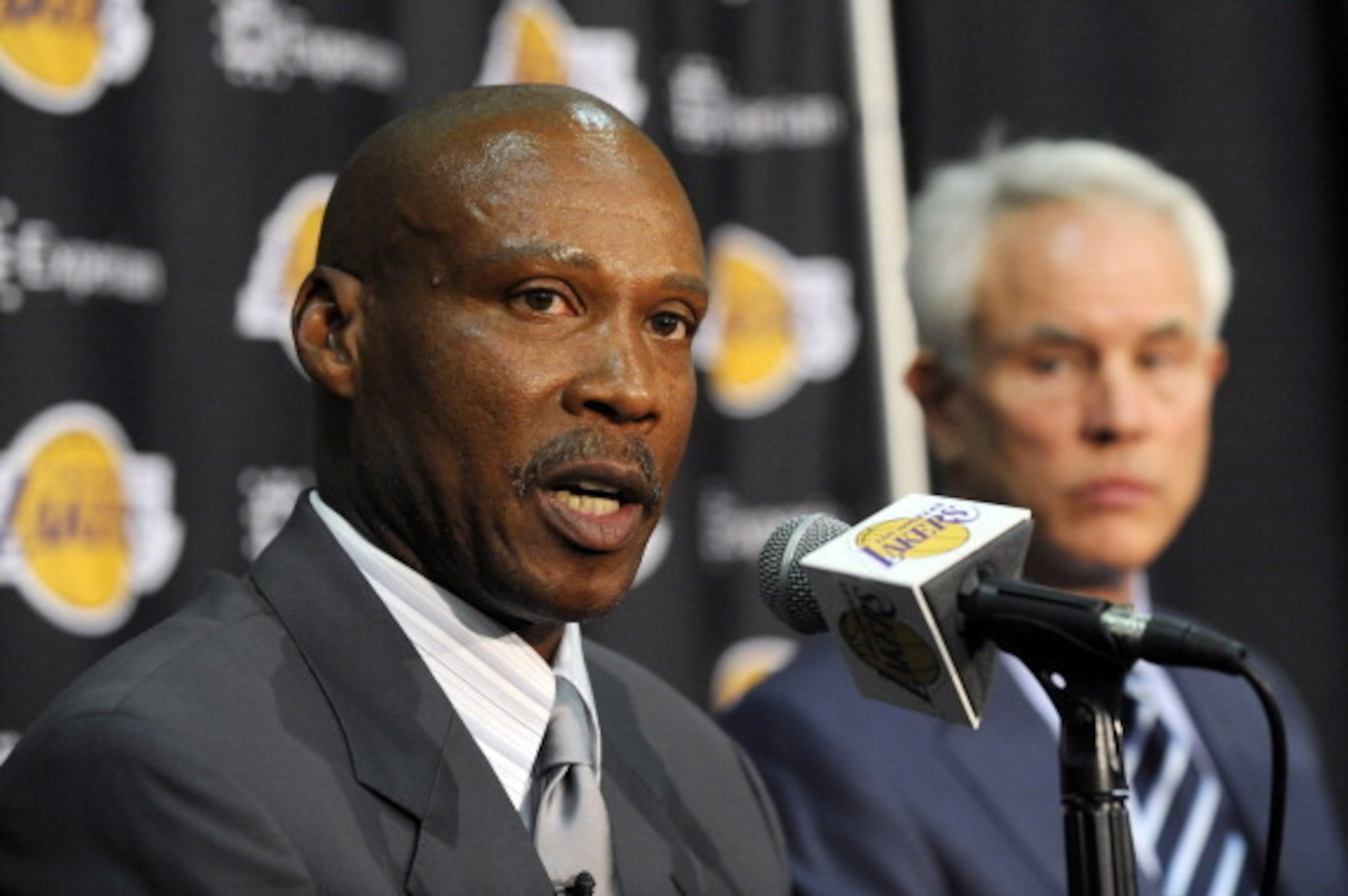
The Los Angeles Daily News' Mark Medina indicated that head coach Byron Scott was planning to start Nash, while the OC Register's Bill Oram subsequently noted via Twitter that decisions about the starting job haven't been made.
Either way, meaningful contributions from the two-time MVP would go a long way toward restoring the Lakers to a respectable position in the crowded Western Conference.
Through 50 games in 2012-13, Nash averaged 12.7 points and 6.7 assists in 32.5 minutes per contest. His 49.7 field-goal percentage was consistent with a 49 percent career mark, and his long-range accuracy followed suit.
This is still a guy who can make a difference.
How much of a difference remains to be seen.
With eight All-Star appearances under his belt, some will expect $9.7 million worth of heroics. Others are—by now—dubious that Nash will ever regain consistently productive form.
The truth probably lies somewhere in the middle, and that's better than nothing.
Though the Lakers' most damning problems haven't been on the offensive end, their defensive struggles create little margin for error. Even if Scott turns around a defensive efficiency that ranked 28th last season (at 107.9 points per 100 possessions, according to Hollinger's NBA Team Statistics), chances are L.A. will have to score a lot of points to win games.
Defensive cultures rarely undergo overnight course corrections.
While arguing Nash will be something of an X-factor this season, Bleacher Report's Dan Favale suggested, "Scott will chirp about defense and the importance of accountability, but these Lakers, from top to bottom, are built to score."
And now these Lakers need to score a little more efficiently. They averaged just 101.9 points per 100 possessions last season, the 21st-best mark in the league. The sometimes impressive scoring output had more to do with a breakneck pace that ranked second in the league than it did any kind of systemic proficiency.
Nash can help change that.
His court vision and decision-making remain uniquely dangerous at any age, so dangerous that his exceptional accuracy from the floor is often overlooked. No one expects Nash to dominate the ball like he did in his prime, but a legend's part-time contributions are still better than most alternatives.
Nash understands how to operate the pick-and-roll far better than most of his peers, making him a force multiplier capable of getting the most from bigs like Carlos Boozer or Jordan Hill. He's a patient and cerebral floor general who prefers facilitating a well-oiled offensive machine to any personal accolades.
But the question has never been about Nash's ability.
It's been whether he can remain healthy enough to put that ability on full display.
With the 2014-15 season just around the corner, all signs point toward him doing just that.

.jpg?w=2560 "Injury-stricken Seahawks signing veteran RB")
.jpg?w=2560 "2 NFL Officials Suspended")

.jpg?w=2560 "Mahomes' Wife Trolls Kubiak 💀")
.jpg?w=2560 "Viral Rams Coach Vid 🖕")
