

Identifying Biggest San Francisco 49ers Problems Entering Week 4
After three weeks of the 2014 NFL season, the San Francisco 49ers sit at 1-2—tied with the St. Louis Rams at the bottom of the vaunted NFC West.
Back-to-back losses to the Chicago Bears and Arizona Cardinals in Weeks 2 and 3 respectively have revealed a plethora of problems about this 49ers team. Has it lost its identity? Is there a disconnect between head coach Jim Harbaugh and the franchise?
What's happening?

.jpg?w=2560 "Rams Eagles Football")
.jpg?w=2560 "Texans-Mixon Released Football")
While San Francisco got off to a hot start in Week 1 by defeating the Dallas Cowboys in sound fashion, subsequent losses revealed a flurry of issues that need to be addressed in short order. The 49ers can ill afford to fall behind in such a tough division.
Unless these concerns are addressed quickly, we can be assured San Francisco will be in for a long and disappointing season moving forward.
These issues are many, and it would take a book to break down and evaluate each problem the 49ers are facing at this point in the young season. But let's try and focus on three predominant factors that are hindering San Francisco's chances up to this point.

Zero Pass Rush
We knew that the 49ers were going to have some difficulty generating a pass rush when linebacker Aldon Smith was suspended by the NFL for nine games.
Smith has 42 sacks over his three pro seasons with the 49ers, and his production has yet to be replaced by anyone on San Francisco's roster.
Initially we had hoped that second-year pro Corey Lemonier would have shouldered the weight of rushing the passer in Smith's stead. Before Week 3, however, Lemonier had yet to register a quarterback pressure in 50 pass-rushing attempts, per Pro Football Focus (h/t David Fucillo of Niners Nation).

With Week 3 now in the books, San Francisco has notched just four sacks—three of which have come from 34-year-old veteran defensive end Justin Smith.
It is encouraging to see Smith play at a high level given his age, but the remaining cast of the 49ers' front seven is not generating the pressure necessary to thwart opponents' passing games.
We saw this in Weeks 1 and 2 when everyone outside of Smith—and rookie Aaron Lynch to a lesser extent—failed to pressure quarterbacks Tony Romo and Jay Cutler, respectively. While Romo helped San Francisco's cause by tossing three interceptions, Cutler was effective in hooking up with Bears wideouts.
Defensive coordinator Vic Fangio drew up some well-timed blitzes in the first half in Week 3, and these worked to a certain extent despite the 49ers not being able to register a sack. But blitzes in the second half proved ineffective, which allowed Arizona quarterback Drew Stanton to regularly find his targets—namely rookie John Brown.
This author has always felt that a secondary is only as good as its pass rush allows it to be. It is only a matter of time before a receiver breaks off from coverage and finds an opening. Thus it is paramount for the pass-rushers to do their job up front.

This isn't happening.
So how do Fangio and the 49ers fix this?
It's easier said than done, of course. Lemonier is having a tough start to the season, but snap counts indicate San Francisco is yet to dismiss the pass-rushing abilities of the second-year pro.
According to Matt Barrows of The Sacramento Bee, Lemonier logged 21 snaps versus the Cardinals, while rookie linebacker Aaron Lynch topped out at 12. Lynch has shown some promise early this season, but Lemonier continues to get the bulk of pass-rushing work from this position.
Ron Kroichick of SFGate.com points out just how much San Francisco's pass-rushing prowess is missing thanks to Aldon Smith's absence. He emphasizes that the current crop of defenders is simply not getting the job done and that it is daunting to think Smith won't return until Week 11 versus the New York Giants.
Also absent from the discussion is second-year defensive end Cornellius "Tank" Carradine.
When drafted, Carradine was supposed to be the prolific pass-rusher who would someday replace the aging Justin Smith. Early this preseason, however, Fangio touched on Carradine missing "too many things mentally" in a press conference.
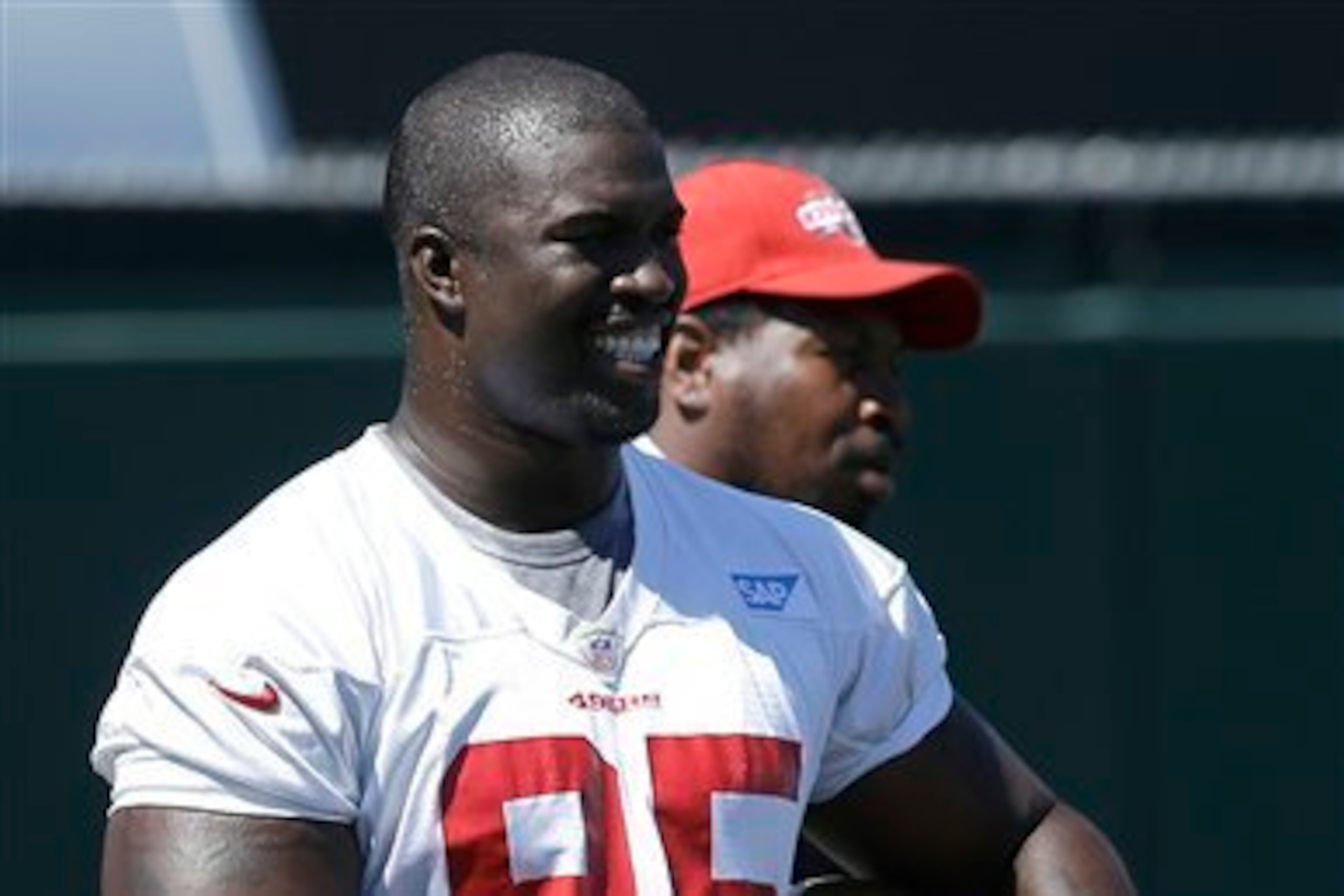
Thus far into the season, Carradine has been activated for just one game out of the three San Francisco has played.
David Fucillo of Niners Nation goes into further detail by writing, "I'm not really sure what Tank's future holds, but clearly he has not done enough for Vic Fangio and Jim Tomsula to be comfortable with him in even a reserve role. That is troubling to say the least."
Regardless of what's happening with Carradine, the 49ers pass rush is in dire straits and needs some desperate help.
As of now, San Francisco isn't getting it.
Zero In-Game Adjustments
The 49ers have gotten out to strong starts in each of their first three games of the season.
Against the Cowboys in Week 1, San Francisco was out to a 28-3 lead by the half. In Week 3, the 49ers commanded a 20-7 lead at the end of the third quarter. In Arizona, San Francisco had a 14-6 lead by halftime.
Second-half meltdowns absolutely demolished hopes that the 49ers could start the season off on the right foot.
So how do we pick this apart?
The answer is nearly just as confounding as are some of the decisions made in the second half of San Francisco's games so far.
In Week 1, the lofty 49ers' lead over the Cowboys allowed them to essentially put things into cruise control for the remainder of the game. Granted, Dallas outscored San Francisco 14-0 in the second half, but the 49ers' lead was far too large to overcome at that point.
Therefore we weren't so concerned.
But in Week 2, Chicago surged forward in the fourth quarter with 21 unanswered points en route to a 28-21 victory.
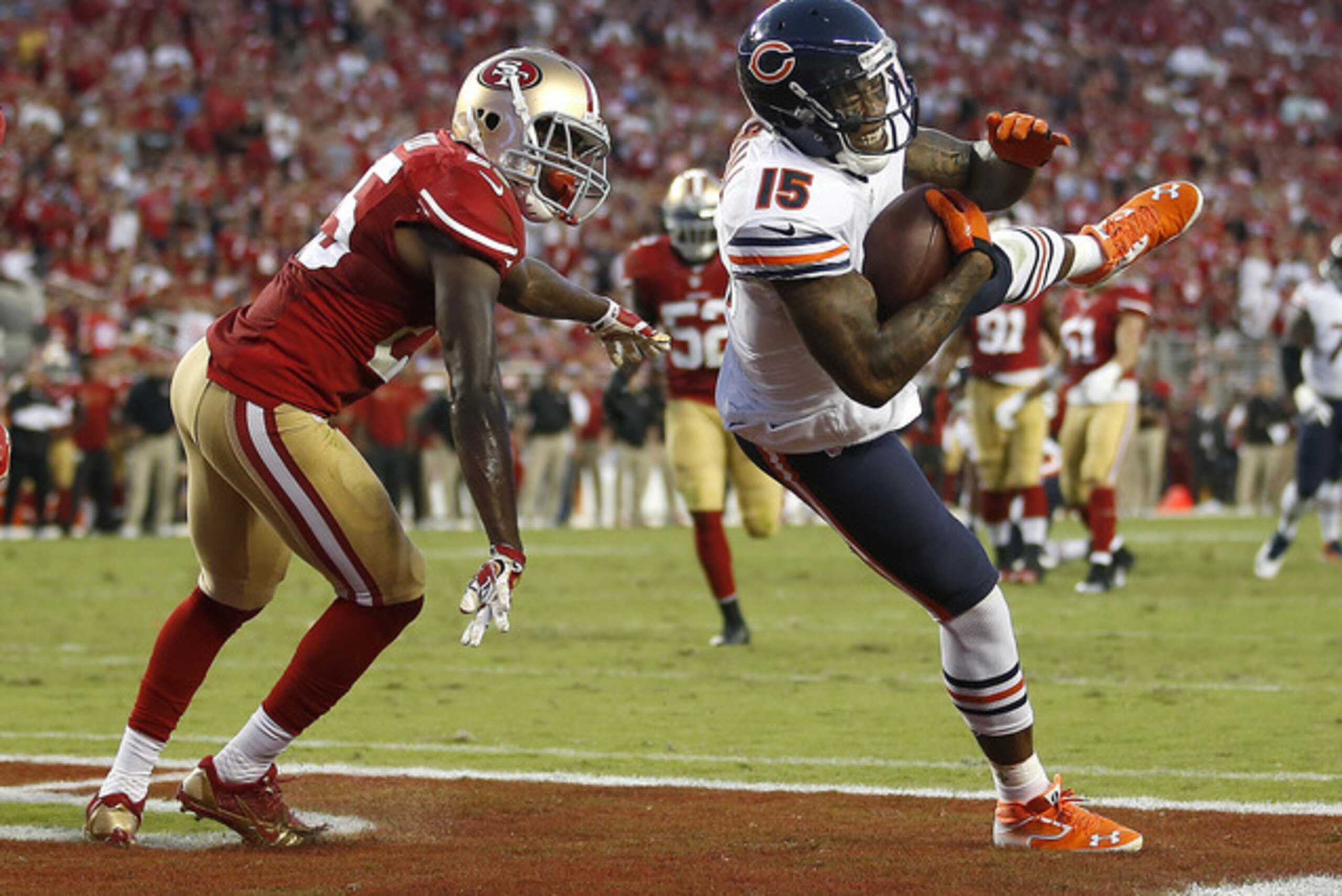
Yes, the lack of pass rush provided the opportunity for Cutler to hook up with Brandon Marshall, exposing rookie defensive back Jimmie Ward in the process (see above problems with a secondary hindered by a lacking pass rush).
Yet this is only a part of the problem.
San Francisco could have punched the ball in for a touchdown early in the third quarter. But three straight runs up the gut were stuffed by the Bears defense, forcing the 49ers to settle for a field goal and allowing the Bears to get back into the game.
Two subsequent San Francisco drives ended in interceptions, dashing most hopes for a 49ers comeback. From watching the game, it appeared as if San Francisco had entered desperation mode.
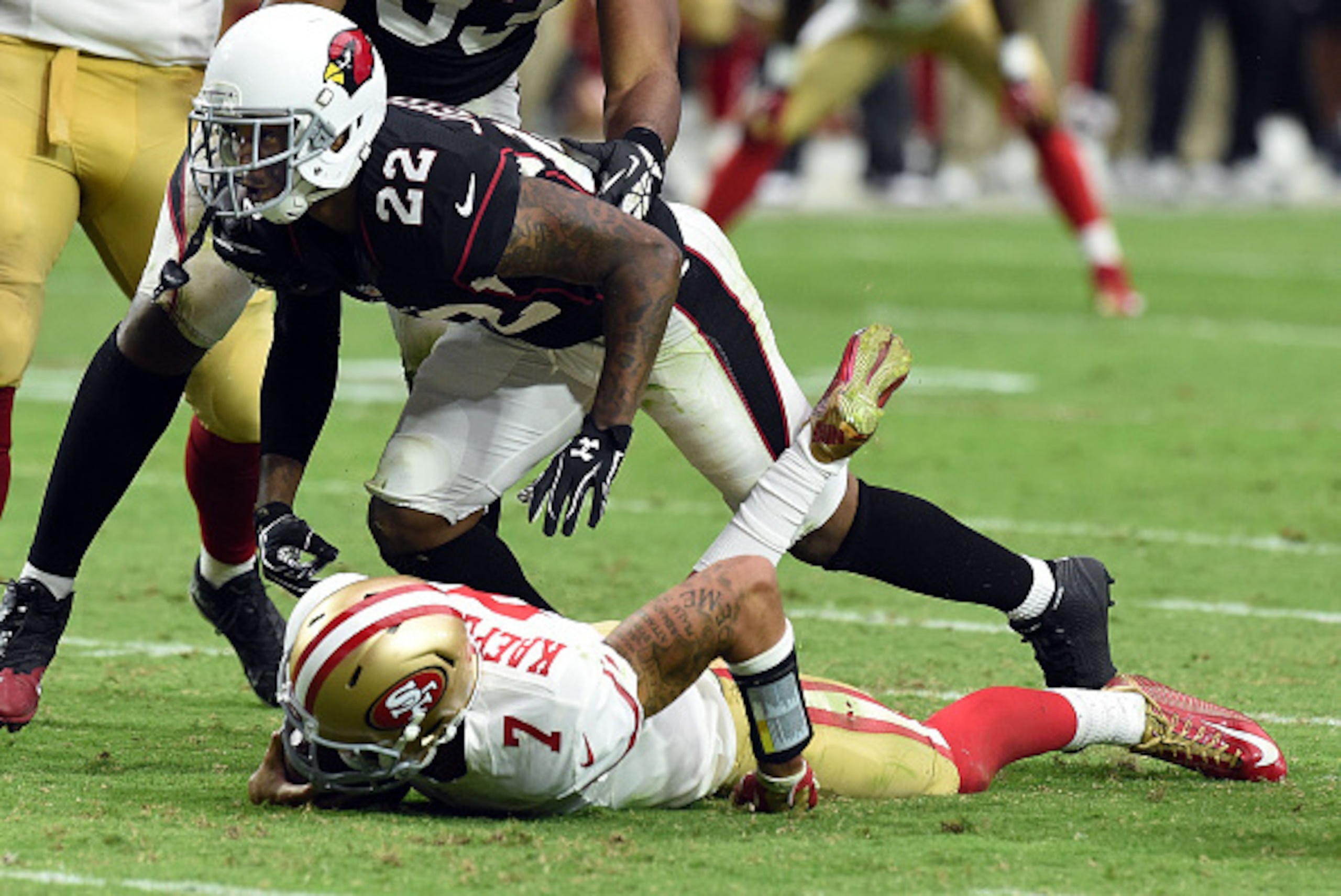
After Colin Kaepernick's first interception of the quarter, the 49ers were trailing only by one with plenty of time remaining. But offensive coordinator Greg Roman utilized Frank Gore—who averaged 4.8 yards during the game—just once during this drive.

Chicago sat back on the 49ers receivers and forced yet another interception from Kaepernick.
San Francisco's final drive also fell short.
Fast forward to Week 3, and the second half again proved to be abysmal from the 49ers' perspective.
The first San Francisco drive in the half utilized Gore just once. Instead of tiring out the Cardinals defense and working the clock, Kaepernick and the 49ers offense tried three straight passing plays and failed to generate a first down.
"Common thread through every 49ers loss in the Jim Harbaugh (or more importantly, Greg Roman) Era: The disappearance of Frank Gore
— Ruthless Sports Guy (@Ruthless_Sports) September 22, 2014"
Similar drives, aside from the one that was hindered by an Anquan Boldin unsportsmanlike penalty (more on that later), ended in the same fashion.
Matt Maiocco of CSN Bay Area goes into further detail about the ineptitude of San Francisco's offense in the second half:
"The spread offense worked well for the 49ers on their first two drives. But, then, the Cardinals adjusted, including placing a spy on quarterback Colin Kaepernick. The 49ers had no answers, and were unable to score over the final 35 minutes of the game. Frank Gore was silent throughout, as he played just 50-percent of the snaps. In fact, four wide receivers saw more action than the team’s featured running back. Gore's best plays were in pass protection. Gore and Carlos Hyde combined for 23 yards rushing on just nine carries. The 49ers completely lacked offensive rhythm after such a promising start.
"
Then there is the defense.
Ward was again victimized, although he stated via Maiocco that he was expecting help from veteran safety Antoine Bethea on a play that resulted in a Brown touchdown.
Whatever semblance of a pass rush dissolved, and Stanton looked like a bona fide starter against a confused and inept 49ers defense.
Simply put, Arizona made its in-game adjustments. San Francisco did not.
Lack of Discipline
It's time to jump on the penalty bandwagon once more.
Calling out the officiating crew is always an easy thing to do. When calls don't go your way or they come at costly times, it's easy to state the officials "had it out" for the 49ers.
But let's calm down for a second and forget any notion that the referees have some sort of grudge against San Francisco. Rather we can focus on the thought that perhaps they made some key mistakes of judgment.
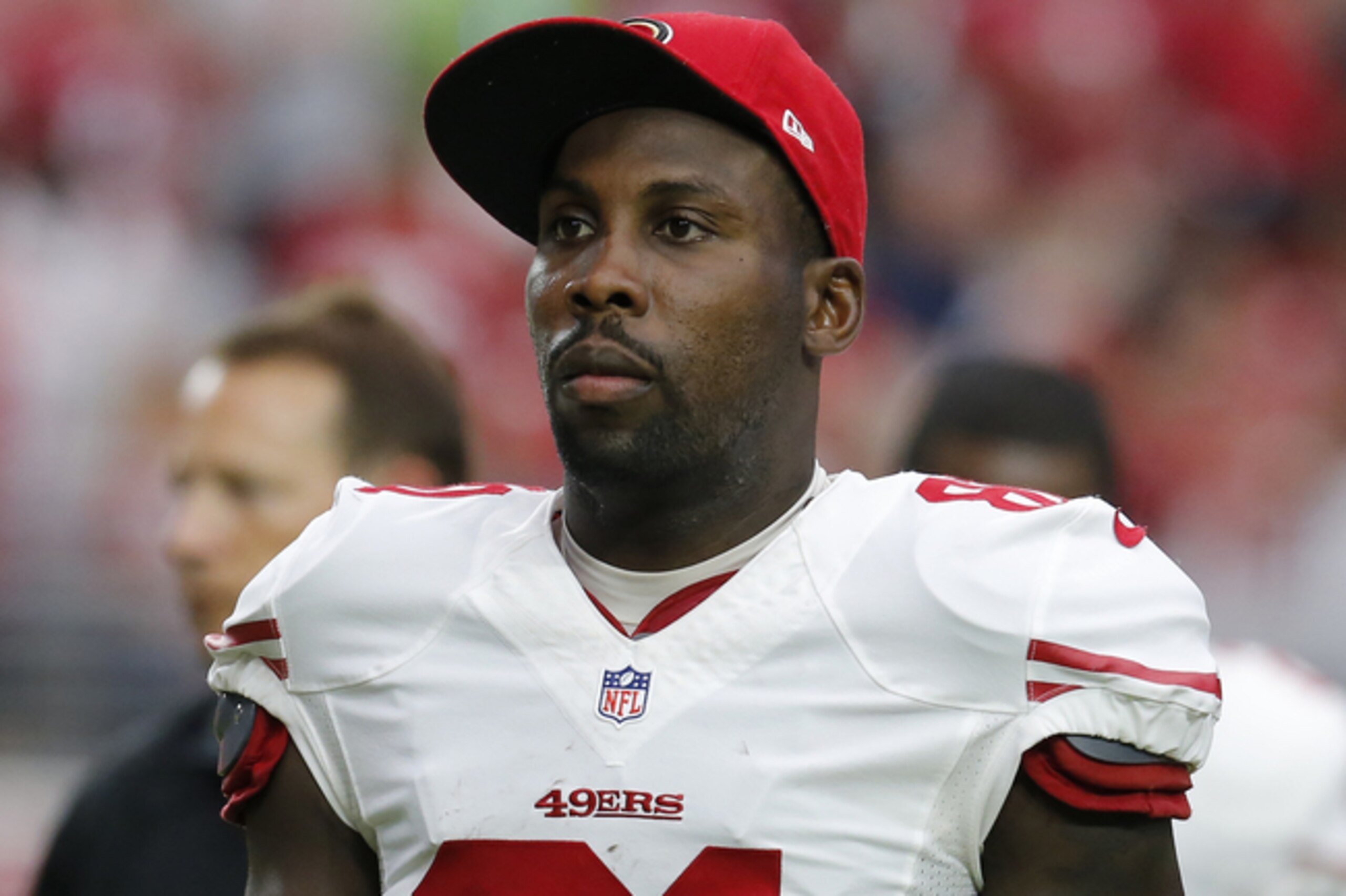
This is what Boldin felt was the case after Sunday's game versus Arizona.
“For me, it’s been obvious the last two weeks the amount of calls that have gone against us and the amount of calls that we’ve gotten,” Boldin said via Maiocco. “It hasn’t been close. And every week it’s the same thing.
“You send the tape in, and the NFL just reports back, ‘We made a mistake.’ But at the same time, the crap is costing us games. At some point, they need to be held accountable.”
The 49ers we penalized 16 times for 118 yards in Week 2. In Week 3, they committed nine penalties for 107 yards.
Boldin was one player responsible for such a penalty. In the third quarter, Boldin headbutted Arizona safety Tony Jefferson after the 49ers had moved to the Cardinals' 6-yard line. The result was a 15-yard unsportsmanlike penalty, which pushed San Francisco back to the 21-yard line.
San Francisco could not score a touchdown, and a subsequent field-goal attempt was blocked by the Cardinals' special teams unit.
The 49ers were trailing 20-14 at this point, so Boldin's mistake was about as costly as any when trying to shift the momentum back into San Francisco's favor.
Cornerback Chris Culliver was also flagged for taunting.
Those who wish to argue that the officials have a bone to pick with Harbaugh and the 49ers may do so, but it will have almost zero effect upon what San Francisco needs to do. Penalties will happen, and yes, bad calls will come the team's way.
That's the nature of the game currently. Tightly called games and questionable flags go beyond just San Francisco's complaints.
More importantly though, Harbaugh has a situation on his hands that can quickly turn into something uglier. The lack of discipline, even among veteran players, is shocking and perhaps a bigger underlying problem.
But as Scott Ostler of SFGate.com points out, San Francisco needs to hold itself accountable and do everything in its power to nip this thing in the bud now. He writes:
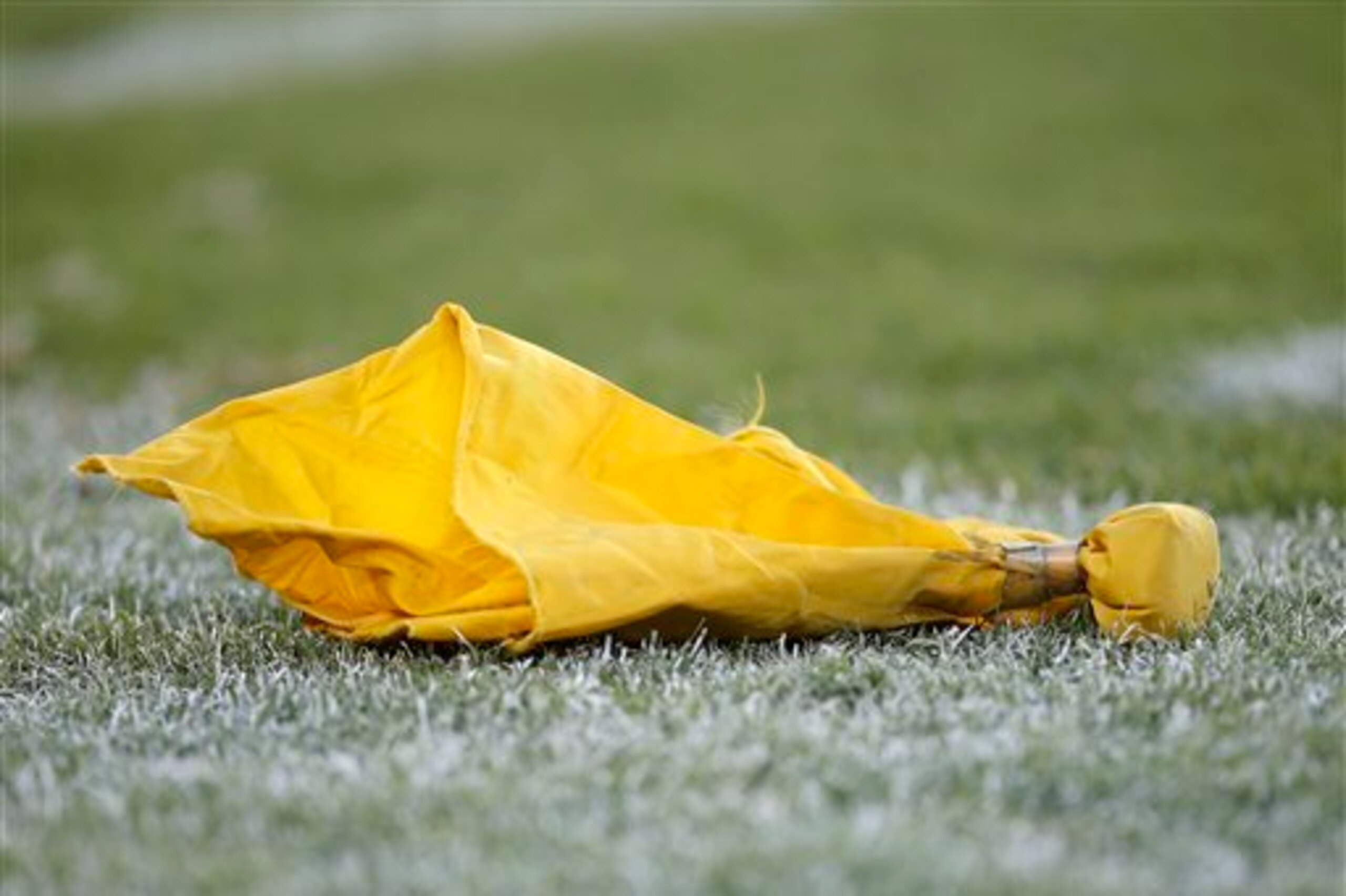
"I asked Harbaugh if he felt any of the penalties were improperly called. “No,” he said. A good bet is that Harbaugh and his players will have a discussion or two this week about penalties, especially the ones involving heated interaction with opponents. The NFL is a trash-talkers’ league, and cheap shots get taken, but the 49ers are going to have to start adjusting and rising above, because the yellow dandruff can be fatal.
"
Ultimately, penalties and flags fall upon the coaches. True, some players are prone to receiving such calls, but the entire magnitude of the situation needs to be resolved by the 49ers coaching staff immediately.
We have seen enough evidence to reveal the significant problem.

Putting It Together
So where do the 49ers go from here? A 1-2 start to the season isn't anything new to Harbaugh and the 49ers. Remember, they held this same record a year ago and made their way to the NFC Championship Game for the third season in a row.
Therefore we shouldn't throw up our hands and admit San Francisco's season is lost. Teams make adjustments, and while the 49ers' in-game adjusting hasn't worked, plenty of time remains for San Francisco to right the ship in coming weeks.
As Tony Dungy from NBC Sports (h/t Ann Killion of the San Francisco Chronicle) said on the Sunday Night Football broadcast, the 49ers do not look like a playoff team right now.
In spite of the immense talent on the team's roster, San Francisco appears as if it is doing everything in its power to thwart any chances of a playoff run.
Championship teams overcome adversity. The 49ers are facing their own adversity early this season but have yet to adjust to it and adapt.
We'll see just how this progresses in coming weeks. San Francisco will face the undefeated Philadelphia Eagles at home in Week 4, and those adjustments need to be made in order for the 49ers to avoid a debacle of a start to the 2014 season.
All statistics, records and accolades courtesy of Pro-Football-Reference.com unless otherwise indicated.
Peter Panacy is a featured columnist for Bleacher Report, covering the San Francisco 49ers. Be sure to check out his entire archive on 49ers news, insight and analysis.
Follow him @PeterPanacy on Twitter.
.jpg?w=2560 "Commanders Eagles Football")


.jpg?w=2560 "Grading WWE Raw 🔠")

.jpg?w=2560 "Mahomes' Wife Trolls Kubiak 💀")
