
The One NBA Star Every Top-10 Rookie Should Emulate in 2014-15
For NBA rookies breaking into the league, it's important to soak up as much as they can from the league's top stars.
There are some invaluable lessons and highly effective skills to learn if they watch their role model's nightly approach to the game. Veterans are treasure troves of everything from fundamentals, tricks of the trade and intangibles.
We took the top 10 draftees this year and identified stars they should emulate in 2014-15.
To be clear, these aren't all necessarily "NBA comparisons" for these newcomers. And the rookies won't be able to mimic every aspect of the veterans' repertoire. The youngsters simply can learn key lessons from these elite performers and apply them to their own development.
Elfrid Payton, Orlando Magic: John Wall
1 of 10
Biggest Takeaway From Wall: Confidence and practice from three-point range
Louisiana-Lafayette standout Elfrid Payton will bring his athleticism, defensive instincts and playmaking skills to the Orlando Magic as a 20-year-old floor general.
What he won't bring, at least initially, is a consistently productive outside shot. He was 14-of-54 (26 percent) from the college line as a junior.
Similar to Washington Wizards guard John Wall, Payton will enter the NBA as an explosive slasher who needs polishing from three-point range. The rookie can take comfort knowing Wall has improved dramatically within his first few years in the league.
Wall made a combined 49 three-pointers in his first three years in the league, and then sank 108 in 2013-14 alone. Wizards skipper Randy Wittman points to a combination of practice and conviction, per Rick Maese of The Washington Post:
"When your confidence grows, your belief grows. It’s nothing more than that. It wasn’t [like] we sent him to the moon and got him fairy dust or anything and sprinkled it on him. He worked. That’s what you have to do to improve a weakness.
"
The sooner Payton gets comfortable and confident from the NBA line, the sooner he can enhance Orlando's offense like Wall boosted Washington's.
Noah Vonleh, Charlotte Hornets: Al Jefferson
2 of 10
Biggest Takeaway From Jefferson: When and how to use face-up and post-up moves
Stretch 4 Chris Bosh may be the eventual NBA comparison for Charlotte Hornets rookie Noah Vonleh. But it's not a good idea for Vonleh to fall in love with the three-pointer as much as Bosh and become so perimeter based.
Outside shooting is certainly important to stretch the floor and keep defenses honest. However, Vonleh must work on maximizing his size and strength in the post.
He has a basic set of post moves right now, consisting largely of baby hooks over his shoulder. In order to be a legitimately dangerous weapon on the block, he must expand his game and get a better feel for face-up and back-to-the-basket maneuvers.
Few players have better instincts and skills in the paint than Hornets center Al Jefferson, so why not tab him as the man Vonleh should emulate? The young prodigy will learn so much if he pays attention to Jefferson's footwork, timing and decision-making.
While he may never be the featured scorer Jefferson is, Vonleh can become a dependable inside-out threat if he learns Big Al's tendencies.
Nik Stauskas, Sacramento Kings: The Splash Brothers
3 of 10
Biggest Takeaway From Splash Bros: Constantly outworking opponents
We cheated here, lumping the Splash Brothers together as the "one" star Nik Stauskas should emulate.
If Stauskas is going to watch Klay Thompson work his craft as a shooting guard, he might as well keep an eye on Stephen Curry's playmaking prowess.
The Sacramento Kings rookie was a prolific three-point shooter at Michigan, but reaching the level of the Dubs' duo (presumably a goal of Stauskas') is no cakewalk. Curry and Thompson ranked No. 1 and No. 2 in three-point field goals in 2013-14, combining for a mind-boggling 484 triples.
From Curry, the rookie can learn how to improve his pick-and-roll skills, find creases to slash and use the defense's attention to set up teammates. From Thompson, he can learn how to work hard away from the ball and deliver an ultra-efficient release.
Perhaps the most important thing he can emulate is Thompson's effort and positional awareness on defense. Stauskas is considered a mediocre stopper, and he could learn from Thompson's example of exertion on both ends. Klay's father and former Los Angeles Laker Mychal Thompson talked about his son's nightly approach:
"Everybody knows that he can score, but I always told him I'm so proud of how he takes so much pride in defense as he does with scoring," he told Sam Amick of USA Today.
That's what defense boils down to, right? Pride.


Julius Randle, Los Angeles Lakers: Paul Millsap
4 of 10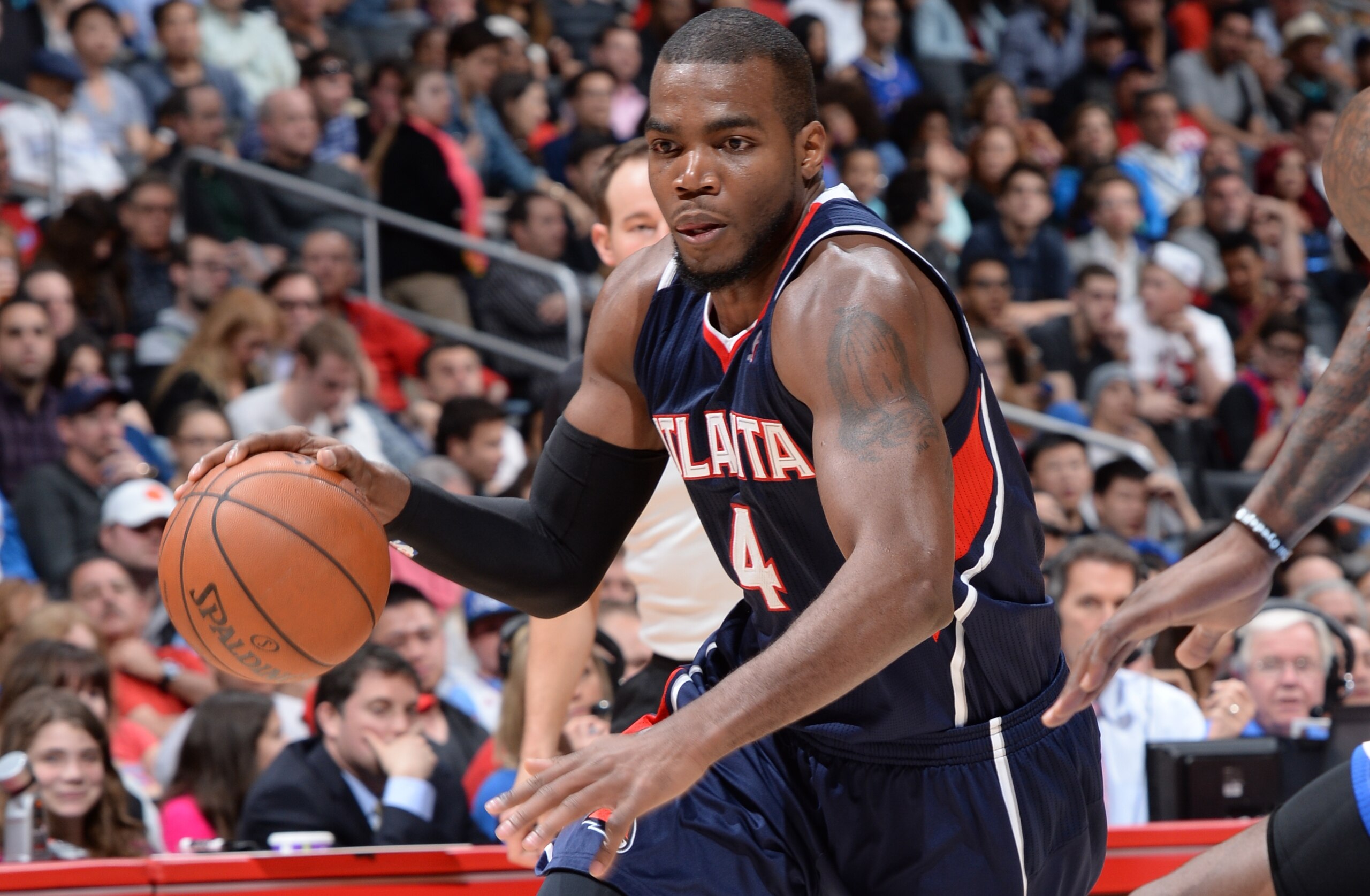
Biggest Takeaway From Millsap: How to use the perimeter and passing to his advantage
Julius Randle's game resembles an exciting blend of lefties like Lamar Odom and Zach Randolph. It's a unique mix of quickness, dexterity and power. He'll undoubtedly give the Lakers an interior presence and someone who can catch on the outside and drive.
Los Angeles Lakers fans would love it if he had an outside shot, though. It might take Randle a couple years before he's a competent three-point shooter, but in the meantime, he should watch how it's expanded Paul Millsap's game.
During his NBA 200 series examining the top players at every position, B/R's Adam Fromal explained how Millsap has blossomed into a more versatile 4-man:
"Going into the 2013-14 season, Paul Millsap had never even taken 40 three-point attempts in a single season, and his career-high in makes was just 13. But during his first year with the Atlanta Hawks, the power forward more than quintupled both of those numbers, and the development of his perimeter game opened up a whole new world of possibilities when he attacked the basket.
"
Fromal also noted Millsap's passing skills from the power forward spot (Millsap dished a career-high 3.1 assists per game in 2013-14): "He's one of the few players at this position who can drive from the perimeter and keep his head up, seeking out open shooters as he attacks the basket."
Randle won't turn into a Millsap type of player overnight, but he can glean two important lessons from the Hawks star: Embrace the three, and keep your head up while driving.
Marcus Smart, Boston Celtics: Dwyane Wade
5 of 10
Biggest Takeaway From Wade: Combo guard skills and utilizing the in-between game
Being a truly effective combo guard isn't easy. It involves attacking and scoring with the skills and tools of a wing, along with solid quarterbacking instincts to distribute the ball.
Marcus Smart of the Boston Celtics has a chance to become a dangerous combo guard, but his mid-range effectiveness leaves something to be desired.
"(Smart) needs a mid-range game," said B/R's Jonathan Wasserman. "Hit less than 25 two-point jumpers all year (in the regular season)."
To improve his overall scoring repertoire while remaining a productive passer, he should look to three-time NBA champ Dwyane Wade. The Miami Heat superstar has developed into a dangerous jump-shooter, especially in the 15-18 foot area.
Wade will have the ball in his hands quite a bit in 2014-15. Smart should watch how he picks his spots to attack, pass and shoot. Growing this skill would boost the rookie's versatility and overall value early in his career.
Dante Exum, Utah Jazz: Monta Ellis
6 of 10
Biggest Takeaway From Ellis: Finding the balance between attacking, shooting and passing
After an underwhelming summer league spent playing both guard positions, Utah Jazz rookie Dante Exum needs to study some of the best combo guards in the NBA. He may be playing the 1 and the 2 in 2014-15, so he needs to be able to work in scoring mode or facilitating mode.
Believe it or not, Monta Ellis of the Dallas Mavericks could be a great star for him to mimic. Exum's closest NBA comparisons are guards like Michael Carter-Williams and Russell Westbrook, but he may be able to learn so much more from a 2-guard like Ellis.
At this point in his career, Ellis has learned to pick his spots more judiciously as a shooter—and frequently use his speed to attack the rim.
Exum's big takeaway from Ellis: You don't have to be a classic 2-guard to play the 2-spot.
He shouldn't have a problem embracing that philosophy.
"I’m a get-to-the-rim type of player,” he told Danny Chau of Grantland.com at the combine. “I beat my man off the dribble and try to draw help to find open players."
And he should do just that, especially if he's surrounded by shooters like Trey Burke, Rodney Hood and Gordon Hayward.
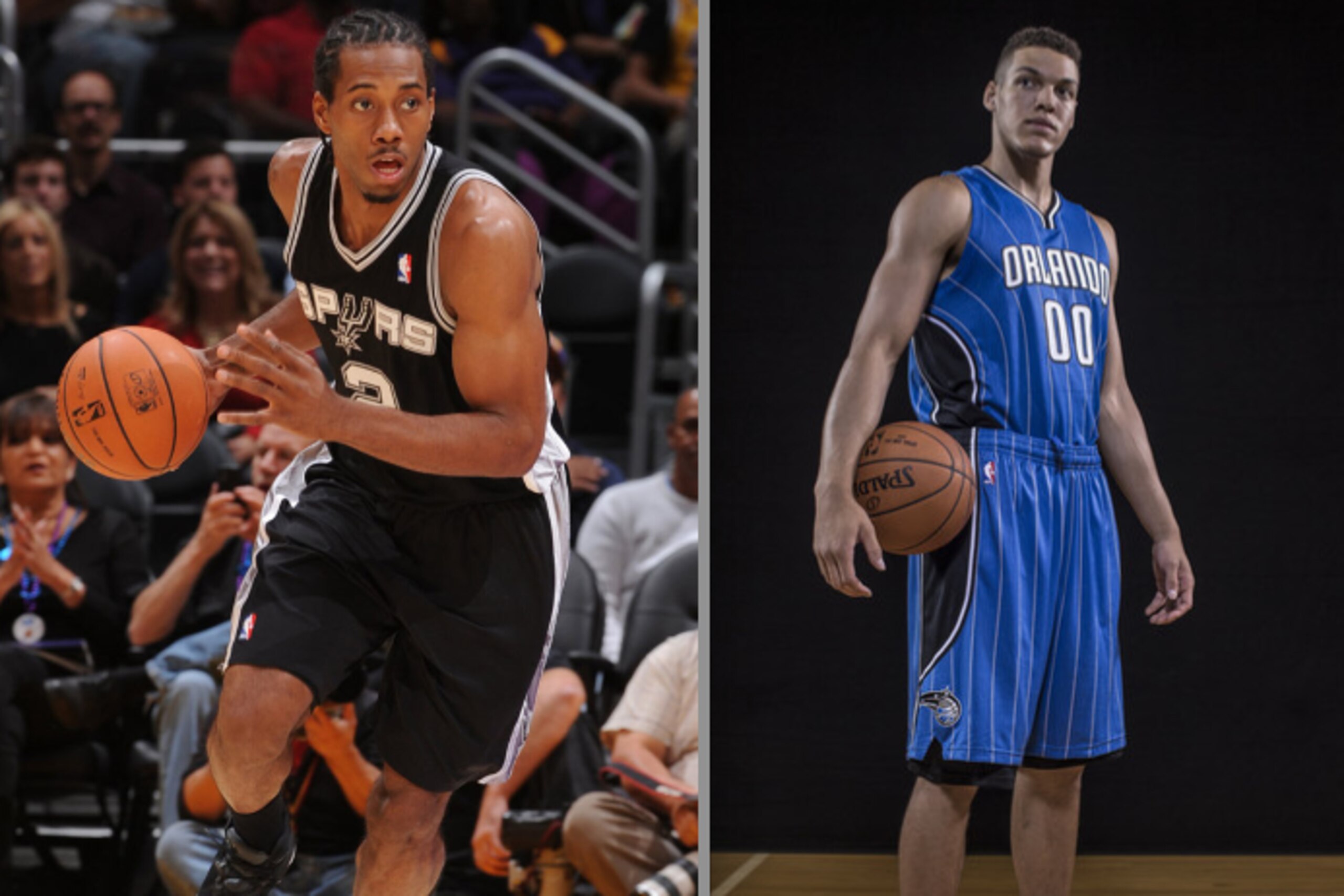
Aaron Gordon, Orlando Magic: Kawhi Leonard
7 of 10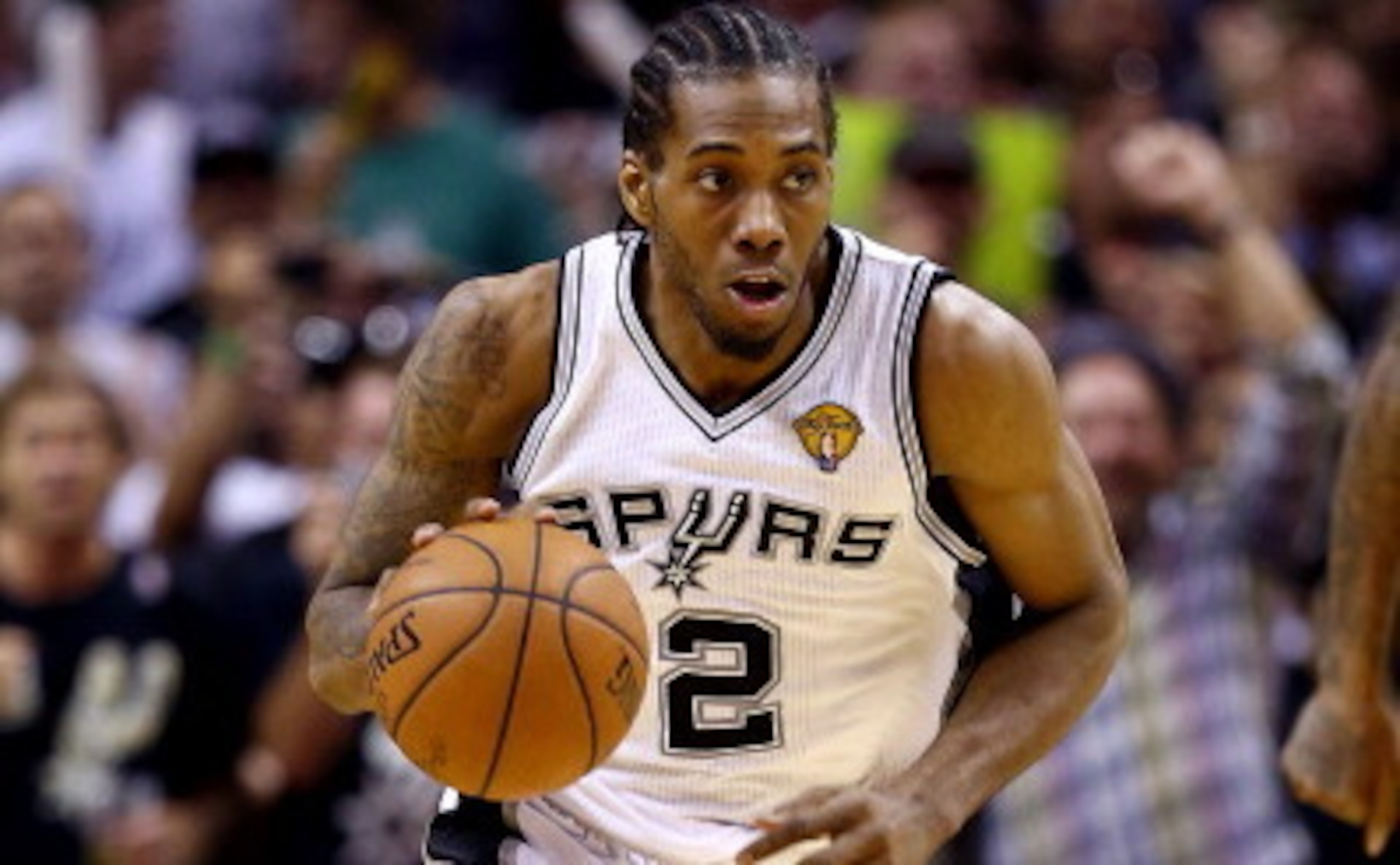
Biggest Takeaway From Leonard: How to use simple yet effective ball-handling moves
When it comes to Aaron Gordon's offensive deficiencies, I'm more concerned with his ball-handling and shot-creating ability than his jump shot.
Ball-handling involves coordination, adjusting to your opponent and smoothly traversing the court to create space. It's a tough skill to apply in fast-paced game scenarios if you don't already have the natural gift for it.
Kawhi Leonard is a great example of a two-way forward who uses simple yet efficient dribbling to accomplish his tasks. He doesn't rush things, and he's come a long way from where he was as a freshman at San Diego State.
"From his freshman year to his sophomore year, he worked on his ball handling and became much more of a playmaker for his team," said Zach Harper of CBS Sports.
Gordon could make that kind of progress from his freshman year at Arizona to his rookie year with the Orlando Magic. We saw flashes of creativity off the bounce last year, but his lack of advanced moves hampered his scoring and passing production.
If he keeps things simple like Leonard, his dribbling (and inevitably all other) skills will open up new opportunities for him.
Joel Embiid, Philadelphia 76ers: Tim Duncan
8 of 10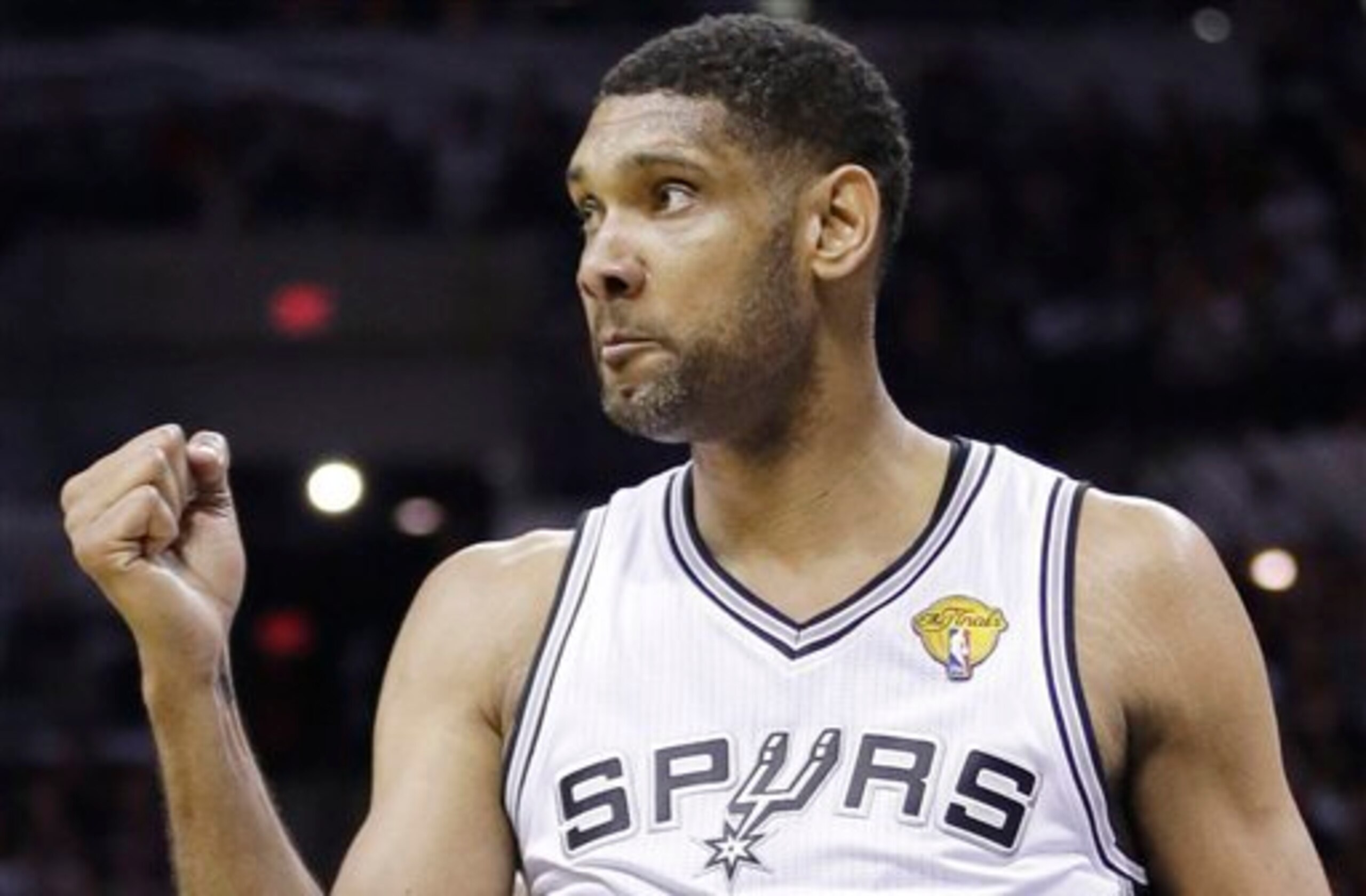
Biggest Takeaway From Duncan: How to use angles and timing (rather than sheer athleticism)
Cameroon native Joel Embiid is blessed with tremendous physical tools when healthy. He's got a 7'5" wingspan, a strong frame of 250-plus pounds and outstanding agility for someone his size.
In order to maximize his career potential and deal with injuries that may slow him down, however, he must learn how to be effective without explosiveness or dynamic quickness.
Enter Tim Duncan, the timeless tower whose game is predicated on craftiness, timing and flawless footwork. The big fella's style of play is built to outlast all his hyper-athletic peers. Hence the five championships spanning three different decades.
Embiid's skill set is already quite impressive for someone his size, and he's one of the few players who actually has a chance to emulate The Big Fundamental.
He'll surely have his eyes on Duncan next year, just as he did last June when he tweeted: "Duncan is so patient in the post #learning."
If he combines Duncan's methodical positioning and skill with his natural gifts, he'll quickly become a menace.
Jabari Parker, Milwaukee Bucks: Kevin Durant
9 of 10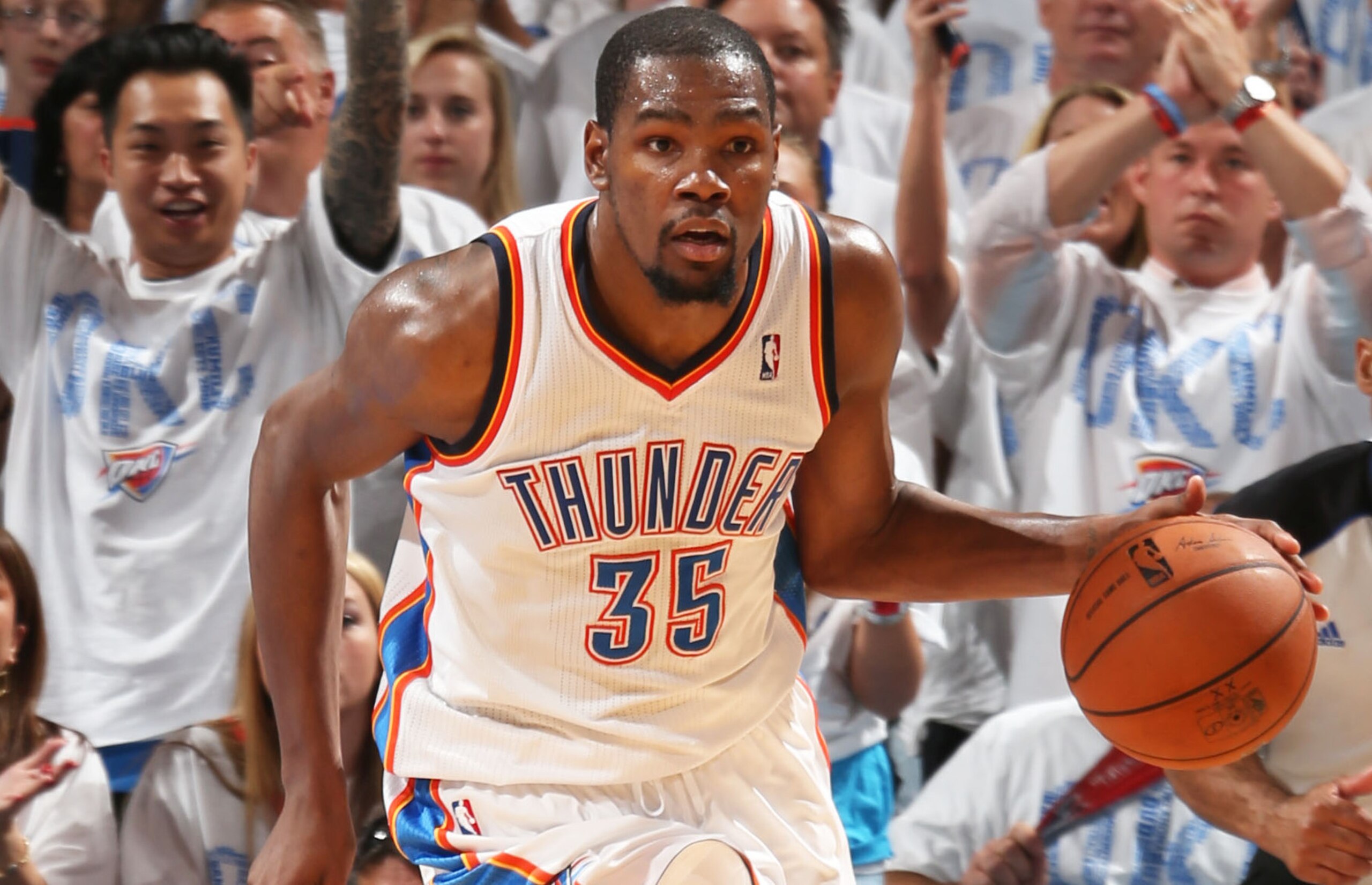
Biggest Takeaway From Durant: Balance between featured scorer and distributor
Jabari Parker's closest NBA comparison is in the mold of Carmelo Anthony and Paul Pierce. He'll certainly pattern much of his game after those worthy models.
However, I think the Milwaukee Bucks draftee can learn some priceless lessons from the game's most lethal scorer: Kevin Durant. Parker will probably never reach Durant's level, but he should try to adopt some of Durant's good habits.
Like Parker, Durant entered the NBA as a one-and-done youngster whose scoring prowess made him an instant impact player. He averaged the same amount of assists per 40 minutes (1.5) as Parker did in college, but he's evolved into a player who can score at a high rate and dish a half-dozen assists on any given night.
Durant's former teammate Caron Butler talked to Cliff Brunt of The Associated Press about Durant's ability to rack up the points while keeping his teammates involved:
"He's an unselfish superstar. Probably one of the most unselfish superstars I've ever seen play the game. I haven't seen a guy like him who can score pretty much at will, but is such a willing passer and facilitator. That's the growth of his game.
"
Parker will fail if he tries to copy every trick in Durant's tool kit, but he should try to emulate the megastar's court awareness on both ends of the floor.
Andrew Wiggins, Minnesota Timberwolves: Paul George
10 of 10
Biggest Takeaway From George: How to consistently excel on both ends
He'll have to watch film from 2013-14 and prior years, but you get the point. Minnesota Timberwolves rookie Andrew Wiggins would do well to model his game-to-game approach after Indiana Pacers star Paul George.
Before he was shockingly injured during a Team USA scrimmage, George was one of the best two-way players in the NBA. LeBron James and Kawhi Leonard might be better, but George's playing style and body type are more suitable for Wiggins to emulate.
George is the Pacers' MVP on both ends of the floor. He exerts a ton of energy as Indy's primary offensive asset, and he's equally important and energetic on the other side of the court. George was the only player in the NBA to land in the top 10 in both usage percentage (28.3) and defensive rating (97.0) during 2013-14.
Wiggins has a chance to make that type of impact, but he's far from being a leader on both ends of the floor. Fortunately, we saw glimpses of two-way dominance at Kansas, and it seems like he wants to be valued for his defense just as much as his offense.
The challenge is to do it for 82 games. He should pattern his defensive approach after George's consistent alert and aggressive stance, and he should grow into an all-purpose performer with the ball.

.jpg?w=2560 "Grading WWE Raw 🔠")

.jpg?w=2560 "Bijan's INSANE 1st Half 🤩")
.jpg?w=2560 "Viral Rams Coach Vid 🖕")
.jpg?w=2560 "Injury-stricken Seahawks signing veteran RB")

.jpg?w=2560 "2 NFL Officials Suspended")