

3rd-Down Weapons Vital to Denver Broncos Success vs. Seattle Seahawks
The Denver Broncos will try to avenge their embarrassing loss in Super Bowl XLVIII against the Seattle Seahawks in the Pacific Northwest on Sunday. According to Odds Shark, both teams are also favored to make it to Super Bowl XLIX, so the game could both be a sequel and a preview of sorts.
Assuming the Broncos can eliminate the gaggle of turnovers that were largely responsible for the blowout, the game will likely come down to which team executes better in key situations. Third downs are particularly important against Seattle’s defense as the San Diego Chargers proved last week in a 30-21 victory.

.jpg?w=2560 "Steelers Saints Football")
.jpg?w=2560 "Rams Raiders Football")
The Broncos have even more weapons than the Chargers on offense, but how they deploy those weapons on third down will be vital to their success. The Seahawks are also a tougher team to beat at home, and crowd noise will now be a factor.
So far, the Seahawks have the worst third-down defense in the entire league, having allowed opposing offenses to convert 55 percent of the time. The Broncos have the ninth-best offense on third down after finishing second a year ago to the Chargers. If the Seahawks can’t keep the Broncos from converting on third down on Sunday, quarterback Peyton Manning’s crew has a very good chance of getting a victory.
The Chargers converted 58 percent of their third-down attempts vs. the Seahawks and may have provided a blueprint the Broncos can follow. Chargers tight end Antonio Gates was particularly effective, and the Broncos have a younger version in Julius Thomas.
Gates caught seven passes for 96 yards and three touchdowns, but he didn’t expose the coverage as much as he exposed a lack of effective pressure from the Seahawks, according to Bleacher Report NFC West Lead Writer Sean Tomlinson. That’s due in large part to the play of quarterback Philip Rivers, who spread the ball around to all of his offensive weapons.
Running back Danny Woodhead and wide receivers Eddie Royal and Keenan Allen caught 16 passes combined for 152 yards. Woohead and his fellow running backs Ryan Mathews and Donald Brown combined for 26 carries and 74 yards. The Chargers weren’t averaging many yards per rush or per catch, but they were creating manageable third downs.
| 3rd-and-2 | Yes | Pass Complete to Danny Woodhead for 3 yards. |
| 3rd-and-1 | Yes | Pass Complete to Ryan Mathews for 10 yards. |
| 3rd-and-1 | Yes | Ryan Mathews Rush for 2 yards. |
| 3rd-and-9 | No | Philip Rivers Sacked for -8 yards. |
| 3rd-and-8 | Yes | Pass Complete to Antonio Gates for 8 yards. Touchdown. |
| 3rd-and-5 | Yes | Pass Complete to Keenan Allen for 12 yards. |
| 3rd-and-2 | Yes | Pass Complete to Danny Woodhead for 4 yards. |
| 3rd-and-8 | No | Pass Incomplete intended for Keenan Allen. |
| 3rd-and-8 | Yes | Pass Complete to Antonio Gates for 8 yards. Touchdown. |
| 3rd-and-8 | No | Pass Incomplete intended for Eddie Royal. |
| 3rd-and-9 | Yes | Pass Complete to Eddie Royal for 16 yards. |
| 3rd-and-7 | No | Philip Rivers Scrambles for 1 yard. Unnecessary Roughness on Bruce Irvin. |
| 3rd-and-2 | Yes | Philip Rivers Scrambles for 4 yards. |
| 3rd-and-13 | No | Pass Incomplete intended for Eddie Royal. |
| 3rd-and-8 | Yes | Pass Complete to Antonio Gates for 15 yards. |
| 3rd-and-7 | No | Pass Incomplete |
| 3rd-and-9 | No | Philip Rivers rush for -1 yard. |
The Chargers were a perfect 6-of-6 on third downs five yards or shorter. Mathews converted two, Woodhead converted two, Allen converted one and Rivers picked up one with his legs.
On third downs six yards and longer, the Chargers were just 4-of-11. Three of those conversions went to Gates and two of them were touchdowns. Gates’ other touchdown catch came on 2nd-and-20 from the Seattle 21-yard line—essentially a third-down scenario.
The Daggers
The long conversions and touchdowns to Gates were really the daggers to the heart of the Seahawks. Without them, the Seahawks would have allowed one third-down conversion over seven yards and a 44 percent conversion percentage overall. Those conversions also were the difference between touchdowns and field goals.
More than anything, Rivers trusted Gates to make plays for him against man-to-man coverage. When the Chargers weren’t getting into manageable third downs, the Seahawks were doing a good job of putting the heat on Rivers, and he had to get the ball out of his hands quickly.
On the first touchdown, Rivers identified the single high safety with a heavy shade to the trips side of the formation and the other safety coming down into the box.
With three pass-rushers in his face, Rivers knew that if Gates could get any separation on his route, he’d be open in the back of the end zone. Rivers made a gorgeous throw to Gates for the touchdown.
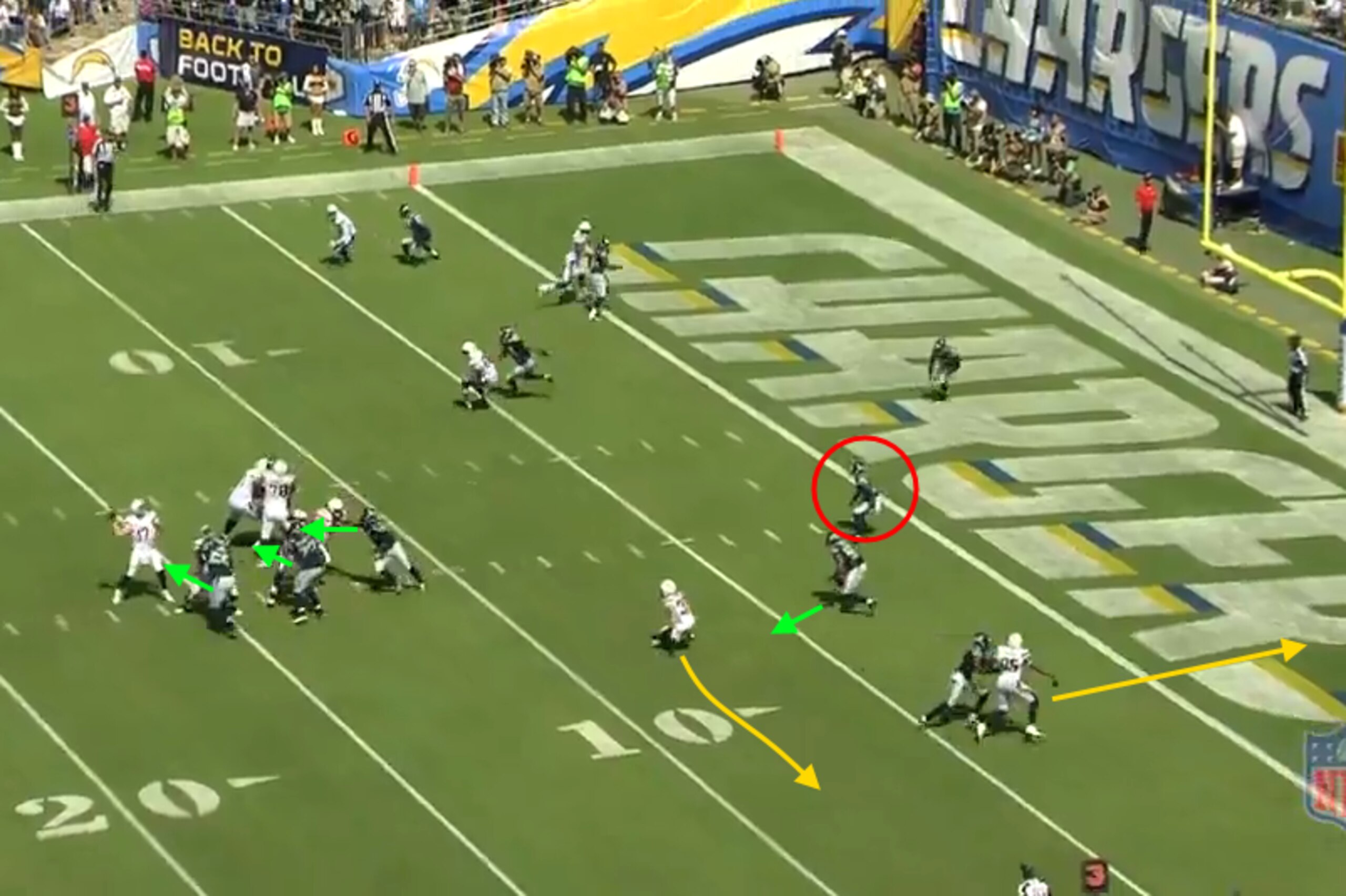
Manning is obviously one of the best at diagnosing defenses and finding the open man, but he’s going to have to trust his players to make plays over Seattle’s defenders as the Chargers did to be successful—especially on third down and more than seven yards.
Gates also used the pivot or “whip” routes with regularity against Seattle's man coverage. Take this long conversion from the fourth quarter, for example.
Rivers correctly read Cover 2, and the safeties rotated over the top, leaving a huge portion of the middle of the field open for Gates to work against a linebacker.
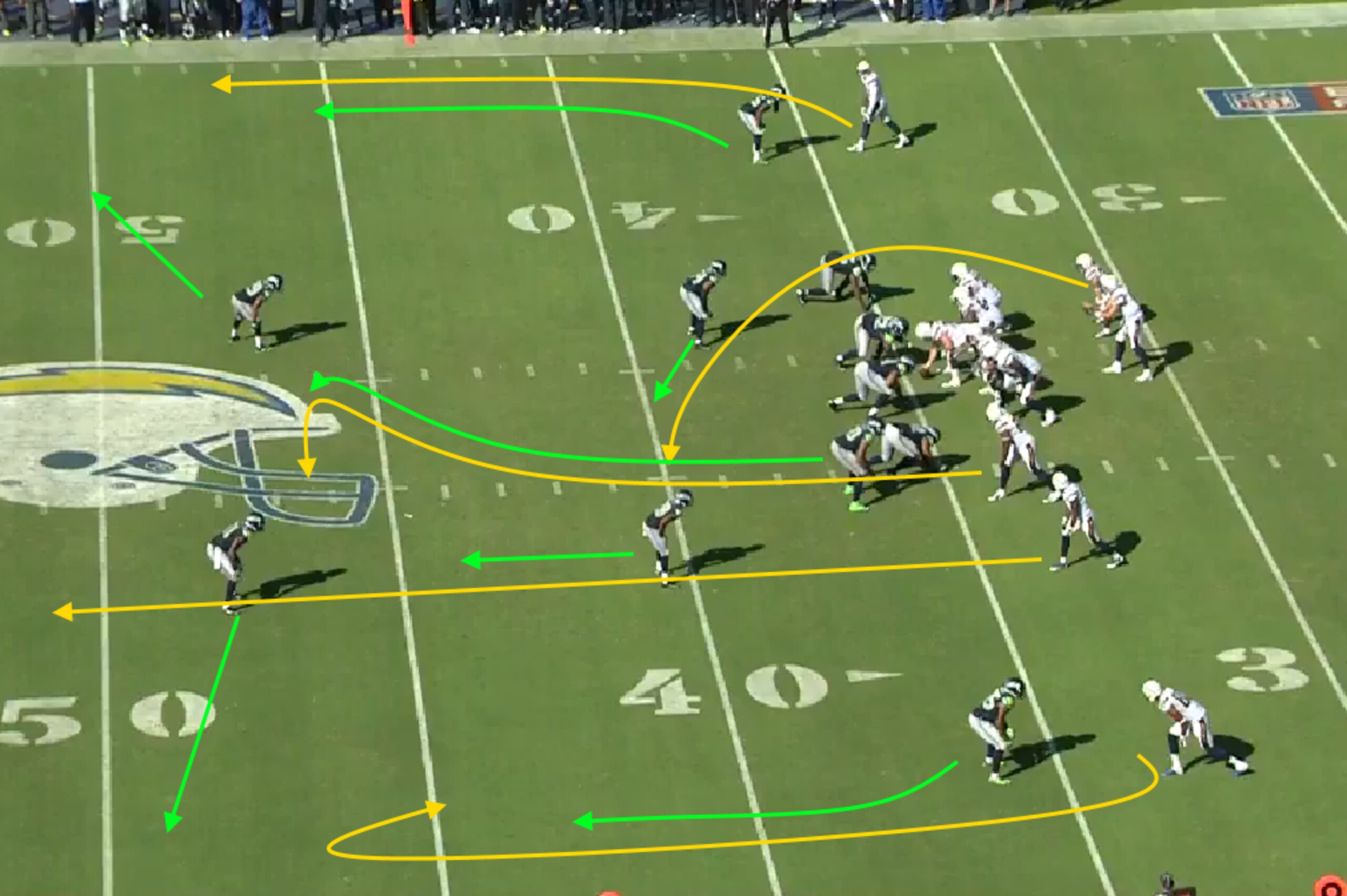
Few linebackers have the quickness required to stick with Gates on these routes because he’s stopping suddenly and reversing his direction, and he has a big body to box out defenders as the ball arrives. In this case, it’s a longer route because the Chargers needed to get the first down, but Gates will run this same route about five yards off the line of scrimmage.
It’s not so much that the Seahawks pass rush wasn’t effective, it was that Rivers easily diagnosed what they were doing and trusted Gates to make plays on the ball.
Gates made the plays and the rest is history.
The Broncos can copy these concepts to have plenty of success against the Seahawks. Thomas is a lot like Gates in build, but he's even more athletic at this stage of his career. If Manning can trust Thomas to make plays for him against man coverage, he could be the key to victory.
Manageable Third Downs
One of the other things the Chargers were able to do was get manageable third downs by running the ball and taking short completions. This was especially true early in the game. To convert on third down, the Chargers turned to Woodhead or one of the other backs to pick up the required yards in the passing game.
The return of slot receiver Wes Welker this week—thanks to the NFL’s new drug policy, per The Denver Post's Mike Klis—could be a boost for the Broncos in this role. When Manning needs a few key yards, finding Welker and a quick inside or outside breaking route can keep drives alive.
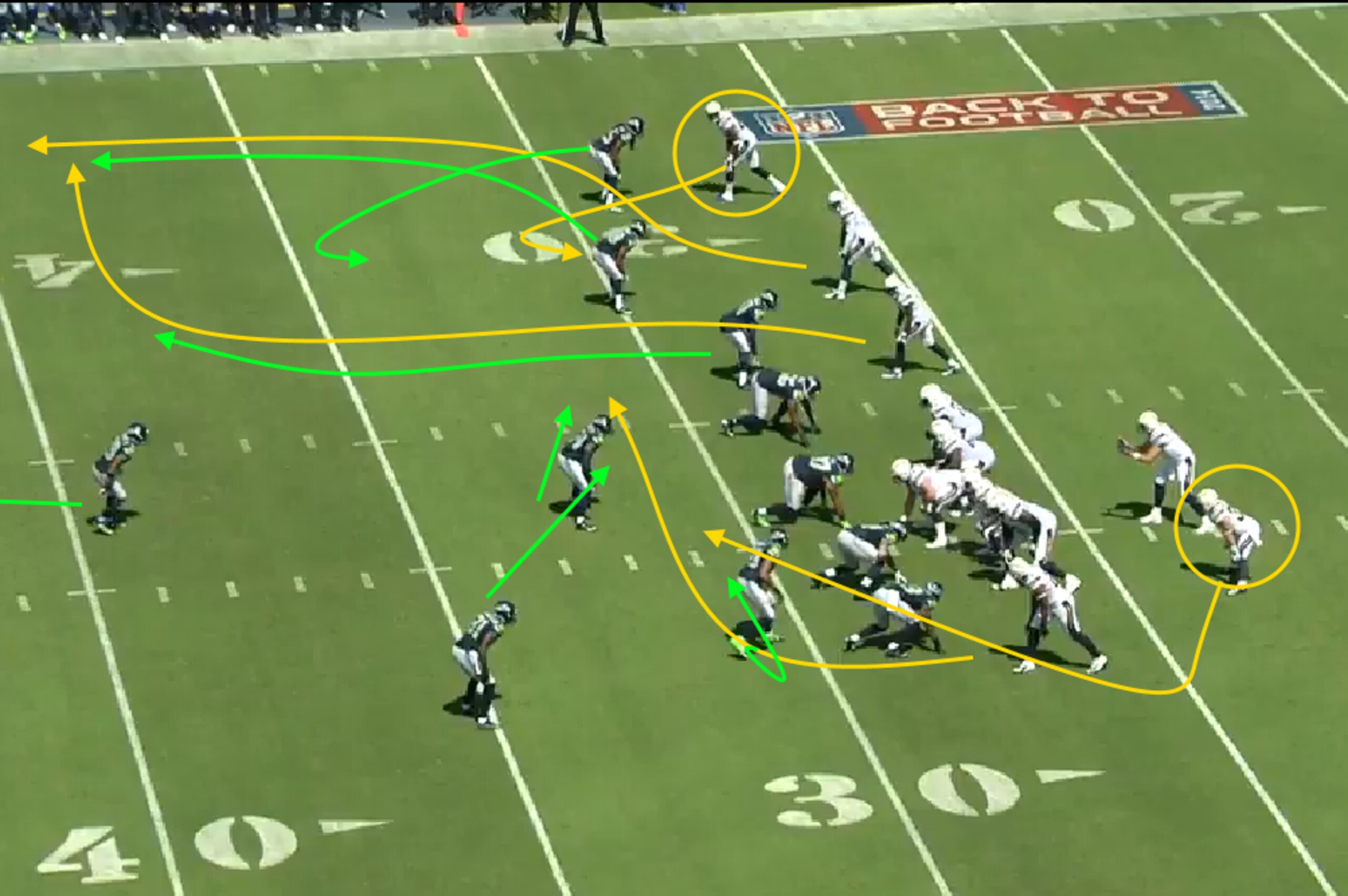
One thing the Chargers did well on these plays was use Gates as a decoy to draw the coverage from the safety. They combined this concept with a natural rub on Richard Sherman out of trips to the right and gave Rivers two possible targets to get the first down. In this case, Rivers hit Woodhead on the angle route to convert their first third down of the game against the Seahawks.
Although the formations will look different, the Broncos can use similar concepts with Thomas and Welker out of the stack or trips formation, which should give at least one receiver a free release off the line of scrimmage.
Attacking Sherman
Wide receiver Emmanuel Sanders is also the perfect weapon to attack cornerback Richard Sherman. If there is one area where Sherman struggles, it’s in his ability to stop and start and change directions.
The opposite is true for Sanders.
The Chargers took advantage of this in a few ways. The first way they attempted to attack him was by making him get over the top of natural rub routes. This forced Sherman to move laterally through traffic and get over the top of the rub to cover his man.
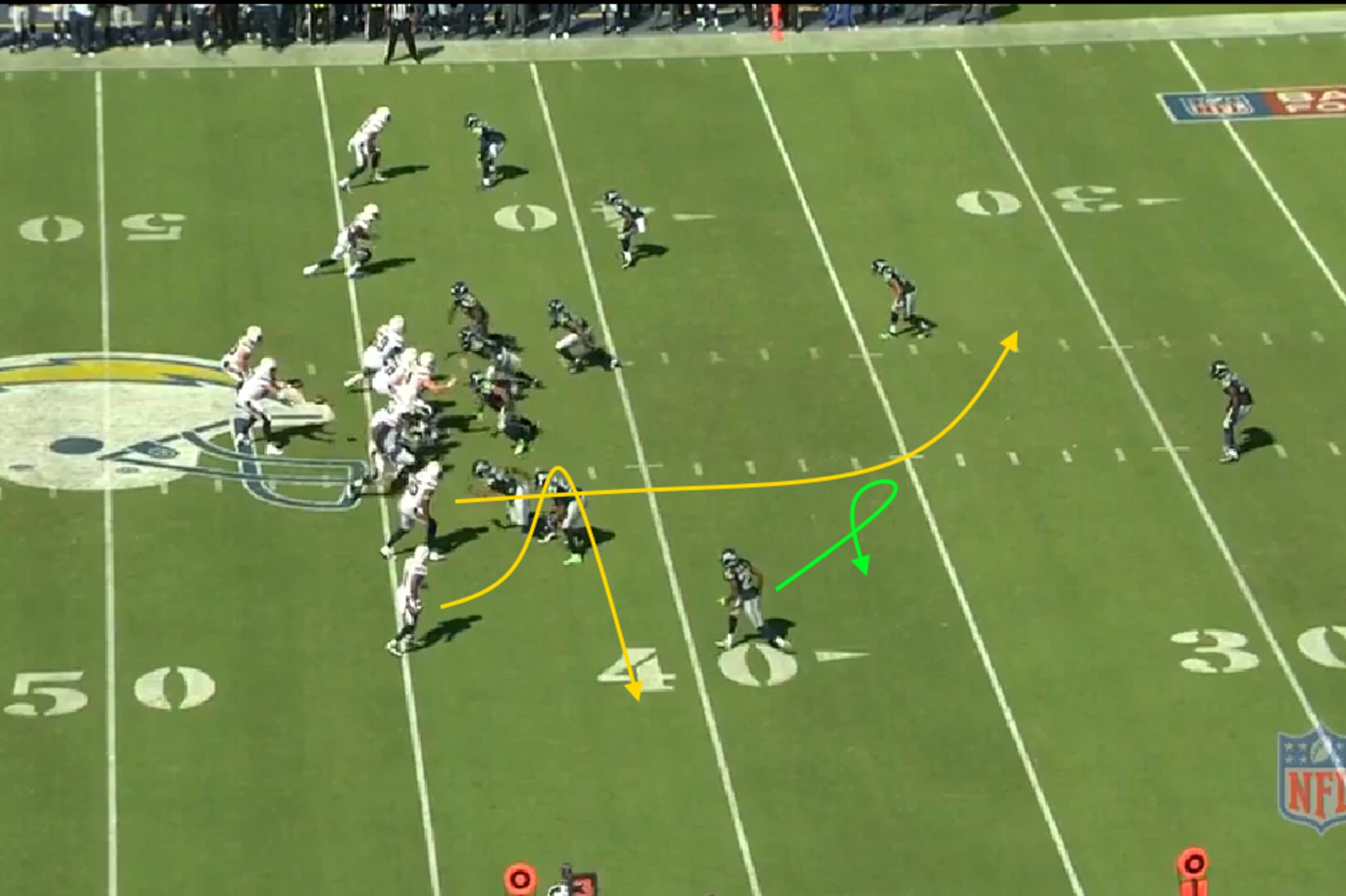
The second way the Chargers attacked Sherman was with pivot routes by wide receivers. On a key 3rd-and-9 play, Royal motioned down and started to run a shallow cross, and Sherman had to loop over the top of Gates coming right at him. Royal reversed direction and Sherman was out of position to make a play on the ball. The result was yet another third-down conversion for the Chargers.
Allen also had some success against Sherman on back-shoulder throws. Allen used his speed to get Sherman to turn and run with him and then stopped on a dime to look for the well-placed throw by Rivers. This is a staple in the NFL, but Sherman can struggle at times with quicker wide receivers who run sharp routes like Sanders.
Sanders should be very effective running these same types of routes for the Broncos on Sunday to exploit Sherman in coverage. If Seattle's pass rush isn't getting to Manning, Sanders is going to be able to shake loose of the less agile Sherman.
.jpg?w=2560 "Chiefs Giants Football")

.jpg?w=2560 "🚨 Week 8 AP Top 25 Poll")

.jpg?w=2560 "Lamar Being Out Shocked Ravens")
.jpg?w=2560 "Lions Outlast Packers")