

What Can We Realistically Expect from Kevin Garnett in His 20th NBA Season?
Scour through the history of American professional sports, and you’ll be lucky to find a smattering of players fortunate enough to author careers that span two full decades. It is, in the purest sense of the term, a rare commodity.
Then again, there’s not much about the career of Kevin Garnett one could call common.
Just weeks before the Brooklyn Nets are set to open training camp, Garnett has been noticeably mum on whether or not this season—his 20th in the NBA—will indeed be his last.
TOP NEWS

LeBron's Special Helicopter Deal

MJ Makes Record-Setting Donation 🙌
Shams: KAT, Hart Could Be Trade Names
However, according to the New York Daily News’ Stefan Bondy, head coach Lionel Hollins seems convinced the 15-time All-Star will be reporting for duty.
Coming off the worst statistical season of his storied career, Garnett’s best days have long since retreated from the rear-view mirror.
So what can and should the Nets expect from the fiery forward heading into the 2014-15 slate?
Newsday's Rod Boone indicates that Hollins hasn’t been shy about offering up his two cents amid the prospect of making due without his team’s most steadfast defensive presence:
Such spin would likely mean something beyond what Garnett logged last season, when the veteran big averaged a career-low 20.5 minutes over an injury-plagued 54-game campaign.
And rightfully so.
Between a healthy Brook Lopez, the sweet-shooting Mirza Teletovic and an ascendant Mason Plumlee coming off a stint with Team USA, Brooklyn’s frontcourt should be much-improved over last season’s MASH unit.
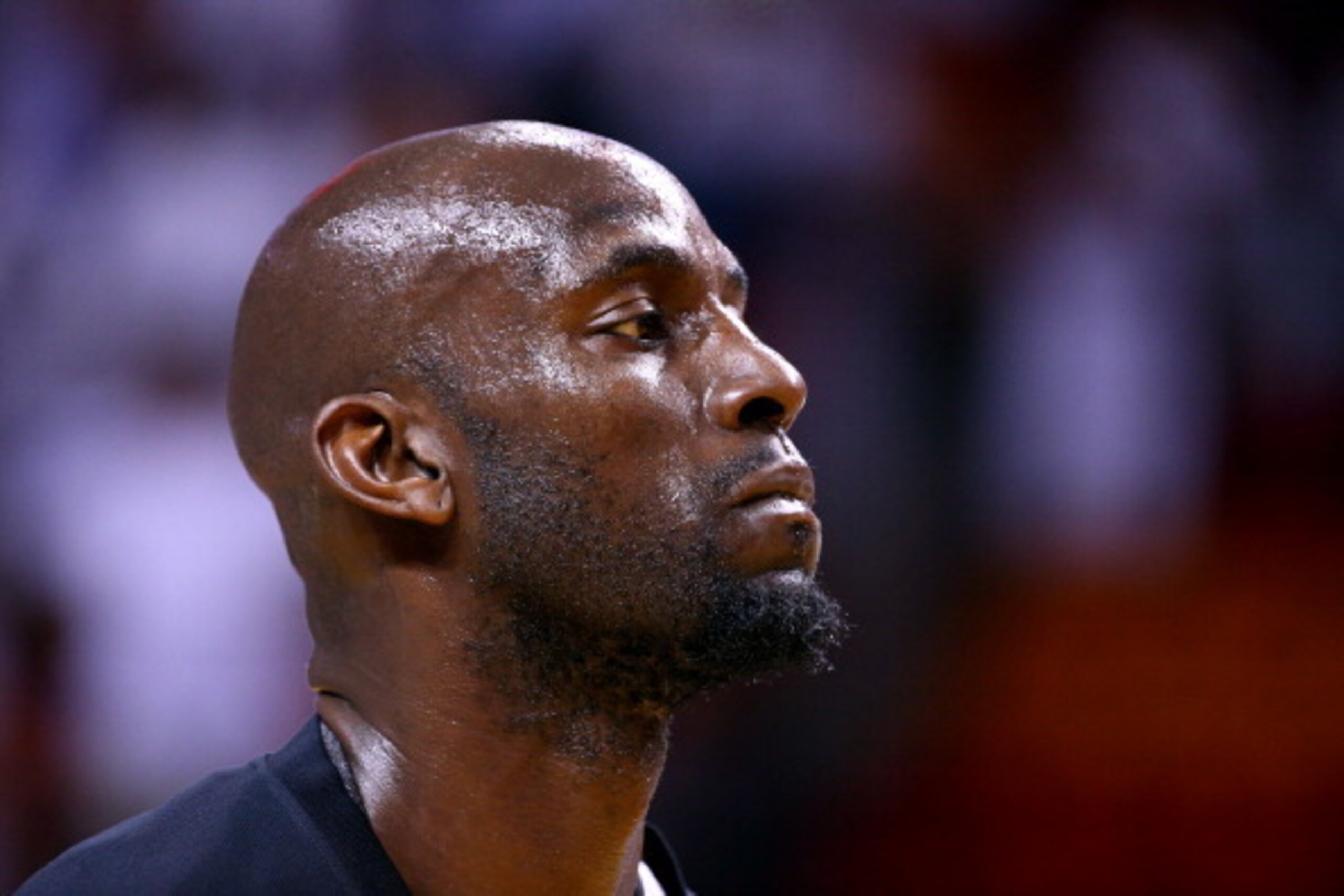
How happy the famously prideful Garnett will be with once again taking a rotational backseat is, of course, a horse of a different color.
Only four players finished the 2013-14 season having started more than 50 games while logging fewer than 1,5000 minutes: Garnett, Tiago Splitter, Kendrick Perkins and Shane Battier.
For a player as cagily competitive as Garnett, the idea of being given what amounts to a ceremonial starting position probably isn’t terribly appealing. The question, then, is whether Garnett’s desire for a second career championship—however unlikely—can trump the torture of being routinely bolted to the bench.
Back in May, ESPNNewYork.com’s Ohm Youngmisuk weighed the pros and cons of Garnett’s impending decision, aptly noting that the same force which has driven the spindly forward to over 55,000 career minutes played could be brought to bear on the opposite outcome:
"The very same reason that could bring him back also could be why he hangs it up. Garnett is so proud that he may not want to continue playing at a diminished level.
"
If he returns, his role, which was playing five- to six-minute stretches, will be the same or reduced a bit to preserve him for the postseason.
If ever there was a professional athlete with nothing left to prove, it’s Garnett—a player who quite literally revolutionized the power forward position with an uncanny combination of athleticism and intelligence.
Sadly, that hardwood force has long since vanished, replaced by a mostly ground-bound player far more reliant on savvy than speed or strength. For good or bad, it’s this hardwood husk upon which Hollins will have to lean.

The question now becomes twofold: Where is Garnett best suited positionally, and should he even start at all?
Bleacher Report’s Thomas Duffy tackled precisely this question in a recent column about Brooklyn’s frontcourt conundrum:
"KG is better as a center at this stage of his career anyway and would fit perfectly as the first man off the bench in relief of Lopez.
When KG started at center last year, he knocked down 50.5 percent of his shots. As a forward, he converted at a clip of just 37.4. According to 82games.com, his player efficiency rating increased 5.8 notches when lined up at a center (16.5) as opposed to PF (10.7).
Garnett has certainly lost a step or two. Or three. And as a result, he's no longer a starting-caliber player.
"
Whether Hollins sees it that way is, of course, an entirely different question. Indeed, Hollins is as no-nonsense as it gets—an old-school coach who’d just as soon lead pregame yoga classes than leave a veteran of Garnett’s cut and caliber riding the pine.
It’s a sentiment Hollins reiterated in a recent interview with Bondy, saying, “There’s nobody in the gym I’d put in [Garnett’s] place. He’s earned that right to be the starter from Day 1.”
As for what Hollins can expect from his vet production-wise, so long as Garnett can maintain what’s been a veritable shoo-in career clip of more than 10 points and 10 rebounds per 36 minutes while remaining a serviceable rim protector down low, Brooklyn should be more than satisfied.
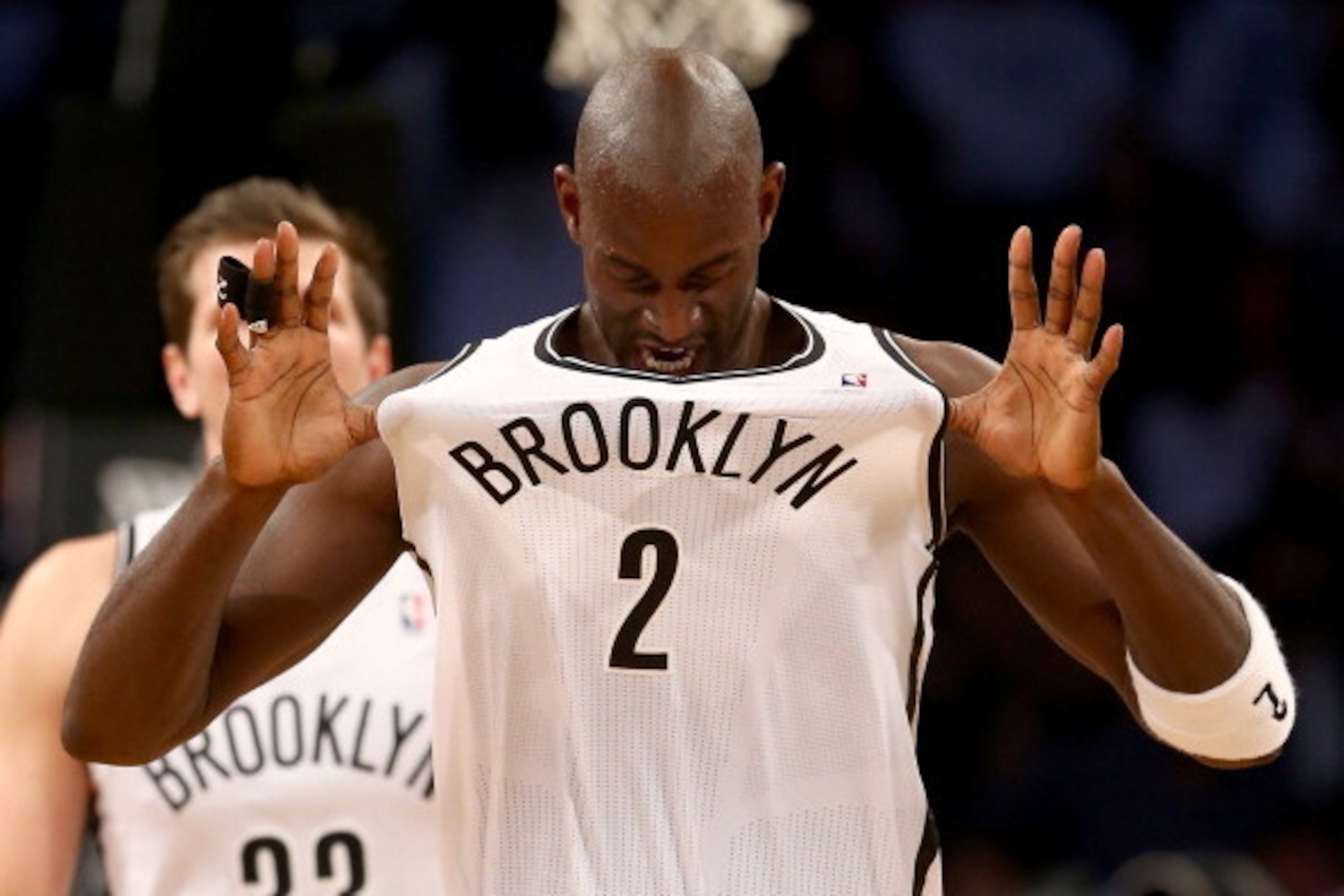
The key remains making sure Garnett stays healthy. Even that’s been something of a struggle for the aging superstar, who hasn’t logged a full season since the 2004-05 campaign.
In the nine years since, Garnett has missed 120 regular-season games—a harrowing trend for a player who was the picture of health and stability during the first half of his career.
In that sense, Garnett is the poster child for a Nets team that has itself been ravaged by injuries over the past two seasons. From Deron Williams’ chronic ankle issues to Brook Lopez’s ailing foot, Brooklyn’s health has been as fragile and tenuous as the record-breaking financial foundation upon which the team is built.
What can the Nets expect from Garnett this season? Sadly, only a shadow of his once-mighty self. Even if that shadow stands sturdier and looms larger than any other dude's on the block.
Statistics courtesy of Basketball-Reference.com.



.jpg?w=2560 "Viral Rams Coach Vid 🖕")
.jpg?w=2560 "Injury-stricken Seahawks signing veteran RB")
.jpg?w=2560 "2 NFL Officials Suspended")
.jpg?w=2560 "Grading WWE Raw 🔠")
.jpg?w=2560 "Mahomes' Wife Trolls Kubiak 💀")
