


A prospect's ceiling is all about upside. And every prospect has an NBA ceiling, which is essentially just a best-case projection. Only it doesn't mean they'll reach it.
I gave each one of our top 10 prospects an NBA ceiling and an established NBA player they might eventually look like down the road if everything goes according to plan.
For each prospect, we determined the height of their ceiling by classifying them into four different categories:
Superstar: A max-contract centerpiece and one of top players at his position
Star: An NBA All-Star
Secondary Star: Featured, productive player, but not quite All-Star material
High-End Role Player: Quality starter who isn't featured
1. Jahlil Okafor, Duke, 6'11", C, Freshman
1 of 10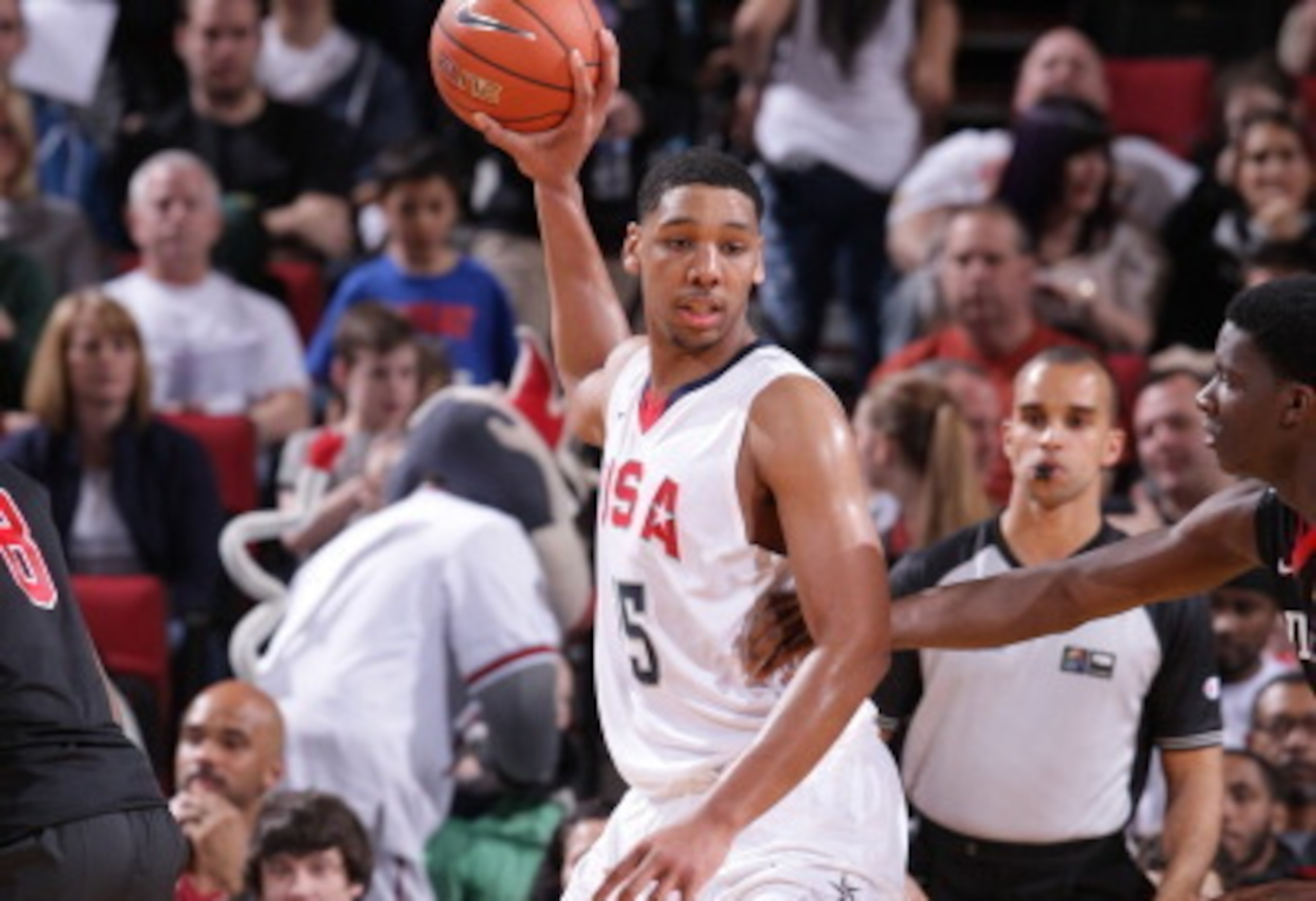
NBA Ceiling: Star
Ceiling Comparison: Al Jefferson
There's nothing flashy about Jahlil Okafor's game despite his All-Star NBA ceiling. Like Charlotte Hornets big man Al Jefferson, Okafor relies on calculated moves, clean footwork and soft touch—not high-flying athleticism or burst.
These are guys you can feed the ball to in the post and expect them to get you a bucket.
At 6'11", 272 pounds with big, soft hands, Okafor blends power and finesse at the low and high post. Jump hooks, up-and-unders, spin moves, short-range jumpers—he projects to make his living within 15 feet of the rim.
On the downside, he's not the most explosive athlete, nor is he a natural rim protector. Okafor doesn't possess the same two-way upside that last year's top center, Joel Embiid, offers at full strength.
But with Okafor, we're talking about a potential go-to, high-percentage option, and given his exceptional basketball IQ, refined skills and enormous frame, there isn't much risk attached to him.
2. Emmanuel Mudiay, China, 6'5", PG, 1996
2 of 10
NBA Ceiling: Superstar
Ceiling Comparison: John Wall
Regardless of how well or poorly Emmanuel Mudiay's season goes in China, nothing can diminish the upside tied to his size and athleticism for a ball-handler.
Long term, it spells mismatch in every language. Mudiay, a point guard by heart and skill, rocks 2-guard physical tools standing 6'5" with a 6'8.5" wingspan.
And Mudiay can fly. He's quick off the bounce and electric in the open floor, much like John Wall, only he also shares the same weaknesses as a shooter and decision-maker.
Still, Mudiay is fully competent with regard to running an offense and getting his teammates involved, and though he'll likely struggle with shot selection early on, his vision and facilitating skills work just fine.
Mudiay really has all the tools you can ask for and a pretty complete offensive package. With superstar upside, don't be surprised to see his name emerge as a No. 1 favorite sometime this year—especially if Jahlil Okafor and Karl Towns underwhelm.
3. Karl Towns, Kentucky, 7'0", PF/C, Freshman
3 of 10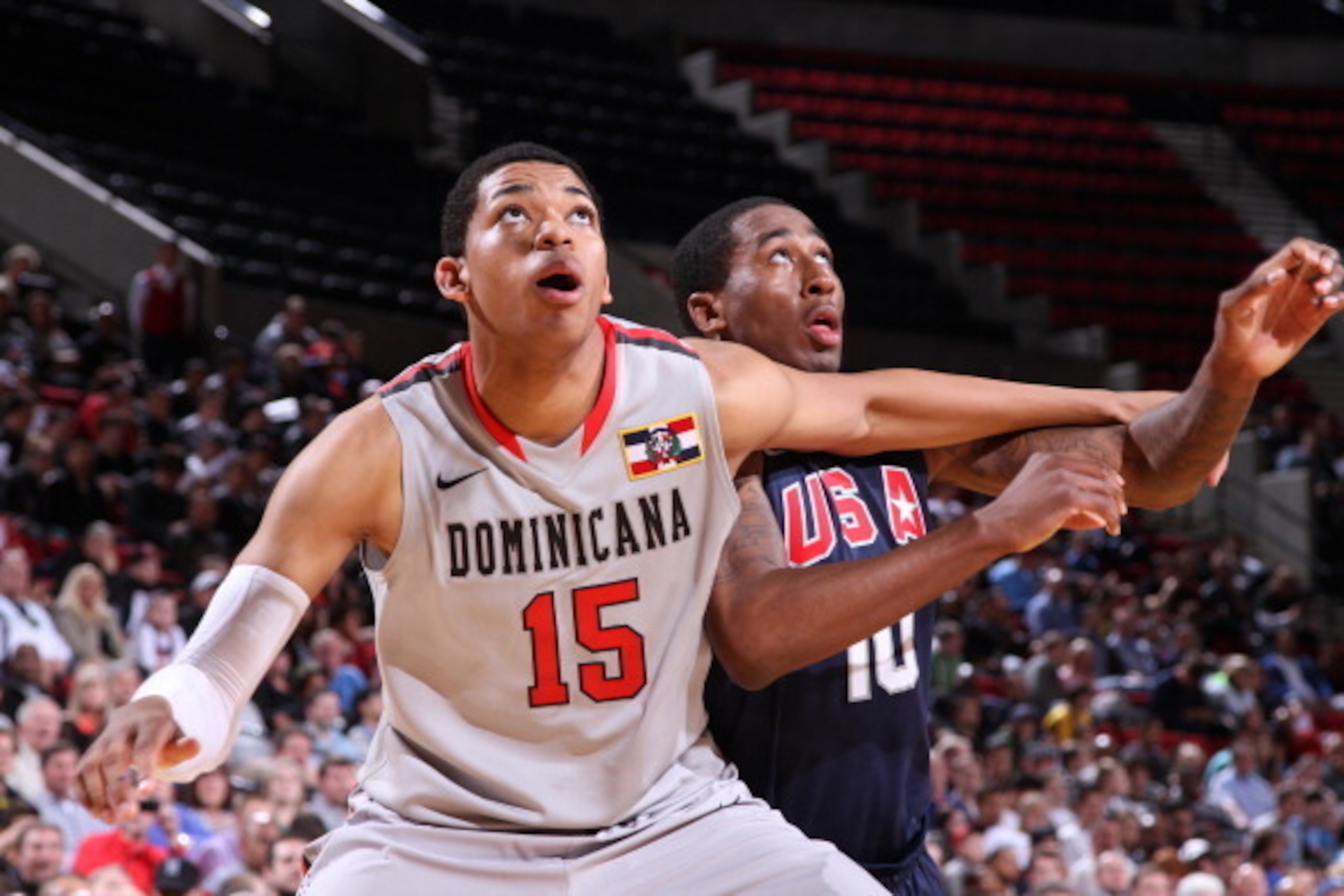
NBA Ceiling: Star
Ceiling Comparison: Rasheed Wallace
Karl Towns' offensive versatility is what ultimately separates him as a prospect. You just don't find many 7-footers who can comfortably operate 20-plus feet from the rim.
He can actually play all over the floor, from the low block and high post to behind the three-point arc.
His game reminds me a lot of a young Rasheed Wallace's—a power forward or center who can knock down shots in a variety of different ways, whether he's spotting up for a jumper, fading away or fighting for a bucket down low.
Towns moves extremely well. He's slippery with his back to the rim, a target off pick-and-rolls and a threat to get out on the break. And he's a terrific passer—a guy you can almost play through at the elbows.
Between his size, mobility and 7'3" wingspan, he also has the tools to become an impact defender the way Wallace was back in the day.
In terms of weaknesses and limitations, Towns isn't the interior beast his size and frame suggest he should be. He can sometimes get caught up with his perimeter game, resulting in quiet stretches. As he adds strength and muscle over the years, becoming a more dominant presence in the paint will be atop his to-do list moving forward.
But the best-case projection for Towns certainly warrants top-five overall type of buzz. Depending on how much progress we see over what's expected to be a one-and-done career at Kentucky, we could eventually start hearing Towns mentioned as a No. 1 overall candidate.

4. Stanley Johnson, Arizona, 6'7", SG/SF, Freshman
4 of 10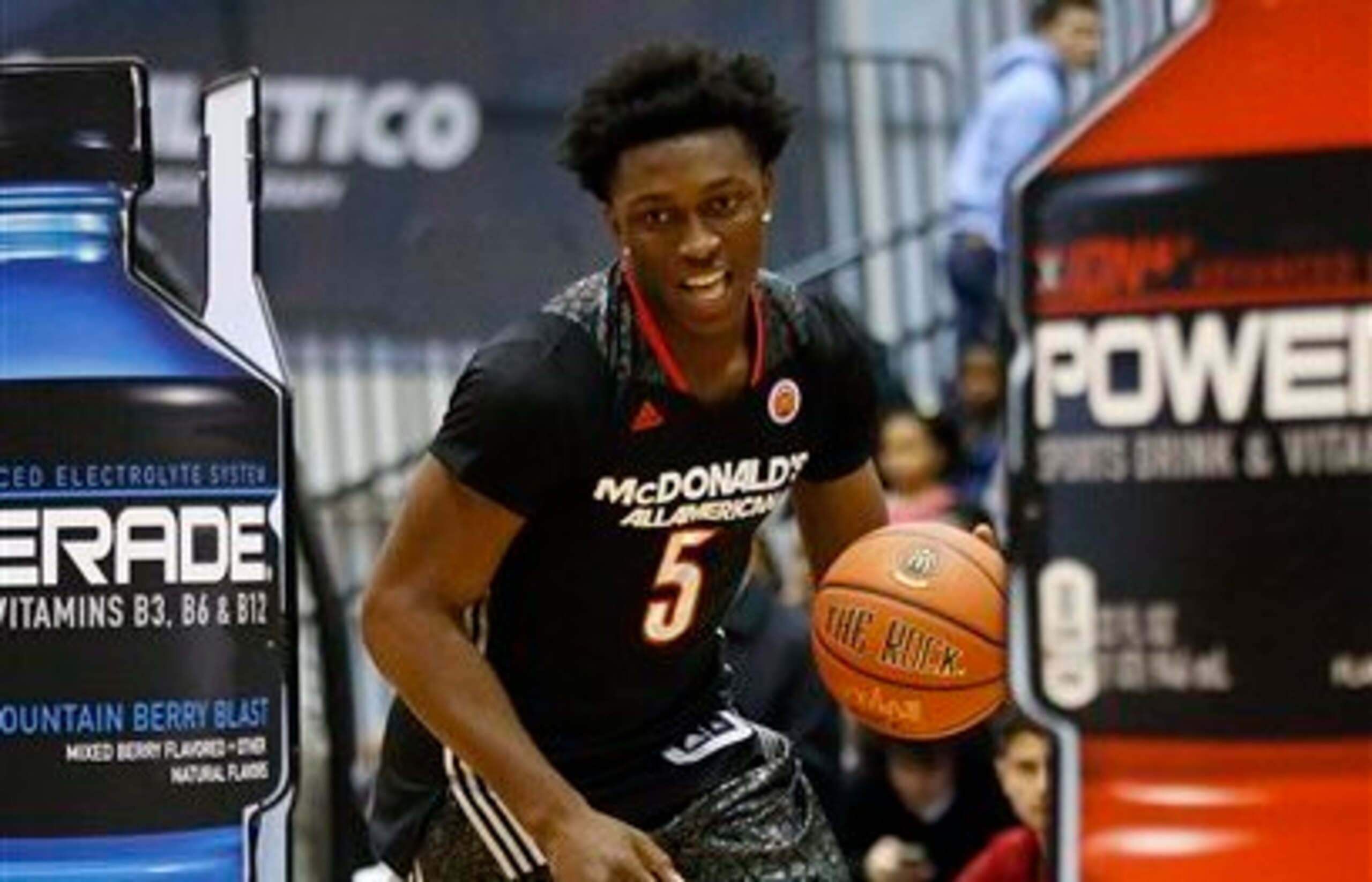
NBA Ceiling: Secondary Star
Ceiling Comparison: Ron Artest
For our ceiling comparison, we're not talking about the last five years of Metta World Peace. Stanley Johnson's game resembles Ron Artest's—the ferocious defender, physical attacker and threatening outside shooter from the early 2000s.
Johnson is a two-way wing with a diesel 235-pound frame built for playing through contact.
At 6'7.5" with a 6'10".5" wingspan, Johnson's upside is fueled by his lockdown defensive tools and offensive versatility.
He gives you a little bit of everything, along with a contagious sense of toughness and competitiveness.
"Anytime people say there's a better player in the gym than me, then that's the person I want to play against," Johnson said following the LeBron James Nike Skills Academy, via Sheila Mikailli of D1Circuit.com.
Johnson's shooting has improved over the past few years, while his ability to get to and finish at the rim has always been his bread and butter.
A great athlete, good passer and high-energy guy, the biggest thing keeping Johnson's ceiling from soaring through the clouds is his limited shot creativity and playmaking ability. At this point, most of his offense comes off line drives, slashes, spot-up jumpers and fast-break chances. I'm not sure Johnson projects as a scorer you'd want to isolate down one in the fourth quarter.
But he still has secondary-star potential as a guy who can probably start in the NBA for years to come.
5. Mario Hezonja, Croatia, 6'8", SG/SF, 1995
5 of 10
NBA Ceiling: Star
Ceiling Comparison: Klay Thompson
With awesome 6'8" size for a 2-guard or wing and extraordinary athletic ability, Mario Hezonja's upside is huge. And it's been viewed that way since 2011, when he first jumped onto the scene as the MVP of the Under-16 European Championships.
An offensive weapon loaded with firepower, Hezonja can score at will. He's a dangerous one-on-one player capable of creating his own shots and sticking them, from step-back jumpers to pull-ups over the defense.
Though there are differences in their games and physical profiles (Thompson the better shooter, Hezonja the better athlete), Hezonja's ceiling looks to be on par with Klay Thompson's, another sizable 2-guard or wing with a lethal perimeter repertoire.
It's been a while since we've seen Hezonja get to play regular minutes, considering he rode the bench in the Spanish ACB this year and at the FIBA Basketball World Cup. But even though the elevator ride up to his ceiling might take longer than most, at 19 years old, Hezonja's All-Star upside isn't going anywhere.
6. Kristaps Porzingis, Latvia, 7'0", PF, 1995
6 of 10
NBA Ceiling: Secondary Star
Ceiling Comparison: Andre Kirilenko/Danilo Gallinari
We have an idea of what Kristaps Porzingis might look like five years down the road. But at this point, that's all it is—an idea. Having played just 15.2 minutes a game last season, it's tough to project his outlook, though scouts have raved about the potential tied to his size, athleticism and face-up offensive game.
It's a rare combination of strengths. At 7'0", Porzingis moves and jumps like a wing, which ultimately translates into easy buckets off cuts, lobs and fast-break opportunities.
At 220 pounds, he doesn't quite have the build to anchor the paint. Instead, he taps into the mismatch his foot speed presents on the perimeter, where he can attack slower big men off the dribble and slice right to the rack.
He's also proven to be a threatening shooter, and though you wouldn't know it from his percentages, Porzingis' jumper projects as a weapon once he hits his NBA stride.
Defensively, he blocked 2.3 shots per 40 minutes this past season, having showcased his range and ability to cover plenty of ground.
ESPN's Chad Ford noted (subscription required) that Porzingis spent time this summer in Las Vegas, where he was put on a "rigorous strength training program." How much he adds over the next few years might determine just what type of NBA player he eventually evolves into.
ESPN's Fran Fraschilla referred to him as "[Andrei] Kirilenko with skills", an assessment I wouldn't argue against.
7. Kelly Oubre, Kansas, 6'7", SF, Freshman
7 of 10
NBA Ceiling: Star
Ceiling Comparison: Rudy Gay
A super-athletic small forward with a dangerous scoring arsenal, Kelly Oubre's ceiling sits as high as any wing's in the country.
Oubre can flat-out get buckets with every shot in the book, from step-back jumpers and mid-range floaters to explosive high-flying slams.
Like Rudy Gay, he's capable of sizing up his man one-on-one and connecting on contested shots.
Oubre also brings some versatility to the table as a solid rebounder and willing passer.
Like every other incoming freshman, he'll have to improve his shooting consistency, but from the surface, Oubre has a complete offensive skill set to go with the athleticism that powers his upside.
8. Cliff Alexander, Kansas, 6'9", PF, Freshman
8 of 10
NBA Ceiling: Star
Ceiling Comparison: Serge Ibaka
Cliff Alexander is a pretty easy prospect to break down when you consider his glaring strengths and weaknesses.
His strengths center around his athleticism and intangibles. At 6'9", 254 pounds, he's one of those big men you fear might eventually rip down a basket. Alexander plays high above the rim and through contact below it, while he's a monster force around the low block.
And Alexander's motor is consistently charged. It leads to rebounds, putbacks and blocks—ultimately heavy interior activity.
Unfortunately, his skills are fairly behind his athleticism and physical tools at this point. Without any polished moves to really go to, he's not quite an option you'd want to isolate in the post.
Whether Alexander reaches his monster ceiling will come down to how much he adds to his offensive repertoire, but there's an All-Star foundation here to build on.
9. Justise Winslow, Duke, 6'7", SF, Freshman
9 of 10
NBA Ceiling: High-End Role Player
Ceiling Comparison: Gerald Wallace
A top-flight athlete who plays with serious grit and toughness, Justise Winslow projects as a high-energy wing and lockdown defender.
He's the type of guy who can impact a game without using a dribble.
Offensively, Winslow is at his best slashing to the rim in line drives or catching-and-finishing in the lane. But at this point, his ball skills are limited. His jumper and dribble creativity could both use major work.
Still, Winslow's defensive pressure and motor together should hold plenty of NBA value. At 6'7", he's a quick, explosive and physical small forward.
Best-case scenario, think of a guy like Gerald Wallace, who lasted a long time as a key starter without much of a one-on-one offensive game.
Despite his limitations, Winslow's ceiling reaches high-end role player potential thanks to his two-way services and room for offensive growth.
10. Willie Cauley-Stein, Kentucky, 7'0", C, Junior
10 of 10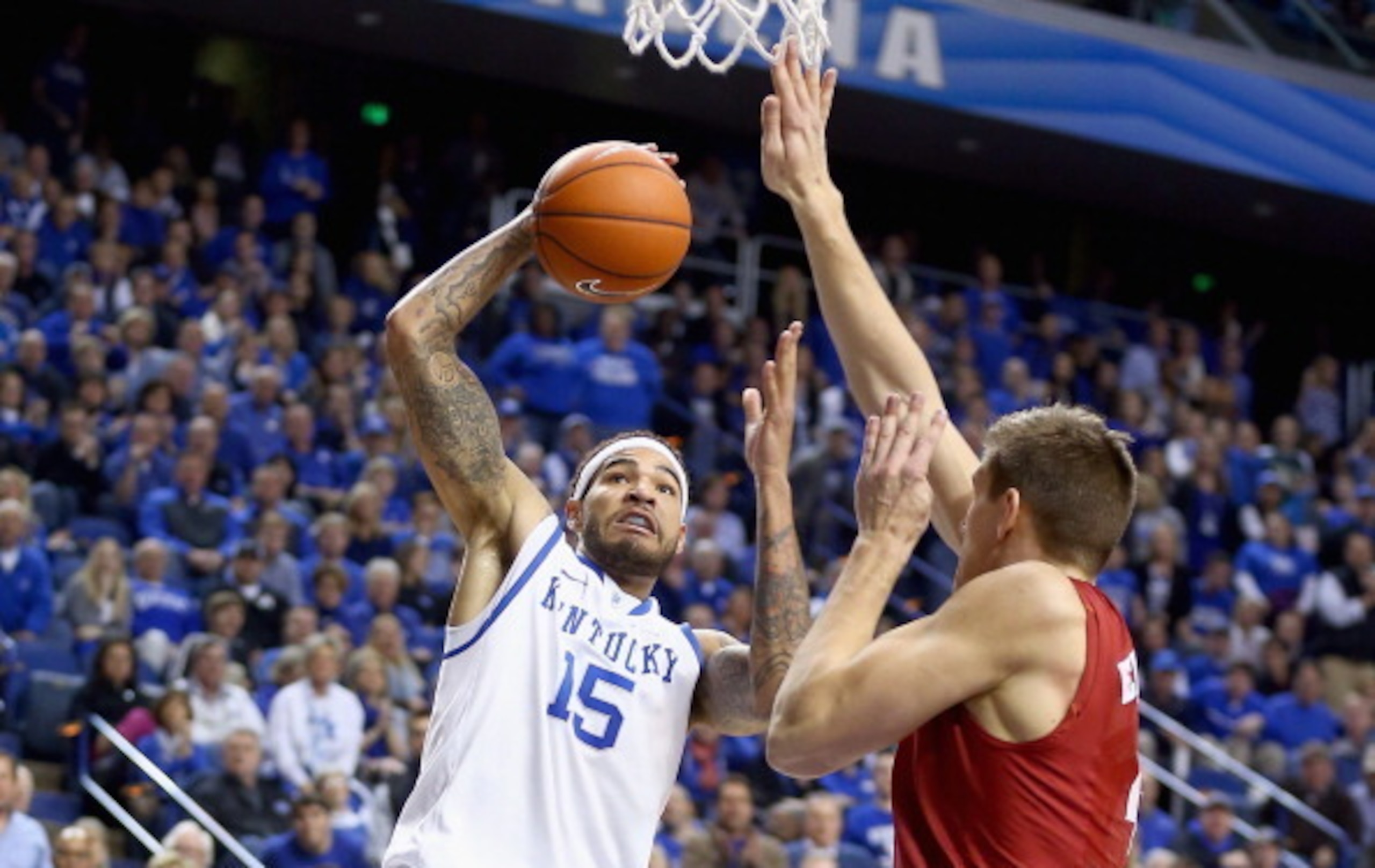
NBA Ceiling: High-End Role Player
Ceiling Comparison: Tyson Chandler
The height of Willie Cauley-Stein's NBA ceiling is tied strictly to his physical tools and athleticism, which, if maximized, should translate to premier rim protection and plenty of easy buckets.
At 7'0", he's got the foot speed and explosiveness of a wing to go with the hand-eye coordination of an NFL wide receiver.
Cauley-Stein blocked 2.9 shots in less than 24 minutes a game last season. He contests everything in the paint when his motor is pumping.
And he's shot over 59 percent from the floor in both years at Kentucky. He finishes high above the rim off pick-and-rolls, catch-and-dunks and putbacks.
Cauley-Stein's weaknesses and limitations are obvious—he lacks offensive polish, scoring range and ball skills. He averaged just 6.8 points a game this past season, with just about all of his buckets set up for him on a platter, whether they came off drive-and-dumps or lobs.
But given his strengths as a finisher and rim protector, Cauley-Stein doesn't quite need any fancy skills to make his presence felt. Tyson Chandler has made a fine living for himself without a go-to offensive move or jumper in the arsenal.
If I'm Cauley-Stein, Chandler is the guy I'm looking to emulate as a pro.
.jpg?w=2560 "Mahomes Told Teammate to Leave Meeting")
.jpg?w=2560 "🚨 Week 8 AP Top 25 Poll")




.jpg?w=2560 "Updates from EVERY NFL Game 🏈")
.jpg?w=2560 "Baker Gets Glove From Rays 🧤")