
Where Does 2014 Team USA Rank Among America's All-Time Best Basketball Squads?
This brand of Team USA basketball was better than you think.
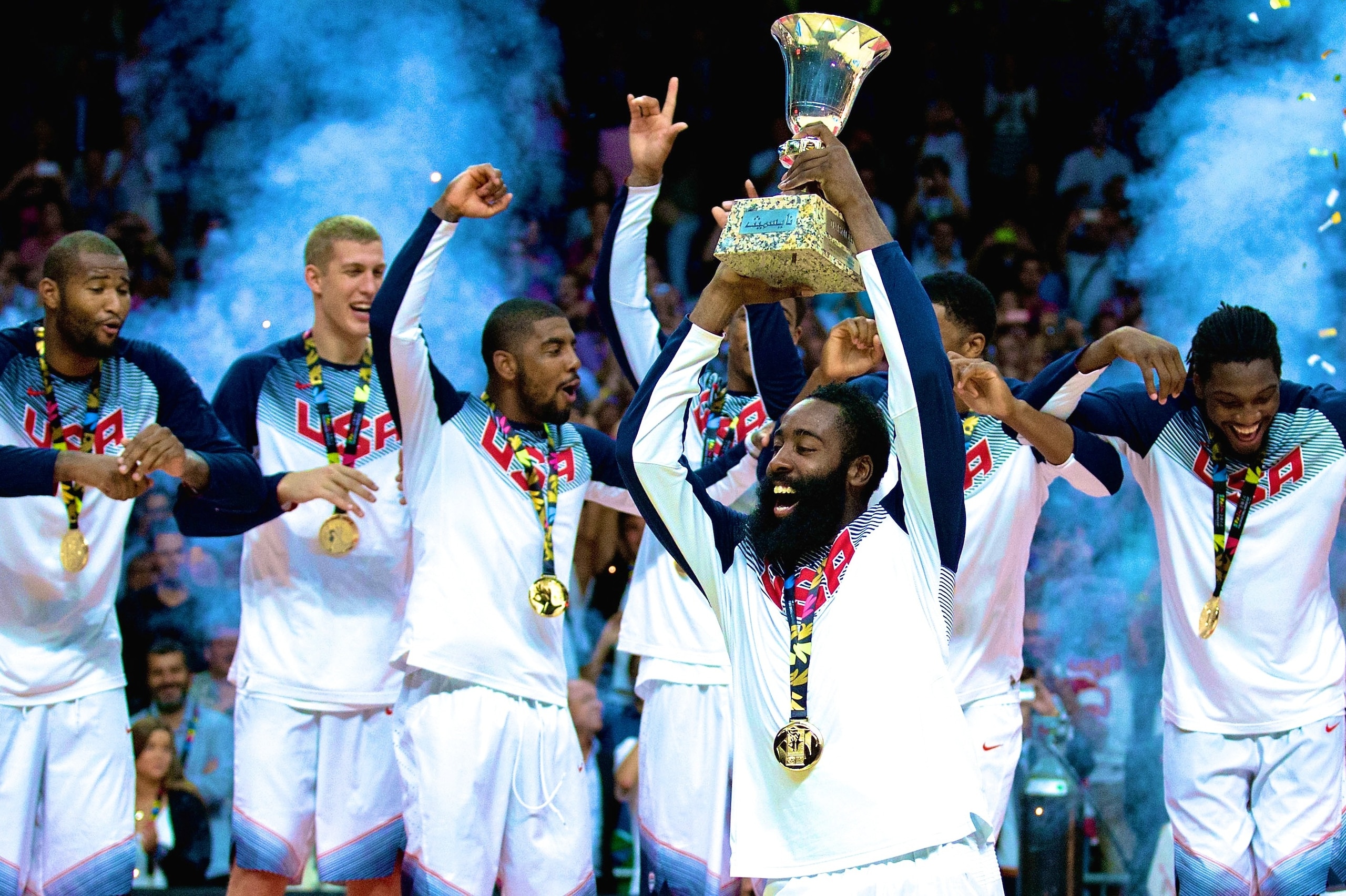
Team USA capped off its perfect summer Sunday, treating Serbia to a 129-92 romping in the 2014 FIBA World Cup final, capturing gold in convincing fashion and leaving all talk of potential weaknesses behind.
Chatter about Spain, about Kevin Durant's and Paul George's departures, about chemistry, about slow starts—it's gone. It all meant nothing.
TOP NEWS

LeBron's Special Helicopter Deal

MJ Makes Record-Setting Donation 🙌
Shams: KAT, Hart Could Be Trade Names
Though Team USA faced recurrent criticism for aspects of its roster, play and victories, legitimate resistance proved scarce. There was no competition, no actual threat. Team USA steamrolled opponents, winning each of its nine games by at least 21 points, cutting through every test with historical dominance.
Yes, this year's squad has its place history.
International play began gaining more popularity in 1992 thanks to the Dream Team's gold-medal Olympics run. Here's a look at how the average victory margin for this year's contingent stacks up against every version of Team USA since then:
Only two of the other 12 teams finished their respective tournaments—be they Olympics or World Cups—with a higher victory margin. This year's faction won games by an average of 33 points, which is the highest victory gap since 1994's forgotten Dream Team II.
The gold-medal game solidified the most recent team's standing further still.
Eight of the last 12 American teams have snagged a gold medal for their particular tournaments. Below you'll see the margin of victory for each unit's final win:
A mere one of the last eight gold-medal teams earned its neck swag with a bigger blowout. Not even the beloved and seemingly unparalleled 1992 Olympics crew unseated its final opponent (Croatia) by a wider surplus.
Balance buttressed Team USA's history-hewing display in the end.
Offense was always a given. Coach Mike Krzyzewski had an abundance of firepower at his disposal, from Stephen Curry and Kyrie Irving, to Klay Thompson and James Harden, to Anthony Davis and DeMarcus Cousins.
Defense was a different story altogether.
These exhibitions aren't recognized for their point prevention, but Team USA had known sieves on the perimeter in Curry, Harden and Irving, among others. There was cause for some concern at the beginning.
Then the games began.
Overloaded with athleticism and paint-patrollers up front, Team USA fielded one of the more successful two-way attacks, as Bleacher Report's Jim Cavan explained ahead of the World Cup final:
"As its proven throughout the tournament, the U.S. is simply too big, too fast and too deep for any team—no matter the poise or pedigree—to author anything more than a noble effort.
Make no mistake: Serbia has the weapons and wherewithal to make Team USA earn its spot atop the ceremonial podium. Unfortunately, it all adds up to so many knives in a nuclear fight.
"
Nuclear weaponry was brought in excess by Team USA.
As you'll see below, Coach Krzyzewski guided one of the more well-rounded groups this time around:
Looking at points allowed per game specifically, only three of the last 12 teams had better defenses than this year's assortment of NBA stars. This, again, despite housing defensive deficiencies galore (like Harden) who were seldom caught channeling their inner Paul George the way Kesha does her inmost P. Diddy in the morning.
Odder still, the defense compares more to its biggest rivals—1992 and 1994—than the offense.
Both the 1992 and 1994 outfits totaled at least 117 points per game, while 2014's stable of talent finished scoring roughly 104.6 a contest. There was also a noticeable difference in shooting efficiency.
Each of the last 12 American teams combined to average 52.7 percent shooting overall and 39.7 percent shooting from deep. While the 1992 and 1994 teams exceeded both marks, the 2014 aggregate found itself above the mean in just three-point shooting (40.1).
The only three teams to shoot above the USA's total average for both categories were those in 1992, 1994 and 2000.
Ball control wasn't a special distinction of this year's band either:
Committing 13.7 turnovers per game left it slightly below the average for an American team (13.2) as well as worlds apart from the 1992 gang—the standard for Team USA greatness—that committed only 8.4 a night.
Similarities did exist in the way this year's team spread the wealth. Five players averaged double-figure point totals in both 1992 and 1994; six players accomplished the same this year.
Such parity hasn't been common through the last two decades:
Not one other USA aggregate had as many double-figure scorers as there were for 2014, further contributing to the top-flight balancing act we bore witness to this summer.
"No one cared about their statistics," Team USA assistant coach Tom Thibodeau said after the World Cup final, per the Chicago Tribune's K.C. Johnson. "They just cared about winning. And that’s what makes it special."
To put this most recent performance in perspective, consider the average USA team has scored 101.6 points and allowed 76.1 since 1992. This year's crop of gold-medal winners was above average in both categories.
Feast your eyes on how the other American convocations fared:
What we’re seeing here is pretty amazing.
Marks in the top-right corner are indicative of USA teams with above-average offenses and defenses. Only three of the last 12 units have had both: 1992, 1996 and 2014.
And therein lies the point.
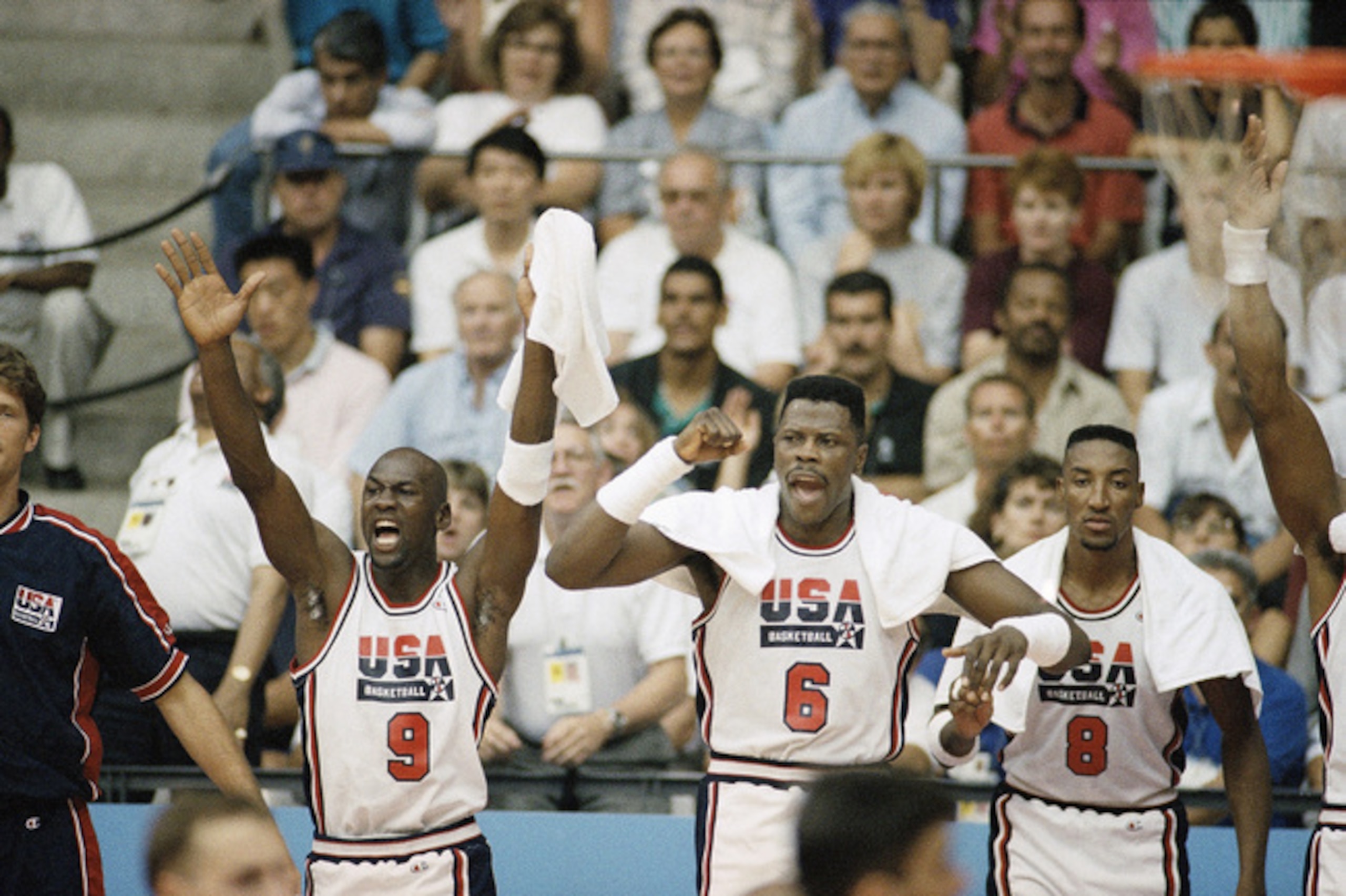
The 2014 version of Team USA keeps coming back to 1992 or 1994, the foremost authorities on Olympics and World Cup basketball. And it did so without the same established star power.
Consider the number of All-Star selections every player on each roster combined for. Note that we're talking about selections—not appearances—and that only honors prior to each tournament are accounted for:
This year's team combined for the third-lowest number of All-Star selections. Young guns like Davis and Kyrie Irving, who haven't been around long enough to earn more than one or two selections, headlined the docket.
These weren't 10-year veterans. The 28-year-old Rudy Gay represented Team USA's oldest player. Derrick Rose held the most All-Star selections with three.
Yet Team USA still went undefeated.
It still took home gold.
It still put itself in the company of the 1992 and 1994 squads—titans of international success.
It still managed to emerge as, at worst, the third-best USA team in recent memory, a titan of international success in its own right.
*Stats courtesy of Basketball-Reference and the FIBA Archives unless otherwise noted.

.jpg?w=2560 "Grading WWE Raw 🔠")

.jpg?w=2560 "Viral Rams Coach Vid 🖕")
.jpg?w=2560 "Bijan's INSANE 1st Half 🤩")

.jpg?w=2560 "Injury-stricken Seahawks signing veteran RB")
.jpg?w=2560 "2 NFL Officials Suspended")