
Patriots vs. Vikings: Full Report Card Grades for New England
After the first five minutes, the New England Patriots looked like the same listless team that had collapsed in against the Miami Dolphins in Week 1.
But after the Minnesota Vikings scored the game's first touchdown, the Pats straightened themselves out, propelled by a game-changing Devin McCourty interception. New England scored the next 24 points en route to a 17-point halftime lead, and unlike last week, controlled the second half to close out the win.
Devin McCourty's first-quarter interception was the jolt that awoke the Pats from their 35-minute slumber, going back to last week's loss against the Miami Dolphins. Though the offense was not particularly explosive, its efficiency and ball control allowed it to take advantage of the juicy field position provided by the defense and special teams.
Indeed, while the latter unit was plagued by penalties throughout the afternoon, Chandler Jones' blocked field goal and subsequent touchdown return was an eye-popping display of his game-changing athleticism. Jones also had a big day defensively, as he and the rest of the defense benefited from the Patriots' switch back to one-gapping principles (though they did remain in three-man fronts).
Offensively, the Patriots reverted to the heavy Ace/12 and Tank/22 personnel that defined them at the end of 2013. That led to a positive run-pass ratio, as New England's offense essentially consisted of quick passes and gap-blocking runs.
Considering how effective the defense was in eliminating any vertical routes from Cordarrelle Patterson or Kyle Rudolph, that limited offense was enough to help the Patriots dictate terms all afternoon. New England will surely seek to vary its play-calling and tempo in future weeks, but after the execution was sorely lacking last week, a return to simplicity and fundamentals was welcome.
Read on for full detailed analysis and grades of each position unit, as the Patriots wrote a much happier story in Week 2.
Quarterback
1 of 10
Tom Brady clearly benefited from a heavier emphasis on power personnel and a greater commitment to the run. After spread formations telegraphed the Patriots' offensive intentions last week, Brady was able to exploit Minnesota's base personnel for easy chunks off play action.
The Pats did not open up their playbook, as virtually everything was limited to three-step dropbacks. That led to plenty of slant and stick routes to Julian Edelman, who essentially represented the bulk of New England's passing game.
But much of these limitations do stem from the fact that Rob Gronkowski and Aaron Dobson are still rounding into form. Those two are the most versatile receiving options for Brady, and both provide a vertical, defense-stretching presence that no one else on the roster really replicates.
Thus, it's hard to evaluate Brady without seeing him operate with his full tool kit. Besides the receiver corps, the still-gelling offensive line likely contributed to the plethora of quick passes. Critics can still point to this contest as evidence of deficiencies in the Patriots passing game, but we should see offensive coordinator Josh McDaniels insert more diversity into the offense soon.
Overall, Brady was efficient yet unspectacular in finishing 15-for-22 for 149 yards and a touchdown. That 6.8 yards per attempt average is better than his putrid rate from last week, though it does illustrate how the passing game was a secondary factor in the win.
Grade: B
Running Back
2 of 10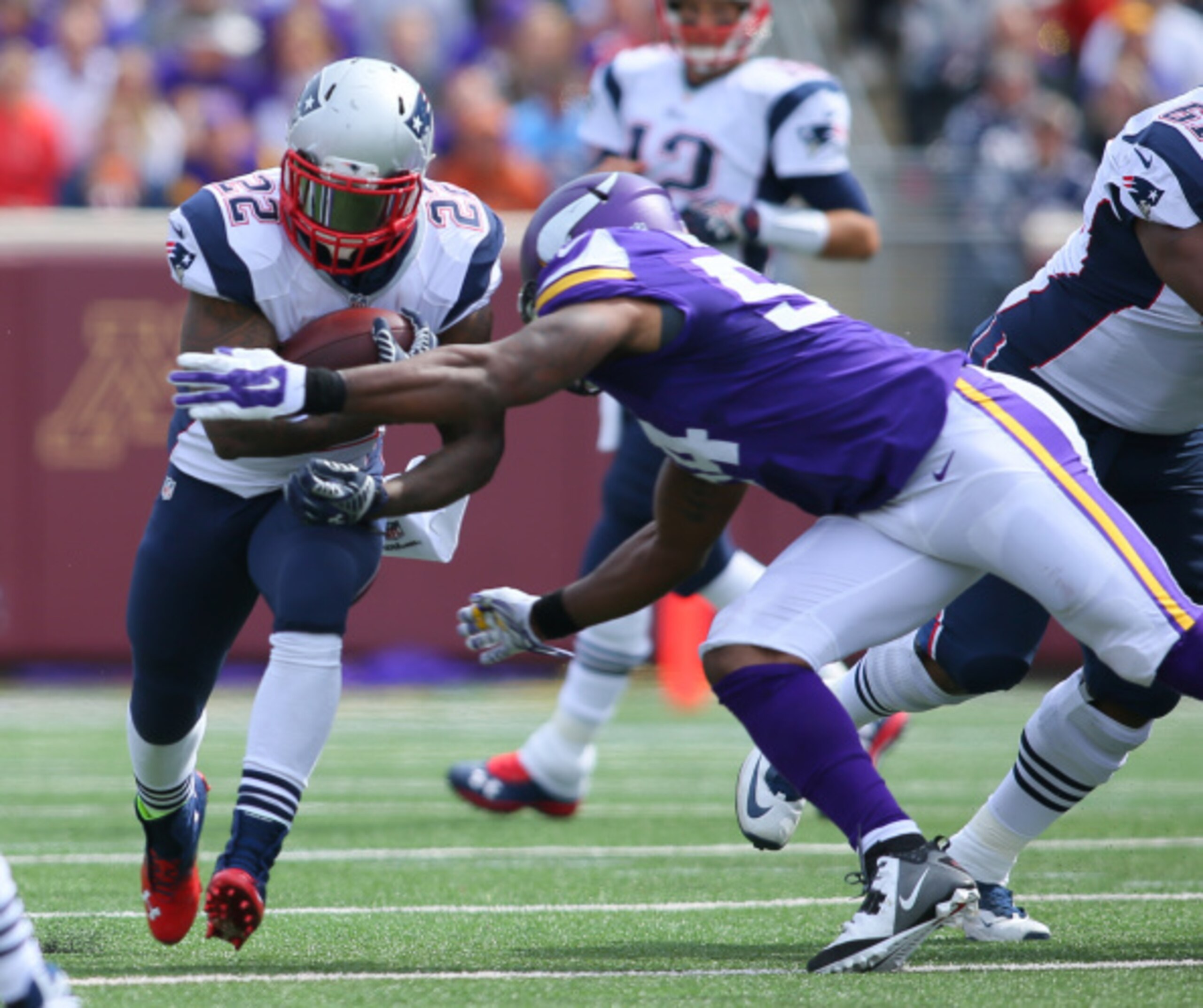
The final numbers are not particularly spectacular, as the Patriots finished with 150 yards on 4.1 yards per carry on Sunday. However, the commitment to the running game was an important factor in keeping the offense humming along on schedule, an important factor considering the lack of big-play potential in the passing game.
Stevan Ridley was the unit's brightest star, checking in with 101 yards and his first touchdown. Much of that raw total came on the final drive, in which the Patriots simply burned out the clock with a series of runs. But New England's emphasis on downhill gap-blocking schemes played into Ridley's hands, and he demonstrated solid ball security along with his typical blend of vision and physicality.
Shane Vereen had only six carries, but he did pick up 40 yards on his patented slippery draw plays. Vereen begins to evoke old friend Danny Woodhead more and more each week, as his ability to squeeze through tiny slivers and find cutback lanes is impressive. Though he was not a huge part of this week's game plan, he remains an important weapon that provides a nice contrast with Ridley's skill set.
Brandon Bolden was unremarkable again, with no yards on four carries. Bolden remains an important special teams contributor, so his roster spot is in no jeopardy. Nonetheless, it might be time to provide rookie James White an opportunity for spare carries after being a healthy scratch the first two weeks.
The Patriots are not going to maximize their running game until they settle on a permanent offensive line combination (something they may have moved closer towards determining today). But this unit fulfilled the offense's needs on Sunday, providing important reliability and helping close out the game in the second half.
Grade: B+
Wide Receiver and Tight End
3 of 10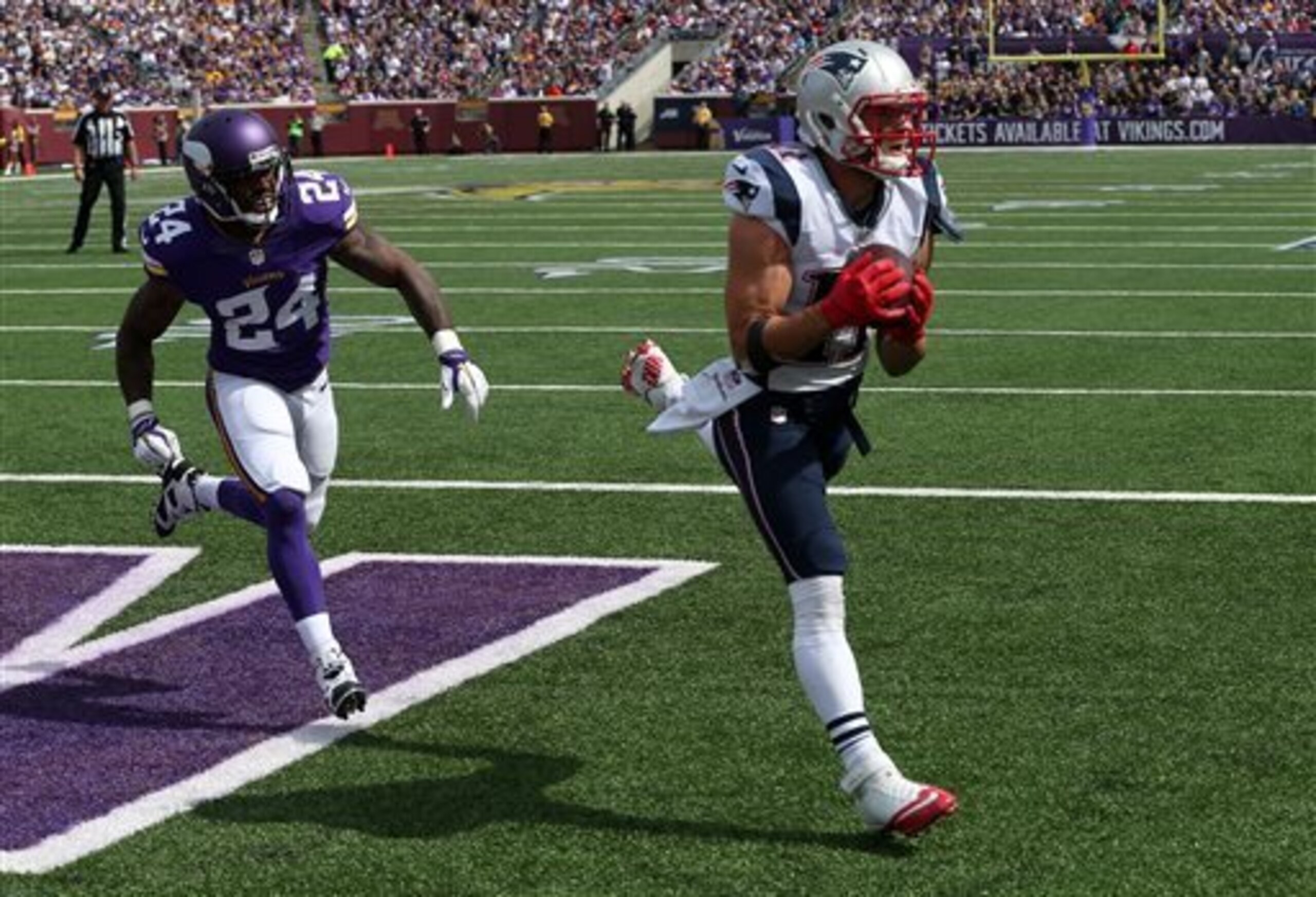
Julian Edelman was the offense's brightest star, compiling 81 yards and a touchdown on six receptions. After an injury-riddled start to his career, Edelman showcased his toughness in taking several big hits and immediately bouncing back up.
It is clear that he will remain the top option among wide receivers this season.
With a heavy emphasis on two-tight end personnel, the Patriots mostly operated out of two-receiver formations. In fact, apart from Edelman, New England receivers recorded only one reception on three targets on the day. Danny Amendola saw his playing time most affected from last week, when the Patriots went with plenty of spread three- and four-receiver sets.
For the second consecutive week, Rob Gronkowski saw his playing time limited, as he continues to recover from offseason ACL surgery. The Pats appeared to save their tight end for the second half, but with the game in hand, Gronkowski ended up playing fewer than half the total offensive snaps.
James Develin was an underrated contributor in the win, fulfilling a hybrid fullback/H-back role. Develin had two catches for 17 yards off a pair of play-action fakes, and he also provided his usual doses of strong lead-blocking. Though his contributions are never glamorous, Develin's versatility plays an important role when the Pats decide to revert to ball-control tendencies.
Again, this unit is operating at limited strength because of injuries to Gronkowski and Dobson (who recorded his first catch of the season). Those two must return to full health soon to infuse the passing game with its usual dynamism.
Grade: B
.jpg?w=2560 "Commanders Eagles Football")


Offensive Line
4 of 10
The Patriots protected this unit to some degree in the passing game, but for the most part, the offensive line was much better in run blocking against Minnesota. The unit is not exactly agile, which can hamper the zone-blocking game, but the starting five exhibited more power in controlling the trenches against a talented Vikings defensive line than it did the week before.
The day's most notable development was the insertion of rookie tackle Cameron Fleming as a sixth lineman on a sizable portion of plays. After Michael Hoomananwanui's struggles in Miami last week, Fleming was much more reliable in sealing the edge, though he did have one penalty. Regardless, this is a grouping the Patriots can lean on near the goal line or when they want to slow the pace.
New England did have its fair share of holding penalties, with Nate Solder having a particularly ignominious three-penalty-in-two-play stretch. But the interior was much steadier than last week, and Jordan Devey's played wire-to-wire for the first time in either the regular season or preseason. Though he was not perfect, Devey did reward the coaching staff's faith in him, one that many have questioned over the past month.
Rookie center Bryan Stork also came in at the end of the game in place of Dan Connolly. The Patriots gave Stork ample opportunity to win the starting job before an injury derailed that potential. Stork is still likely weeks away from starting if he does take over, but this is a good sign that he is healthy enough to provide insurance in the interior.
After this week, the Patriots will likely stick with the same starting five in Week 3. Though there are physical limitations that will result, increased chemistry can cover up the individual warts in time.
Grade: B
Defensive Line
5 of 10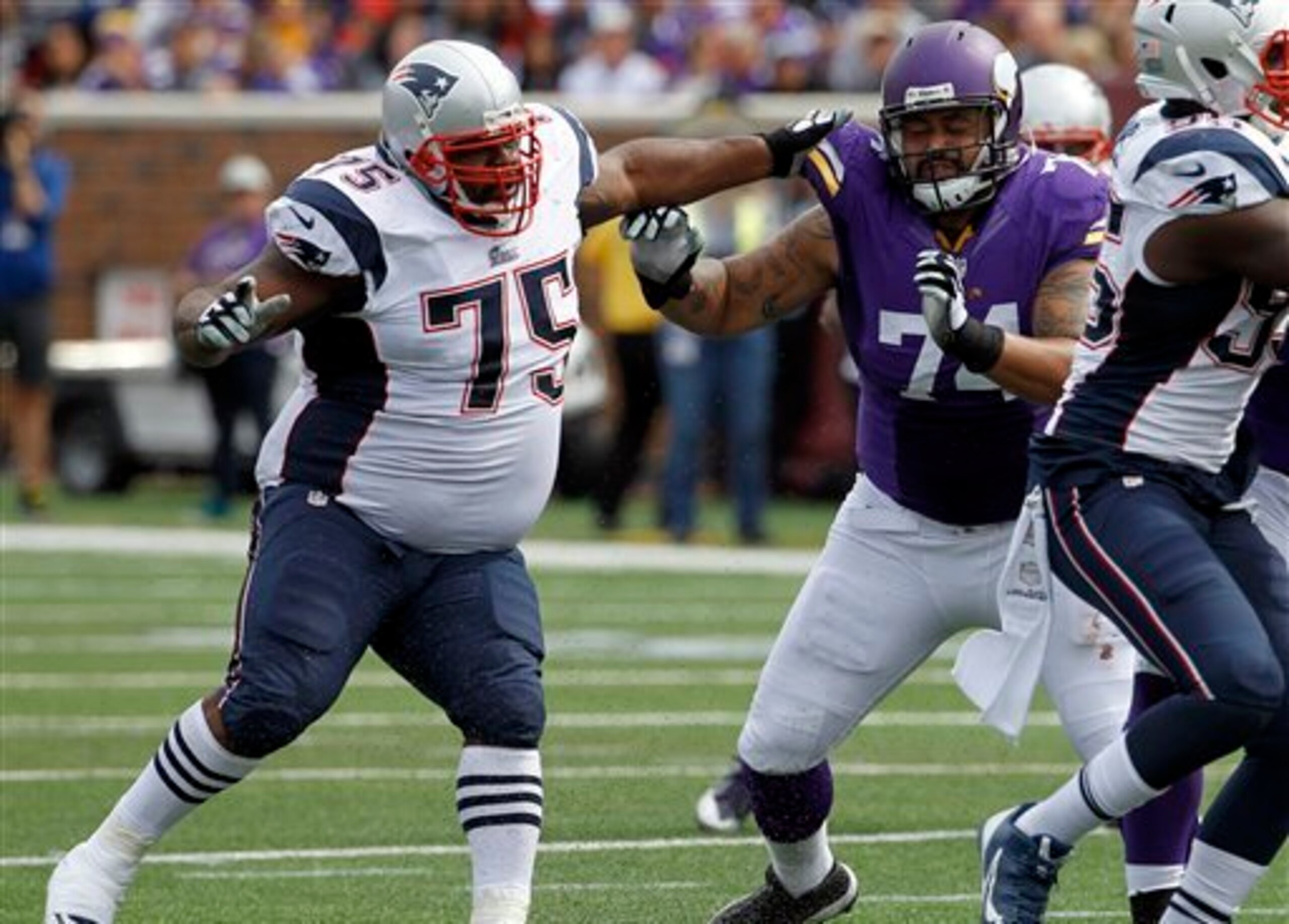
After last week's reliance on Chandler Jones, Vince Wilfork and Joe Vellano, the Patriots were refreshingly creative with their usage along the line.
Though they still relied primarily on three-man fronts, the Pats decided to use Wilfork and Sealver Siliga on early downs before shifting to Jones and Dominique Easley in sub-package personnel.
That enabled the Patriots to control the interior line all game. Wilfork and Siliga handled the Vikings' blockers and allowed the linebackers to clean up plays at the line, while Jones and Easley forced Minnesota QB Matt Cassel off his spot into the waiting arms of the edge-rushers.
That's the type of complementary football Belichick preaches. More importantly, the Pats did not insist on having converted defensive ends two-gap, allowing for a penetrating style that flustered Cassel consistently. Whereas the Dolphins offense dictated to New England last week because of its dominance in the trenches, the Pats were able to flip that scenario against the Vikings on Sunday.
Going forward, it will be interesting to see how heavily the Pats rely upon Wilfork. Conventional wisdom suggested that the 32-year-old would see his snap count reduced after a debilitating Achilles injury in 2013. But Wilfork was again a constant one week after playing 52 of 76 snaps against Miami.
Still, that's a concern for future weeks. Wilfork and the defensive line did not fill the stat sheet (apart from Easley's fourth-quarter interception), but their steadiness enabled the rest of the defense to totally stifle Minnesota's offensive rhythm.
Grade: A-
Linebacker
6 of 10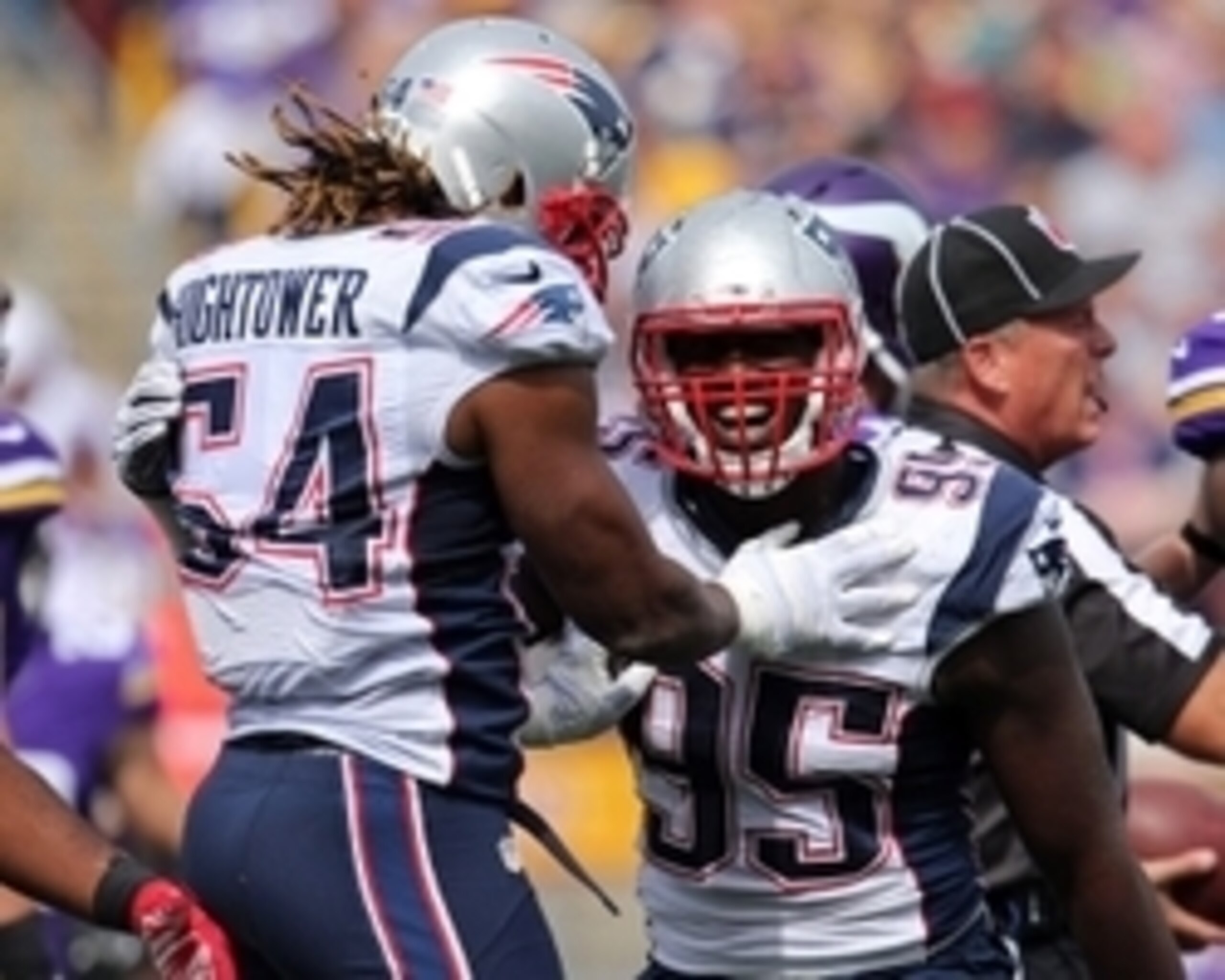
After struggling mightily as a 5-technique last week, Chandler Jones was arguably New England's best player against the Vikings.
Jones is much more effective as an outside linebacker, as his length and explosiveness are maximized when he is allowed to penetrate rather than engage opposing linemen.
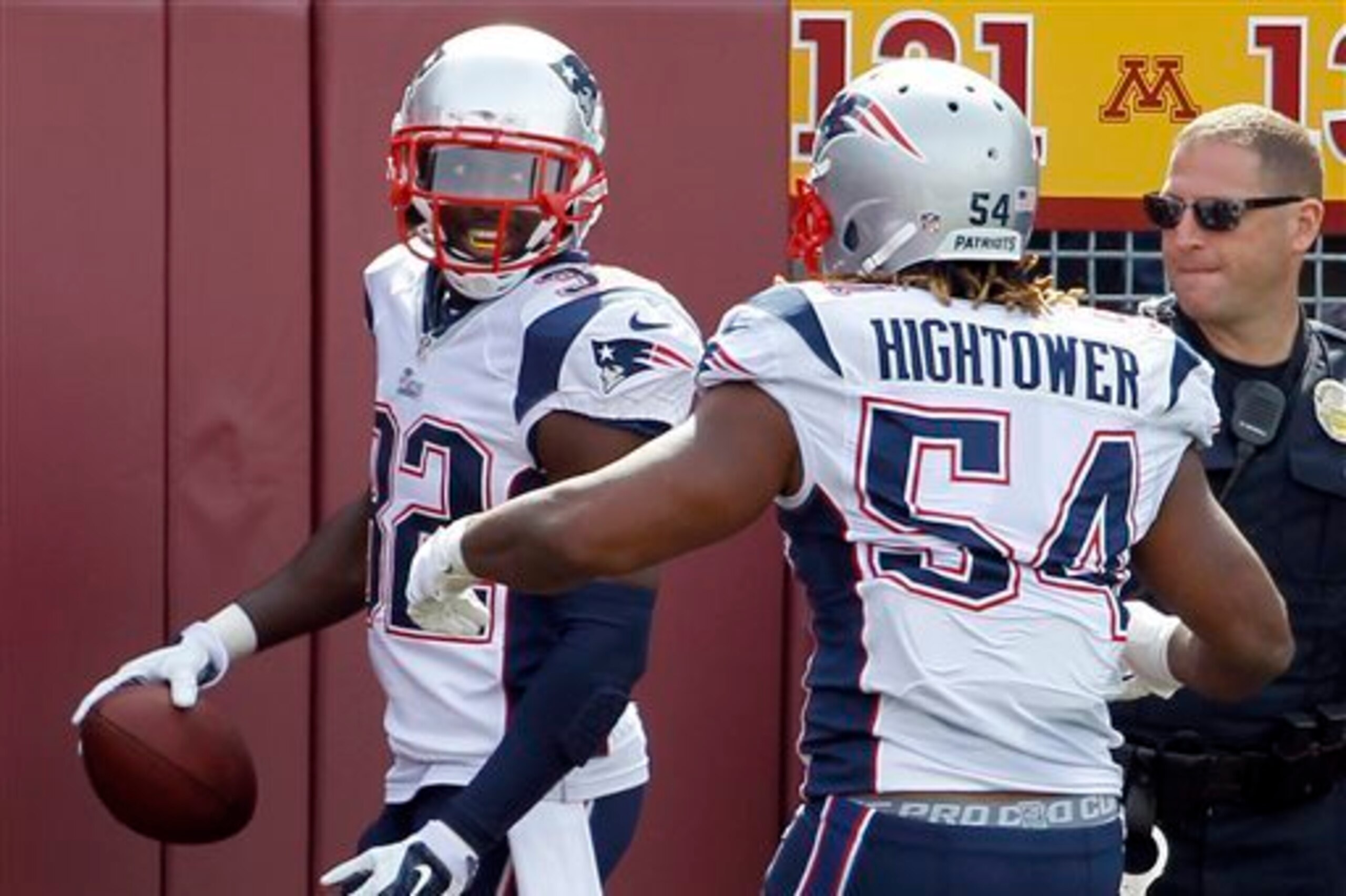
Jones compiled two sacks, but Dont'a Hightower surprisingly matched him in that category. Hightower clearly enjoys his new edge-rushing role, which allows him to attack the line rather than read and react, as he has done during his two-year career so far. That the Pats kept him in this role despite Jamie Collins' deactivation suggests that Belichick is committed to Hightower as a third edge-rusher along with Jones and Rob Ninkovich.
Jerod Mayo was also extremely effective in gap fits against the run this week, compiling seven tackles, including two for a loss. Mayo's success partially stems from the defensive line's ability to keep blockers off him at the second level, but after being out of position all game against the Dolphins, his constant disruption was an important turnaround that helped limit Minnesota backs Matt Asiata and Jerick McKinnon.
If there's one complaint with this unit, it is that there were coverage issues on crossing routes early in the game. Minnesot Kyle Rudolph gave Mayo and Deontae Skinner fits on Minnesota's game-opening touchdown drive, as Collins' absence robbed the Patriots of a linebacker with the speed and fluidity to track tight ends from sideline to sideline.
Nonetheless, the Pats corrected that issue by bracketing tight ends with safety help, an important adjustment that eliminated Cassel's only reliable source of receptions. Considering how effective this unit was elsewhere, those early-game struggles do not even dent the final grade.
Grade: A
Secondary
7 of 10
McCourty's interception and return to the 1-yard line was the game's biggest turning point, awakening a drowsy Patriots team before the Vikings could create any meaningful separation. McCourty's effectiveness as a ball-hawking security blanket is insurance to the Patriots' press-coverage corners, making him arguably as important as any defender.
Darrelle Revis and Logan Ryan also came up with their first interceptions of the season. In a surprise that myself and others probably should have seen coming, the Pats isolated Revis on Greg Jennings while Ryan covered Cordarrelle Patterson. Patterson's quickness is reminiscent of receivers who have given Revis trouble, while Jennings' veteran route-running savvy could have created issues for the gambling Ryan.
But Revis' airtight technique and Ryan's speed were perfect matchups for whom they faced, and both disrupted Minnesota's receivers with excellent press coverage. Ryan's performance was particularly encouraging after the second-year corner struggled mightily in the preseason, as his interception was an embodiment of the value his ball-hawking jumps can provide the defense.
Additionally, Patrick Chung was an underrated contributor to this unit. Chung helped cover Rudolph and Rhett Ellison after the linebackers struggled on the first drive. While coverage remains Chung's weakness, his physicality and tackling in the box has evidently earned the coaching staff's trust to start him over Duron Harmon.
This is the best unit on the Patriots roster, and their performance in limiting Cassel to 5.6 yards per attempt reiterated that truth. With four picks and suffocating press coverage, this unit contributed to the win more than any other.
Grade: A
Special Teams
8 of 10
This unit experienced an eventful roller coaster throughout the game. Chandler Jones' blocked field goal and scoop-and-score touchdown was the knockout blow that propelled the Patriots through the second half, a play that will remain on the Patriots' highlight reel by season's end.
Moreover, Julian Edelman was his usual elusive self as a punt returner, with an average of 16.5 yards on four returns. Between Jones' game-clinching play and Edelman's constant field-position flipping, the overall complexion of this unit was positive.
But all those penalties are going to anger Belichick. The Pats had at least four penalties on special teams, continuing a theme from last week's struggles in the third phase of the game. Though those flags ultimately failed to stymie New England's rhythm, those hidden yards are losses the Pats must rectify.
Still, the kicking game was mostly excellent. Stephen Gostkowski continues to resemble a cyborg with his consistency, nailing field goals of 48, 47 and 27 yards. Ryan Allen also had a better showing, with four of his five punts landing inside the 20.
This unit is more of an asset than a liability, even with the penalties. The Patriots ability to control field position is an important variable they usually possess, and today typified that reliability.
Grade: A
Coaching
9 of 10
After employing several questionable schematic surprises last week, Bill Belichick's return to conventional tactics and packages resulted in steadier production. This is hardly surprising, for while Belichick may have been experimenting with some players' versatility, today's game plan was much more effective in maximizing his personnel's strengths.
In reverting to two-tight end sets on offense and one-gapping concepts on defense, Belichick allowed the Patriots to dictate the game's rhythm. New England may try and shift to more hybrid schemes on both sides of the ball in the future, as Belichick values amorphous personnel and schemes above all. Still, a return to bread-and-butter familiarity was an important antidote to last week's discombobulation.
Josh McDaniels still deserves some scorn for his lack of play-calling creativity, though like Brady, he is not operating with his full tool kit. But the absence of even a single target for Rob Gronkowski in the red zone seems like a heinous oversight, especially with the Patriots stalling throughout the second half.
Nonetheless, the Patriots were clearly more comfortable and prepared this week, so give the coaching staff credit for making important adjustments. There are still important tweaks for the offense to make once they return their full complement of weapons, but the coaches redeemed themselves as much as the players this week.
Grade: B
Final Grades
10 of 10
| Positional Unit | Overall Grade |
| QB | B |
| RB | B+ |
| WR/TE | B |
| OL | B |
| DL | A- |
| LB | A |
| Secondary | A |
| ST | A |
| Coaching | B |
| Cumulative Grade | B+ |
The Patriots were not wholly overwhelming, despite what the scoreboard may have suggested. The large margin of victory was also partially attributable to Minnesota self-destructing, perhaps as a consequence of their tumultuous week.
Still, the fundamentals were nearly flawless after they were shockingly absent against Miami last week. That loss was a reminder that the Patriots cannot take contention for granted, and their refocused approach paid clear dividends this week.
New England still has plenty of offensive development left before they can be considered top Super Bowl favorites, but the defense and special teams exhibited the elite form many prescribed for them in the preseason. The Pats are back on the right track, and a soft upcoming slate should help them pile wins while they continue to shape their identity.
.jpg?w=2560 "Chiefs Dolphins Football")
.jpg?w=2560 "Texans-Mixon Released Football")


.jpg?w=2560 "Love's Body Already 'Tired'")