

Breaking Down Miami Heat's Small Forward Position for 2014-15 Season
LeBron James is out, Luol Deng is in, and the Miami Heat are facing a major change at the small forward position. But it isn't as simple as that.
James didn't play 48 minutes at small forward. Also contributing to the Heat at the 3 last season were Shane Battier, Rashard Lewis, James Jones and Michael Beasley in varying degrees. Even Ray Allen was used in three-guard lineups with Dwyane Wade and Mario Chalmers.
Of all positions, small forward is the one in which Miami faces the biggest change, giving the position a new identity and role in the team's scheme for the 2014-15 season.
TOP NEWS

LeBron's Special Helicopter Deal

MJ Makes Record-Setting Donation 🙌
Report: Embiid Down to Rookie Weight
Grading Last Year's Performance

Few teams have been in a better situation at small forward than the Heat were last season—like, in the history of the NBA. James is the most versatile, singularly dominant small forward the game has ever seen, and he was in his prime during his last season in Miami.
James is listed as a small forward, but he often played power forward in Erik Spoelstra's positionless approach. According to basketball-reference.com, James played power forward 82 percent of the time. Battier, Lewis, Beasley and Jones would all be seen playing a small forward-like position at times, too. However, either forward spot's distinction was nominal in nature. The 3 and the 4 were interchangeable in Spoelstra's scheme, depending on the matchup.
| 2010-11 | 0% - SG | 74% - SF | 25% - PF | 0% - C |
| 2011-12 | 0% | 58% | 35% | 7% |
| 2012-13 | 0% | 9% | 82% | 9% |
| 2013-14 | 1% | 15% | 82% | 2% |
As for the other small forwards on the roster, Battier looked like a guy who should have retired after the Heat won the Finals in 2013. He couldn't close out on defense, defend 4s anymore or hit his three-pointers (just 34.8 percent last season).
That led to Spoelstra yanking him from the starting lineup in favor of Lewis, who had a nice stretch in the playoffs but couldn't make it last into the NBA Finals. The Heat signed Beasley before the season as a low-risk, high-reward guy. He never panned out, coming in and scoring in spurts but overall being unreliable to fulfill his assignments within the scheme.
Still, with James in the fold, few teams could have asked for a better situation. When Battier was playing top-notch defense, though, the Heat as a team were also. In 2013, I would have given the 3 spot an "A+," but I'll settle on an "A" given the lack of depth last season.
What's New?
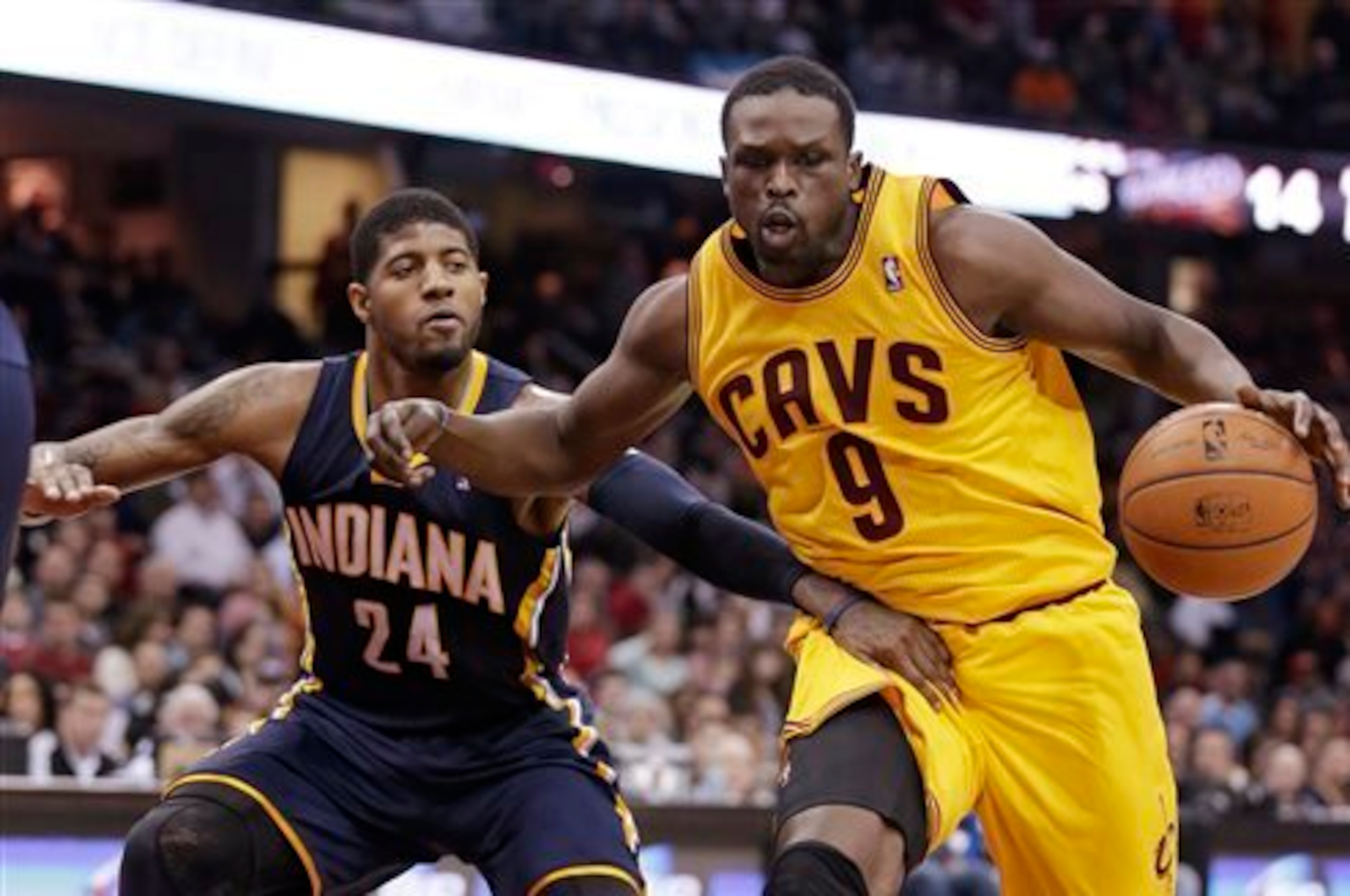
In a word? Everything.
James, Battier, Lewis and Jones are all gone. In comes Deng, Danny Granger and James Ennis.
Deng comes over from the Cleveland Cavaliers and ensures that the small forward spot isn't a weakness in Miami despite the departure of James. The Heat also signed Granger, who is coming off a few leg injuries, and brought last year's second-round pick Ennis back from Australia. Both are guard-forward tweeners with specific skill sets.
Still, going from historically excellent to above average at a position is quite the drop-off. It's like if you replaced Tom Hanks in "Forrest Gump" with John Travolta.
What Will the Position Look Like This Season?
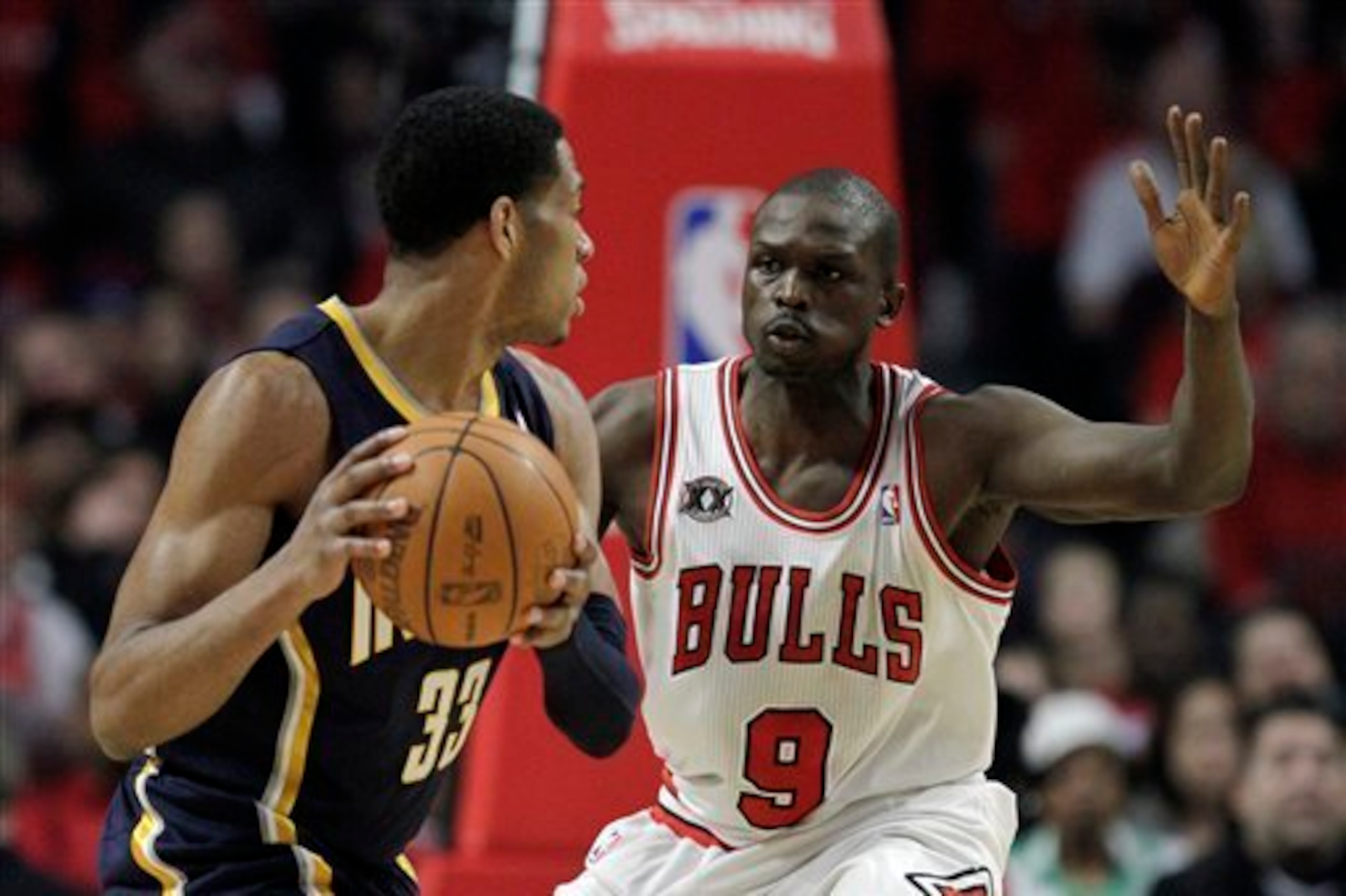
The only true small forward on the roster, Deng should get the lion's share of the minutes here. In his last three seasons in Chicago, he averaged more than 38 minutes per game. Miami will probably give him a similar work load, especially if Granger has to miss time and assuming Ennis takes a while to adjust to the NBA.
It's no secret that James mailed it in at times on defense last season. With the scoring load firmly set on his shoulders, it's hard to blame him. Deng won't face nearly the same demand on offense, which will allow him to do what he does best. He'll play the best perimeter defense on the team, hustle for loose balls and rebounds while letting the game come to him on offense. He isn’t a particularly dangerous offensive player, but knows his limits.
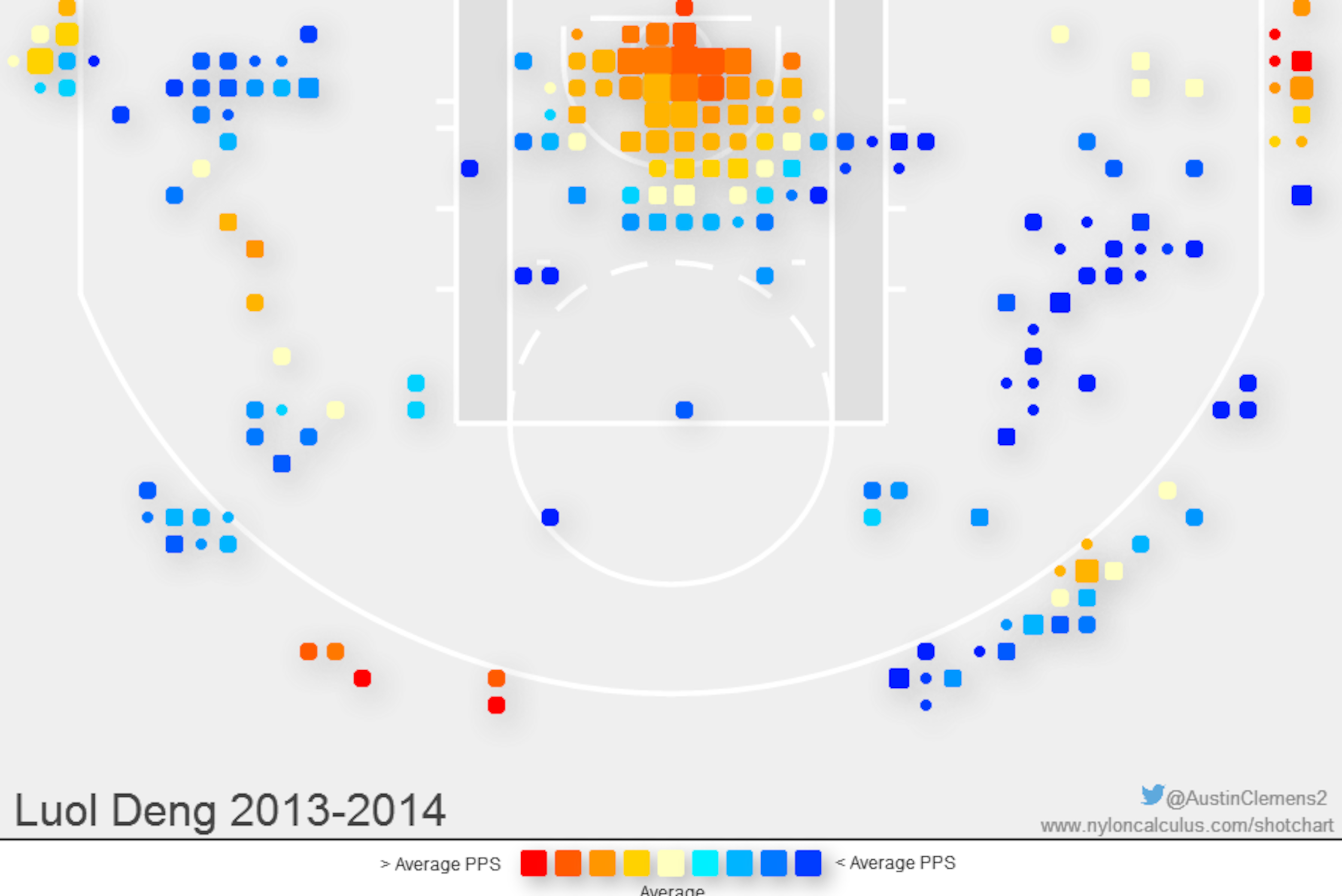
Check out his efficiency shot chart, via NylonCalculus.com. Shot efficiency measures a player's points per shot compared to the rest of the league, measuring not only a player’s field-goal percentage from a particular location but also the volume at which that player shot from that location. 34 percent of Deng’s attempts came near the basket, while no more than five percent of his attempts came from any other location.
Granger, then, can come in and bring the scoring punch. Looking at his efficiency chart, Granger shot better than 44 percent from four different spots beyond the arc with 13 percent of his attempts coming from the corners.
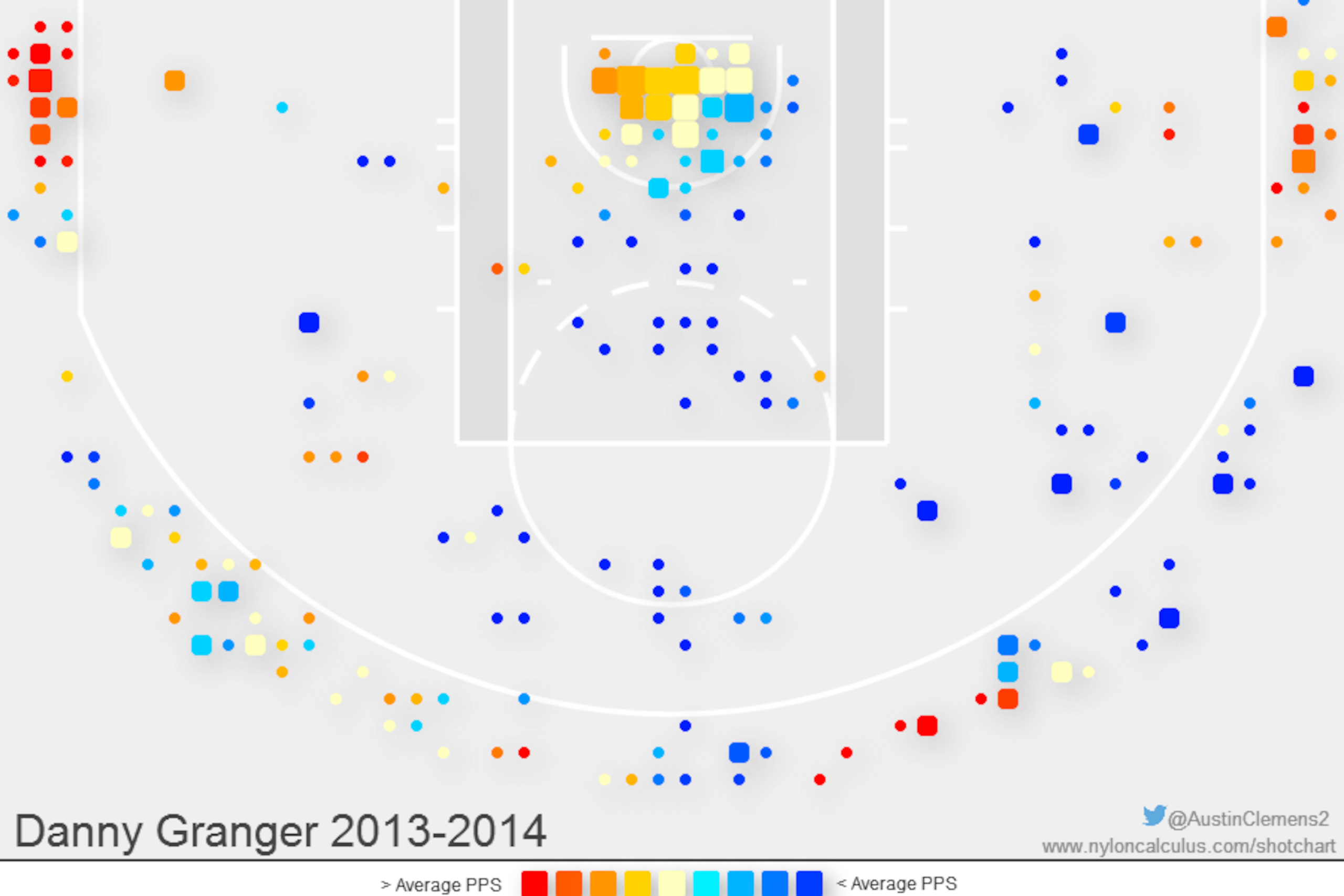
For a comparison of what the 3 spot will look like, think of the Dallas Mavericks small-forward rotation the last few years with Shawn Marion and Vince Carter. Marion was the reliable starter, playing plus defense and shooting threes. Then Carter would come in to add a scoring flare. With those teams, Marion averaged about 30 minutes per game while Carter played about 25.
Because Granger's injury concerns and Deng being used to playing nearly 40 minutes a game, figure that split to be something closer to 35-20 with Deng in the Marion role and Granger in the Carter role.
As for Ennis, it will depend on how quickly he can get accustomed to NBA action. He is, by far, the most athletic on the three. He can get in the paint and play above the rim. He is very raw and needs to learn the intricacies of the game—playing within Miami's defense and offense—before he sees a significant playing time. For now, he figures to be seated near the end of Miami's bench.
When judging the impact of losing James, you have to look further than simply who replaces him at small forward. James did so much for the Heat—from initiating the offense from the perimeter or the post, defending the opponent's best player, being the scoring leader and bringing the ball up—that it will take a team effort to replace even a percentage of what he brings to the court.
When you really think about it, Miami didn't have a true small forward for the past three seasons. Even Battier played more of a faux stretch-4. The biggest change between last season and this season will be the fact that the Heat will be playing with a true small forward for the first time since James joined the team in 2010.


.jpg?w=2560 "2 NFL Officials Suspended")

.jpg?w=2560 "Mahomes' Wife Trolls Kubiak 💀")
.jpg?w=2560 "Injury-stricken Seahawks signing veteran RB")

.jpg?w=2560 "Love's Body Already 'Tired'")