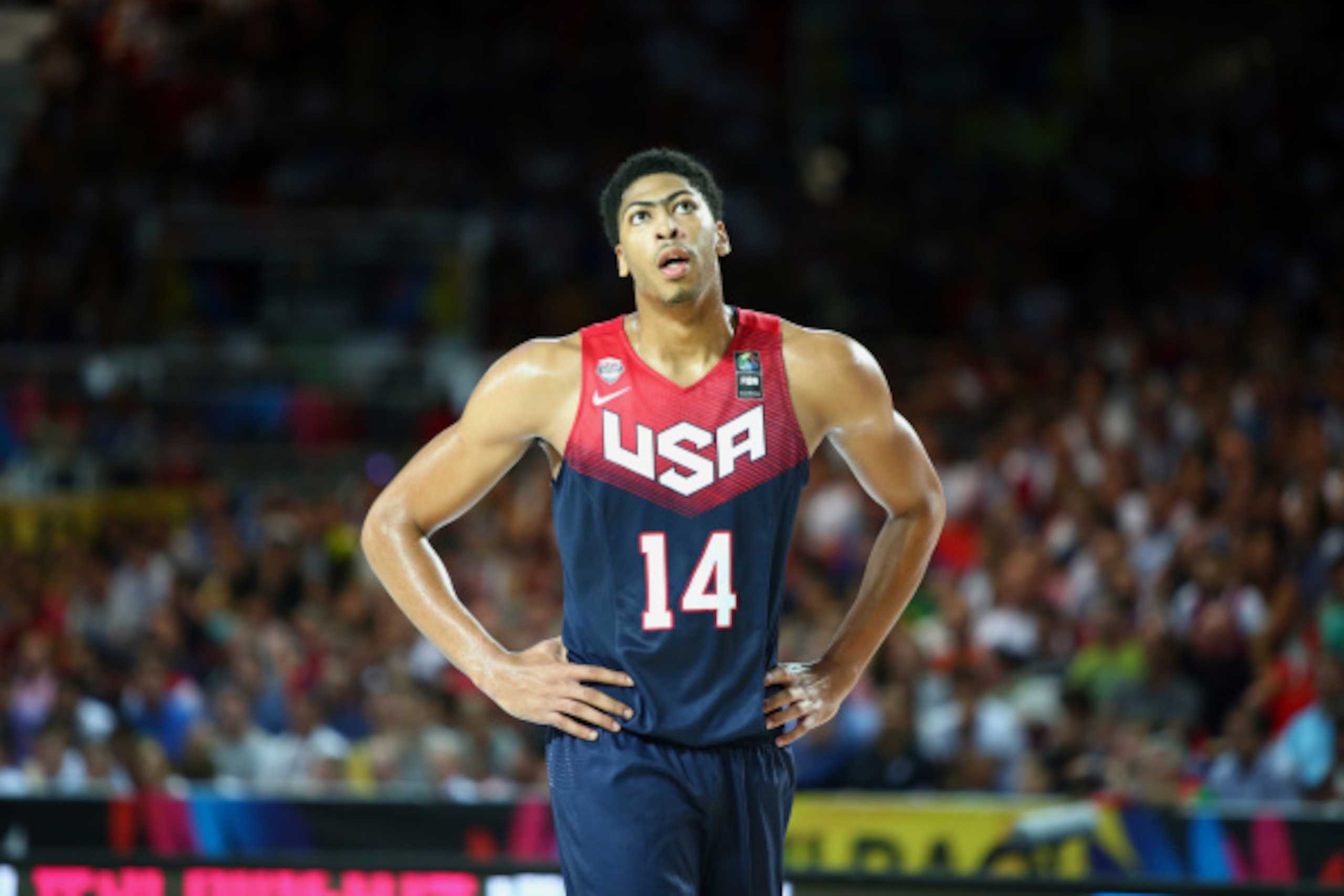

Updated Country Power Rankings Heading into FIBA World Cup Elimination Round
And then there were 16.
Though 24 teams came to Spain for the 2014 FIBA Basketball World Cup, only 16 remain for the knockout rounds. The fat has been trimmed, if you will, even if not all of the eliminated teams deserve to be referred to as such.
Heading into the tournament, ranking these teams was largely a guessing game. The rosters hadn't been together for many significant games, and gleaning information from exhibition contests is a fruitless, perilous task.
Now, we at least have a five-game sample for every team in the field. There's still more to be learned, but from top to bottom, the rankings are truly beginning to take shape.
16. Mexico
1 of 16Mexico sneaked its way into the elimination stage after a 16-point win against South Korea on Thursday afternoon, but it didn't exactly play as though it belonged in the next portion of the competition. That should be apparent soon enough, with a matchup against Team USA looming in the not-so-distant horizon.
Though Gustavo Ayon has played quite well—even if Mexico was outscored with him on the court—and seems comfortable carrying the offensive load in crucial situations, the roster as a whole has underwhelmed. Jorge Gutierrez, for example, has recorded as many turnovers as assists and has failed to get the offense humming when he's dribbling out on the perimeter.
Mexico, which was outscored by two points in the group stage, does get to advance, but it does so by virtue of taking care of business against exceedingly weak teams. South Korea and Angola aren't the strongest squads in the field, and those are the only countries Mexico has beaten.
Kudos to Ayon and Co. for making it, but a reality check is coming.
15. Senegal
2 of 16It's hard to find a better feel-good story than this one in the FIBA Basketball World Cup.
Going into the tournament, not much was expected of Senegal. In particular, yours truly massively underestimated what this squad brought to the table, placing it dead last in the team rankings heading into the festivities.
Senegal would have none of it.
Had it pulled off a victory against the Philippines in its fifth game of group play, it would have gone into the elimination stage of the World Cup with a shocking 3-2 record. But even with that overtime loss, Senegal still managed to emerge with successful outings against Croatia and Puerto Rico.
Did it keep things close against the clear-cut favorites from Group B? Not really, but it didn't need to. With Gorgui Dieng emerging as a stud, Hamady N'Diaye contributing consistently and Mouhammad Faye and Maleye N'Doye both making large impacts, Senegal took care of weaker opponents and did enough to creep into the next round.
This has to be considered a success, no matter how badly it's beaten in the first elimination game, which will come against Spain.
14. Dominican Republic
3 of 16
Losing to Turkey didn't ultimately keep the Dominican Republic out of the next round.
As NBA.com's John Schuhmann tweeted, "How did Ukraine get knocked out? In three games between them, DOM was +3, NZL was -1 and UKR was -2. One point made the difference."
You've probably heard that every shot counts before. Rarely has it been more true than it was this week for the Dominican Republic, which narrowly advances out of Group C and into the knockout stage. Thank you, Francisco Garcia.
Garcia is simply everything for this team.
Through four games, he averaged 20.2 points, 3.8 rebounds and 2.5 assists per contest, shooting 61.2 percent from the field and 65.4 percent from beyond the arc. Those are incredible numbers, and the decision to rest him against the United States (the picture above is from an exhibition game) may yet pay off.
Nonetheless, the Dominican Republic will have to receive more contributions from players other than Garcia moving forward.



13. New Zealand
4 of 16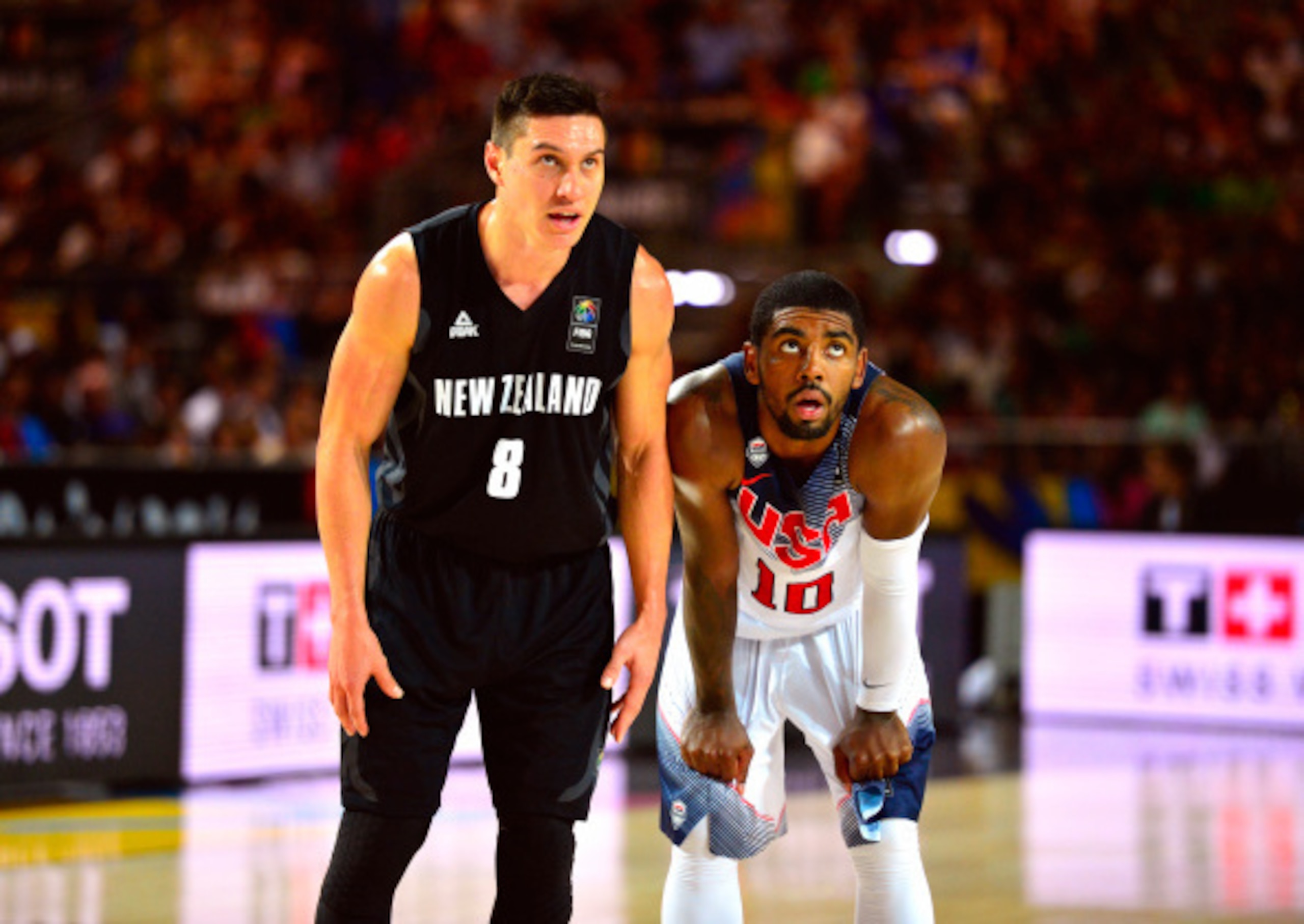
Kirk Penney was actually held in check during the group stage, averaging only 11.8 points per game on 31.8 percent shooting from the field and 27.3 percent from beyond the arc. That wasn't expected for a scorer this talented, but New Zealand still managed to win enough games (two) that it advanced out of Group C.
The 67-65 victory over Finland on the final day of the opening round couldn't have been bigger in a tightly packed group. A big performance from Isaac Fotu—and his hair—allowed New Zealand to pull ahead, winning consecutive games to rebound from an 0-3 start that didn't leave much hope for advancement.
That said, this should be the end of the run. An upset is always possible, but it would take much hotter shooting from Corey Webster and Penney, something that hasn't happened too consistently thus far.
Group C wasn't particularly strong outside of the United States, but New Zealand still only posted a minus-two point differential against the non-American teams in the field in four games. That's not conducive of anything other than a finish near the bottom of the power-rankings totem pole.
12. Turkey
5 of 16
Omer Asik has been an absolute machine for the Turkish contingent, dominating on the glass and submitting a few surprising lines on the offensive end. This team has been strategic using him, benching him when the matchup isn't advantageous, and that's worked out quite well, keeping him fresh and undeniably effective.
Of course, Emir Preldzic deserves a good bit of credit, seeing as he's been the team's leading scorer while thriving on the boards as well.
This is a big, physical team that takes advantage of the right matchups.
Now things get harder, and the sheer talent of the squad might not be great enough to keep the run going.
11. Croatia
6 of 16Croatia's tournament doesn't really make sense.
Beating Argentina was impressive, as was keeping things fairly close against Greece and blowing out Puerto Rico. But only mustering up a three-point victory against the Philippines and dropping a game against Senegal?
That's strange.
As SBNation.com's Kevin Zimmerman wrote, this was arguably the biggest upset of the group stage:
"By early morning of the FIBA World Cup's third day, the group stage had its biggest surprise. Senegal recorded its second major upset in Group B play on Monday, beating a well-respected Croatian squad, 77-75, behind the play of Minnesota Timberwolves forward Gorgui Dieng.
Dieng's 28 points, eight rebounds and two blocks followed up an 18-point, 13-rebound performance Sunday in a win over Puerto Rico.
"
If Croatia couldn't stop Dieng, how is it going to slow down the other big men it'll go up against during the tournament's remaining contests?
Bojan Bogdanovic and Dario Saric have predictably excelled, but Croatia needs someone else to step up.
Here's looking at you, Damjan Rudez.
10. Serbia
7 of 16Serbia can't be displeased with how it performed against a tough slate of competition in Group A.
Led by Miroslav Raduljica (who still hasn't received an appealing NBA offer), Milos Teodosic and Nemanja Bjelica, the Serbians have basically played out their schedule as was expected. Well, expected when only the the types of results are discussed, as the margins of victory and defeat tell a different story.
Egypt and Iran both failed to produce much of a challenge for Serbia, which handily defeated each country by a double-digit margin. But in three losses, it wasn't difficult to find positive feelings.
Against Brazil, Serbia lost by only eight points. The margin was even more narrow against France, and it was truthfully a game that shouldn't have produced the result it did. Bogdan Bogdanovic turned the ball over with five seconds left on the clock and the score tied, and Joffrey Lauvergne ended the contest with a free throw to give the French a victory.
There were even plenty of positive moments against Spain. No one has really kept things close for long against the host country, but Serbia at least played the Spaniards closer than anyone else.
Thus far, it's tough to put Serbia up in the group of nine teams that have been truly impressive, but they're the leaders of the next tier.
9. Argentina
8 of 16
Argentina got off to a blazing start, dropping 98 points on Puerto Rico to open the tournament. There was simply nothing that could stop them that afternoon, though it quickly became clear that this team did actually miss Manu Ginobili.
Heading into the tournament, there was plenty for the Argentines to worry about. The summer was filled with controversy and ineffective basketball during the exhibition schedule, while the roster was comprised largely of aging veterans and young, untested players.
However, Luis Scola and Pablo Prigioni have refused to let this team fall out of contention, aided by the unexpectedly excellent contributions of Nicolas Laprovittola. The 24-year-old point guard has given Argentina a third high-quality ball handler, allowing the ball to move freely between the bigs and some combination of Laprovittola, Prigioni and Facundo Campazzo.
Given the Argentine tradition in international competition, a 3-2 record has to be fairly disappointing. But given the roster, the turmoil, the narrow loss to Croatia and a tough matchup against Greece that featured a quality comeback, it's really not too bad.
8. Australia
9 of 16A 3-2 record does not accurately depict how Australia played during the 2014 FIBA Basketball World Cup.
After all, this team beat Lithuania by seven points, dropped a 10-point loss against Slovenia, took down Mexico by eight points and handily dismantled South Korea. The only real flaw on the resume was a defeat at the hands of Angola on the final day of group play, and that was a fairly controversial contest.
Aron Baynes did not play against Angola. Neither did Joe Ingles, and those are arguably the two most reliable players for the Boomers. In fact, it's tough to argue that this game wasn't thrown for the sake of positioning heading into the elimination rounds.
As Slovenia's Goran Dragic tweeted after the game, "Basketball is a beautiful sport, there is no room for fixing the game like today Australia vs Angola!! @FIBA should do something about that!"
Regardless of whether there were losing intentions, Australia now doesn't have to worry about playing Team USA in the quarterfinals. Immoral? Savvy gamesmanship? Depends on your opinion, but Australia still shouldn't have this loss against Angola hold it back in the power rankings too much, as this was a dominant outfit when at full strength.
7. France
10 of 16No Tony Parker, no problem.
Though Evan Fournier has struggled, France's other two guards have performed admirably and picked up the proverbial slack for the country's best player—and leader—who is sitting out of the World Cup to rest for the 2014-15 campaign with the San Antonio Spurs.
Thomas Heurtel averaged 7.8 points, 2.4 rebounds and 4.2 assists per game through the first five contests, shooting 51.5 percent from the field. Joining him in the backcourt, Antoine Diot put up 9.2 points, 3.6 rebounds and 2.4 dimes during the average outing. That's pretty solid production, especially when the duo combined for only 4.6 turnovers per game.
France did lose twice, but it's hard to hold a two-point letdown against Brazil and a loss to Spain against it. Those are both basketball powerhouses with stellar rosters, and a Parker-less French squad really couldn't have been expected to emerge from either outing in victorious fashion.
6. Slovenia
11 of 16Slovenia was so close to going unbeaten in group play.
If the offense hadn't stagnated in the fourth quarter of a tough game against Lithuania, thus allowing the eventual Group D champions to scratch their way back from a double-digit deficit, the Slovenians would've put together an impressive collection of five victories, one that would've earned them the No. 4 spot in the power rankings.
So much for that.
Nonetheless, this was an impressive team, led by the Dragics night in and night out. Goran Dragic in particularly was absolutely sublime, averaging 17.4 points, 2.8 rebounds and 4.0 assists per game on 60.7 percent shooting from the field.
Yes, 60.7 percent, even after his 5-of-14 performance against Lithuania.
In the elimination rounds, Slovenia will be doing everything in its power to control the tempo, running as fast as possible to give the offense as many chances as it can realistically enjoy. With Dragic playing this well, the Slovenians are a threat to upset anyone.
5. Lithuania
12 of 16Lithuania pulled off a stunner against Slovenia to close out group play, holding Goran Dragic and the stellar Slovenian scoring machine scoreless for a ridiculously long stretch to close a double-digit deficit and move into Group D's top spot.
It was a resilient performance from Jonas Valanciunas, Lithuania's key player, excelling against Slovenia even after struggling mightily in his previous outing. The big man finished group play averaging 11.2 points and 6.8 rebounds per game while shooting a jaw-dropping 78.1 percent from the field.
If his country isn't forcing him the ball, it's making a mistake, as he should touch the rock on nearly every possession.
Group D ended up being one of the toughest collections of talent, with the two aforementioned teams rising to the top at the expense of Australia, Mexico and a feisty Angola squad that was ultimately denied a spot in the elimination rounds.
To go 4-1 in this group, with the only loss coming by seven points to Australia, is an impressive accomplishment.
4. Brazil
13 of 16
Brazil has to be pleased with its performance during the group stage.
A 4-1 record is nothing to sniff at in the brutally difficult Group A, especially when the only loss came at the hands of an unstoppable Spanish machine. Otherwise, Brazil eked out a two-point victory against France, blew out Iran and absolutely throttled an overmatched Egyptian squad, winning with a 63-point margin.
The defense has been on point in each and every game, and the offensive duties have been shared rather nicely. Through five games, Leandro Barbosa is the team's leading scorer, and he's averaging just 13.6 points per game.
In fact, there are actually seven different players who are contributing at least seven points during the average contest thus far, and that ability to spread the ball and share the offensive load has made it quite difficult for opponents to hold down the Brazilian offense.
3. Greece
14 of 16Outside of the two favorites, no team has been more impressive than Greece.
The Greeks have been clicking on all cylinders from start to finish, and the result is an undefeated run during the group stage. Impressively, that includes victories over Croatia, a pesky Senegal squad and an Argentine squad that was held in check for most of the closing game of the opening round. Prior to running into Greece, Argentina's offense had been absolutely rolling.
Giannis Antetokounmpo has supplied some highlights, but he's been far from the most impressive player on this roster.
That honor would have to go to either Giannis Bourousis, Kostas Kaimakoglou or Kostas Papanikolaou, though Georgios Printezis and Nick Calathes have been quite excellent as well. Greece hasn't had as much firepower as other squads, preferring to spread the scoring around and force the opposition to distribute its attention to everyone on the court.
But the defense has been something to write home about, which the Greeks might have to do as they make a deep run in Spain.
2. Spain
15 of 16
Group A was not easy to navigate.
Brazil and France (even without Tony Parker) both present formidable challenges, and Serbia is capable of upsetting nearly any country in the field when the young players are hitting shots. Iran and Egypt aren't particularly potent, but that aforementioned trio is dangerous enough already.
Nonetheless, Spain blazed its way through the group stage, using its size, undeniable chemistry and all-around play to stomp every opponent in its path. Brazil and Serbia were the only teams to keep the margin under 20 points, and even those victories came with 19 and 16 points of separation between the two sides, respectively.
Pau Gasol has been unbelievable, and the rest of his teammates haven't been too shabby. Even with Jose Calderon uncharacteristically struggling to hit his shots and Serge Ibaka working his way back from injury, one that kept him out of the tournament opener, the host country has been purely dominant.
It's safe to call Spain a juggernaut, even if it isn't the only one in the field.
1. United States
16 of 16
Well, this is pretty obvious.
As good as Spain was throughout the group stage, the United States was better. The only tricky spot came against Turkey, when a fantastic game plan kept things close early in the contest. Nonetheless, Team USA won that game by 21 points, which remains its smallest margin of victory at this tournament.
The defense has been brutally dominant, swarming ball-handlers, cutting off passing lanes, rejecting plenty of shots and contesting everything. And though players like Stephen Curry and Derrick Rose have struggled with their shots, the frontcourt has carried the offensive burden, admittedly in surprising fashion.
Anthony Davis was fantastic throughout group play, emerging as the Team USA MVP with his well-rounded efforts. But a huge nod has to go to Kenneth Faried, who averaged 13.8 points and 7.8 rebounds while shooting 79.1 percent from the field.
That is not a typo. He shot 79.1 percent over the course of five games.
With the frontcourt—which was supposed to be a weakness, mind you—emerging as a constant source of offense, Team USA looks as dangerous as ever.
Note: All stats, unless otherwise indicated, come from FIBA.com.


.jpg?w=2560 "Viral Rams Coach Vid 🖕")
.jpg?w=2560 "Injury-stricken Seahawks signing veteran RB")
.jpg?w=2560 "2 NFL Officials Suspended")
.jpg?w=2560 "Grading WWE Raw 🔠")
.jpg?w=2560 "Mahomes' Wife Trolls Kubiak 💀")
