How College Football Offensive Stats Looked in Pre-BCS Era Compared to Today
Is the offensive explosion in college football a reality, or is it something we’ve conjured up in our own minds?
Though it definitely seems like teams are scoring more points, gaining more yards and relying on the pass more than they did 25 years ago, what do the numbers actually say?
Here’s a look at offensive statistics from 2013 compared with those from 1987, 1997 and 2007, respectively. The span stretches back to a decade before the BCS took over, a year before its debut in 1998 and then a decade into its 16-year run.


Scoring
Offensive yards are one thing, but putting the ball in the end zone is another. Check out the scoring trends in college football since 1987:
| Average PPG | 23.24 | 25.57 | 28.23 | 29.17 |
| Scoring High | 41.1 | 46.7 | 43.4 | 52.4 |
| Teams over 40 PPG | 2 | 2 | 7 | 9 |
| Teams over 50 PPG | 0 | 0 | 0 | 2 |
On average, teams are scoring six points more per game than they were a decade before the inception of the BCS. The biggest jump came between 1997 and 2007, when the number increased by almost three points.
What’s even more striking is the increase in the number of teams scoring more than 40 points per game, which has more than quadrupled over the 25-year span.
The biggest spike in 40-plus-points-per-game scoring came from 1997 to 2007, when the number of teams more than tripled from two to seven.
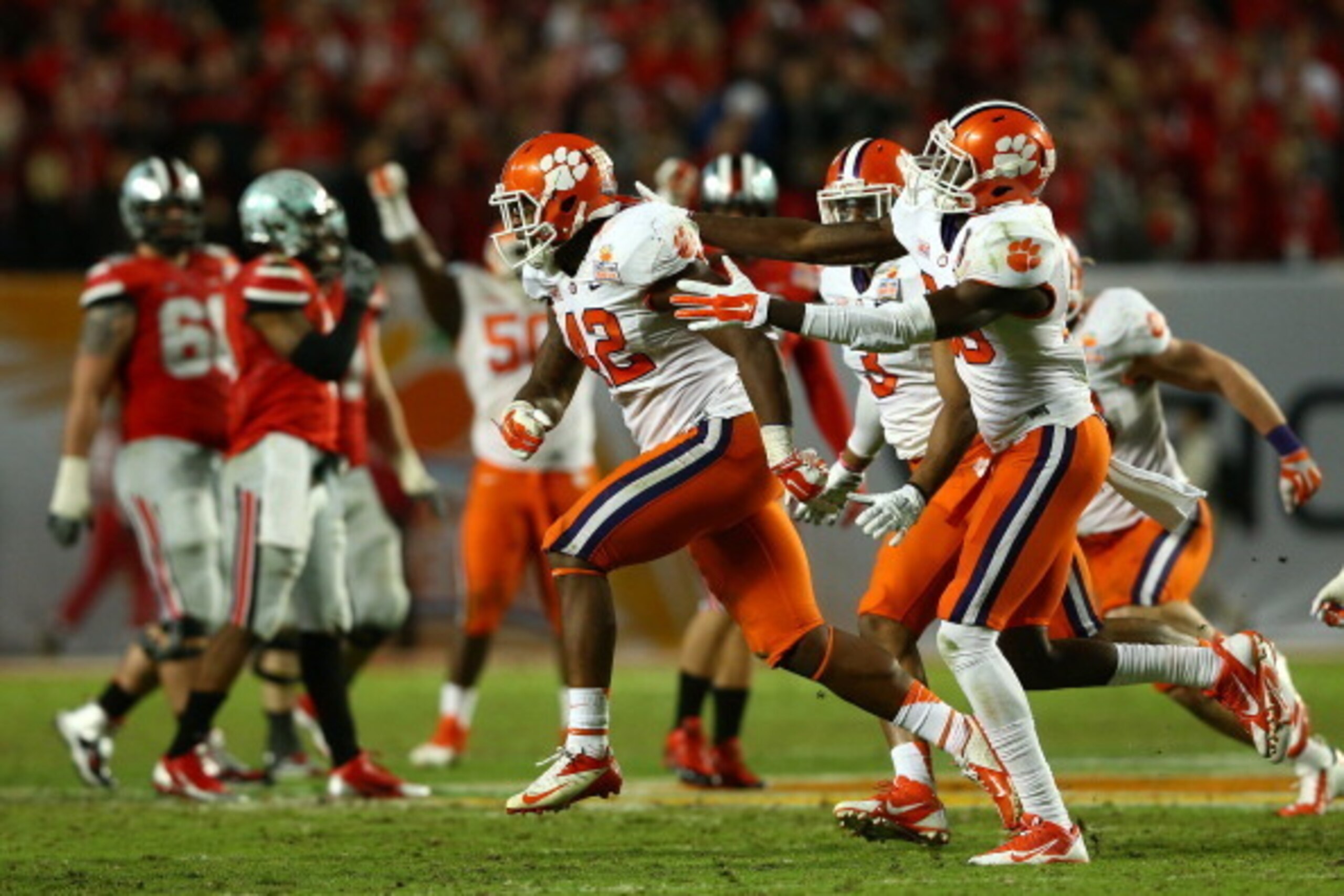
Overall, the trend is clear: The explosion in scoring is real, and it’s continuing to trend upward.
It’s important to note that the increase is not driven by small pockets of offensive rebels at smaller schools who are eking out a meager existence on excessive points rather than solid defense.
To illustrate, take a look at the five national champions for the years studied along with their rank in scoring offense:
| Miami (Fla.) | 1987 | 6 | 34.3 |
| Nebraska | 1997 | 1 | 46.7 |
| Michigan | 1997 | 48 | 26.8 |
| LSU | 2007 | 11 | 38.6 |
| Florida State | 2013 | 2 | 51.6 |
The only team listed that didn’t finish in the top 11 in terms of scoring—Michigan in 1997—was ranked No. 1 in the nation in scoring defense, giving up a paltry 9.5 points per game.
Passing
If you’re thinking passing yards drove the scoring increase, you’re right. Here’s a look at the averages for individual quarterback stats from 1987, 1997, 2007 and 2013, respectively:
| Passing Avg | 1863 | 2086 | 2523 | 2401 |
| Passing High | 3932 | 3968 | 5705 | 5083 |
| QBs over 3000y | 6 | 13 | 38 | 31 |
| QBs over 4000y | 0 | 0 | 6 | 9 |
| QBs over 5000y | 0 | 0 | 2 | 1 |
On average, quarterbacks in 2013 threw for 538 more yards in a season than their predecessors did in 1987. The biggest jump came from 1997 to 2007, when the number rose by 437 yards.
Again, what’s most striking is the staggering rise in the number of prolific passers—guys hitting the 3,000-, 4,000- and 5,000-yard mark—over the 25 years.
The number of 3,000-yard quarterbacks doubled from 1987 to 1997 and then tripled from the beginning of the BCS until 2007 before finally regressing slightly last season. Proving that the bar is being pushed up even further is the fact that there were zero 4,000-yard passers in 1987 and 1997, but there were six in 2007 and nine in 2013.
This passing-yard explosion, resulting in a media frenzy, goes a long way in explaining why just five quarterbacks won the Heisman in the 13-year span from 1987 to 1999 versus 12 quarterbacks winning the award in 13 tries from 2000 to 2013.
Rushing
Though rushing yards haven’t gained the same momentum as passing yards, the ground game has played its part in the offensive explosion.
| Rushing Avg | 574 | 629 | 687 | 686 |
| Rushing High | 1791 | 1893 | 2567 | 2177 |
| RBs over 1000y | 35 | 38 | 58 | 50 |
| RBs over 2000y | 0 | 0 | 3 | 1 |
On average, rushers earned 112 yards more per season in 2013 than they did back in 1987. But while the number of prolific rushers has risen, it hasn’t done so at the same blistering pace as passers.
Even though the spike isn’t as high as that of the passers, the overall trend is similar, with the rushing peak coming in 2007 and the plateau forming from 2008 to 2013.
Overall, average passing yards rose 29 percent over the 25-year span, and rushing yards increased by 20 percent. This makes a clear case that though passing has had a stronger upward trend, rushing has also made significant gains.
Why It Happened
The obvious cause of the offensive renaissance in college football is the development of the broad concepts of the spread attack, the hurry-up and other new schemes. These advancements have allowed teams to score more points, and to do so much more quickly.
Though this explanation is valid, it leaves one major question unanswered: Why did the explosion coincide with the BCS era?
The answer to this might be as simple as teams needing “style points” to manipulate the BCS scheme. In other words, if top-ranked teams wanted to rise in the BCS standings, scoring a zillion points couldn’t hurt.
Where it was one thing for Florida State—making a case for a BCS national title bid with the disadvantage of a supposedly “weak” ACC schedule—to beat No. 25 Maryland 34-0, it was even better if it beat the Terps 63-0.
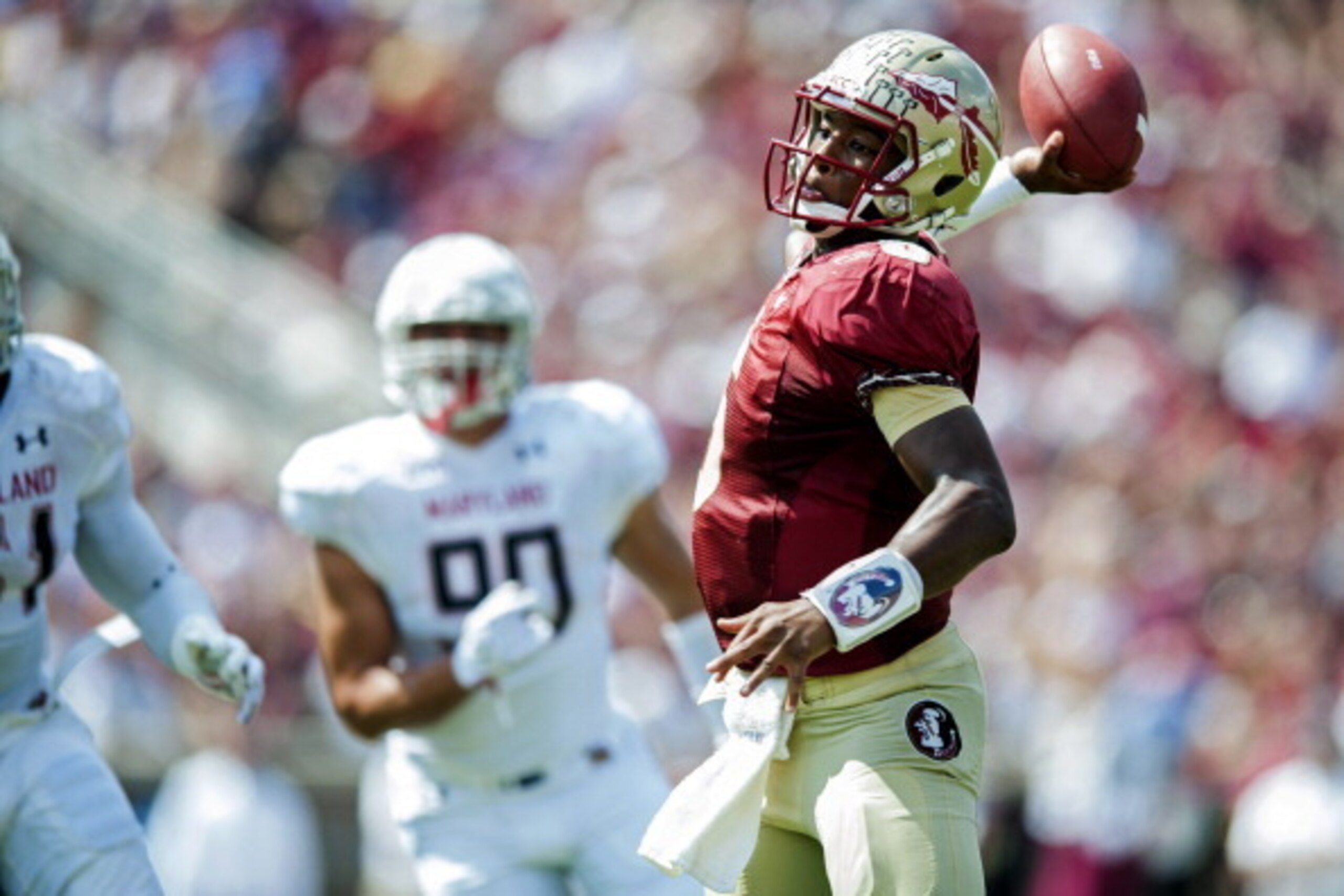
So, on one hand, offensive masterminds managed to make unbelievable strides over the last 25 years, while on the flip side the BCS format forced teams to max out utilization of the new schemes.
The combination of the two made the offensive craze spread across college football at an increased rate, resulting in the explosion.
The next question is how the new College Football Playoff will effect offensive stats. Will teams take their foot off the gas during the season, or will they instead press down even harder to try and get the attention of the selection committee—the gateway to gaining one of the four most coveted spots in college sports?
If you're thinking a slow down is on the horizon, check out what Auburn's Gus Malzahn had to say about his offense, per Brandon Marcello of AL.com: "We think we can be quite a bit faster."
Remember, this is a unit which averaged 73.8 plays per game in 2013 and ranked No. 12 in scoring offense with 39.5 points per game.
Statistics courtesy of Sports Reference-College Football.




.jpg?w=2560 "Dak to Stroud: Get Some Wins 💯")
.jpg?w=2560 "5 NFL Players Getting Trade Buzz")

.jpg?w=2560 "Vikings HC Called OBJ Before Release ☎️")