WWE Survivor Series 2013: Greatest Title Changes in Event's History
The 2013 Survivor Series will be headlined by two huge championship matches.
Title matches are a staple of the annual November spectacular. Hall of Fame inductees such as Hulk Hogan, Bret Hart and Shawn Michaels have defended their WWE Championships in some of the most memorable matches in the history of the event, while modern-day stars such as John Cena and Batista have added to their legacies with impressive performances in title matches at Survivor Series.
With every title defense comes the possibility of a title change, and Survivor Series is no stranger to those changes.
Some of the greatest, not to mention most controversial, title switches in WWE history have taken place at the event.
As we gear up for Big Show vs. Randy Orton for the WWE Championship and John Cena vs. Alberto Del Rio for the World Heavyweight Championship and wonder whether or not those titles will switch hands November 24, let's take a look back at some of the great title changes in Survivor Series history.
The Undertaker Buries Hogan's Title Reign (1991)
1 of 10The first WWE Championship match in Survivor Series history took place on November 27, 1991, and it featured Hulk Hogan defending his title against the enigmatic Undertaker, a cold-blooded Superstar who made his debut a year earlier at the event and spent the 12 months in between dominating any and all that were put in front of him.
Hogan, however, was a different animal altogether. He was the face of the promotion for seven years and had taken wrestling to heights it had never seen before. Though his act was getting stale and the company had recently taken a darker, more serious tone than it had during the height of his popularity, Hogan was still a very important attraction.
That made his loss to the phenom at Survivor Series all the more shocking.
Late in the match, self-proclaimed "Real World's Champion" Ric Flair came to ringside and was clocked by Hogan. With the referee distracted, Flair slid a chair into the ring and Undertaker delivered a Tombstone piledriver to Hogan on the chair. Three seconds later, the Dead Man had captured his first Heavyweight Championship.
What made it great?
The unpredictability of the match really helped to re-energize a company that had become somewhat stale at the time.
The arrival of Flair was huge, but the fact that Vince McMahon recognized Undertaker's potential and elevated him in a single night by having him capture his first WWE title, regardless of how long he planned for him to hold it, showed that the visionary promoter was prepared to move in a fresh, new and exciting direction.
Hindsight being what it is, the win catapulted Undertaker into the upper echelon of WWE Superstars and helped cement him as one of the top stars of his generation and a true locker room leader.
Hogan would regain the title on December 3, but it was clear that the days of taking your vitamins and following the 10 "demandments" were nearing their end.
He would leave WWE by 1993, leaving a new generation of Superstars such as Undertaker, Bret Hart and Shawn Michaels to carry the company through the decade.
Mom Throws the Towel in on Bret's Title Reign (1994)
2 of 10The full match is not available online, so enjoy Bob Backlund's excellent post-match promo instead.
The 1994 Survivor Series featured a Submission match for the WWE Championship between Bret Hart and the rejuvenated Bob Backlund.
At the center of the match was the drama between Bret, his brother Owen and the entire Hart family.
That drama would rear its ugly head late in the match, resulting in one of the greatest and most unexpected title changes in the history of the pay-per-view, let alone in WWE history.
Ever one to sneak and cheat to get what he wants, Owen Hart attacked his brother-in-law "British Bulldog" Davey Boy Smith from behind, laying him out and leaving no one to throw the towel in on Bret's behalf. The attack provided a distraction and allowed Backlund to lock in his feared Cross Face Chicken Wing on the WWE champion.
Owen feigned sympathy for his brother and begged and pleaded with his mother to end Bret's suffering by throwing in the towel and ending the match. Martha did just that, resulting in the second WWE Championship for Backlund and the end of The Hitman's title reign, which began back at WrestleMania X.
What made it great?
The improbable title win for Backlund was well deserved, even if it came at the expense of the best worker in the industry.
Backlund rejoined WWE in 1993 and had proven to be as good as he had ever been. In the spring of 1994, he underwent a character change, becoming a delusional, psychotic Superstar who snapped without warning and attacked everyone from Hart to legendary manager Arnold Skaaland.
His devotion to the character and to reinventing himself to better fit in with the ever-changing landscape of professional wrestling deserved to be rewarded, and it was—with the biggest prize the sport has to offer.
He would only hold the title three days before losing it to Diesel at Madison Square Garden, but Backlund's Hall of Fame career was forever enhanced with his success in a third decade and his second Heavyweight title win.
Hitman Gets Hardcore, Wins 3rd WWE Title (1995)
3 of 10Diesel's WWE Championship reign, which began on November 26, 1994, lasted nearly a year.
During that time, business fell off significantly, and the seven-foot champion took the brunt of the blame, despite a lack of legitimate contenders and a cast of characters that were a poor reflection of what the audience wanted at the time.
At the 1995 Survivor Series, the champion would defend his title against Bret Hart in a No Disqualification match. Earlier in the year at the Royal Rumble, the two Superstars had clashed over the title in a wild and chaotic bout that ended in a no-contest.
That would not be the case this time.
Champion and challenger punished one another for nearly 25 minutes, all for the sake of leaving with the WWE title. At one point, Diesel sent Hart off the ring apron and through an announce table, marking the first time that spot had been done in a major pay-per-view title bout.
The finish saw a cerebral Hart play possum and catch Diesel with a small-package roll-up for the three and the title.
What made it great?
Easily the greatest match in Survivor Series history to this point.
No matter how much criticism Diesel took for his in-ring ability or his lack of effort at times, he always worked hard with Bret, and the two always had great chemistry with one another. Bret's win put Diesel's disappointing run behind the company and set up one of the great WrestleMania main events of all time six months later (Hart vs. Michaels in an Iron Man match).
The post-match activities were equally as awesome as the match itself.
Frustrated beyond belief that he had fallen for such a trick, Diesel shoved and punched officials and delivered his patented Jackknife powerbomb to the new champion. It showcased the edgy, explosive and violent side of Diesel that had disappeared when he became the face of the company for a year.
It set up a heel turn that would see Diesel become the big, nasty, sarcastic heel that Kevin Nash would play to perfection in WCW, and it injected WWE with a bit of attitude it previously had not had.
.jpg?w=2560)

Heartbreak for the Heartbreak Kid (1996)
4 of 10In 1996, Shawn Michaels was the hottest star in WWE. The Heavyweight champion for most of the year and the best worker in the business at that point, he was earning the reputation of wrestling's best big-match performer.
Bouts against Diesel, British Bulldog, Vader and Mankind had also established him as a diverse worker who could wrestle any wrestler of any style and still deliver and outstanding match.
Unfortunately, business did not back up his strong performances. Television ratings were down significantly, as Eric Bischoff, the New World Order and WCW easily defeated their competition on a weekly basis.
Vince McMahon seemed determined to stick with Michaels, however, as he led the company into the fall months with the title still strapped around his waist.
Sycho Sid had returned to WWE over the summer and become one of the most popular stars in the company. He was fresh and on the biggest roll of his career thanks to strong promos and a character that better suited the landscape of the sport. By November, he had earned himself a title shot, setting up a bout with his storyline friend for the Survivor Series.
Michaels, as he had done all year, delivered a phenomenal performance, but it was not enough to sway a partisan crowd. The fans inside New York's Madison Square Garden heavily favored Sid, even going as far as to cheer him when he struck legendary wrestler (and Michaels' trainer) Jose Lothario in the chest with a camera. He would do the same to Michaels before dropping him with the powerbomb and capturing his first WWE Championship.
What made it great?
The title change at Survivor Series 1996 was great because it was a change that needed to happen if WWE had any shot at making a comeback in the, to that point, one-sided war with WCW.
In his first run with the title, Michaels was still largely a bread-and-butter babyface. He smiled, danced around for the audience and invited kids into the ring with him to celebrate successful title defenses.
After this loss, Michaels would begin to exhibit the aggressiveness, the meanness and the attitude that would make him one of the most controversial on-air (and off-air) character in the business. The controversy that came along with Michaels would be a key piece in the establishment of the Attitude Era.
Had McMahon not capitalized on Sid's popularity and switched the title, he may have stuck with Michaels until the very end.
Who is to know what would have become of WWE had Michaels retained in New York? And for that reason alone, this match does not quite get the recognition for its importance that it probably deserves.
'Bret Screwed Bret' (1997)
5 of 10There is not much to say about the Montreal Screwjob that has not been said, so why bother going there.
Late in the WWE Championship match between Bret Hart and No. 1 contender Shawn Michaels, the challenger grabbed hold of the champion's legs and twisted them together. He applied Hart's own Sharpshooter against him, much to the disdain of the Canadian, pro-Hart fans inside the Molson Center in Montreal.
Suddenly, and without explanation, the bell sounded and Michaels was declared champion without any formal submission by Hart.
Referee Earl Hebner rushed out of the arena while everyone in and around ringside appeared absolutely stunned. Hart spit on Vince McMahon, who was at ringside and had called for the bell to be rung. Michaels grabbed the WWE title and hightailed it to the locker room area.
Hart closed out the show by destroying production equipment while the crowd voiced their displeasure with what they had just seen.
What made it great?
The match was certainly nowhere near the truly great matches Hart and Michaels had in the past, and the finish of the match made it the most controversial bout in the history of professional wrestling, so how can it be considered a great title change?
Historical significance.
There are few, if any, title changes as historically significant as the one in the main event at the 1997 Survivor Series.
The Montreal Screwjob brought to an end the fifth and final WWE title reign for Bret Hart, his stay in the only company outside of his father's that he had ever known and the era that he championed.
In many ways, Michaels' controversial title reign ushered in the official start of the Attitude Era and changed the sport forever. The sanctity and respect that had served as the backbone of professional wrestling since its creation was erased.
On that night in Montreal, innocence was lost, and the WWE was changed forever.
Hart would leave for WCW and Michaels would become the most despised man in the sport, both on television and off. A back injury suffered in a match against Undertaker the following January at the Royal Rumble would spell the end for HBK's in-ring career for nearly five years.
In 2010, Hart returned to the company and reunited with an apologetic Michaels on a historic January 4 episode of Raw.
A Corporate Champion (1998)
6 of 10At SummerSlam 1998, The Rock defended the Intercontinental Championship against Triple H in a show-stealing Ladder Match. He bled for his craft and endured incredible pain and punishment in the bout, and as a result, he won over the diehard fans inside New York's Madison Square Garden.
As the fall wore on, he became more popular with every passing week. By the time Survivor Series approached, he was one of two clear favorites to leave the event with the vacant WWE Championship.
Instead of ascending to the top of the industry on his own, proving doubters wrong and becoming the hottest new babyface in the business, Rock and the McMahon family fooled the world in a moment that became one of the signature, iconic moments of the Attitude Era.
In the finals of the Deadly Game tournament for the vacated WWE title, Rock mirrored Shawn Michaels' actions from the year prior and slapped a Sharpshooter on his opponent, Mankind.
Mr. McMahon, who was at ringside for the bout, called for the bell and for the second year in a row, a champion was crowned by highly controversial means.
What made it great?
Unlike the 1997 main event, this title change featured a scripted screwjob that instantly made Mankind a sympathetic figure and created a hot new heel to combat top babyface Stone Cold Steve Austin.
The Rock would defend the WWE title in his first WrestleMania main event when he met Austin the following March. In the months leading up to that match, he evolved as a performer and perfected the catchphrases that would lead him to become one of wrestling's most entertaining and captivating performers.
Mankind would recover nicely and go on to become one of the most popular and beloved stars of the Attitude Era. His matches with The Rock between Survivor Series and WrestleMania brought out a new side of the Corporate champion and helped prepare him for the stardom he would achieve.
Mr. McMahon's Big Surprise (1999)
7 of 10When a neck injury sidelined Steve Austin, the planned Survivor Series main event was thrown out the window.
Scrambling to find a crowd-pleasing scenario that would make up for the absence of the Texas Rattlesnake, Vince McMahon turned to a gigantic Superstar who had displayed loads of potential but had yet to capitalize on the opportunities he had been given.
The Big Show was in the middle of a personal feud with Big Boss Man that had seen the giant display more emotion than he had before. The crowd had finally discovered a reason to care about the big man other than the fact that he was, well, big, and it greatly benefited the performer.
At Survivor Series, he demolished Boss Man's team, then took Austin's place in the Triple Threat main event against The Rock and Triple H.
In a shocking turn of events, the World's Largest Athlete delivered a chokeslam to Triple H and captured his first WWE Championship.
What made it great?
The title change at Survivor Series 1999 was a perfect use of a swerve or twist ending.
Until November 14, Big Show had taken part in a few WWE title matches but was never really firmly entrenched in the WWE title picture. That all changed when Vince capitalized on his strong storyline with Big Boss Man and opted to give Big Show his first run with the title.
No one saw it coming, so the shock value was incredibly high. It created a great deal of buzz for a company that had been firing on all cylinders throughout 1999.
The title win immediately solidified Show as a top-tier star in the company, and it allowed Rock and Triple H to stay far enough away from the championship that, when they competed for it throughout the spring of 2000, the matches felt relatively fresh enough that audiences could remain interested and excited for them.
Big Show would do an admirable job carrying the title, even though he was never really treated like the top guy in the company. He would wrap up his rivalry with Boss Man in December at Armageddon before losing the championship to Triple H on the first Raw of the new year.
A Stratusfying Champion (2001)
8 of 10In 2001, Women's champion Chyna left World Wrestling Entertainment, leaving the company without a champion.
At the Survivor Series, it was determined that the company would crown a new champion in a Six-Pack Challenge match involving Divas from both WWE and the Alliance.
Accomplished in-ring competitors such as Molly Holly, Lita, Ivory, Jacqueline and Jazz were booked for the match, but it was the inclusion of the returning Trish Stratus that had caught the eyes of the fans. After all, she had a very busy 2001 but was not exactly what one would call a great in-ring worker.
She changed their minds very quickly when, on November 18, she captured her first of seven Women's Championships by pinning Ivory following a maneuver that would eventually be dubbed Stratusfaction.
What made it great?
Fans may not have known it at the time, but the title change was the first step in a Hall of Fame career.
In the weeks and months that followed Survivor Series, Stratus would evolve and improve her work to the point that she became the most complete female performer in the company.
With the help of trainer Fit Finlay, she would develop a skill set that suited her plucky, resourceful, resilient babyface character to a T, giving fans someone with a distinct in-ring personality they could get behind.
By the time she retired from the business in 2006, Stratus had won every championship and accolade a female performer was eligible for an had changed forever what it meant to be a WWE Diva.
Shawn Michaels Survives the Chamber (2002)
9 of 10In 2002, Shawn Michaels made an improbable return from a serious back injury.
At SummerSlam in August, he defeated Triple H in a Street Fight that ranks as one of the best matches in that show's long and illustrious history.
For an encore, he would be entered into the revolutionary Elimination Chamber match at Survivor Series with a shot to validate his comeback with a World Heavyweight Championship win.
Michaels was the last Superstar to officially enter the match, and he wasted little time in taking the fight to an injured Triple H, who showcased his underrated toughness by competing with a crushed trachea he suffered earlier in the match.
Despite taking tremendous punishment, Michaels was able to pin Triple H and capture the one title he had never held.
What made it great?
As late as a year earlier, the idea of Shawn Michaels getting back inside a wrestling ring was nonexistent. The back injury that nearly crippled him and the personal demons he had fought off to become a born-again Christian simply were not going to allow him to return to the professional wrestling business in that manner.
To see Michaels not only defy the odds but come back better, smarter and more appreciative than he had been before was one of the truly great, special moments of a year that also brought fans the return of Hulk Hogan and an epic match between the Hulkster and The Rock at WrestleMania.
Michaels would lose the title back to Triple H and never win the Heavyweight Championship again. It was OK, though, because he was a Superstar at a different level than most and did not need a title to validate his standing in the company.
WWE Champion: Day One (2011)
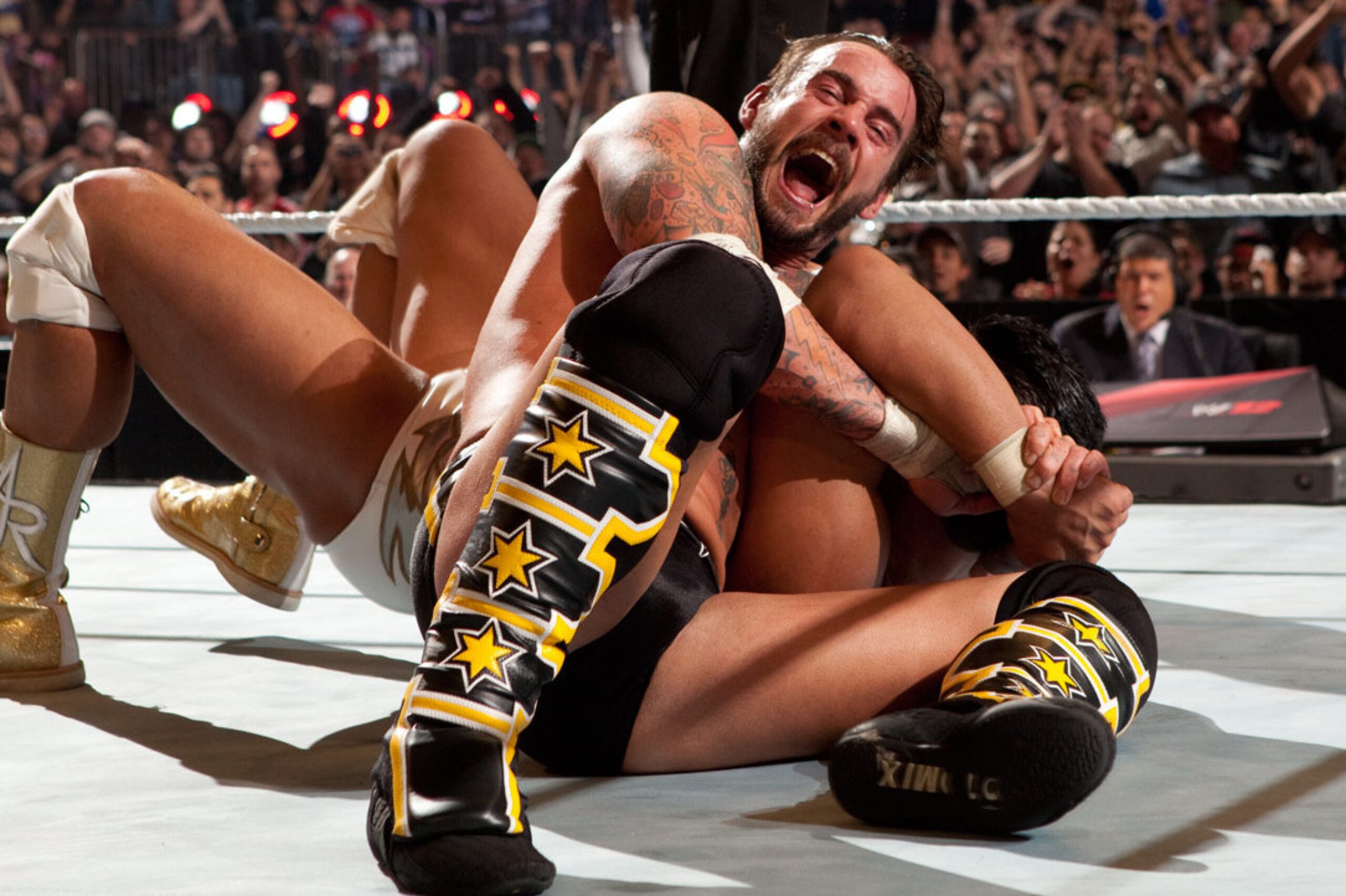
10 of 10In 2011, CM Punk became the hottest wrestler in the industry thanks to a few promos in which he expressed his true feelings about his employer and a determination to be the very best professional wrestler on the planet.
His WWE Championship match against John Cena at Money in the Bank in July was a heavy favorite for Match of the Year. More importantly, he captured the attention of audiences across the globe and brought mainstream media attention back to the sport.
By Survivor Series in November, he had lost the WWE Championship to Alberto Del Rio and was hellbent on getting it back.
In an outstanding wrestling match that did not rely on gimmicks or trickery or overbooking, two outstanding competitors delivered an old-school championship battle inside the hallowed halls of Madison Square Garden, the setting for so many epic, legendary title bouts.
Punk would catch Del Rio in the Anaconda Vise and win the WWE Championship for the second time in four months before celebrating with the fans, who were a major part of the success he was enjoying.
What made it great?
Outside of the match itself, the title change is remembered for starting an improbable—and unheard of, by modern standards—title reign that stretched 434 days and established CM Punk as one of the top two stars in all of pro wrestling.
He would lose the title to The Rock at the Royal Rumble in January of 2013, but the legacy he leaves behind as one of the longest-reigning champions in the history of WWE speaks for itself.
The fact that he accomplished it in an era where title changes occur on a weekly or monthly basis is even more impressive.
.jpg?w=2560)


.jpg?w=2560 "Viral Rams Coach Vid 🖕")