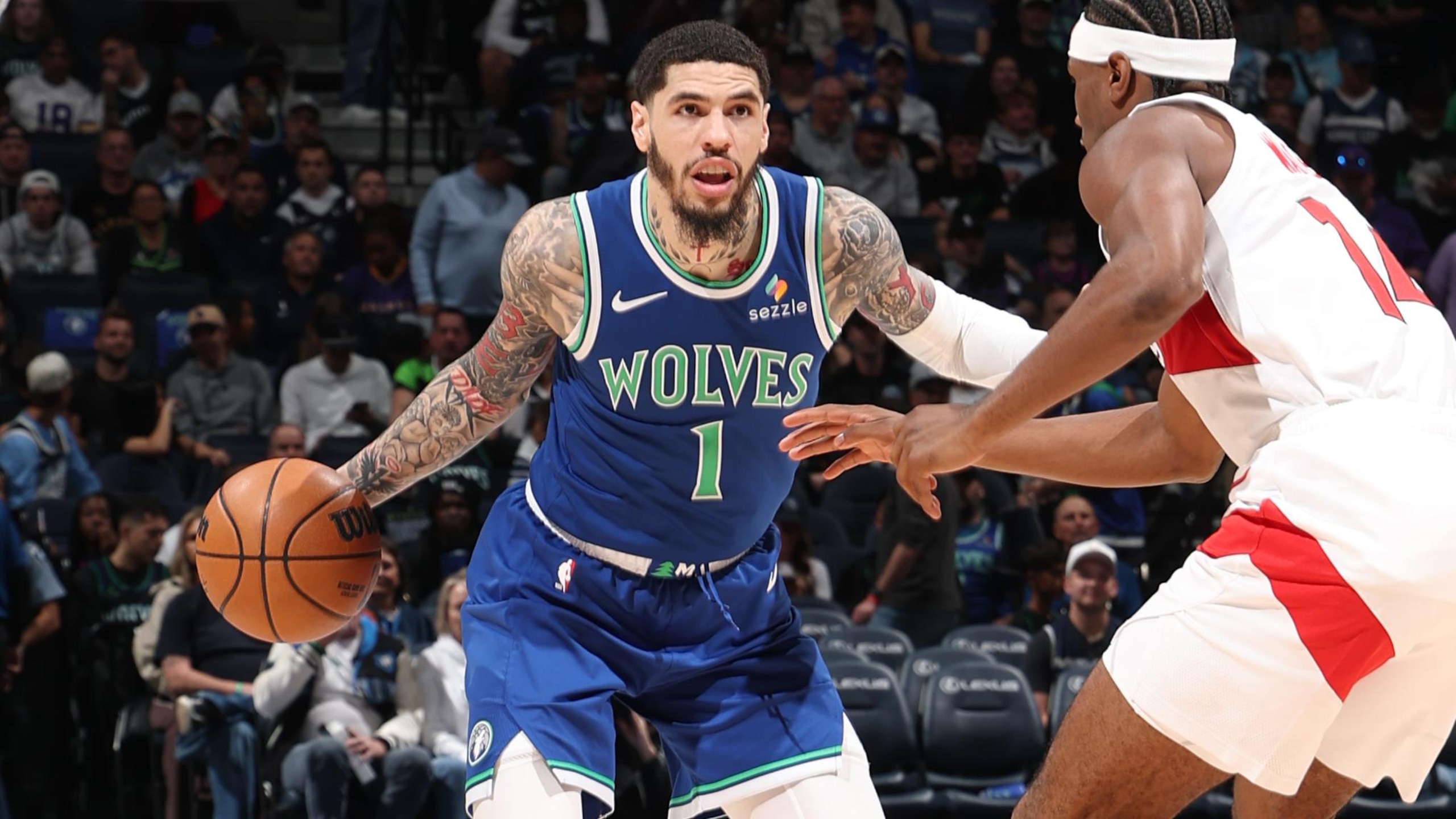
Oakland A's: Jason Giambi's Homecoming (in More Ways than One)
Jason Giambi is the latest member of an Oakland A's migration that started in 2001 because of Jason Giambi. It won't end with him, although it might soon end for him.
In 2001, at least, Giambi was arguably the most valuable player in the recent history of the Athletics' franchise. Someone who made Rickey Henderson look like a "slouch" by comparison—until he went to the New York Yankees upon achieving free agency.
Basically, the post-2001 history of the A's was that they were able to make the playoffs in years when they were able to more or less fill the "hole" left by Giambi's departure, but not when they were unable to. Makes sense.
TOP NEWS

MLB Testing Fielding Rule 🤔

Bold MLB Predictions For 2026-27 Offseason 🔮

Best Free-Agent Hitters 💥
The biggest need of the low-budget A's was for affordable players who had Giambi's salient (good) qualities. These were mainly found among older players that other clubs had given up on.
Older players didn't hit as many home runs as they used to, but tended to draw more walks as they become more patient hitters. (The A's, unlike other teams, attached almost as much importance to walks as home runs).
In 2002, that player was Scott Hatteberg, whose throwing arm had suffered a nerve injury, ending his career as a catcher with the Boston Red Sox.
No other team had any use for a 30-something catcher that couldn't catch. That's because most catchers can't hit. Except that Hatteberg could.
His batting average was around .270, more or less average. But Oakland saw Hatteberg as a solution to their "Giambi" problem, and were able to sign him for less than $1 million, a tenth of what Giambi was making with New York.
Hatteberg, like Giambi, was a superior batter (although not to the same degree) because he drew an inordinate number of walks, meaning he got on base a lot. Other batters could then drive him home. Hatteberg could also take over Giambi's position at first base, using his good catching arm.
In fact, Hatteberg proved to be a decidedly better defender than Giambi. That was important because the A's had also hired David Justice as a partial replacement for outfielder Johnny Damon, another free agent. Justice was able to replace Damon's offense, and Hatteberg's defensive premium over Giambi basically replaced Damon's defense.
Damon cost the Boston Red Sox $8 million. Justice was a $7 million-a-year-man, but the beauty was that the A's did not have to pay more than a token amount of this salary (Gary Sheffield-style).
Justice had been hurt in 2001, and the Yankees offered to pick up his salary to induce other teams to take him off their roster. The New York Mets traded another injured player, Robin Ventura, for him, and flipped Justice to the A's for two pitchers, a rookie and a replacement player.
As for the rest, Eric Chavez and Miguel Tejada had banner years in 2002 that filled the rest of Giambi's hole, and the A's made it to the playoffs. The same was true in 2003, with Chavez, Hatteberg, and Tejada leading the way again, and Hatteberg being even more crucial to the A's success.
All three players regressed in 2004, and the A's did not make it to the playoffs that year. Hatteberg's regression turned into a slide in 2005, causing General Manager Billy Beane to release him. (Hatteberg returned to his 2002-2003 form with the Cincinnati Reds in 2006-2007 before regressing again in 2008).
The next time that the A's made it to the playoffs was in 2006, when they signed sluggers Frank Thomas, aka the Big Hurt, and Milton Bradley, who between them filled about two-thirds of Giambi's hole. Thomas had been signed for a mere $500,000, basically a rookie's salary, because Billy Beane had declined to lock him up for two years at $1 million per year.
That proved to be a mistake because, Toronto signed Thomas for millions in 2007, depriving the A's of another chance at the playoffs. As a substitute, Beane tried to sign Mike Piazza, another good-hitting but "finished" catcher as a designated hitter, but Piazza's playing time was limited by injuries.
At 37, Jason Giambi is the latest "older" payer that other clubs—namely, the Yankees—have given up on. The A's have shown a preference for older players this year, even trading for one year of Matt Holliday, an unusual move for them. But the main question for 2009 is whether (today's) Jason Giambi is even a partial replacement for (yesterday's) Jason Giambi over and above a league average player.
The season is still young yet but the early returns suggest not. Giambi is still a huge walker, but his batting average is now well below average, and he has lost his earlier power. (And one wonders how much of that was due to steroids that he is no longer taking).
And there is a limit to the patience of Beane, whose dealings with Scott Hatteberg and Frank Thomas indicate that his "fuse" errs on the side of being "too short," rather than "too long."


.jpg?w=2560 "Chiefs, Steelers Eye WR Trades")