Brian Dozier Is Proof That Aaron Hicks, Scott Diamond Can Bounce Back Next Year
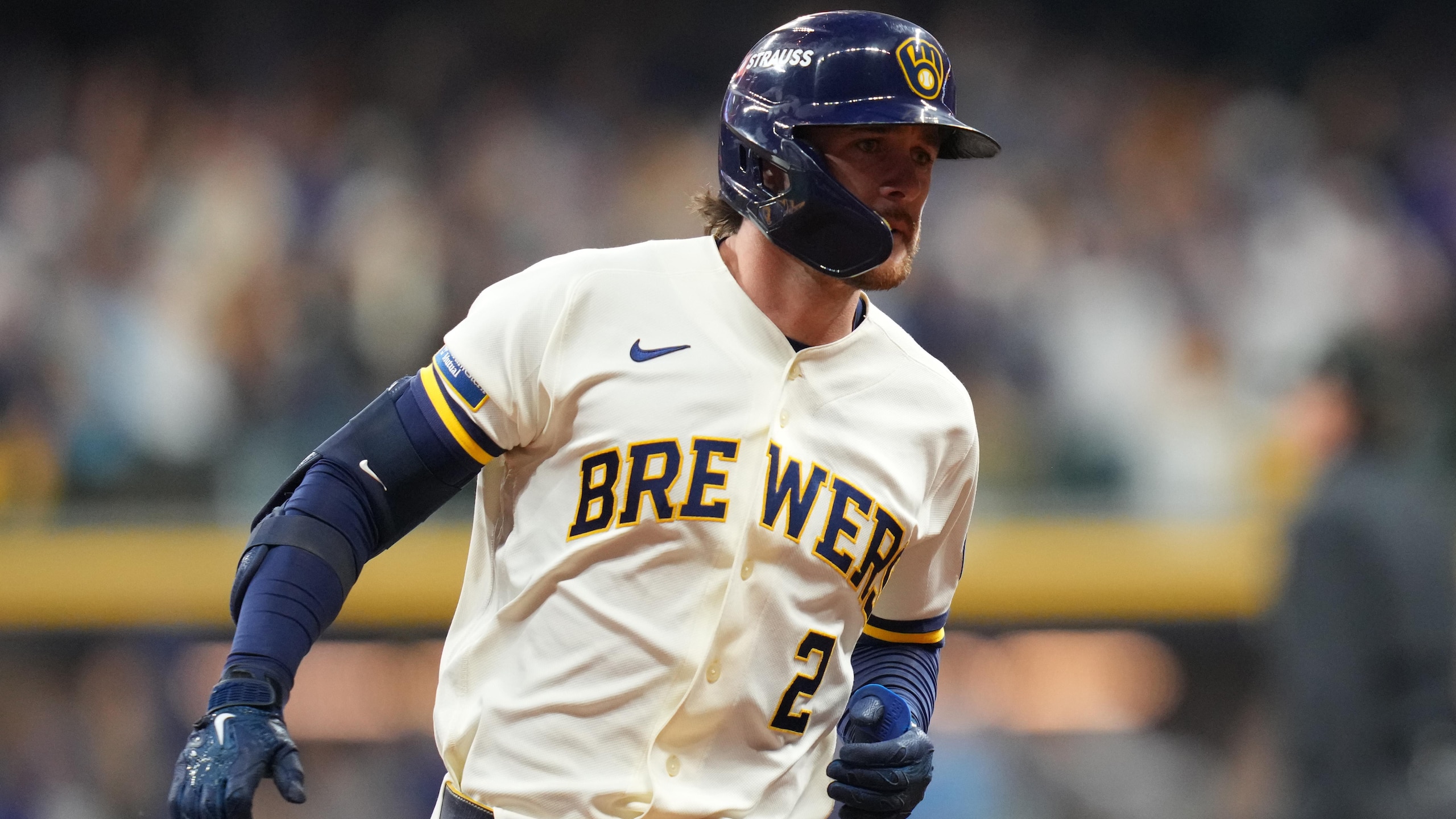
Brian Dozier played his last game of the 2012 season on August 12. A year later, he has become the second-best player on the Minnesota Twins.
During that game, the Twins had a 3-2 lead over the Tampa Bay Rays entering the 10th inning. Alex Burnett loaded the bases with one out with the speedy Desmond Jennings standing at third, threatening to tie the game.
Jeff Keppinger hit a grounder to Dozier, who at the time was a shortstop. Dozier was presented with two options: Throw home and try to prevent the run or throw to second baseman Alexi Casilla to try and turn a double play.
TOP NEWS

Ranking Top 25 Trade Chips For Offseason 🔢
Family Bikes to 30 MLB Parks ❤️

MLB Playoffs Winners and Losers ⚾
Dozier opted for a third option, throwing to Justin Morneau at first. Jennings inexplicably sauntered home, tying the game, and the Rays exploded for four more runs in the tenth, putting the game out of reach.
The demotion
Dozier stood in front of his locker following the loss and defended his decision, saying that he was playing regular depth and Jennings is one of the fastest players in the league. He acknowledged that he could have gone for the double play, but it was a slow-roller.
“I could have tried to go to second, but to be honest, like Alexi said, there’s no chance. There’s no chance.”
He paused.
“And, to be honest with you guys, a smart infielder makes sure he gets and out right there.”
He said he was 100 percent certain that he could not have gotten Jennings at the plate. “My one little thought as I’m catching it was—it’s almost an impossible play on a slow roller—was to come back to second base as I caught it.”
Manager Ron Gardenhire said that he talked to Dozier about the play after the game.
“I got what his thoughts were,” he says. “He had good thoughts.
“Your two potions are to try and turn a double play, in my opinion, or go home. I just wanted to know his thoughts on the play. He’s out there; we’re not. Everybody has an opinion on where he should have thrown the ball, but I’m going to back my player here.”
Dozier sat in his chair outside his locker long after the interview was over, staring at the ground. After a few minutes, while the media lingered, waiting for starter Scott Diamond to emerge from the showers, he called over longtime Star Tribune beat writer La Velle E. Neal to discuss the situation once again.
Diamond finished his interview quickly and left a vacant room, save for Dozier. The loss had kept everyone outside of the locker room—nobody wanted to talk about it.
Dozier was still sitting, staring at the floor, in an empty room, when the media went back up to the press box.
Two days later he would be sent down to the minors.
“We were really trying to be patient because we know with a young player and a rookie he’s going to have his ups and downs,” said assistant general manager Rob Antony about the decision to option Dozier, “but it just got to the point where we felt it was better for him…to go down to Rochester and try to get his game in order.”
“It’s pretty tough, to be honest with you,” Dozier admitted, “but I know that I haven’t been playing good baseball, not what I’m capable of playing.
“I don’t want to be some .230, .240 hitting shortstop. I feel that I can be an offensive threat. I know I can.”
He would not be recalled in September.
Vast improvement in sophomore season
In the offseason, Dozier changed his number from 20 to 2, taking departed centerfielder Denard Span’s old digits, and had moved from shortstop to second base.
He immediately clicked with Pedro Florimon and proved to be a much better second baseman. His average runs saved per year per 1200 innings improved from 2 in 2012 to 13 in 2013 (per baseball-reference.com) and he reduced his errors from 15 to 3.
At the plate, Dozier’s numbers do not look much better—he hit .234/.271/.332 last season and is currently hitting .245/.315/.428—but the numbers don’t tell the whole story.
Dozier struggled in the beginning of the year, hitting .190/.227/.286 in May, hovering around .240-.250 in June and July and then exploding with a .327/.390/.712 line in August.
He not only believes that he is not a .230-.240 hitter, but that he can be a leadoff hitter with a high average.
“I got into a big slump in the beginning of the year as far as average,” he admitted recently, “[but] I believe I can turn the page. Hopefully in the near future, I’d like to be a .300 hitter.”
He said because he got into such a hole early in the year, he is just focusing on having good at-bats, but that appears to be working out well for him.
“What got me in a little trouble last year was taking my at-bats to the field and vice versa,” he says. “Some people say if you make a great play, take it into offense or something, but you have to have a light switch on offense and defense—you have to separate it completely and do it one at a time.”
ESPN1500 contributor Brandon Warne writes that in addition to great defense, Dozier has become the second-best player on the Twins because he made an adjustment after nearly being no-hit by Anibal Sanchez of the Detroit Tigers on May 24.
According to Warne, he spent that night and most of the next day working with hitting coach Tom Brunansky on planting his feet in order to plug some holes in his swing.
Since May 27, when his season OPS bottomed out around .500, he has hit .271/.355/.504 with 10 home runs, raising his total to 12—good for second on the team behind Justin Morneau, but ahead of Trevor Plouffe, Josh Willingham and Oswaldo Arcia.
Dozier has come a long way in a year and, ironically, has been hotter than ever at about the time that he was sent down last season. Twins Daily blogger Nick Nelson justifiably called his rookie season a disaster and wondered aloud if he would ever be an impact player in Minnesota.
“[When] you consider that Dozier was given an incredibly long leash, isn't all that young and was never an exceptional prospect to begin with,” he wrote, “it's pretty tough to dismiss his initial struggles as a fluke.”
Nelson was not the only person questioning his ability last year, but as the 2013 season has unfolded, more and more people are rocking Dozier’s No. 2 and he is making believers out of even the harshest of critics.
It’s amazing what a position change and another year in the majors can do.
Sympathy for Hicks and Diamond
While Dozier has been hotter than the Mississippi sun, rookie Aaron Hicks and third-year player Scott Diamond froze up like Target Field in April and were sent down at the beginning of August.
Hicks and Diamond had dichotomous paths to the majors.
Hicks was Minnesota’s first round draft choice in 2008 and was fast-tracked through the majors, never having played a game in Triple-A. Twins hitting coordinator Bill Springman called him a combination of Denard Span and Ben Revere—two players that the Twins dealt in the offseason, making room for Hicks on the team.
When he reaches his potential, the Long Beach native who passed on a scholarship to USC to join the Twins should have Span’s prowess at the plate and Revere’s range in the field.
Diamond, on the other hand, joined the Atlanta Braves as an undrafted rookie out of little-known SUNY-Binghamton in 2008 and was left unprotected in the Rule 5 draft, allowing Minnesota to swoop in and take him.
Like Hicks, Diamond struggled in his first season, going 1-5 with a 5.08 ERA in 2011, but established himself as the team’s best starter last year with a 12-9 record and 3.54 ERA. His ERA+, which adjusts for park size, jumped from 80 to 117.
His ceiling was always questioned, however, because as a soft-throwing lefty he did not have lights out stuff required to be an ace in the league. At best, he is a Jamey Moyer-type pitcher and probably will end up being a No. 3 starter in a functional rotation.
Both demotions came as a surprise to Twins fans. Diamond was considered the only sure thing in the rotation entering the season and the team was expected to give Hicks a long leash.
Former Twins outfielder Torii Hunter struggled early in his major league career, never hitting above .250 until his third season in the league and taking until his fourth year to earn an OPS+ of 100 and the expectation with Hicks, who entered the season with Hunter-like expectations, the thought was that he would have a lot of leeway to work with.
Defense was a focus for Hicks entering the year and, for the most part, he was pretty solid in the field. He provided a few highlight reel grabs and one famous run-in with Gardenhire.
He struggled at the plate, though, and while he his .280/.308/.400 June was promising, his .192/.259/.338 average was not high enough to keep him in the majors in August.
“You have to be able to produce and produce on a daily basis,” he acknowledged. “The past couple of weeks I haven’t been producing really well.”
Diamond knew that he wasn’t contributing either and felt that another stint in Triple-A could help his confidence and allow him to have more success getting deeper into games. He had only gone six innings in three starts since May 7.
“I have to face the facts that I haven’t been pitching well, haven’t been executing, haven’t been putting hitters away,” he admitted. “I really just haven’t given our team the best chance to win. If you’re not impacting the team and contributing at all, you don’t deserve to be here.”
Dozier drove Diamond to the airport on the morning of August 3, a day after he had been demoted, and had a long talk with him about what he used to do right.
“He got called up when I did in May (of 2012) and he was outstanding,” said Dozier in reference to Diamond’s second go with the Twins, “He was our best pitcher and so he’s had success. He just got away from the basics this year and he knows that.
“He feels he wasn’t attacking hitters like he always did and that was a big part of the conversation—attacking hitters. He was just trying to nibble, nibble, nibble and then you find yourself 3-2.”
Dozier also had a conversation with Hicks before the centerfielder left for Rochester. He feels that some time in Triple-A will help him work out kinks in his game and that it will open his eyes a little bit, letting him know that he has to work really hard in the majors to stay on the team, even with how naturally talented he is.
“He definitely has a lot of tools,” says Dozier, “but you see guys each and every day that have tools up here. What separates you from being a Triple-A player to the big leagues is being consistent.”
A major league player always throws to the right bases and knows when to take, when to swing and when to bunt in any given situation.
“I was a prominent example,” says Dozier. “If you do those things: Draw more walks, get more guys over, get your sac flies, you start to see on-base percentage and your average go up and everything. It’s a funnel. It’s one after the other.
“You have to be a total baseball player, really fundamentally sound. That’s what separates you.”
Dozier became that complete, or at least a more complete, player this year and, safe to say, with Hick’s natural talent he can be too.
Conclusion
Dozier’s improvement after his August demotion should be a good omen for Hicks and Diamond. Both players possess plenty of talent and have had their fair share of success at the big league level, but they also have multiple issues to work through down in Rochester.
Very few people saw the potential in Dozier last season, just as fans may now write Diamond off as a Rule 5 fluke or Hicks as an over-hyped prospect.
If we’ve learned anything though, it is to reserve judgment on a player. Dozier looks like he can be, at the very least, a strong defensive second baseman that can hit .280 with power. Diamond is capable of being a No. 3 pitcher in the rotation if he attacks hitters and Hicks has the talent to be a strong defensive outfielder that will vie with Dozier for the leadoff spot.
All three players were upset about being sent down, but sometimes an August demotion can do wonders for a player.
Just ask Brian Dozier.
All quotes were obtained first-hand.
Tom Schreier covers Minnesota sports for Bleacher Report and is a contributor to Yahoo! Sports.


.jpg?w=2560 "Commanders OL HEATED After Tie ▶️")
.jpg?w=2560 "49ers LB Suspended for Headbutt")