
NBA Stars-in-Waiting Guaranteed to Blossom Next Season
More and more teams are headed or soon will be headed to the offseason, aspiring to better things for next year. On those teams there are individual players who hope to achieve more success by blossoming into stars.
In compiling this list, it was hard to define exact parameters in terms of who had already blossomed, who was a star-in-waiting versus a new star or how old a player could be and still be considered for the list.
Rough parameters were that player had to be younger than 25 as of opening day this season. Players who had made an All-Star team or All-Defensive team, I considered to be stars already. This ruled out most of the bigger stars, such as Blake Griffin, Russell Westbrook, Kevin Durant and Serge Ibaka.
Then there was another level of stars that have not been recognized by All-Star or All-Team selections but who were definitely stars, such as Stephen Curry, Kenneth Faried or Kawhi Leonard. In those cases my intention is not to insult them by not putting them on the list, but to not insult them by putting them on the list. They have blossomed.
These are young players ready to take their game to the next level. They are ranked according to their projected star value at the conclusion of next season.
10. John Henson
1 of 10Of all the players who quietly just blew apart the NBA at season's end with nary anyone noticing, John Henson is at the top of the list. In his last five games, he averaged 15 points and 15 rebounds a contest when he stepped into starting duty.
There are two things that should work in his favor. First, hopefully the Milwaukee Bucks will work out some kind of cohesive strategy instead of the wide array of mismanagement, bad coaching and weird decisions which has plagued the team for the last two years.
Truthfully, they have talent on the team, but it’s like they’ve obtained pieces from three different jigsaw puzzles and they’re trying to make a single picture out of them. The degree of talent doesn’t matter if it can’t mesh together.
I expect that one way or another, with both Brandon Jennings and Monta Ellis being free agents this year, the Bucks will form a cohesive strategy and figure out how to get a starting five that has some semblance of synergy. That should involve figuring out how to get Hanson and Larry Sanders on the court at the same time, or failing that, trading one of them.
However it works out, Hanson established that he’s far too good of a player to be whiling away time on the bench. Look for him to get more minutes next year, either as a Buck or somewhere else.
9. Tristan Thompson
2 of 10Tristan Thompson continued to show consistent improvement last season down the stretch. More and more he's looking like another valuable piece to the team that will win a title before LeBron James wins No. 8 or 9.
Over the second half of the season, he upped his scoring average from 11.4 points to 12.1 points and his rebounding from 9.1 to 10.1.
Thompson was taken with a high pick, No. 4 overall, and his lack of production so far has been discouraging. To add insult to injury, he was in danger breaking the record for having the highest percentage of his shots blocked this year. But he worked on his offensive arsenal to expand beyond two-handed dunks, and as a result he’s improving.
Look for him to do more to improve offensively this summer, and a 15-point, 10-rebound season could be on board for next year.
8. JaVale McGee
3 of 10Oh, JaVale McGee! How we love you! How we wish you could find the Wizard of Oz and ask for the that thing for which Scarecrow asked! If you only had a brain!
His pure athleticism and heart are really impressive but contradict his lack of thought. This is exemplified by his greatest “stupid” ever. He raced to get back on defense while his team still had the ball—but at least there was effort. He didn’t just make a bonehead play, he committed to that bonehead play.
Between George Karl and the rest of the Denver Nuggets coaching staff, you saw spurts of reason and rational thought begin to permeate the thickness of Mr. McGee’s skull. At times, he even resembled a future starter.
If McGee ever pulls it together, he could climb into the category of elite centers in the game. This could be his last chance before being listed as a bust, but he’s in the best place to fulfill his potential.
My hunch is that once he “gets it,” he’ll really get it.


7. Tobias Harris
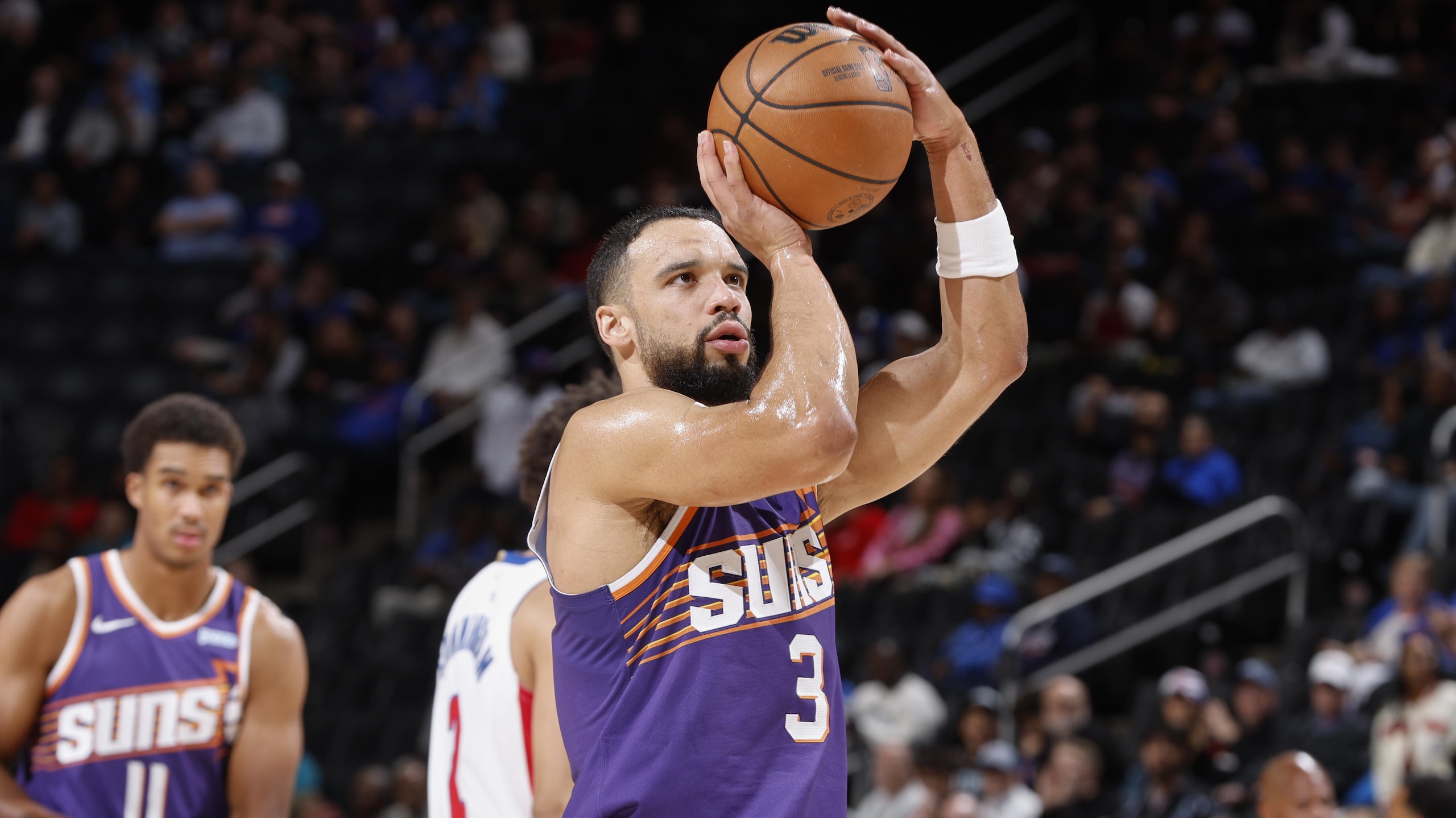
4 of 10Tobias Harris was the breakout star after the trade deadline. While a Magic, he averaged 17.3 points, 8.5 rebounds and 2.1 assists per game. That made him the team’s top scorer and second-best rebounder.
The question is whether that was just the product of being the featured player on a bad team. Harris has shown some ability to score, particularly at the rim, where nearly half his points have come, but there’s a bit of a “Ricky Davis” cautionary tale to be told here.
Davis put up some pretty respectable numbers from time to time, such as with the ’03 Cleveland Cavaliers when he topped 20 points per game. but it was always with bad teams. Davis was a player who used possessions and thus accrued big numbers, but he never carried a team to success.
Whether Harris is a Davis or a building block to Orlando’s rebuilding process remains to be seen, but for the time being he’s one of the more talented offensive players the Magic have. Look for him to put up around 17 and eight next season. He’s shown what he can do with the usage.
6. Klay Thompson
5 of 10Klay Thompson has been rapidly emerging as one of the exciting young shooting guards in the league, and it’s been highlighted by some pretty extraordinary postseason performances. His 34-point, 14-rebound game against the San Antonio Spurs was one of the best lines posted in the playoffs, period.
He and Stephen Curry are one of the top backcourts in the NBA and the foundation of the future. Thomas saw his Player Efficiency Rating (PER) drop from 14.9 to 12.7 this year, but he was adjusting to the role of a full-time starter. Another year of seasoning should see him improve his efficiency.
Even this season, his three-point percentage was 37 points higher after the All-Star break, and his overall shooting was 13 points higher.
Look for him to average around 18 points next year with three rebounds and three assists.
5. Enes Kanter
6 of 10Over the last couple of years, the Utah Jazz have had either the best or worst situation in their frontcourt in the league, depending on your perspective. If you’re a Jazz and like bigs, you’re not just a kid in a candy store. You’re a fat kid in a candy store.
If you’re a young and talented big trying to get playing time in Salt Lake City, not so much.
With Al Jefferson, Paul Millsap, Derrick Favors and Enes Kanter, the Jazz have been an embarrassment of riches. The problem is that some of the gems at the bottom of the chest just sit there doing nothing.
As a result, either Millsap or Jefferson will be making a departure via free agency; possibly even both of them. The more likely scenario is that Jefferson will depart, as he will be more expensive.
That means that Kanter would be more likely to step into the starting role, and when he started last year he had some outright prodigious numbers, averaging 20.5 points and 15 rebounds.
Sadly, it’s a pretty small sample size of two games.
In the only other game in which he played at least 30 minutes, he had 18 and 10. He’s the type of big man that plays better when he starts and gets into a rhythm. Add that Kanter is the superior defender (12.5 oPER to 16.9), and it just makes too much sense on too many levels to keep Millsap and let Jefferson walk.
As a result of breaking into the starting lineup, Kanter will have a huge breakout season. He may even bring back the 20-point, 10-rebound season.
4. Jimmy Butler
7 of 10Jimmy Butler first garnered national attention with a remarkable defensive performance against Kobe Bryant, forcing the Mamba into one of his worst nights of the season as he scored just 16 points on 22 attempts.
Butler has also excelled guarding LeBron James this postseason, holding him to nearly four fewer points than his season average. And, based on calculating Synergy’s tracking data, when Butler was the primary defender on James, the King has shot just .387 for the series, averaging .775 points per play on 12-of-31 shooting.
Against other Bulls, James was his normal self, shooting .514 for the series, so it’s Butler, not just the system working against James.
According to NBA.com/STATS, (media account required) Kobe Bryant shot just .393 while Butler was on the court. Carmelo Anthony was only .405 . And, in limited minutes sharing the court, Kevin Durant shot just .286.
When you can guard the best offensive perimeter players in the game that effectively, it makes you an elite perimeter defender.
Butler’s opponent’s Player Efficiency Rating (oPER) overall was 10.7, and when he was playing the shooting guard, it was 7.0. First-team All-Defensive player Tony Allen’s numbers are 11.6 and 11.8 respectively for comparison. And, like Allen, Butler routinely draws the toughest defensive assignment.
Additionally, Butler’s oPER was second-best among all NBA players who played at least 40 percent of possible minutes.
Butler is a defensive beast, but his game is not just about defending. Since becoming a starter, his offensive numbers are impressive, too. He averaged 14.5 points on just 10.5 field-goal attempts and 7.1 rebounds per game as a starter.
Overall, he averaged just 8.6 points per game last year. But next season, with more playing time and with Derrick Rose feeding him for the three (where he hit at a .458 clip as a starter), it’s not unreasonable to think he could average 15 points, five rebounds and three assists next season.
Add to that a possible trip to the All-Defensive team, and it’s hard to think of too many young shooting guards who play both sides of the ball as well as Butler.
3. Bradley Beal
8 of 10Bradley Beal is for real, and the backcourt of Beal and John Wall is downright exciting. When the pairing was on the court (NBA media account required) together last year, the Washington Wizards were 8.8 points per 100 possessions better than their opponents.
In layman’s terms, that’s pretty darned good. The only starting backcourt tandem in the NBA last season with a better net rating was the Memphis Grizzlies duo of Mike Conley and Tony Allen, who had a net rating of 10.1.
John Wall makes Beal so much better that it bears mentioning. When Beal was playing without Wall, he shot 39.1 percent and scored 15.7 points per 36 minutes off of 14.5 shots. When Wall was on the court, he shot 47.1 percent (including 50 percent from three) and averaged 17.1 points off of 13.3 shots. That’s 1.4 more points off of 1.2 fewer shots.
This is a truly devastating backcourt tandem. With another year of aging, the Wizards look to be a threat to join the playoff race in 2014.
2. Andre Drummond
9 of 10Does anyone know that the Detroit Pistons are going to absolutely blow up next year? I do. And Andre Drummond is part of the reason why.
If that seems like a dream, then bear in mind that Drummond is the latest pupil of The Dream himself, Hakeem Olajuwon.
Drummond and Greg Monroe make for a nice complementary frontcourt. Monroe can step out and hit the jumper, or catch the ball and work his way to the rim (47 percent of his field goals were either jumpers or unassisted layups).
That is the makings of a really nice high-low game, particularly if Drummond can improve his post moves by working with someone like Olajuwon.
If the Pistons can sign a quality small forward who can drive and get to the rim, they would have something special. Brandon Knight is another rising star, even if his failure to block the shot a certain center a foot taller than him got way overblown.
But Drummond will be a huge breakout player for the Pistons next season. He is a fantastic rebounder and an improving scorer. If he becomes a full-time starter as I expect he will, averages of 15 points and 12 rebounds are not unrealistic.
1. Chandler Parsons
10 of 10I have to confess that I get player crushes, particularly when they are second-round picks and undrafted players who completely exceed expectations, so it’s easy to like almost the entire Houston Rockets roster.
Parsons was the second-leading scorer on the Rockets this year, averaging 15.5 points per contest. He chipped in 5.3 boards and 3.5 dimes for good measure. He upped those numbers to 18.2, 6.5 and 3.7 during the postseason.
His scoring jumped from 14.5 before the All-Star break to 18.0 after it. His field-goal percentage leapt from 47.1 percent to 51.7 percent and his three-point percentage from 36 to 43.9 percent. In the month of April he scored 22.3 points per game and shot .625 and .450, respectively.
What all of this shows is that while Parsons had a fantastic season and is obliterating his draft position, there may yet be another big step forward for him next season. A 20-plus point-per-game average is not out of reach.
Do not be surprised if Chandler makes it to next season's All-Star game.


.jpg?w=2560 "Grading WWE Raw 🔠")


.jpg?w=2560 "Viral Rams Coach Vid 🖕")
.jpg?w=2560 "Injury-stricken Seahawks signing veteran RB")