Will Trevor Cahill Be Productive in '09?
Having never pitched above Double-A, many didn’t expect former second-round draft pick Trevor Cahill to emerge out of Spring Training with a rotation spot. Selected out of high school in 2006, he has just 238.2 professional innings under his belt, though the stats he compiled are highly impressive:
22 Wins
238.2 Innings
2.68 ERA
1.09 WHIP
264 Strikeouts (10.0 K/9)
97 Walks (3.7 BB/9)
Granted, only 37 of this innings came above Single-A (all last season) and he threw just 124.1 innings overall in 2008. That inning total sets off a whole set of concerns regarding how many innings the A’s will actually allow him to throw. Will they abide by the standard 30-inning increase, limiting him right around 155?
TOP NEWS
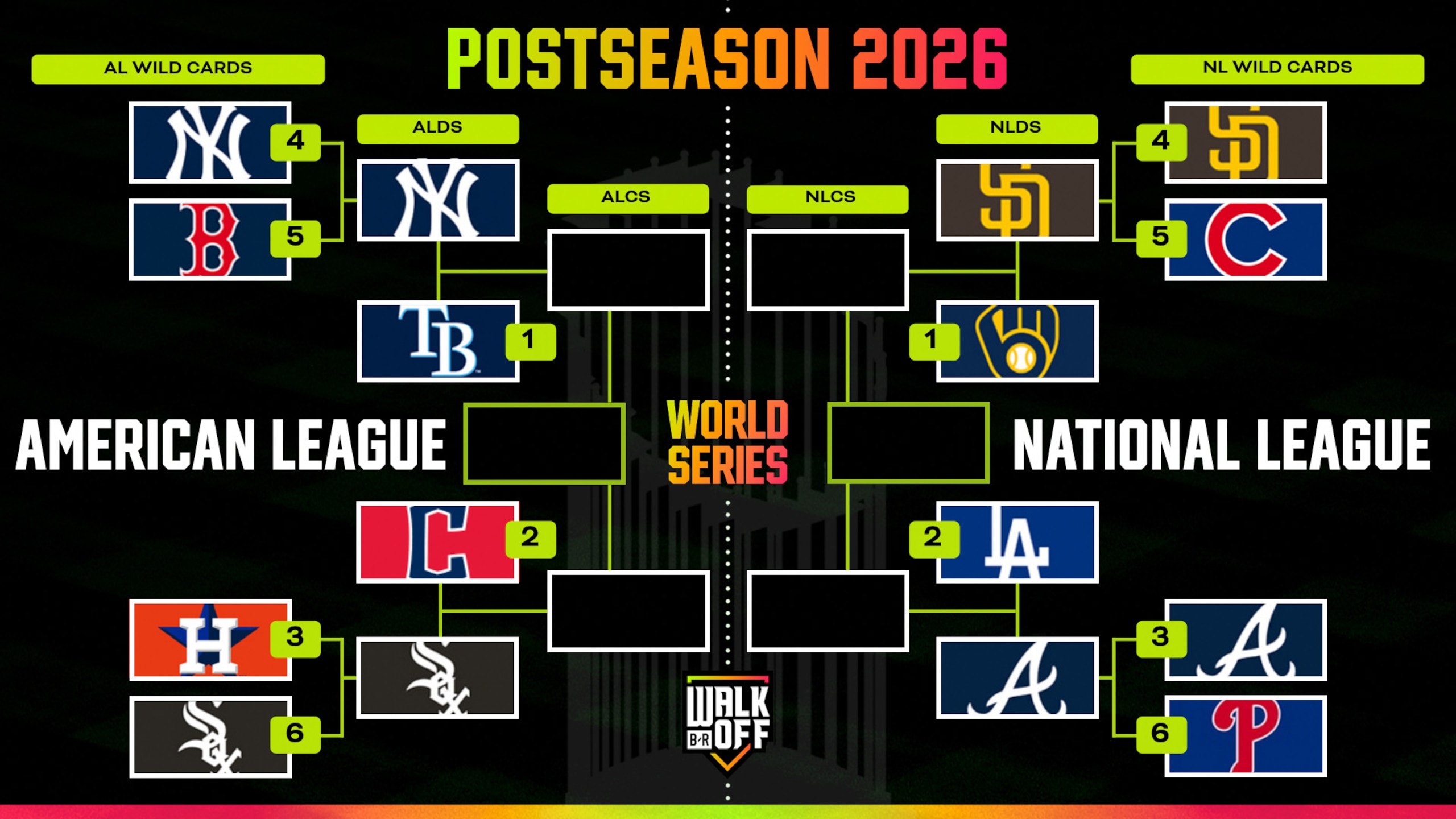
Brewers Stun Padres in Game 2 😧
Braves' Opener Shines vs. LA 💪
Aaron Boone Calls Out Yankees Catcher 🗣️
He was limited by a ribcage injury at the Olympics, ending his season a bit prematurely. That certainly plays a role in his limiting innings.
Still, I don’t see the A’s giving him a hard limit. While Greg Smith was hardly the prospect Cahill his, he had thrown 121 innings in 2007 (and 148.1 innings in 2006) before the team allowed him to pitch 196.1 innings (between the majors and Triple-A) last season.
Obviously anything can happen, but I’m expecting them to allow him to pitch as long as he is successful.
His fastball, though not overpowering, is certainly one of his biggest assets. Let’s take a look at what some people are saying:
Keith Law of espn.com says, “Cahill’s two-seam fastball is just toxic. He sits in the low 90s but has ridiculous sink on the pitch — a hard, late, diving action.”
Baseball America says, “Cahill works off an 88-92 mph two-seam fastball with outstanding heavy sink and running life, enabling him to rack up both grounders and swinging strikes. He also can touch 94 mph with his four-seamer.”
Billy Owens, the Athletics director of player personnel, was quoted on mlb.com said, “Trevor Cahill has the unique combination of being able to induce groundballs at a very high rate and still be able to have a very high strikeout-to-innings-pitched ratio.
"Trevor is the quiet assassin type that is extremely competitive and is driven to achieve at the top level. Combine that desire with athleticism, a heavy natural sinking fastball, an out pitch knuckle-curve, intelligence and strike-throwing ability and that equals an elite starting-pitching prospect.”
Couple the ability to induce groundballs with a ballpark that favors pitchers and you have the potential for tremendous success. We all know that ballpark has a lot of foul ball territory, which could play into his hands even more then most.
If people try to pull a sinking fastball they are liable to pop the pitch up. In smaller parks, that pop up could sail into the seats and give the batter a second chance.
In a park like Oakland, that same ball instead could easily end up in a fielders’ glove.
Unfortunately, that’s where the positives come to an end.
The strikeout potential he has shown in the minors is not likely to continue. Remember, he has spent the majority of his time in the low levels, facing inexperienced hitters. He couples his fastball with a knuckle-curve, slider and change-up, so the full repertoire is there, but until he actually brings it against top talent, I can’t buy it.
For example, this spring he has struck out 13 batters over 25 innings. That may be a bit of an extreme, but it tells the story. He’s not likely to strikeout six or seven per nine innings this season.
Usable, yes, but far from the elite totals he showed in the minors. With more balls in play, it’s going to put a lot of pressure on the teams’ defense, especially for a pitcher who generates significant ground balls.
The control could also be an issue. He walked 10 batters this spring, good for a BB/9 of 3.60, right along his minor league career mark. It’s not a completely terrible number, but it would but him towards the bottom of the league.
In Cahill you have a pitcher with tremendous upside, and one that I could see taking a flyer on in the later rounds, though he seems more useful for a potential pitch-and-ditch type strategy in his rookie campaign.
When he’s pitching at home against a weaker opponent, he has a repertoire to be extremely successful.
Unfortunately, he doesn’t have the experience and he has the makings of a pitcher who could struggle early on. He’s not likely to generate many strikeouts.
That means more balls are going to be put in play to begin with, which likely will lead to more hits allowed (unless he gets significantly lucky). Add to that an above average walk rate, and his WHIP is going to suffer.
Factor in that the Athletics are unlikely to be very competitive, meaning a lack of win potential, and yearly league owners should be cautious. As we described, the talent is there, so keeper league owners should certainly look to stash him away if possible.
He could develop this season, quicker then expected, so make sure to monitor his progress. For now, however, yearly leaguers should do it from a distance.
THIS ARTICLE IS ALSO FEATURED ON WWW.ROTOPROFESSOR.COM


.jpg?w=2560 "NFL investigating 2 referees for separate viral exchanges")

.jpg?w=2560 "Report: Chiefs Contact Hill's Agent")
.jpg?w=2560 "OBJ Calls Out Giants 😳")
.jpg?w=2560 "Tyreek makes another cryptic post amid Chiefs rumors")