
Arizona Diamondbacks: All-Decade Roster
This season marks the beginning of the second decade of baseball for the Arizona Diamondbacks. The team, which joined the Colorado Rockies, San Diego Padres, Los Angeles Dodgers and San Francisco Giants in the National League West in 1998, has had its fair share of ups and downs as a franchise.
With an overall record of 818-802, the team looked very good in some years and very poor in others. Perhaps the longest summer was in 2004, when the squad posted the worst record in baseball, winning 51 games and losing a staggering 111.
One of the only bright spots that season was on May 18 when Randy Johnson pitched a perfect game, striking out 13 against the Atlanta Braves. Johnson ended up winning 16 games that year and was the only pitcher on staff who had a winning record.
TOP NEWS
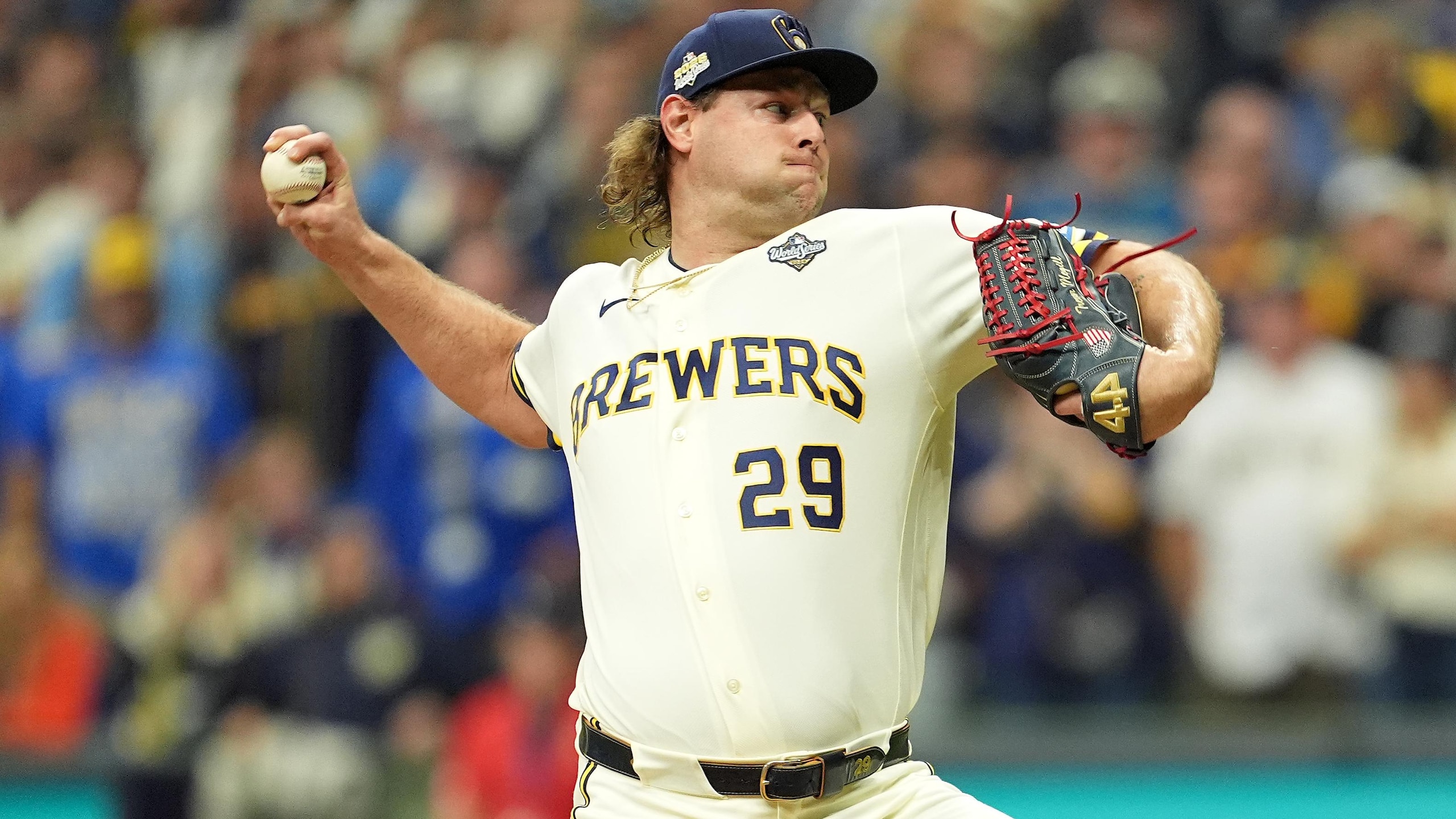
Brewers Closer Blasts Tropicana Field Roof

Latest MLB Trade Rumors 👂
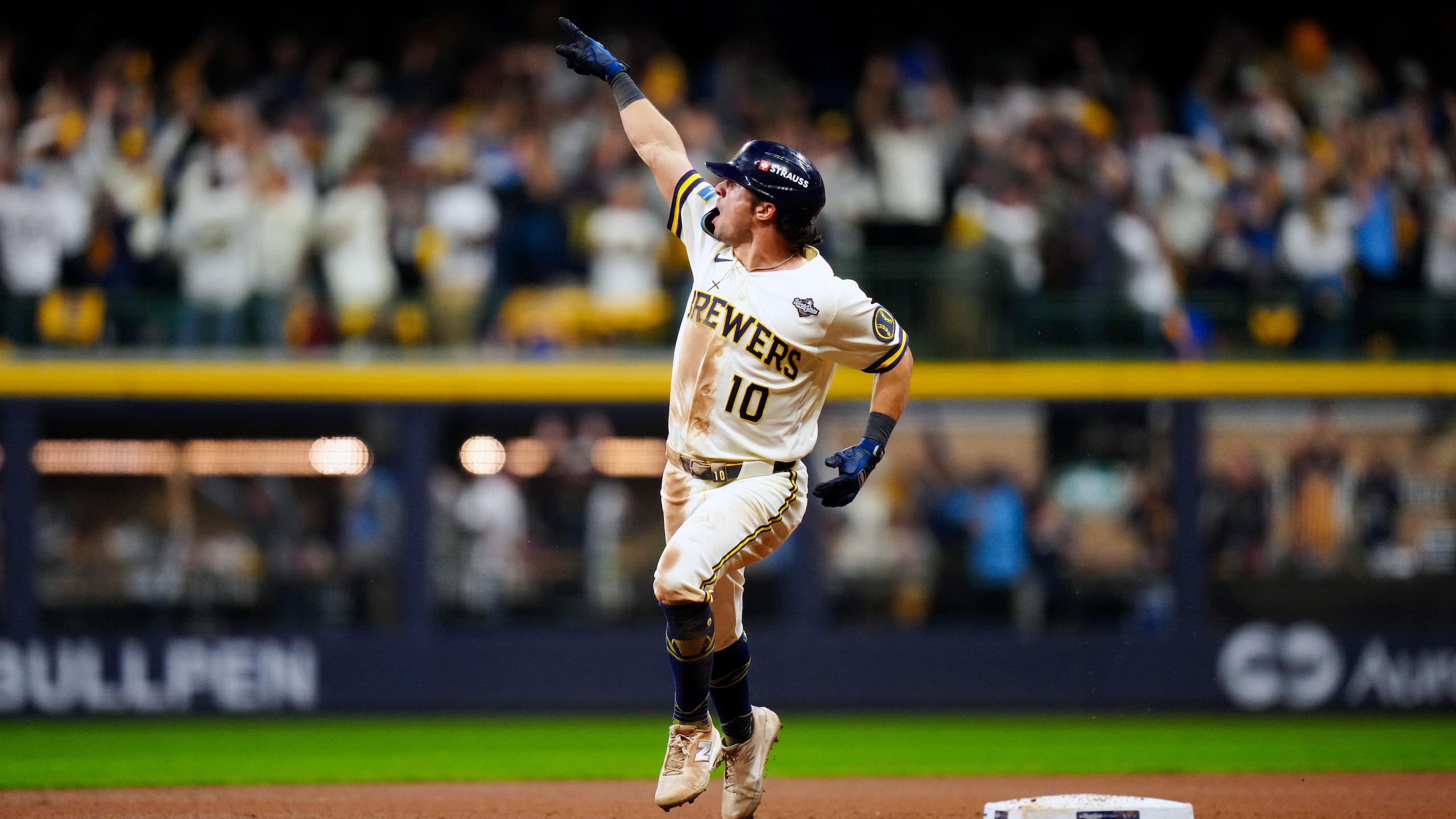
Tying HR Had Bauers Emotional
Bright spots in franchise history have been the 100-62 season in 1999, when the team made the playoffs for the first time, but not before losing to the New York Mets in the National League Division Series.
Their strong 1999 season was bested two years later in 2001, when the team posted a 92-70 record, won the NL West, again made the playoffs, and beat the New York Yankees in a World Series where Johnson and Curt Schilling both appeared in three games, with Johnson winning three games. The duo shared co-MVP awards for the series.
The team would miss the playoffs the next five years until 2007 when they posted a 90-72. The team swept the Chicago Cubs in the National League Division Series, but lost to the surging Colorado Rockies in the Championship Series.
Now I will honor the best player at each position, basing my selections not necessarily on the player's overall career, but on their contributions while they were a member of the Diamondbacks.
The honor at catcher goes to Damian Miller. Miller, who is the team leader in games played at the position, played for the D-Backs from 1998 to 2002. His best season at the plate, arguably was in 2001, when, over the course of 123 games, Miller scored 45 runs, drove in 47, hit 13 home runs and batted .271, respectable for a catcher.
The choice at first base was less clear. The Diamondbacks have yet to have a first basemen who puts up overly impressive offensive numbers. Tony Clark, the starting first baseman in 2005, has been the only one in the group who has shown any sort of power, hitting 30 home runs, driving in 87, and hitting .304.
He only scored 47 runs that season, a measly number, considering the amount of homers he hit. While in Chicago, Mark Grace was a three-time All-Star and a fan favorite, but in his two full years in Arizona, he never really put up his Chicago-esque numbers.
So with all that considered, I am going to give the nod to current first baseman Connor Jackson, who is entering his third year as a starting first baseman. Jackson, a Diamondback since 2005, put up similar seasons in both 2006 and 2007. I expect, however a better 2008 season from him.
Second base, from an offensive standpoint, was a rather easy choice. It is hard to overlook Jay Bell's monster season of 1999, even though he never came close to repeating those numbers again. Bell, the leader in games played at second base, exploded for 38 home runs, 132 runs scored, 112 RBI, and a .289 batting average, earning his a place in the All-Star game.
The honor at shortstop goes to Tony Womack, who is the franchise leader in triples and stolen bases. Womack never put up the offensive numbers of his double-play partner, but over the course of his four and a half years as a Diamondback, he had three years of 90-plus runs scored, with 111 in 1999 to go along with his 72 stolen bases and 10 triples.
Another member of the equation to be considered would be Alex Cinteron's 2003 season of 70 runs scored, 13 home runs and a .307 batting average. A few years from now, Womack's nod at shortstop might be null and void if 25-year-old Stephen Drew lives up to his potential.
Matt Williams is the choice at third base partly because of his four straight years as the opening day third basemen, but also in part to, like Bell, his monster 1999 season.
Williams, who came to Arizona in its inaugural season, after a decade in San Fransisco, was third in MVP voting that year after blasting 35 home runs, driving in 142 and batting .303. Also like Bell, he never came close to repeating those numbers. But unlike Bell, Williams, was a four-time All-Star with four top-ten finishes in the MVP race in his 17-year career. Bell, to his credit, appeared in two All-Star games.
Outfield, was surprisingly easier than I thought it was going to be, at least in two positions.
A no-brainer choice at left field is Luis Gonzalez, the franchise leader in games played, hits, runs, doubles, home runs, RBI and batting average. Gonzalez, who appeared in 1194 games for the Diamondbacks from 1999 to 2006, was a large part of the team's success in 2001. After strong campaigns in 1999 and 2000, Gonzalez upped his game in 2001. He hit .325, scored 128 times, hit 57 home runs, and batted in 142.
As a Diamondback he strung together five straight 100-RBI seasons, three straight 100-run seasons, five straight 25-plus home run seasons and hit above .300 four times. He represented the Diamondbacks in three All-Star games.
His long-time outfield counterpart, Steve Finley, was also an easy choice in centerfield. Finley manned centerfield from 1999 to 2004 and like several of his teammates, had a big year in 1999. That year, he scored 100 runs, hit 34 home runs and drove in 103. He followed that performance up in 2000 with a 100-run, 35 homer, 96 RBI season. He was an All-Star that year.
The choice in right field is the hardest of the outfield. Shawn Green, Danny Bautista, and Reggie Sanders get consideration. Bautista has appeared in the most games in right field as a Diamondback and started three opening days, but Shawn Green, who started two of his own, takes the nod, even though he only played one full season in Arizona.
Green, known much better for his years in Toronto and Los Angeles, put up a decent, albeit a little lackluster, season in 2005, hitting 26 home runs and scoring 87 runs. This season, however, was a huge drop off from his back-to-back 40-homer seasons of 2001 and 2002.
Bautista's best year, on the other hand, was in 2007 when he batted .286 with 11 home runs and 65 RBI. In 2001, Sanders, in his only year as a Diamondback, scored 84 times, hit 33 home runs, drove in 90 and batted .263.
The nod, goes to Sanders for his strong offensive season, who helped the Diamondbacks make the playoffs. He had 14 hits in the playoffs, scoring 10 runs and hitting .357 in the Divisional Series and .304 in the World Series.
Okay, time for a a break. Think of it as Bleacher Report seventh inning stretch.
You back? Good, now let's look at pitching. I will pick three starters and a closer.
Two pitchers previously mentioned in this article take the first two spots. Johnson and Schilling both had impressive careers outside of Phoenix, but certainly made enough of a contribution to the Diamondbacks to warrant recognition.
Johnson, the franchise leader in ERA, wins, innings pitched, and strikeouts, put together seven 16-plus win seasons, including back-to-back 20-plus win seasons in 2001 and 2002, four straight seasons of 300-plus seasons and four straight seasons of a sub-2.64 ERA. Perhaps most impressive of all is his string of four Cy Young Award winning seasons in 1999, 2000, 2001, and 2002.
Schilling, wasn't as dominate as Johnson, but was equally as valuable to the Diamondbacks in his years with the team from 2000 to 2003. Schilling put up back-to-back 20-plus win seasons in 2001 and 2002, striking out at least 293, with a 3.25 ERA. He finished second in voting for the Cy Young losing to none other than Johnson.
The last starting pitcher honor goes to Brandon Webb, who has been with the team since 2003. Webb has started the last two Opening Days and has also put up some impressive numbers, posting at least 16 wins, 235 innings pitched, 172 strikeouts and a 3.10 ERA in those two seasons. He won the Cy Young Award in 2006 and was runner up in 2007.
A consideration for the closer honor goes to a pitcher the team shipped out this offseason. Jose Valverde, who played for the Diamondbacks from 2003 until he was traded to the Houston Astros, is the franchise leader in games appeared in and saves.
His best year as a Diamondback came last year in his All-Star season when he saved 47 games and had a 2.66 ERA in 65 games.
Another choice is memorable closer Byung-Hyun Kim, who served in the duty in 2001 and 2002. He earned an All-Star pick for his 2002 season when he saved 36 games and posted a 2.04 ERA over 72 appearances. I would say Kim and Valverde are about even, but the honor is going to go to Valverde because of his 98 career saves with the team to Kim's 70.
Since its inception in 1998, Diamondback pitchers have won the Cy Young Award five times, pitched a perfect game, certainly not a bad resume for such a young team.
I might have missed the mark on some of my choices. I would love to hear some of your thoughts on the best Diamondbacks.
I will be taking a look at the best players in Tampa Bay history shortly. Something tells me it is going to be a little bit harder.



.jpg?w=2560 "Raiders Could Start Mendoza")

.jpg?w=2560 "Rodgers Iced Out on Plane 💎")

.jpg?w=2560 "Packers Safety Slams Refs 🤬")

.jpg?w=2560 "🚨 Week 8 AP Top 25 Poll")
