
College Football: How Many SEC Teams Would Win the Big East in 2012?
The truth is, if the SEC and the Big East were neighboring countries pitted in a war against one another, the SEC would invade and take over the Big East in rapid, decisive fashion.
Following the same line of reasoning, if a SEC football program was suddenly cast aside and joined up with the Big East, the result in most cases would be that the SEC team would win a bunch of ball games and more than likely a conference crown.
And this is especially true since the Big East has just bid a fond farewell to West Virginia, a program that has won a piece of six of the last 10 league titles.
So, for the specific season of 2012, which SEC teams would triumph if they entered the easiest sweepstakes to an automatic BCS bid, or Big East title?
The following slideshow pinpoints the squads that could win it all in the Big East, and then identifies those who might struggle to capture the seemingly easy crown.
Though a potential move to the Big East would mean no SEC conference games, no division to have to win and then no pesky conference championship to deal with, long term there would be pitfalls.
Among the potential downsides is that if the team became a longtime member of the fading Big East, at some point they’d risk losing their valuable SEC recruiting prowess.
Seriously, who wants to play Cincinnati and Rutgers every year instead of Alabama and Florida?
The answer is a hearty “not many,” and that’s the truth regardless of how many championships you’d be guaranteed.
Really the question itself, whether it’s more advantageous to play in the easiest BCS league or the most difficult, is one of the most perplexing in all of modern college football.
Alabama
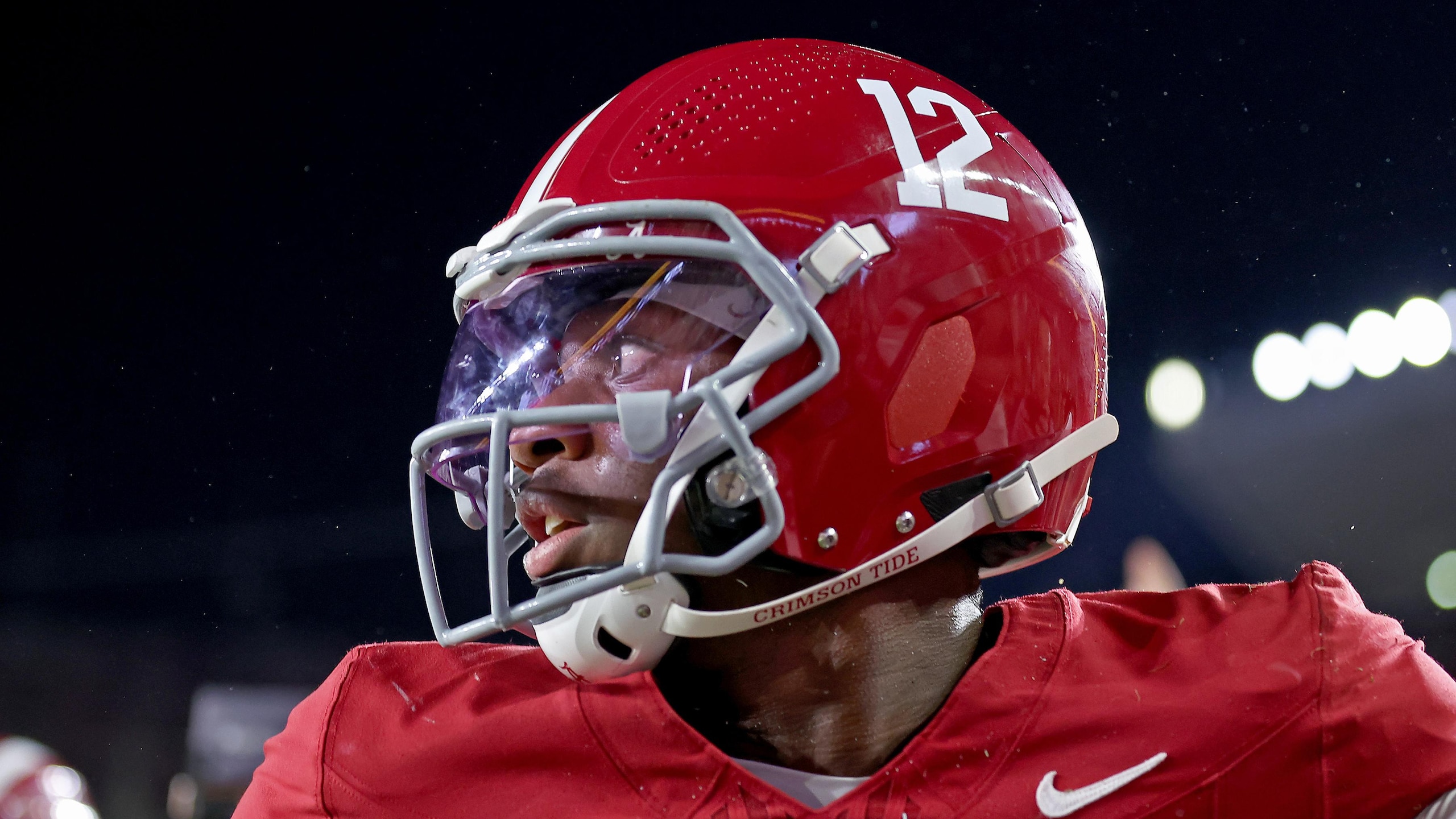
1 of 10It’s no stretch to say that the Crimson Tide would win the Big East if they joined up for 2012.
The area that the SEC most dominates the Big East in, recruiting, is no more glaringly evident than it is when you compare the Crimson Tide to the eight members of the "Smaller East."
Using the Rivals.com team-recruiting rankings from 2009-12, Alabama’s average class ranking is No. 2, while the top of the heap in the Big East, Rutgers, averaged an approximate rating of No. 36.
The Crimson Tide’s overall record vs. the current members of the Big East is 14-2; the only two losses being a 1991 Fiesta Bowl loss to Louisville and a 23-0 defeat to Syracuse in 1923.
Texas A&M
2 of 10Though the 2012 Aggies may struggle to find even the middle of the pack in the SEC, they’d win the Big East this season.
If you weren’t impressed with A&M’s not so inspirational 7-6 finish last season, don’t forget that Phil Steele deemed the Aggies' schedule the eighth hardest in the nation, which was far and away stiffer than the Big East’s toughest slate, Louisville’s, who rated No. 44.
And remember, Louisville still had to play West Virginia last season.
One slightly disturbing piece of data regarding Texas A&M is the Aggies' lopsided 4-5 record all-time against current members of the Big East.
But again, to put this in perspective, with the exception of A&M’s pair of close losses to Pitt in 1989 and 2003, the Aggies' previous losses came in 1971, 1935 and 1934.
LSU
3 of 10The No. 1 preseason ranked team in the USA Today Coaches Poll; LSU is another no-brainer to win the Big East.
With the exception of pass offense (LSU ranked No. 106 nationally in 2011), the Tigers ranked above every team in the Big East in all of the major offensive and defensive statistical categories. This slew of numbers included scoring defense, pass defense, rush defense, scoring offense and rushing yards (where LSU technically finished below Temple, who played a MAC slate in 2011).
A mildly shocking revelation is that LSU is 1-3 all-time against current members of the Big East, but again, to put things in perspective, the losses are almost ancient history.
The Tigers fell to Cincinnati 28-0 in 1898, lost to Rutgers 22-0 in 1922 and then fell to Syracuse 23-10 in the 1989 Hall of Fame Bowl.
The singular victory came in 1965 when LSU beat Syracuse 13-10 in the Sugar Bowl.


_0.png?w=2560)
South Carolina
4 of 10The Gamecocks will once again have their work cut out for them to win even a divisional crown in the 2012 SEC, but all logical indicators point to them winning the Big East if they had the opportunity.
South Carolina returns 14 starters to a squad that won 11 games against some of the stiffest opposition in college football.
This fact makes it hard to believe that they wouldn’t run away with the Big East.
The Gamecocks are 5-5 all-time against current Big East members; the most recent loss came vs. UConn (20-7) in the 2010 Papajohns.com Bowl, and the latest win came in 2004 when South Carolina bested USF 34-3.
Arkansas
5 of 10Regardless of turmoil, strife, leadership changes and what Phil Steele calls the No. 18 hardest schedule coming into 2012, the Razorbacks would clean up in the Big East this season.
After battling LSU, Alabama and Auburn year in and year out, it would be a relief for Arkansas to square off with Syracuse and UConn.
This doesn’t mean that the Big East teams are bad, it just means that the Razorbacks are accustomed to facing teams over-served in talent, speed and raw athletic ability.
Amazingly, Arkansas has only played a single game against a team that is a current member of the Big East; the year was 2002 and the opponent was USF. The Hogs won the contest 42-3.
Florida
6 of 10Florida, who had a very unGator-like 7-6 finish last season, is an interesting pick to win the Big East in 2012.
Yes, we’re talking about THE Florida Gators, but, we’re also speaking of a squad that beat Vandy by only five points in Gainesville last season, allowed 32 points vs. FCS Furman and ranked No. 89 nationally in passing yards.
These guys aren’t necessarily the 2008 team that won the big, cheesy enchilada.
But still, regardless of all this, Florida is flat-out stacked with talent. Using Rivals.com team rankings, the Gators average class ranking from 2009-12 is a breathtaking No. 7.
Raw talent (and 18 returning starters), not recent results, indicate that Florida would win the Big East if they entered the race in 2012.
Florida is 9-4-2 all-time against current Big East members; the most recent win came in the 2010 Sugar Bowl where the Gators stomped Cincinnati 51-24, and the latest loss came via a 38-21 decision vs. Syracuse back in 1991.
Georgia
7 of 10The team with the best odds to win the SEC East and perhaps the entire conference ball of wax in 2012, the Bulldogs also have all the right stuff to win the less competitive, and smaller version of the East.
Even though Georgia played one of the easiest slates in the SEC in 2011, and will do so again in 2012, their sheer athletic ability, especially on defense (they return nine starters to a unit that ranked No. 11 against the run and No. 10 against the pass last season) would put them in peachy shape in the Big East.
And this is no narrow comparative outcome, the Bulldogs' dominance over the entire Big East field, at least on paper, is quite literally a landslide.
Georgia is 6-4-1 all time against the current Big East membership; they are a perfect 2-0 and 4-0 respectively against Cincinnati and Syracuse and have never beat Pitt (0-3) and Syracuse (0-1).
The most recent meeting with a current Big East member came in the 1989 Peach Bowl, a game the Bulldogs dropped to Syracuse 19-18.
Missouri
8 of 10The less publicized of the two Big 12 members moving to the SEC this season, Missouri took a fairly young team with the No. 19 hardest slate in the land (according to Phil Steele) and managed to win eight games in 2011.
The Tigers may not run away with the title like say Alabama or LSU might, but Missouri has always stacked up well in a Big 12 that never pulled any punches.
Even though the Midwest Tigers recruit with the big dogs, they are big time when stacked against the Big East and never fail to score a Top 50-rated class.
Missouri is a lopsided 1-4 against current Big East teams, but they haven’t played a game against a member since 1987 when they lost to Syracuse 24-13 in Columbia.
Vanderbilt
9 of 10Definitely the diciest pick of the bunch, Vandy’s ascension to their first conference crown since 1923 wouldn’t be a sure thing even if they were competing in the Big East.
Vanderbilt returns 18 starters in 2012 from a team that was all heart in 2011 and made you believe they could easily become giant killers under first -year head man, James Franklin.
But, what if the giants were smaller? Yes, what if the foes were Rutgers, Louisville and Cincinnati rather than Florida, South Carolina and Georgia?
Well, it might come down to defense, where Vandy played a serious schedule last season and came out ranked No. 29 in scoring, No. 36 against the run and No. 18 against the pass.
The biggest competition for the Commodores might be USF, who are equally stacked and identically underestimated.
Vandy enjoys an 11-9 advantage all-time against current Big East members and most recently competed against Cincinnati in the 2011 Liberty Bowl, a game they dropped 31-24.
The Question Marks
10 of 10Though you could make a solid argument that every team in the SEC could win the Big East in 2012, in reality not all the current SEC membership is primed up for the task, at least this year.
Following are the teams who didn’t make the cut, and though each of these teams could make a run, it’s definitely less of a sure thing when you stack them against the football members of the Big East for 2012.
Auburn
Both history and recruiting numbers scream out a case for Auburn to spank the entire Big East, but by delving further under the covers we see holes in the argument.
What dampens confidence in the Tigers is the fact that they just didn’t perform well in 2011, despite the difficulty of their schedule.
National rankings of No. 70 in scoring offense, No. 105 in passing offense, No. 78 in scoring defense and No. 94 against the run are hard to swallow.
Auburn is absolutely the most difficult team to leave out of the mix in terms of which teams could win the Big East, but until they show on field improvement and maturity (remember how young they were last season), it’s really difficult to say that they could absolutely win the Big East this season.
Ole Miss
There is really no need to over-analyze Ole Miss vs. the Big East field in 2012.
Yes, the Rebels won only two games in 2011 and those were against FCS Southern Illinois and Fresno State.
They were outscored 385-193 in 2011 and lost to Vandy, Kentucky and Louisiana Tech.
All this makes the Big East, and perhaps C-USA look like a huge stretch.
Mississippi State
Though nobody really wants to bet against underdog Mississippi State and their likable leader Dan Mullen, the Bulldogs will be a very young team this season.
Wizard, like Phil Steele, ranks MSU No. 99 nationally in experience for 2012, and the Bulldogs return just 13 starters from their 7-6 product last season.
Yes, Mississippi State might not be a bad team in 2012, but they might be a very, very young team.
The Bulldogs would definitely win some ball games in the Big East, and they would likely finish in the top three, even with their inexperience, but saying they’ll definitely win it all might be a stretch.
Kentucky
The Wildcats return a paltry 13 starters from their five-win team in 2011, and this is a group that ranked No. 117 nationally in scoring offense and No. 114 in passing yards.
Kentucky simply doesn’t recruit well (at least in football) and their numbers are low even for a Big East team.
This all means that Kentucky has less talent and less experience, meaning they’d definitely be more competitive in the Big East in 2012, but likely wouldn’t take home any trophies.
Tennessee
The truth is if Tennessee could ever cash in on their talent stockpile, they’d win the SEC, much less the Big East.
Yes, according to Rivals.com team rankings, the Volunteers last four recruiting hauls ranked No. 10, No. 9, No. 13 and No. 18.
These numbers are among the best in the entire nation.
But this is a team that has simply underperformed, by historic proportions, over the last two seasons, and their stagnant offense (No. 106 in scoring in 2011) makes them an underdog pick for any title.
Could they win the Big East? Absolutely.
Would they? Honestly, they have a lot to prove.

.jpg?w=2560 "NFL investigating 2 referees for separate viral exchanges")
.jpg?w=2560 "Report: Chiefs Contact Hill's Agent")
.jpg?w=2560 "OBJ Calls Out Giants 😳")
.jpg?w=2560 "Tyreek makes another cryptic post amid Chiefs rumors")


