
5 Players Who Won't Be on Lakers' Roster Next Season
When determining which Lakers will still be on the roster next season, it's important to evaluate the current contracts, especially their duration.
According to HoopsWorld.com, next year Matt Barnes, Devin Ebanks, Darius Morris, Jordan Hill and Troy Murphy's contracts will be up. The team has the option to pick up Andrew Bynum's and Andrew Goudelock's contracts. Chances are good that all of these will be picked up due to recent play and also to use as trading chips in the future. Ramon Sessions has a player option on his $4.5 million contract.
Beyond these expiring contracts, Kobe Bryant has two years at about $30 million, Gasol has two years at $19 million, World Peace has two years at $7 million with an early termination option the last year. Steve Blake has two years left at exactly $4 million each year, McRoberts isn't far behind at $3 million. Newly acquired Christian Eyenga has two years at $1 million and $2 million.
So, now that all that's out, it's easier to evaluate contracts and who the Lakers should and may move around in the upcoming year. Obviously, Bryant is not an option. While he's still clutch and every bit “The Mamba,” his contract is enormous, and it's not likely the Lakers would be able to get anything back that would even equal him in value, nor would many teams be willing to give that much.
Pau Gasol is in this boat as well. He's definitely got both tangibles and intangibles that are valuable to the Lakers, but his play is inconsistent at times, like last year in the playoffs.
Also, a lot of questionable players will come down to how they play leading up to and during the post season. The team finally seems to be falling into sync in this new offense, so there's a chance not many people will be moved around at all. However, if people do leave the Lakers, it should be these next five guys.
Troy Murphy
1 of 5It's no secret that Troy Murphy's play is lackluster.
In an average 16 minutes a game, Murphy scores 3.3 points, grabs 3.3 rebounds and averages less than one assist. That's hardly the play you want out of a guy who's getting legitimate playing time in his contract year. While he is 6'11" and adds height to the Lakers, his skills aren't anything that the Lakers can't find elsewhere.
Murphy is also 32 years old, and he's well past his prime. This year, Murphy is making $1.35 million which is the league minimum for a veteran player (he's been in the league for 10 years). He's got nearly no intangibles that the Lakers can't find for cheaper or in someone with more skill at the position.
Steve Blake
2 of 5Steve Blake is a tough contract, but it's one the Lakers must move in the offseason. Playing next to Derek Fisher, he looked like a pretty decent point guard, but now that he's coming in behind Sessions, his age is apparent.
His veteran knowledge definitely helps the second unit out, but it's the actual production that's the problem. He's scoring 4.9 points in 23 minutes, on average, and gets 1.6 rebounds and 3.2 assists.
The difficulty with Blake is that he's set to get $4 million for the next two years. If the Lakers can rework his contract so that Blake gets the league minimum, then it may be worth it for the Lakers to keep him as an option off the bench. However, if not, then they've got to find a way to trade him during the off-season.
The Lakers organization has made it known that they're trying to get as far under the salary cap as possible without sacrificing talent. They'll be paying Blake $8 million over the next two years, which doesn't help their cause.
Metta World Peace
3 of 5Do not let yourself get caught up in World Peace's last two performances. He's averaging 25 minutes a game, 6.7 points, 3.3 rebounds and two assists. What's worse is that he's shooting 37 percent and 28 percent from three-point range.
He's clearly underproducing. People like to joke that the Lakers signed Ron Artest, not Metta World Peace, but it's true. This season is a career low in shooting percentage, points per game and rebounding. Again though, there's the problem of unloading his contract.
Metta has two more years at about $7 million a year. This means a team will need to pick up over $14 million in salary for a player who is well past his prime. He's also lost the defensive edge that Ron Artest brought to games.
That's not to say though that there aren't flashes of the old player here and there, but his killer instinct is not what it used to be. If World Peace can keep up his current play, then there's a chance Mitch can work some of his Kupchak magic and trade away this contract, which needs to be done.
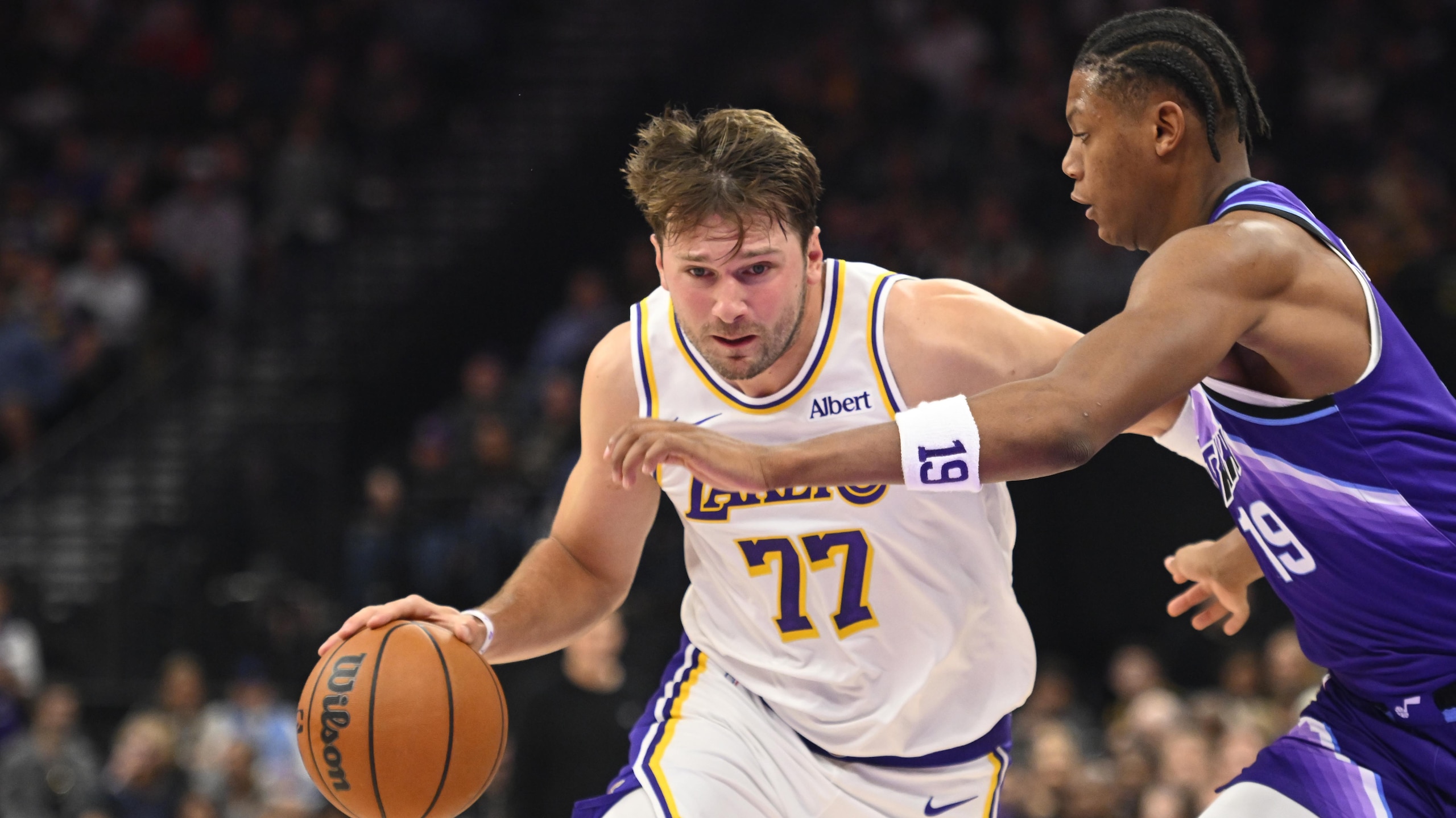


Christian Eyenga
4 of 5Christian Eyenga is a player who the Lakers picked up in the trade for Ramon Sessions. Likely, he was picked up because of the size of his contract. He's played no games for the Lakers since coming to town and only played seven total for Cleveland.
He's a 6'7" rookie with lots of potential, but the Lakers need to tap into that to make his contract worth it. You'd expect a guy with these stats to be making Darius Morris money, at just under $500,000, but instead, Eyenga has a contract where he'll make about $1 million this year, $2 million in a player option the following year and $3 million in a qualifying offer three years from now. He's got the longest contract on the Lakers' entire roster.
While Eyenga hasn't had a chance to prove himself, this isn't a contract that the Lakers need to keep if they're trying to save money. The goal is to keep the payroll low, and these are large numbers for a developing rookie. The Lakers should reevaluate him at the end of the year and weigh their options, but it would be best if he was not on the team next year.
Josh McRoberts
5 of 5McRoberts has slowly been proving himself with more playing time, but the fact remains that he's getting $3 million a year through next year. His numbers rival Murphy's who is getting paid about half of what McRoberts makes.
He's getting about 13 minutes a game, 2.4 points, 3.5 rebounds and 0.9 assists. What's impressive is that his shooting percentage is 46 percent which makes his one of the top shooters on the team.
However, his production means that he makes approximately $23,000 per each point he scores. That's great for him, but not such a smart move for the cash-strapped Lakers.
Next year will be the last on his contract, which means he may be easier to move around. On a different team, McRoberts could feasibly get more playing time and better production value, but it's just not happening for him on the Lakers.

.jpg?w=2560 "Rodgers Iced Out on Plane 💎")
.jpg?w=2560 "Raiders Could Start Mendoza")
.jpg?w=2560 "Mahomes Told Teammate to Leave Meeting")
.jpg?w=2560 "🚨 Week 8 AP Top 25 Poll")


.jpg?w=2560 "Lamar Being Out Shocked Ravens")
.jpg?w=2560 "Packers Safety Slams Refs 🤬")